Sponsored Ad

Ad 1
Ad 2
Ad 3
Ad 4
Ad 5
Ad 6
22.2 C
Kenya
Sunday, April 26, 2026
Home Blog Page 1955

Ruthless Lyon beat Bayern 4-1 to reach women’s Champions League semis

Lyon comfortably beat Bayern Munich to set up a Women’s Champions League semi-final tie with Arsenal.

Eight-time winners Lyon went into Wednesday’s game with a 2-0 lead from the first leg but missed a number of early chances and went behind on the night at Groupama Stadium.

Klara Buhl opened the scoring for the visitors, finding the bottom corner with a low drive across goal which went in off the post.

But Joe Montemurro’s side made amends for their wasted efforts and Melchie Dumornay restored their two-goal lead in the tie just 27 seconds after the break, heading past Maria Luisa Grohs from Kadidiatou Diani’s cross.

Giulia Gwinn was punished for a heavy touch on the edge of her own penalty area as Diani pounced to sidefoot a first-time finish and put the French side ahead on the night.

Diani then turned provider again as her low drive across goal teed up Tabitha Chawinga to fire home from close range.

Bayern rarely threatened again and Lyon saw out the game with a late Ada Hegerberg strike as they reached the last four of the competition for a 14th time.

Montemurro will face his former side Arsenal in the last four after the Gunners completed a brilliant two-goal comeback against Real Madrid.

Semi-final ties will be played on 19-20 and 26-27 April.

Man City and Chelsea could earn £97m at Club World Cup

Manchester City and Chelsea could earn up to £97m in prize money from this year’s Club World Cup.

The overall prize fund, shared between all 32 teams based on different factors, will be £775m, with £407m divided between all participating clubs and £368m awarded on a performance-related basis.

By comparison, last season’s prize money in the Premier League, external ranged from £175.9m for winners City to the £109.7m earned by bottom-placed Sheffield United.

Money awarded for participation is weighted by a ranking based on sporting and commercial criteria, meaning European clubs will earn more for taking part than teams from other continents.

The top-ranked European team by Fifa’s metrics will receive £29.6m just for participating – and they would secure the maximum prize available of around £97m for winning all of their group-stage games and then going on to win the tournament.

A group-stage win will net a team £1.5m, with £5.8m for reaching the last 16, £10.2m for reaching the quarter-finals, £16.3m for reaching the semi-finals, and £31m for winning the final.

As a result, Manchester City and Chelsea, the two Premier League sides in the competition who qualified thanks to their recent Champions League wins, could earn the biggest prize money ever awarded in club football over a seven-game format.

The expanded Club World Cup will take place in the United States from 15 June to 13 July.

Previously an annual tournament contested by seven teams, it will now feature 32 clubs and take place once every four years.

“The distribution model of the Fifa Club World Cup reflects the pinnacle of club football,” said Fifa president Gianni Infantino.

Teams from each of the six international football confederations will participate: Asia (AFC), Africa (Caf), North and Central America (Concacaf), South America (Conmebol), Oceania (OFC) and Europe (Uefa).

There are 12 places available for European teams – the highest number of any of the confederations – and they are decided by clubs’ Champions League performances over the past four seasons.

Only two clubs per country can qualify, so 2022 Champions League finalists Liverpool are not included but 2021 winners Chelsea and 2023 winners City are.

Other European teams have qualified through a Uefa ranking system determined by clubs’ performances over the four seasons.

‘Tournament now looks very worthwhile for biggest clubs involved’

The success of this tournament, which has barely registered on the global football consciousness so far, largely hinges on clubs such as Chelsea, Manchester City, Real Madrid and Bayern Munich.

They have negotiated substantial revenue to be part of it – they should earn a minimum of £40m if they progress from the group stage and can earn up to £97m for winning it. That revenue is comparable to the money earned from taking part in the Champions League.

But not all clubs are equal. The smaller European clubs to have qualified, such as RB Salzburg, will only get around £15m if they qualify from the group. South American clubs such as Boca Juniors, River Plate and Flamengo are due a similar sum.

Teams in North America, Asia, Africa and Auckland City, the only club from Oceania, will get even less.

Of course, the biggest clubs will argue they are already stretched in terms of the football calendar and will miss out on pre-season revenue but this tournament now looks very worthwhile for those involved.

Those revenues will give Chelsea and Manchester City more room to stay on the right side of profit and sustainability regulations, but they could distort the competition with smaller leagues in Europe and beyond, in the same way that Champions League participation gives those involved a major financial advantage.

Fifa said this tournament will help grow the game beyond Europe and distribute money to clubs outside the traditional elite.

But the elite have leveraged their importance in negotiations to get a bigger share of the total prize fund.

Shooting in south Florida kills a woman and 3 children; 2 others taken to a hospital

(AP) — A woman and three children were fatally shot Wednesday night in south Florida and two others were taken to a hospital, according to law enforcement.

The shooting in Pembroke Park took place at about 8 p.m., Michael Kane, the Broward Sheriff’s Office fire rescue battalion chief, told the South Florida Sun Sentinel. An adult male and a girl were transported to a hospital.

The conditions of the two people taken to a hospital weren’t immediately clear.

Evan Ross, a spokesperson for Pembroke Park Police, described the shooting as domestic, according to the news report.

A Venus flytrap wasp? Scientists uncover an ancient insect preserved in amber that snatched its prey

(AP) — An ancient wasp may have zipped among the dinosaurs, with a body like a Venus flytrap to seize and snatch its prey, scientists reported Wednesday.

The parasitic wasp’s abdomen boasts a set of flappy paddles lined with thin bristles, resembling “a small bear trap attached to the end of it,” said study co-author Lars Vilhelmsen from the Natural History Museum of Denmark.

Scientists uncovered over a dozen female wasps preserved in 99-million-year-old amber from the Kachin region in northern Myanmar. The wasp’s flaps and teeth-like hairs resemble the structure of the carnivorous Venus flytrap plant, which snaps shut to digest unsuspecting insects. But the design of the wasp’s getup made scientists think its trap was designed to cushion, not crush.

Instead, researchers suggested the flytrap-like structure was used to hold a wriggly insect still while the wasp laid an egg, depositing a baby wasp to feed on and drain its new host.

It’s a playbook adapted by many parasitic wasps, including modern-day cuckoo and bethylid wasps, to exploit insects. But no known wasp or any other insect does so with bizarre flaps quite like this one.

“I’ve seen a lot of strange insects, but this has to be one of the most peculiar-looking ones I’ve seen in a while,” said entomologist Lynn Kimsey from the University of California, Davis, who was not involved with the research.

Scientists named the new wasp Sirenobethylus charybdis, partly for the sea monster from Greek mythology that stirred up wild whirlpools by swallowing and expelling water.

The new study was published in the journal BMC Biology and included researchers from Capital Normal University and the Beijing Xiachong Amber Museum in China.

It’s unclear when the wasp went extinct. Studying unusual insects like this one can help scientists understand what insects are capable of and how different they can be.

“We tend to think that the cool things are only found today,” said Gabriel Melo, a wasp expert at the Federal University of Paraná in Brazil, who had no role in the study. “But when we have this opportunity, we see that many really exceptional, odd things already happened.”

The Associated Press Health and Science Department receives support from the Howard Hughes Medical Institute’s Science and Educational Media Group and the Robert Wood Johnson Foundation. The AP is solely responsible for all content.

Turkish student at Tufts University detained, video shows masked people handcuffing her

(AP) — A Turkish national and doctoral student at Tufts University has been detained by U.S. Department of Homeland Security agents without explanation, her lawyer said Wednesday.

Rumeysa Ozturk, 30, had just left her home in Somerville on Tuesday night when she was stopped, lawyer Mahsa Khanbabai said in a petition filed in Boston federal court.

Video obtained by The Associated Press appears to show six people, their faces covered, taking away Ozturk’s phone as she yells and is handcuffed.

“We’re the police,” members of the group are heard saying in the video.

A man is heard asking, “Why are you hiding your faces?”

Khanbabai said Ozturk, who is Muslim, was meeting friends for iftar, a meal that breaks a fast at sunset during Ramadan.

“We are unaware of her whereabouts and have not been able to contact her. No charges have been filed against Rumeysa to date that we are aware of,” Khanbabai said in a statement. Ozturk has a visa allowing her to study in the United States, Khanbabai said.

‘This isn’t public safety, it’s intimidation’
Neighbors said they were rattled by the arrest, which happened at 5:30 p.m. on a residential block.

“It looked like a kidnapping,” said Michael Mathis, a 32-year-old software engineer whose surveillance camera captured the arrest. “They approach her and start grabbing her with their faces covered. They’re covering their faces. They’re in unmarked vehicles.”

Tufts University President Sunil Kumar said in a statement that the school learned that authorities detained an international graduate student and the student’s visa had been terminated.

“The university had no pre-knowledge of this incident and did not share any information with federal authorities prior to the event,” Kumar said.

Kumar did not name the student, but university spokesperson Patrick Collins confirmed that Ozturk is a doctoral student in the Graduate School of Arts and Sciences.

Democratic U.S. Rep. Ayanna Pressley called the arrest “a horrifying violation of Rumeysa’s constitutional rights to due process and free speech.”

“She must be immediately released,” Pressley said in a statement. “We won’t stand by while the Trump Administration continues to abduct students with legal status and attack our fundamental freedoms.”

Massachusetts Attorney General Andrea Joy Campbell called the video “disturbing.”

“Based on what we now know, it is alarming that the federal administration chose to ambush and detain her, apparently targeting a law-abiding individual because of her political views,” she said. “This isn’t public safety, it’s intimidation that will, and should, be closely scrutinized in court.”

Court says not to remove Ozturk from the state, but she is listed as being held in Louisiana

U.S. District Judge Indira Talwani issued an order giving the government until Friday to answer why Ozturk was being detained. Talwani also ordered that Ozturk not be moved outside the District of Massachusetts without 48 hours advance notice.

But as of Wednesday evening, the U.S. Immigration and Custom Enforcement’s online detainee locator system listed her as being held at the South Louisiana ICE Processing Center in Basile, Louisiana.

A senior DHS spokesperson confirmed Ozturk’s detention and the termination of her visa.

“DHS and (Immigration and Customs Enforcement) investigations found Ozturk engaged in activities in support of Hamas, a foreign terrorist organization that relishes the killing of Americans. A visa is a privilege, not a right. Glorifying and supporting terrorists who kill Americans is grounds for visa issuance to be terminated. This is common sense security,” the spokesperson told the AP.

Ozturk cowrote article criticizing university response to Palestinian issues

Ozturk was one of four students last March who wrote an op-ed in The Tufts Daily criticizing the university’s response to its community union Senate passing resolutions that demanded Tufts “acknowledge the Palestinian genocide,” disclose its investments and divest from companies with direct or indirect ties to Israel.

Friends said Ozturk was not otherwise closely involved in protests against Israel. But after the piece was published, her name, photo and work history were featured by Canary Mission, a website that says it documents people who “promote hatred of the U.S.A., Israel and Jews on North American college campuses.” The op-ed was the only cited example of “anti-Israel activism” by Ozturk.

Students and faculty elsewhere also have recently had visas revoked or been blocked from entering the U.S. because they attended demonstrations or publicly expressed support for Palestinians. President Donald Trump ‘s administration has cited a seldom-invoked statute authorizing the secretary of state to revoke visas of noncitizens who could be considered a threat to foreign policy interests.

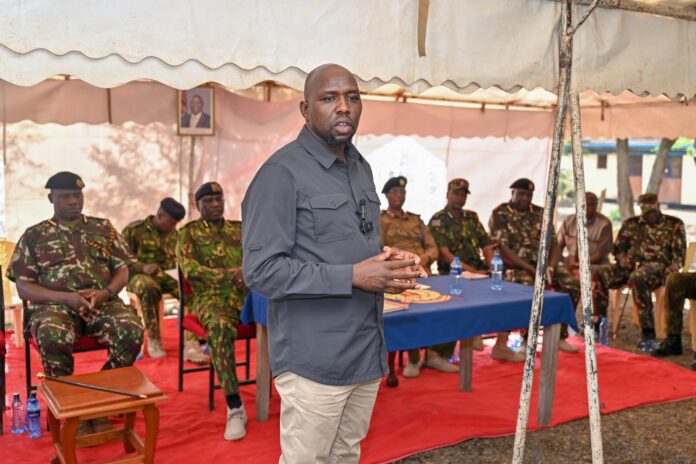
Interior CS Murkomen Fires Back at Journalists Amid Rising Criticism

Interior Cabinet Secretary Kipchumba Murkomen has lashed out at critics questioning security lapses, particularly in the North Rift and North Eastern regions.

Speaking at the National Police Service Development Partners Roundtable in Nairobi, he accused the media and social media users of failing to grasp the complexities of national security, suggesting that journalists should be taken to conflict zones to witness the risks security officers face.

“I know it is very easy for people to sit behind their computers and write stories about our police officers. I wish we could take some of these editors, journalists, and bloggers—not for the whole day, but even for half a day—to operational areas like Elwak,” he said.

“I will provide free transport and fly a good number of them to Elwak. I want them to stay there for a week.”

Murkomen also lauded the success of Operation Maliza Uhalifu, crediting it with significantly reducing cattle rustling in Kerio Valley.

Speaking in Baringo County on Wednesday, Murkomen vowed that the government would fiercely protect the restored peace in the region despite what he termed as propaganda about security failures.

“We are doing everything possible to protect the calm that has returned to the region so that residents can continue reaping the peace dividends that have seen the reopening of schools and resumption of economic activity,” he stated.

Murkomen dismissed criticism over security lapses, maintaining that security forces were working tirelessly to sustain stability. He emphasized the government’s determination to eradicate banditry and urged leaders and residents to support the efforts by reporting criminal elements.

“Banditry has no place in our society, and we will not relent until we root it out,” he added.

He was accompanied by Inspector General Douglas Kanja, Deputy IG APS Gilbert Masengeli, Rift Valley Regional Commissioner Dr. Hassan Abdi, GSU Commandant Ranson Lolmodoni, and other senior security officials.

His remarks came as Nandi Senator Samson Cherargei launched a scathing attack on him, accusing him of incompetence in handling rising banditry, terrorist attacks, and violent crimes.

In a statement on Wednesday, Cherargei claimed Murkomen had failed in his mandate, questioning why Head of Public Service Felix Koskei had to personally confront bandits in the North Rift over the weekend.

“No wonder HOPS Koskei had to go and confront bandits in the North Rift over the weekend,” he said.

Cherargei further contrasted Murkomen’s performance with that of his predecessor, Deputy President Kithure Kindiki, crediting him with containing insecurity.

Former Brazilian President Bolsonaro to stand trial on coup charges, court rules

CNN — Former Brazilian President Jair Bolsonaro should stand trial on charges related to an alleged plot to overturn the 2022 election results, the country’s Supreme Court has determined.

Bolsonaro was among 34 people charged last month with five crimes, including attempting a coup d’état. Part of the coup plot, prosecutors allege, involved a plan to potentially assassinate elected President Luiz Inácio Lula da Silva, his vice president and a minister of the Supreme Court. Bolsonaro has denied wrongdoing.

The court on Wednesday decided unanimously to fully accept the charges against eight of the accused, including Bolsonaro, his vice presidential candidate and other military and political leaders.

The court will decide the fates of the other 26 people later on.

As the deciding votes were being cast on Wednesday, Bolsonaro posted a message on X, criticizing the judges for moving forward with the case so quickly.

“Everyone says that the process will be concluded by the end of 2025, even though there is no precedent for such speed in a case of this magnitude. And why? Because everyone knows that what is taking place is, in fact, a kind of legal attack on democracy: a political trial, conducted in a partial, biased and openly unfair manner by a completely compromised and suspicious rapporteur,” he said, referring to Justice Alexandre de Moraes, who was the first to vote in favor of accepting the charges in full.

Moraes presented video evidence of the alleged crimes in his opening remarks on Wednesday, saying they were material and serious.

Prosecutor-General Paulo Gonet had argued before the court on Tuesday, the first day of proceedings, that there was enough evidence to move the case to a trial. He claimed that the accused had formed a criminal organization to “generate reactions that would guarantee their continuity in power,” regardless of the result of the 2022 election.

“They all accepted, encouraged and carried out acts that are classified in criminal legislation as an attack against the existence and independence of the Powers and the Democratic State of Law,” he told the court.

Gonet alleged that the coup attempt began in 2021, during Bolsonaro’s presidential term, and culminated in the riots of January 8, 2023, when Bolsonaro supporters stormed and vandalized the three seats of government in Brasilia to reject the 2022 election results.

The former president has repeatedly denied wrongdoing. His lawyer Celso Vilardi argued that there is no evidence his client was involved in the Brasilia riots.

Bolsonaro, who attended Tuesday’s court session, had told reporters earlier that he expected justice in the case.

“I’m fine. We always expect justice. Nothing is substantiated in the accusations made in a biased manner by the Federal Police,” he said.

He also compared the case to a rigged soccer match, posting on X, “In my case, the referee whistles against the game before the game even starts… and it’s also the VAR (video assistant referee), the linesman, the coach and the opposing team’s top scorer; all in one person.”

Alleged coup plot

Prosecutors say the alleged coup plot began in 2021 with an effort to undermine public trust in electronic voting machines.

In 2022, Bolsonaro met with ambassadors and diplomatic representatives to discuss the accusations of voting fraud, in what the Attorney General’s Office said was “an attempt to prepare the international community for disrespecting the popular will in the presidential elections.”

Despite finding no evidence of election fraud, the defendants allegedly continued their campaign to discredit the electoral system, according to prosecutors.

They also allege that Bolsonaro approved a plan to carry out the coup, and that the last attempt to overturn the election happened during the riots of January 8, 2023, which prosecutors claim were encouraged by the defendants.

If found guilty, Bolsonaro could potentially face up to 28 years in prison, according to CNN Brasil.

In 2023, Bolsonaro was banned from public office for eight years after a separate investigation into alleged abuse of power found him guilty of spreading misinformation about the integrity of the Brazilian election apparatus to foreign governments.

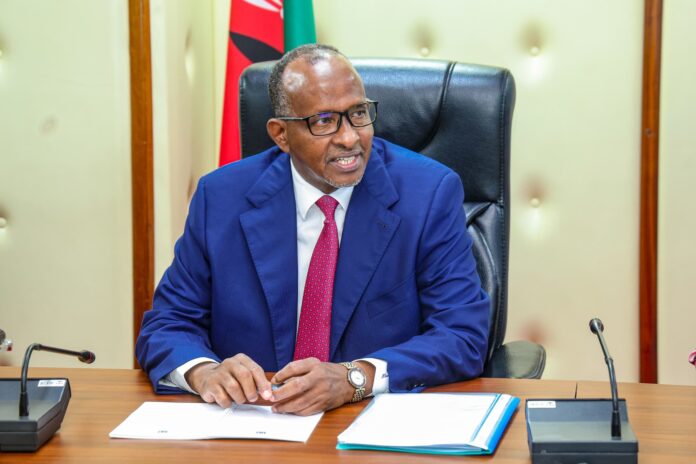
Private Hospitals Welcome Aden Duale to Health Docket, Demand Payment of NHIf Arrears

The Rural and Urban Private Hospitals Association (RUPHA) has welcomed Aden Duale’s appointment as the new Health CS. 

In a statement on Thursday, March 27, RUPHA informed Duale that in the healthcare sector, negotiations are essential before the ministry makes any decisions. 

“Congratulations Aden Duale, and welcome to healthcare. Here we negotiate, our training as healthcare professionals inculcates the “do as I do” attitude and not the “do as I say” attitude. So we will copy your every step,” read the statement in part.

The association also urged Duale to set a good example in the Health Ministry by clearing NHIF arrears immediately.

RUPHA further asked Duale to constitute the Social Health Authority Benefits and Tariffs Committee, Dispute Resolution Tribunal, and Primary Healthcare Advisory Council.

“Set a good example by paying NHIF arrears ASAP. Please note that SHA Benefits & Tariffs Committee, Dispute Resolution Tribunal, and Primary Healthcare Advisory Council are not in place,” RUPHA stated.

The association also stated that proxy means testing in SHA is unpopular among Kenyans and that Primary Healthcare funds have not been released for February 2025.

Additionally, cancer patients do not have access to the Emergency, Chronic, and Critical Illness Fund.

On Wednesday, President William Ruto made changes to his Cabinet, moving Duale to the health docket while CS Deborah Barasa was taken to the Ministry of Environment, Climate Change and Forestry.

The Head of State also sacked Public Service CS Justin Muturi, replacing him with Mbeere North MP Geoffrey Ruku.

Taking to his social media after being appointed the Health CS, Duale thanked President Ruto for the opportunity and said he is committed to engaging with all stakeholders to advance healthcare.

“In my new role, I remain committed to working with relevant stakeholders in driving government policies that strengthen healthcare delivery, ensuring accessible and quality services for all Kenyans. A key priority will be advancing Universal Health Coverage (UHC) to guarantee equitable healthcare access, especially for vulnerable populations,” Duale remarked.

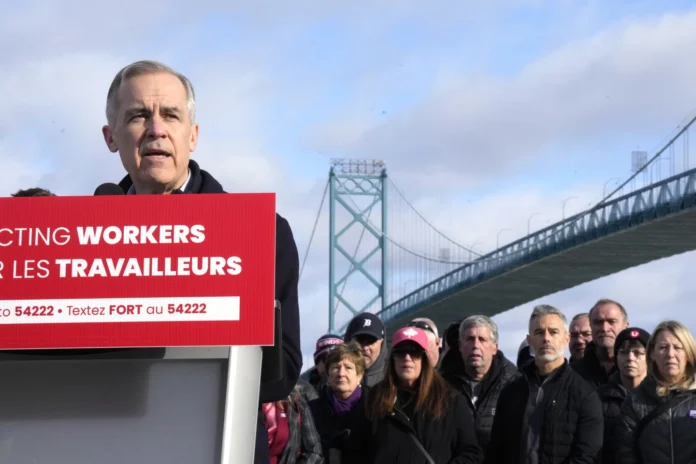
Canada PM condemns Trump’s ‘mad’ auto tariffs geared towards killing economy

(AP) — Canadian Prime Minister Mark Carney said Wednesday that U.S. President Donald Trump’s auto tariffs are a “direct attack” on his country and that the trade war is hurting Americans, noting that American consumer confidence is at a multi-year low.

Trump said earlier Wednesday that he was placing 25% tariffs on auto imports and, to underscore his intention, he stated “This is permanent.”

“This is a very direct attack,” Carney responded. “We will defend our workers. We will defend our companies. We will defend our country.”

Carney said he needs to see the details of Trump’s executive order before taking retaliatory measures. He called it unjustified and said he will leave the election campaign to go to Ottawa on Thursday to chair his special Cabinet committee on U.S. relations.

Carney earlier announced a CA$2 billion ($1.4 billion) “strategic response fund” that will protect Canadian auto jobs affected by Trump’s tariffs.

Autos are Canada’s second largest export, and Carney noted it employs 125,000 Canadians directly and almost another 500,000 in related industries.

“Canada will be there for auto workers,” he said.

Trump previously granted a one-month exemption on his stiff new tariffs on imports from Mexico and Canada for U.S. automakers.

The president has plunged the U.S. into a global trade war — all while on-again, off-again new levies continue to escalate uncertainty.

The Conference Board reported Tuesday that its U.S consumer confidence index fell 7.2 points in March to 92.9, the fourth straight monthly decline and its lowest reading since January of 2021.

“His trade war is hurting American consumers and workers and it will hurt more. I see that American consumer confidence is at a multi-year low,” Carney said earlier while campaigning in Windsor, Ontario ahead of Canada’s April 28 election.

The tax hike on auto imports starting in April means automakers could face higher costs and lower sales.

Trump previously 25% tariffs on Canada’s steel and aluminum and is threatening sweeping tariffs on all Canadian products — as well as all of America’s trading partners — on April 2.

“He wants to break us so America can own us,” Carney said. “And it will never ever happen because we just don’t look out for ourselves we look out for each other.”

Carney, former two-time central banker, made the earlier comments while campaigning against the backdrop of the Ambassador Bridge, which is considered the busiest U.S.-Canadian border crossing, carrying 25% of all trade between the two countries. It plays an especially important role in auto manufacturing.

Carney said the bridge carries $140 billion Canadian dollars ($98 billion) in goods every year and CA$400 million ($281 million) per day.

“Now those numbers and the jobs and the paychecks that depend on that are in question,” Carney said. “The relationship between Canada and the United States has changed. We did not change it.”

In the auto sector, parts can go back and forth across the Canada-U.S. border several times before being fully assembled in Ontario or Michigan.

Ontario Premier Doug Ford said, whose province has the bulk of Canada’s auto industry, Ford said auto plants on both sides the border will shut simultaneously if the tariffs go ahead.

“President is calling it Liberation Day. I call it Termination Day for American workers. I know President Trump likes tell people ’Your fired!” I didn’t think he meant U.S. auto workers when he said it,” Ford said.

Trump has declared a trade war on his northern neighbor and continues to call for Canada to become the 51st state, a position that has infuriated Canadians.

Canadians booed Trump repeatedly at a Carney election rally in Kitchener, Ontario.

The new prime minister, sworn in March 14, still hasn’t had a phone call with Trump. It is unusual for a U.S. president and Canadian prime minister to go so long without talking after a new leader takes office.

“It would be appropriate that the president and I speak given the action that he has taken. I’m sure that will happen soon,” Carney said.

Opposition Conservative leader Pierre Poilievre said the tariffs will damage American auto workers just as they will damage Canadian auto workers.

“The message to President Trump should be to knock it off,” Poilievre said. “He’s changed his mind before. He’s done this twice, puts them on, takes them off. We can suspect that may well happen again.”

Traumatised executed condemned prisoner speaks out on ordeal

(RNS) — When 67-year-old Brad Sigmon was put to death on March 7 in South Carolina for the murder of his then-girlfriend’s parents, it was the first time in 15 years that an execution in the United States had been carried out by a firing squad.

United Methodist minister Hillary Taylor, Sigmon’s spiritual adviser since 2020, said the multifaceted, months long effort to save Sigmon’s life, and to provide emotional and spiritual support for his legal team, and the aftermath of his execution has been a “whirlwind” said Taylor, the director of South Carolinians for Alternatives to the Death Penalty.

Her organization has advocated for three other death row inmates in the state over the past six months as South Carolina ramps up executions after a 13-year hiatus; the delay was caused in part by legal challenges to the lethal injection method. In 2021, a state bill gave those on death row the simplified options of electrocution or death by firing squad, which has had the effect of expediting executions.

After Sigmon chose the firing squad, suddenly, said Taylor, “I got catapulted into the movement to save his life.” She was introduced to anti-death penalty organizers around the country, and in time what had been a volunteer position with the anti-capital punishment group became a paid position.

Taylor was introduced to the work 10 years ago when she joined an (unsuccessful) campaign to save the life of Kelly Gissendaner, a Georgia prisoner convicted of persuading her lover to kill her husband in 1997. Gissendaner, who had taken theology courses offered by Emory University while on death row, sang “Amazing Grace” on the way to her execution.

Taylor, then a first-year student at Emory University’s Candler School of Theology, learned about Gissendaner while working with women in solitary confinement at Lee Arrendale State Prison, where Gissendaner had spent time before being transferred. Taylor learned that Gissendaner “had sobered up, become a Christian and reconciled to her children.” When other inmates had suicidal episodes, Taylor had heard, they would be placed in a cell next to Gissendaner, who would “literally preach and counsel them back to life.”

The more Taylor reflected on Gissendaner’s faith, the “more it reminded me of people in my own life who could have ended up on a similar path if they didn’t have access to power and privilege.” Over time, she became convinced that “we’re more than the worst thing we have done, or the worst thing that ever happened to us, and that the worst thing is not the last thing.”

Despite Gissendaner’s execution, Taylor is proud of the faith leaders and others who organized to save her life. “It’s possible not to just say sorry, but to ‘do sorry,‘” she said.

When Taylor arrived in South Carolina in 2020 to pastor two UMC congregations, she called a local justice reform organization and asked them if they needed a spiritual adviser or a pen pal for an inmate on death row. A few months later, she was connected to Sigmon, who had taken a Bible College course at Broad River Correctional Institution, where he died.

He “had kind of exhausted the spiritual resources available to him,” she said. “That began our pen pal connection,” recalled Taylor.

Like Gissendaner, she said, Sigmon, who became an “informal chaplain” to other prison inmates, tried to become a different person. After his prison conversion, she said, “he loved to share with people the ways the love of Jesus changed him. His objective was to save the other prisoners, who were like his brothers,” she said. One of his last requests was to share a last meal with his friends. (It was denied.)

In the years before his execution, Sigmon and Taylor only met four times in person but exchanged a multitude of letters. As they got to know one another, said Taylor, she was able to confide in him about the challenges of pastoring two small rural churches during COVID-19, “which was, at the time, a lonely and isolating experience. He was the person who could hold a lot of my fear and my anger. That was a gift I will treasure.”

They teased each other about their affection for rival football teams, Clemson versus South Carolina. “He was always making me laugh,” she said.

She learned from Sigmon, she said, about mercy, compassion and forgiveness, particularly the realization that “even when you are mad, you can come back to a place of kindness, compassion and humanity.”

As the end neared, he was at peace, Taylor said, able to seek reconciliation with some of the people he had harmed.

In her last in-person encounter with Sigmon, on Ash Wednesday (March 5), they both took Communion, and she was able to anoint his head with ashes, the symbol of repentance and mortality many Christians receive on the first day of Lent.

“When I delivered ashes to him, I got to hug him for only the second time.” As she pressed her forehead, already imprinted with ashes, against his, she told him how grateful she was that he knew the power of love in Jesus.

Being a spiritual companion to a condemned person can be traumatic, particularly when the prisoner loses their final appeal. Shane Claiborne, an evangelical Christian anti-death penalty activist, wrote in an email interview, “It is a terrible thing to accompany someone as they are executed,” but added that the only thing worse is being executed without accompaniment. “That’s why we do this holy work, and it is also why we are working so hard for alternatives to the death penalty. The closer you are to the system that executes, the more convinced you become that violence is the problem, not the solution.”

Sister Pamela Smith, a member of the congregation of Saints Cyril and Methodius, has participated in anti-death penalty vigils on the state capitol steps since South Carolina resumed executions.

Smith, who directs the office of ecumenical and inter-religious affairs for the Catholic Diocese of Charleston, is also a board member of South Carolina Alternatives. “I see this as another way of taking public action to try to raise consciousness to help people understand what actually goes on with the death penalty. Because I live in a state where executions are unfortunately becoming commonplace, you know, I have a passion as part of my overall pro-life commitment to try to do something about it.”

Though not directly involved in prison ministry, the nun was on hand when South Carolina’s first execution in more than a decade took place. “You know the clock is approaching the hour, even though you don’t hear something happening. There’s just something chilling about the fact that you’ve got a scheduled time of death for this person for whom you’ve been praying and sending letters and presenting petitions.”

Taylor said the most painful part of her work “is just how ready people are to say things like ‘a firing squad is too merciful for him’ — as though those folks were not victims of somebody else’s violence first, and didn’t have anybody to intervene on their behalf. There are ways we can hold people accountable. That’s part of what rehumanizing is.”

There is also, said Taylor, a reward in introducing outsiders to someone who is kind and compassionate — “telling a story that maybe hasn’t been told before.”

Former death row prisoners talk about the powerful effects of spiritual witnesses. Sentenced to death as a 20-year-old for killing a man and wounding another during an armed robbery, the Rev. Jimmy MacPhee was re-sentenced to life with the possibility of parole during a brief national death penalty hiatus in the 1970s. After 45 years in prison, he is now free, ordained and married.

He spends a lot of time on the road sharing his story — and that of Frankie San, the man MacPhee credits with transforming a furious, violent young man into a writer, speaker and mentor and finally a minister. A Japanese immigrant, now in his 90s, San began visiting McPhee when he first arrived in prison.

MacPhee said his personal experience of redemption inspires him to help others to transition back to life outside the cell block: “We all were washed by the blood. There’s none of us beyond the reach of God’s power I know blessed to be one of them. I know the transformative power is Grace, how powerful it can be, and I’ve witnessed it in so many others.”

As it became more likely that the execution would move forward, recalled Taylor, Sigmon told her that if she saw a bird, she would know he was nearby. “That’s too many birds, Brad,” she said. “How about a finch,” he suggested. This week, said Taylor, she is going to go out and buy a bird book.


Create a free account, or log in.

Gain access to read this content, plus limited free content.

Yes! I would like to receive new content and updates.

Sponsored Ad

Ad 1
Ad 2
Ad 3
Ad 4
Ad 5
Ad 6