Sponsored Ad

Ad 1
Ad 2
Ad 3
Ad 4
Ad 5
Ad 6
24.1 C
Kenya
Sunday, April 26, 2026
Home Blog Page 1956

Canada PM condemns Trump’s ‘mad’ auto tariffs geared towards killing economy

(AP) — Canadian Prime Minister Mark Carney said Wednesday that U.S. President Donald Trump’s auto tariffs are a “direct attack” on his country and that the trade war is hurting Americans, noting that American consumer confidence is at a multi-year low.

Trump said earlier Wednesday that he was placing 25% tariffs on auto imports and, to underscore his intention, he stated “This is permanent.”

“This is a very direct attack,” Carney responded. “We will defend our workers. We will defend our companies. We will defend our country.”

Carney said he needs to see the details of Trump’s executive order before taking retaliatory measures. He called it unjustified and said he will leave the election campaign to go to Ottawa on Thursday to chair his special Cabinet committee on U.S. relations.

Carney earlier announced a CA$2 billion ($1.4 billion) “strategic response fund” that will protect Canadian auto jobs affected by Trump’s tariffs.

Autos are Canada’s second largest export, and Carney noted it employs 125,000 Canadians directly and almost another 500,000 in related industries.

“Canada will be there for auto workers,” he said.

Trump previously granted a one-month exemption on his stiff new tariffs on imports from Mexico and Canada for U.S. automakers.

The president has plunged the U.S. into a global trade war — all while on-again, off-again new levies continue to escalate uncertainty.

The Conference Board reported Tuesday that its U.S consumer confidence index fell 7.2 points in March to 92.9, the fourth straight monthly decline and its lowest reading since January of 2021.

“His trade war is hurting American consumers and workers and it will hurt more. I see that American consumer confidence is at a multi-year low,” Carney said earlier while campaigning in Windsor, Ontario ahead of Canada’s April 28 election.

The tax hike on auto imports starting in April means automakers could face higher costs and lower sales.

Trump previously 25% tariffs on Canada’s steel and aluminum and is threatening sweeping tariffs on all Canadian products — as well as all of America’s trading partners — on April 2.

“He wants to break us so America can own us,” Carney said. “And it will never ever happen because we just don’t look out for ourselves we look out for each other.”

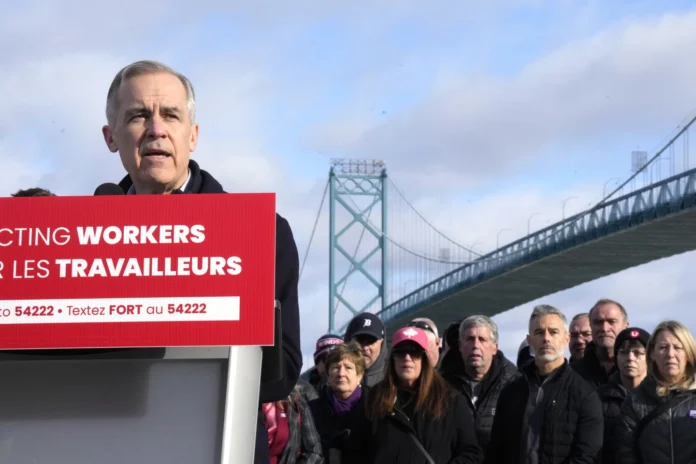
Carney, former two-time central banker, made the earlier comments while campaigning against the backdrop of the Ambassador Bridge, which is considered the busiest U.S.-Canadian border crossing, carrying 25% of all trade between the two countries. It plays an especially important role in auto manufacturing.

Carney said the bridge carries $140 billion Canadian dollars ($98 billion) in goods every year and CA$400 million ($281 million) per day.

“Now those numbers and the jobs and the paychecks that depend on that are in question,” Carney said. “The relationship between Canada and the United States has changed. We did not change it.”

In the auto sector, parts can go back and forth across the Canada-U.S. border several times before being fully assembled in Ontario or Michigan.

Ontario Premier Doug Ford said, whose province has the bulk of Canada’s auto industry, Ford said auto plants on both sides the border will shut simultaneously if the tariffs go ahead.

“President is calling it Liberation Day. I call it Termination Day for American workers. I know President Trump likes tell people ’Your fired!” I didn’t think he meant U.S. auto workers when he said it,” Ford said.

Trump has declared a trade war on his northern neighbor and continues to call for Canada to become the 51st state, a position that has infuriated Canadians.

Canadians booed Trump repeatedly at a Carney election rally in Kitchener, Ontario.

The new prime minister, sworn in March 14, still hasn’t had a phone call with Trump. It is unusual for a U.S. president and Canadian prime minister to go so long without talking after a new leader takes office.

“It would be appropriate that the president and I speak given the action that he has taken. I’m sure that will happen soon,” Carney said.

Opposition Conservative leader Pierre Poilievre said the tariffs will damage American auto workers just as they will damage Canadian auto workers.

“The message to President Trump should be to knock it off,” Poilievre said. “He’s changed his mind before. He’s done this twice, puts them on, takes them off. We can suspect that may well happen again.”

Traumatised executed condemned prisoner speaks out on ordeal

(RNS) — When 67-year-old Brad Sigmon was put to death on March 7 in South Carolina for the murder of his then-girlfriend’s parents, it was the first time in 15 years that an execution in the United States had been carried out by a firing squad.

United Methodist minister Hillary Taylor, Sigmon’s spiritual adviser since 2020, said the multifaceted, months long effort to save Sigmon’s life, and to provide emotional and spiritual support for his legal team, and the aftermath of his execution has been a “whirlwind” said Taylor, the director of South Carolinians for Alternatives to the Death Penalty.

Her organization has advocated for three other death row inmates in the state over the past six months as South Carolina ramps up executions after a 13-year hiatus; the delay was caused in part by legal challenges to the lethal injection method. In 2021, a state bill gave those on death row the simplified options of electrocution or death by firing squad, which has had the effect of expediting executions.

After Sigmon chose the firing squad, suddenly, said Taylor, “I got catapulted into the movement to save his life.” She was introduced to anti-death penalty organizers around the country, and in time what had been a volunteer position with the anti-capital punishment group became a paid position.

Taylor was introduced to the work 10 years ago when she joined an (unsuccessful) campaign to save the life of Kelly Gissendaner, a Georgia prisoner convicted of persuading her lover to kill her husband in 1997. Gissendaner, who had taken theology courses offered by Emory University while on death row, sang “Amazing Grace” on the way to her execution.

Taylor, then a first-year student at Emory University’s Candler School of Theology, learned about Gissendaner while working with women in solitary confinement at Lee Arrendale State Prison, where Gissendaner had spent time before being transferred. Taylor learned that Gissendaner “had sobered up, become a Christian and reconciled to her children.” When other inmates had suicidal episodes, Taylor had heard, they would be placed in a cell next to Gissendaner, who would “literally preach and counsel them back to life.”

The more Taylor reflected on Gissendaner’s faith, the “more it reminded me of people in my own life who could have ended up on a similar path if they didn’t have access to power and privilege.” Over time, she became convinced that “we’re more than the worst thing we have done, or the worst thing that ever happened to us, and that the worst thing is not the last thing.”

Despite Gissendaner’s execution, Taylor is proud of the faith leaders and others who organized to save her life. “It’s possible not to just say sorry, but to ‘do sorry,‘” she said.

When Taylor arrived in South Carolina in 2020 to pastor two UMC congregations, she called a local justice reform organization and asked them if they needed a spiritual adviser or a pen pal for an inmate on death row. A few months later, she was connected to Sigmon, who had taken a Bible College course at Broad River Correctional Institution, where he died.

He “had kind of exhausted the spiritual resources available to him,” she said. “That began our pen pal connection,” recalled Taylor.

Like Gissendaner, she said, Sigmon, who became an “informal chaplain” to other prison inmates, tried to become a different person. After his prison conversion, she said, “he loved to share with people the ways the love of Jesus changed him. His objective was to save the other prisoners, who were like his brothers,” she said. One of his last requests was to share a last meal with his friends. (It was denied.)

In the years before his execution, Sigmon and Taylor only met four times in person but exchanged a multitude of letters. As they got to know one another, said Taylor, she was able to confide in him about the challenges of pastoring two small rural churches during COVID-19, “which was, at the time, a lonely and isolating experience. He was the person who could hold a lot of my fear and my anger. That was a gift I will treasure.”

They teased each other about their affection for rival football teams, Clemson versus South Carolina. “He was always making me laugh,” she said.

She learned from Sigmon, she said, about mercy, compassion and forgiveness, particularly the realization that “even when you are mad, you can come back to a place of kindness, compassion and humanity.”

As the end neared, he was at peace, Taylor said, able to seek reconciliation with some of the people he had harmed.

In her last in-person encounter with Sigmon, on Ash Wednesday (March 5), they both took Communion, and she was able to anoint his head with ashes, the symbol of repentance and mortality many Christians receive on the first day of Lent.

“When I delivered ashes to him, I got to hug him for only the second time.” As she pressed her forehead, already imprinted with ashes, against his, she told him how grateful she was that he knew the power of love in Jesus.

Being a spiritual companion to a condemned person can be traumatic, particularly when the prisoner loses their final appeal. Shane Claiborne, an evangelical Christian anti-death penalty activist, wrote in an email interview, “It is a terrible thing to accompany someone as they are executed,” but added that the only thing worse is being executed without accompaniment. “That’s why we do this holy work, and it is also why we are working so hard for alternatives to the death penalty. The closer you are to the system that executes, the more convinced you become that violence is the problem, not the solution.”

Sister Pamela Smith, a member of the congregation of Saints Cyril and Methodius, has participated in anti-death penalty vigils on the state capitol steps since South Carolina resumed executions.

Smith, who directs the office of ecumenical and inter-religious affairs for the Catholic Diocese of Charleston, is also a board member of South Carolina Alternatives. “I see this as another way of taking public action to try to raise consciousness to help people understand what actually goes on with the death penalty. Because I live in a state where executions are unfortunately becoming commonplace, you know, I have a passion as part of my overall pro-life commitment to try to do something about it.”

Though not directly involved in prison ministry, the nun was on hand when South Carolina’s first execution in more than a decade took place. “You know the clock is approaching the hour, even though you don’t hear something happening. There’s just something chilling about the fact that you’ve got a scheduled time of death for this person for whom you’ve been praying and sending letters and presenting petitions.”

Taylor said the most painful part of her work “is just how ready people are to say things like ‘a firing squad is too merciful for him’ — as though those folks were not victims of somebody else’s violence first, and didn’t have anybody to intervene on their behalf. There are ways we can hold people accountable. That’s part of what rehumanizing is.”

There is also, said Taylor, a reward in introducing outsiders to someone who is kind and compassionate — “telling a story that maybe hasn’t been told before.”

Former death row prisoners talk about the powerful effects of spiritual witnesses. Sentenced to death as a 20-year-old for killing a man and wounding another during an armed robbery, the Rev. Jimmy MacPhee was re-sentenced to life with the possibility of parole during a brief national death penalty hiatus in the 1970s. After 45 years in prison, he is now free, ordained and married.

He spends a lot of time on the road sharing his story — and that of Frankie San, the man MacPhee credits with transforming a furious, violent young man into a writer, speaker and mentor and finally a minister. A Japanese immigrant, now in his 90s, San began visiting McPhee when he first arrived in prison.

MacPhee said his personal experience of redemption inspires him to help others to transition back to life outside the cell block: “We all were washed by the blood. There’s none of us beyond the reach of God’s power I know blessed to be one of them. I know the transformative power is Grace, how powerful it can be, and I’ve witnessed it in so many others.”

As it became more likely that the execution would move forward, recalled Taylor, Sigmon told her that if she saw a bird, she would know he was nearby. “That’s too many birds, Brad,” she said. “How about a finch,” he suggested. This week, said Taylor, she is going to go out and buy a bird book.

Miracle medical procedure that saved the Pope after serious breathing crisis

(AP) — Pope Francis’ medical team briefly considered suspending treatment after a Feb. 28 breathing crisis but instead decided on an aggressive course that put his organs at risk, the doctor coordinating the pope’s hospital care said in an interview published Tuesday.

Dr. Sergio Alfieri said the 88-year-old pontiff and people close to him alike understood “that he might not survive the night,’’ after the bronchospasm attack during which the pope inhaled vomit.

“We needed to choose whether to stop and let him go, or to push it and attempt with all of the possible drugs and the treatments, taking the very high risk of damaging other organs,’’ Alfieri told told the Milan daily Corriere della Sera. “In the end, that is the path we chose.”

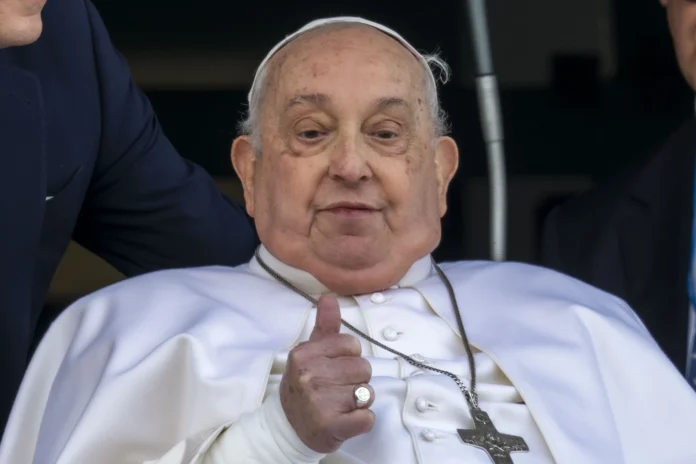
Francis was released Sunday after 38 days of treatment for double pneumonia, under doctors’ orders to observe two months of convalescence during which he should avoid large gatherings. The pope appeared weak and frail when he greeted the crowd outside the Gemelli hospital before his discharge.

The Vatican has not indicated whether the pope would participate in any Holy Week activities leading up to Easter on April 20. His planned meeting next month with King Charles III in the Vatican was postponed on mutual agreement on Tuesday to allow the pope to rest.

Alfieri said that the pope remained “alert’’ throughout the Feb. 28 ordeal and that his personal health care assistant, Massimiliano Strappetti, “who knows perfectly the pontiff’s wishes,’’ urged them “to try everything. Don’t give up.”

Alfieri acknowledged that the treatment risked damaging the pope’s kidneys and bone marrow, “but we continued, and his body responded to the treatments and the lung infection improved.’’

The medical bulletin that night said that the pope had suffered a bronchiospasm so severe that he inhaled vomit “worsening his respiratory picture.” Doctors used a non-invasive aspiration to clear his airways.

Three days later, in a second life-and-death crisis, the pope suffered a pair of acute bronchiospasms episodes. Doctors used a camera tube with a device to remove mucus plugs that yielded abundant secretions. The bulletin emphasized that the pope “always remained alert, oriented and collaborative.’’

Alfieri said he believed that prayers for the pope help keep him alive, something that the doctor said is backed by scientific literature.

“In this case the whole world was praying. I can say that twice the situation was lost, and then it happened like a miracle,’’ the doctor said, adding that “of course he was a very cooperative patient.’’

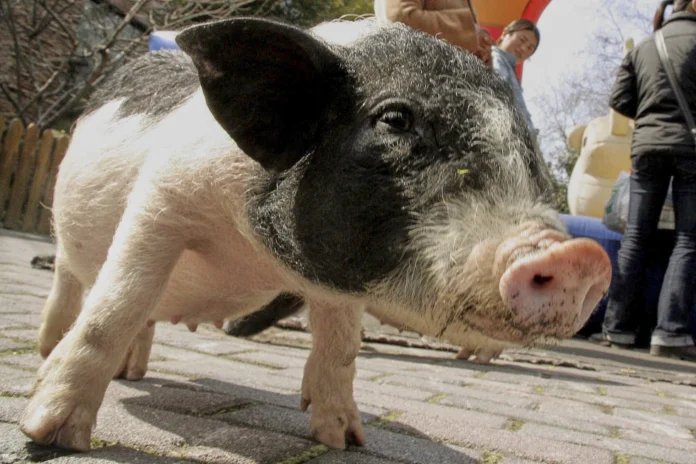
China seeks pig kidneys, liver for human transplants

(AP) — Chinese researchers are reporting new steps in the quest for animal-to-human organ transplants – with a successful pig kidney transplant and a hint Wednesday that pig livers might eventually be useful, too.

A Chinese patient is the third person in world known to be living with a gene-edited pig kidney. And the same research team also reported an experiment implanting a pig liver into a brain-dead person.

Scientists are genetically altering pigs so their organs are more humanlike in hopes of alleviating a transplant shortage. Two initial xenotransplants in the U.S. — two pig hearts and two pig kidneys – were short-lived. But two additional pig kidney recipients so far are thriving – an Alabama woman transplanted in November and a New Hampshire man transplanted in January. A U.S. clinical trial is about to begin.

Nearly three weeks after the kidney surgery the Chinese patient “is very well” and the pig kidney likewise is functioning very well, Dr. Lin Wang of Xijing Hospital of the Fourth Military Medical University in Xi’an told reporters in a briefing this week.

Wang, part of the hospital’s xenotransplant team, said the kidney recipient remains in the hospital for testing. Chinese media have reported she is a 69-year-old woman diagnosed with kidney failure eight years ago.

But Wang pointed to a potential next step in xenotransplantation — learning to transplant pig livers. His team reported Wednesday in the journal Nature that a pig liver transplanted into a brain-dead person survived for 10 days, with no early signs of rejection. He said the pig liver produced bile and albumin — important for basic organ function — although not as much as human livers do.

The liver is a complex challenge because of its varied jobs, including removing waste, breaking down nutrients and medicines, fighting infection, storing iron and regulating blood clotting.

“We do find that it could function a little bit in a human being,” Wang said. He speculated that would be enough to help support a failing human liver.

In the U.S. last year, surgeons at the University of Pennsylvania attempted that sort of “bridge” support by externally attaching a pig liver to a brain-dead human body to filter blood, much like dialysis for failing kidneys. U.S. pig developer eGenesis is studying that approach.

In China, Wang’s team didn’t remove the deceased person’s own liver, instead implanting the pig liver near it.

That “clouds the picture,” said Dr. Parsia Vagefi, a liver transplant surgeon at UT Southwestern Medical Center who wasn’t involved with the work. “It’s hopefully a first step but it’s still, a lot like any good research, more questions than answers.”

Wang said his team later replaced the human liver of another brain-dead person with a pig liver and is analyzing the outcome.

According to media reports, another Chinese hospital last year transplanted a pig liver into a living patient after a piece of his own cancerous liver was removed but it’s unclear how that experiment turned out.

The Associated Press Health and Science Department receives support from the Howard Hughes Medical Institute’s Science and Educational Media Group and the Robert Wood Johnson Foundation. The AP is solely responsible for all content.

Trump says Signal chat isn’t ‘really an FBI thing.’ The FBI has a long history of such inquiries

This picture taken on Januray 22, 2021 in Rennes, western France, shows a smartphone screen featuring messaging service applications WhatsApp, Signal, telegram, Viber, Discord and Olvid. (Photo by Damien MEYER / AFP) (Photo by DAMIEN MEYER/AFP via Getty Images)

(AP) — FBI Director Kash Patel was not part of a Signal chat in which other Trump administration national security officials discussed detailed attack plans, but that didn’t spare him from being questioned by lawmakers this week about whether the nation’s premier law enforcement agency would investigate.

Patel made no such commitments during the course of two days of Senate and House hearings. Instead, he testified that he had not personally reviewed the text messages that were inadvertently shared with the editor-in-chief for The Atlantic who was mistakenly included on an unclassified Signal chat.

That Patel would be grilled on what the FBI might do was hardly surprising.

Even as President Donald Trump insisted “it’s not really an FBI thing,” the reality is that the FBI and Justice Department for decades have been responsible for enforcing Espionage Act statutes governing the mishandling — whether intentional or negligent — of national defense information like the kind shared on Signal, a publicly available app that provides encrypted communications but is not approved for classified information.

The Justice Department has broad discretion to open an investigation, though it remains unclear whether Attorney General Pam Bondi, who introduced Trump at a Justice Department event this month, would authorize such an inquiry. Trump administration officials insist that the details shared were not classified, though the Espionage Act technically criminalizes the mishandling of any information deemed to be closely held national defense information even if not classified.

Multiple high-profile figures have found themselves under investigation in recent years over their handling of government secrets, but the differences in the underlying facts and the outcomes make it impossible to prognosticate what might happen in this instance or whether any accountability can be expected. There’s also precedent for public officials either to avoid criminal charges or be spared meaningful punishment.

“In terms of prior investigations, there were set-out standards that the department always looked at and tried to follow when making determinations about which types of disclosures they were going to pursue,” said former Justice Department prosecutor Michael Zweiback, who has handled classified information investigations.

Those factors include the sensitivity of the information exposed and the willfulness of the conduct.

A look at just a few of the notable prior investigations:

Hillary Clinton

The 2016 Democratic presidential nominee was investigated but not charged for her use of a private email server for the sake of convenience during her time as secretary of state in the Obama administration. There appear to be some parallels with the Signal chat episode.

The politically fraught criminal investigation was initiated by a 2015 referral from the intelligence agencies’ internal watchdog, which alerted the FBI to the presence of potentially hundreds of emails containing classified information on that server. Law enforcement then set out to determine whether Clinton, or her aides, had transmitted classified information on a server not meant to host such material.

The overall conclusions were something of a mixed bag.

Then-FBI Director James Comey, in a highly unusual public statement, asserted that the bureau had found evidence that Clinton was “extremely careless” in her handling of classified information but recommended against charges because he said officials could not prove that she intended to break the law or knew that the information she and her aides were communicating about was classified.

The decision was derided by Republicans who thought the Obama administration Justice Department had let a fellow Democrat off the hook. Among those critical were some of the very same participants in the Signal chat as well as Bondi, who as Florida’s attorney general spoke at the 2016 Republican National Convention and mimicked the audience chant of “Lock her up!”

David Petraeus

Among the biggest names to actually get charged is David Petraeus, the former CIA director sentenced in 2015 to two years’ probation for disclosing classified information to a biographer with whom he was having an extramarital affair.

That material consisted of eight binders of classified information that Petraeus improperly kept in his house from his time as the top military commander in Afghanistan. Among the secret details in the “black books” were the names of covert operatives, the coalition war strategy and notes about Petraeus’ discussions with President Barack Obama and the National Security Council, prosecutors have said.

Petraeus, a retired four-star Army general who led U.S. forces in Iraq and Afghanistan, wound up pleading guilty to a single misdemeanor count of unauthorized retention and removal of classified material as part of a deal with Justice Department prosecutors. Some national security experts said it smacked of a double-standard for its lenient outcome.

Comey himself would later complain about the resolution, writing in a 2018 book that he argued to the Justice Department that Petraeus should have also been charged with a felony for lying to the FBI.

“A poor person, an unknown person — say a young black Baptist minister from Richmond — would be charged with a felony and sent to jail,” he said.

Jeffrey Sterling

A former CIA officer, Sterling was convicted of leaking to a reporter details of a secret mission to thwart Iran’s nuclear ambitions by slipping flawed nuclear blueprints to the Iranians through a Russian intermediary.

He was sentenced in 2015 to 3 1/2 years in prison, a punishment whistleblower advocates and other supporters decried as impossible to square with Petraeus’ misdemeanor guilty plea just a month earlier.

The details of the operation disclosed by Sterling were published by journalist James Risen in his 2006 book “State of War.”

Sterling was charged in 2010, but the trial was delayed for years, in part because of legal wrangling about whether Risen could be forced to testify. Ultimately, prosecutors chose not to call Risen as a witness, despite winning legal battles allowing them to do so.

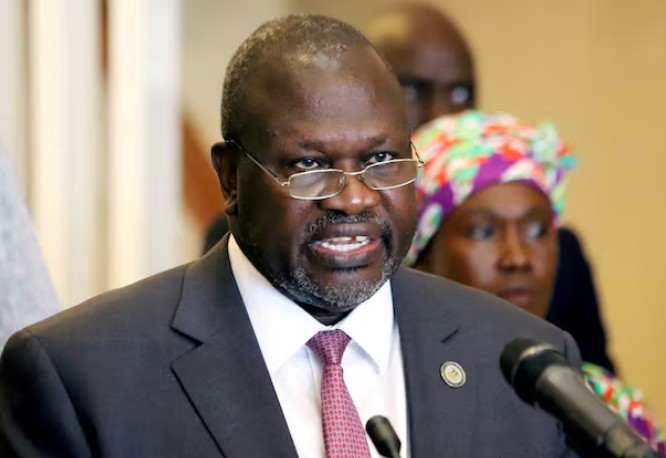
US urges South Sudan president to release VP Machar, who is reportedly under house arrest

(Reuters) – The United States on Thursday called on South Sudan President Salva Kiir to release his rival First Vice President Riek Machar who was reportedly under house arrest, saying it was time the country’s leaders demonstrated their commitment to peace.

Machar’s SPLM-IO party said on Wednesday that the defence minister and chief of national security “forcefully entered” Machar’s residence and delivered an arrest warrant.

Machar was being held at his house with his wife and two body guards, accused of being implicated in fighting between the military and White Army in Nasir, Upper Nile State this month, Reath Muoch Tang, a senior SPLM-IO official said in a statement seen by Reuters on Thursday.

“We are concerned by reports South Sudan’s First Vice President Machar is under house arrest,” Washington’s Bureau of African Affairs wrote on X.

“We urge President Kiir to reverse this action & prevent further escalation of the situation.”

Under a peace deal which ended a 2013-2018 civil war between forces loyal to Machar on one side and Kiir on the other, South Sudan has five vice-presidents. Kiir’s longtime rival and opposition leader Machar is currently serving as first vice-president.

The United Nations has warned that recent clashes in Nasir between the army and the White Army, a militia with historical ties to Machar, and a rise in hate-speech could reignite along ethnic lines the civil war which ended in 2018.

Machar’s SPLM-IO party denies ongoing links with the White Army.

“It is time for South Sudan’s leaders to demonstrate sincerity of stated commitments to peace,” Washington’s Bureau of African Affairs wrote on X.

South Sudan’s army and government spokespeople did not immediately respond to requests for comment.

CALL FOR RESTRAINT

Political analysts say that the peace deal, under which Kiir and Machar have been serving in a fragile coalition government, is on the brink of collapse.

The U.N. peacekeeping mission in South Sudan (UNMISS) called for restraint, saying that the country’s leaders stood on the brink of relapsing into widespread conflict.

“This will not only devastate South Sudan but also affect the entire region,” UNMISS said in a statement.

Earlier this month Kiir’s government detained several officials from Machar’s party, including the petroleum minister and the deputy head of the army, in response to the clashes with the White Army in Upper Nile State.

On Wednesday the U.N. reported fighting between forces loyal to Kiir and Machar close to the capital Juba.

The 2013-2018 civil war, which was fought largely along ethnic lines, resulted in hundreds of thousands of deaths in the world’s youngest nation.

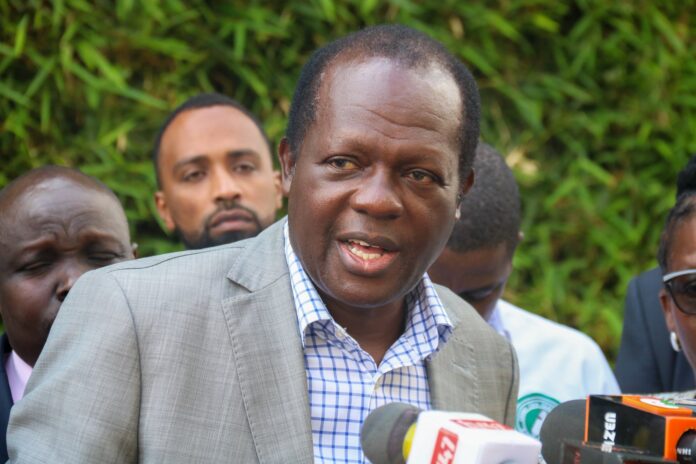
Judiciary Warns Tuju Over Comments on Case against EADB, Dari Over Multi-Million Dispute

The Judiciary has warned former Jubilee Secretary General and Cabinet Secretary Raphael Tuju against public discussions on the ongoing legal battle between Dari Limited and the East African Development Bank (EADB), urging all parties to allow the courts to handle the matter.

In a statement on Thursday, March 27, Judiciary Spokesperson Paul Ndemo said the Judiciary has taken note of Tuju’s recent media interviews and public statements regarding court cases involving Dari Limited.

Ndemo pointed out that the matter between Dari Limited and the EADB has been the subject of litigation in multiple courts and jurisdictions. 

He said that a UK court in 2019 delivered a judgment in favor of EADB, ordering Dari Limited and its guarantors to pay money claimed by the EADB. 

Following this judgment, EADB applied to the High Court in Kenya for recognition and enforcement of the UK judgment.

“On 7th January 2020, the High Court granted the application, recognizing and registering the UK judgment as a Kenyan judgment, thereby enabling its enforcement in Kenya. Subsequent efforts by Dari Limited to set aside this recognition were dismissed by the High Court on 13th February 2020,” read the Judiciary statement in part. 

Ndemo noted that Dari Limited appealed the decision in the Court of Appeal but it was dismissed. The company then moved to the Supreme Court seeking to challenge the decisions of the lower courts with respect to the adoption of the UK judgment.

The Judiciary Spokesperson also disclosed that Dari Limited lodged a complaint with the Judicial Service Commission (JSC), alleging bias on the part of the Supreme Court bench hearing the matter and the judges recused themselves from the case.

“During the pendency of the appeal at the Supreme Court, Dari Limited lodged a complaint with the Judicial Service Commission (JSC), alleging bias on the part of the bench hearing the matter. In light of the seriousness of the allegations, the bench of the Supreme Court recused itself from hearing the appeal. As a result, the judgment of the Court of Appeal remains in force,” Ndemo stated.

Further Ndemo said, that Dari filed an application in the High Court in September 2024 seeking to stop the auction of multi-million properties subject to the dispute but the application was dismissed.

He explained that the cases between Dari Limited and EADB are still active in court, and the issues should be left for judicial determination.

“In accordance with the sub judice rule, which upholds the rule of law and the due administration of justice, these issues should be left for judicial determination and resolution by the JSC,” Ndemo added.

Further, he urged Tuju to refrain from litigating the cases through the media or on social media platforms.

The statement comes days after Tuju wrote to Chief Justice Martha Koome and took issue with sentiments made by some of the judges regarding petitions seeking their removal from the bench.

The former CS also raised an issue regarding a court case involving his property which has been at the center of an auction.

“When the panel of 5 SCoK judges saw things go south as affidavits before them were recanted, they did something rather ‘clever.’ The 5 judges recused themselves. An action with no precedent in the Commonwealth Jurisprudence.

“They needed not to recuse themselves. The case before them had collapsed because the affidavit before them had been recanted. Hence their “clever” move to recuse themselves,” Tuju stated.

South Sudan VP Machar’s party trying to locate him after arrest warrant issued

(Reuters) – The party of South Sudan’s First Vice President Riek Machar said on Wednesday it was trying to locate him after the defence minister and chief of national security “forcefully entered” his residence and delivered an arrest warrant.

In a statement, Machar’s SPLM-IO party condemned “a blatant violation of the Constitution and the Revitalized Peace Agreement,” which ended a 2013-2018 civil war between forces loyal to Machar on one side and to President Salva Kiir on the other.

“His bodyguards were disarmed, and an arrest warrant was delivered to him under unclear charges. Attempts are currently being made to relocate him,” the statement said.

A government spokesperson could not be immediately reached for comment.

Foreign governments have warned that civil war could break out again in South Sudan following weeks of escalating tensions that originated in fighting between government troops and a militia that has historically been close to Machar’s forces.

In response to the fighting since late February in the northeastern Upper Nile State, Kiir’s government has detained several officials from Machar’s party, including the petroleum minister and the deputy head of the army.

Earlier on Wednesday, the United Nations reported clashes over the past 24 hours between forces loyal to Kiir and Machar outside the capital Juba.

The civil war from 2013-2018, which was fought largely along ethnic lines, resulted in hundreds of thousands of deaths in the world’s youngest nation. South Sudan won its independence from Sudan in 2011.

The fighting in Upper Nile has displaced 50,000 people since last month, according to the United Nations.

Norway announced on Wednesday it was temporarily shutting its embassy in Juba due to deteriorating security. The United States ordered non-emergency government personnel to leave two weeks ago.

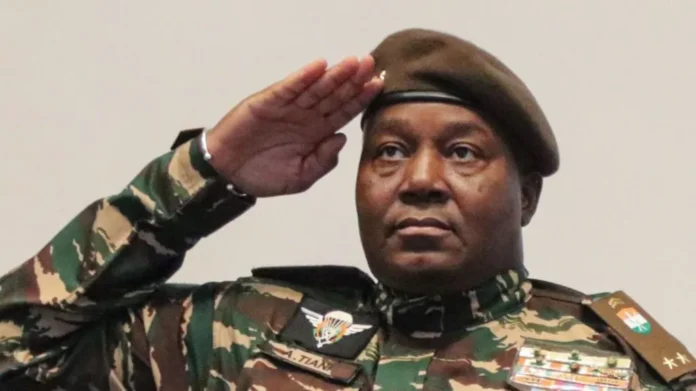
Niger coup leader sworn in as president for five years

Niger’s military ruler has been sworn in as the country’s president for a transitional period of five years.

Gen Abdourahamane Tchiani has led the country since 2023, after he deposed Niger’s elected President, Mohamed Bazoum.

On Wednesday, Gen Tchiani took the presidential office under a new charter that replaces the West African country’s constitution.

He was also promoted to the country’s highest military rank of army general, and signed a decree ordering that all political parties be dissolved.

During a ceremony in the capital, Niamey, Gen Tchiani said of his new military rank: “I receive this distinction with great humility… I will strive to live up to the trust placed in me.”

The transition to democratic rule is in line with recommendations that a commission made following national discussions.

This five-year time period is “flexible” depending on the country’s security status, the new charter says.

Niger has been plagued by jihadist attacks for many years – one of the issues junta leaders cited when staging their coup.

The military takeover followed a string of others in the region – neighbouring Mali, Guinea and Burkina Faso are also run by juntas.

All four countries have severed ties with former colonial power France and forged new alliances with Russia.

And all except Guinea, have pulled out of Ecowas, the West African regional bloc.

Niger’s relations with Ecowas broke down when the junta proposed a three-year transition period to democratic rule straight after the coup.

Ecowas called this plan a “provocation” and threatened to intervene with the use of force, before later backing down.

Gen Tchiani’s administration is prosecuting former President Bazoum on allegations of committing high treason and undermining national security.

Bazoum is still being held in the presidential palace with his wife, while his son was granted a provisional release last January.

According to state-run news agency ANP, Gen Tchiani said that Niger’s new charter was in line with traditional constitutions but also takes “unprecedented measures to protect our natural resources so that Nigeriens truly benefit from the exploitation of their wealth”.

DR Congo conflict tests China’s diplomatic balancing act

China’s efforts to build up huge business interests across Africa have been accompanied by a careful policy of maintaining neutrality – but the conflict in the east of the Democratic Republic of Congo has caused a shift in its approach.

Rwanda has been widely accused of stoking the fighting in the mineral-rich region and Beijing, which has close relations with both DR Congo and Rwanda, has in recent weeks joined the criticism.

But it is trying to walk a diplomatic tightrope to maintain good relations with both countries, while also continuing to operate its businesses – and buy crucial minerals.

How is China’s response to this conflict different?

For decades, China has been careful not to take sides in conflicts in Africa, to avoid causing problems that might interfere with its extensive commercial interests.

Up to now it has shied away from criticising African governments for supporting participants in a conflict.

For example, China has said little about the series of coups since 2020 in West Africa’s Sahel region, except to urge leaders to consider the interests of the people.

Beijing has long pursued a policy of non-interference in another state’s internal affairs, says Prof Zhou Yuyuan, who specialises in African development and security at the Shanghai Institutes for International Studies (SIIS).

It therefore avoids proposing solutions to conflicts, apart from calling for diplomatic or political efforts by international organisations such as the UN or the African Union.

The unrest involving Rwandan-back M23 rebels in eastern DR Congo reared its head again in 2021. The fighters are led by ethnic Tutsis who say they took up arms to protect the rights of the minority group – and because the Congolese authorities reneged on an earlier peace deal.

In its early comments on these developments, China restricted itself to criticising unnamed “foreign forces” for providing support to the M23 fighters.

But in the last few weeks it has broken from its usual practice and referred to Rwanda by name.

This follows major gains by the M23, which since January has captured the key cities of Goma and Bukavu.

“China reiterates its hope that Rwanda will… stop its military support for M23 and immediately withdraw all its military forces from the DRC territory,” China’s UN ambassador said in February.

Prof Zhou notes that though significant, the “wording in general is still relatively mild”.

“China ‘hoped’ that Rwanda would stop its support but did not condemn it,” he says.

However, soon afterwards China backed a UN Security Council resolution which bluntly calls on the Rwanda Defence Forces to “cease support to the M23 and immediately withdraw from DRC territory without preconditions”.

Why has China made this shift?

According to Prof Zhou, China’s statements are likely to have been prompted by UN expert reports, which have provided strong evidence of Rwanda’s support for the M23.

“This is a basic consensus in the UN Security Council,” he added.

“The problem has been going on long enough, and everyone knows in their hearts the basic situation. There’s no need to be hush-hush any more.”

Neither China’s mission to the UN nor its embassy in London responded when asked why China had criticised Rwanda.

But the critical importance to China of DR Congo’s renowned mineral wealth may have been a factor.

Fighting in eastern DR Congo has been concentrated in the provinces of North Kivu and South Kivu, home to many Chinese-run gold mines.

How these mines have been affected by the fighting is so far unclear.

The M23 has also seized territory containing mines for coltan ore, which China imports in large volumes.

The metal tantalum, used in cars and everyday electronics from TV sets to mobile phones, is extracted from this ore, and DR Congo is the source of 40% of the world’s supply.

A UN expert group said in December 2024 that the M23 had smuggled coltan to Rwanda from DR Congo. It also noted that Rwanda’s coltan exports rose by 50% between 2022 and 2023.

Although Rwanda has its own coltan mines, analysts say they could account for such a large increase in production.

It is not yet clear whether the volume or the price of coltan imported by China has been affected.

Another mineral that China imports from DR Congo is cobalt, which is crucial for the lithium battery industry.

However, China’s cobalt mining operations are primarily based in southern DR Congo, away from the conflict zones in the east.

Dozens of Chinese companies, many of which are state-owned, are also building roads, telecommunications and hydropower facilities in DR Congo. But it seems that the impact on these activities has so far been minimal.

Does China provide military support to Rwanda or DR Congo?

China’s supplies weapons to both Rwanda and DR Congo.

In the past two decades, the Rwandan military has bought Chinese armoured vehicles, artillery and anti-tank missiles, according to the think-tank Stockholm International Peace Research Institute (Sipri).

China posted a military attaché to the country for the first time in 2024.

While UN experts say the Rwandan military has armed the M23, it is unclear whether the rebel group is using any Chinese weapons.

The Congolese armed forces have bought Chinese armoured personnel carriers and drones.

They also own Chinese tanks, which were bought in 1976 but were still in use as recently as 2022.

It is reported that the drones, at least, have been used in the fight against the M23.

Have China’s relations with either country been affected?

The Rwandan embassy in Beijing said ties with China remained “excellent and productive”, and it was not for Rwanda to comment on China’s statement about the fighting in eastern DR Congo.

The Chinese ambassador to DR Congo, Zhao Bin, held discussions with Congolese Senate President Sama Lukonde in early February but no details of the meeting were made public.

China’s economic activities in the two countries go very deep. They are both part of China’s Belt and Road initiative, designed to stitch China closer to the world through investments and infrastructure projects.

In Rwanda, China has funded stadiums, schools and highways. Chinese loans are also funding infrastructure projects – a loan to fund a dam and irrigation system, worth an estimated $40m (£31m), was confirmed in January.

For years most goods imported into Rwanda have come from China.

When it comes to China’s economic ties with DR Congo, the UN Comtrade Database shows that for years China has been DR Congo’s top trading partner.

China has gone to great lengths to secure access to DR Congo’s mineral wealth.

It extended $3.2bn (£2.5bn) of loans to the country between 2005 and 2022, according to the Chinese Loans to Africa Database run by Boston University, mostly to fund road and bridge construction, and the country’s electricity grid.

China has financed and built other large-scale infrastructure projects in DR Congo, including hydropower plants and a dry port.

These investments may suggest it is in China’s long-term interests to find a resolution to the conflict quickly.

Create a free account, or log in.

Gain access to read this content, plus limited free content.

Yes! I would like to receive new content and updates.

Sponsored Ad

Ad 1
Ad 2
Ad 3
Ad 4
Ad 5
Ad 6