Sponsored Ad

Ad 1
Ad 2
Ad 3
Ad 4
Ad 5
Ad 6
24.1 C
Kenya
Sunday, April 26, 2026
Home Blog Page 1957

DR Congo conflict tests China’s diplomatic balancing act

China’s efforts to build up huge business interests across Africa have been accompanied by a careful policy of maintaining neutrality – but the conflict in the east of the Democratic Republic of Congo has caused a shift in its approach.

Rwanda has been widely accused of stoking the fighting in the mineral-rich region and Beijing, which has close relations with both DR Congo and Rwanda, has in recent weeks joined the criticism.

But it is trying to walk a diplomatic tightrope to maintain good relations with both countries, while also continuing to operate its businesses – and buy crucial minerals.

How is China’s response to this conflict different?

For decades, China has been careful not to take sides in conflicts in Africa, to avoid causing problems that might interfere with its extensive commercial interests.

Up to now it has shied away from criticising African governments for supporting participants in a conflict.

For example, China has said little about the series of coups since 2020 in West Africa’s Sahel region, except to urge leaders to consider the interests of the people.

Beijing has long pursued a policy of non-interference in another state’s internal affairs, says Prof Zhou Yuyuan, who specialises in African development and security at the Shanghai Institutes for International Studies (SIIS).

It therefore avoids proposing solutions to conflicts, apart from calling for diplomatic or political efforts by international organisations such as the UN or the African Union.

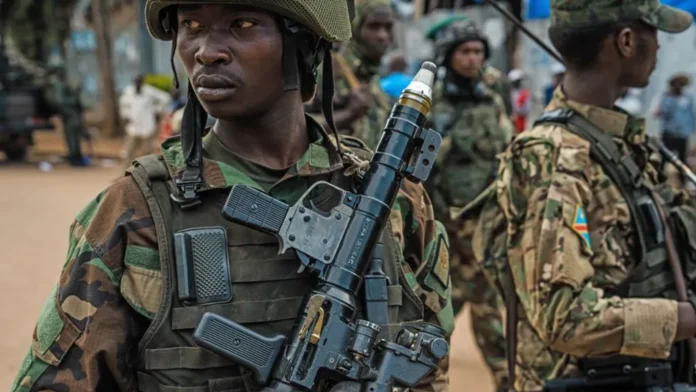
The unrest involving Rwandan-back M23 rebels in eastern DR Congo reared its head again in 2021. The fighters are led by ethnic Tutsis who say they took up arms to protect the rights of the minority group – and because the Congolese authorities reneged on an earlier peace deal.

In its early comments on these developments, China restricted itself to criticising unnamed “foreign forces” for providing support to the M23 fighters.

But in the last few weeks it has broken from its usual practice and referred to Rwanda by name.

This follows major gains by the M23, which since January has captured the key cities of Goma and Bukavu.

“China reiterates its hope that Rwanda will… stop its military support for M23 and immediately withdraw all its military forces from the DRC territory,” China’s UN ambassador said in February.

Prof Zhou notes that though significant, the “wording in general is still relatively mild”.

“China ‘hoped’ that Rwanda would stop its support but did not condemn it,” he says.

However, soon afterwards China backed a UN Security Council resolution which bluntly calls on the Rwanda Defence Forces to “cease support to the M23 and immediately withdraw from DRC territory without preconditions”.

Why has China made this shift?

According to Prof Zhou, China’s statements are likely to have been prompted by UN expert reports, which have provided strong evidence of Rwanda’s support for the M23.

“This is a basic consensus in the UN Security Council,” he added.

“The problem has been going on long enough, and everyone knows in their hearts the basic situation. There’s no need to be hush-hush any more.”

Neither China’s mission to the UN nor its embassy in London responded when asked why China had criticised Rwanda.

But the critical importance to China of DR Congo’s renowned mineral wealth may have been a factor.

Fighting in eastern DR Congo has been concentrated in the provinces of North Kivu and South Kivu, home to many Chinese-run gold mines.

How these mines have been affected by the fighting is so far unclear.

The M23 has also seized territory containing mines for coltan ore, which China imports in large volumes.

The metal tantalum, used in cars and everyday electronics from TV sets to mobile phones, is extracted from this ore, and DR Congo is the source of 40% of the world’s supply.

A UN expert group said in December 2024 that the M23 had smuggled coltan to Rwanda from DR Congo. It also noted that Rwanda’s coltan exports rose by 50% between 2022 and 2023.

Although Rwanda has its own coltan mines, analysts say they could account for such a large increase in production.

It is not yet clear whether the volume or the price of coltan imported by China has been affected.

Another mineral that China imports from DR Congo is cobalt, which is crucial for the lithium battery industry.

However, China’s cobalt mining operations are primarily based in southern DR Congo, away from the conflict zones in the east.

Dozens of Chinese companies, many of which are state-owned, are also building roads, telecommunications and hydropower facilities in DR Congo. But it seems that the impact on these activities has so far been minimal.

Does China provide military support to Rwanda or DR Congo?

China’s supplies weapons to both Rwanda and DR Congo.

In the past two decades, the Rwandan military has bought Chinese armoured vehicles, artillery and anti-tank missiles, according to the think-tank Stockholm International Peace Research Institute (Sipri).

China posted a military attaché to the country for the first time in 2024.

While UN experts say the Rwandan military has armed the M23, it is unclear whether the rebel group is using any Chinese weapons.

The Congolese armed forces have bought Chinese armoured personnel carriers and drones.

They also own Chinese tanks, which were bought in 1976 but were still in use as recently as 2022.

It is reported that the drones, at least, have been used in the fight against the M23.

Have China’s relations with either country been affected?

The Rwandan embassy in Beijing said ties with China remained “excellent and productive”, and it was not for Rwanda to comment on China’s statement about the fighting in eastern DR Congo.

The Chinese ambassador to DR Congo, Zhao Bin, held discussions with Congolese Senate President Sama Lukonde in early February but no details of the meeting were made public.

China’s economic activities in the two countries go very deep. They are both part of China’s Belt and Road initiative, designed to stitch China closer to the world through investments and infrastructure projects.

In Rwanda, China has funded stadiums, schools and highways. Chinese loans are also funding infrastructure projects – a loan to fund a dam and irrigation system, worth an estimated $40m (£31m), was confirmed in January.

For years most goods imported into Rwanda have come from China.

When it comes to China’s economic ties with DR Congo, the UN Comtrade Database shows that for years China has been DR Congo’s top trading partner.

China has gone to great lengths to secure access to DR Congo’s mineral wealth.

It extended $3.2bn (£2.5bn) of loans to the country between 2005 and 2022, according to the Chinese Loans to Africa Database run by Boston University, mostly to fund road and bridge construction, and the country’s electricity grid.

China has financed and built other large-scale infrastructure projects in DR Congo, including hydropower plants and a dry port.

These investments may suggest it is in China’s long-term interests to find a resolution to the conflict quickly.


Euro remains stable despite Trump’s auto tariffs sustaining trade war concerns.

The euro rebounded from a three-week low hit earlier on Thursday after U.S. President Donald Trump announced a 25% tariff on imported cars and light trucks starting next week. Despite concerns about a potential trade war weighing on market sentiment, currency reactions remained relatively muted, with most of the volatility centered on automaker stocks.

The euro rose 0.3% to $1.0786 after dipping to $1.0733 earlier in the session. The yen strengthened slightly to 150.17 per dollar.

Meanwhile, the Mexican peso weakened by 0.5% to 20.2054 per U.S. dollar in Asian trading, while the Canadian dollar remained flat at 1.4261 per U.S. dollar.

In 2024, the U.S. imported $474 billion worth of automotive products, including $220 billion in passenger cars. Key suppliers included Mexico, Japan, South Korea, Canada, and Germany—longstanding U.S. allies.

“This move prolongs trade uncertainty and raises concerns about how drastically Trump intends to reshape the global trade landscape,” said Kyle Rodda, senior financial market analyst at Capital.com.

The U.S. dollar index, which tracks the greenback against six major currencies, fell 0.33% to 104.29, after reaching a three-week high in the previous session.

Vasu Menon, managing director of investment strategy at OCBC, warned that the new tariffs could make cars more expensive for U.S. consumers already grappling with inflation, potentially heightening recession fears.

“If affected countries retaliate with their own tariffs, it could further hurt U.S. consumers and automakers, worsening inflation concerns and economic uncertainty,” he added.

Investors are now closely watching for retaliatory tariffs expected to be announced next week. Trump has suggested these measures may not be direct equivalents to those he previously threatened.

Market participants remain concerned that the new trade policies could slow U.S. economic growth and reignite inflation. However, optimism persists that the tariffs may be narrower in scope than initially feared.

St. Louis Federal Reserve President Alberto Musalem cautioned on Wednesday that inflation could remain higher than expected while economic growth slows, signaling no immediate urgency for the Fed to cut interest rates.

In the broader currency market, the Australian dollar edged up 0.21% to $0.6311, while the New Zealand dollar rose 0.23% to $0.5742.

The British pound strengthened 0.26% to $1.2919, recovering from a 0.45% decline in the previous session. Investors assessed the implications of Finance Minister Rachel Reeves’ spring budget update, in which she scaled back spending plans, offering some reassurance to markets.

Additionally, data released Wednesday showed UK inflation slowed to 2.8% in February, down from 3.0% in January—below analysts’ expectations of 2.9%. However, experts cautioned that rising energy costs and tax hikes could push inflation back toward 4% later this year.

Global Health Crisis Looms As U.S. Rescinds $12 Billion (Ksh. 1.5 trillion) Grant from State Health Agencies

The U.S. Department of Health and Human Services (HHS) has rescinded approximately $12 billion in federal grants previously allocated to state health departments during the COVID-19 pandemic, according to statements from federal and state officials on Wednesday.

These grants were instrumental in tracking, preventing, and managing infectious diseases such as measles and bird flu. They also supported mental health services and addiction treatment programs, prompting sharp criticism from lawmakers and state governors who condemned the decision.

In Lubbock, Texas, public health officials were ordered to halt work funded by three grants that had been aiding efforts to control a growing measles outbreak, according to a spokesperson for city public health director Katherine Wells.

HHS stated that much of the funding had been used for COVID-19 testing, vaccinations, and related pandemic responses. Termination notices for these funds began on Monday.

“The COVID-19 pandemic is over, and HHS will no longer waste billions of taxpayer dollars responding to a non-existent pandemic that Americans moved on from years ago,” the department said in a statement.

The Trump administration rescinded over $11 billion in funding previously awarded by the Centers for Disease Control and Prevention (CDC), along with roughly $1 billion in grants from the Substance Abuse and Mental Health Services Administration, U.S. Senator Patty Murray noted in a statement.

Washington state lost more than $160 million in funding intended for its health department, Native American tribes, and other community groups. Murray urged the administration to reverse the decision, warning that over 200 jobs were now at risk.

“Senselessly stripping away this funding, which Congress provided, will weaken our state’s ability to protect families from infectious diseases like measles and bird flu, as well as limit access to mental health care and substance use treatment,” Murray stated.

New York Governor Kathy Hochul reported that the Trump administration had informed her office of plans to withdraw over $300 million in funding from the state’s Department of Health, Office of Addiction Supports and Services, and Office of Mental Health. She vowed to fight “tooth and nail” against the cuts.

In Illinois, the Department of Public Health and 97 local health departments lost $125 million in funding intended for infectious disease prevention and control, including efforts against measles and bird flu, according to Democratic Governor JB Pritzker’s office.

Massachusetts also used the withdrawn funds for tracking mental health services, addiction treatment, and other pressing health concerns, Democratic Governor Maura Healey said.

Since taking office on January 20, the Trump administration has sought to reduce government spending by eliminating several programs and cutting funding for agencies it considers wasteful. As a result, many initiatives have been dismantled, with tens of thousands of federal employees losing their jobs.

The federal health department is currently led by vaccine skeptic Robert F. Kennedy Jr., whose appointment raised concerns among medical experts due to his controversial views on vaccines. Kennedy has pledged to address chronic diseases as part of his agenda.

U.S. Appeals Court Upholds Block on Trump Administration’s Spending Freeze

A federal appeals court ruled Wednesday that a block on former President Donald Trump’s freeze of trillions of dollars in government financial assistance will remain in effect.

The decision by the Boston-based 1st U.S. Circuit Court of Appeals upholds a lower court ruling that prevented Trump’s administration from halting $3 trillion in federal grants, loans, and other financial aid while the government pursues its appeal.

The original injunction was issued on March 6 by U.S. District Judge John McConnell in Providence, Rhode Island, following a lawsuit led by Democratic attorneys general from 22 states and the District of Columbia. McConnell determined that the administration had overstepped its authority.

His order blocked the Trump administration from reinstating or implementing a funding freeze initially announced in a January 27 memo from the White House’s Office of Management and Budget (OMB). The memo, later rescinded after legal challenges began, instructed federal agencies to temporarily pause spending on financial assistance programs while the administration reviewed grants and loans to ensure alignment with Trump’s executive orders.

The Trump administration appealed the injunction, arguing that since the OMB memo had been rescinded, Democratic-led states were improperly using the case to secure a broad injunction against various agency funding decisions.

However, Chief U.S. Circuit Judge David Barron, writing for a three-judge panel—all appointed by Democratic presidents—clarified that the injunction did not prohibit all funding freezes but specifically blocked “discrete final agency actions to adopt the broad, categorical freezes challenged here.”

New Jersey Attorney General Matt Platkin, a Democrat involved in the lawsuit, praised the ruling on X, stating that the court had “rejected an effort by the Trump administration to continue their illegal funding freeze.”

The White House did not respond to requests for comment. The administration could appeal the ruling to the U.S. Supreme Court, which has a 6-3 conservative majority.

Previously, in a similar case in Washington, a judge issued a preliminary injunction in February that also blocked the spending freeze. McConnell, an appointee of Democratic President Barack Obama, previously ruled that the Trump administration had “put itself above Congress” and undermined the constitutional separation of powers.

Vengeful? President Donald Trump’s executive orders Against elite law firms Raises Eyebrows

President Donald Trump’s executive orders targeting elite U.S. law firms appear to share a common thread: personal grievances against attorneys associated with those firms.

The latest target, Jenner & Block, was singled out because of its former partner, Andrew Weissmann. Weissmann played a key role as a lead prosecutor on Special Counsel Robert Mueller’s team, which investigated links between Trump’s 2016 campaign and Russia. Just before signing the order at the White House on Tuesday, Trump made his feelings clear, stating, “He’s a bad guy.”

A similar order against Paul Weiss—later rescinded as part of a deal—cited the firm’s connection to Mark Pomerantz, a former Manhattan prosecutor and ex-Paul Weiss partner involved in investigating Trump’s business dealings.

An earlier action against Perkins Coie stemmed from long-standing grievances, particularly its work for Hillary Clinton’s 2016 campaign. The firm had hired research company Fusion GPS, which, in turn, commissioned a former British spy to compile a dossier alleging Russian ties to Trump’s campaign.

U.S. District Judge Beryl Howell commented on Trump’s persistence in referencing Fusion GPS, saying during a March 12 hearing in Perkins Coie’s lawsuit against the order, “He keeps bringing it up. It’s like he doesn’t want any of us to forget Fusion GPS. He really has a bee in his bonnet about it.”

On Wednesday, attorneys general from 20 Democratic-led states condemned Trump’s actions, calling them a “clear threat to our system of justice and our profession.” In an open letter to the legal community, they accused Trump of targeting individual attorneys simply because they represented clients who challenged him.

The attorneys general also pointed to Paul Weiss’s compliance with Trump’s order as an example of the chilling effect these actions could have on the legal profession.

Trump Grapples With Complex TikTok Deal, Forced To Offer Tariffs Reduction To Save Face

Former President Donald Trump indicated on Wednesday that he might consider lowering tariffs on China to facilitate a deal for ByteDance, the Chinese parent company of TikTok, to sell the popular social media app, which is used by 170 million Americans.

ByteDance faces an April 5 deadline to secure a non-Chinese buyer for TikTok or risk a U.S. ban under a 2024 law aimed at addressing national security concerns. The legislation stems from fears in Washington that TikTok’s Chinese ownership could make it vulnerable to influence from Beijing, potentially allowing the Chinese government to gather data on American users or conduct influence operations.

Trump stated that he would be open to extending the April deadline if a deal was not finalized in time. Acknowledging China’s involvement in any potential agreement, he suggested that offering a slight reduction in tariffs could help move negotiations forward.

“Maybe I’ll give them a little reduction in tariffs or something to get it done,” Trump told reporters.

TikTok has not yet commented on the matter.

Trump’s remarks highlight the importance his administration places on securing a deal for TikTok’s sale, even considering trade concessions with China as part of the negotiation strategy.

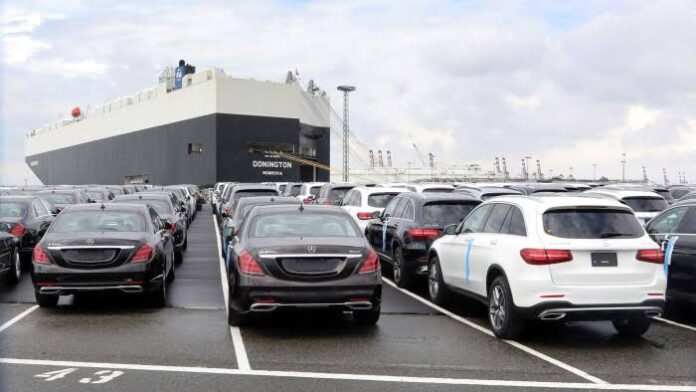
Trump Imposes 25% Tariff on Car Imports, Sparking Global Backlash

Asian auto stocks tumbled on Thursday after U.S. President Donald Trump announced a 25% tariff on imported vehicles, escalating trade tensions and drawing sharp criticism from U.S. allies, who threatened retaliation.

The new tariffs on cars and light trucks will take effect on April 3, a day after Trump is set to introduce reciprocal trade measures targeting nations contributing most to the U.S. trade deficit. These duties add to existing tariffs on steel, aluminum, and goods from Mexico, Canada, and China.

In 2024, the U.S. imported $474 billion in automotive products, including $220 billion in passenger cars. Major suppliers included Mexico, Japan, South Korea, Canada, and Germany—key U.S. allies now facing significant economic repercussions.

European Commission President Ursula von der Leyen criticized the move as “harmful for businesses and consumers,” while Canadian Prime Minister Mark Carney condemned it as a “direct attack” on Canadian workers, warning that retaliatory actions were under consideration.

“We will stand up for our workers, our businesses, and our country,” Carney declared in Ottawa.

The announcement triggered sharp declines in shares of automakers, particularly in Japan and South Korea, where auto exports to the U.S. are crucial. Toyota and Mazda stocks led losses in Japan, while shares of Hyundai and Kia also plummeted in South Korea.

Japanese Prime Minister Shigeru Ishiba responded by stating that Tokyo would consider “all available options” to counter the tariffs. Meanwhile, Brazilian President Luiz Inácio Lula da Silva warned that Trump’s decision could harm the U.S. economy.

“These tariffs will drive up prices and potentially fuel inflation, something he hasn’t accounted for yet,” Lula said at a press conference in Tokyo, adding that Brazil would file a complaint with the World Trade Organization over U.S. trade measures on Brazilian steel.

Trump has positioned tariffs as a means to generate revenue, offset tax cuts, and revive American manufacturing.

However, many trade experts predict that the new duties will initially drive up prices and dampen demand, further destabilizing an auto industry already grappling with economic uncertainty caused by Trump’s shifting trade policies.

“We’re making other countries pay for doing business in the U.S. after taking our jobs, wealth, and resources for years,” Trump stated from the Oval Office on Wednesday. “Friends have sometimes been worse than foes.”

Trump Announces Permanent 25% Tariff on Imported Cars

U.S. President Donald Trump announced on Wednesday that the United States will impose a 25% tariff on all cars not made domestically, with the measure set to be permanent. The decision immediately impacted the stock market, with shares of General Motors (GM) and Ford (F) falling in extended trading, while Tesla (TSLA) initially dropped before recovering after Trump suggested the tariffs could be neutral for the electric vehicle maker.

Trump’s move marks a significant escalation in his administration’s protectionist trade policies, aimed at boosting domestic manufacturing and reducing reliance on foreign-made automobiles. The announcement comes as part of broader efforts to reshape global trade relationships and strengthen American industry.

Industry analysts believe the tariffs could lead to higher vehicle prices for consumers and increased costs for automakers relying on global supply chains. Chuck Carlson, CEO of Horizon Investment Services, noted that while the policy may have “some legs,” exemptions or modifications for U.S. automakers could be introduced to mitigate potential disruptions.

The tariffs are expected to have a profound impact on foreign automakers exporting to the U.S., including European and Asian manufacturers. Experts anticipate retaliatory measures from affected countries, which could further strain international trade relations.

The automotive industry will be closely watching for further developments, including potential legal challenges or negotiations that could modify the tariff’s scope. Meanwhile, American consumers may soon face higher costs on imported vehicles as the policy takes effect.

‘Animal’ Father Arrested Over Gruesome Murder of 13-Year-Old Girl

An Ohio neighborhood is in shock after a horrifying murder of 13-year-old Keimani Latigue, whose mutilated body was discovered in an abandoned home just six days after she was reported missing.

Authorities described the case as one of the most horrific they have ever encountered.

Keimani, who was just days away from her 14th birthday, was found with severe injuries, including the severing of her hands and multiple incised wounds to her neck.

An autopsy confirmed the teenager had been raped prior to her death. Lt. Brian Steel of the Columbus Police expressed disbelief at the brutality involved in the case, labeling the perpetrator as an “absolute animal.”

The investigation took a startling turn when Keimani’s father, Darnell Jones, appeared on local television pleading for help in finding his daughter.

However, inconsistencies in his statements led to a search warrant for his arrest. Following Keimani’s discovery, he was charged with murder and felonious assault.

In a dramatic turn of events, Jones was apprehended in Columbus during a SWAT operation, where he was shot after reportedly displaying a firearm. He was later hospitalized for his injuries.

Keimani’s death has left family, friends, and classmates devastated. She was set to receive a kindness award at her school, and was remembered as a bright student with a promising future.

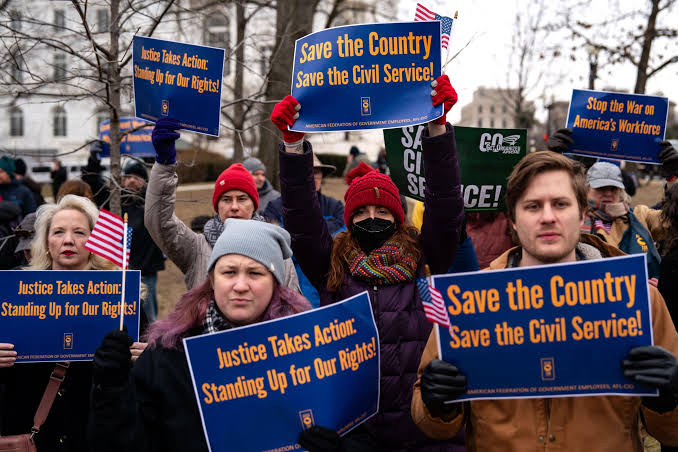
Judge Considers Limiting Ruling on Mass Firings of U.S. Government Workers

A U.S. federal judge has signalled he may limit the scope of his ruling that ordered the reinstatement of nearly 25,000 federal workers fired by the Trump administration.

Judge James Bredar, who had previously blocked the mass firings, said on Wednesday that he was reluctant to impose a nationwide injunction and could instead restrict his order to Washington, D.C., and the 19 states that brought the lawsuit.

“This court has great reluctance to issue a national injunction,” Bredar told lawyers in a Baltimore hearing. However, he did not rule out the possibility, asking the states involved to justify why a broader order was necessary.

Legal Dispute Over Firings

The case stems from the Trump administration’s decision to terminate thousands of probationary federal employees, part of broader plans by former President Donald Trump and his adviser, Elon Musk, to shrink the federal workforce. The states suing the administration argue that the dismissals violated federal regulations requiring agencies to give 60 days’ notice to state and local governments before large-scale layoffs.

Judge Bredar had initially ordered the reinstatement of the affected employees on 13 March, but extended his temporary order until 1 April as he considers the states’ request for a longer-term injunction.

While the U.S. Department of Justice defended the firings, it acknowledged that any injunction should apply only to the states that sued. The government has also appealed a separate ruling in San Francisco that ordered the reinstatement of probationary workers at six federal agencies.

The outcome of the case could have major implications for federal employment policies and executive authority.

Create a free account, or log in.

Gain access to read this content, plus limited free content.

Yes! I would like to receive new content and updates.

Sponsored Ad

Ad 1
Ad 2
Ad 3
Ad 4
Ad 5
Ad 6