Sponsored Ad

Ad 1
Ad 2
Ad 3
Ad 4
Ad 5
Ad 6
29.8 C
Kenya
Sunday, April 26, 2026
Home Blog Page 1959

Secretive Chinese network tries to recruit recently fired US government workers

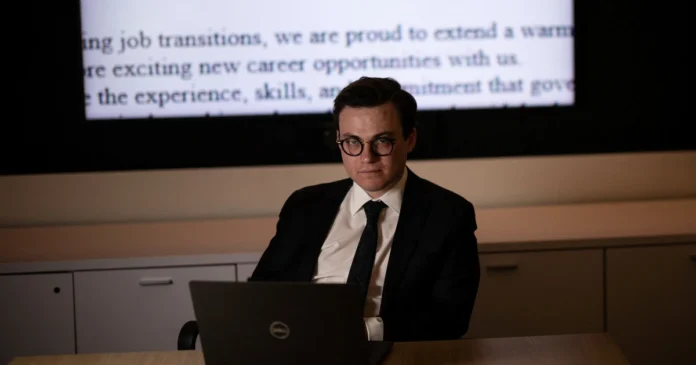
A network of companies operated by a secretive Chinese tech firm has been trying to recruit recently laid-off US government workers, according to job ads and a researcher who uncovered the campaign.

Max Lesser, a senior analyst on emerging threats with the Washington-based think tank Foundation for Defense of Democracies, said some companies placing recruitment ads were “part of a broader network of fake consulting and headhunting firms targeting former government employees and AI researchers.”

Little information is publicly available on the four consultancies and recruitment companies allegedly involved in the network, which in some cases shared overlapping websites, were hosted on the same server, or had other digital links, according to Reuters’ reporting and Lesser’s research.

The four companies’ websites are hosted at the same IP address alongside Smiao Intelligence, an internet services company whose website became unavailable during Reuters’ reporting. Reuters could not determine the nature of the relationship between Smiao Intelligence and the four companies.

The news agency’s attempts to track down the four companies and Smiao Intelligence ran into numerous dead-ends including unanswered phone calls, phone numbers that no longer work, fake addresses, addresses that lead to empty fields, unanswered emails and deleted job listings from LinkedIn.

Lesser, who uncovered the network and shared his research with Reuters ahead of publication, said the campaign follows “well-established” techniques used by previous Chinese intelligence operations.

“What makes this activity significant,” he said, “is that the network seeks to exploit the financial vulnerabilities of former federal workers affected by recent mass layoffs.”

Reuters could not determine if the companies are linked to the Chinese government or whether any former federal workers were recruited.

Asked about the research, three intelligence analysts told Reuters the network appeared to be a prime example of how foreign-linked entities are trying to gather intelligence from staff fired or forced into retirement by President Donald Trump and billionaire tech tycoon Elon Musk’s Department of Government Efficiency.

Once employed by the network, federal employees could then be asked to share increasingly sensitive information about government operations, or recommend additional people who might be targeted for willing or unwitting participation, the analysts said.

A spokesperson for the Chinese Embassy in Washington told Reuters in an email that China was unaware of any of the entities allegedly involved in the campaign and Beijing respects data privacy and security.

A White House spokesperson said China was constantly trying to exploit the United States’ “free and open system” through espionage and coercion. “Both active and former government employees must recognize the danger these governments pose and the importance of safeguarding government information,” the spokesperson said.

CNN reported February 28 that US intelligence believes Russia and China are targeting disgruntled US government employees, something both countries have done for years. The companies in the network – which posted job ads to Craigslist, LinkedIn and other job sites – could be concrete evidence such operations are underway, Lesser said.

Reuters reported earlier this month that some US government workers with top security clearances were not given standard exit briefings which, in part, cover what to do if approached by foreign adversaries.

“GEOPOLITICAL RISK CONSULTING”

One of the companies in the network, RiverMerge Strategies, bills itself on its website as a “professional geopolitical risk consulting company” and posted two since-deleted job listings on its since-removed LinkedIn page in mid-February.

One ad that sought a “Geopolitical Consulting Advisor” with experience with government agencies, international organizations, or multinational corporations, displayed that it had more than 200 applications, according to a screenshot of the LinkedIn post.

The other sought a human resources specialist who could “utilize a deep understanding of the Washington talent pool to identify candidates with policy or consulting experience,” and “leverage connections to local professional networks, think tanks, and academic institutions.”

The US number for RiverMerge Strategies listed on the company’s home page is no longer in service. A separate Chinese phone number, until recently listed on the website’s contact page, is the same number listed by Shenzhen Si Xun Software Co., Ltd, an information technology company focused on online retail, commercial automation and catering, according to a Google translation of the company’s website.

Reuters could not determine the nature of the connection between the network of companies, Smiao Intelligence, and Shenzhen Si Xun Software Co., Ltd. Calls to a phone number listed on the company’s website did not go through.

RiverMerge Strategies until recently listed two addresses on its website, one in Singapore and the other in Colorado. The Singapore address led to a hostel building within the campus of the Management Development Institute of Singapore, but the company could not be located during a Reuters visit. Its other address led to an address in Boulder, Colorado, tied to Northwest Registered Agent, a business services firm.

A person listed on LinkedIn as an employee of RiverMerge, who spoke on condition of anonymity, told Reuters an acquaintance he met at a networking event in China reached out and asked him to help promote job listings for RiverMerge Strategies.

The acquaintance, who he knows as “Eric,” as well as another contact, “Will,” pays the employee $1,000 or $2,000 every two or three months to post the job listings, he said.

A person identifying themselves as William Wells and RiverMerge’s “strategies project manager” responded to an initial Reuters email and asked about Reuters’ request for information.

Even though the Reuters email identified the sender as a reporter, Wells also inquired whether Reuters was seeking a job, and said they would review a resume and set up a short call.

Another company in the network, Wavemax Innovation, placed an ad February 6 on Craigslist offering “Job Opportunities for Recently Laid-Off US Government Employees.” The ad, which has since expired, sought workers with backgrounds in project management, research, technology, communications, policy analysis and more.

Reuters could not establish who saw the ad or whether anyone applied to Wavemax as a result.

An email to the address posted in the ad was not returned. When Reuters visited the Singapore address posted to the company’s website there was no sign of the company, just a vacant field. A search of Singapore’s corporate registry for the company was equally barren.

Asked how it verifies job listings, LinkedIn said it uses automated technologies and a team of reviewers to find and remove inauthentic activity and profiles. The spokesperson said on Tuesday RiverMerge Strategies’ profile had been restricted.

In response to questions about Reuters’ findings, an FBI spokesperson warned that Chinese intelligence officers can represent themselves as think tanks, academic institutions and recruiting firms to target “current, former, and prospective” US government employees.

Agents for the Chinese government have used similar tactics in the past.

In 2020 a Singaporean national named Jun Wei Yeo pleaded guilty in a US federal court to acting as an agent of a foreign power, starting in 2015. Prosecutors alleged he worked to spot and assess Americans with access to non-public sensitive information and paid them to write reports for unnamed Asian clients, without disclosing the work was actually for the Chinese government.

That operation relied on a fake consulting company and job advertisements, according to court records.

Chinese intelligence operatives told Yeo how to recruit targets, including by asking them if they were “dissatisfied with work, were having financial troubles [or] had children to support,” according to court records.

China’s foreign ministry denied any knowledge of Yeo’s case and accused the US of repeatedly accusing Beijing of espionage, saying “it has reached a state of extreme suspicion,” the South China Morning Post reported at the time.

Foreign intelligence services often use job recruitment scams to recruit sources without them even knowing they are working for a foreign government, David Aaron, a former Department of Justice prosecutor now in private practice, told Reuters.

“I would expect China’s intelligence services to dial those efforts up as they see a wave of government employees suddenly having to look for new jobs,” Aaron said, adding that while many former government employees are motivated by patriotism, some may be vulnerable to deceptive tactics.


Club World Cup winners to receive up to Sh16bn

The winners of this year’s 32-team Club World Cup to be held in the US will earn up to $125 million (Sh16 billion), FIFA said on Wednesday.

World soccer’s governing body had announced earlier this month a total prize pot of $1 billion (Sh129 billion) for the June 14-July 13 event, significant in the current climate of financial regulation for clubs.

“FIFA will neither retain any funding for this tournament, as all revenues will be distributed to club football, nor will it touch FIFA’s reserves, which are set aside for global football development through the 211 FIFA Member Associations,” FIFA president Gianni Infantino said in a statement.

About half of the $1 billion total will be divided between all 32 clubs, with the amount per club based on sporting and commercial criteria, meaning clubs such as Manchester City and Real Madrid will receive a greater percentage than smaller clubs in a model FIFA developed with the European Club Association.

A further $475 million (Sh61.5 billion) will be awarded on a performance-related basis, meaning the team with the most wins over a potential seven matches will bank more cash, with a maximum pot of $125 million (Sh16 billion) available.

Numerous players and coaches, including England captain Harry Kane, have voiced concern over player welfare with the revamped Club World Cup meaning less time off between seasons.

“Of course it’s another summer where you don’t really have a break,” Kane said this week. “I think we’re getting used to it. There’s nothing really we can do about it.”

The Bayern Munich striker said he had high hopes for the event, however, telling FIFA.com that his goal was: “To win it. We’re one of the best teams in the world, without a doubt, so every tournament we go into, the idea is to win.”

Late Journalist Nick Mudimba to be laid to rest in Siaya on April 5

CGTN Africa Journalist Nick Mudimba will be buried on April 5, family has said.

In a statement showing the sequence of events leading up to the burial, the family said Mudimba’s body will be airlifted to Kisumu then driven to Busia on April 4.

On the same day, there will be a mass at home.

“There are buses that stop near the homestead. The committee is exploring the possibility of group/joint travel,” the statement read.

On April 3, family and friends will hold a Mass at Holy Family Basilica.

“There will be viewing afterwards,” the statement added.

The proposed budget for the preparation of and the burial is Sh2 million.

Family and friends will be having daily meetings and a fundraising is to be scheduled to meet the budget.

Further, CGTN Africa will cover the announcement of Mudimba’s death in the dailies.

Mudimba, who is a former KTN journalist, collapsed and died in his house in Syokimau, Machakos County, on Sunday, March 23, 2025, evening.

He was with his family when the incident happened

A family member said Mudimba was unwell and was diagnosed on Saturday with uric acid.

He was prescribed medication on Sunday, hours before his sudden death. 

He was in a good mood and watched the football match between Harambee Stars and Gabon before he took his medication as advised.

Witnesses said he later collapsed and started convulsing and died in the house.

The body was moved to a mortuary in Syokimau, where the preliminary results of an autopsy pointed to respiratory distress.

It was said that his airways were blocked and his lungs were filled with liquid.

His colleagues mourned him as a hardworking and dedicated journalist whose work touched and changed many.

He had, among others, worked at KTN and Switch TV before moving to CGTN where he was a senior reporter based in Nairobi.

DPP Meets EU Ambassador Henriette Geiger to Discuss the Progress of the PLEAD Justice Programme

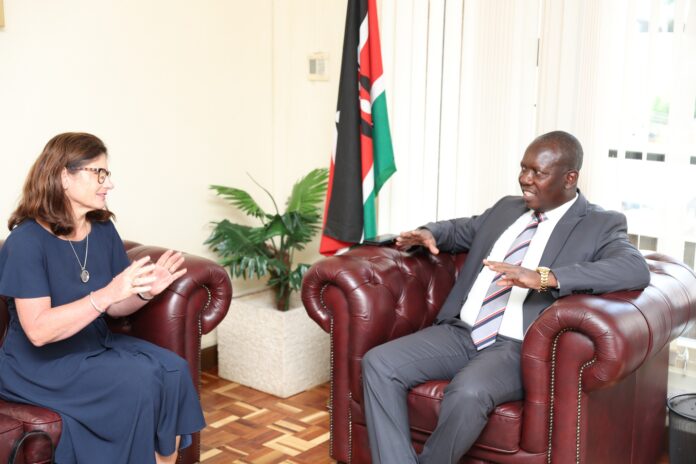
European Union Ambassador to Kenya Her Excellency Henriette Geiger, paid a courtesy call to the Director of Public Prosecutions (DPP) Renson Ingonga, CBS, OGW, to review the progress of the Programme for Legal Empowerment and Aid Delivery (PLEAD II), a vital justice sector initiative that is funded by the European Union and led by the United Nations Office on Drugs and Crime (UNODC).

PLEAD II, which runs from 2023 to 2027, is the second phase of a programme designed to strengthen Kenya’s criminal justice system, improve access to justice, and enhance the prosecution of criminal cases.

Building on the success of its predecessor, PLEAD I, the programme is aligned with Kenya’s ongoing judicial reforms and has the EU as its primary funder, underscoring its commitment to supporting the country’s legal and judicial transformation.

The ODPP, with its constitutional mandate to prosecute criminal cases, plays a central role in implementing PLEAD II. As one of the programme’s main partners, the ODPP is tasked with strengthening prosecution services, improving the capacity of prosecutors, and ensuring the efficiency of Kenya’s criminal justice system.

Ambassador Geiger reiterated the EU’s commitment to supporting the ODPP in its efforts to build a more effective and transparent justice system, particularly in tackling corruption and economic crimes.

“Our partnership with the ODPP is a crucial part of the EU’s broader engagement in Kenya’s justice sector reform,” said Ambassador Geiger.

The meeting provided an opportunity for the DPP to brief Ambassador Geiger on the key achievements for the office under the PLEAD programme. Mr. Ingonga highlighted several initiatives aimed at advancing the fight against corruption, including the development of technical guidelines for corruption-related offenses, the proposed creation of standardized charge sheets, and conducting public awareness campaigns designed to enhance community involvement in the fight against corruption.

In justice sector coordination, the ODPP is working closely with key institutions such as the Ethics and Anti-Corruption Commission (EACC) and the Directorate of Criminal Investigations (DCI) to streamline investigations and prosecutions related to corruption. Additionally, new prosecution guidelines for traffic offenses and legislative reforms are being pursued to enhance the efficiency of the justice sector.

Mr. Ingonga also noted PLEAD’s contribution to the ODPP’s ongoing efforts to build capacity and improve infrastructure. This includes staff training on legal policies, the launch of the ODPP Strategic Plan (2024-2025), and the installation of solar panels in ODPP offices to promote energy sustainability.

In addition to reviewing the progress of the programme, the courtesy call provided an opportunity to explore further collaboration between the EU and the ODPP. Potential areas of future partnership include continued training for prosecutors, particularly on handling digital evidence, corruption cases, and human rights-based approaches. There are also plans to support the establishment of ODPP grassroots offices in remote areas, expand the Prosecution Training Institute, enhance the juvenile justice system, and promote green prosecution initiatives.

The DPP expressed his appreciation for the EU’s continued support in strengthening Kenya’s legal institutions and advancing justice sector reforms.

“As Kenya continues to push forward with its justice sector reforms, the partnership between the EU and the ODPP remains a cornerstone of the country’s efforts to create a more just, equitable, and efficient legal system,” Mr. Ingonga concluded.

Prince Harry resigns from southern Africa charity

(AFP) – Harry founded Sentebale in 2006 with Prince Seeiso of Lesotho to help young people with HIV and Aids in the southern African kingdom and later Botswana.

But relations have soured between the UK-registered charity’s trustees and board chair Sophie Chandauka, who was appointed in 2023.

Harry and Seeiso decided to resign after the relationship “broke down beyond repair”, they said in a joint statement on Tuesday.

“What’s transpired is unthinkable. We are in shock that we have to do this, but we have a continued responsibility to Sentebale’s beneficiaries,” the statement said.

Several trustees have already left the organisation and requested Chandauka’s resignation.

It is not clear exactly what is behind the rift but Chandauka said she was being targeted after raising serious concerns about the charity.

Sentebale said in a statement to AFP that they had not received the resignations but confirmed that it was evolving from a “development organisation focused on addressing the impact of HIV/AIDS on the lives of children and young people in Lesotho and Botswana, to one that is addressing issues of youth health, wealth and climate resilience in Southern Africa”.

Regulator

In their statement, Harry and Seeiso said: “With heavy hearts, we have resigned from our roles as patrons of the organisation until further notice, in support of and solidarity with the board of trustees who have had to do the same.

“It is devastating that the relationship between the charity’s trustees and the chair of the board broke down beyond repair, creating an untenable situation.”

Chandauka alleged she had faced a backlash after trying to air concerns about the charity’s governance.

The Zimbabwe-born lawyer said this was “the story of a woman who dared to blow the whistle about issues of poor governance, weak executive management, abuse of power, bullying, harassment, misogyny, misogynoir -– and the coverup that ensued.

“For me, this is not a vanity project from which I can resign when I am called to account,” she said.

Chandauka said she had reported trustees to the UK’s Charity Commission regulator and taken her case to the High Court in London.

Harry and Seeiso said Chandauka had “sued the charity” to remain in her position after trustees asked her to step down, adding that they would also share their concerns with the Charity Commission.

The regulator told AFP it was “aware of concerns about the governance of Sentebale”.

“We are assessing the issues to determine the appropriate regulatory steps,” it said.

© 2025 AFP

KCB ranked the 7th most valuable African banking brand of 2025

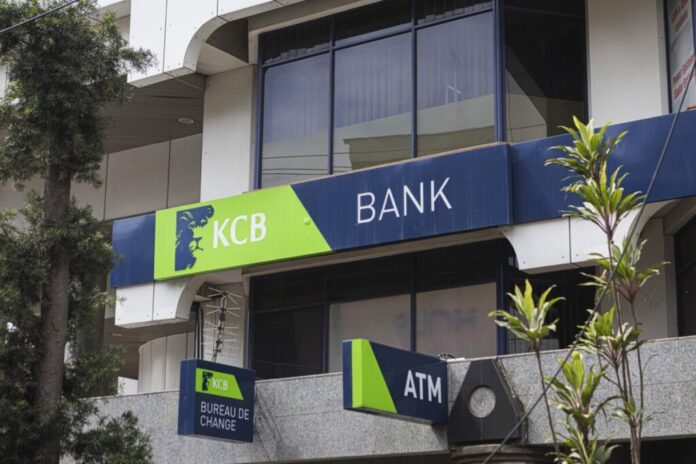
KCB has been named the 7th most valuable banking brands in the world with a Brand Strength Index (BSI) score of 94.4% up from 91.5% in 2024, reinforcing the bank’s efforts in delivering superior financial products and services through enhanced customer support channels.

According to the latest Banking 500 2025 Report by Brand Finance, the world’s leading brand valuation consultancy, KCB also climbed 30 places within the brand value ranking to sit at position 343 up from the previous 373 out of the 500 global banks surveyed.

The report also notes that ​African banking brands continue to perform well on the global stage despite economic, geopolitical, and regional challenges.

As a result, African banking brands created US$15.2 billion in value in 2025, with average brand value growth of 22% across surveyed markets.

​The strongest country growth in Africa was seen in Kenya (+49%), with South Africa (+24%), Morocco (+21%), Nigeria (+16%), and Egypt (+8%).

Commenting on the ranking, Rosalind Gichuru, KCB Group Director, Marketing and Communications said, “This achievement is a testament to the hard work, dedication, and commitment of our team, as well as the trust our customers and partners place in us. It reflects the strength of our brand, the resilience of our business model, and our continuous efforts to innovate and deliver value to our stakeholders. We are excited about the future and will continue to build on this momentum to achieve even greater success.”

Despite these impressive performances, no African banking brands have yet broken into the Top 100 due to weaker currencies and regional economic risks.

Jeremy Sampson, Chairman of Brand Finance Africa commented: “The remarkable rise of African banks in brand rankings highlights the sector’s resilience, innovation, and ability to meet evolving consumer needs. While global banking giants continue to dominate in absolute brand value, Africa’s banking sector is proving that strong brands, built on trust and digital capabilities, can punch well above their weight on the world stage.”

While the global banking sector is benefitting from higher interest rates and financial market recovery, African banks are capitalising on their brand strength, customer loyalty, and digital innovation.

The continued rise of mobile banking and fintech disruptors in Africa presents opportunities for even greater expansion and competitiveness in the years ahead.

Top Lawyer and Senatorial Aspirant Danstan Omari Recognized Among Leading Litigators

Renowned lawyerl Danstan Omari has been named among the top litigation lawyers of the year, joining an elite list of legal professionals.

According to a survey conducted by advocate Paul Musyimi’s firm, Omari stands alongside other distinguished lawyers such as Duncan Okatch, Edwin Mukele, and Kethi Kilonzo.

Defending Omari’s inclusion, Musyimi emphasized that the selection process was comprehensive, relying on extensive research and verified data sourced from Kenya Law records.

He explained that litigation today goes beyond courtroom representation; it involves crisis management and safeguarding clients’ reputations throughout the dispute resolution process.

“Clients choose Danstan Omari for a reason,” Musyimi noted. “He has a proven ability to manage sensitive, high-risk cases both in court and behind the scenes. When you hire Danstan Omari, you’re getting more than a lawyer — you’re gaining a strategist and a crisis manager.”

Musyimi further pointed out that public relations have become a critical aspect of legal practice, especially in complex disputes — a trend well-established in the Americas and now growing rapidly in Kenya.

Kenya frozen from list of seven States with free entry to Russia

As the Kremlin deepens its footprint in Africa to counter the influence of the West, a post on TikTok claims Russia has removed visa requirements for all African states.

However, this is misleading; only six African countries enjoy visa-free entry to Russia, and an update on the status of a proposed visa-free programme for all African countries has not been announced since a key Moscow diplomat hinted at it in 2023.

“The West is in PANICK as Russia announces visa-free for all African countries (sic),” reads a text overlay on a TikTok video posted on March 13, 2025.

Shared more than 11,000 times, the video’s voice-over claims “Africans will easily move and do business with Russia”, adding that “they [Africans] will find investment opportunities and even decide to live in Russia, unlike the West which makes this so hard (sic)”.

The voice-over refers to a “recent statement” from Moscow diplomat Oleg Ozerov who is quoted as saying that “Russia has established visa-free arrangements with six African nations and is actively pursuing similar agreements with other countries on the continent”.

Ozerov is identified as the ambassador-at-large of the Russian foreign ministry and head of the secretariat of the Russia-Africa Partnership Forum.

One user wrote, “Nigerians, please don’t mess this up for us,” while another said, “Time to move to Russia.” 

The account has more than 54,000 followers and published a similar claim on March 25, 2025.

Russia has been expanding its influence in Africa in recent years, offering security support to the region’s poor countries and kindling anti-Western sentiment (archived here).

As of March 2025, however, agreements exist with only a handful of African countries whose citizens can enter Russia without a visa.

Work in progress

Using keyword searches, AFP Fact Check could not find any recent statement from the Russian government announcing visa-free entry for all African countries.

According to the Russian Consular information portal, only six African countries — out of 54 — have visa-free entry (archived here). 

The six countries are Namibia, South Africa, Mauritius, Cape Verde, Botswana and Seychelles.

While Namibians and South Africans can stay in Russia for three months without a visa, people from Mauritius and Cape Verde can only stay for two months and those from Botswana and Seychelles can only stay one month.

The comments attributed to Ozerov in the video are correct, but he made them in September 2023 when he told Russian News Agency Tass that Moscow was working on exempting all African countries from visa requirements (archived here).

“We have visa-free agreements with six countries, and there is certainly ongoing work with other states,” Ozerov was quoted as saying. 

He added that how fast such agreements are concluded is “a matter of negotiation”.

Since Ozerov’s remarks in 2023, there has been no update on progress from the Russian government.

Ozerov’s role has also changed: he was the head of the secretariat of the Russia-Africa Partnership Forum until September 2024 and is now Russian ambassador to Moldova (archived here).

Meanwhile, in December 2023, Russia’s foreign ministry added 11 new countries to the list of states whose citizens can obtain a single electronic visa (archived here).

Three are African nations: Kenya, Eswatini, and Zimbabwe.

The electronic visa allows citizens of these countries to stay for 16 days on a single entry.

Elon Musk stung by China car firm

Chinese electric vehicle (EV) maker BYD has reported annual revenue for 2024 that has leapfrogged rival Tesla.

The Shenzhen-based firm says revenue rose by 29% to come in at 777 billion yuan ($107bn; £83bn), boosted by sales of its hybrid vehicles. This topped the $97.7bn reported by Elon Musk’s Tesla.

BYD has also just launched a lower-priced car to rival Tesla’s Model 3, which has long been the top selling EV in China.

It comes as Tesla faces a backlash around the world over Musk’s ties to US President Donald Trump, while Chinese carmakers have been hit with tariffs in Western countries.

BYD sold around the same number of EVs as Tesla last year – 1.76 million compared to 1.79 million, respectively.

But when sales of the Chinese company’s hybrid cars are taken into account it is much bigger, selling a record 4.3 million vehicles globally in 2024.

On Sunday, BYD announced a new model to take on Tesla.

Its Qin L model has a starting price in China of 119,800 yuan, while a basic version of Tesla’s Model 3 is priced at 235,500 yuan.

It comes as Chinese consumers are cutting spending in the face of economic challenges, including a property crisis, slowing growth, and high local government debt.

Last week, BYD’s founder Wang Chuanfu announced new battery charging technology, which he said could charge an EV in five minutes.

That compares with around 15 minutes to charge a Tesla using its supercharger system.

In February, BYD announced that its so-called “God’s Eye” advanced driver-assistance technology would be available free in all its models.

Shares in the firm, which is backed by veteran US investor Warren Buffett, have jumped by more than 50% so far this year.

A backlash against Musk and his carmaker has gathered momentum since he was appointed head of the Trump administration’s Department for Government Efficiency (DOGE), which has been tasked with slashing federal government spending.

Musk has also intervened in politics abroad, including giving his backing to far-right party Alternative für Deutschland ahead of Germany’s parliamentary election and criticising UK politicians such as Prime Minister Keir Starmer.

Meanwhile, China’s EV manufacturers have been targeted with tariffs in large parts of the world, including the US and the European Union.

US officials begin trade talks in Delhi as tariff deadline nears

India and the US have begun bilateral trade negotiations that will continue until Saturday in Delhi.

A US delegation, led by Assistant Trade Representative for South and Central Asia Brendan Lynch, arrived in the city on Tuesday for the talks.

“This visit reflects the United States’ continued commitment to advancing a productive and balanced trade relationship with India,” a US Embassy statement said.

The negotiations are happening ahead of President Donald Trump’s 2 April deadline to impose “reciprocal” or tit-for-tat tariffs on countries around the world, including India.

India’s junior commerce minister Jitin Prasada told parliament on Tuesday that the two countries were planning to negotiate a “multi-sector bilateral trade agreement” that focused on increasing market access and “reducing tariff and non-tariff barriers.”

The countries have been engaged in hectic negotiations since Trump came into office.

Trade Minister Piyush Goyal made an unscheduled visit to the US in March for talks following a visit by Indian Prime Minister Narendra Modi to Washington in February.

The US was until recently India’s biggest trading partner, with bilateral trade amounting to $190bn.

Trump and Modi had set a target to more than double it to $500bn (£400bn). The two sides also committed to negotiating the first phase of a trade agreement by autumn 2025.

The Trump administration has repeatedly accused India of being a “tariff king” and a “big abuser” of trade ties in the past.

India has recently lowered tariffs on Bourbon whiskey, motorcycles and some other US products, but the balance of trade is still stacked heavily in its favour, with Delhi enjoying a $45bn trade surplus.

India’s average tariffs of around 12% are also significantly higher than the US’s 2%.

Officials have not spoken publicly about the contours of the trade talks, but Reuters has reported that India could be considering slashing tariffs on more than half of US imports worth $23bn in the first phase of a trade deal to avoid Trump’s reciprocal action.

Trump had previously said he wanted to charge countries tit-for-tat tariffs whereby the US would impose exactly the same charges that other countries imposed on it.

But on Monday, he suggested the White House might be “nicer than that”.

“We may take less than what they’re charging, because they’ve charged us so much, I don’t think they could take it,” he said, while also acknowledging that some countries might be spared from the measures.

Create a free account, or log in.

Gain access to read this content, plus limited free content.

Yes! I would like to receive new content and updates.

Sponsored Ad

Ad 1
Ad 2
Ad 3
Ad 4
Ad 5
Ad 6