Sponsored Ad

Ad 1
Ad 2
Ad 3
Ad 4
Ad 5
Ad 6
32.5 C
Kenya
Sunday, April 26, 2026
Home Blog Page 1960

Elon Musk stung by China car firm

Chinese electric vehicle (EV) maker BYD has reported annual revenue for 2024 that has leapfrogged rival Tesla.

The Shenzhen-based firm says revenue rose by 29% to come in at 777 billion yuan ($107bn; £83bn), boosted by sales of its hybrid vehicles. This topped the $97.7bn reported by Elon Musk’s Tesla.

BYD has also just launched a lower-priced car to rival Tesla’s Model 3, which has long been the top selling EV in China.

It comes as Tesla faces a backlash around the world over Musk’s ties to US President Donald Trump, while Chinese carmakers have been hit with tariffs in Western countries.

BYD sold around the same number of EVs as Tesla last year – 1.76 million compared to 1.79 million, respectively.

But when sales of the Chinese company’s hybrid cars are taken into account it is much bigger, selling a record 4.3 million vehicles globally in 2024.

On Sunday, BYD announced a new model to take on Tesla.

Its Qin L model has a starting price in China of 119,800 yuan, while a basic version of Tesla’s Model 3 is priced at 235,500 yuan.

It comes as Chinese consumers are cutting spending in the face of economic challenges, including a property crisis, slowing growth, and high local government debt.

Last week, BYD’s founder Wang Chuanfu announced new battery charging technology, which he said could charge an EV in five minutes.

That compares with around 15 minutes to charge a Tesla using its supercharger system.

In February, BYD announced that its so-called “God’s Eye” advanced driver-assistance technology would be available free in all its models.

Shares in the firm, which is backed by veteran US investor Warren Buffett, have jumped by more than 50% so far this year.

A backlash against Musk and his carmaker has gathered momentum since he was appointed head of the Trump administration’s Department for Government Efficiency (DOGE), which has been tasked with slashing federal government spending.

Musk has also intervened in politics abroad, including giving his backing to far-right party Alternative für Deutschland ahead of Germany’s parliamentary election and criticising UK politicians such as Prime Minister Keir Starmer.

Meanwhile, China’s EV manufacturers have been targeted with tariffs in large parts of the world, including the US and the European Union.

US officials begin trade talks in Delhi as tariff deadline nears

India and the US have begun bilateral trade negotiations that will continue until Saturday in Delhi.

A US delegation, led by Assistant Trade Representative for South and Central Asia Brendan Lynch, arrived in the city on Tuesday for the talks.

“This visit reflects the United States’ continued commitment to advancing a productive and balanced trade relationship with India,” a US Embassy statement said.

The negotiations are happening ahead of President Donald Trump’s 2 April deadline to impose “reciprocal” or tit-for-tat tariffs on countries around the world, including India.

India’s junior commerce minister Jitin Prasada told parliament on Tuesday that the two countries were planning to negotiate a “multi-sector bilateral trade agreement” that focused on increasing market access and “reducing tariff and non-tariff barriers.”

The countries have been engaged in hectic negotiations since Trump came into office.

Trade Minister Piyush Goyal made an unscheduled visit to the US in March for talks following a visit by Indian Prime Minister Narendra Modi to Washington in February.

The US was until recently India’s biggest trading partner, with bilateral trade amounting to $190bn.

Trump and Modi had set a target to more than double it to $500bn (£400bn). The two sides also committed to negotiating the first phase of a trade agreement by autumn 2025.

The Trump administration has repeatedly accused India of being a “tariff king” and a “big abuser” of trade ties in the past.

India has recently lowered tariffs on Bourbon whiskey, motorcycles and some other US products, but the balance of trade is still stacked heavily in its favour, with Delhi enjoying a $45bn trade surplus.

India’s average tariffs of around 12% are also significantly higher than the US’s 2%.

Officials have not spoken publicly about the contours of the trade talks, but Reuters has reported that India could be considering slashing tariffs on more than half of US imports worth $23bn in the first phase of a trade deal to avoid Trump’s reciprocal action.

Trump had previously said he wanted to charge countries tit-for-tat tariffs whereby the US would impose exactly the same charges that other countries imposed on it.

But on Monday, he suggested the White House might be “nicer than that”.

“We may take less than what they’re charging, because they’ve charged us so much, I don’t think they could take it,” he said, while also acknowledging that some countries might be spared from the measures.

Signal gets free White House approval rate. Is this a dummy?

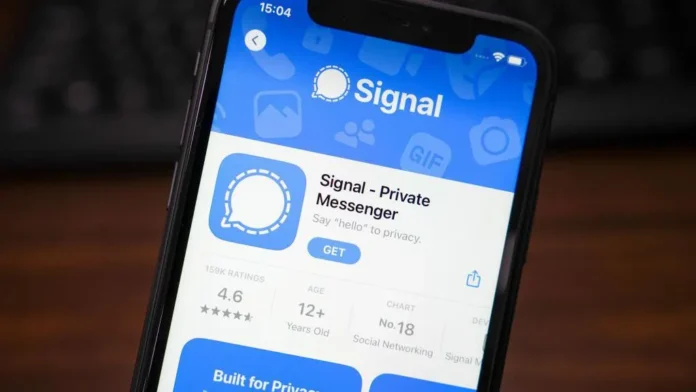
The messaging app Signal has made headlines after the White House confirmed it was used for a secret group chat between senior US officials.

The editor-in-chief of the Atlantic, Jeffrey Goldberg, was inadvertently added to the group where plans for a strike against the Houthi group in Yemen were discussed.

Signal’s creator Matthew Rosenfeld – who is better known by the pseudonym Moxie Marlinspike – joked the “great reasons” to join the platform now included “the opportunity for the vice president of the United States of America to randomly add you to a group chat for coordination of sensitive military operations”.

But others are not seeing the funny side, with Democrat Senate leader Chuck Schumer calling it “one of the most stunning” military intelligence leaks in history and calling for an investigation.

But what actually is Signal – and how secure or otherwise were the senior politicians’ communications on it?

The security app

Signal has estimated 40-70 million monthly users – making it pretty tiny compared to the biggest messaging services, WhatsApp and Messenger, which count their customers in the billions.

Where it does lead the way though is in security.

At the core of that is end-to-end encryption (E2EE).

Simply put, it means only the sender and the receiver can read messages – even Signal itself cannot access them.

A number of other platforms also have E2EE – including WhatsApp – but Signal’s security features go beyond this.

For example, the code that makes the app work is open source – meaning anybody can check it to make sure there are no vulnerabilities that hackers could exploit.

Its owners say it collects far less information from its users, and in particular does not store records of usernames, profile pictures, or the groups people are part of.

There is also no need to dilute these features to make more money: Signal is owned by the Signal Foundation, a US-based non-profit, which relies on donations rather than ad revenue.

“Signal is the gold standard in private comms,” said its boss Meredith Whittaker in a post on X after the US national security story became public.

‘Very, very unusual’

That “gold standard claim” is what makes Signal appealing to cybersecurity experts and journalists, who often use the app.

But even that level of security is considered insufficient for very high level conversations about extremely sensitive national security matters.

That is because there is a largely unavoidable risk to communicating via a mobile phone: it is only as secure as the person that uses it.

If someone gains access to your phone with Signal open – or if they learn your password – they’ll be able to see your messages.

And no app can prevent someone peeking over your shoulder if you are using your phone in a public space.

Data expert Caro Robson, who has worked with the US administration, said it was “very, very unusual” for high ranking security officials to communicate on a messaging platform like Signal.

“Usually you would use a very secure government system that is operated and owned by the government using very high levels of encryption,” she said.

She said this would typically mean devices kept in “very secure government controlled locations”.

The US government has historically used a sensitive compartmented information facility (Scif – pronounced “skiff”) to discuss matters of national security.

A Scif is an ultra-secure enclosed area in which personal electronic devices are not allowed.

“To even access this kind of classified information, you have to be in a particular room or building repeatedly swept for bugs or any listening devices,” said Ms Robson.

Scifs can be found in places ranging from military bases to the homes of officials.

“The whole system is massively encrypted and secured using the government’s own highest standards of cryptography,” she said.

“Especially when defence is involved.”

Encryption and records

There’s another issue tied to Signal that has raised concerns – disappearing messages.

Signal, like many other messaging apps, allows its users to set messages to disappear after a set period of time.

The Atlantic’s Jeffrey Goldberg said some of the messages in the Signal group he was added to disappeared after a week.

This may violate laws around record-keeping – unless those using the app forwarded on their messages to an official government account.

This is also far from the first row involving E2EE

Various administrations have wanted to create a so-called backdoor into messaging services that use it so they can read messages they think might pose a national security threat.

Apps including Signal and WhatsApp have previously fought attempts to create such a backdoor, saying it would eventually be used by bad actors.

Signal threatened to pull the app from the UK in 2023 if it was undermined by lawmakers.

This year, the UK government became embroiled in a significant row with Apple, which also uses E2EE to protect certain files in cloud storage.

Apple ended up pulling the feature in the UK altogether after the government demanded access to data protected in this way by the tech giant.

The legal case is ongoing.

But, as this controversy shows, no level of security or legal protection matters if you simply share your confidential data with the wrong person.

Or as one critic more bluntly put it: “Encryption can’t protect you from stupid.”

Ugandan shilling broadly stable on commodity exports

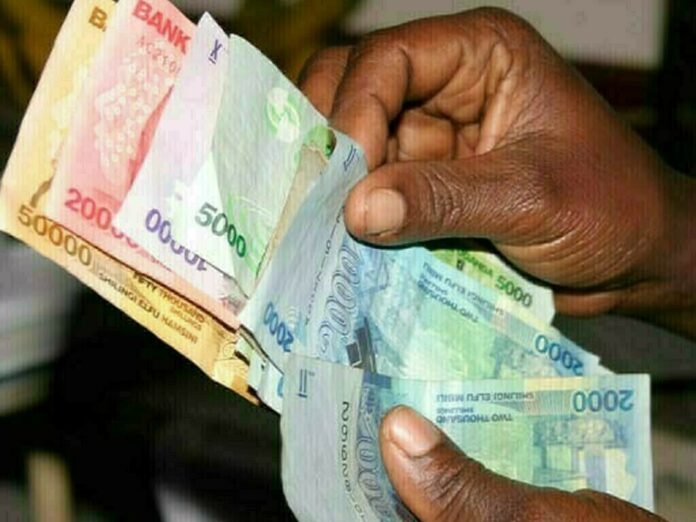
(Reuters) – The Ugandan shilling was largely stable on Wednesday, with some hard currency inflows from commodity exports like coffee, cocoa and others providing support, traders said.

At 0840 GMT commercial banks quoted the shilling at 3,661/3,671, compared to Tuesday’s close of 3,660/3,670.

Glencore’s South African refinery invests in cleaner fuels

 (Reuters) – Astron Energy, a unit of global commodity trader Glencore (GLEN.L), opens new tab, will invest up to six billion rand ($328 million) to install new equipment and become compliant with South Africa’s cleaner fuel specifications ahead of a 2027 deadline, the company said on Wednesday.

The foundations have already been laid at the 100,000 barrels per day crude oil refinery, close to Cape Town, for a Gasoline Hydrotreating Process that will help bring petrol down to Euro 5 specifications, senior Astron officials said.

South Africa’s Clean Fuels II regulations, which required that sulphur levels in both petrol and diesel be reduced to 10 parts per million (ppm), was meant to come into operation in 2017 but was postponed to July 1, 2027.

“We will be supplying compliant fuels at the date asked of us,” Thabiet Booley, the chief executive officer at Astron Energy told lawmakers during a visit to the plant on Wednesday.

Astron Energy is one of only two crude oil refineries operating in South Africa, whose domestic refining capacity has halved to around 358,000 barrels a day following the closure and mothballing of the two largest crude refineries in Durban.

Africa’s most advanced economy imports around 75% of its liquid fuel needs, which was estimated at just over 19 billion litres in 2023, according to industry body FIASA.

According to the Strategic Fuel Fund, the state agency tasked with securing strategic crude oil supplies at Saldanha’s storage terminal, South Africa currently had less than 21 days of reserves in the event of a major incident.

The government has purchased the Sapref 180,000 bpd refinery in Durban, which was the country’s largest crude oil plant before being mothballed in 2022 and subsequently badly damaged during floods, as part of efforts to bolster local refining capacity and reduce security of supply concerns.

($1 = 18.2682 rand)

Zimbabwe president fires army chief ahead of planned protests

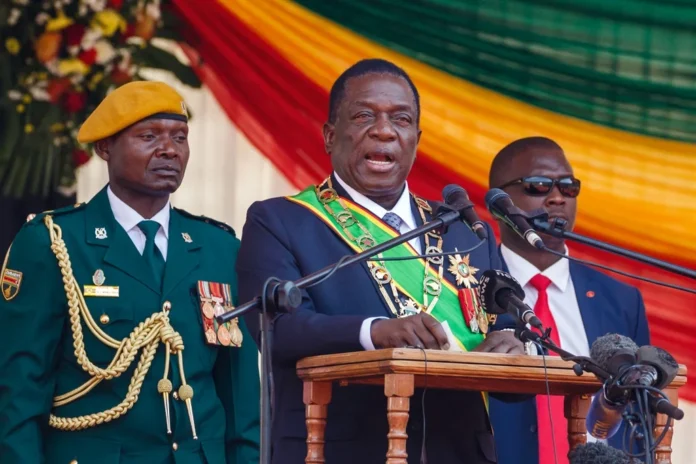
(Reuters) – Zimbabwe President Emmerson Mnangagwa acted to consolidate his hold on power with Tuesday’s dismissal of a senior general, political analysts say, amid growing fears of a possible coup by former allies.

Mnangagwa, who took charge after a military coup that ousted longtime ruler Robert Mugabe in 2017, is facing growing dissent within his ZANU-PF party, which has ruled Zimbabwe since independence from Britain in 1980.

Some veterans of the Southern African country’s war of independence have called for countrywide protests on March 31 to force Mnangagwa to step down. They accuse him of deepening the country’s economic crisis and plotting to extend his rule beyond 2028 when his second term is due to end.

Mnangagwa denies those accusations and on Wednesday warned against “people who want to disturb our peace” during a ZANU-PF meeting in the capital Harare.

Analysts say Mnangagwa appears to be increasingly worried about his grip on power has been trying to bolster his position by shaking up the military, police and intelligence leadership.

Tuesday’s removal of Anselem Sanyatwe, Zimbabwe’s second most powerful general and head of the army, was the third such reshuffle by Mnangagwa in recent months. Mnangagwa also removed the chief of police and head of Zimbabwe’s intelligence service.

Political analyst Eldred Masunungure told the privately owned Newsday newspaper that Mnangagwa appeared to be “protecting himself against a potential coup”.

The anti-Mnangagwa war veterans want to replace him with Constantino Chiwenga, a retired general who led the coup against Mugabe and is now the country’s vice president.

Although diminishing in number and advancing in age, the independence war veterans remain influential in Zimbabwe’s politics and retain strong ties with its security chiefs, after fighting alongside them during the liberation struggle.

In his previous role as head of the presidential guard under Mugabe, Sanyatwe played a key role in the 2017 coup. He also oversaw the deployment of soldiers who shot dead six people and injured many others during post-election unrest in August 2018.

Sanyatwe, a close ally of Chiwenga, has been appointed sports minister, replacing Kirsty Coventry, who was elected president of the International Olympic Committee on March 20.

Norway temporarily shuts South Sudan embassy over security

 (Reuters) – Norway’s foreign ministry said on Wednesday it was temporarily shutting its embassy in South Sudan’s capital Juba due to the deteriorating security situation in the country.

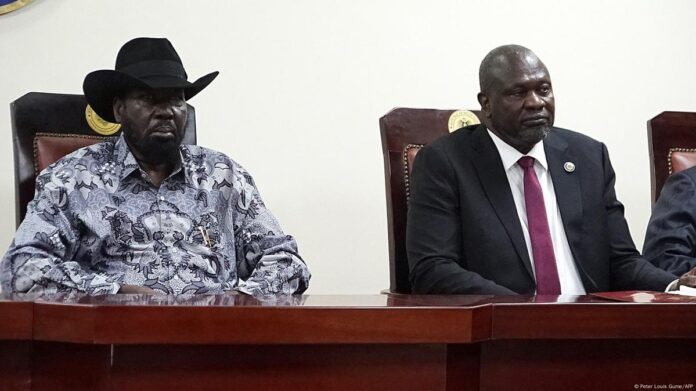
South Sudan President Salva Kiir last week sacked the governor of Upper Nile state, where clashes have escalated between government troops and an ethnic militia he accuses of allying with his rival, First Vice President Riek Machar.

The standoff has heightened concerns that the world’s newest nation could slide back into conflict some seven years after its emergence from a civil war that killed hundreds of thousands of people.

The Norwegian embassy’s work will be carried out from Kenya’s capital Nairobi until further notice, Norway’s foreign ministry said in a statement, adding that the Juba mission would be reopened when the situation allowed it.

Sudan army surrounds Khartoum airport, sources say, in battle for capital

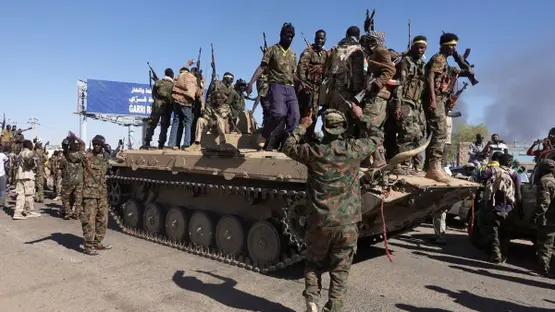
(Reuters) – The Sudanese army is encircling Khartoum airport, two military sources told Reuters on Wednesday, as it battles to oust its rival Rapid Support Forces from a last foothold in the capital, though the war looks far from over.

The army seized the presidential palace in downtown Khartoum after fighting on Friday, an important symbolic advance after two years of a conflict that is splitting the massive country into rival zones of control.

On Wednesday, the army said it had gained control of Tiba al-Hassanab camp south of the capital, which it described as the RSF’s last base in central Sudan and last stronghold in Khartoum State.

The military sources said the army was encircling the airport, which is located in the city centre, and surrounding areas. Witnesses said the RSF had focused its troops in southern Khartoum, apparently to secure their withdrawal from the city via bridges to the neighbouring city of Omdurman.

Recent army gains in central Sudan, retaking districts of the capital and other territory, come as the RSF has consolidated its control in the west, hardening battle lines and threatening to move the country towards a de facto partition.

The war, which erupted two years ago as the country was attempting a democratic transition, has caused what the U.N. calls the world’s largest humanitarian crisis, with famine in several areas as well as outbreaks of disease.

It has driven 12.5 million people from their homes, many of them seeking refuge in neighbouring countries.

ERUPTION OF WARFARE

The army and RSF had at one point been in a fragile partnership together, jointly staging a coup in 2021 that derailed the transition from the Islamist rule of Omar al-Bashir, a longtime autocrat who was ousted in 2019.

They had also fought on the same side for years in the western state of Darfur under Bashir’s government.

The RSF, under Mohamed Hamdan Dagalo, better known as Hemedti, developed from Darfur’s janjaweed militias and Bashir developed the group as a counterweight to the army, led by career officer Abdel Fattah al-Burhan.

After they seized power together in 2021, the two sides clashed over an internationally backed plan aimed at launching a new transition with civilian parties that would require them both to cede powers.

Major points of dispute included a timetable for the RSF to integrate into the regular armed forces, the chain of command between army and RSF leaders, and the question of civilian oversight.

When fighting broke out, Sudan’s army had better resources including air power. However, the RSF was more deeply embedded in neighbourhoods across Khartoum and was able to hold much of the capital in an initial, devastating burst of warfare.

The RSF also made rapid advances to gain control of its main stronghold of Darfur and over El Gezira state, south of Khartoum, a big farming area.

With the army now re-establishing its position in the capital, it is making a new push to cement its control in the centre of Sudan.

Senator Methu hits back at Ruto after calling Muturi ‘incompetent’

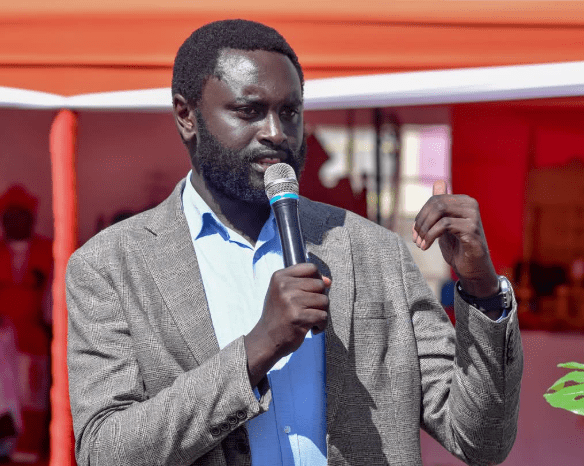
Nyandarua Senator Methu Muhia has hit back at President William Ruto for calling Public Service Cabinet Secretary Justin Muturi incompetent during his tenure as Attorney General.

In a statement on Wednesday, March 26, Methu criticized Ruto for promoting Muturi to a higher office despite questioning his capabilities.

“How do you reward an incompetent staff by promoting him to a bigger office? Mr. President, stop taking Kenyans for a ride. On Tuesday, March 25, you said Justin Muturi was incompetent, but instead of firing him, you promoted him to a higher office,” he stated.

Methu further accused the Ruto administration of being intolerant to criticism and targeting leaders who speak out against it. 

“It’s quite clear that your administration is incapable of taking criticism and has now resulted to maligning leaders who speak the truth. They say before the hyenas eat their young ones, they first accuse them of smelling like sheep,” he added.

Speaking during an Iftar dinner at State House on Tuesday, March 25, Ruto criticized Muturi, stating that his tenure as Attorney General was marked by incompetence.

He expressed confidence in the current Attorney General, Dorcas Oduor, assuring Kenyans that key legal matters would be addressed promptly.

“I had a problem with the AG who was there, he was fairly incompetent. But I now have a very competent lady in that position, and I can assure you that the issues of Waqf will be sorted out in a matter of months,” he said.

In his defence, Muturi said there is no provision for a Muslim Endowment Fund under the Waqf Act No. 8 of 2022.

The Public Service CS also pointed out that waqf is managed by the Waqf Commission.

“Under the Waqf Act no.8 of 2022 there’s no provision for a “Muslim Endowment Fund “. It must be understood that a waqf is a religious, charitable, or benevolent endowment by a person who professes Muslim faith and is managed by the Waqf Commission,” he stated.

In the wake of this accusation, a scorecard released by the State Law Office revealed that Muturi defended 1,503 out of 1,588 cases filed against the government between September 2022 and September 2023 while he was serving as the Attorney General. 

The office said an analysis of some of the concluded cases demonstrated savings to the Government above Ksh17.5 billion. 

Some of the cases Muturi’s office successfully defended and saved the government money include the Nairobi Civil Appeal No. 638 of 2019, Attorney General vs Kabuito Contractors Limited, where the Supreme Court dismissed the appeal, thereby saving the government Ksh5.2 billion, and Nairobi Supreme Court Petition No. E006 of 2022, Torino Enterprises Ltd vs Attorney General, where the Supreme Court dismissed the appeal, saving the Government Kshs3.7 billion.

Another case won by Muturi was the Eldoret ELC No. 649 of 2012, Stephen K. Cheruiyot -v- Attorney General and others, where the court dismissed a third-party claim against the Attorney General for the sum of Ksh100 million being an indemnity for wrongful allocation of the land.

The exit scorecard also revealed that Muturi issued 708 legal advisories on bilateral, regional, and international law matters issued to Ministries within six days of receiving the requests and 225 advisories in matters on International Judicial Cooperation in criminal matters within 6 working days.

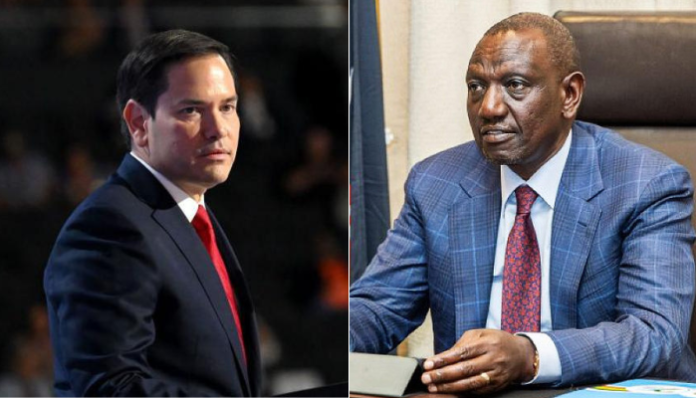
US Secretary of State Marco Rubio Holds Phone call With Ruto

President William Ruto has revealed that he had a telephone conversation with United States Secretary of State Marco Rubio on Tuesday.

He said they deliberated on several issues of mutual interest, including trade, regional and international peace and security.

“We discussed the need for the US government to support the renewal of the African Growth and Opportunity Act (AGOA), which is a comprehensive framework between America and Africa,” he said.

They also agreed on the necessity for greater engagement of the US Department of Commerce in facilitating the growth of trade with Africa.

Ruto said he thanked President Donald Trump for appointing Massad Boulos as Special Envoy to the Great Lakes region.

He noted that the move signals a strong US government commitment to Africa’s regional stability, peace initiatives and resolution of conflicts.

“Secretary Rubio and I also discussed the situation in Haiti. He reaffirmed the strong US support for the Kenya-led effort to stabilise Haiti,” the President said.

In that regard, Ruto said he welcomed Rubio’s support for the effort to secure sustainable UN support for the Multi-National Security Support Mission (MSS).

On the peace and security situation in the region, Secretary Rubio thanked Kenya for the leadership role it is playing in the search for peace and resolution of conflicts.

This is on Kenya’s role in providing forum for diverse Sudanese actors to engage in an effort to restore civilian governance, and on efforts with other partners including Saudi Arabia and the United Arab Emirates in engaging the combatants on the need for dialogue and silencing the guns. 

“In this regard, I briefed him on the Joint Summit of Heads of State of the EAC-SADC on the DRC peace initiative, held on Monday,” Ruto said.

As regards the South Sudanese conflict, Ruto updated Rubio on the current situation and the initiatives they are engaged in to encourage the government and opposition to re-engage, de-escalate violence and rededicate themselves to the search for peace.

“I also briefed Secretary Rubio on escalating terrorist activities in Somalia and the necessity for our two countries to work together in confronting this threat to our interests as well as to international peace and security,” Ruto said.

Create a free account, or log in.

Gain access to read this content, plus limited free content.

Yes! I would like to receive new content and updates.

Sponsored Ad

Ad 1
Ad 2
Ad 3
Ad 4
Ad 5
Ad 6