Sponsored Ad

Ad 1
Ad 2
Ad 3
Ad 4
Ad 5
Ad 6
32.9 C
Kenya
Thursday, May 14, 2026
Home Blog Page 198

MPs question Ksh.42B cost of constructing new Bomas complex amid delays

The ongoing construction of the Bomas International Convention Complex (BICC) came under sharp focus on Thursday as members of the National Assembly’s Tourism and Wildlife Committee questioned the high cost of the facility.

The legislators raised concerns with the cost of Ksh.42 billion being used to construct the facility, saying the figure was exorbitant and too high compared to other similar facilities in the region.

The total overhaul of the popular Bomas of Kenya and construction of a new international meetings, conferences and exhibitions centre, dubbed Bomas International Convention Centre (BICC), is touted as part of Kenya Kwanza government’s flagship projects.

However, the 11,00-seater facility, whose construction began in March last year, has raised eyebrows, as members of the National Assembly Tourism and Wildlife Committee poked holes into the cost of construction.

Fafi MP Yusuf Salah said: Kigali is much lower than this one. When we talk of a hype of this is a one of a kind, I want clarity as to the amount of money used…”

Defence Principal Secretary Patrick Mariru stated: “It won’t be good to do an empirical comparison because I am on record. In terms of actual comparisons about the figure I will have to check.”

The members also questioning why the pace of the construction of the building was still at 35%, with the deadline announced by President William Ruto fast approaching.

The facility had been scheduled to host the France-Africa Summit from 11th May this year.

MP Salah added: “A time of one month with 35% completion, the numbers are not adding up. Unless we are going to work in supernatural way.”

Committee Chairman MP Kareke Mbiuki chimed in: “With all due respect and humility, do you think the Africa Summit will be held in BICC? The President made clear instructions.”

PS Mariru responded: “We are working 24 hours, the President committed that the France-Africa Summit will happen in Nairobi, and not only in Nairobi, in BICC.”

This as it also emerged that the BICC will utilize parking spaces inside the Nairobi National Park, which will also see the animal orphanage moved closer to the parking designated for the facility at the park, raising concerns over the interference with the natural wildlife habitat.

Brigadier Titus Sokobe, Chief of Special Projects, KDF, said: “We need to move the Nairobi orphanage from where it is, we have been interacting with all stakeholders, including Karengata activists and NEMA. Of course, there are some individuals here and there who are not very happy.”

Oburu Oginga Officially Elected ODM Party Leader as Junet Announces Major Leadership Changes at SDC

By Andrew Kariuki

The Orange Democratic Movement (ODM) on Friday announced sweeping leadership changes during its National Delegates Convention (NDC) held at Jamhuri Grounds in Nairobi.

Party Director of Elections Junet Mohamed read out the resolutions adopted by delegates, marking a significant shift in the party’s leadership structure.

Among the key changes, Oburu Oginga was elected as the new ODM Party Leader, replacing Late Raila Odinga in a move seen as part of ongoing internal realignments within the party.

Vihiga Senator Godfrey Osotsi was dropped from his position as Deputy Party Leader. In his place, Mombasa Governor Abdulswamad Shariff Nassir and Kisii Governor Paul Simba Arati were elected as Deputy Party Leaders.

Homa Bay Governor Gladys Wanga was elected as the party’s Chairperson, with Rarieda MP Otiende Amollo and Dr. John Ariko Namoit taking up positions as Deputy Chairpersons.

In other changes, Ahmed Abdullahi Jiir was elected National Organising Secretary, deputised by Ruth Odhiambo. MP Rozzah Buyu was elected Secretary for Political Affairs.

The resolutions come amid heightened internal tensions within ODM, with parallel meetings and factions emerging over the party’s direction and leadership.

Police Arrested Three Suspects, Stolen Goods Recovered in Archers Post Burglary

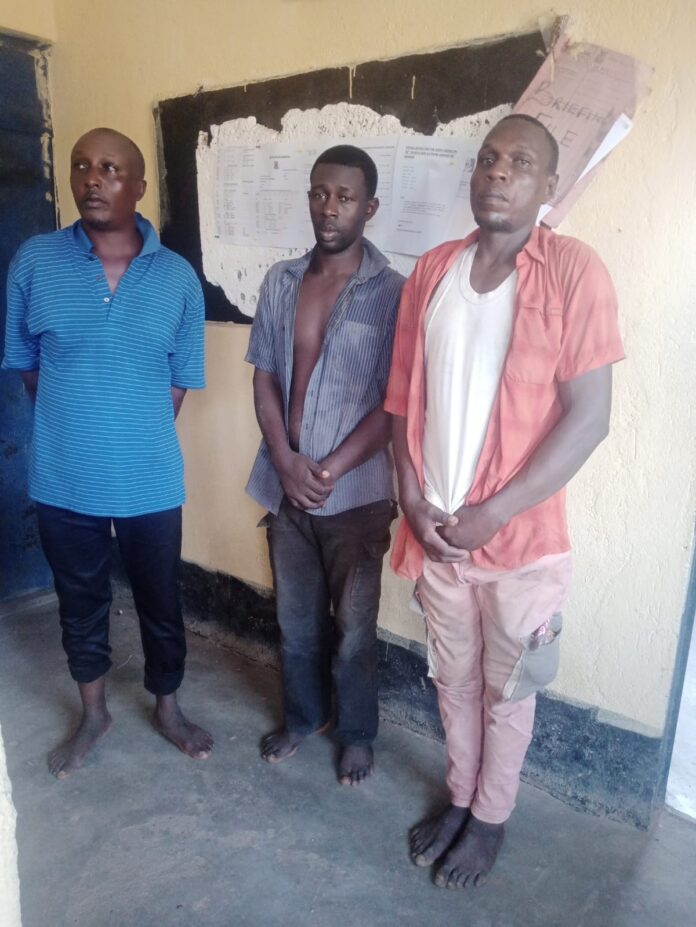
Three suspects have been arrested and stolen goods recovered following a night-time burglary in Archers Post, Samburu County, after a police roadblock operation intercepted the suspects in the early hours of the morning.

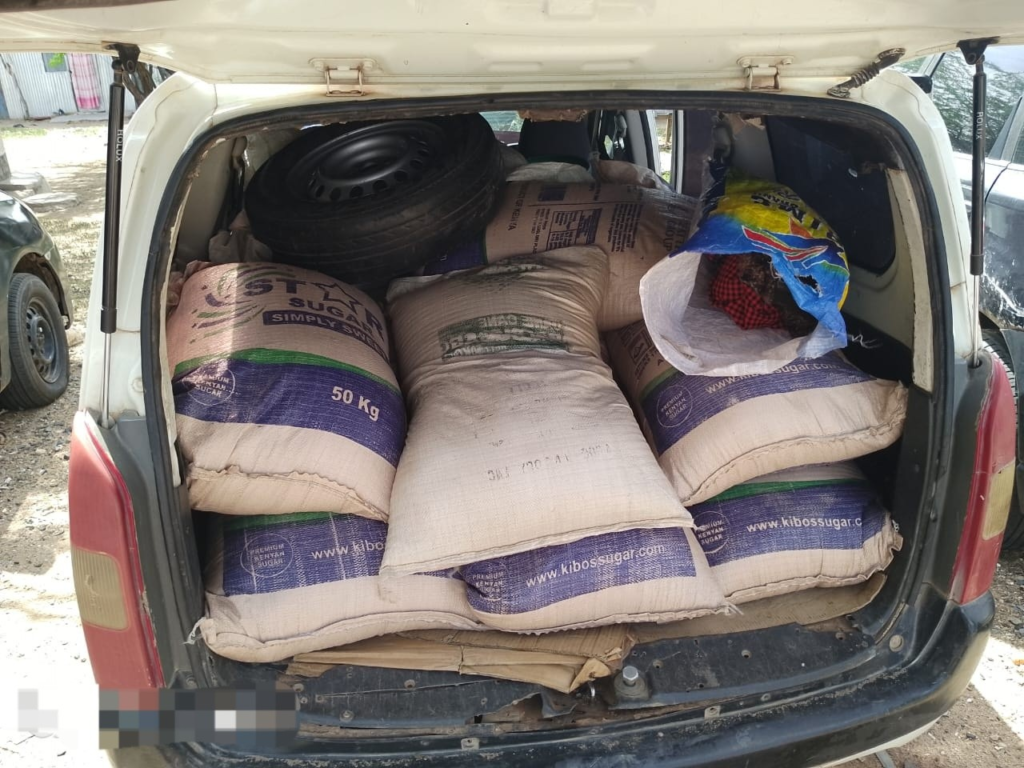
The arrests were made at about 4:30 a.m. during a multi-agency operation mounted near the School of Military Engineering, where officers stopped a white Toyota Probox (registration KBQ 065Q) carrying four occupants.

A search of the vehicle led to the recovery of 20 gas cylinders and 13 sacks of sugar weighing 50 kilograms each. The occupants could not give a satisfactory account of the goods. One suspect escaped into a nearby bush, while three were apprehended.

The suspects were identified as Timothy Ngunyi Mwangi (50), the driver, David Mureithi Mwangi (37), and Douglas Achongo Orero (39).

Officers also recovered KSh 8,205 in coins, assorted credit cards, a machete, scissors, two screwdrivers, two Maasai lesos, a woollen cape, and a metallic bar believed to be a housebreaking tool.

The suspects were taken to Archers Post Police Station, where they are being held pending arraignment on March 27, 2026.

Preliminary investigations linked the suspects to a burglary at a shop identified as “Tawakal” in Archers Post Township, which had been broken into during the night.

Stolen items included 15 sacks of sugar (50kg each), KSh 9,000 in coins, and credit cards valued at KSh 15,000, with total losses estimated at KSh 126,000. The shop owner has positively identified the recovered items.

The Directorate of Criminal Investigations (DCI) has reaffirmed its commitment to combating crime through intelligence-led operations and multi-agency collaboration, and has urged the public to remain vigilant and report suspicious activities to the nearest police station.

By Anthony Solly

Linda Mwananchi meeting temporarily disrupted after police attempt to evict attendees

The Linda Mwanachi meeting at Ufangamano House on Friday, March 27, was temporarily disrupted after police officers attempted to storm the gathering.

Nairobi Senator Edwin Sifuna, who was addressing the attendees, was forced to cut short his speech and ask the officers to leave the premises.

“The police are not allowed to enter here. You should stay outside and protect us; please do not disrupt our meeting. We respect you, we are your brothers, and we are peaceful. So why are you coming in?” Sifuna pleaded with the officers.

Siaya Governor James Orengo joined Sifuna and warned the officers against attempting to disrupt the meeting.

Orengo said the officers will face consequences if they attempt to assault anyone in the meeting.

“I want to tell the police that any assault on any one of us will be met with consequences. We will pursue you and hold you accountable, and we will also go after those who sent you,” said Orengo.

The Linda Mwananchi team stood their ground, forcing police officers to retreat from attempting to evict them from Ufangamano House. 

Earlier, the officers barricaded the road leading to the Ufangamano house, blocking anyone from getting into the building.

However, the Linda Mwananchi team managed to breach the police barricade and access the Ufungamano House.

The faction is holding a parallel meeting from the ODM National Delegates Conference (NDC) being held at the Jamhuri Showground.

The team, which is led by Nairobi Senator Edwin Sifuna and Embakasi East MP Babu Owino, described their meeting as the ‘People’s NDC.

The wing is opposed to the leadership of ODM party leader Oburu Oginga and opposed to the idea of the ODM party backing President William Ruto’s re-election in 2027.

Parents should monitor children ’24/7′ on Roblox, says developer

By Stacy Boit,

An independent game developer for Roblox says he believes the platform’s child safety measures, including age verification checks, do not go far enough.

Roblox is the most popular gaming platform in the UK among eight to 12-year-olds.

In an exclusive interview with BBC Radio 5 Live, the developer – whom the BBC is not naming at their request – said parents should monitor their children on the platform “24/7, and if that’s not possible then they shouldn’t be playing Roblox”.

A spokesperson for Roblox said “safety is a top priority, and we have advanced safeguards and filters designed to prevent harmful content and communications on our platform to keep all our users safe”.

In 2024, Roblox averaged more than 80 million global players per day – with roughly 40% of them under the age of 13.

The developer, “Sam”, did not want us to use his real name but contacted the BBC after hearing an interview on 5 Live Breakfast with Matt Kaufman, Roblox’s chief safety officer.

In the interview, Kaufman spoke about the numerous safety checks the platform employed, including the mandatory age verification checks which were rolled out in January 2026 for all users in the UK.

Sam, who is not employed by Roblox, is an independent developer who earns an income from content creation on the platform. He also works in a voluntary capacity for a non-profit online safety organisation.

He said he had seen first-hand how safety is nothing like he [Kaufman] was portraying it to be.

Roblox is a platform where users can create their own games or play games made by other creators. It is set up like an open world, where players can interact with each other. Creators also have to provide a description of the game and a content maturity label, which is used to assign it to an appropriate age range.

Any player can create games and make money from advertising or by charging other users to play. Some are also on Roblox’s creator programme, where they are paid directly by Roblox depending on user engagement or bringing in new audiences.

Critics say the platform should do more to protect the millions of very young players on the platform, with some alleging it is a target for groomers. Others claim it can expose children to harmful or violent content through the types of games created.

Sam said: “I’ve seen people on this platform be lured into engaging in ways that they shouldn’t with complete strangers.”

He said, in his role as a safety monitor, he had also seen reports of “people leading others off platform” to have conversations away from the game, something he said “Roblox does not allow”.

Sam added: “I have seen games where the goal is to shoot as many people as possible in the depicted version of Sandy Hook or Columbine. I’ve seen remakes of Epstein Island on Roblox.”

He said concerns were flagged via a form, but added “maybe 30% actually get accepted”.

Asked what advice he had for parents of children entering the world of gaming who had never used Roblox before, Sam said: “When playing Roblox, children need to be monitored 24/7. And if that’s not possible, then they shouldn’t be playing Roblox.”

In a statement given to the BBC, Roblox said it took “swift action against those found to be breaking our rules”. It said it operated an age check process certified by independent experts so children were limited, by default, to chatting with users who were of a similar age.

“”We also continuously monitor user behaviour. If we detect signs their actions do not match their checked age, we prompt users to age check again,” it added.

CS Murkomen Pushes for Paramilitary Training, Stronger Legal Protection for Serjeant-at-arms

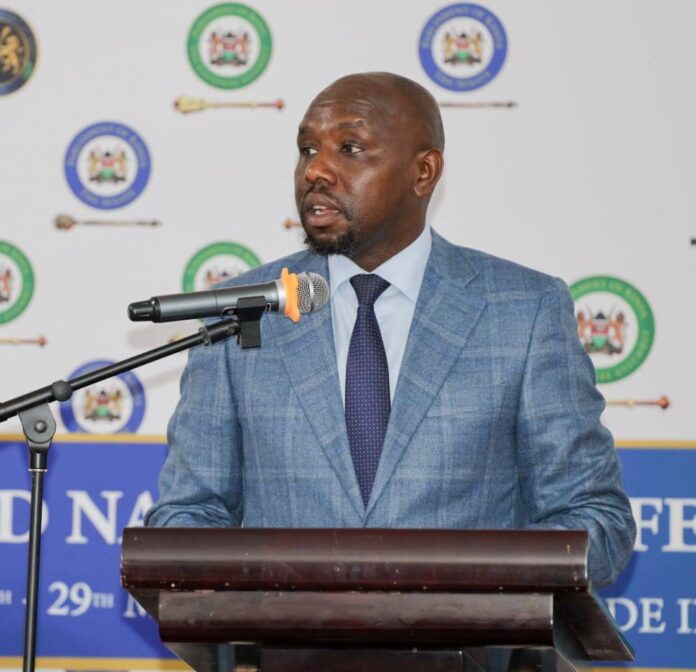
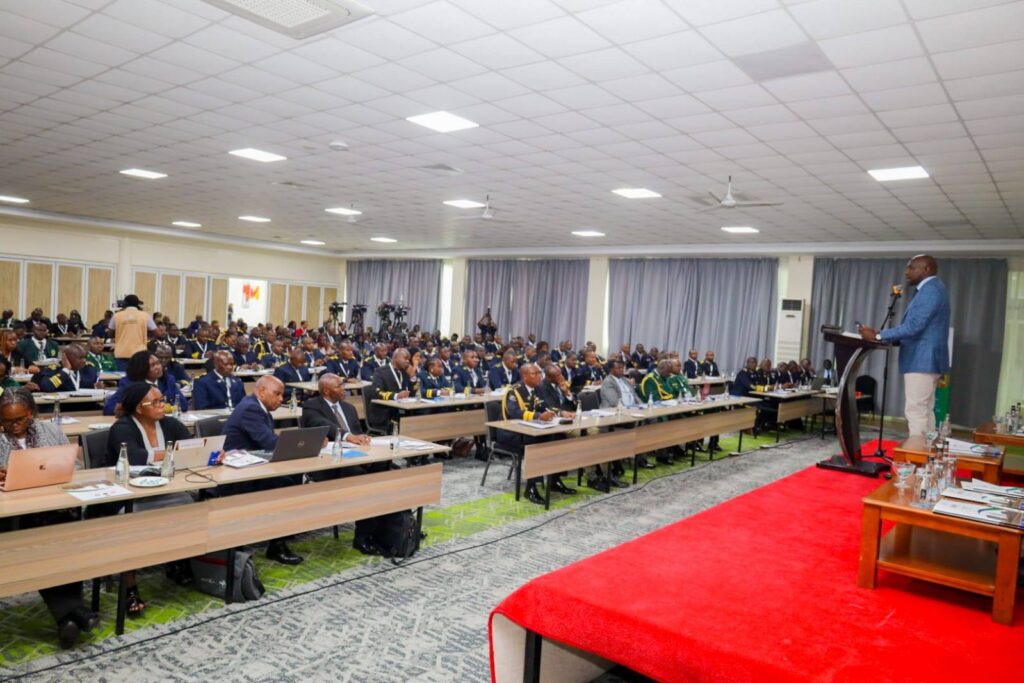
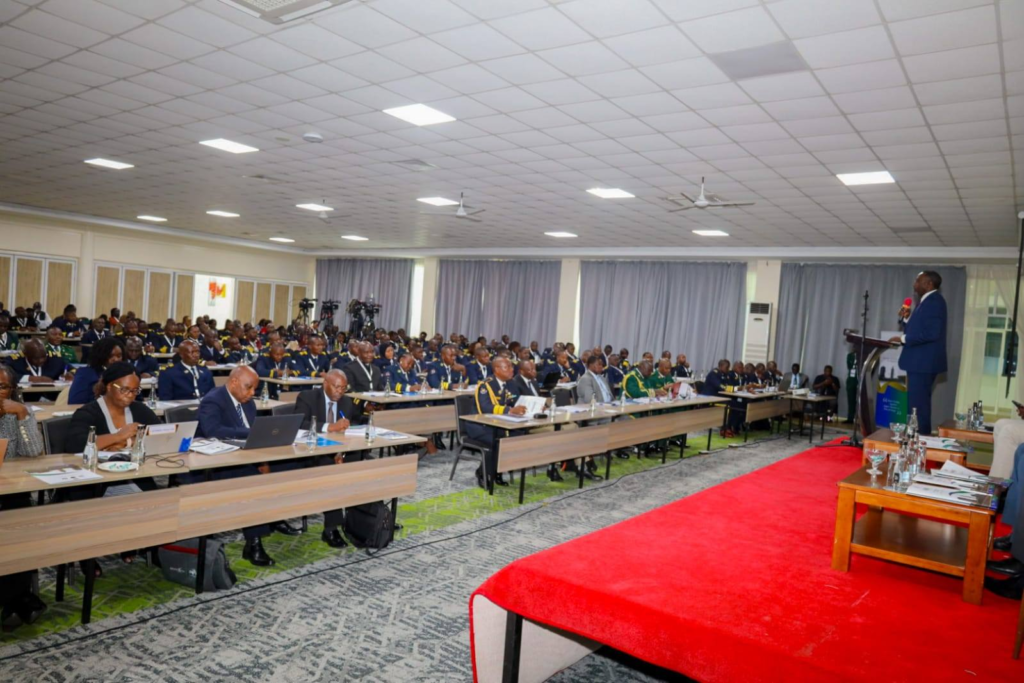
Cabinet Secretary for Interior and National Administration, Hon. Kipchumba Murkomen has called for reforms to strengthen the security apparatus of legislative institutions, enhanced training and legal protections for Serjeant at Arms, citing the 2024 invasion of Parliament as a turning point.

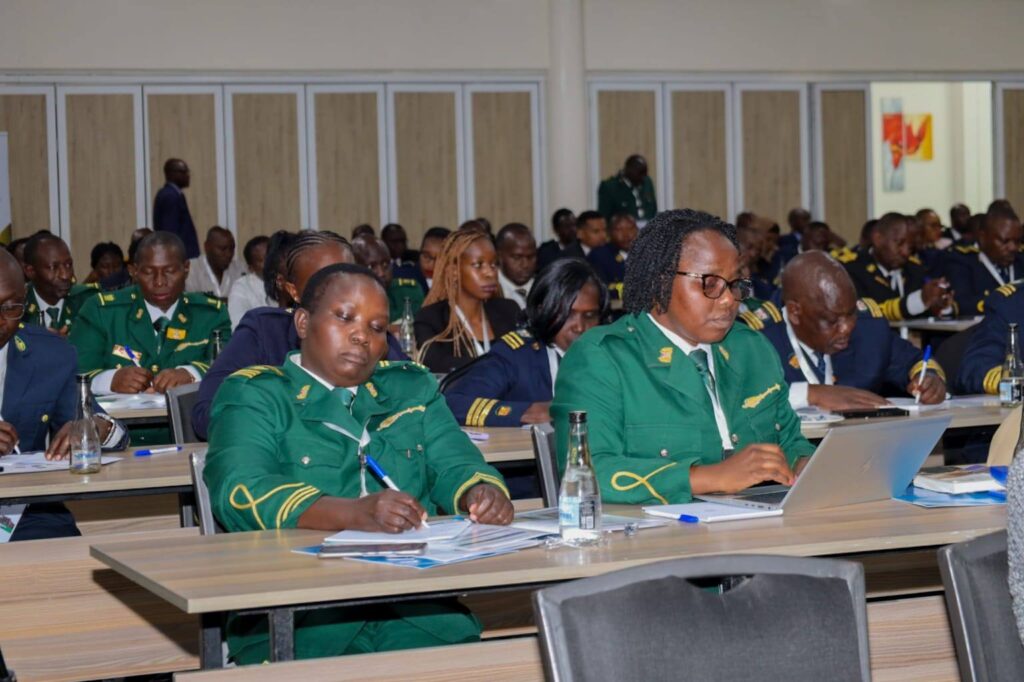
Speaking during the 3rd National Conference of Serjeant-at-Arms, CS Murkomen described the invasion of Parliament on June 25, 2024, as a defining moment that exposed vulnerabilities within Kenya’s democratic institutions.

“The one of the lowest point in our recent history is the invasion of the precincts of Parliament.” said Murkomen.

The CS cautioned that while security at the national level has since been reinforced, County Assemblies remain exposed to similar threats and must urgently strengthen their preparedness.

“If such a thing happens to a county assembly, there is need for us in this forum to prepare and imagine such scenarios,” he said. “I propose that Serjeants-at-Arms in County Assemblies must have direct contact with county security teams and a seat in County Security Committees.”

CS Murkomen emphasized that institutional security must be anchored on both coordination and capacity, proposing paramilitary training for Serjeants-at-Arms to enhance their response to emerging threats.

“We can find ways of making paramilitary training available for Serjeants-at-Arms in counties,” he stated.

The CS noted that threats facing legislative institutions have evolved beyond physical confrontations to include misinformation, cyber risks, and procedural manipulation. He described technology as a double-edged sword, warning that while it enhances surveillance, it also creates new vulnerabilities.

“New technology is both an asset and a risk,” he cautioned, adding that misinformation and disinformation circulating on social media can easily incite public unrest and mobilize attacks on institutions.

Mr. Murkomen called for urgent legislative amendments to protect the Office of the Serjeant-at-Arms from political interference. He noted that many officers face a dilemma when ordered by leadership to facilitate “procedural sittings” that lack an order paper.

“We must introduce legislative measures that protect Serjeants-at-Arms and make it punitive for Members to use force to achieve their objectives,” the CS stated. He further warned officers against participating in irregular acts, such as switching off CCTV or microphones to manipulate house records.

Digital Threats

He further urged officers to uphold integrity and resist involvement in irregular practices, including manipulation of proceedings.

“Do not participate in unlawful processes such as switching off microphones or CCTV to manipulate proceedings. Stand firm. The law must protect you,” he advised.

CS Murkomen challenged stakeholders to move beyond discussions and implement concrete reforms that will safeguard legislative institutions.

“Institutions outlast individuals. The systems we build today will protect future generations and uphold democracy,” he said.

By Anthony Solly

Trump’s signature to appear on US dollars in first for sitting president

By Stacy Boit,

Donald Trump is set to become the first sitting US president to have his signature on US banknotes, the treasury department has announced.

Trump’s signature will appear alongside Treasury Secretary Scott Bessent, an unprecedented move that the department said would mark America’s 250th anniversary.

“There is no more powerful way to recognize the historic achievements of our great country and President Donald J Trump than US dollar bills bearing his name,” Bessent said. US banknotes have traditionally carried the signatures of treasury officials.

It is the latest move by the administration to associate Trump’s name with a range of government programmes and public buildings.

The first $100 (£75) bills with the signatures of Trump and Bessent will be printed in June, with others to follow.

Notes currently being printed bear the signatures of former President Joe Biden’s Treasury Secretary, Janet Yellen, and Treasurer Lynn Malerba.

It has been tradition since 1861 for the US treasurer’s signature to appear on bank notes, a tradition that would end under the Trump administration’s plans.

Ahead of the 250th anniversary, Bessent said printing currency bearing Trump’s name would be a “powerful way to recognize the historic achievements of our great country” and the president.

Current US Treasurer Brandon Beach vowed the country’s currency will “continue to stand as a symbol of prosperity, strength, and the unshakable spirit of the American people”.

This year sees the 250th anniversary of the formal declaration when the 13 original American colonies, later states, declared their independence from Britain.

The Democratic Party governor of California and long-time Trump critic Gavin Newsom responded to the announcement with an attack on the president’s economic record. Now Americans will know exactly who to blame as they’re paying more for groceries, gas, rent, and health care.

Earlier this month, a federal arts commission approved a commemorative 24-karat gold coin bearing the image of Trump, also to celebrate America’s 250th birthday.

During his first term in office, President Trump’s name appeared on paper support cheques sent to millions of Americans during the Covid-19 pandemic.

During the launch of the Kenya National Public Health Institute (KNPHI) CS Duale announces a major shift in Kenya’s Health System

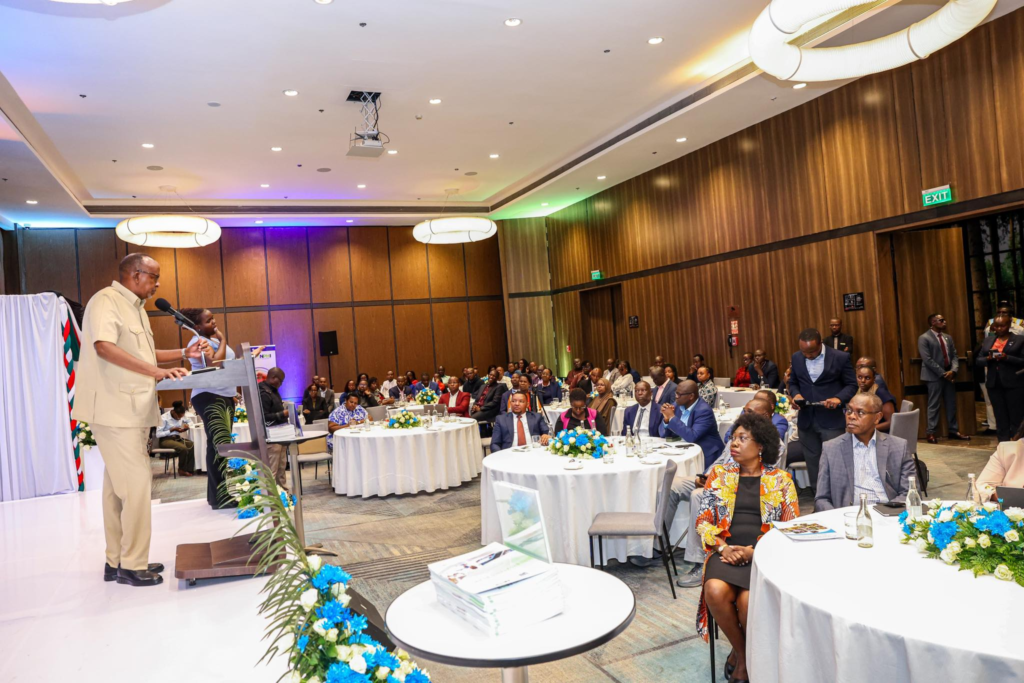
Health Cabinet Secretary Hon Aden Duale Duale has announced a major shift in Kenya’s health system, placing preparedness and resilience at the centre of national health security following the launch of the Kenya National Public Health Institute (KNPHI) Strategic Plan (2023–2027) and the National Action Plan for Health Security (2026–2030).

Speaking in Nairobi, the Cabinet Secretary said Kenya is moving from reacting to health crises to anticipating and managing them, noting that strong health security systems are essential to protecting lives, livelihoods and the economy.

He described the Kenya National Public Health Institute as the backbone of the country’s health security architecture, integrating surveillance, laboratories and emergency operations into a coordinated national response, and noted progress in operationalising the institute through governance, technical transition and dedicated financing.

The new frameworks, he said, provide a clear roadmap for real-time data use, emergency preparedness, risk communication and a One Health approach linking human, animal and environmental health.

The Cabinet Secretary also highlighted progress in Universal Health Coverage, noting that over 30 million Kenyans are now registered with the Social Health Authority, expanding access to care and financial protection while strengthening early detection at community level.

He underscored Kenya’s growing regional leadership, citing the Africa CDC Eastern Africa Regional Coordinating Centre and the WHO Regional Emergency Hub in Nairobi, and called for sustained domestic financing to anchor health security gains.

Looking ahead, he announced the inaugural Kenya Health Security Convention to align priorities and position the country as a regional hub for health security dialogue.

Those in attendance included Mary Muthoni, Principal Secretary for Public Health and Professional Standards; Festus K. Ng’eno, Principal Secretary for Environment and Climate Change; Neema Kimambo, WHO Acting Country Representative; Paul Kariuki, Chairperson, Kenya National Public Health Institute Board; Kamene Kimenye, Acting Director-General, Kenya National Public Health Institute; alongside representatives from Africa CDC, development partners, and stakeholders from national and county governments.

By Anthony Solly

The spiky cactus fruit giving Indian farmers a cash boost

By Stacy Boit,

“It was a do-or-die decision,” says Arun Srinivas. In 2020 he abandoned his career in finance, sold all his shares and gold and invested the money in the family farm, in the southern Indian state of Karnataka.

“I wanted to do something on our land that would benefit me both mentally and financially,” he explains.

The family farm had been growing coconuts and mango, but he had another crop in mind dragon fruit. A little research convinced Srinivas that it might be a good bet.

“It was not just good financial return crop, it also requires very little water and has lower disease risk compared to crops like other fruits, I felt it was the right crop for my land,” he explains.

Srinivas approached his new career like an investment project, collecting data and making detailed plans.

“I visited nearly 80 to 100 farms. Spoke to farmers, understood the challenges, profits and risks, and made my own analysis almost like analysing stocks,” he says.

The work paid off. He now cultivates dragon fruit on 11 acres producing around 220 tonnes a year.

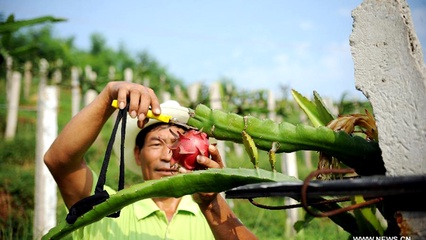
Usually it is grown on concrete pillars with a circular ring sometimes a tyrea t the top for the vines to hang over.

Originally from Central America, Vietnam has become the world’s leading producer, but India has plans to catch up.

Compared to traditional crops dragon fruit promises higher returns and relatively stable prices.

In 2020, the industry was given a boost when Prime Minister Modi congratulated the farmers of Kutch in Gujarat for their success in cultivating and exporting the fruit.

“Dragon fruit entered India around 2009. At that time, we knew very little about the crop or how to cultivate it,” says Dr G Karunakaran, the principal scientist and head of the Centre of Excellence for Dragon Fruit at the Indian Institute of Horticultural Research in Bengaluru.

“Serious research on dragon fruit in India started around 2013–14 when we began systematic studies on its cultivation.”

But cultivation really took off after 2021, thanks to media coverage.

“Dragon fruit adoption in India spread like mobile phones, once farmers saw the income potential, everyone wanted to grow it,” says Karunakaran.

Unlike mangoes, which have a short harvest season, dragon fruit can be harvested continuously for six months.

“Farmers harvest small quantities every month, which provides a steady income. A family can manage one acre and produce up to 15 tonnes of fruit annually,” says Karunakaran.

One quirk of dragon fruit farming is that its flowers only bloom at night and into the early hours of the morning. For many varieties, if you want a crop, then the flowers have to be pollinated in the dark, often by hand.

In Karnataka, Srinivas solved that problem by using honey bees.

“Nature has already designed the perfect pollination system. When humans interfere too much, it often disturbs that balance,” he says.

For Cheradeep Ma venturing out at night to pollinate dragon fruit plants at his farm in Wayanad, in the southern state of Kerala, could be deadly.

“In Wayanad, going into the plantation at night is risky. We have snakes, wild boars, sometimes even leopards and elephants,” he says.

To avoid potentially deadly wildlife he focused on self-pollinating varieties.

Ma moved into dragon fruit in 2020, as an alternative to coffee and pepper cultivation.

Today he has between 80 and 100 varieties on his farm, the ones that perform best in the local climate he sells to other farmers.

That income, plus selling his fruit, has made the farm more financially sustainable.

“Dragon fruit has helped me diversify the farm income. If coffee prices fall or pepper prices fluctuate, crops like dragon fruit helped me sustain the estate,” he says.

Dr Sunila Kumari, is also on a mission to find the most promising varieties of dragon fruit for Indian farmers.

In 2019 she traveled across India collecting samples and bought them back to her base in Haryana, in the northwestern state of Punjab, to compare their performance.

“”From these variants, we identified the plants that consistently produced larger fruits and better yields, and selected them as elite mother plants,” says Kumari.

Her company, Dragonflora Farms, now has two “promising” elite lines he says.

Globally, dragon fruit production includes several categories, including varieties with a red skin and white flesh, fruit with red skin and red flesh and yellow-skinned types.

However, the Indian market has developed a clear preference – consumers strongly prefer large-sized red-flesh fruits.

“These varieties are visually attractive, have a richer flavor profile, and generally command a better market price,” Kumari explains.

In addition to finding the right varieties for the Indian climate and customer tastes, farmers also have to modernise growing and storage techniques, says Kumari.

“We are currently at a critical crossroads. To move from being a curious newcomer to a global powerhouse like Vietnam. We must pivot from a volume-focused approach to a precision-driven export strategy,” she says.

Indian yields of between 15 and 25 tonnes per hectare are well behind the international standard of more than 30 tonnes, Kumari points out.

Indian farms need to move beyond “simple pole and tyre” fields and instead build higher density trellis systems where the canopy can be better managed, she says.

Keeping the fruit in good condition after harvest also needs investment.

“Without an integrated network of solar-powered, on-farm, pre-cooling units and specialized cold-chain logistics, our fruit will never reach premium European or North American markets in peak condition,” she says. A shift in mindset is needed, says Kumari.

“We must treat dragon fruit not as a hardy cactus that survives neglect, but as a high-value horticultural asset.”


Clerk of the Senate Calls for Stronger Professionalism and Collaboration Among Serjeant-at-arms

The Clerk of the Senate, Mr. Jeremiah Nyegenye, has called for enhanced professionalism, collaboration and adaptability among Serjeant-at-Arms to strengthen legislative institutions amid evolving challenges.

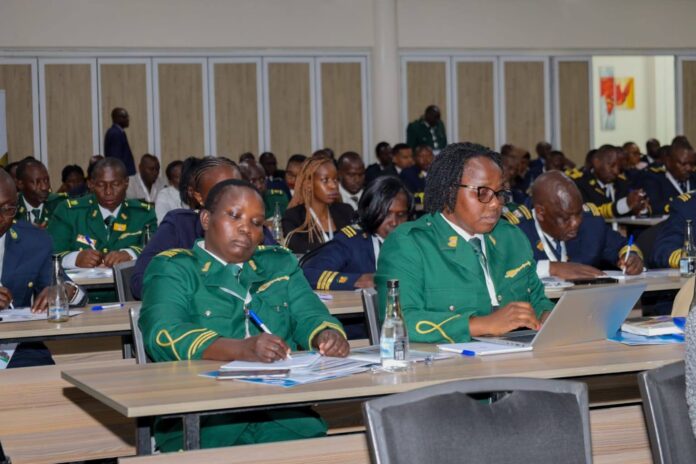
Speaking at the 3rd National Conference bringing together Serjeants-at-Arms from the Senate, National Assembly, and County Assemblies, the Clerk underscored the critical role these officers play in ensuring the smooth functioning of parliamentary business.

He noted that legislative bodies are currently operating in a complex environment characterized by emerging security threats, rapid technological changes, and a dynamic political landscape.

“We meet at a time when legislative institutions are facing emerging and complex challenges. Security threats continue to evolve, technology is rapidly changing how we conduct parliamentary business, and the political environment is dynamic,” he said.’

He added that these factors coupled with limited resources, require officers to remain vigilant, innovative, and united in purpose.

The conference provides opportunity for participants to reflect on ways to improve legislative support services across institutions.

Emphasizing the expanding mandate of the Serjeant-at-Arms, the Clerk highlighted that their responsibilities now go beyond traditional roles such as maintaining order in the Chamber.

“They include managing parliamentary precincts, ensuring the safety of Members and staff, enforcing protocol, and supporting the overall operations of legislative Houses,” he noted.

He encouraged officers to prioritize strengthening professional capacity, enhancing collaboration between national and county legislatures, and promoting recognition of the Serjeant-at-Arms function.

The Clerk also stressed the importance of maintaining discipline, integrity, and impartiality, particularly during politically charged debates and proceedings.

He challenged participants to use the conference as a strategic platform for building resilience within legislative institutions and promoting the sharing of best practices.

“By fostering stronger networks and developing clear operational standards, the forum aims to enhance efficiency and public confidence in legislative processes,” he said.

By Anthony Solly

Create a free account, or log in.

Gain access to read this content, plus limited free content.

Yes! I would like to receive new content and updates.

Sponsored Ad

Ad 1
Ad 2
Ad 3
Ad 4
Ad 5
Ad 6