Sponsored Ad

Ad 1
Ad 2
Ad 3
Ad 4
Ad 5
Ad 6
25.1 C
Kenya
Thursday, May 14, 2026
Home Blog Page 204

Rocket stocks soar on report Musk’s SpaceX to file for share sale

By Stacy Boit,

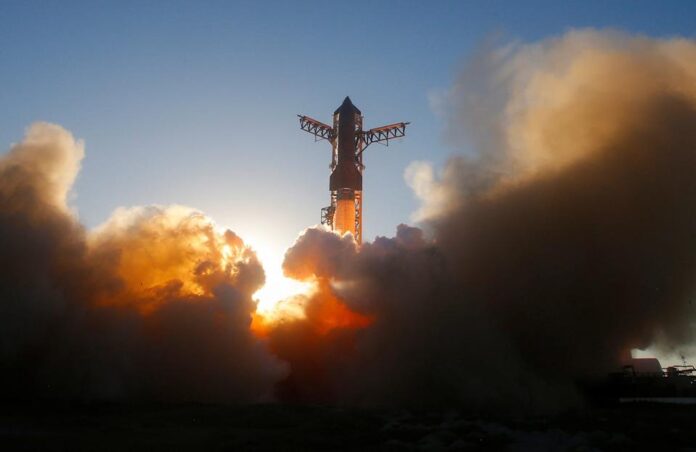
Shares of space companies soared in US trade on Wednesday following a report that technology multi-billionaire Elon Musk’s SpaceX could this week file to list shares on the stock market.

The stock prices of rocket makers Firefly Aerospace and Rocket Lab rose by more than 10%, while other space-related firms also saw their shares jump.

SpaceX is expected to go public this year with a valuation of around $1.75tn (£1.31tn). The technology news outlet The Information reported that the firm could file for the initial public (IPO) within days.

The BBC has contacted SpaceX for comment.

SpaceX, which makes and launches rockets, could reportedly raise more than $75bn from the share sale. That would make it the biggest stock market debut in history.

Other space industry firms also saw their stock prices surge on Wednesday, including Intuitive Machines – which rose by nearly 15%, while shares of Earth-imaging company Planet Labs jumped by more than 10%.

Satellite maker Sidus Space gained nearly 19% and shares of AST SpaceMobile rose by 10%.

SpaceX was founded in 2002 by Musk, the world’s richest man who also runs several other companies including electric car giant Tesla, the social media platform X and brain implant firm Neuralink.

SpaceX has in recent years become an aerospace powerhouse, securing billions of dollars in US government contracts and space projects.

The firm has other companies in its stable like xAI, which owns social media platform X and artificial intelligence (AI) firm Grok.

SpaceX also owns satellite firm Starlink, which provides internet services around the world.

The SpaceX share sale could make Musk the world’s first trillionaire.

He currently has a fortune of more than $820bn, according to Forbes, which tracks the wealth of the world’s richest people.

In 2025, Musk became the first person ever first person ever to achieve a net worth of more than $500bn.

Rigathi Gachagua Explains Absence from Raila Odinga Family Burial, Bondo Visit Delay

By Peter John

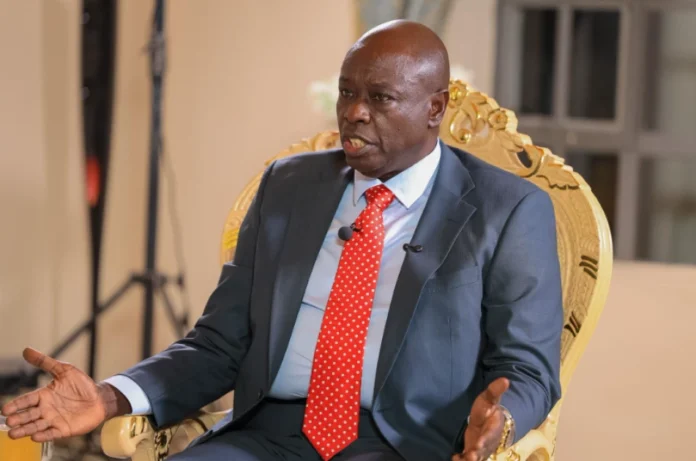
Former Deputy President Rigathi Gachagua has explained why he did not attend the State funeral service of the late former Prime Minister Raila Odinga at Nyayo National Stadium, nor the burial ceremony held later in Bondo.

Speaking during an interview on Ramogi TV on Wednesday evening, the Democracy for Citizens Party (DCP) leader said his decision was guided by security concerns and intelligence reports indicating potential threats to his safety.

Gachagua revealed that he had initially planned to attend both the Nairobi funeral service and the burial in Bondo.

However, he claimed to have received information suggesting that individuals had been mobilised to attack him during the events—an act he believes was intended to incite ethnic tensions between the Luo and Kikuyu communities.

According to him, attending under such circumstances would have risked disrupting what he described as a solemn and significant occasion for Odinga’s family and supporters.

He said he chose to stay away to avoid any incident that could have escalated into broader national unrest.

The former Deputy President further alleged that similar threats extended to the burial in Bondo, warning that any confrontation there could have strained relations between communities.

He maintained that his decision was informed by what he termed as credible intelligence from within security circles.

Gachagua also claimed that previous attacks against him in areas such as Kariobangi and Mwiki were orchestrated, linking them to individuals he accused of planning similar disruptions in Nyanza.

He further alleged that heckling incidents targeting James Orengo were connected to the same network, though he did not provide evidence to support the claims.

Despite the concerns, Gachagua insisted that he enjoys goodwill in the Nyanza region, recalling past visits alongside President William Ruto where he said he received a warm reception across counties including Migori, Homa Bay, Siaya, and Kisumu.

On why he has yet to visit Odinga’s home in Bondo months after the burial, Gachagua said he had already reached out to the family. He disclosed that he personally called Ida Odinga to convey his condolences and formally requested to visit.

However, he noted that the family asked for more time as they continued to mourn, and he is still awaiting their invitation. Gachagua emphasised that, in keeping with cultural norms and respect for the family, he would not visit unannounced.

He reiterated that his absence from both events was a deliberate decision aimed at preserving peace and preventing any potential disruption during a sensitive national moment.

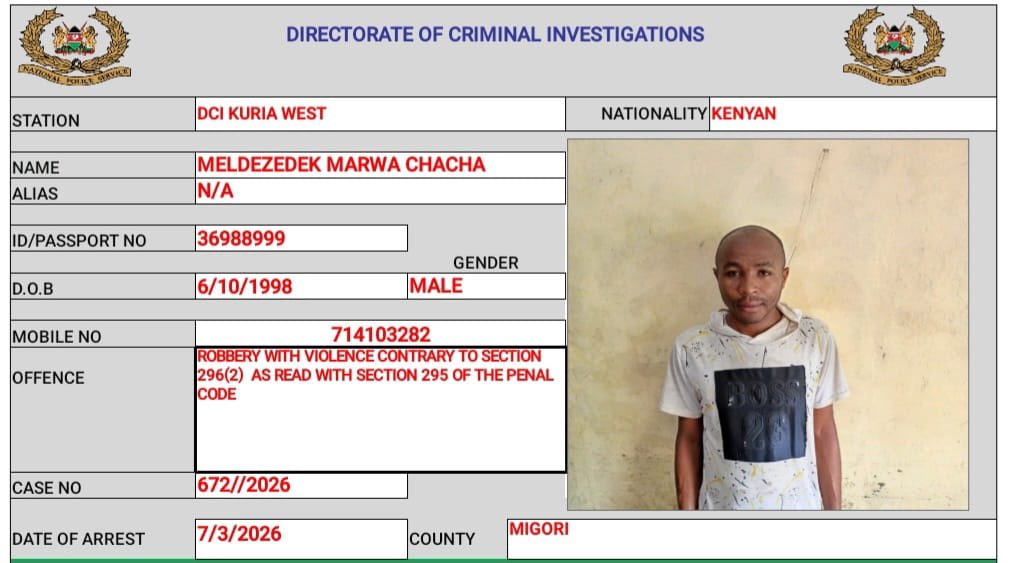
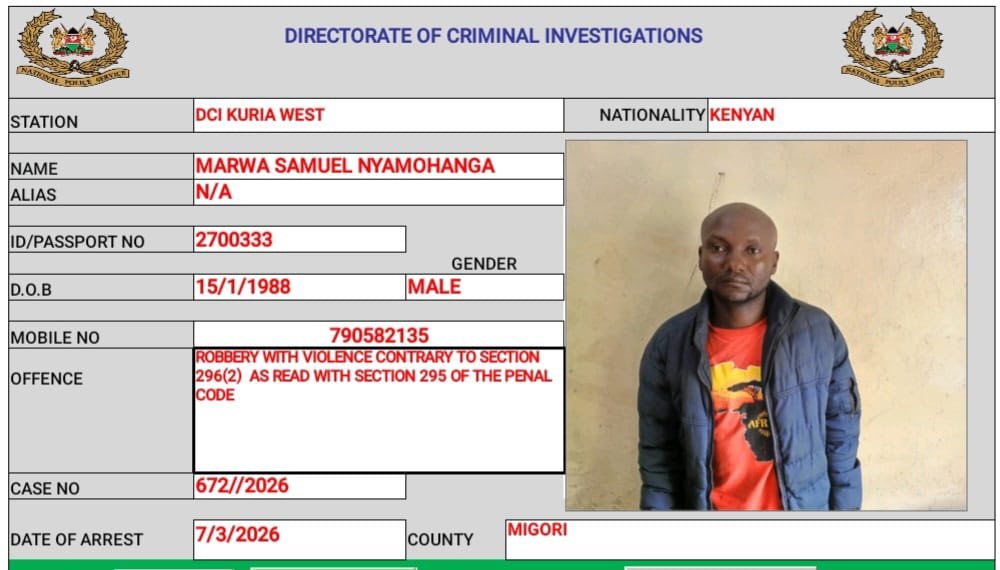
4 Charged Over Kuria West Robbery and Attempted Murder Cases

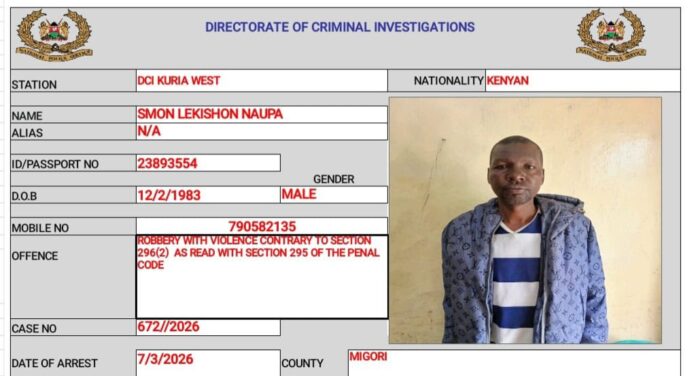
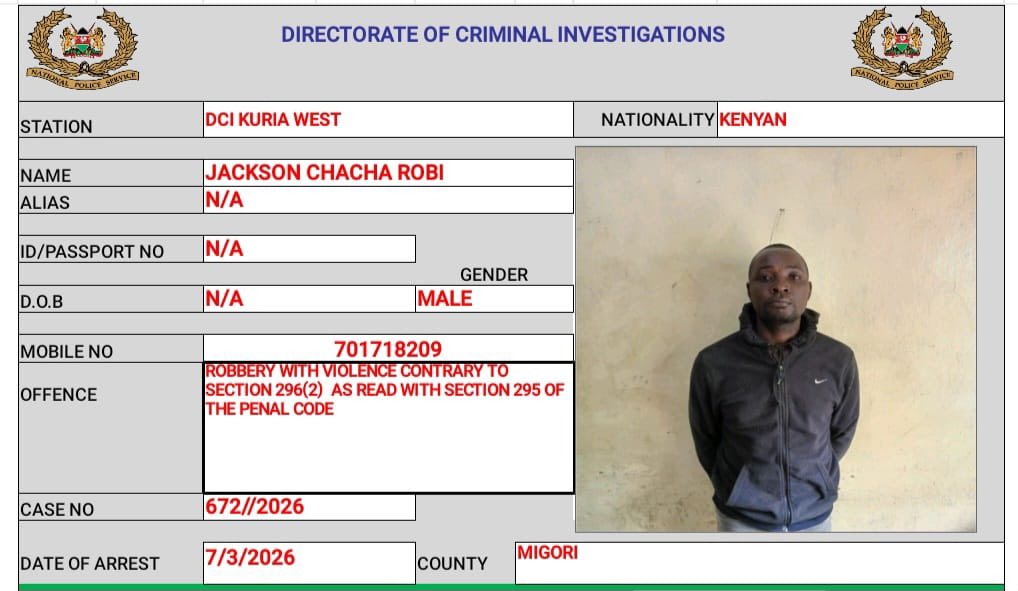
Four suspects linked to a series of robbery with violence and murder incidents in Kuria West Sub-County have been formally charged in court following their arrest earlier this month.

‎The suspects—Lekishon Simion Nawapa, Marwa Samuel Nyamohanga, Melchizedek Marwa Chacha, and Julius Mwita Juma alias Kehogo—were arrested on 5 March 2026 and presented before the Senior Principal Magistrate’s Court on March 9, 2026 under Miscellaneous Application No. E023/2026, where custodial orders were granted pending completion of investigations.

‎On 23 March 2026, they four were arraigned for plea taking and were subsequently charged under three separate case files where they faced seven counts of robbery with violence and two counts of attempted murder.

The prosecution opposed their release on bail, citing ongoing inquiries into other unresolved cases of a similar nature in which the suspects are believed to be involved.

‎The matter is scheduled for mention on March 31, 2026 for bail hearing and pre-trial conference.

‎The Directorate of Criminal Investigations (DCI) remains committed to combating violent crime and safeguarding the public.

By Anthony Solly

India’s fertilizer supplies under strain as war disrupts shipments

By Peter Jihn

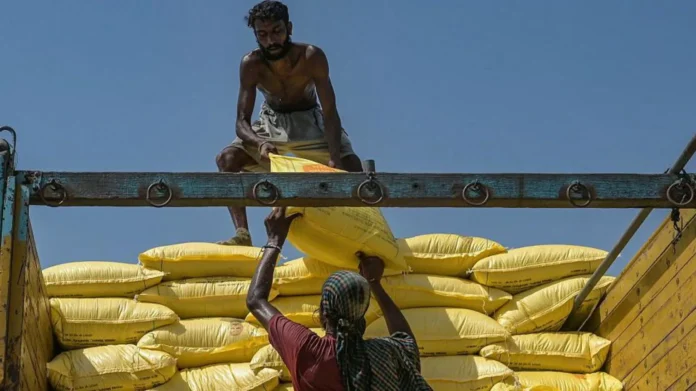
India’s fertilizer supplies are under pressure after disruptions to shipping routes due to the war in the Middle East, raising concerns about lower farm produce and higher food prices.

India, the world’s second-largest fertiliser user after China, depends heavily on imports of both raw materials and finished products – much of which comes from the Gulf, passing through the Strait of Hormuz, where shipping has been disrupted.

Prime Minister Narendra Modi has said his government has taken measures to ensure fertiliser supplies are not affected and to protect farmers from any impact.

Analysts say current stocks are enough for the upcoming sowing season, but this may change if the war stretches on.

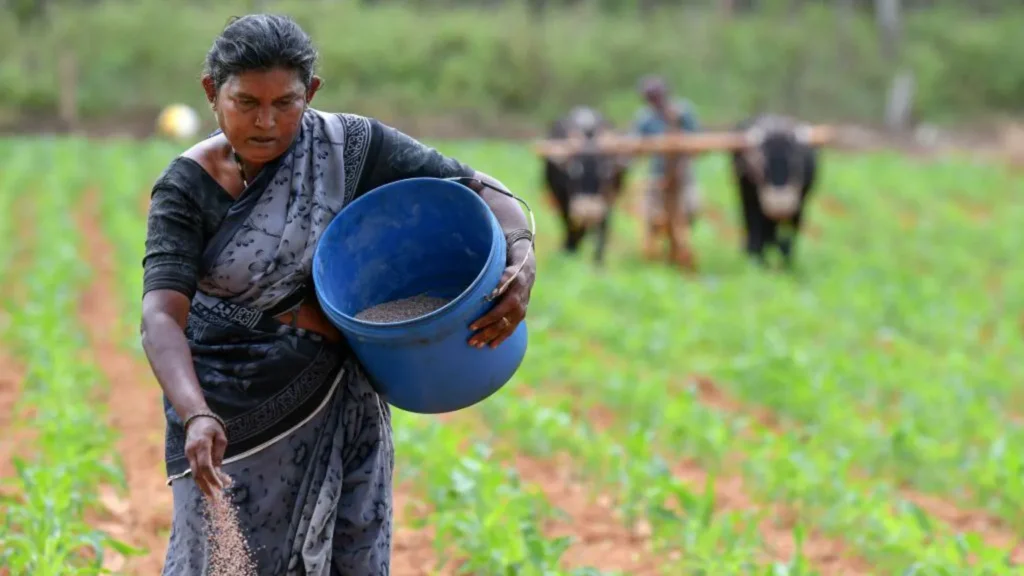
Nitrogen fertilisers such as urea – the most widely used in India – are crucial for farmers because many major food crops, including rice and wheat, cannot absorb adequate nitrogen directly from the air.

India uses nearly 40 million tonnes of urea annually, supported by government subsidies, and supply disruptions could affect planting decisions.

Farmers in northern states of Punjab and Haryana – which are major grain-producing regions – say they are not yet feeling the stress as the key sowing season (June-July) approaches. They typically start buying urea for this season from May.

Currently, supplies are available through farmer cooperatives as well as warehouses run by manufacturers and distributors, but there are worries about the future.

“We don’t know how long the stock will last if the war stretches any further,” said Manpreet Singh Grewal, president of a farmers’ collective linked to Punjab Agricultural University.

India had urea stocks of about 6.2 million tonnes as of 19 March, according to government data.

Fertiliser use peaks during the June-to-September monsoon crop season, which analysts say the current stocks should be able to support under normal conditions.

Some experts warn that the situation could worsen if disruptions continue.

India’s fertiliser production is “surely going to be impacted” because of the disruption, Siraj Hussain, a former federal secretary of agriculture and farmers’ welfare in India, told the BBC. “The government should be preparing for a shortage of urea and other fertilisers for the monsoon harvest.”

He points out that in many parts of India, farmers use more urea than recommended, applying “more nutrients than crops can absorb”.

“This means a temporary shortage may not significantly affect yields in those areas. However, supplies would need to be ensured in regions where fertiliser use is lower, as crops in those areas could be more vulnerable,” he says.

Executives at two fertiliser companies, who did not want to be identified, told the BBC that shortages could emerge later in the season if the conflict continues – though the timing and scale would depend on how long supply disruptions persist.

Natural gas is the main raw material used to make urea and India imports about 85% of it, mostly from the Gulf region.

“Up to four weeks [of supply disruptions] are absorbable via local production or imports from other regions. Anything more than that would become more concerning,” Alberto Persona, director of fertiliser and sustainability analytics at S&P Global Energy, told the BBC.

Fertiliser plants in India are getting only around 70% of their gas needs currently, following a government order issued earlier this month. Industry insiders say this has led to some manufacturers cutting production.

To be sure, the supply squeeze is not limited to India. Global fertiliser prices have risen sharply in recent weeks, with urea prices climbing and gas prices across Asia increasing.

Higher costs and reduced availability may lead some farmers to cut fertiliser use – even though its immediate impact on output is likely to be limited.

“The risk on crop yields is genuinely small for the next crop season, but becomes increasingly important for the future ones,” Persona said.

Experts add that any movement in food prices may depend more on market expectations than immediate changes in crop output.

Two Suspects Arrested, Stolen Phones and Motorcycle Recovered in South B Robbery

By Andrew Kariuki

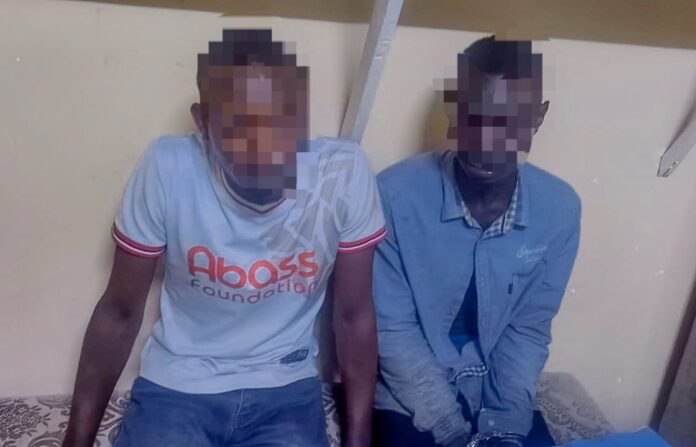
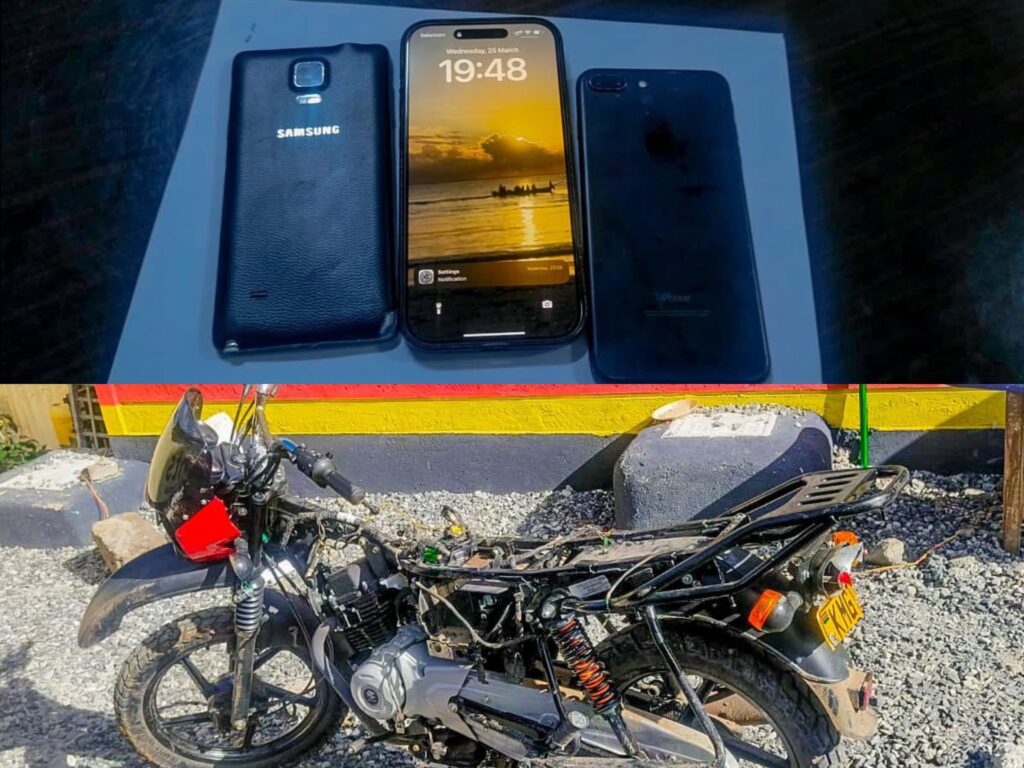
Police officers in Nairobi’s South B area have arrested two suspects linked to a robbery with violence incident and recovered a motorcycle along with several stolen mobile phones.

The incident occurred near Mater Hospital Bridge, where a member of the public was accosted by two individuals riding a motorcycle. The suspects reportedly robbed the victim of a high-end mobile phone before attempting to flee the scene.

Following a distress call, officers on patrol responded swiftly and launched a pursuit, leading to the arrest of the two suspects.

During the operation, police recovered three mobile phones, including the stolen device, as well as the motorcycle believed to have been used in carrying out the robbery.

The suspects are currently being held in custody as investigations continue. Authorities have indicated that they will be arraigned in court to face appropriate charges.

Meta and YouTube found liable in landmark social media addiction trial

By Stacy Boit,

A Los Angeles jury has handed down an unprecedented win for a young woman who sued Meta and YouTube over her childhood addiction to social media.

Jurors found that Meta, which owns Instagram, Facebook and WhatsApp, and Google, owner of YouTube, intentionally built addictive social media platforms that harmed the 20-year old’s mental health.

The woman, known as Kaley, was awarded $6m (£4.5m) in damages, a result likely to have implications for hundreds of similar cases now winding their way through US courts.

Meta and Google said separately that they disagreed with the verdict and would both appeal. Meta said: “Teen mental health is profoundly complex and cannot be linked to a single app.

“We will continue to defend ourselves vigorously as every case is different, and we remain confident in our record of protecting teens online.”

A spokesperson for Google said: “This case misunderstands YouTube, which is a responsibly built streaming platform, not a social media site.”

Jurors found that Kaley should receive $3m in compensatory damages and an additional $3m punitive damages, because they determined Meta and Google “acted with malice, oppression, or fraud” in the way the companies operated their platforms.

Meta will be expected to shoulder 70% of Kaley’s damages award, with Google the remaining 30%.

Parents of other children, who are not part of Kaley’s lawsuit but claim they also were harmed by social media, were outside the courthouse on Wednesday, as they had been many days throughout the five-week trial.

When the verdict came through, parents like Amy Neville were seen celebrating, and hugging other parents and supporters who had been waiting for a decision.

The LA verdict came a day after a jury in New Mexico  found Meta liable for the way in which its platforms endangered children and exposed them to sexually explicit material and contact with sexual predators.

Mike Proulx, a research director for Forrester, said the back-to-back verdicts underline a “breaking point” between social media companies and the public.

In recent months, countries such as Australia have imposed restrictions for children to stop or limit their use of social media. The UK is currently running a pilot program to see how a ban of social media for people aged under 16 may work.

“Negative sentiment toward social media has been building for years, and now it’s finally boiled over,” Proulx said.

During his appearance before the juryin February, Mark Zuckerberg, Meta’s chairman and chief executive, relied on his company’s longstanding policy of not allowing users under the age of 13 on any of its platforms.

When presented with internal research and documents showing that Meta knew young children were, in fact, using its platforms, Zuckerberg said he “always wished” for faster progress to identify users under 13. He insisted the company had reached the “right place over time”.

While Google, as the owner of video-sharing site YouTube, was also a defendant in the case, most of the trial proceedings focused on Instagram and Meta.

Snap and TikTok were also initially defendants, but both companies reached undisclosed settlements with Kaley prior to trial.

As for Kaley’s lawyers, they argued that Meta and YouTube had built “addiction machines” and failed in their responsibility to prevent children from accessing their platforms.

Kaley said she started using Instagram aged nine and YouTube aged six, and encountered no attempts to block her because of her age.

“I stopped engaging with family because I was spending all my time on social media,” Kaley said during her testimony.

Kaley said she was 10-years-old when she started having feelings of anxiety and depression, disorders for which she would be diagnosed years later by a therapist.

She also started to obsess about her physical appearance and began using Instagram filters that would change the way she looked – making her nose smaller and her eyes bigger – almost as soon as she started using the platform as a child.

Kaley has since been diagnosed with body dysmorphia, a condition which causes people to worry excessively about their physical appearance and prevents them from seeing themselves as others do.

Her lawyers argued that features of Instagram, like infinite scroll, were designed to be addictive.

Meta’s growth goals were aimed at getting young people to use its platforms, Kaley’s lawyers said.

Using testimony from experts and former Meta executives, they argued the company wanted young users because they were more likely to stick with its platforms for longer stretches of time.

When lawyers for Kaley told Adam Mosseri, the head of Instagram, that her longest single day of use of the platform stretched to 16 hours, he denied that it was evidence of an addiction.

Instead, he called a teenager spending most hours of the day on Instagram “problematic”.

Lawyers for Kaley said Wednesday that the jury’s verdict “sends an unmistakable message that no company is above accountability when it comes to our children.”

Another case against Meta and other social media platforms over their alleged harms to children is poised to begin in June in California federal court.


Alleged Gold Fraudster Takes Plea Over USD 600,000 Fake Gold Scam Targeting Australian Investor

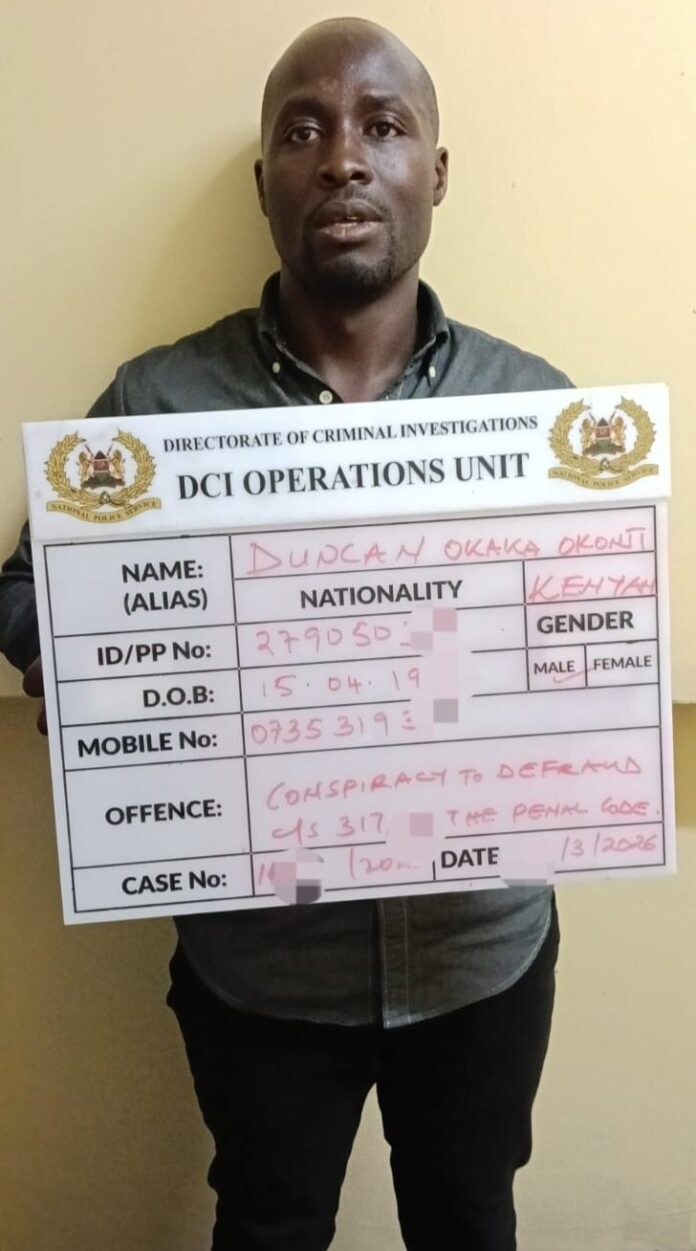
A Kenyan suspect has been arraigned at the Milimani Law Courts over an alleged USD 600,000 fake gold scam targeting an Australian national in a case highlighting the persistence of transnational investment fraud schemes.

The accused, Duncan Okaka Okonji, was arrested on March 24, 2026 and presented in court the following day, where he was charged with conspiracy to defraud contrary to Section 317 of the Penal Code. He denied the charge.

The court released Okonji on a bond of Ksh 5 million or an alternative cash bail of Ksh 1 million, with two contact persons. The matter is scheduled for mention on April 7, 2026.

According to investigators, the case dates back to October 2025, when the complainant, while in Dubai, was introduced to an individual identified as Marshall Morrison, who allegedly posed as an American investor. Morrison is said to have linked the victim to Okonji, who presented himself as a facilitator of a gold transaction involving approximately 590 kilograms.

Investigations indicate that the complainant was first taken to Tanzania, where he was shown what were presented as mining sites, before being brought to Kenya as part of the elaborate scheme.

Authorities say the suspects staged multiple meetings and produced documentation to convince the victim that arrangements were underway to ship the gold consignment to Dubai.

Believing the deal to be legitimate, the complainant reportedly transferred USD 600,000 through a law firm account before later suspecting foul play and reporting the matter to the Directorate of Criminal Investigations (DCI).

The DCI has stated that investigations are ongoing, including efforts to identify additional suspects and uncover the full scope of the alleged fraud network.

Authorities have reiterated their commitment to dismantling transnational fraud syndicates, particularly those exploiting Kenya’s gold trade to target foreign investors, and to ensure that proceeds of crime are traced and recovered in accordance with the law.

Trump confirms May meeting with Xi Jinping as Iran war forces postponement

By Stacy Boit,

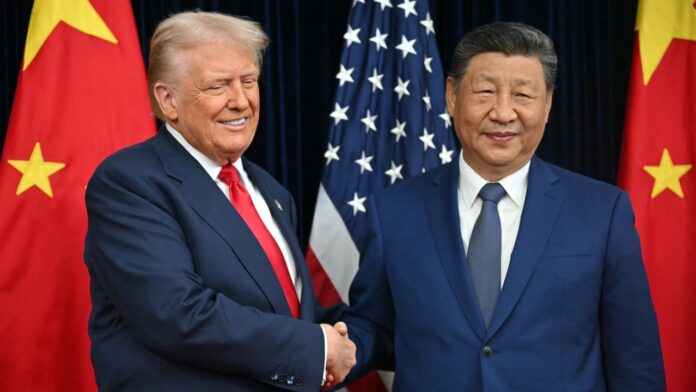
President Donald Trump has announced he will meet Chinese President Xi Jinping in China on May 14–15, marking the first visit by a U.S. leader to the country in nearly a decade.

The landmark trip, originally set for March, was delayed following U.S. and Israeli strikes on Iran that killed the country’s supreme leader and triggered a global fuel crisis after Iran blocked the Strait of Hormuz.

White House Press Secretary Karoline Leavitt confirmed that President Xi accepted the postponement, understanding Trump’s need to oversee ongoing combat operations.

While Beijing has not officially confirmed the dates, Chinese state media has signaled a desire to mend the “abnormal” lack of high-level exchanges between the two superpowers.

The visit is seen as a critical opportunity to ease long-standing tensions over trade, technology, and geopolitics.

Following the China trip, Trump is also expected to host Xi in Washington D.C. later this year, with officials currently finalizing what the White House has termed “Historic Visits.”

Arise IIP Eyes $3 Billion Kenya Investment Drive in Five-Year Plan


By Reuters 

  • Dubai-based ‌AriseIIP plans to invest more than $3 billion in Kenya over the next five years, an executive director at the African infrastructure developer told Reuters.

The money, which would go to three industrial and ​export parks and a textiles firm, could help the East African country’s efforts ​to attract foreign investment to create jobs.

“Our total investment in these ⁠projects is going to be upwards of about $3 billion,” Nikhil Gandhi, AriseIIP’s executive director ​in charge of special economic zones development said on the sidelines of an investment ​conference.

“We are looking to attract global companies from more than 14 countries globally to set up their manufacturing base here,” he said, adding that AriseIIP would provide 30%-40% of the money itself, in ​exchange for equity in the projects.

The rest will come through debt from development finance ​institutions and other lenders, Gandhi said, adding that the money would go towards two export zones ‌along ⁠Kenya’s coast, a third in the Rift Valley area of Naivasha and to the Rivatex textiles firm.

AriseIIP is owned by Afreximbank’s private equity arm (FEDA), the Africa Finance Corporation, Saudi Arabia’s Vision Invest and UAE-based Equitane Group.

It has big projects in Benin and Gabon, ​but this would mark ​its first investments ⁠in Kenya.

Along with Kenyan lender KCB Group and Afreximbank, it will also set up an $800 million facility to support investors who ​will take up space in the zones once developed, Gandhi said.

Dozens ​of firms ⁠from China, Lebanon and India have expressed interest, he said, but he declined to name them.

War in Iran and U.S. tariff hikes could actually benefit some African countries as ⁠supply chains ​change, he added.

“People will shift value chains to ​this continent,” he said, citing textiles, minerals and electric vehicles. “In the context of where Kenya lies, I can ​already see a tectonic shift.”

Detectives Foil Planned Robbery Targeting Senior Military Officer in Kitengela

By Andrew Kariuki

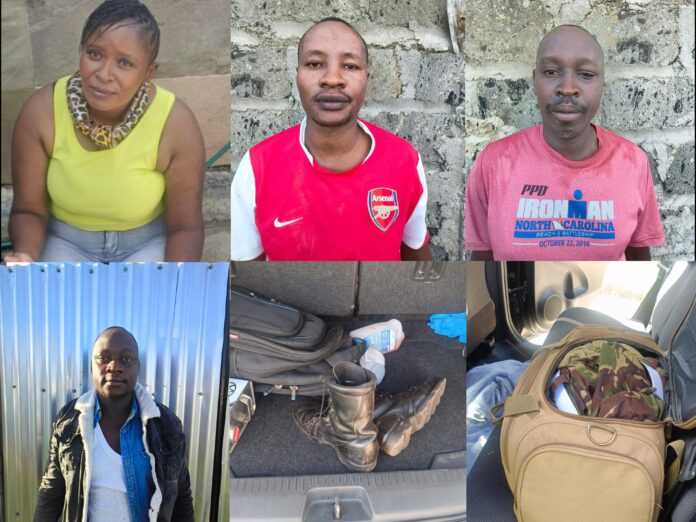
Detectives have foiled a planned robbery targeting a senior military officer in Kitengela, arresting six suspects in an intelligence-led operation that has exposed a criminal network involving serving Kenya Defence Forces (KDF) personnel and civilian accomplices.

According to investigators, the operation was launched on Monday, March 23, 2026, after detectives received credible intelligence about an imminent attack. The suspects were placed under surveillance as officers monitored their movements and preparations ahead of the planned robbery.

On the day of the intended attack, the suspects arrived at the target location in two vehicles, a black Toyota Harrier (KCR 809K) and a Toyota Ractis (KCM 804L), which was positioned nearby with a driver on standby.

Authorities say a female suspect alighted from the Harrier and approached the main gate under the pretext of seeking access. Detectives, who had already secured the area, moved in and arrested her, triggering a swift operation in which backup teams intercepted both vehicles and apprehended the remaining suspects.

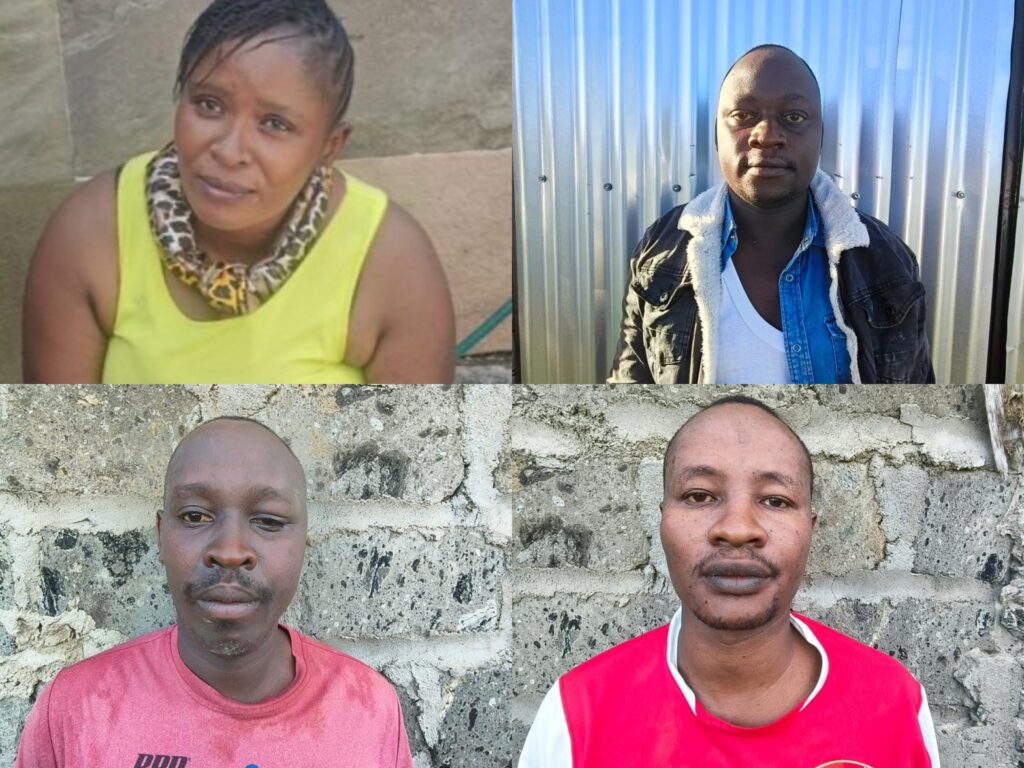
The six individuals arrested include Charles Kiio Matata, a KDF sergeant based at Kahawa Garrison; David Ng’aa Mwangangi, a civilian mechanic attached to the KDF at Kahawa Barracks; Samuel Agango Odoyo, a KDF service member currently on interdiction; Alex Mumo Kisilu of Umoja; Richard Mwania Muasya of Tala; and Stella Nzuki Mweni of Umoja Inner Core.

A search conducted at the scene led to the recovery of items believed to have been intended for use in the robbery, including KDF jungle uniforms, military boots, a crowbar, a claw hammer, a knife, pliers and several mobile phones.

The scene has since been processed, and investigators are working to establish the full extent of the syndicate’s operations, including possible links to other criminal activities.

The Directorate of Criminal Investigations (DCI) said the suspects remain in custody as processing and interrogation continue. Authorities have reiterated their commitment to dismantling organised criminal networks and ensuring that all those involved in criminal activity, regardless of their status, are brought to justice.

Create a free account, or log in.

Gain access to read this content, plus limited free content.

Yes! I would like to receive new content and updates.

Sponsored Ad

Ad 1
Ad 2
Ad 3
Ad 4
Ad 5
Ad 6