Sponsored Ad

Ad 1
Ad 2
Ad 3
Ad 4
Ad 5
Ad 6
25.1 C
Kenya
Thursday, May 14, 2026
Home Blog Page 203

Gachagua: Why I did not attend Raila’s burial, and why I’m yet to visit Bondo

Former Deputy President Rigathi Gachagua has explained why he has not yet paid homage to the late Raila Odinga’s grave at Kang’o Ka Jaramogi in Bondo, Siaya County. 

Speaking during an interview on Wednesday, March 25, Gachagua said he reached out to Mama Ida Odinga to seek permission to visit the family home, but was advised to wait until the appropriate time.

Gachagua noted that he is yet to receive a date from Mama Ida on when he will visit the gravesite of the late Raila.

The former Deputy President said he was ready and had even gathered elders to accompany him to Bondo.

“I called Mama Ida Odinga and gave her my personal condolences. We placed a request that we would like to go to Bondo. She told us things were still quite heavy, and at an appropriate time, she will give us an answer. We are still waiting. In fact, I was ready with my elders,” Gachagua stated.

File images from Raila Odinga’s funeral service. 

The DCP leader went on to say he is an elder and a leader and cannot force himself into someone’s home without approval.

“You cannot force yourself into somebody’s home. I’m an elder and a leader in this country, I’m also a person who respects families and homes and traditions,” added Gachagua.

Further, Gachagua said he had planned to attend Raila’s State Funeral at the Nyayo National Stadium but received intelligence reports that goons planned to attack him.

The former DP said he carefully considered the situation and chose not to attend the funeral to avoid being perceived as the cause of any disruption.

“I applied my mind as a senior politician and as a strategist, and I realized that it was a very important occasion for Raila Odinga and his followers, and it would have been imprudent of me to seem like I had brought chaos into a very solemn ceremony that was very important,” Gachagua said.

Raila passed away on October 15, after suffering a cardiac arrest during a morning walk at an Ayurvedic treatment facility in Kochi, India.

The ODM leader was laid to rest on Sunday, October 19, at his ancestral home in Kang’o Ka Jaramogi, Bondo, Siaya County.

He was buried with his trademark hat and fly whisk, symbols that defined his political image for decades.

Following his burial, thousands of people visited his gravesite in Bondo to pay tribute to him and console his family.
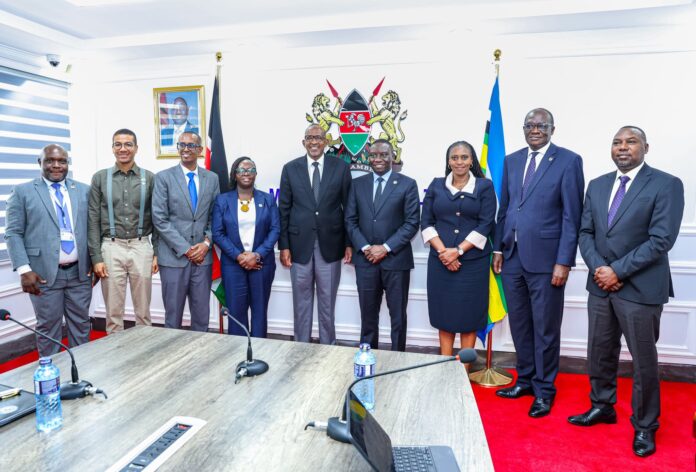
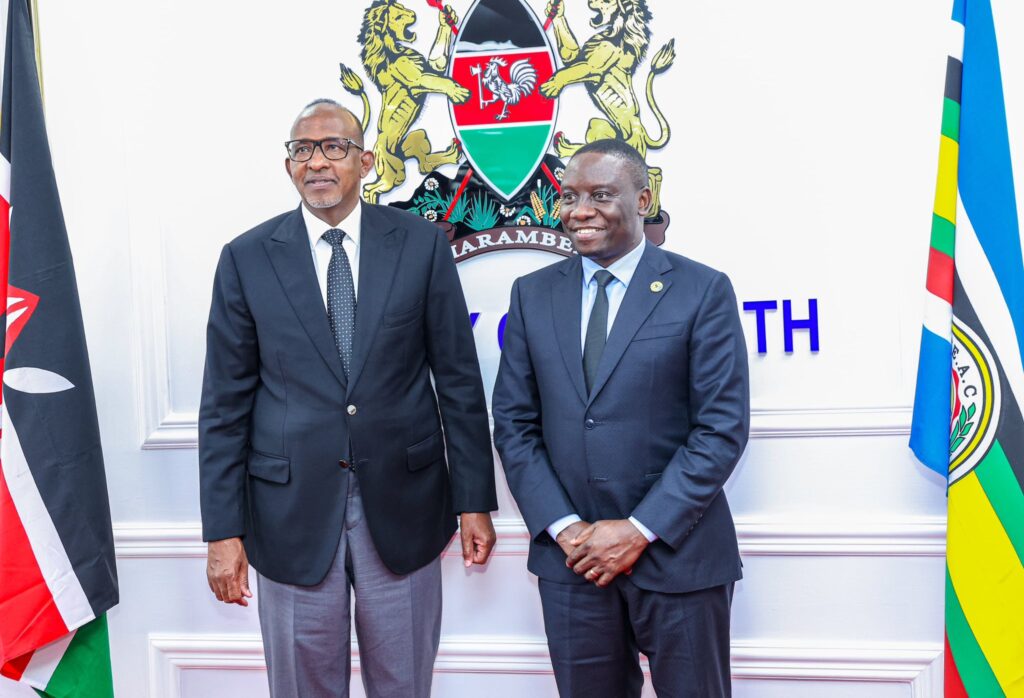
Health CS Hon Aden Duale holds bilateral talks with the East, Central and Southern Africa Health Community (ECSA-HC) delegation

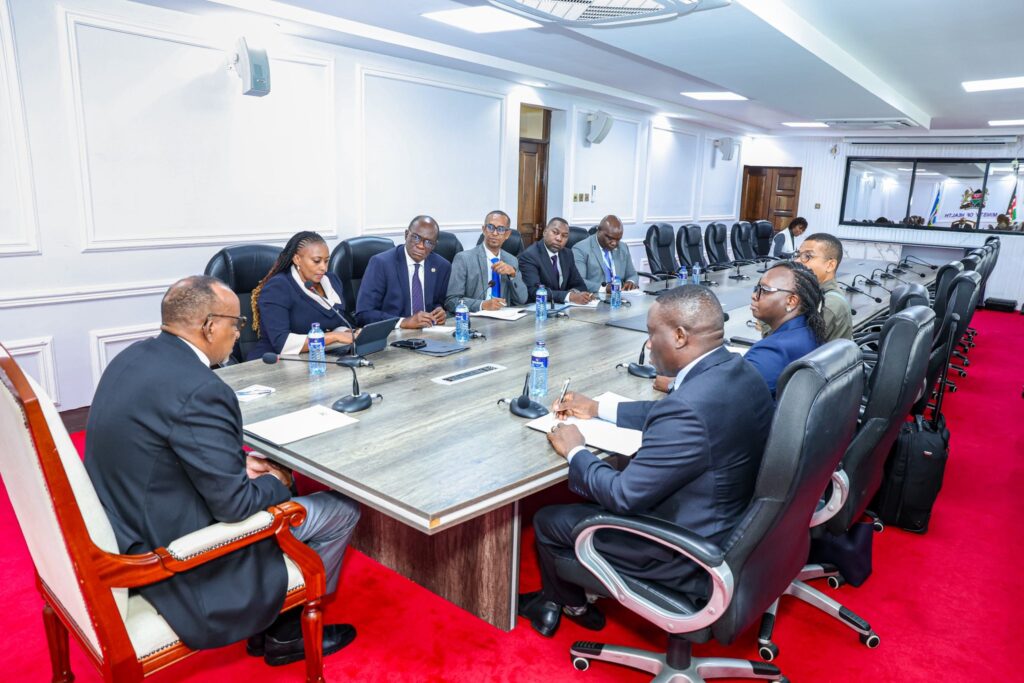
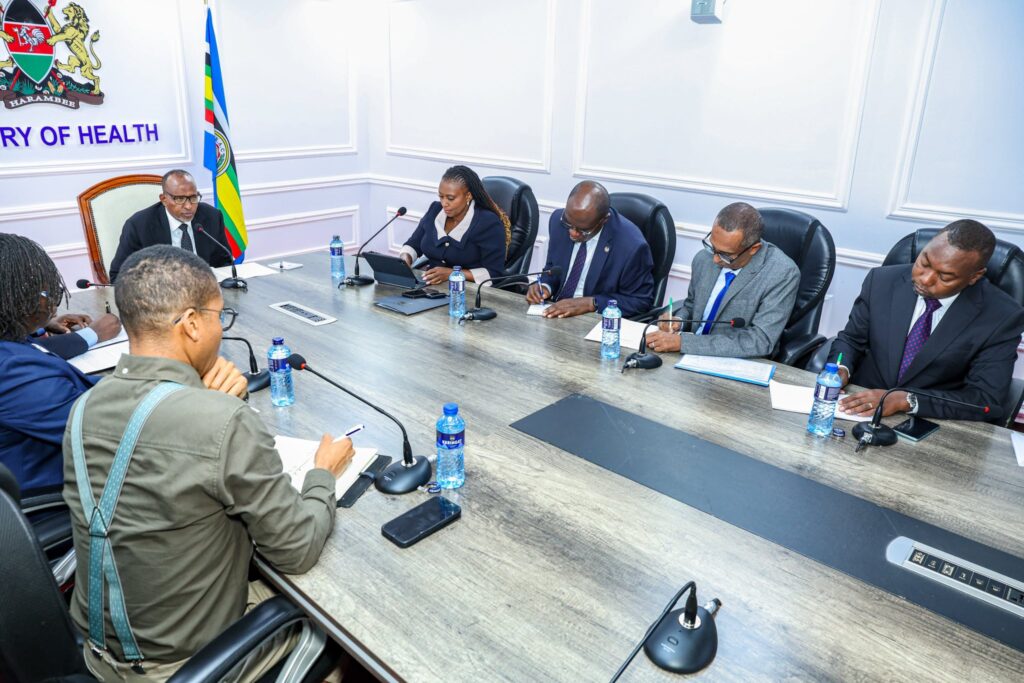
Health Cabinet Secretary Hon Aden Duale today held bilateral talks with the East, Central and Southern Africa Health Community (ECSA-HC) delegation led by Ntuli Kapologwe at Afya House, reaffirming Kenya’s commitment to strengthening regional health collaboration.

Discussions aligned Kenya’s priorities with resolutions of the 76th Health Ministers Conference, with a focus on Universal Health Coverage, primary healthcare, and digital health transformation.

The meeting placed strong emphasis on sustainable health financing—highlighting pooled funding, blended finance, and public-private partnerships as critical to reducing donor dependence. Both sides also underscored the need to strengthen regional health emergency preparedness through early warning systems, coordinated response mechanisms, and cross-border collaboration.

Kenya reiterated support for advancing digital health interoperability and harmonised regional data-sharing standards, positioning ECSA-HC as a key platform for coordination.

The talks further addressed the dual burden of communicable and non-communicable diseases, with renewed calls for joint action on antimicrobial resistance and strengthened disease surveillance.

On health workforce development, the CS pointed to ongoing investments in training and retention, while encouraging regional cooperation on skills recognition and mobility.

Kenya also highlighted its ambition to position itself as a regional hub for pharmaceutical manufacturing through policy harmonisation and resilient supply chains.

Reaffirming Kenya’s support for ECSA-HC, Hon. Duale called for strengthened partnerships, accountability, and regular progress reviews, noting ongoing regional initiatives including the World Bank-funded Health Emergency Preparedness Project implemented with ECSA-HC and IGAD.

The meeting was attended by Mary Muthoni, Patrick Amoth, alongside ECSA-HC officials Dr. Evelyne Wesangula and Dr. Khalid Azam.

By Anthony Solly

Kenya bans sale, import of phones and tablets without USB Type-C ports

The Communications Authority of Kenya (CA) has issued new technical specifications for mobile phones and other communication devices, requiring that all phones sold in the country be fitted with USB Type-C chargers.

The authority says manufacturers must comply with the specifications to enhance consumer safety and network reliability.

The guidelines cover input power, safety standards, electromagnetic compatibility (EMC), radiated power, frequency use and environmental considerations.

“These specifications aim to establish clear and comprehensive technical requirements for mobile cellular devices to ensure their safe, reliable, and efficient operation within Kenya’s telecommunications networks,” CA Director General David Mugonyi said.

The rules also require that materials used in the manufacture of mobile phones and accessories must not contain lead, mercury, cadmium or any other hazardous substances.

CA says the specifications are intended to ensure devices are safe for users by providing protection against electrical shock, heat and the risk of explosion during charging or use.

The battery of a mobile device should provide a minimum of eight hours of talk time and at least 24 hours of standby time.

Devices must also comply with national and international radiation exposure limits and be compatible with existing and future telecommunications networks.

The specifications further require that devices maintain network integrity and optimal performance by improving electromagnetic compatibility through limiting unintended emissions and ensuring resistance to interference.

“Where a device is sold with a power plug, the plug shall conform to the ‘Type G’ standard, 3-pin plug used in Kenya and where the device is sold with a power plug that is not 3-pin, an adapter to convert the non-3-pin to 3-pin shall be included,” the rules state.

The devices must support an operating voltage of 240 Vac ± 10% at a frequency of 50 Hz ± 1, in line with Kenya’s standard power supply.

“The charging solution shall be such that the charging cable is detachable from the power adapter while the charging solution for mobile cellular device shall be USB Type-C in line with European Union (EU) Directive (EU) 2022/2380.”

The mobile devices must support frequency bands used for 2G (GSM), IMT-2000 (3G), IMT-Advanced (4G) and IMT-2020 (5G), as well as future generations as allocated by the International Telecommunication Union (ITU).

On safety, the CA says access to energised parts of the device must be restricted, and materials used must not exceed safe temperature limits.

“For mobile device with replaceable batteries, there shall be a marking close to the battery slot that warns of possible risk explosion if wrong battery type is used.”

The devices must also support accessibility features for persons with disabilities, including compatibility with assistive technologies such as screen readers, voice recognition and refreshable braille displays.

They must include features for users with limited or no vision, such as speech output, text-to-speech conversion, tactile or haptic feedback, non-visual navigation cues, adjustable text size and spacing, high-contrast display modes, magnifier functionality and screen reader compatibility.

“Devices shall support users with limited or no hearing through features such as visual notifications, text displays for audio content, vibration alerts, captioning options, audio amplification, adjustable frequency response, and real-time captioning.”

The devices must also support Real-Time Text (RTT) for messaging, visible caller identification, alternatives to voice-only services and access to emergency services without barriers.

Skyward Airlines Announces Ticket Pricing Changes Over Rising Fuel Costs

Kenyan-owned Skyward Airlines has announced a fare hike for all passengers, citing increasing global fuel prices as the main reason for the adjustment.

In an official passenger advisory dated Thursday, March 26, 2026, the airline informed travelers of the upcoming change, stating that the decision was made after sustained increases in international fuel prices began to put pressure on operating costs.

The airline said the new charges will take effect from April 1, 2026, and will apply to all Skyward Airlines ticket prices through a fuel surcharge.

Skyward Express is privately owned and was founded by pilots Mohamed Abdi and Issack Somow, who remain its principal owners alongside other investors.

Skyward Airlines stated that imported aviation fuel now makes up a significant portion of the cost of each flight.

According to the advisory, the airline noted that the aviation industry worldwide continues to face challenges caused by higher fuel prices driven by long-term supply pressures in global markets.

“The aviation industry continues to navigate the impact of rising global fuel costs, driven by sustained supply pressures in international markets. As internationally imported fuel represents a substantial portion of our operating costs for each flight, these conditions have required us to take deliberate steps to ensure we can maintain a sustainable and reliable service,” read part of the statement by Skyward Airlines.

Skyward Airlines management said these conditions have necessitated a fuel surcharge to ensure continued operations.

The airline said the surcharge will be applied across all ticket prices, meaning passengers booking flights from April 1 onward should expect to pay more than current fares.

Despite the fare increase, the airline stated it remains dedicated to providing competitive and transparent pricing.

Skyward Airlines added that it will continue monitoring fuel prices and market conditions closely and make additional adjustments as needed.

The airline ended by assuring passengers that any future changes would be communicated promptly.

Judicial Service Commission announces 108 job opportunities; how to apply

The Judicial Service Commission (JSC) has announced 108 job vacancies for legal professionals. 

In a public notice on Thursday, March 26, JSC invited qualified and interested candidates to apply for the positions. 

The vacancies include: Law Clerk (1) post, Senior Legal Researcher (22) posts, and Legal Researcher (85) posts.

The qualifications for legal researchers include a Bachelor of Laws (LLB) degree from a recognized university, a Postgraduate Diploma in Law, and admission to the Bar as an Advocate of the High Court. 

Candidates are also required to have membership of the Law Society of Kenya (LSK), proficiency in computer applications, and compliance with the requirements of Chapter Six of the Constitution. 

File image of the Judiciary Building in Nairobi.

How to Apply

Interested and qualified persons are required to visit the JSC jobs portal: https://jsc.go.ke/jobs-2/ to apply for the vacancies in JSC. 

“All applications should reach the Commission not later than April 15, 2026, at 5:00 p.m.,” the notice stated.

The commission noted that only shortlisted and successful candidates will be contacted for interviews.

JSC warned applicants that any form of canvassing will lead to automatic disqualification.

Further, the commission emphasized that the recruitment process is free of charge and urged applicants to remain vigilant against fraudsters seeking to exploit job seekers.

“The Judicial Service Commission is an Equal Opportunity Employer and selects candidates on merit through fair and open competition from the widest range of eligible candidates,” JSC added.

This comes months after JSC announced a vacancy for the position of Chief Kadhi of Kenya.

In an advertisement on January 16, JSC invited interested and qualified candidates to apply for the position.

In addition to the Chief Kadhi position, JSC also advertised vacancies for Registrar, JSC, Assistant Director, ICT (Security), and Assistant Director, ICT (Infrastructure).

The deadline for submitting applications was on February 5, 2026, at 5.00 P.M. 

The position of the Chief Kadhi of Kenya fell vacant after Sheikh Abdulhalim Hussein passed away. 

Melania Trump Welcomes Humanoid Robot to the White House; Push For AI Into Classrooms

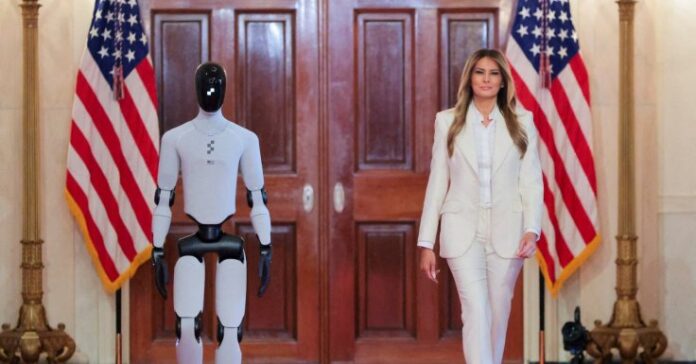
In a striking scene at the White House on Wednesday, First Lady Melania Trump marked a new chapter in the history of first-spouse initiatives by welcoming a humanoid robot to her inaugural Fostering the Future Together Coalition Summit.

The event, which brought together international leaders and first spouses from around the world, including Sara Netanyahu of Israel, Olena Zelenska of Ukraine, and Brigitte Macron of France, alongside tech leaders and educators, aimed to collaborate on practical solutions to expand access to educational tools while strengthening protections for children in digital environments.

The moment took an unconventional turn when Mrs. Trump appeared alongside Figure 3, a humanoid, A.I.-powered robot developed by the company Figure. According to the company, the robot’s capabilities include fetching towels, carrying groceries, and serving champagne. However, the First Lady is envisioning a role beyond robot butlery, joining tech executives and researchers in exploring how such machines could serve as educators.

Both clad in shades of white, the First Lady and the robot entered the gathering to the dulcet tones of a military orchestra. Figure 3 delivered brief remarks and offered salutations in several languages before teetering gingerly away.

With its sleek black-and-white appearance, the robot complemented the First Lady’s established aesthetic, a detail underscored by the name “MELANIA” emblazoned on the side of its glossy plastic head, aligning with her self-titled coffee table book and film projects.

Addressing the room afterward, Mrs. Trump framed the appearance as a glimpse of what lies ahead. “The future of A.I. is personified,” she told her audience. “It will be formed in the shape of humans. Very soon artificial intelligence will move from our mobile phones to humanoids that deliver utility.” She invited attendees to envision a future in which a “robot philosopher” educates children.

The moment marked a distinct departure from previous first lady initiatives, which have included Laura Bush’s National Book Festival, Michelle Obama’s efforts to reshape the food pyramid, and Jill Biden’s advocacy for free community college. Mrs. Trump’s inclusion of a humanoid robot in an education policy forum was a first.

Latest Developments

Since the summit, Figure AI has announced that Figure 3 will enter limited pilot programs in several U.S. school districts by late 2026, focusing on multilingual instruction and special education support.

The White House confirmed that the Fostering the Future Together Coalition will release a framework for A.I. and robotics in classrooms ahead of the upcoming G7 leaders’ summit, where digital education safety is expected to be a central topic.

Rachel Ruto Honored Among 40 First Spouses at White House

First Lady Rachel Ruto was among a select group of First Spouses who attended a high-level technology summit held at the White House. 

The event, dubbed ‘Fostering the Future Together,’ was convened by Melania Trump and attracted participants from across the world.

In a statement after the meeting, Rachel highlighted the significance of the engagement and the collaborative spirit among the attending First Spouses.

“It was an honour to join my fellow First Spouses at the ‘Fostering the Future Together’ initiative, which was convened at the White House by the First Lady of the United States, Melania Trump,” she said. 

File image of Brigitte Macron and Melania Trump at the summit

Rachel noted that discussions at the summit centered on the transformative power of emerging technologies and the need to ensure inclusivity in access to these tools.

“The summit focused on the ways in which technology, particularly artificial intelligence, is reshaping education and the future of work, and on ensuring that every child has fair and safe access to these opportunities,” she added.

File image of First Spouses at the summit

Houston airport wait times reach over four hours amid US travel chaos

By Stacy Boit,

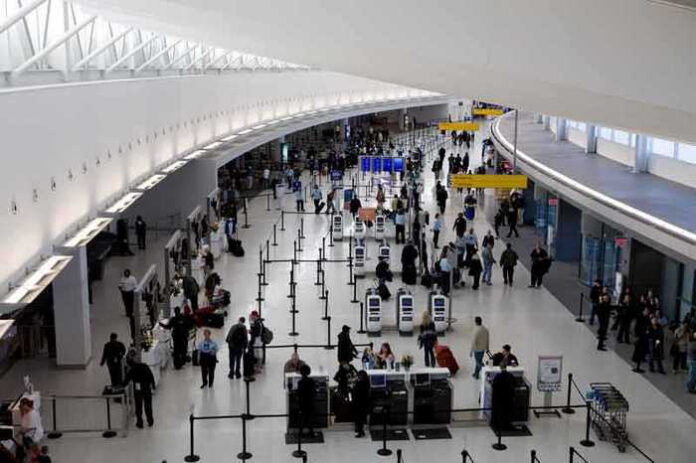
Travellers across the US are facing unusually long lines at airports, with some of the worst delays reported in Houston, where security wait times have stretched beyond four hours amid a partial government shutdown.

Hundreds of Transportation Security Administration (TSA) agents continue to miss paychecks and call out of work, leaving large gaps in airports’ abilities to screen passengers.

Nearly 40% of the security staff at the George Bush Intercontinental Airport in Houston did not show up for work the highest such rate in the country.Officials fear that conditions “will only get worse at airports across the US until Congress ends this shutdown”.

Houston’s airport is operating just one-third to 50% of its TSA checkpoints, said Jim Szczesniak, director of aviation for the Houston Airport System.

“That’s 100% spring break loads going through the airport, being processed through less than 50% of our TSA lanes,” he noted referring to the spring break travel season. “That is not sustainable.”

A flurry of sporting events all this weekend in Houston may bring more passengers to the airport, further clogging lines. The Astros’ season opener is scheduled for this weekend along with a golf open and a pair of NCAA Tournament Sweet 16 matchups.

Ahead of that, the TSA plans to deploy at least two dozen officers from its National Deployment Office to the Bush airport on Thursday, the Houston mayor’s office told media partner CBS News.

On Monday, the Trump administration said hundreds of US Immigration and Customs Enforcement (ICE) agents had been sent to 14 airports in cities including New York, Atlanta and Houston to help fill the void.

US President Donald Trump touted the success of the move on Wednesday, saying they’re doing “an unbelievable job” at airports. He indicated he would also send the National Guard “if we need to” in order to assist TSA and ICE. He blamed Democrats for the worker shortages, saying they “don’t want to pay” the agents.

Democrats in Congress have refused to fund the Department of Homeland Security without new limits on immigration agents, following public outrage over the shooting death of the two US citizens in Minneapolis.

Republicans have rejected Democratic ​proposals to fund TSA amid ongoing negotiations over ICE reforms.

There is little sign that the funding standoff is close to being resolved.

Billionaire Elon Musk offered to fund pay for TSA workers during the partial shutdown but the White House rejected the offer on Wednesday, several sources told CBS News.

A top TSA official said on Wednesday that more than 450 TSA workers have quit since the partial shutdown began.

While that’s just a fraction of some 50,000 TSA agents who screen passengers, the resignations paired with thousands of absences are creating longer-than-usual queues.

During testimony before a congressional oversight committee, the TSA’s acting chief Ha Nguyen McNeill warned on Wednesday that the turnover will have “dire” consequences as the US prepares to co-host the FIFA World Cup this summer.

“At this point if we bring on any new [TSA agents], those folks will not be deployed in time by FIFA,” she said.

The TSA is monitoring the staff attrition rates closely, McNeill said, adding: “If we see any spikes, we’ll have to pivot and assess how we are going to staff the FIFA locations adequately.”

Australia bans Iranian tourists with valid visas for six months

By Peter John

Iranian tourists with valid visas will be banned from visiting Australia for the next six months over concerns they may be unable or unlikely to return home once their visas expire.

“Decisions about permanent stays in Australia should be deliberate decisions of the government, not a random consequence of who had booked a holiday,” Home Affairs Minister Tony Burke said on Wednesday.

The move, which comes into force on Thursday, will affect about 6,800 Iranian visa holders. Some exceptions have been made including for the partners and children of Australian citizens.

Some MPs and refugee advocates have called the decision a “moral failure” and warned it sets a “dangerous precedent”.

The Australian government introduced legislation to block visa holders from nominated countries from visiting earlier this month, on the same day it granted humanitarian visas to seven members of the Iranian women’s football delegation. Five later returned to Iran.

Burke said in a statement that the government was “acting in the national interest amid rapidly changing global conditions”, noting that the measure would allow “time to assess the situation properly, while still allowing flexibility in limited cases”.

“Sympathetic consideration” may be given to the parents of Australian citizens, Burke said. The step was taken in consultation with the Australian-Iranian community, he added.

The measure does not apply to citizens from any other country.

Jana Favero, Deputy CEO of the Asylum Seeker Resource Centre, described the move as a “massive betrayal of the Iranian community, and a breathtaking moral failure”.

“In the moment that people need safety the most and their country is being torn apart, the Albanese government is slamming the door closed on people from Iran,” Favero said.

Independent MP Zali Steggall said the laws underpinning the ban gave the government “sweeping, unchecked” powers and ought to be amended.

“Invalidating lawfully obtained visas undermines confidence in our entire migration system and sets a dangerous precedent,” she said.

The Australian Greens party said the measure “puts the lie to the pretence that [the] Labor [government] is supporting the illegal US and Israeli war on Iran to help the Iranian people”.

“Today, we see with 100% clarity what the Albanese government thinks of the safety of the Iranian people as they shut the door on protection for people with a visa to come here,” Greens Senator David Shoebridge said.

War Blocks India’s Vital Fertilizer Routes

By Stacy Boit,

India’s fertilizer supplies are under pressure after disruptions to shipping routes due to the war in the Middle East, raising concerns about lower farm produce and higher food prices.

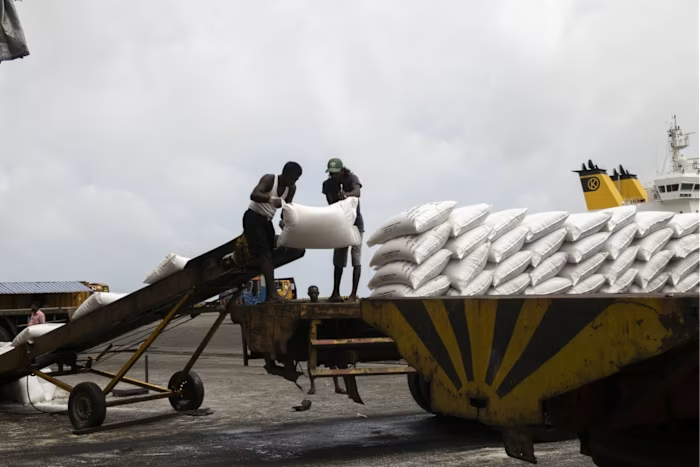
India, the world’s second-largest fertilizer user after China, depends heavily on imports of both raw materials and finished products much of which comes from the Gulf, passing through the Strait of Hormuz, where shipping has been disrupted.

Prime Minister Narendra Modi has said his government has taken measures to ensure fertiliser supplies are not affected and to protect farmers from any impact.

Analysts say current stocks are enough for the upcoming sowing season, but this may change if the war stretches on.

Nitrogen fertilizers such as urea the most widely used in India are crucial for farmers because many major food crops, including rice and wheat, cannot absorb adequate nitrogen directly from the air.

India uses nearly 40 million tonnes of urea annually, supported by government subsidies, and supply disruptions could affect planting decisions.

Farmers in northern states of Punjab and Haryana – which are major grain-producing regions – say they are not yet feeling the stress as the key sowing season (June-July) approaches. They typically start buying urea for this season from May.

Currently, supplies are available through farmer cooperatives as well as warehouses run by manufacturers and distributors, but there are worries about the future.

“We don’t know how long the stock will last if the war stretches any further,” said Manpreet Singh Grewal, president of a farmers’ collective linked to Punjab Agricultural University.

India had urea stocks of about 6.2 million tonnes as of 19 March, according to government data.

Fertiliser use peaks during the June-to-September monsoon crop season, which analysts say the current stocks should be able to support under normal conditions.Some experts warn that the situation could worsen if disruptions continue.

India’s fertiliser production is “surely going to be impacted” because of the disruption, Siraj Hussain, a former federal secretary of agriculture and farmers’ welfare in India, told the BBC. “The government should be preparing for a shortage of urea and other fertilisers for the monsoon harvest.”

He points out that in many parts of India, farmers use more urea than recommended, applying “more nutrients than crops can absorb”.

“This means a temporary shortage may not significantly affect yields in those areas. However, supplies would need to be ensured in regions where fertiliser use is lower, as crops in those areas could be more vulnerable,” he says.

Executives at two fertiliser companies, who did not want to be identified, told the BBC that shortages could emerge later in the season if the conflict continues through the timing and scale would depend on how long supply disruptions persist.

Natural gas is the main raw material used to make urea and India imports about 85% of it, mostly from the Gulf region.

“Up to four weeks of supply disruptions are absorbable via local production or imports from other regions. Anything more than that would become more concerning,” Alberto Persona, director of fertiliser and sustainability analytics at S&P Global Energy, told the BBC.

Fertiliser plants in India are getting around 70% of their gas needs currently, following a government order issued earlier this month. Industry insiders say this has led to some manufacturers cutting production.

The supply squeeze is not limited to India. Global fertiliser prices have risen sharply risen sharply in recent weeks, with urea prices climbing and gas prices across Asia increasing.

Higher costs and reduced availability may lead some farmers to cut fertiliser use even though its immediate impact on output is likely to be limited.

“The risk on crop yields is genuinely small for the next crop season, but becomes increasingly important for the future ones,” Persona said. Experts add that any movement in food prices may depend more on market expectations than immediate changes in crop output.

Create a free account, or log in.

Gain access to read this content, plus limited free content.

Yes! I would like to receive new content and updates.

Sponsored Ad

Ad 1
Ad 2
Ad 3
Ad 4
Ad 5
Ad 6