Sponsored Ad

Ad 1
Ad 2
Ad 3
Ad 4
Ad 5
Ad 6
33 C
Kenya
Monday, May 11, 2026
Home Blog Page 207

Senate ICT Committee Meets ICT Authority to Address Wayleave Charges and Barriers to Broadband Expansion ]

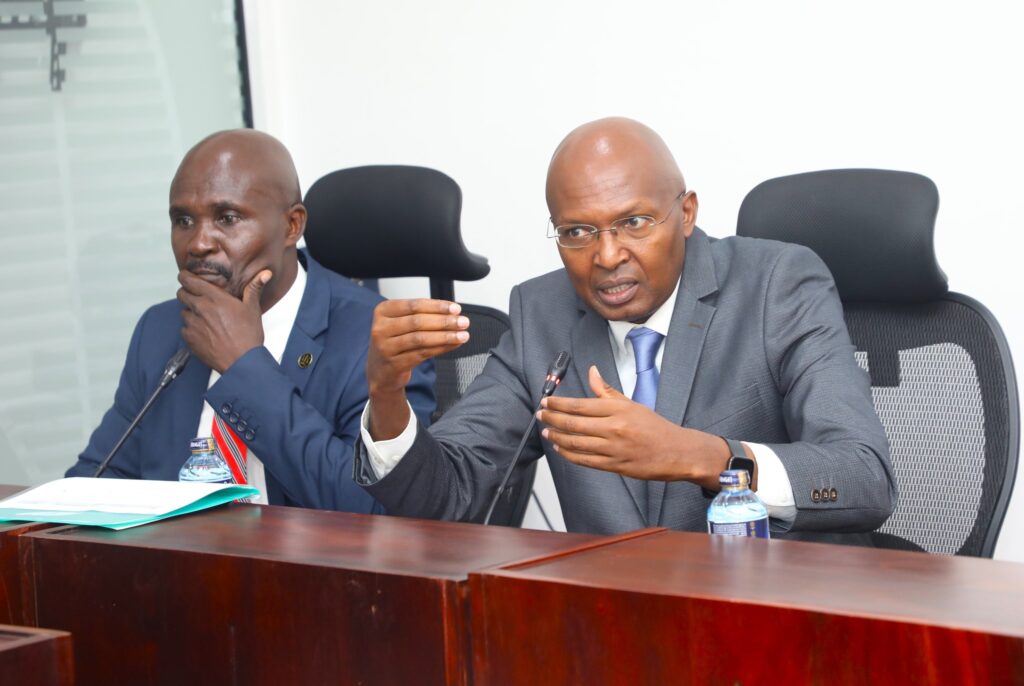
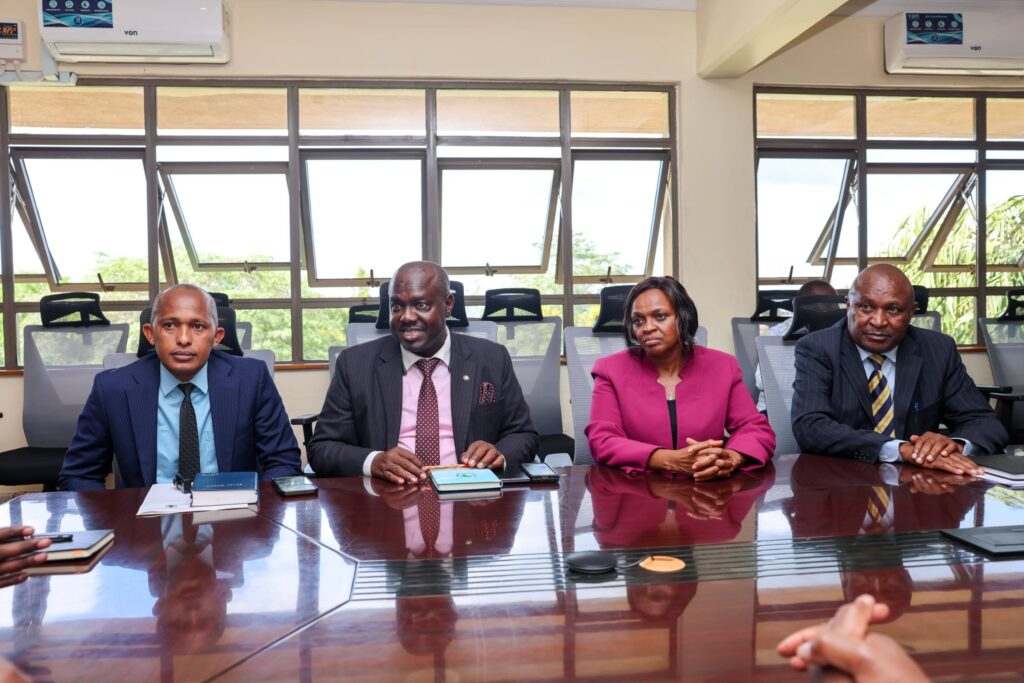
The Senate Standing Committee on Information, Communication and Technology today held a meeting with the ICT Authority to deliberate on the impact of county wayleave charges as well as regulatory and operational barriers affecting the deployment of ICT infrastructure and the expansion of broadband connectivity across counties.

The engagement forms part of the Committee’s oversight mandate in ensuring the growth of the ICT sector and the realization of Kenya’s digital transformation agenda.
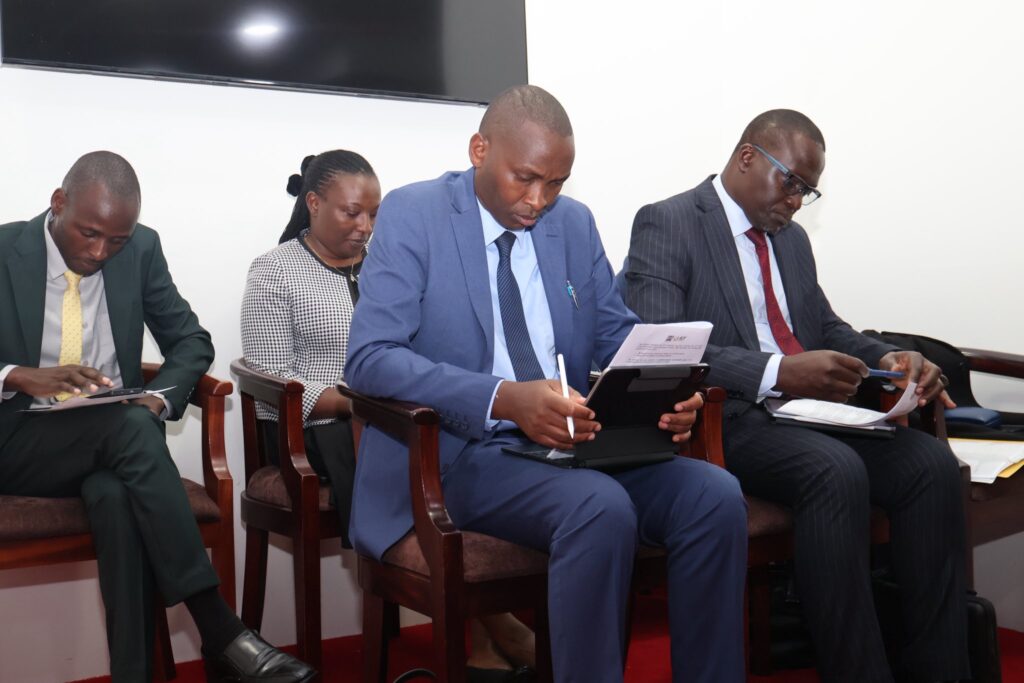
During the session, the Authority outlined its mandate in coordinating the development and implementation of ICT infrastructure across government institutions, as well as its role in promoting secure and integrated digital systems within the public sector.

Members were informed that wayleave charges imposed by county governments remain a significant challenge in the rollout of broadband infrastructure, often leading to increased costs and delays in project implementation.

The Authority noted that efforts are ongoing to address the challenge through collaboration with key stakeholders, including the State Department for ICT and the Digital Economy, county governments, and the Council of Governors, with a view to harmonizing wayleave frameworks across the country.

The Committee was further apprised of proposals submitted to the Senate aimed at addressing wayleave-related constraints, including contributions to the Energy (Amendment) Bill, 2025, as well as engagements with relevant parliamentary committees to align policy and legislative interventions.

Additionally, the Authority highlighted ongoing stakeholder consultations geared towards streamlining approval processes and reducing regulatory bottlenecks that hinder infrastructure deployment.
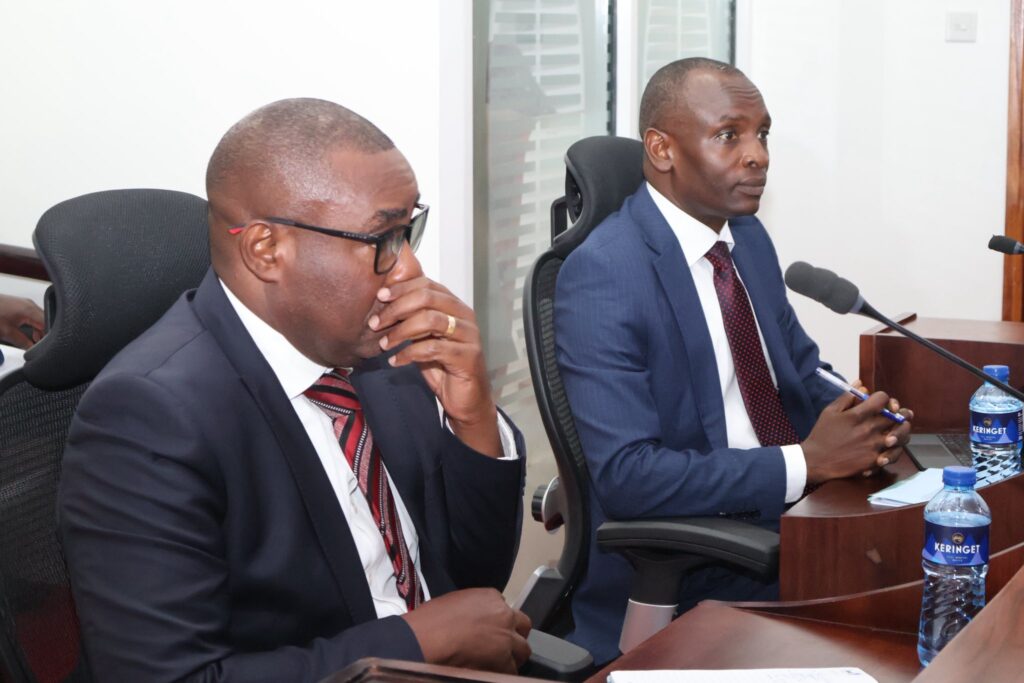
Members emphasized the need for a coordinated approach between the National and County Governments to eliminate duplicative levies and create a conducive environment for investment in ICT infrastructure.

The Committee further underscored the importance of affordable and reliable broadband connectivity in driving economic growth, enhancing service delivery, and promoting digital inclusion across all regions of the country.

The Committee reaffirmed its commitment to supporting legislative and policy measures aimed at addressing existing barriers and accelerating the expansion of ICT infrastructure to ensure equitable access to digital services nationwide.

By Anthony Solly
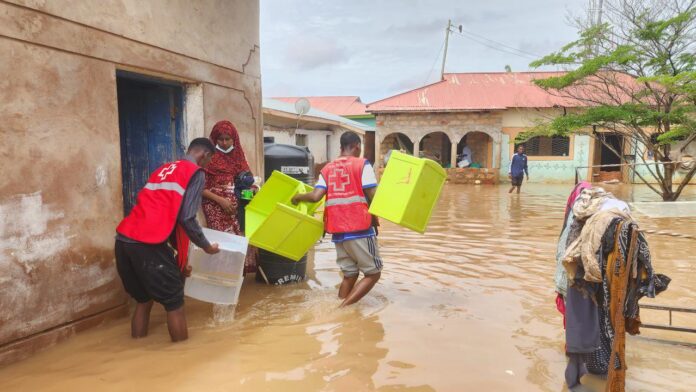
84 dead as State warns of rising river flood risks in 3 counties

The Government has issued flood warnings in Kisumu, Tana River, and Uasin Gishu counties after rivers burst their banks, causing extensive inundation in multiple communities.

Emergency teams are on the ground conducting rescue operations as residents remain on high alert. Recent flash floods have resulted in 84 fatalities, with three people still missing nationwide.

In a press release issued by the government on Tuesday, it says that River Nyando in Kisumu County has overflowed, spilling into multiple locations, including Kakola, Onjiko, Kochogo, East Kano, Okanja, Kamidumbi, and Panadol.

Other affected areas include the lower parts of Kakola Ombaka Sub-Location and regions bordering several streams, including Awach, Agala, Nyalbiego, Chamrogi, and Nyaidho.

Emergency operations are underway, with the Kenya Coast Guard Service, Kenya Red Cross, and Kisumu County disaster management team actively assisting residents.

National Government Administrative Officers are closely monitoring river levels to prevent further escalation.

Field reports indicate a rapid rise in river levels, with strong currents flowing across Awasi, Onjiko, Kochogo, and Kakola, increasing the risk of flash floods.

Some overflows in Magina Sub-Location remain contained within existing dykes, but authorities have raised concerns about potential breaches, particularly along weakened sections of both Eastern and Western dykes.

Heavy rainfall upstream may worsen the situation, threatening flooding around Okanja, Kamidumbi, Panadol, as well as areas surrounding Ahero Girls and Kakola Ombaka, along with some stretches of the Kisumu-Nairobi road.

Locals have been urged to remain vigilant while multi-agency emergency teams are on high alert.

In Tana River County, rising water levels in River Tana have caused flooding in Asako Village, Mbalambala Location, affecting nearby farms.

Similarly, in Uasin Gishu County, assessments of River Sosiani in Lower Elgon View, Racecourse Location, have revealed flooding of residential and hospitality facility lawns due to the rising river levels.

The floods come amid a period of heavy rainfall in several parts of the country. Government authorities are warning that continued precipitation may exacerbate river overflows and pose risks to additional communities.

Recent nationwide flash floods have resulted in a total of 84 fatalities, with three people still reported missing.

These statistics highlight the severity of the flooding situation, even beyond the three rivers currently under alert. Emergency teams are working to reach affected residents and mitigate further losses.

Authorities continue to advise residents to avoid low-lying areas, stay away from fast-flowing waters, and adhere to guidance from local disaster management officials.

Multi-agency coordination remains a priority as rescue operations continue in Kisumu, Tana River, and Uasin Gishu counties.

The Government has emphasized that the situation remains dynamic, with water levels fluctuating due to both upstream rainfall and ongoing river flows.

Residents in affected areas are being encouraged to remain indoors or evacuate to higher ground where necessary. Rescue teams are equipped to provide assistance to those stranded or affected by the floods.

Authorities are also monitoring infrastructure such as roads, bridges, and dykes for damage.

While some dykes have contained minor overflows, weakened sections are being reinforced to prevent potential breaches.

Roads in vulnerable areas, including stretches of the Kisumu-Nairobi highway, may be affected by floodwaters, prompting authorities to advise caution.

With continued vigilance and coordinated emergency response, the Government aims to minimize the impact of these floods on communities and infrastructure. Updates will be provided as the situation develops and rescue operations progress.

Senate Security Committee Orders Immediate Halt to Fishing at Lake Nakuru

The Senate Committee on National Security, Defence and Foreign Relations has ordered the immediate stop of all fishing activities at Lake Nakuru, amid claims of forced disappearances of young fishermen.

The directive was issued on Tuesday by Committee Chairperson Sen. Fatuma Dullo (Isiolo) during a meeting with the Kenya Wildlife Service (KWS) and Petitioners, following a petition lodged over alleged abuses at Lake Nakuru National Park.

“Any fishing at Lake Nakuru must stop immediately, KWS must ensure that there is no fishing taking place at the Lake, if based on the submission here that Nakuru fish were declared unfit for human consumption, why are people being allowed to fish and supply the condemned fish to markets, this must stop today,” directed Senator Dullo.

The petition, filed by Gaplink International, urges the Senate to intervene, investigate the reported disappearances and issue firm recommendations. The petitioners are seeking a thorough probe into the alleged incidents, particularly any involvement of KWS officers, alongside measures to strengthen community engagement and safeguard human rights.

They also called for a review of KWS policies and operational protocols to curb abuse of power and enhance accountability while fostering dialogue between the agency, local fishermen and other stakeholders to resolve disputes over fishing rights.

Gaplink International told the Committee that residents dependent on fishing for their livelihoods have faced intimidation and violence from KWS officers. They further alleged that, despite the ban, fishing activities continue unabated at the lake. The organisation was represented by Mr Tom Mboya, with Peter Mbae appearing as co-petitioner.

However, KWS, led by Director General Prof Erustus Kanga firmly rejected the allegations, maintaining that the agency does not condone human rights violations.

“KWS remains open to engaging with any specific, documented complaints that may be submitted through the appropriate channels. We have not received any formal reports, complaints, or administrative notifications of forced disappearances of young fishermen at Lake Nakuru National Park,” submitted Prof Kanga.

In reinforcing the Committee’s directive, Senator Dullo demanded an immediate halt to all fishing at the lake and called on the Petitioners to furnish further details and evidence to support their claims.

The Committee has pledged to widen its inquiry by engaging key stakeholders, including the Ministry of Interior, National Environment Management Authority (NEMA), the County Government of Nakuru and the Kenya Fisheries Service before compiling a comprehensive report.

Other Senators who attended the meeting were Prof Tom Ojienda SC (Kisumu), Dr Lelegwe Ltumbesi (Samburu), Okongo Mogeni (Nyamira), Abdul Haji (Garissa), Edwin Sifuna (Nairobi) and Joseph Githuku (Lamu).

By Anthony Solly

NPS Strengthens Partnership With NTSA To Enhance Road Safety

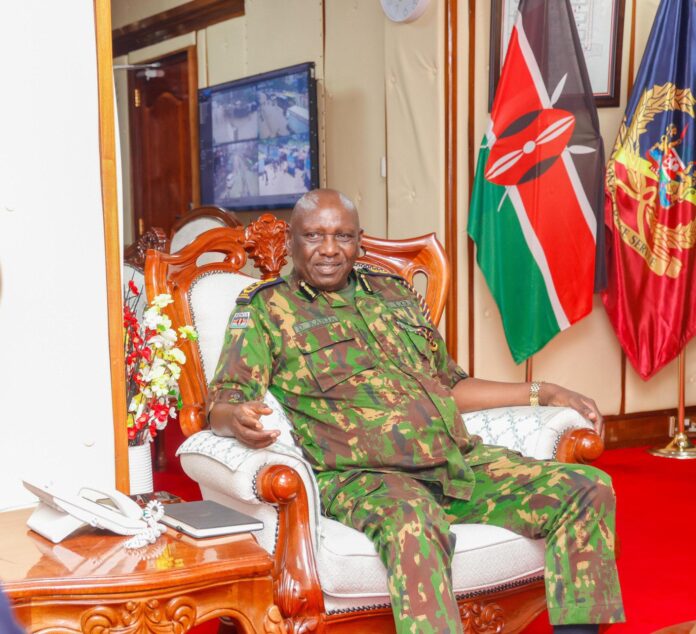
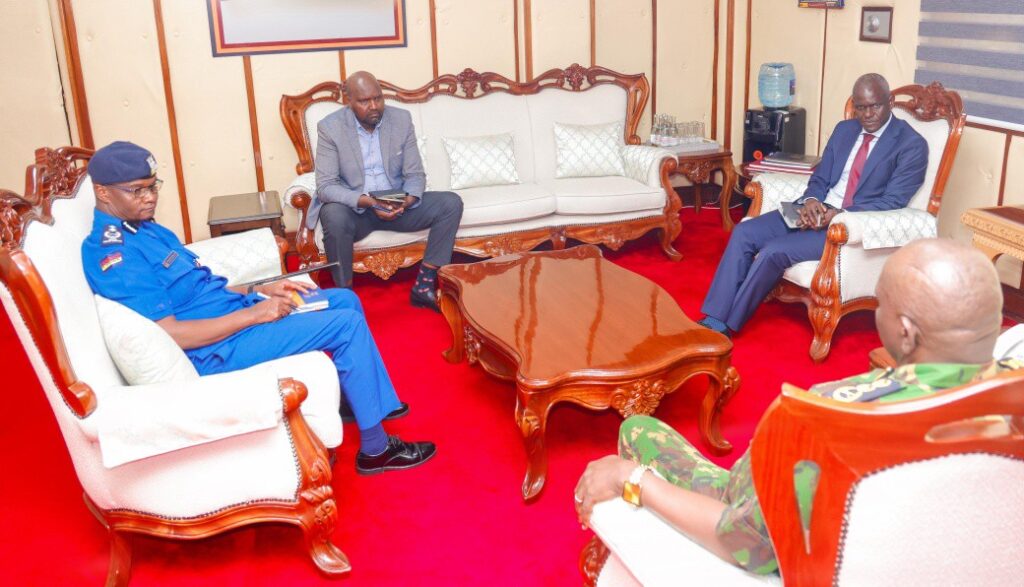
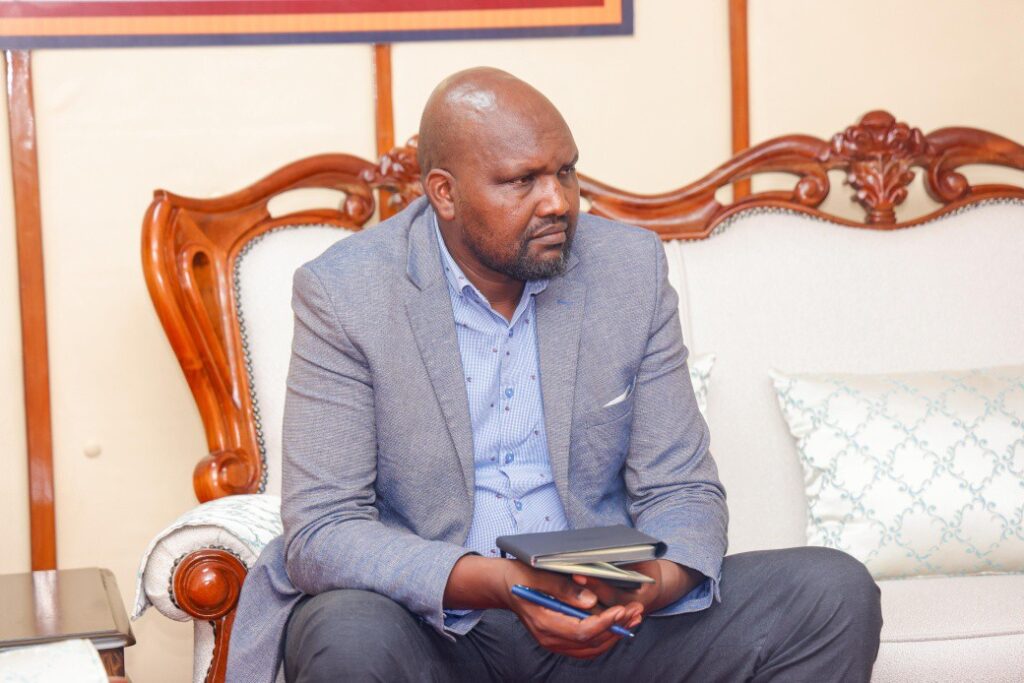
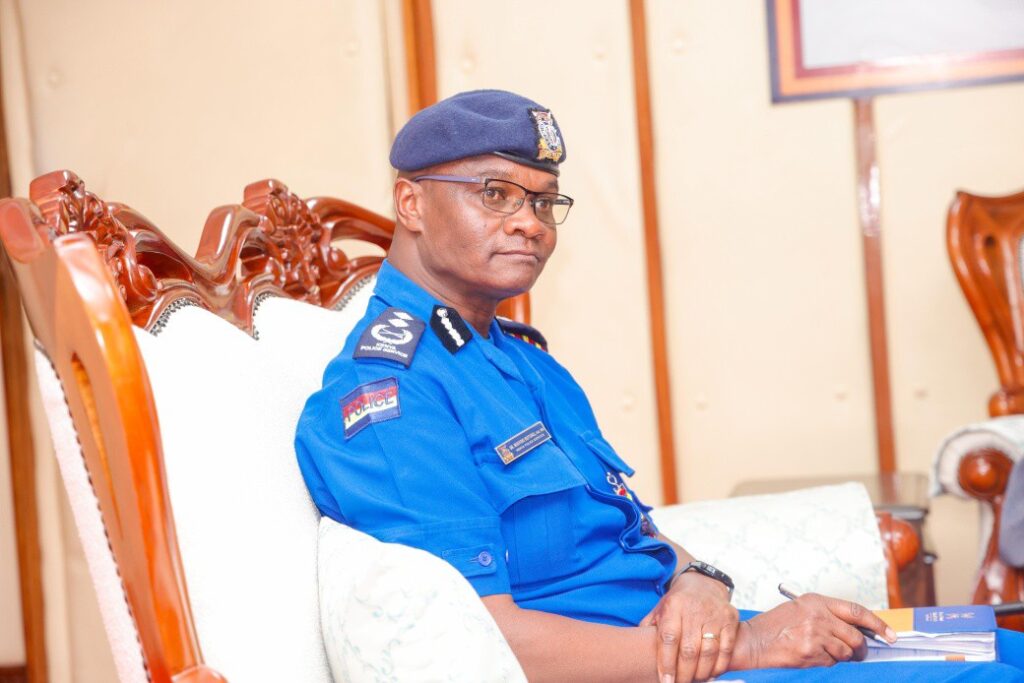
The National Police Service (NPS) today, 24 March 2026, hosted the newly appointed National Transport and Safety Authority (NTSA) Director General, Engineer Nashon Kondiwa, who paid a courtesy call on the Inspector General of Police, Mr. Douglas Kanja, at NPS Headquarters, Jogoo House ‘A’.

During the meeting, the two leaders held candid and constructive discussions focused on strengthening strategic collaboration between the NPS and NTSA to enhance road safety enforcement and significantly reduce fatalities on Kenya’s roads.

Key areas of engagement included the development of sustainable and consistent enforcement activities aimed at improving compliance with traffic regulations.

The meeting also explored the formulation of a proposed memorandum of understanding (MoU) between the two institutions to formalise and guide joint operations. This initiative is expected to provide a clear framework for coordinated enforcement efforts.

Additionally, the leaders agreed on the need to establish a structured and well-resourced traffic enforcement framework, anchored on the provisions of both the NTSA Act and the Traffic Act. The overarching goal of this collaboration is to achieve a sustainable reduction in road traffic fatalities across the country.

Engineer Kondiwa was accompanied by the Deputy Director in charge of Road Safety Compliance and Driver Testing, Mr. Wilson Tuigong. Also present was the Liaison Officer, Traffic, Kenya Police Service, Dr.Musyoki Mutungi, AIG.

The National Police Service remains committed to working closely with key stakeholders to enhance safety on our roads and protect the lives of all road users.

By Anthony Solly

Kenya Airways Reports Sh17.12 Billion Loss for 2025 After Prior Profit

By Peter John

Kenya Airways has reported a net loss after tax of Sh17.12 billion for the year ended December 2025, reversing a Sh5.43 billion profit recorded in 2024.

The national carrier attributed the sharp downturn to reduced capacity and softer travel demand.

Total revenue declined by 14.3% to Sh161.5 billion during the period under review.

A major factor behind the performance was the grounding of three Boeing 787-8 Dreamliner aircraft throughout the year due to global engine parts shortages.

The disruption cut the airline’s capacity by 18% and reduced passenger numbers to 4.3 million.

Chief Financial Officer Mary Mwenga said the fleet constraints significantly affected operations, compounding the impact of weakening demand in key markets.

The airline’s financial position also deteriorated further, with negative equity widening to Sh132.1 billion against a debt burden of Sh310 billion.

Kenya Airways is now seeking recapitalization measures alongside efforts to restore full fleet operations.

The results underscore the continued challenges facing the carrier as it navigates global supply chain disruptions and works toward long-term financial stability.

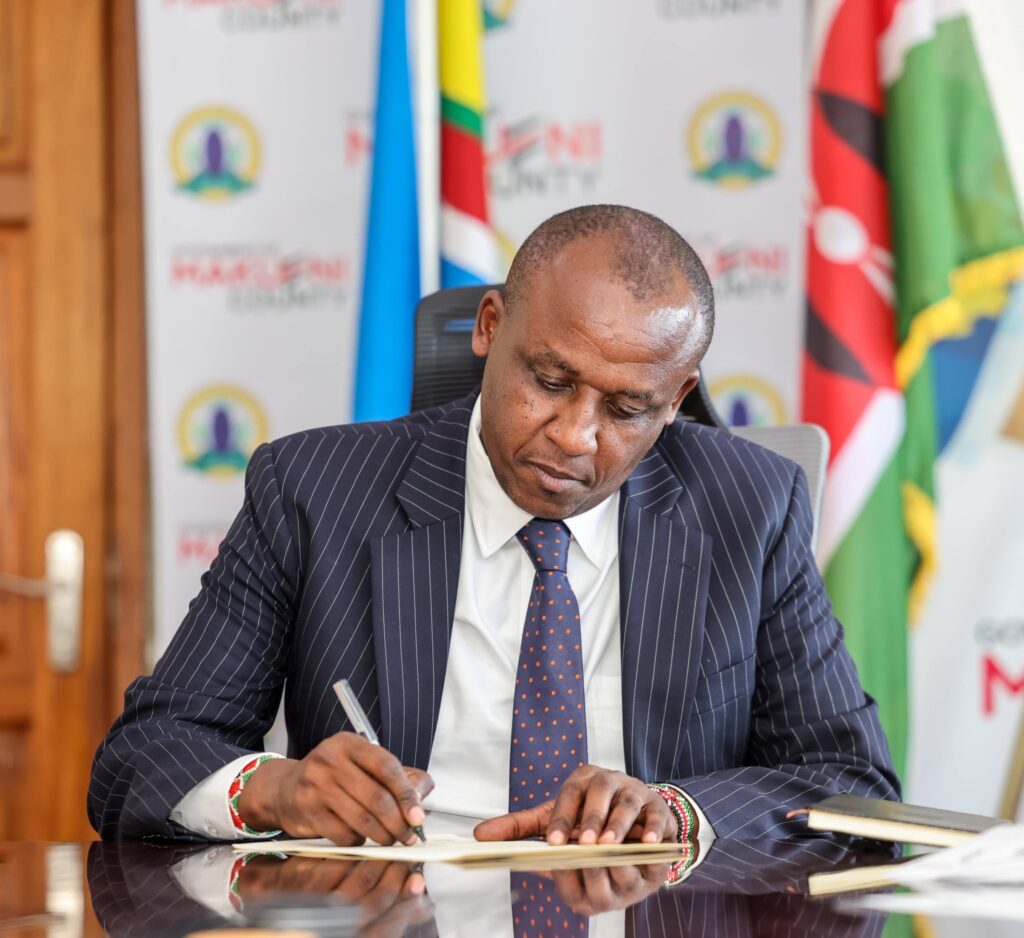
Dr. Kalondu Sworn in to lead Makueni County Empowerment Fund

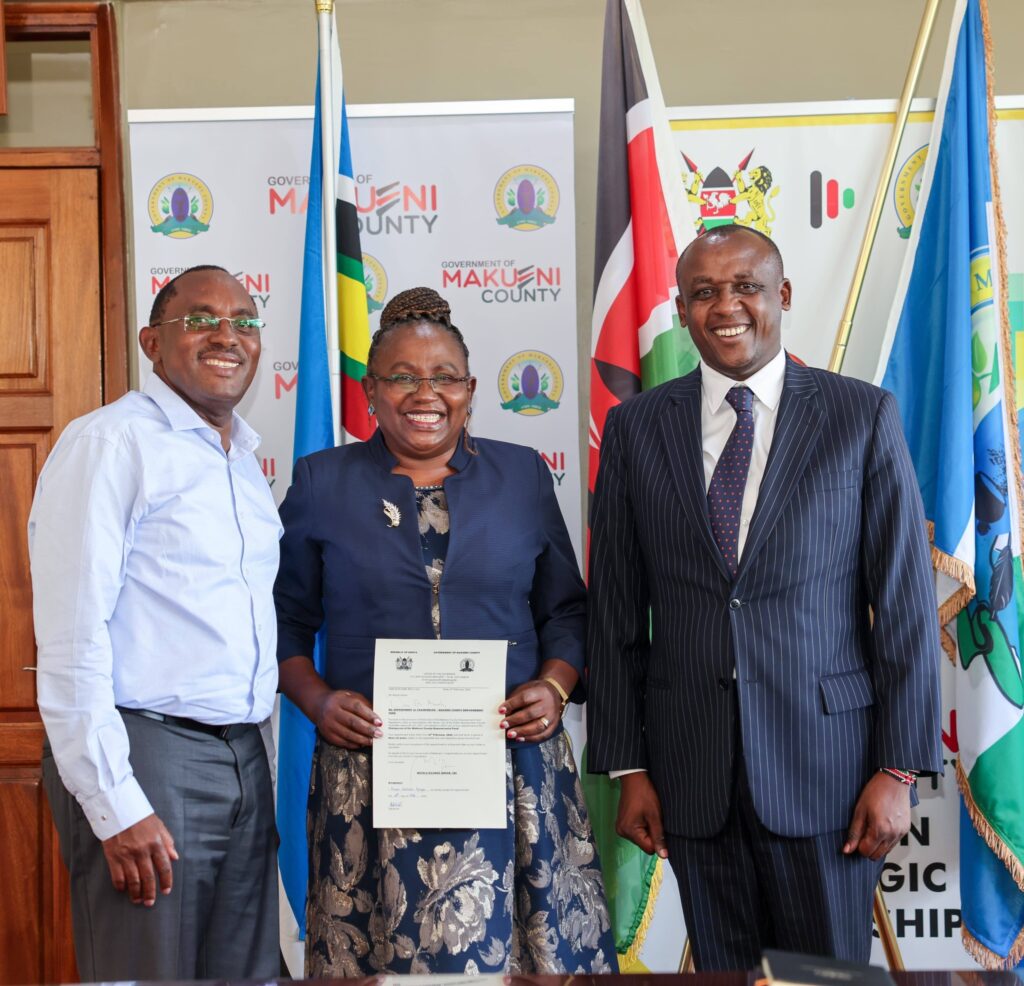
Dr Ann Kalondu Kyoya has been sworn in as chairperson of the Makueni County Empowerment Fund (MCEF) following her successful vetting and approval by the Makueni County Assembly.

Governor Mutula Kilonzo Jr. witnessed the swearing-in ceremony, administered by the County Attorney, and urged Dr Kalondu to discharge her duties diligently.

The governor said the county’s priority is to boost economic empowerment while increasing household incomes among Makueni residents. He revealed that the county has already secured Sh160 million for the fund, with additional resources expected through partnerships aimed at strengthening its impact.

MCEF remains a key economic pillar in the county, structured as a revolving fund that provides sustainably affordable, interest-free credit to residents, particularly those running micro and small enterprises.

Dr Kalondu, who will chair the MCEF Committee, is expected to supervise the fund’s operations and spearhead efforts to grow its capital base through stakeholder engagement.

Speaking after taking the oath of office, Dr Kalondu thanked the county government for entrusting her with the role, terming it a noble mandate.

The swearing-in ceremony was also attended by County Executive Committee Members: Japheth Mang’oka, Joyce Mutua, and Eng. Sebastian Kyoni.

Established in 2015 under the Public Finance Management Act, the fund has undergone several reviews of its guidelines and regulations to enhance efficiency and effectiveness.

MCEF is currently anchored under the Makueni County Social Protection Act, 2025, and the MCEF Regulations, 2025. It is wholly owned by the County Government of Makueni and domiciled within the Department of Gender, Children, Youth, Sports and Social Services.

The fund’s mandate includes providing access to capital and financing facilities to micro and small enterprises owned by marginalized groups—youth, women, men, and persons with disabilities—facilitating investment in small businesses, and advancing loans to village savings and loan associations across the county.

By Anthony Solly

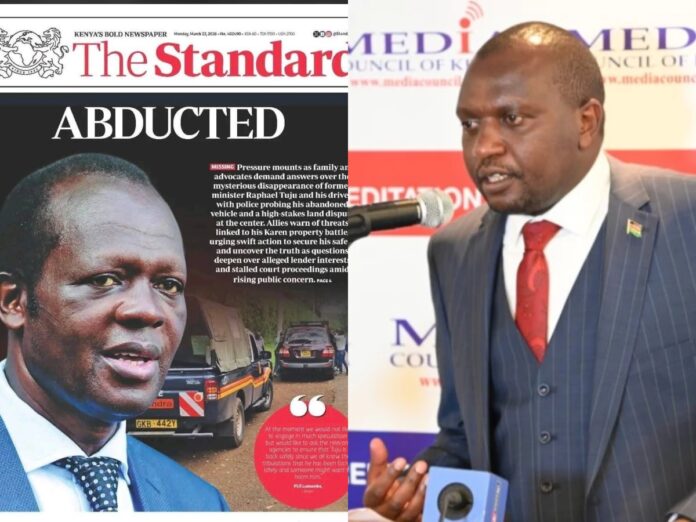
MCK Goes After Standard Media Over Tuju’s ‘Abducted’ Headline

The Media Council of Kenya (MCK) on Tuesday, March 24, expressed concerns about the sensational headlines by the Standard Group.

In a statement issued by MCK Chief Executive Officer, David Omwoyo, noted the persistent pattern of sensationalism and publication of unverified news by Standard Group.

The Council particularly worried about the ‘Abducted’ headline, following the disappearance of former Cabinet Secretary Raphael Tuju.

Omwoyo claimed that the Standard had presented the information on an alleged factual basis and official verification, only for Tuju to come out and dispute that he had been kidnapped.

“This alarming report was published despite Mr Tuju subsequently re-emerging at his residence, safe and unharmed.

“Such high-stakes misinformation is not only irresponsible but poses a direct threat to national stability and to the personal safety of the individuals concerned,” the statement read in part.

MCK stated that the editorial publication trying to explain the misreporting was an admission of guilt. The Council wondered why the media house had not issued a retraction or apology.

In addition, Omwoyo revealed that the ‘Abducted’ headline was not a unique case and was part of a troubling pattern of publishing unverified claims.

“It reflects a troubling pattern of yellow journalism in which the Standard Group has consistently prioritised provocative, unverified claims over factual accuracy,” the statement continued.

The Mombasa Road-based media agency was accused of repeatedly using banner headlines to drive a narrative without affording the right of reply – a blatant violation of the Code of Conduct for Media Practice (2025).

Consequently, MCK reminded the Standard Group that sensationalism through clickbait headlines was unsustainable and eroded public trust.

“Once a news organisation loses its credibility, its commercial and social viability is permanently compromised,” Omwoyo wrote.

The CEO further condemned the attacks on MCK after the media house tried to portray it as “compromised” for enforcing professional standards.

He opined that attacking the regulator when reminded to uphold the law weakens the entire industry by suggesting that the media is above accountability.

MCK explained that accountability is not censorship, stating that professionalism is the greatest safeguard of a free press.

The Standard Media Group has been asked to verify news before publishing and align its operations with the Code of Conduct for Media Practice (2025).

This is not the first time the media giant has come under scrutiny over its headlines.

Several politicians, including President William Ruto and his Cabinet Secretaries, have come out to dispute multiple headlines.

Pro-government politicians have also accused the media house of being biased against Ruto’s administration.

Kenyatta National Hospital Gives Families 7 Days to Claim 480 Unclaimed Bodies

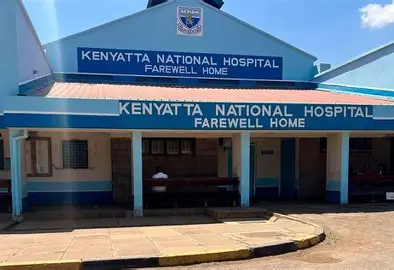
Kenyatta National Hospital has issued a public notice giving families until March 31 to claim the remains of 480 unclaimed bodies currently held at its Farewell Home mortuary in Nairobi.

The notice, published on March 24, indicates that the bodies include 378 children and 102 adults.

According to the hospital, some of the remains have been at the facility since January 2024, highlighting a growing crisis of congestion at the mortuary.

The hospital warned that if the bodies are not identified and collected within seven days, it will proceed with court-approved disposal in line with provisions of the Public Health Act.

KNH attributed the situation largely to financial constraints, noting that many families are unable to settle hospital bills required for the release of bodies.

Poverty and lack of proper identification documents have also been cited as key barriers.

The announcement has sparked widespread concern among members of the public, particularly over the high number of children among the unclaimed bodies.

Observers have linked the issue to rising neonatal deaths, illnesses affecting vulnerable children—including those living on the streets—and broader socio-economic challenges.

Some Kenyans have proposed solutions such as the creation of a national DNA database and the publication of anonymized online records or photographs to help families identify missing relatives more easily.

The hospital has urged anyone who may have lost a loved one to visit the Farewell Home mortuary for identification before the March 31 deadline.

SHA defends ethnic imbalance in its workforce

The Social Health Authority (SHA) has responded to allegations of ethnic imbalance in its workforce, assuring that its recruitment process adheres to inclusivity and national diversity standards. 

Appearing before the Senate Standing Committee on National Cohesion, Equal Opportunity and Regional Integration on Tuesday, March 24, SHA CEO Mercy Mwangangi explained that the authority had maintained fair employment practices and ensured representation from communities across the country.

In the report submitted to the committee, SHA disclosed that its staff comprised individuals from 40 different ethnic communities.

“No single ethnic group exceeds the legal threshold of one-third of the total workforce, in line with the National Cohesion and Integration Act,” Mwangangi said.

The data further outlined the distribution of staff across various communities, with the largest representations being Kalenjin (17.7%), Somali (14.0%), Kikuyu (12.1%), and Kamba (10.5%). 

Other groups include Kisii (6.4%), while Luhya and Luo communities each account for 7.8%. 

Smaller communities, including minority and marginalized groups, are also represented.

“By incorporating staff from a wide range of communities, SHA aims to strengthen public trust, promote fairness in employment, and ensure that the institution mirrors the rich social fabric of the nation,” Mwangangi added.

This comes days after the National Assembly’s Departmental Committee on Health raised alarm over SHA funding shortfalls and premium contributions.

Speaking on Thursday, March 19, in Mombasa County, Seme MP James Nyikal, who chairs the committee, said the funding shortfall threatens the sustainability of the medical scheme.

Nyikal noted that the revenue collected by the authority is not enough to meet its expenses.

According to the MP, SHA collects about Ksh7.4 billion monthly but spends Ksh7.2 billion on its expenses.

“The revenue that the Social Health Authority collects for the three funds is really not enough to meet its expenses. As things stand now, they are barely getting what they need to run. We are likely to face an issue of sustainability,” the Seme lawmaker stated.

Nyikal linked the imbalance between revenue and expenditure in SHA to low participation from the informal sector, which is expected to contribute the bulk of funding under the Social Health Insurance Fund (SHIF).

“Those in formal employment remit their contributions directly through employers, and that has remained the main source of income. But we expect a larger portion to come from the informal sector, and this is where the challenge lies,” he added.

The Seme MP disclosed that about 29 million Kenyans have registered under the medical scheme, but only five million of them are actively paying premiums.

However, Nyikal defended the SHA model but pointed out gaps in the implementation of its medical scheme.

“My view about the whole thing, the design and the concept, is good. The problem we are going through is a problem of implementation,” he further said.

Govt Warns Kenyans Against Eating Fish from Lake Nakuru

The Kenya Wildlife Service (KWS) Director General, Erustus Kanga, on Tuesday, March 24, revealed that a lot of Kenyans are consuming poisonous fish.

Appearing before the Senate, Kanga explained that all fish from Lake Nakuru are unfit for human consumption.

He explained that there was sewage seepage in the area surrounding the lake, making all organisms in the water body contaminated.

Kanga stated that despite KWS putting in measures to stop fishing in the lake, some fishing companies still find a way to catch fish, which is them sold to Nairobi and other regions.

“We are killing Kenyans. Anyone who is taking tilapia in this country, unless it is labelled that it is from Lake Victoria, should be aware that it is from Lake Nakuru,” he told the Senate.

A file image of KWS  Director General Erustus Kanga

The KWS DG intimated that the consumers of the poisonous fish are susceptible to contracting multiple deadly diseases.

“They should be worried that very soon, they will contract various diseases, including cancer,” he reiterated.

Kanga explained that the current heavy rainfall has undermined KWS’s efforts to curb fishing in Lake Nakuru, which broke its banks due to increased water volume.

He added that their implementation of the ban on fishing in the lake has been derailed by activists and parties who went to court to challenge the directive.

The fish flagged by the government is also sold along the Nakuru-Nairobi Highway to long-distance truck drivers and unsuspecting motorists.

Notably, the government has not flagged fish harvested from fish ponds, which have become popular in the Kenyan market.

The issue of poisonous fish adds to the list of health-threatening food making its way to the plates of Kenyan households.

Kenyans in Nakuru and neighbouring cities have been repeatedly cautioned against buying donkey meat being sold by rogue businessmen.

Create a free account, or log in.

Gain access to read this content, plus limited free content.

Yes! I would like to receive new content and updates.

Sponsored Ad

Ad 1
Ad 2
Ad 3
Ad 4
Ad 5
Ad 6