Sponsored Ad

Ad 1
Ad 2
Ad 3
Ad 4
Ad 5
Ad 6
23.4 C
Kenya
Wednesday, May 13, 2026
Home Blog Page 22

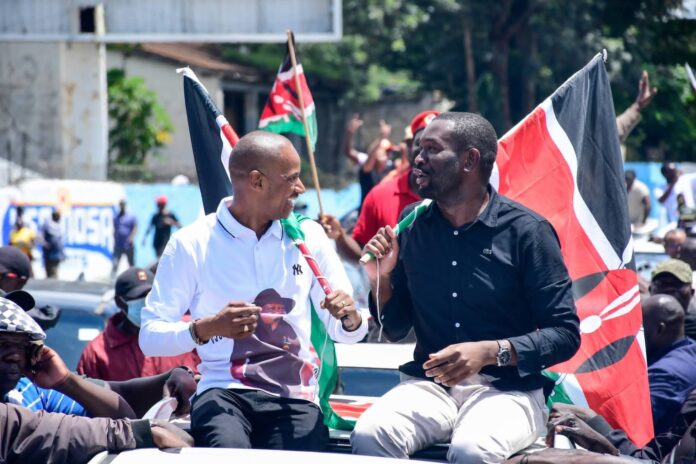
Senator Sifuna signals readiness to unite with opposition ahead of 2027

By Bonface Mulyungi

Nairobi Senator Edwin Sifuna has signalled a willingness to work with rival political camps to form a united opposition coalition, saying such a move could offer Kenyans a credible alternative government.

Sifuna said the country is ripe for a consolidated opposition that can challenge the incumbent with a single presidential candidate, rather than a fragmented field that splits votes.

The senator proposed a two-horse race model in the next general election, arguing that a simplified ballot would sharpen the contest and give voters a clearer choice.

“Kenyans are suffering and have told us that they want fresh leadership. What are we supposed to do? We are supposed to give Kenyans hope as a political leadership and send home the current government, even if it means that the rest of us unite,” he said.“We don’t want a ballot paper that has many names to tire Kenyans. We only need two names, the incumbent and one from the opposition. That will follow deep talks,” he added.

Sifuna emphasised that such a coalition would not be rushed, noting that structured, face-to-face negotiations among opposition leaders would be necessary to align on policy direction and leadership.“We shall talk face to face and ask each other what the intentions and plans for the country are,” he said.

This is even as leaders are increasingly exploring alliances to strengthen their chances against the ruling coalition.

Sifuna is leading a parallel ODM faction, Linda Mwananchi, that has been positioning itself as young leaders seeking to unseat President William Ruto.

In December 2025, former Deputy President Rigathi Gachagua, who leads DCP, told Sifuna and Embakasi East MP Babu Owino that they were free to join his party if they felt dissatisfied within ODM.

Gachagua defended his stepped-up mobilisation, saying he was within his rights to promote his party.“Let nobody make me feel like I am committing any political crime by marketing my party. That is my job,” he said.

He told Sifuna and Babu that they were welcome in DCP or any other party within the United Opposition.“Edwin Sifuna, if you are chased in ODM, come to DCP. Sifuna is a great senator in Nairobi, and I have no problem with DCP supporting him to be senator of Nairobi in 2027,” he said.

He extended a similar invitation to Babu, saying, “Babu Owino, if you are chased in ODM, come to DCP.”Gachagua described DCP as the party of Kenyan patriots, but added that if the two leaders preferred not to join DCP, they could still work with Wiper.
Pastor Owuor ‘Miracle Healing’ Sparks Legal Battle as Lawyers Demands KEMRI Retract HIV Findings

By Andrew Kariuki

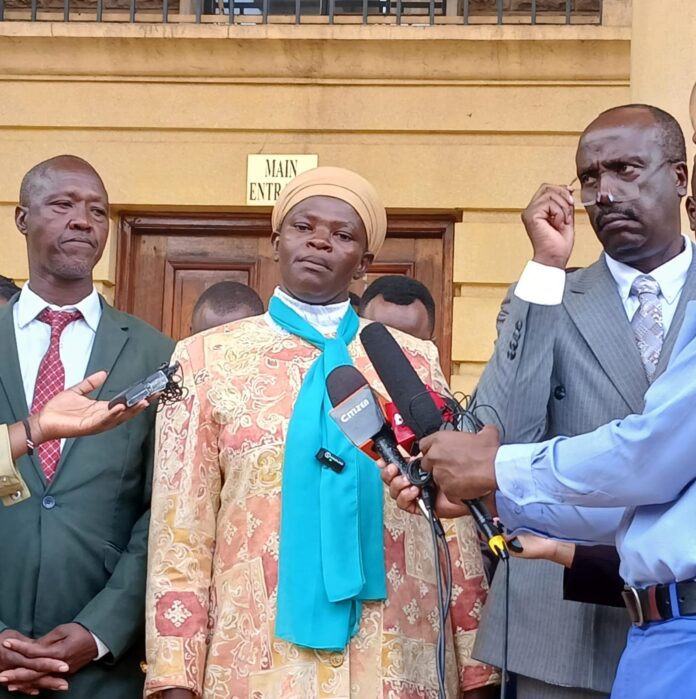
A case involving an alleged miraculous healing linked to preacher Prophet David Owuor has escalated into a legal dispute, with a Nairobi law firm demanding that the Kenya Medical Research Institute (KEMRI) retract its position on a woman’s HIV status.

In a demand letter dated May 6, 2026, Danstan Omari & Associates Advocates, acting on behalf of Millicent Awino, challenged KEMRI’s findings, citing inconsistencies between earlier confirmed diagnoses and subsequent conclusions issued by the agency.

According to the documents, Awino was first diagnosed as HIV positive in September 2023 at a government health facility and later enrolled in antiretroviral therapy (ART) in line with national treatment protocols.

Follow-up tests conducted at different facilities reportedly confirmed her positive status and she remained under treatment.

The situation took a dramatic turn in December 2024 after Awino followed a televised healing crusade led by Prophet David Owuor. During the broadcast, she placed her clinic card on the screen and later claimed she experienced a healing sensation.

She subsequently sought re-testing at another facility, where she received a negative result.

Further tests conducted at multiple facilities continued to return negative results, prompting confusion among medical professionals due to the contradiction with her earlier confirmed diagnosis and treatment history.

“This conclusion stands in direct contradiction to the scientific earlier diagnoses, documented treatment and national health system records,” the lawyers state in reference to KEMRI’s later position that there was no evidence of prior HIV infection.

The case attracted national attention, leading to involvement by health authorities including the National AIDS and STI Control Programme (NASCOP), which conducted further investigations and confirmatory testing.

Despite these processes, the legal team argues that KEMRI’s conclusion, contained in a letter dated April 20, 2026, raises serious concerns about the integrity of Kenya’s HIV testing systems and public health data.

The lawyers maintain that under Kenya’s HIV testing guidelines, diagnosis must follow a strict confirmatory process and any conflicting results should be treated as inconclusive rather than dismissed outright.

The matter has since been reported to the Directorate of Criminal Investigations (DCI), as questions mount over whether there was a breakdown in diagnostic procedures or misrepresentation of medical findings.

“KEMRI shall retract their conclusion vide the letter dated 20th April 2026,” the demand letter states, adding that the Ministry of Health must clarify whether the country’s HIV testing framework remains reliable.

The case now sits at the intersection of faith, science and law, with potential implications for public trust in medical systems as well as scrutiny over claims of miraculous healing.

Health authorities are yet to issue an official response.

CS Opiyo Wandayi Blames ‘Technical Hitch’ for Fuel Shortages, Assures Supply Stability

By Andrew Kariuki

The Ministry of Energy and Petroleum has attributed the recent fuel shortages reported across parts of the country to what it described as “technical and administrative hitches” within the supply chain.

Energy Cabinet Secretary Opiyo Wandayi said the disruption led to reduced uptake of petroleum products by some oil marketing companies operating downstream, resulting in temporary shortages at several filling stations.

He assured the public that the situation is being addressed and that the country has sufficient fuel reserves.

“Fuel restocking in various filling stations is underway, and normal supply across the country will be attained by the end of the day today,” he said.

The shortages come against the backdrop of global supply pressures linked to the ongoing US-Iran conflict, which has driven up international fuel prices and disrupted supply chains.

In the latest pricing cycle, landed costs rose sharply, with super petrol at Ksh107 per litre, diesel at Ksh133, and kerosene at Ksh170. In Nairobi, pump prices currently stand at Ksh206 for both petrol and diesel, while kerosene remains at Ksh152 per litre.

To cushion consumers from rising costs, the government has deployed approximately Ksh6.2 billion from the Petroleum Development Levy (PDL) Fund to stabilise prices at the pump.

The ministry maintained that the shortages are temporary and urged calm as supply normalisation efforts continue.

Uganda Parliament Passes Controversial ‘Foreign Agents’ Bill Amid Criticism

By Andrew Kariuki

Uganda’s Parliament has passed the controversial Protection of Sovereignty Bill, a law that has drawn sharp criticism from rights groups, journalists, and sections of the business community over concerns it could be used to suppress dissent.

The bill, passed on Tuesday night following a heated debate, introduces penalties for individuals or organisations deemed to be acting in the interest of foreign entities against Uganda’s national interests. Those found guilty under the law could face prison sentences of up to 20 years.

House Speaker Anita Among described the legislation as a major milestone, saying, “It is a historic bill.”

The law labels individuals receiving foreign funding as “agents of foreigners” and bars them from engaging in political activities seen to advance external interests, including sponsoring or funding such initiatives.

Proponents argue that the bill is intended to safeguard Uganda’s sovereignty. “This has been a monumental achievement,” said MP Kajwengye Twinomugisha Wilson of the ruling party.

However, the legislation has faced strong opposition both locally and internationally. Critics say it mirrors similar laws in countries like Russia, where such provisions have been used to restrict civil society and silence government critics.

Human Rights Watch warned that the bill “mimics” foreign agent laws used to target dissent and could be applied broadly due to its vague definitions. The organisation cautioned that it “could be used to shut down civil society” in Uganda.

Opposition lawmakers also raised concerns about the economic and political implications of the law. “The bill creates punitive sanctions regime, and has potential to hurt the economy,” said opposition MP Gilbert Olanya.

In response to earlier criticism, lawmakers introduced amendments before passing the bill. These included removing a clause that classified Ugandans living abroad as “foreigners” and exempting certain entities such as medical institutions, faith-based organisations, and academic or research bodies operating under approved frameworks.

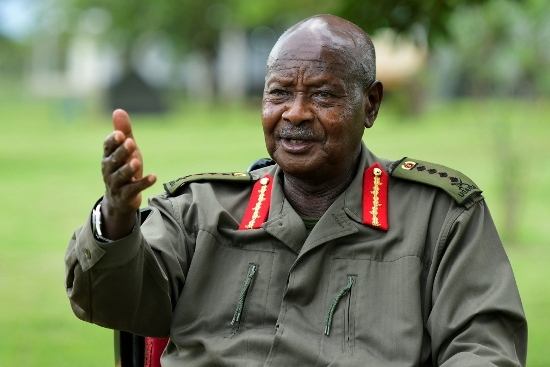
President Yoweri Museveni, who has ruled Uganda for nearly four decades, had also called for revisions to ensure the law does not disrupt capital flows, while maintaining support for measures aimed at limiting foreign political influence.

The passage of the bill comes against a backdrop of growing concerns over governance and political freedoms in Uganda. Museveni, 81, was re-elected in January in a contested election marked by an internet shutdown and a crackdown on opposition figures, including his main rival Bobi Wine.

Despite the controversy, the bill was approved by an overwhelming majority and now awaits further steps before becoming law.

South Korean Judge Who Increased Ex-First Lady’s Sentence Found Dead

By Andrew Kariuki

A South Korean judge who recently increased the prison sentence of former first lady Kim Keon Hee has been found dead, authorities confirmed on Wednesday.

Judge Shin Jong-o was discovered unconscious at the Seoul High Court building at around 1:00 a.m., according to police in Seocho district. He was rushed to hospital, where he was later pronounced dead.

Police said there were no immediate signs of foul play surrounding the incident.

Local media reports claimed the judge may have left a suicide note, although investigators later stated that no such note had been found.

Last month, Shin presided over the appeal case involving former first lady Kim Keon Hee, 53, where he found her guilty of stock manipulation and bribery. He increased her prison sentence from 20 months to four years after overturning part of a lower court’s ruling.

During the judgment, Shin said Kim had “failed to acknowledge her culpability and has instead consistently resorted to excuses.”

The ruling attracted widespread public and political attention in South Korea due to Kim’s high-profile status and the sensitive nature of the corruption allegations.

Police said the judge’s family was deeply affected by the incident and requested privacy as investigations continue.

The case remains one of South Korea’s most closely watched political and judicial developments in recent months.

Where do Bayern’s prolific trio rank in greatest front threes ever?

Stacy Boit,

When Harry Kane, Michael Olise and Luis Diaz are bearing down on goal, there is usually only one outcome.

Just ask Atalanta, Real Madrid, Paris St-Germain, and practically any team in Germany, and they will testify to the quality of Europe’s most feared front line.

Since linking up for the first time in August, Kane, Diaz and Olise have scored more than 100 times across all competitions for Bayern.

They are only the fifth trio to reach a ton since the turn of the century.

It is one of the main reasons why the German champions are looking to add the DFB Pokal (German Cup) and Champions League to the Bundesliga title they won last month.

But where do they rank among the great three-man forward lines of recent times?

Ahead of Wednesday’s Champions League semi-final second leg against Paris St-Germain – with the German side trailing 5-4 after a remarkable first leg – BBC Sport takes a closer look at the numbers.

Players will boycott a Slam ‘at some point’ – Sabalenka

Stacy Boit,

World number one Aryna Sabalenka believes players will boycott a Grand Slam “at some point” because of the ongoing dispute over prize money.

The men’s and women’s top-10 players are demanding a higher percentage of the revenue generated by the four majors, as well as benefit contributions and a greater say in areas such as scheduling.

But until Sabalenka spoke to the media in Rome before the Italian Open, players had been circumspect on the subject of strike action.

“I think at some point we will boycott it. I feel like that’s going to be the only way to kind of fight for our rights,” the Belarusian said.

“I feel like the show is on us. I feel like without us there wouldn’t be a tournament and there wouldn’t be that entertainment.”

Fourth-ranked Coco Gauff said she could “100%” see herself boycotting a Grand Slam “if everyone were to move as one and collaborate”.

However, world number three Iga Swiatek said she supports the call for increased prize money but a boycott would be a “bit extreme”, while Britain’s Emma Raducanu said she “would not be a part” of any boycott.

On Monday, a number of leading players expressed their “deep disappointment” at the prize money at this year’s French Open.

The fund at Roland Garros has increased by 9.5% – but the players believe that is some way below the 22% of tournament revenue they feel they are entitled to.

“I just really hope that we at some point are going to get to the right decision, to the conclusion that everyone will be happy with,” Sabalenka, 28, said.

“I feel like nowadays, we girls can easily get together and go for this because some of the things I feel like it’s really unfair to the players.”

The financial pot at last year’s US Open rose by 20%, with the figure for January’s Australian Open nearly 16% higher.

Wimbledon will announce its prize money next month.

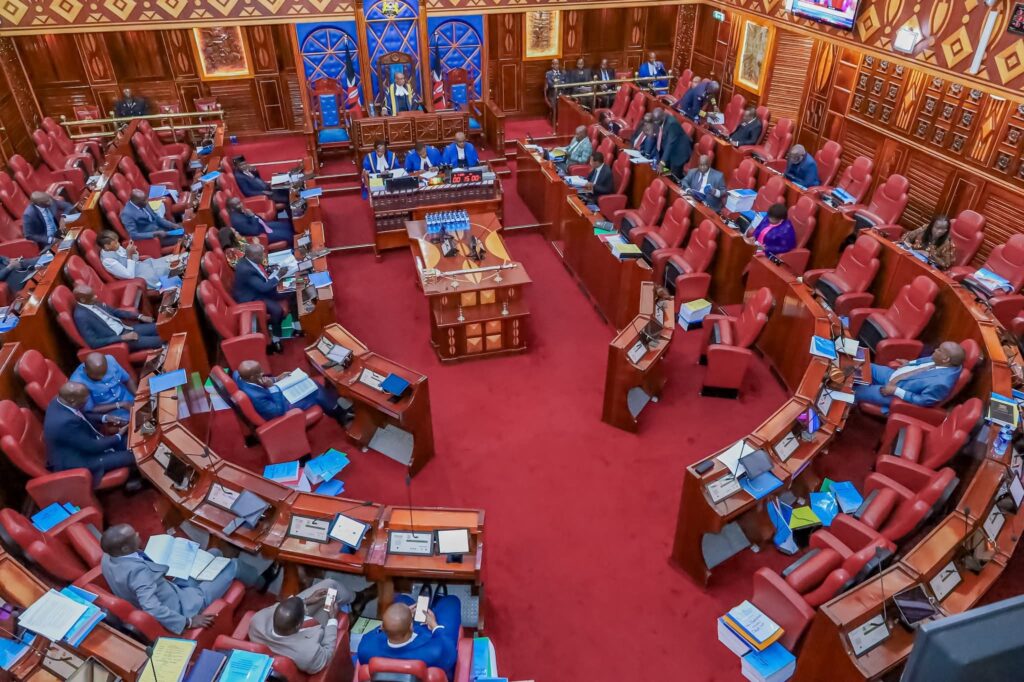
Senate to hold plenary sittings in Kilifi County

By Bonface Mulyungi

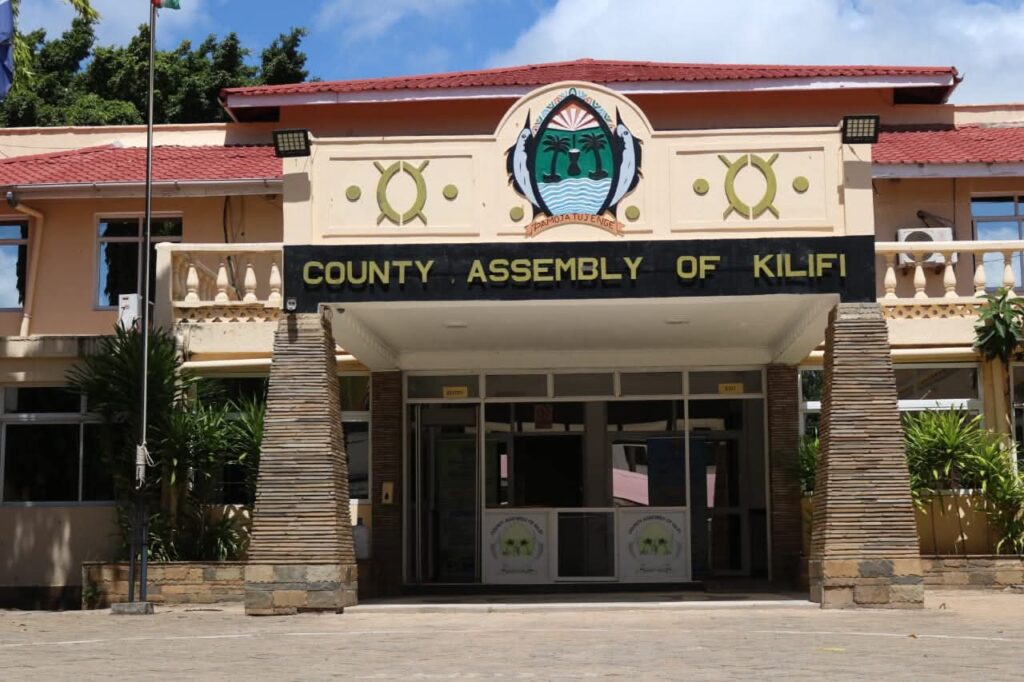
The Senate has resolved to hold its plenary and committee sittings in Kilifi county from September 21 to 25, 2026, in a move aimed at strengthening public engagement and deepening devolution at the grassroots.

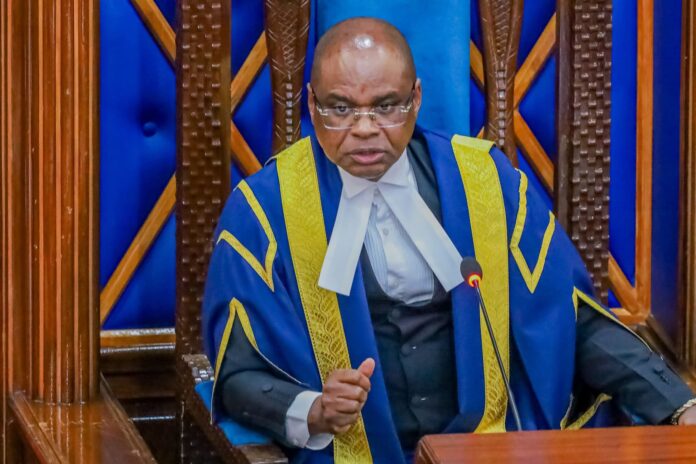
The motion, moved by Senator David Wakoli, received unanimous support from senators during a sitting chaired by Speaker Amason Kingi.

While tabling the motion, Wakoli said the decision aligns with earlier commitments by the House to periodically hold sittings outside Nairobi to bring Parliament closer to the people.

“Pursuant to Article 126(1) of the Constitution, the Senate resolves to hold its plenary and committee sittings in Kilifi from 21st to 25th September, 2026,” Wakoli said.

He noted that the Senate Business Committee had already approved the decision and was in line with its earlier recommendation that at least one sitting be held away from the traditional Parliament buildings in Nairobi during the term of the 13th Parliament.

Wakoli also referenced a March 2023 resolution requiring the Senate to convene plenary and committee sittings in counties for one week every September, except during election years.“The objective of these sittings is to promote the role and work of the Senate, enhance public awareness on parliamentary business, and highlight opportunities for citizen engagement in the legislative process,” he said.

He added that the sessions will also help build partnerships with county governments while providing a platform for members and staff of county assemblies to exchange ideas and best practices with senators and parliamentary officials.

Wakoli pointed to the success of previous sittings held outside Nairobi, citing sessions in Uasin Gishu (2018), Kitui County, Turkana (2023) and Busia (2025).

Seconding the motion, nominated senator Veronica Maina said taking Senate sittings to the counties is critical in making Parliament’s work accessible and relevant to citizens.

“It is important that the work we do becomes relevant to the people. Not many Kenyans can come to Nairobi to follow live proceedings,” Maina said.

She emphasised that as the guardian of devolution, the Senate must actively engage with citizens at the grassroots level.“The best way the Senate can connect with the people of Kenya is to constantly go down to where the people are. This is also an opportunity to check the projects implemented by counties,” she added.

Maina further noted that such visits provide senators with a chance to verify development claims made by county governments.“There have been instances where counties purport to undertake projects, but there is nothing on the ground. These sittings give us a chance to confirm what is actually happening,” she said.

She also highlighted the strategic importance of Kilifi, saying the visit would allow senators to deepen their understanding of the blue economy and its potential along the coastal region.

“If resources allow, such sittings should even be held twice a year,” she proposed.

The motion was unanimously approved after Speaker Kingi put the question, paving the way for preparations for the Kilifi sittings later this year.

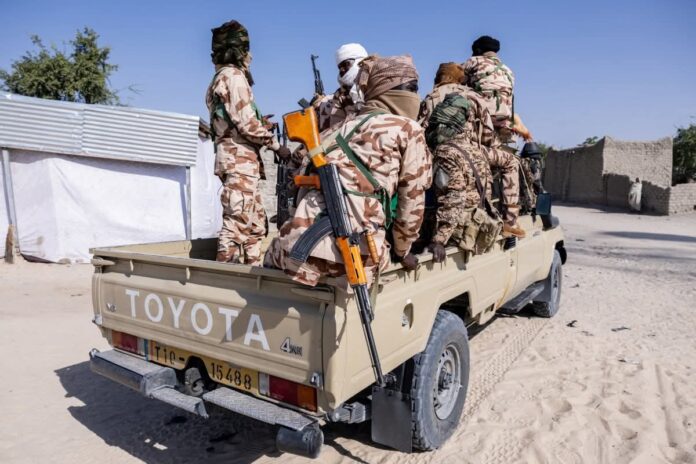
Boko Haram attack kills 24 soldiers in Chad’s Lake Chad region

By Bonface Mulyungi

An overnight attack by suspected Boko Haram jihadists on a Chadian military base has killed at least 24 people, a military official and regional administrator told AFP on Tuesday.

The Barka Tolorom base is on the shores of Lake Chad, which straddles Cameroon, Chad, Niger and Nigeria and whose islands provide a refuge for jihadists from Boko Haram and other radical Islamist groups.

The raid late on Monday “left 25 dead and 46 wounded on the Chadian army side”, the army source told AFP.

The administrative official gave a toll of “24 dead and several wounded”.Both attributed the attack to Boko Haram, with the administrator insisting that “the situation is under control”.”Once again, the nebulous Boko Haram terrorist group carried out a cowardly attack last night on our military base at Barka Tolorom,” Chadian President Mahamat Idriss Deby Itno said on Tuesday in a Facebook post.

“We will continue the fight with renewed determination until this threat is completely eradicated,” he pledged, offering his condolences to the bereaved families.Soldiers have come under increasing fire from Boko Haram in the Lake Chad region, with an October 2024 attack leaving some 40 dead in the Chadian army’s ranks.

Recent months have also seen a surge in attacks by the group’s JAS faction, including kidnappings and attacks on advanced army positions, especially on the islands and along Niger’s portion of the lake’s shores.

In response to the October 2024 attack, Deby launched a counter-offensive which he vowed to “personally” lead on the ground for two weeks.After that offensive ended in February 2025, the army insisted that Boko Haram had “no more sanctuary on Chadian territory”.Lake Chad’s islands and marshes also serve as a haven for Boko Haram’s rival splinter group, the Islamic State West Africa Province (ISWAP).

The league is the dream – but is this Arsenal’s moment in Europe?

Stacy Boit,

It might seem odd to suggest an English club reaching a Champions League final have been in danger of going under the radar – but that has almost been the case for Arsenal this year.

Such has been the immense pressure piled upon Mikel Arteta’s side to end a 22-wait for a Premier League title, their remarkable unbeaten run to the European showpiece in Budapest has arguably not got the credit it deserves.

Bukayo Saka’s first-half tap-in gave the Gunners a 1-0 win over Atletico Madrid in Tuesday’s semi-final second leg, securing a 2-1 aggregate victory.

In truth, while their display at Emirates Stadium was not necessarily vintage, some of Arsenal’s best performances of the season have come in Europe.

The Gunners remain the only unbeaten team left in the Champions League, defeating teams like Bayern Munich, Inter Milan and Sporting along the way.

There has been a desperation to win the league – which, indeed, they could well go on to do as well given Manchester City’s draw at Everton 24 hours before this semi-final.

But there has been a quiet ruthlessness in Arsenal’s European games – rarely troubled, rarely in danger of going out.

“I don’t think you can underestimate what we have done in this competition up to this point,” midfielder Declan Rice told Amazon Prime.

“We have every right to celebrate that moment. The most prestigious competition in club football. We are just trying to soak it all in.

“We knew coming into the game what was at stake. If you can’t get up for that, then you can’t get up for any game of football.

“When we went 1-0 up, I knew we were going to win. I could feel something special building.”

The Arsenal supporters welcomed the team bus with flares and chants – the first time that has happened at the stadium – setting the tone and atmosphere for what Arteta described as “an incredible night”.

“We made history again together,” said Arteta. “I cannot be happier, prouder for everybody that’s involved in this football club. The manner that we [were] received outside the stadium was special and unique.

“The atmosphere, our support has created the energy, the way they managed every ball with us… I never felt that in the stadium [before].

“We knew how much it meant to everybody… the boys did an incredible job and after 20 years and a second time in our history, we are back in the Champions League final.”

Create a free account, or log in.

Gain access to read this content, plus limited free content.

Yes! I would like to receive new content and updates.

Sponsored Ad

Ad 1
Ad 2
Ad 3
Ad 4
Ad 5
Ad 6