Sponsored Ad

Ad 1
Ad 2
Ad 3
Ad 4
Ad 5
Ad 6
30.5 C
Kenya
Saturday, May 9, 2026
Home Blog Page 258

AI must reflect Africa’s realities, says PS Isaboke at TikTok Internet Summit

Principal Secretary for Broadcasting and Telecommunications Stephen Isaboke has called for the responsible development of artificial intelligence that reflects Africa’s realities, languages, and cultural contexts.

At the TikTok Safer Internet Summit 2026 held in Nairobi on Wednesday, Isaboke stated that artificial intelligence should complement rather than replace human capability.

“Artificial intelligence should be seen as the deliberate augmentation of human capability,” he said.

He noted that AI can improve efficiency and create opportunities in agriculture, health, education, and the creative economy.

Isaboke made these remarks after joining a panel discussion on “AI for Good: Leveraging Technology for Social Impact” at TikTok’s invitation.

He affirmed the government’s commitment to the Digital Superhighway and Creative Economy pillar, which aims to expand digital infrastructure and support innovation.

“The Government remains fully committed to the Digital Superhighway and Creative Economy pillar, creating an enabling environment for platforms like TikTok to operate responsibly,” he said.

He highlighted that digital platform enable young Kenyans to build livelihoods through content creation and digital services.

Isaboke stated that Kenya has developed a National Artificial Intelligence Strategy (2025–2030) to guide the development and use of AI technologies.

“Our National AI Strategy provides guidance to ensure Kenyan youth seize the opportunities that artificial intelligence brings,” he said.

He added that technology platforms must help address online risks.

“We expect platforms to harness their algorithms effectively to combat fake news, misinformation, and disinformation and safeguard online spaces,” he said.

He described the summit as an opportunity to discuss responsible innovation and the role of technology in society.

During the discussion, Duduzile Mkhize, Outreach and Partnerships Manager for Sub-Saharan Africa at TikTok, emphasized the importance of transparency as AI-generated content becomes more common.

“It is important that communities know when the content they are consuming is AI-generated,” she said.

She noted that TikTok is collaborating with organizations across Africa to promote responsible AI use and strengthen digital literacy among young people.

Panelist Jennifer Kaberi, the Founder and Director at Mtoto News observed that some digital systems are developed without sufficient understanding of African users.

“When a 13-year-old is identified as much older, it shows the system was not designed with African children in mind,” she said.

She also called for the inclusion of young people in discussions on technology and digital policy.

“There is nothing for us without us,” she said.

Nigerian tech creator Izzi Boye stated that creators should be involved earlier in policy discussions on emerging technologies.

“It is important to have the right people in the room when policies are being made,” he said. He noted that creators often experience the effects of platform policies before others do.

Nshingu Kazadi stated that platforms are working with governments and partners to strengthen transparency and responsible content governance.

“We consult partners, governments, and experts when shaping policies,” he said.

Kazadi explained that partnerships with initiatives such as the Content Authenticity Initiative and the Coalition for Content Provenance and Authenticity help improve trust in digital information.

Participants agreed that cooperation among governments, technology companies, civil society, and creators is essential for the responsible development of artificial intelligence.

They emphasized that transparency, inclusion, and local context should guide the development of AI technologies.

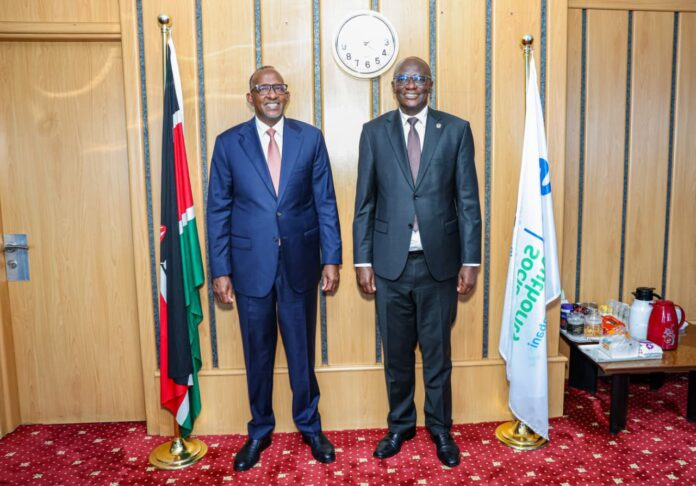
The Principal Secretary was accompanied by the Secretary for Broadcasting and Telecommunications, Temesi Mukani; David Omwoyo, the Chief Executive Officer of the Media Council of Kenya; and Dennis Itumbi.

‘We’re not wombs’: Japan women seek rights to sterilisation

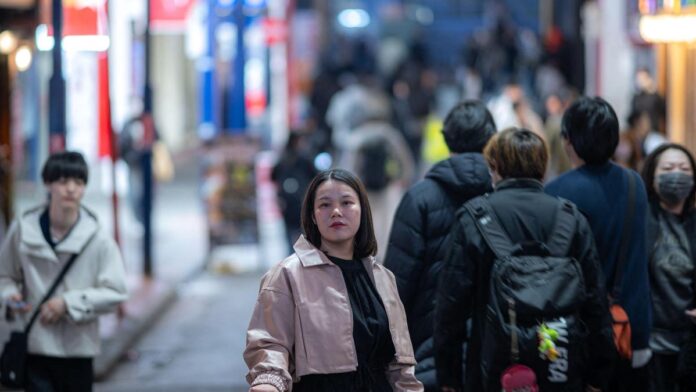
When Kazane Kajiya voluntarily sterilised herself in the United States aged 27, she essentially “flipped the middle finger” at Japan’s patriarchal society that had long pushed her towards motherhood.

In the rapidly ageing country desperate to boost its falling birth rates, women seeking to make themselves infertile were assumed “not even to exist”, Ms. Kajiya, who has never wanted children, told AFP.

She and four other women are now challenging the constitutionality of Japan’s decades-old “maternity protection” law, one of the world’s most restrictive barriers to sterilisation.

A verdict in their landmark lawsuit dubbed “maternity is not my body’s purpose” is due next week.

Under the law, a woman must have multiple children with her health at risk, or face life-threatening danger from pregnancy, to qualify for sterilisation. Even then, spousal consent is required.

This bans physicians from operating on healthy, childless women like Ms. Kajiya, now 29, who flew to the U.S. to have her fallopian tubes removed in what she described as a minimally invasive procedure.

It was her “ultimate no” to being treated as a “future incubator”.

To her, the law signals the government is “dead-set against giving freedom to end reproductive capacity to women who haven’t fulfilled their ‘duties’ to bear multiple children for the sake of the nation”.

Growing up, she was told her uterine lining represented the “bed for a baby” and that period pain was preparation for labour.

“I felt like I had been shoved onto a train bound for motherhood,” she recalled.

By having the surgery, “I smashed the windows, and hurled myself out of that train.

“We’re not wombs, we’re humans.”

Japan as an ‘outlier’

A holdover from a wartime era where women were considered resources for population growth, the law effectively “manages all fertile women as potential maternal bodies”, Michiko Kameishi, lead lawyer for the case, told AFP.

Its spousal consent requirement suggests “women are not seen as independent beings capable of self-determination”.

The lawyer aims to establish women have constitutionally guaranteed rights to bodily freedom, placing sterilisation on par with plastic surgery or tattooing.

Ms. Kajiya once wondered if discomfort with being female explained her feelings but dismissed that “because I hate beards and like pretty clothes”, she said. She even came to terms with menstruation.

What she truly loathes, she concluded, is her biological capacity to reproduce.

That innate aversion to fertility, the pressure on women to give birth and the desire for safe, effective contraception have united the plaintiffs.

Among modern democracies, Japan is an outlier on sterilisation access.

The lawsuit cites a 2002 study by EngenderHealth, a global NGO focused on sexual and reproductive health, that says more than 70 countries— including many industrialised economies— explicitly permitted the procedure as a method of contraception.

Japan was among eight countries that forbade or severely restricted it.

In Japan, condoms— a male-controlled method— is the most popular form of birth control.

Just 0.5% of women choose sterilisation and 2.7% use the contraceptive pill, seen as costly, according to one survey.

Contraceptive injections and implants remain unavailable.

And while men’s vasectomies similarly require spousal consent, enforcement tends to be laxer with urology clinics openly touting the procedure, campaigners say.

The government, meanwhile, has defended the current system as protecting women from “future regret”.

Given the “irreversible” nature of sterilisation, existing restrictions “help guarantee those considering surgery rights to self-determination over whether they want to have children”, the government said in a document filed with Tokyo District Court.

Myths, guilt

These restrictions have historically sparked little debate even among feminists who have strenuously opposed Japan’s spousal consent requirement for abortions.

That’s because few want to speak out in a society where “the myth persists that women are incomplete without motherhood”, lawyer Kameishi said.

“Merely being childless makes them feel a bit guilty, so how could they speak openly about their desire to proactively remove their reproductive potential?”

Another plaintiff raising her voice is 26-year-old Rena Sato.

As an aromantic and asexual person, Ms. Sato— a pseudonym she uses in the lawsuit— categorically rules out marriage and childbirth.

“To me, the act of bringing a life out of my body is strongly linked to heterosexual romance, so this function of fertility has no place in my sexuality,” she told AFP.

Her only possibility of pregnancy is therefore through rape, she said.

“If I’m forced to maintain my fertility, it’d be tantamount to the state telling me to accept the risk of sexual violence while alive.”

Now married to a partner who respects her choice to be child-free, Ms. Kajiya has no regrets about getting sterilised.

But she sometimes wonders whether Japan pushed her to an extreme.

“Had I been born in a country where women have the same rights to bodily autonomy as men, and where no one assumes I will become a mother,” she said, “I might’ve not let incisions be made to my body.”

Viral matatu smashing incident a domestic dispute, not fare dispute, says police boss

A violent confrontation that erupted in Nairobi’s CBD and quickly went viral on social media has been confirmed by police as a domestic dispute, not a fare-related altercation as widely speculated online.

The incident, captured in a video that spread rapidly across multiple platforms, shows a woman hurling a stone at a matatu, shattering its windscreen.

Moments later, a man associated with the vehicle rushes towards her, pushing her to the ground in a heated struggle. During the scuffle, he attempts to snatch her handbag, breaking its strap as she resists.

A school-going child, believed to be their daughter, was present at the scene and tried to intervene but was restrained by concerned onlookers.

The footage sparked intense speculation, with many online users claiming the confrontation stemmed from a dispute over fare change.

Reports suggested the woman had paid with a Sh. 1,000 note and was denied proper balance. However, police have dismissed these claims, clarifying that the matter was rooted in a personal disagreement between the two individuals.

Providing details of the investigation, OSPD Filmon Nyakombo of Central Police Station stated: “In our investigation, I found out that the driver and the lady have been in a relationship. They have a child together. The altercation arose from differences over the issues of taking this child to school.” He said the matter was domestic in nature and not related to fare payment.

According to police, the disagreement escalated from a conversation into physical violence, drawing the attention of bystanders and sparking the viral recording. Both parties have since recorded official statements with law enforcement.

The woman’s statement was taken at Kamukunji Police Station, while the man recorded his at Central Police Station. This dual process is standard in disputes where both individuals are directly involved.

Authorities have underscored the sensitivity of the case, particularly given the involvement of a minor and urged the public to avoid spreading unverified claims online.

Nyakombo said the police are handling the matter with caution to protect the family from further distress.

The incident highlights how quickly misinformation can spread when dramatic footage surfaces without context.

While online narratives initially painted the confrontation as a fare dispute, police investigations have revealed a more personal and complex reality.

Investigations into the full circumstances remain ongoing, with police promising to provide updates once inquiries are complete.

Officials have reiterated that the incident is fundamentally a domestic issue and cautioned against drawing conclusions from viral clips without verified information.

KeNHA reopens Mai Mahiu–Suswa–Narok Road after flooding

The Kenya National Highways Authority (KeNHA) has announced the reopening of the Mai Mahiu–Suswa–Narok road to traffic following days of closure caused by flooding and silt deposition.

In a notice issued on March 13, KeNHA said the road section that had been closed earlier this month has been reopened following emergency works to clear the debris and restore movement along the key transport corridor.

“KeNHA is pleased to inform the public that the Mai Mahiu – Suswa – Narok (B7) Road is now open to traffic. This follows the closure of the road section on March 7, 2026, due to flooding and deposition of silt at Kedong Ranch near Suswa,” stated KeNHA.

The route had been shut on March 7 after floodwaters and large amounts of silt covered sections of the highway at Kedong Ranch, cutting off traffic along the busy road that links Nairobi to Narok and the wider South Rift region.

KeNHA said its emergency teams worked to remove the accumulated debris and clear the affected sections, allowing traffic to resume along the strategic B7 road that carries vehicles transporting goods and passengers daily.

When the closure was announced earlier, motorists were advised to seek alternative routes while the clean-up exercise continued. The Authority had directed drivers to use the Narok-Mau Narok-Nakuru (B18) road or the Ngong-Suswa road as crews worked to restore the blocked section.

Even with the road now reopened, KeNHA has warned motorists to remain careful while driving through parts of the route due to ongoing rains.

“The Authority, however, appeals to motorists to exercise caution when driving through the sections of this road as the rains continue, particularly between Naivasha ICD (Km 14) and Suswa Ranch (Km 39),” advised the notice.

Over 30 Pupils Hospitalised After Suspected Mango Food Poisoning at Kitale School

More than 30 Grade 4 pupils from Big Tree Comprehensive School in Kitale were rushed to hospital on Thursday after suffering suspected food poisoning believed to have been caused by contaminated mangoes shared among classmates.

The incident occurred on the morning of March 12 when a pupil reportedly brought two mangoes to school and shared them with fellow learners. Shortly afterwards, several pupils began complaining of severe stomach aches and discomfort, prompting teachers and school authorities to seek urgent medical attention.

According to reports, at least 31 pupils initially reported stomach-related symptoms following the incident. Of these, 23 learners were taken to Wamalwa Kijana Teaching and Referral Hospital in Kitale for further medical evaluation and treatment, while others with milder symptoms were monitored at the school.

Doctors at the hospital confirmed that the learners displayed symptoms consistent with food poisoning and were immediately placed under treatment and observation.

“Most of them had taken kitchen fruit which had been contaminated with pesticides in the morning. We started our management; we gave them fluids and some medication,” a doctor at the hospital stated.

Medical personnel administered fluids and medication to stabilise the affected pupils, and doctors later confirmed that the children responded well to treatment. According to the medical team, none of the pupils suffered severe complications.

“They weren’t badly affected, so after medication, they got well, and they are ready to be discharged home,” the doctor added.

Health officials have since collected samples of the mangoes suspected to have caused the illness for laboratory analysis to determine whether pesticide contamination was responsible for the incident.

Meanwhile, authorities have launched investigations to establish the exact circumstances surrounding the case. Police officers are working alongside health officials to determine how the suspected contaminated fruit ended up being consumed by the pupils.

The incident has raised renewed concerns over food safety and the potential dangers posed by pesticide contamination in fruits and vegetables. Experts say that improper handling or washing of fruits treated with chemicals can expose consumers especially children to health risks.

Parents of the affected pupils are awaiting official communication from both the school and health authorities regarding the outcome of the investigations and measures to prevent similar incidents in the future.

CS Duale joined the leadership and staff of the Social Health Authority (SHA) to welcome newly recruited officers

Cabinet Secretary for Health Hon. Aden Duale today joined the leadership and staff of the Social Health Authority (SHA) to welcome newly recruited officers, marking a key step in strengthening the Authority’s capacity to support the implementation of Universal Health Coverage (UHC).

The Cabinet Secretary said the onboarding of the new officers strengthens SHA’s role as the financial backbone of Kenya’s healthcare reforms and will help accelerate the delivery of accessible and effective healthcare services across the country.

Addressing staff and management, Hon. Duale emphasized that SHA plays a central role in advancing the Government’s healthcare agenda under the Bottom-Up Economic Transformation Agenda (BETA).

He urged the officers to remain focused on serving Kenyans with integrity, transparency and accountability while ensuring prudent management of public resources.

The CS warned that fraud, collusion with rogue healthcare facilities and misuse of funds will not be tolerated, noting that any individual found culpable will face the full force of the law.

As the new officers deploy to departments and counties, he challenged them to prioritise key targets including scaling up revenue collection, ensuring full employer onboarding, strengthening claims management and improving administrative efficiency to ensure more resources directly support healthcare services.

Despite operating with limited staff in recent months, SHA has collected KSh 142.8 billion, transitioned 29.8 million Kenyans and paid KSh 109 billion in claims to healthcare facilities. With the full workforce now in place, the Authority is expected to further strengthen service delivery.

During the visit, Hon. Duale, accompanied by Director-General for Health Dr Patrick Amoth, also inspected the ongoing construction of the National Ambulance Dispatch Centre at the SHA headquarters, reaffirming the Government’s commitment to strengthening emergency care and referral systems.

The meeting was hosted by SHA leadership led by Chief Executive Officer Dr Mercy Mwangangi and Chairperson Dr Abdi Mohamed.

By Anthony Solly

FIFA Unveils Four New Rules for World Cup 2026: Here’s What You Need to Know

(Reuters) – The International Football Association Board (IFAB) approved on Saturday a package of measures aimed at speeding up the pace of matches and cracking down on time‑wasting, with the changes set to come into force at the 2026 World Cup and across all other competitions.

The changes were agreed at IFAB’s 140th Annual General Meeting in Hensol, Wales.

The extension of the countdown principle to throw-ins and goal kicks is one of the most significant new rules.

If the referee considers that a throw-in or goal kick is taking too long or is being deliberately delayed, referees can initiate a five‑second visual countdown. Failure to restart play before the countdown expires will see possession handed to the opposition: throw‑ins awarded the other way, and delayed goal kicks punished with a corner.

The move extended last year’s rule designed to discourage goalkeepers from holding on to the ball excessively.

Players being substituted will have 10 seconds to leave the pitch once the board is shown or the referee signals the change.

If they fail to do so, the replacement player will be forced to wait until the next stoppage after one minute of play has elapsed, although the substituted player must still leave immediately.

Players receiving on‑field injury assessment or whose injury causes play to stop will have to leave the pitch once play resumes and remain off for one minute. The policy is designed to discourage tactical injury delays.

The AGM signed off on three changes to the VAR (video assistant referee) protocol. When clear evidence exists, VARs will now be allowed to intervene in three additional situations: red cards resulting from an incorrect second yellow; cases of mistaken identity; and corner kicks that have been clearly awarded in error.

The next edition of the Laws of the Game, effective on July 1, will include that non-dangerous items may be worn if safely covered, and referees will be permitted to wear chest- or head-mounted cameras.

There was also clarification around dropped balls, with possession given to the team that would have retained the ball had play not stopped, and accidental double touches during penalty kicks.

The IFAB also agreed on consultation around players leaving the field as an act of protest against a referee’s decision or team officials instigating such action, and players covering their mouths when confronting opponents during matches.

Kenya Met Lists 5 Regions Set to Experience Rains This Weekend

The Kenya Meteorological Department (KMD) has predicted heavy rainfall across five regions this weekend.

In a weather forecast on Friday, March 13, the Met Department said rainfall is expected in the Highlands West of Rift Valley, Highlands East of the Rift Valley, and the Lake Victoria Basin.

The Rift Valley and the South-eastern Lowlands regions will also experience showers this weekend.

In the highlands west of the Rift Valley, the Lake Victoria Basin, and the Rift Valley, the weatherman said morning rains will be experienced over a few places, followed by afternoon showers and thunderstorms. In the evening, some locations are expected to receive rainfall.

In the highlands east of the Rift Valley, which includes Nairobi and Kiambu counties, the Met Department predicted that there will be a chance of morning rains in a few areas, followed by afternoon showers and thunderstorms.

In the evenings, some places will experience showers, while other areas will be partly cloudy.

Meanwhile the South Eastern Lowlands will experince morning rainfall over a few places followed by afternoon showers and thunderstorms.

The forecast comes days after the Met Department predicted a general reduction in rainfall across many parts of the country.

In an update on Monday, March 9, the department said rainfall will become less intense in several regions, although some parts will continue receiving occasional rains.

According to the agency, rainfall activity will decline in both spatial coverage and intensity across many areas of the country during the week under review.

“Rainfall is expected to reduce in spatial coverage and intensity across several parts of the country. However, occasional rainfall is likely to continue over several areas in the southern parts of the country,” the statement read.

Despite the expected reduction, the department warned that some regions could still experience isolated heavy rainfall during the forecast period.

Ndindi Nyoro Breaks Silence After Alleged Arrest Over Govt Criticism

Kiharu MP Ndindi Nyoro has responded to a viral video circulating on social media alleging that he had been arrested.

In an update on Friday, March 13, the MP assured the public and his supporters that he is safe, explaining that the footage being circulated is not recent and dates back several years.

“We have no idea of the motive of the inaccurate circulating information, the video is for 2019. I’m fine and well. Thank you everyone for your concern,” he said.

Nyoro also used the opportunity to highlight his upcoming engagement, indicating that he would proceed with scheduled development activities in his constituency.

“We’ll be launching triple laboratories at Karemaini Secondary School in the morning,” he added.

File image of Ndindi Nyoro

This comes two months after Nyoro opened up on his fallout with President William Ruto’s administration.

Speaking during an interview on Wednesday, January 14, he said the ruling UDA party deviated from its campaign promises to Kenyans.

Nyoro pointed out that the government has been borrowing, yet it promised Kenyans to go slow on taking loans.

“I think it is the party that deviated. Because when we were campaigning, I had a chance to come here to sell our agenda. The party has deviated from what we were to do.

“I have spoken on several issues, but the primary one is around the economy. We told Kenyans that we were not going to borrow the kind of money we are borrowing now, we promised that we will go slow on borrowing because for sustainable development it’s not about spending now but the future of our economy,” he said.

Nyoro also said the Ruto administration is not delivering on its promise of properly funding the education sector.

“We were also to give education the primacy it deserves; I don’t think the party is doing what we sold to the Kenyan people, and especially when it comes to funding education and holistic things, for example, what we are doing in terms of decent, people are having alternative voices, especially with the young people,” he added.

ODM Postpones Migori County Delegates Elections

The Orange Democratic Movement (ODM) on Friday, March 13, announced that it had rescheduled the Migori County Delegates Elections.

In a statement issued by the Chairperson of ODM’s National Elections Coordinating Committee (NEC), Emily Awitta, she revealed that the elections had been postponed to Sunday, March 22.

The elections had been slotted to take place on March 13. However, Awitta did not explain why the process had been put off.

“Migori County delegates, let us do this on Sunday. The NEC will conduct County Delegates elections on Sunday, March 22, 2026, from 9 a.m to 12 p.m.,” the statement read in part.

Awitta informed eligible delegates that they could apply for any positions at the ODM County Offices. She also provided payment details for aspirants to remit their application fees.

Delegates running for non-executive positions will pay Ksh1,000. Women, youth, and people living with disabilities will be required to pay Ksh2,500 to run for special interest seats.

Aspirants running for executive positions other than that of the Chairperson will have to part with Ksh5,000 while those seeking to become the Chair will pay Ksh10,000.

The Party also reassured delegates of a free and transparent process during the elections. 

ODM’s grassroots elections are in line with its plan to reorganise its party structures ahead of the August 2027 General Election.

The Party Leader, Oburu Odinga, has repeatedly indicated that the Orange Party needs to strengthen itself first to become a formidable party.

Oburu explained that maintaining its support base would be critical when the party sits at negotiation tables if they opt to get into a pre-election pact.

The Siaya Senator reiterated that UDA would have first priority when ODM resolves to partner with any political parties in 2027.

Create a free account, or log in.

Gain access to read this content, plus limited free content.

Yes! I would like to receive new content and updates.

Sponsored Ad

Ad 1
Ad 2
Ad 3
Ad 4
Ad 5
Ad 6