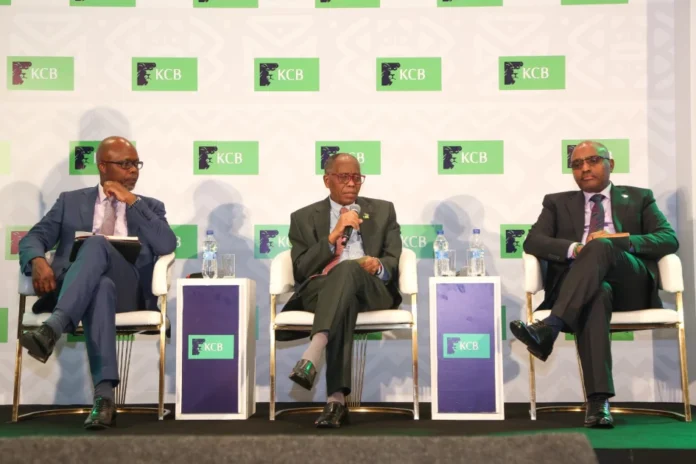
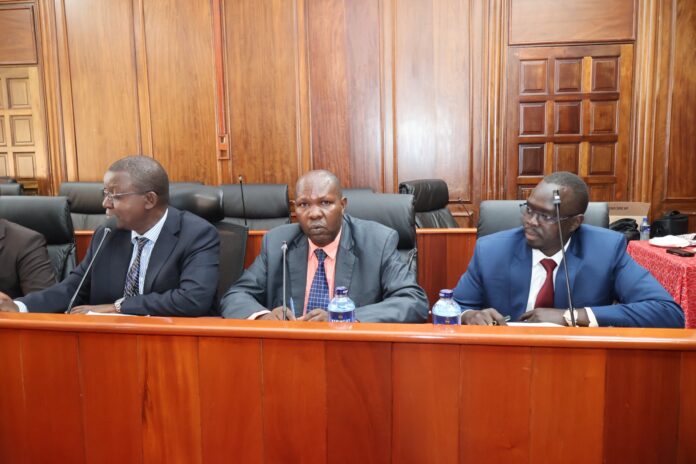
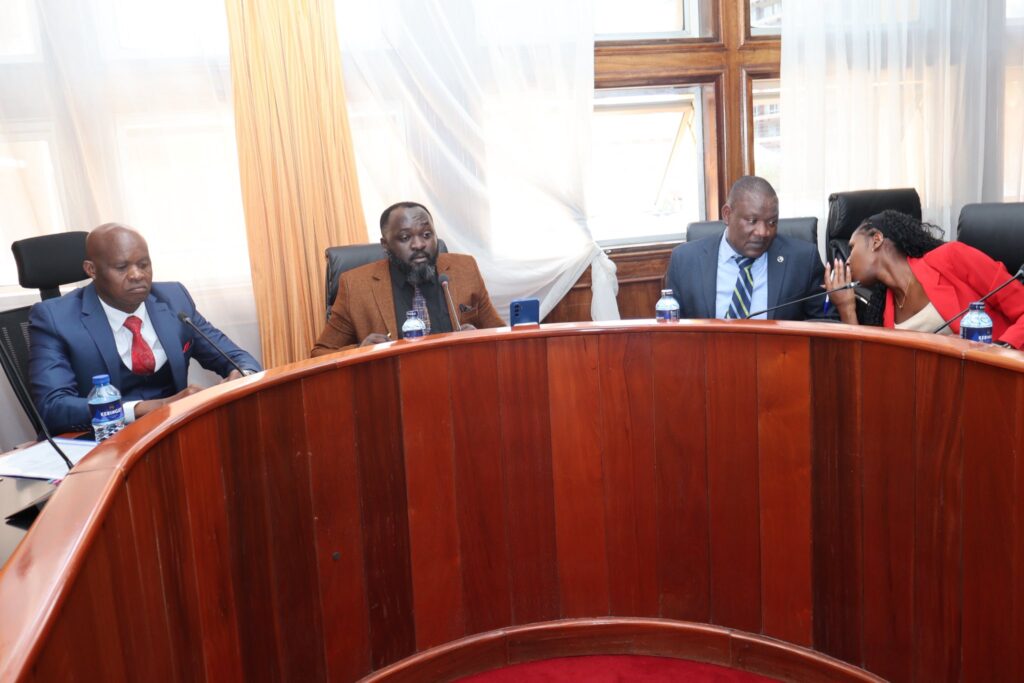
The KCB Group recorded a Ksh.68.4 billion profit in 2025, up 11% on an expanded loan book that delivered higher income across key business lines, coupled with sustained cost management across the Group.
During the period under review, KCB’s assets grew by 9.3% to Ksh.2.15 trillion despite divesting in National Bank of Kenya, demonstrating the Group’s resilience and the success of its diversification strategy and innovative financial solutions.
Likewise, total revenues grew steadily to Ksh.214 billion from Ksh.204 billion owing to higher net interest income as the Group continued to deepen its support for households, businesses and the public sector.
Non-Funded Income also delivered 31% of the total revenues on the back of investments in digital banking.
Speaking during the announcement of the financial results on Wednesday, KCB CEO Paul Russo said that the performance reflects the Group’s continued resilience to become a market leader while professionally servicing its customers.
“Despite a challenging operating environment, we delivered solid growth driven by disciplined execution, continued investment in digital innovation, and our unwavering commitment to supporting sector-focused lending that catalyzes economic transformation across the region,” he said.
“We remained focused on sustainable growth, supporting customers and delivering long-term value for shareholders”.
Customer loans for the same period also grew by 15% to close at Ksh.1.59 trillion. KCB says that this growth was utilized to fund interest-earning assets, which closed at Ksh.1.84 trillion, a year-on-year increase of 13.8%.
On the back of the strong performance, the Board has proposed a final dividend payout of Ksh.3 per share, subject to shareholder approval.
This is in addition to an interim payout of Ksh.4 per share which was paid out in November 2025, bringing the total dividend payout for the year to Ksh.7.0 per share, amounting to a total of Ksh. 22 billion for the year 2025.
The Group chairman, Joseph Kinyua, also noted that they are now focused on maintaining sustained business activity and economic growth prospects in 2026 across the markets they operate in.
He intimated that the Group is closely monitoring the increased global uncertainties attributed to heightened geopolitical tensions and higher tariffs.
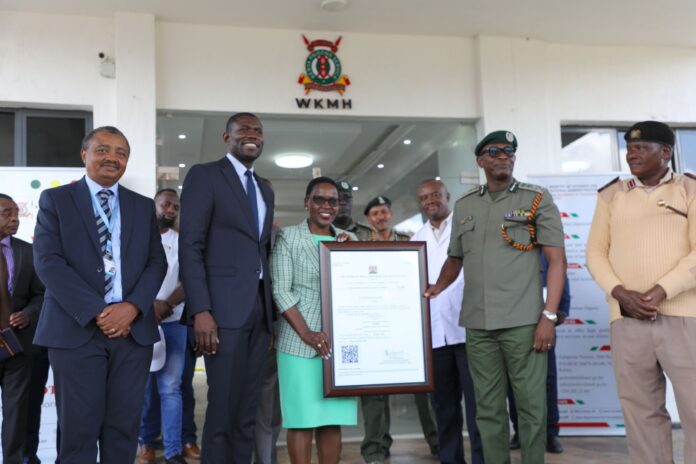
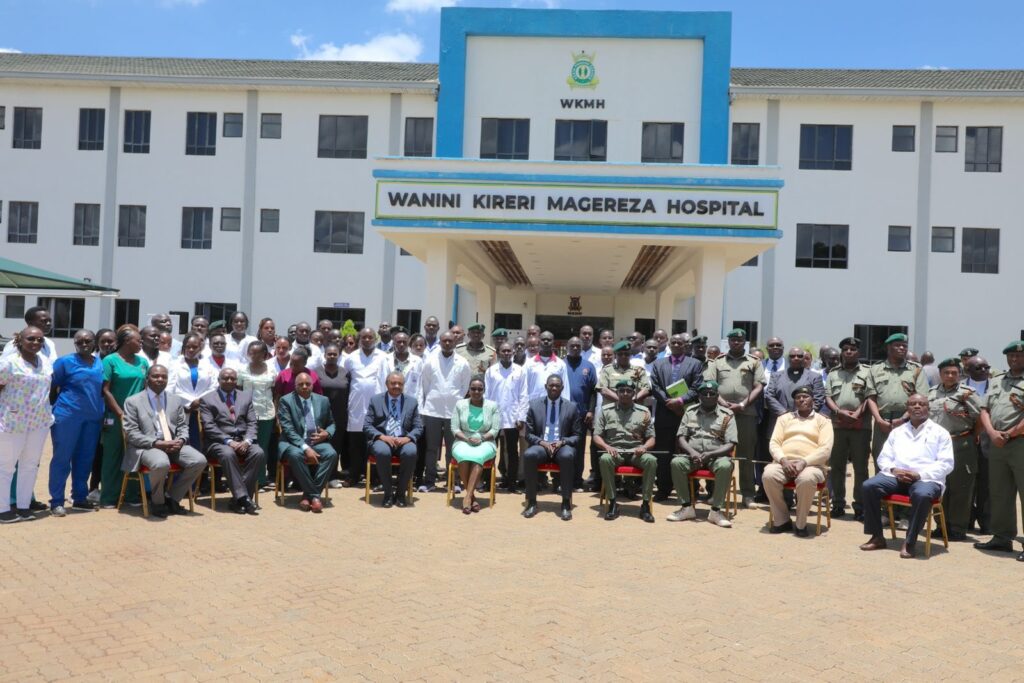
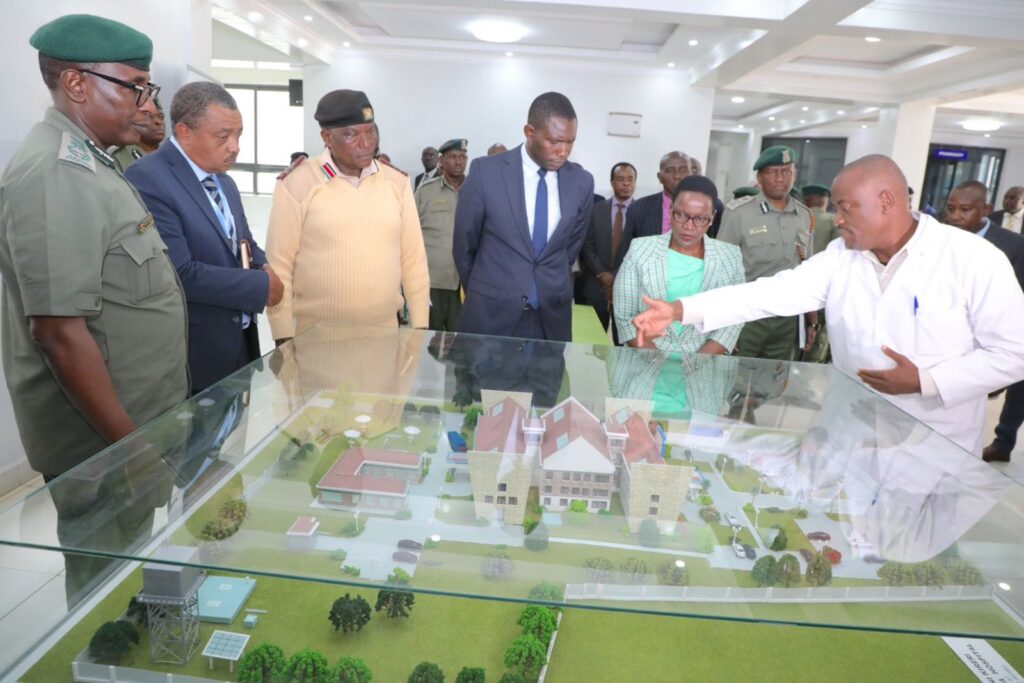
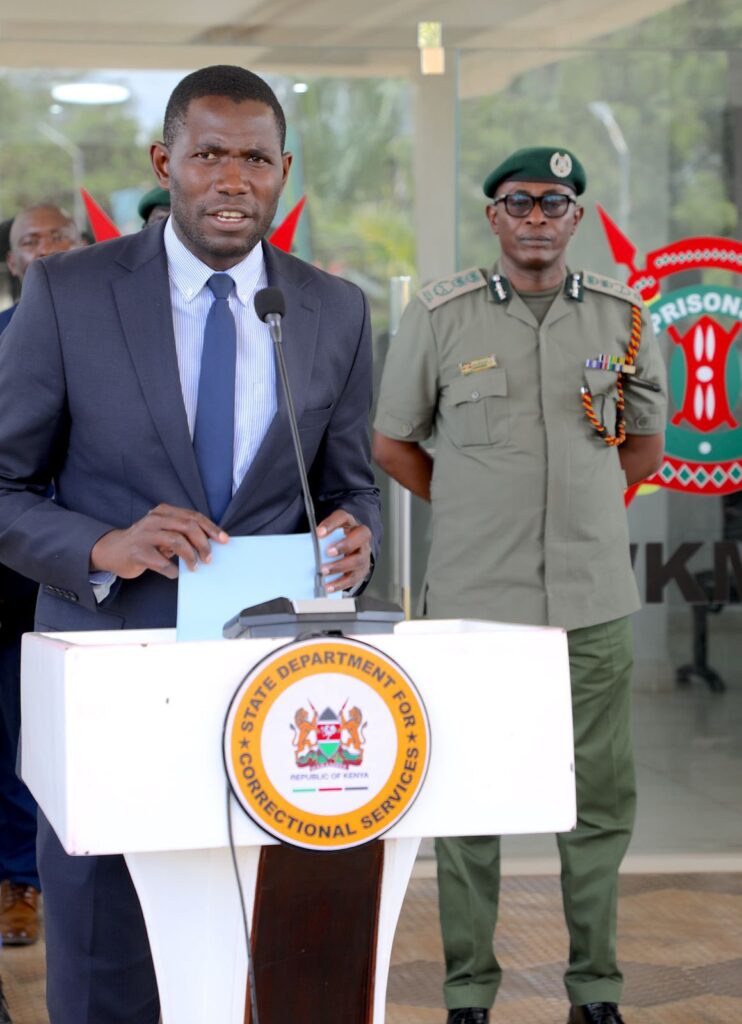
Wanini Kireri Magereza Level IV Hospital in Kiambu County has today begun offering Outpatient Department (OPD) services, marking the first phase in the operationalisation of the new 150-bed health facility serving correctional officers, inmates and surrounding communities.
The hospital, located at the Prisons Staff Training College, is being opened in phases ahead of full equipping and official commissioning.
Its operationalisation follows a directive issued by H.E. the President during the recent pass-out parade for newly enlisted prison officers, where he instructed that the facility be made operational within two weeks.
Constructed by the Kenya Defence Forces, the hospital is equipped with key medical units including a fully stocked pharmacy, male and female inpatient wards, a modern medical laboratory and physiotherapy services.
Once fully operational, the facility will provide outpatient and inpatient care, emergency services, diagnostics, maternal and child health services, as well as management of communicable and non-communicable diseases.
Speaking during the officiation ceremony, Principal Secretary for Medical Services Dr Ouma Oluga said the operationalisation of the hospital marks an important step in strengthening healthcare services within correctional institutions.
He noted that the initiative supports the Government’s Universal Health Coverage (UHC) agenda and the ongoing reforms in health financing under the Social Health Authority (SHA) to ensure Kenyans access essential health services without financial hardship.
Dr Oluga also called on healthcare workers deployed to the facility to uphold the highest standards of professionalism, clinical excellence and ethical conduct.
The Ministry of Health, he added, remains committed to strengthening health institutions across the country through policy leadership, technical support, capacity building and quality assurance, while safeguarding the health and wellbeing of officers and inmates in line with national public health standards.
Also present during the ceremony were Dr Salome Beacco, Principal Secretary for Correctional Services; Dr Andrew Toro, Director of Curative Services; Dr George Waganga, Acting Superintendent of Wanini Kireri Level IV Hospital; Mr Patrick Aranduh, Commissioner General of Prisons; Mr Angus Masoro, Commandant of the Prisons Staff Training College; and senior officials from the Ministries of Health and Interior as well as the Kenya Prisons Service.
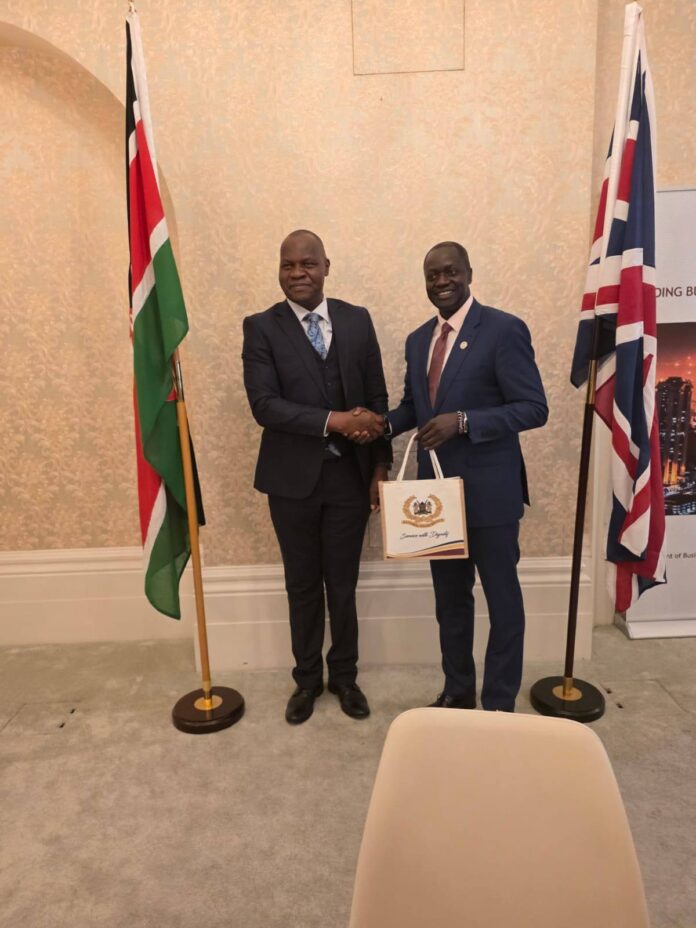
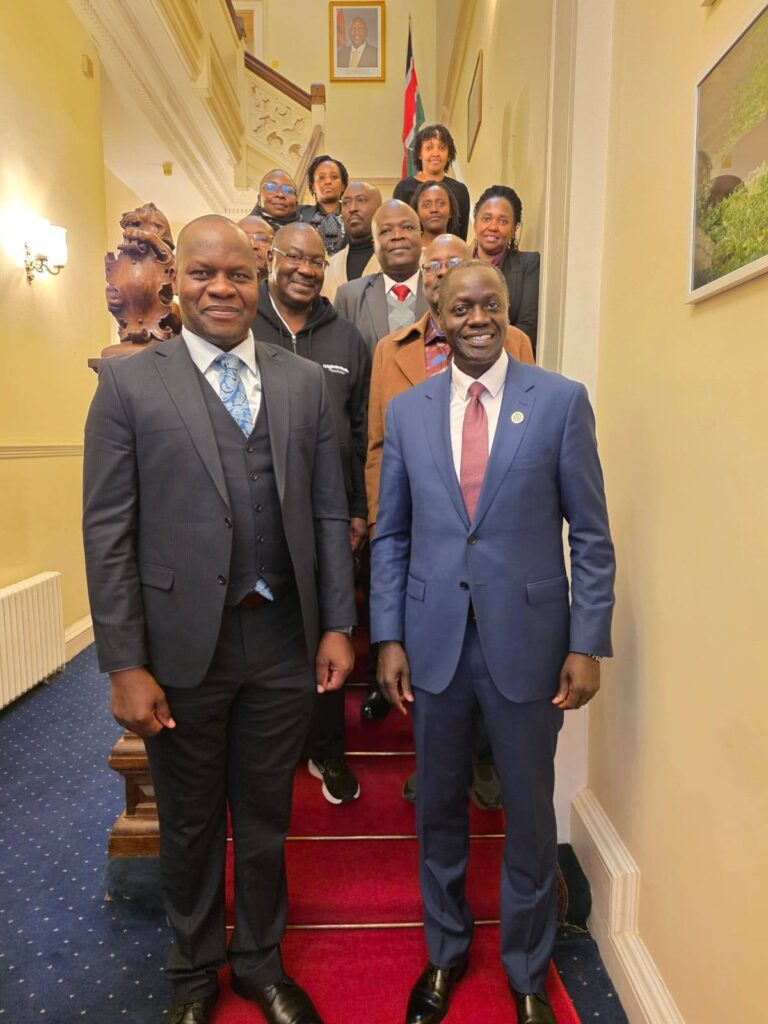
The Kenyan delegation that attended the Security & Policing Event 2026 in Farnborough England led by Deputy Inspector General APS Mr. Gilbert Masengeli, CBS, OGW, SS, paid a courtesy visit to the Kenya High Commission in London, where they were received by Ambassador Maurice Makoloo.
The meeting provided an opportunity to brief the High Commissioner on Kenya’s participation in the event and to deliberate on key areas of cooperation between Kenya and the United Kingdom.
Discussions focused on leveraging science and technology, strengthening cybersecurity capabilities, and addressing the growing threat of misinformation and disinformation that could manipulate public perception and undermine national security.
The delegation also explored avenues for enhancing security and stability through the exchange of intelligence and information. In addition, the importance of building stronger partnerships with the Kenyan diaspora in advancing national development and security interests was emphasized.
The engagement reaffirmed the value of diplomatic collaboration and strategic partnerships in addressing emerging global security challenges.
The DIG was accompanied by; Mr. Richard Lesasuiyan, MBS, HSC – Director Planning NPS, Mr. Philip Opiyo, MBS – Director Operations KPS, Mr. Geoffrey Mutegi Director Administration DCI, Ms. Grace Kamau, OGW alongside other senior officers from the Ministry of Interior and National Administration (MOINA).
The Security & Policing Event 2026 was held at the Farnborough International Exhibition and Conference Centre, a leading venue that hosts international exhibitions on security, defence, and policing technologies.
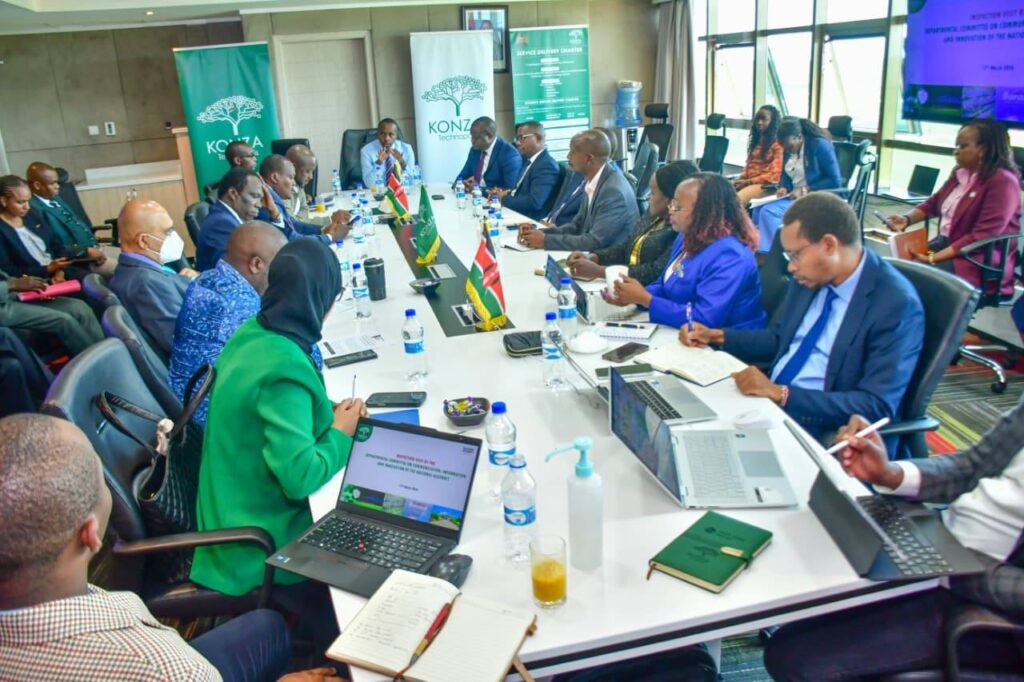
The National Assembly’s Departmental Committee on Communication, Information and Innovation, chaired by Hon. John Kiarie Waweru, MP (Dagoretti South), today conducted an inspection visit to Konza Technopolis to assess the progress of key smart city projects and review the status of strategic investments intended to anchor Kenya’s digital economy.
During the visit, Members were briefed on ongoing infrastructure developments, including the Phase One horizontal infrastructure undertaking which has already been completed and handed over for operationalization.
Legislators also reviewed the progress of the Konza National Data Centre and Smart City facilities, which are currently operational and supporting government digital services while undergoing further cloud expansion.
The Committee further assessed the status of the Konza Complex project comprising the conference facility and hotel block, which remains under development, as well as the Kenya Advanced Institute of Science and Technology (KAIST), a flagship research and innovation institution expected to play a critical role in advancing science and technology research in the country.
Members emphasized the need for timely completion of the remaining components to ensure that Konza Technopolis fully delivers on its mandate as Kenya’s flagship smart city and a driver of innovation, research and investment.
The Committee also engaged Konza Technopolis Development Authority (KoTDA) officials on measures being taken to accelerate construction, equipping and operationalization of the stalled Digital Innovation Hubs across the country. Legislators underscored the importance of the hubs in expanding digital access, nurturing young innovators and creating employment opportunities for youth.
Hon. Kiarie noted that Parliament remains committed to supporting initiatives that strengthen Kenya’s digital ecosystem while ensuring public investments deliver tangible value to citizens.
The Committee, he further noted, remains devoted to providing legislative guidance and oversight to accelerate the growth of Konza Technopolis as a regional centre for technology, research and innovation.
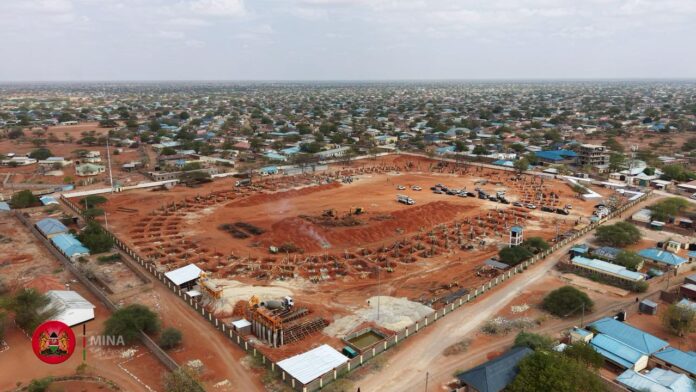
Preparations for this year’s Madaraka Day celebrations have started in Wajir, with the government assuring that the stadium under construction will be completed in time for the June 1 national event.
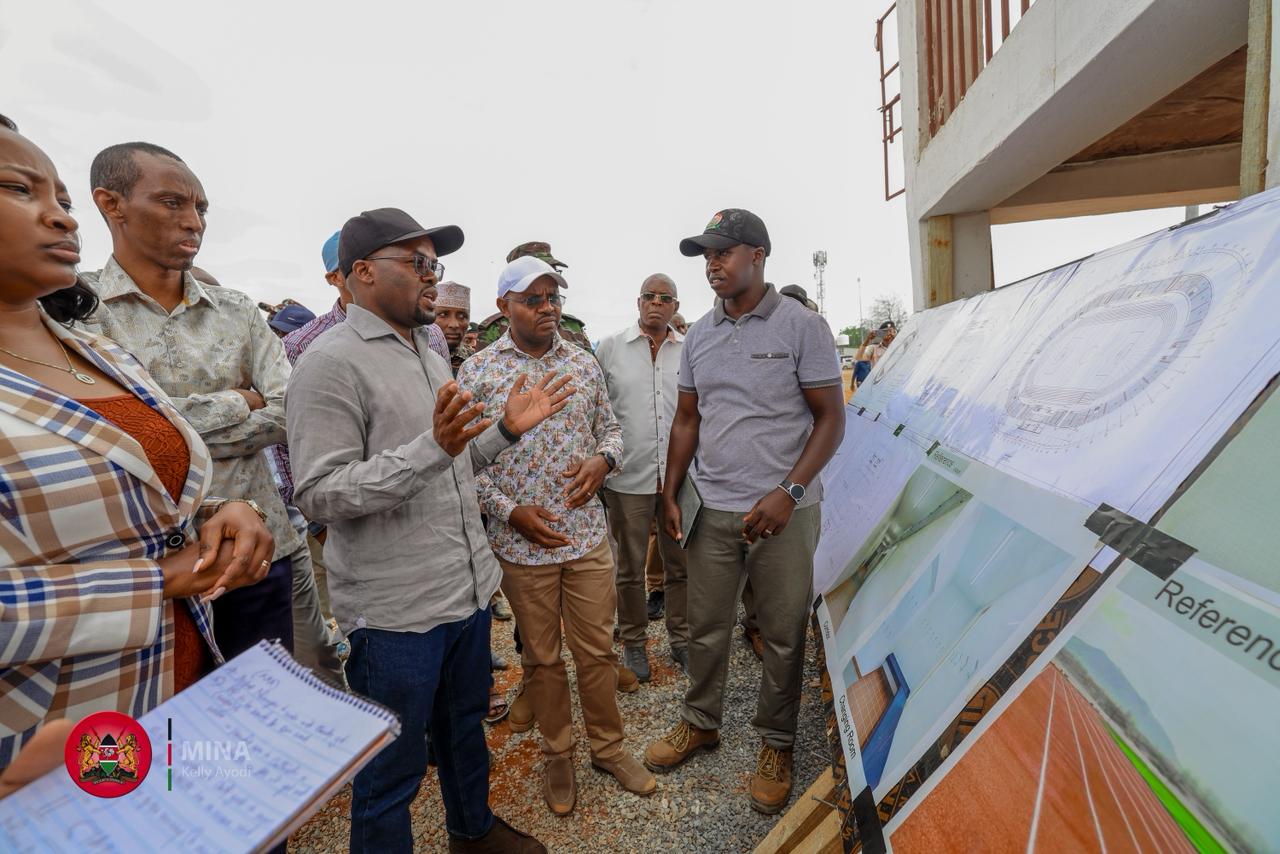
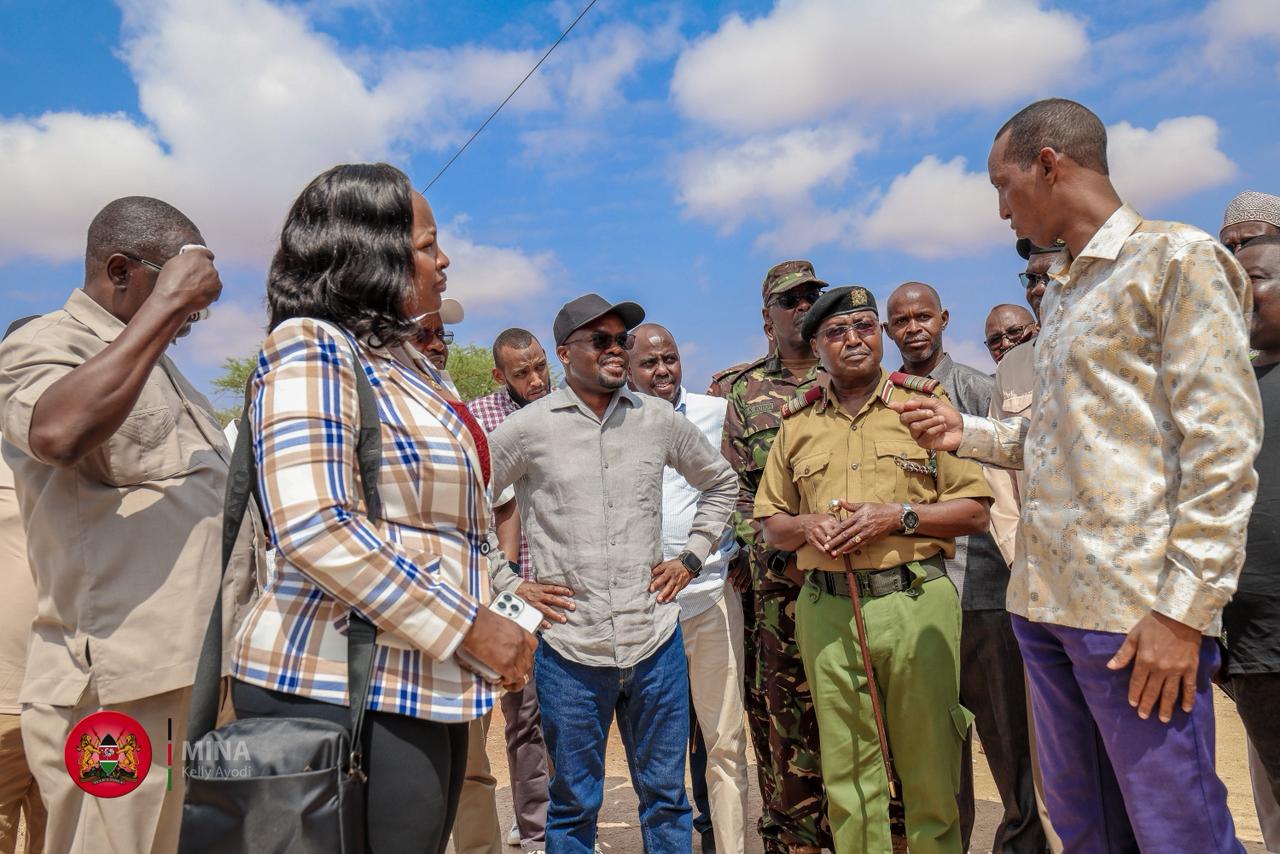
Raymond Omollo, Principal Secretary for Internal Security and National Administration, on Thursday led the National Celebrations Steering Committee on an inspection tour of the stadium that will host the national event.
He was accompanied by Defence PS Patrick Mariru and Aviation and Aerospace Development PS Teresia Mbaika.
The inspection marks the start of a critical phase in preparations for the celebrations, which will be hosted in Wajir for the first time.
During the tour, the team inspected ongoing works at the 10,000capacity Wajir Stadium and received technical briefings from contractors, engineers and senior National Government Administrative Officers on the progress of construction and projected timelines.
Omollo said contractors would work around the clock to ensure the stadium is ready ahead of the celebrations.
“The stadium is currently at about 10 per cent completion and we expect substantial completion by the first week of May as we get ready for the Madaraka Day celebrations,” he said.
He said hosting the national event in Wajir reflects the government’s effort to ensure all regions are included in major national milestones.
“Hosting Madaraka Day in Wajir shows the government’s commitment to ensuring every Kenyan feels part of the national story,” Omollo said.
The PS also highlighted key infrastructure projects underway to support the celebrations, including expansion and rehabilitation works at Wajir International Airport.
According to Omollo, works on the airport’s terminal building, taxiway and runway are expected to enhance efficiency and ease movement into and out of the county during the national fete.
He said the decision to host the 63rd Madaraka Day celebrations in Wajir is part of the national government’s policy of rotating major national events across different regions to ensure inclusivity.
Madaraka Day, celebrated on June 1 each year, marks Kenya’s attainment of internal self-governance in 1963, a key milestone in the country’s journey towards independence.
Omollo said hosting the celebrations is also expected to accelerate infrastructure development in Wajir county and the wider North Eastern region.
The delegation also visited the county commissioner’s residence, which will undergo refurbishment ahead of the State luncheon to be hosted by President William Ruto on the day.
“Beyond the celebrations themselves, the preparatory investments in the stadium and surrounding public facilities are expected to generate lasting economic benefits for local communities, including employment, improved public amenities and greater national visibility for the region,” he said.
Omollo emphasised the need for close coordination among agencies involved in the preparations.
He called on National Government Administrative Officers, the Wajir county leadership, security agencies and implementing ministries to work together to meet the set timelines.
He said comprehensive security and logistical arrangements will be put in place to ensure the safety and comfort of participants expected to attend the national event.
The celebrations will also provide an opportunity to showcase the cultural heritage of the North Eastern region while strengthening national cohesion.
The national fete is expected to attract senior government officials, dignitaries and Kenyans from across the country to Wajir County for the historic event.
Drama has rocked western Uganda after a woman who reportedly received millions from her lover to study law ended up in prison for refusing to marry him.
Fortunate Kyarikunda, a law enforcement officer at Rubanda Town Council, was on Tuesday hauled to civil prison by the Chief Magistrate’s Court in Rukungiri after failing to refund more than Shs14 million (about KSh 491,407) to the man who sponsored her education hoping she would become his wife.
The complainant, Richard Tumwiine, a primary school teacher from Kanungu District, told court he spent years supporting Kyarikunda financially, including paying for her studies at the Law Development Centre in Kampala.
But after completing the prestigious Diploma in Legal Practice, the relationship collapsed — and so did the marriage plans.
According to court records, Tumwiine and Kyarikunda met in 2015 while both were teachers at Kiringa Primary School in Kambuga Sub-county.
Their relationship blossomed and by 2018 the couple had agreed to marry, with Tumwiine reportedly pouring money into the relationship, including about Shs9.4 million to sponsor Kyarikunda’s bar course at LDC.
The pair even planned a traditional introduction ceremony in February 2022.
But just when wedding bells seemed near, Kyarikunda allegedly pulled the brakes on the relationship.
She reportedly told Tumwiine that he was too old for her and that continuing the relationship would cause her stress.
At the time, Tumwiine was said to be in his 60s, while Kyarikunda was still in her 30s.
Feeling betrayed and financially drained, the teacher dragged her to court, accusing her of breaching a promise to marry him.
In January 2023, the Kanungu Grade One Magistrate’s Court ruled in Tumwiine’s favour and ordered Kyarikunda to refund Shs9,439,100 he had spent on her, plus Shs1 million in general damages for the emotional pain he suffered.
However, the law officer never paid the money.
Instead, she filed petitions claiming she had never received court summons, arguing that her phone had been used by her sister at the time. The court rejected her claims.
After ignoring multiple court orders, Kyarikunda’s troubles finally caught up with her.
On March 10, 2026, she was arrested while on duty at Rubanda Town Council and taken to Rukungiri to face the Chief Magistrate’s Court. By then, the unpaid amount had grown to Shs14,099,100 (about KSh 491,407).
Magistrate Dinah Nekesa immediately ordered that she be committed to civil prison for up to six months unless the money is paid.
Tumwiine’s lawyer, Erasmus Nabimanya, welcomed the court decision, saying the woman had deliberately refused to comply with the ruling despite several opportunities.
Meanwhile, Tumwiine earlier said he chose the legal route to avoid taking the law into his own hands.
“I mobilized money from my salary, agricultural produce and rental structures because we were planning a future together,” he previously revealed.
Although the court victory may not heal the heartbreak, the teacher hopes the case will teach people the importance of keeping promises — especially in matters of love and money.
As Kyarikunda now sits behind bars, the once romantic relationship has turned into a costly lesson about mixing love, promises and finances.
Security efforts under Operation Maliza Uhalifu continue to bear fruit in West Pokot County, as residents increasingly cooperate with authorities to rid the region of illegal firearms.
Yesterday, an AK-47 rifle loaded with three rounds of ammunition was voluntarily surrendered to security personnel operating in the area.
This surrender adds to the significant progress already made, with security agencies having so far recovered a total of 86 rifles and 188 rounds of ammunition.
These recoveries represent a substantial step towards combating illegal weapons that have long fuelled insecurity, banditry, and conflict in parts of the region.
As Operation Maliza Uhalifu progresses, the continued recovery of illegal firearms signals meaningful progress towards restoring peace and security in West Pokot.
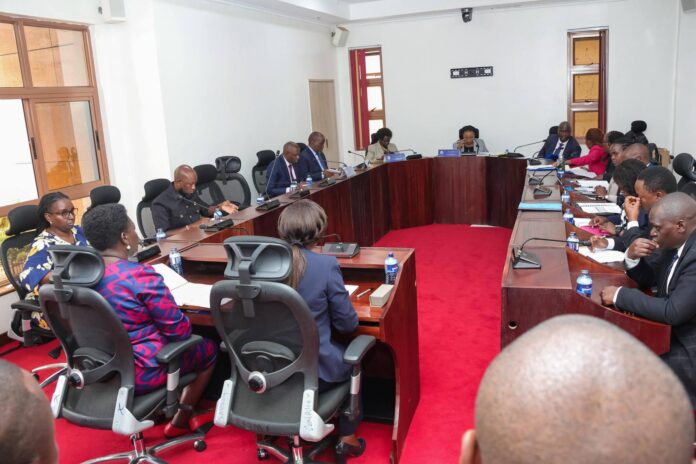
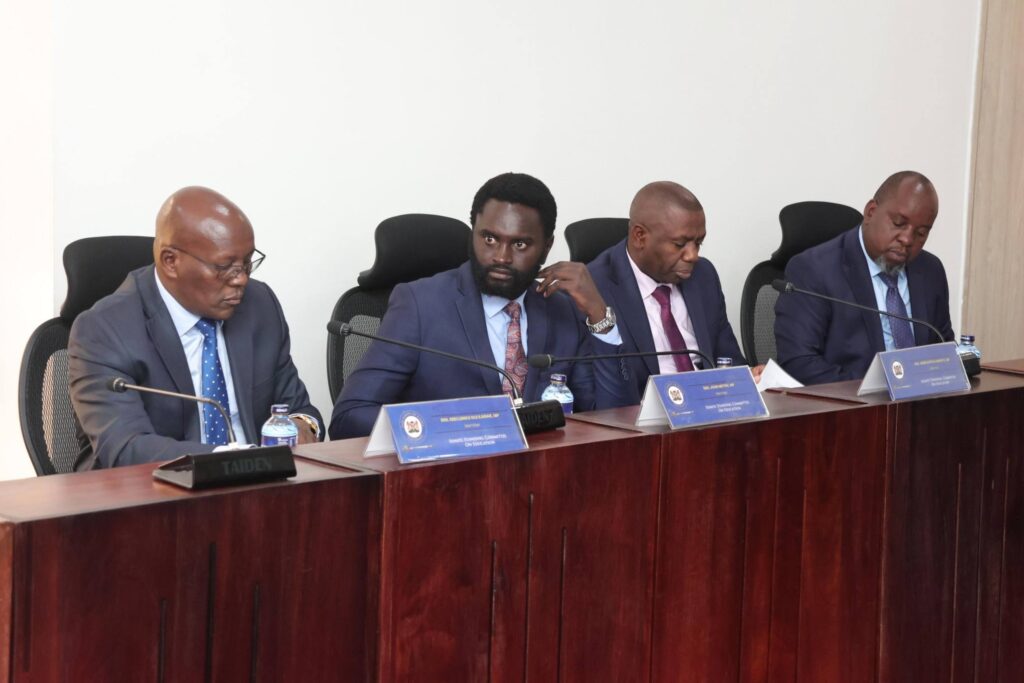
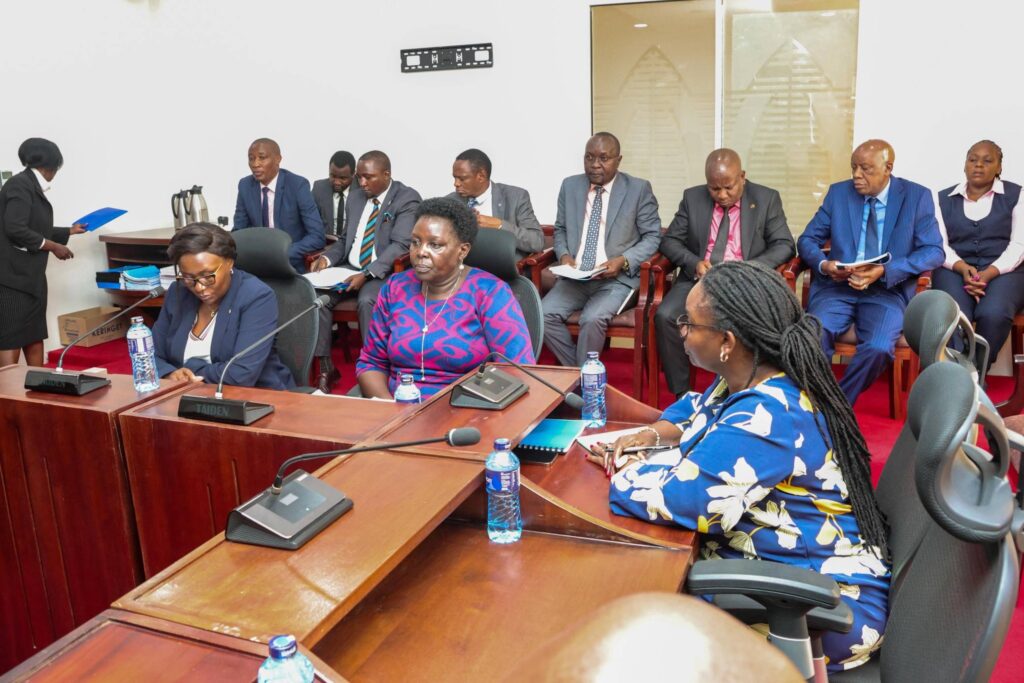
The Senate Committee on Education, Chaired by Senator Betty Montet, today held a consultative meeting with Embu Governor H.E. Cecily Mbarire and her County Executive Team to deliberate on the current status of Early Childhood Development Education (ECDE) and Vocational Training Centres (VTCs) within Embu County.
The session forms part of the Committee’s ongoing national assessment of ECDE and Technical and Vocational Education and Training (TVET) implementation across all 47 counties, aimed at strengthening the delivery of foundational learning and skills development under devolved governance.
Governor Mbarire, accompanied by the County Executive Committee Member for Education, Ms. Monica Mwikali, and senior county education officials, briefed the Committee on the progress made in expanding access to ECDE services and strengthening vocational training opportunities for youth across the county.
The Committee was informed that Embu County currently has 404 public ECDE centres and 142 private ECDE centres, serving a total enrolment of 27,718 learners. Of these, 19,209 learners are enrolled in public centres while 8,509 attend private ECDE institutions, demonstrating the complementary role played by private providers in supporting early childhood education.
Further, the county reported that 9,975 learners are enrolled in PP1 and 9,234 in PP2 within public ECDE centres, reflecting steady participation in early childhood education.
The Governor also highlighted the county’s commitment to ensuring access to early childhood education.
“We do not charge any tuition fees in our ECDE centres. Our focus is to ensure that every child can access early learning regardless of their background,” said Governor Mbarire.
On infrastructure development, the Governor noted that the county had revised construction costs to reflect prevailing market conditions.
“Previously each ECDE classroom unit cost about KSh 1.2 million to construct, but following a review of Bills of Quantities, the cost was revised to approximately KSh 1.5 million per unit to align with current market rates,” she explained.
The Committee further heard that approximately 95% of ECDE centres in the county are located within existing primary schools, enabling a seamless transition from early childhood education to primary schooling. Additionally, 21 ECDE centres operate as feeder or stand-alone centres in remote areas, helping improve access to early learning for children in hard-to-reach communities.
The Governor also outlined ongoing plans to strengthen the county’s ECDE school feeding programme.
“We phased the Uji feeding programme earlier, but we will be launching the second phase in May 2026 to ensure that all learners in public ECDE centres benefit,” she stated.
During the engagement, Senators raised several issues relating to infrastructure standards, teacher welfare, and learning environments for young children.
Senator Johannes Mwaruma sought clarification on the financing and implementation of quality assurance mechanisms in ECDE centres as well as teacher welfare.
“Quality assurance is critical in early childhood learning. We must ensure that proper systems are in place to monitor standards and support teachers delivering foundational education,” said Sen. Mwaruma.
Senator Prof. Margaret Kamar underscored the importance of providing child-friendly learning environments for ECDE learners.
“Young learners require spaces designed specifically for them. Facilities such as sanitation blocks and classroom furniture should reflect the unique needs of ECDE pupils,” she noted.
Senator John Methu commended the county for progress made in strengthening education financing and teacher support mechanisms.
“We are encouraged by the steps taken to implement the scheme of service for ECDE teachers and the increased investment in education development programmes,” he said.
Senator Seki Lenku also welcomed the county’s efforts in supporting learner welfare through school feeding initiatives.
“School feeding programmes play an important role in improving enrollment and retention among young learners,” he observed.
In her closing remarks, Committee Chairperson Senator Betty Montet commended Embu County for prioritising early childhood education while encouraging continued investment in quality learning environments.
“This function was previously underrated, but it is encouraging to see counties increasingly prioritising ECDE and vocational training. Our children deserve quality education from the earliest stages,” she said.
Governor Mbarire expressed appreciation for the Committee’s oversight role and the opportunity for counties to learn from one another.
“Let me appreciate the work of this Committee. These engagements allow us to learn from other counties, adopt best practices and improve the programmes we are implementing for our learners,” she noted.
The Senate Education Committee continues to undertake similar engagements with county governments as part of its oversight mandate to ensure effective implementation of devolved education functions and to promote equitable access to quality ECDE and vocational training across the country.
Also present during the meeting was Sen. James Murango and Embu Senator Munyi Mundigi (Friend of the Committee).
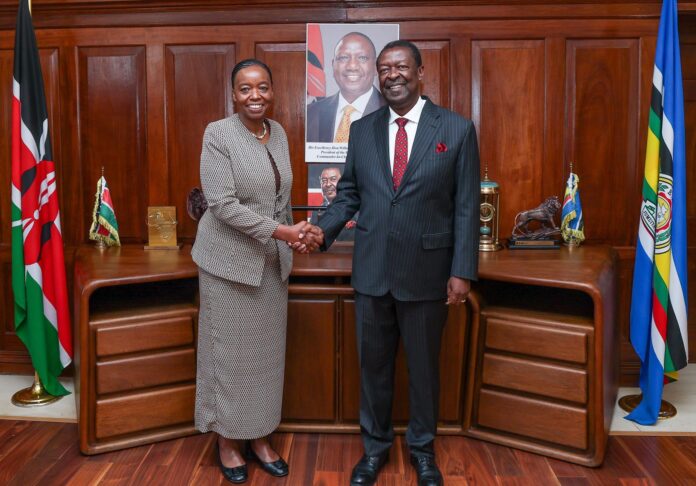
Prime Cabinet Secretary Musalia Mudavadi has held a key meeting with the newly appointed Executive Director of the United Nations Office, Monica Juma, as she takes up the new role.
Taking to his official X account on Thursday, March 12, 2026, Mudavadi congratulated her as she prepares to take up her new global responsibilities at the United Nations Office at Vienna (UNOV).
“Hosted outgoing National Security Advisor, Amb. @AmbMonicaJuma, and congratulated her as she prepares to take up her new global responsibilities as Executive Director of the United Nations Office on Drugs and Crime (UNODC) and Director-General of the United Nations Office at Vienna (UNOV),” Mudavadi said.
Mudavadi lauded Monica Juma’s appointment, noting that the appointment reflects her distinguished leadership, professionalism and steadfast commitment to advancing Kenya’s interests on the global stage.
“Amb. Juma’s remarkable career continues to inspire many. It adds to the growing number of Kenyans, particularly women, who are making a strong impact in international governance, peace and security, economic development, and diplomacy. We also exchanged views on matters of national interest as she transitions to her new international responsibilities,” he added.
Monica Juma previously served as the National Security Advisor to President William Ruto and Secretary to the National Security Council.
She was appointed to the dual role by the United Nations Secretary-General António Guterres on Friday, March 6.
In a statement, the UN said Juma will succeed Ghada Fathi Waly of Egypt, who served a six-year term from 2020 to 2026.
“United Nations Secretary-General António Guterres announced today the appointment of Monica Kathina Juma of Kenya as Executive Director of the United Nations Office on Drugs and Crime (UNODC) as well as Director-General of the United Nations Office at Vienna (UNOV),” the UN said in a statement.
According to UN practice, the office of the Executive Director of UNODC, as well as the Director-General of UNOV, are typically held by the same person.
The holder of this office is regarded at the rank of Under-Secretary-General, and is appointed by the UN Secretary-General. Typically, the holders of this office serve an initial period of up to five years, subject to renewal.
An Under-Secretary-General (USG) is a high-ranking official in the United Nations and holds the third-highest rank in the UN hierarchy, below the Secretary-General and Deputy Secretary-General.
This means the former Defense Cabinet Secretary is among a group high ranking officials at the global agency.
The Senate Standing Committee on Agriculture, Livestock and Fisheries chaired by Sen. Wafula Wakoli (Bungoma) today held a meeting with representatives from the Kenya Sugar Board to deliberate on key regulatory and farmer-related issues affecting the sugar sub-sector.
The engagement focused on the implementation of reforms under the Sugar Act 2024, including the current sugarcane pricing framework, regulation and licensing of millers, the impact of sugar imports on the domestic industry and the status of farmer registration and cane development programmes.
During the meeting, the Board briefed the Committee on the formula-based cane pricing mechanism administered through a statutory Sugarcane Pricing Committee comprising representatives of farmers, millers, county governments from sugarcane-growing regions and the national government. The framework links the price payable to farmers to the average ex-factory sugar price, ensuring that farmers receive a share of the industry’s market performance.
Members were informed that several safeguards have been introduced to enhance transparency and fairness in farmer payments, including statutory timelines for miller payments, mandatory cane supply agreements, detailed payment statements for delivered cane and the gradual transition to a quality-based cane payment system that will reward farmers based on sucrose content.
The Committee also reviewed the licensing and regulation of sugar millers under the law. The Board reported that 17 sugar factories have been registered and licensed to operate across designated cane catchment areas in the country. However, the Board noted that Kwale International Sugar Company Ltd has not been issued with a mill operating licence due to non-compliance with regulatory requirements.
Members further examined the impact of sugar imports on the domestic sugar industry. The Board explained that increased imports in 2023 were necessitated by a shortage of mature sugarcane and temporary closure of several mills to allow the crop to reach maturity. The situation improved in 2024 following increased cane supply and higher domestic sugar production.
The Committee was informed that uncontrolled or illegal sugar imports can suppress local sugar prices, reduce off-take of locally produced sugar and disrupt mill operations, ultimately affecting farmer incomes. To address this, the government has strengthened regulatory oversight through coordinated monitoring by agencies including the Kenya Revenue Authority and the Kenya Bureau of Standards.
On farmer registration and cane development, the Kenya Sugar Board indicated that over 401,000 sugarcane farmers are currently registered across various counties, with the highest numbers recorded in Kakamega County, Bungoma County and Busia County.
The Board further highlighted ongoing initiatives aimed at improving farmer productivity and sustainability in the sector, including promotion of good agricultural practices, access to subsidised fertiliser, financing through the Sugar Development Fund and support from the Kenya Sugar Research and Training Institute.
Senators present included Sen. Alexander Munyi Mundigi (Vice Chairperson), Sen. Catherine Mumma (Nominated), Sen. Prof. Tom Ojienda (Kisumu) and Sen. Abass Mohammed (Wajir).