A Kenyan TikToker and nurse based in the United States has been charged with sexual assault following allegations that he assaulted a patient at a hospital in Orlando, Florida.
Abedinecho Katue, 46, was charged before the Ninth Circuit Court of Orange County in Orlando with sexual battery of a physically incapacitated victim and a second count of lewd or lascivious molestation of a disabled adult.
According to court records, Katue was arrested on March 4, 2026, after authorities accused him of sexually assaulting a patient on January 26, 2025.
At the time of the alleged incident, Katue was working as a nurse at AdventHealth Orlando, one of the major healthcare facilities in the area.
Investigators allege that the victim was physically incapacitated, a factor that forms part of the charges filed against the suspect under Florida law.
The case has drawn attention within Kenyan diaspora circles, as Katue is also known on social media platform TikTok, where he had built a following.
Details surrounding the circumstances of the alleged assault and the ongoing court proceedings remain under review as the matter moves through the U.S. justice system.
Authorities in Florida have not released further details about the victim in order to protect their identity.
Katue is expected to face the charges before the Orange County court as the case proceeds.
Motorists across Kenya have begun receiving automated traffic fine alerts via SMS following the rollout of the National Transport and Safety Authority (NTSA) Instant Fines Traffic Management System.
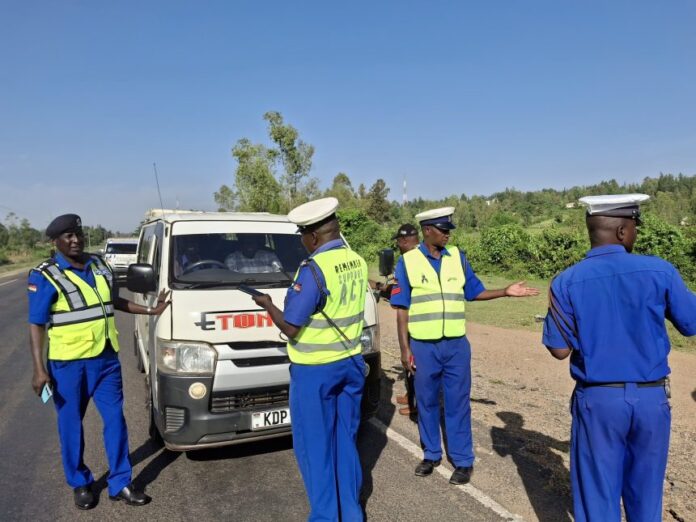
The new enforcement system uses smart traffic cameras installed on major roads to automatically detect traffic violations as they occur. Once an offence is captured, the system records the violation, identifies the vehicle involved and sends an instant SMS notification to the registered motorist indicating the offence and the fine imposed.
According to the new framework, motorists issued with fines must pay the penalty within seven days through KCB Bank branches. Failure to settle the fine within the stipulated period attracts additional interest and motorists with pending penalties will be unable to access NTSA services until the amount is cleared.
The system introduces penalties for a range of traffic offences. These include Ksh10,000 for vehicles operating without number plates, Ksh5,000 for driving on pavements, Ksh3,000 for ignoring traffic signs and Ksh1,000 for driving without a valid license.
Speeding violations are also graded based on how far a driver exceeds the speed limit. Drivers exceeding the limit by 1–5 km/h will receive a warning, while those exceeding by 6–10 km/h face a Ksh500 fine. Motorists driving 11–15 km/h above the limit risk a Ksh3,000 fine, while those exceeding by 16–20 km/h face a Ksh10,000 penalty.
Authorities say the system is designed to improve transparency and efficiency in traffic enforcement by automating the detection and notification process, reducing direct interaction between motorists and traffic officers.
However, the rollout has already drawn mixed reactions from the public.
Some motorists have criticised the system, questioning the fairness of the penalties and the manner in which the fines are issued.
One driver who was reportedly fined Ksh10,000 for speeding on Thika Road described the system as “extortion,” arguing that motorists were not adequately informed about the new enforcement measures.
Others have expressed concerns that the government did not provide sufficient public awareness about the rules before implementing the automated system.
Despite the criticism, authorities maintain that the initiative forms part of ongoing efforts to improve road safety, enforce traffic laws and reduce accidents on Kenya’s roads.
The High Court has declined to issue orders temporarily suspending the implementation of the National Transport and Safety Authority (NTSA) Instant Traffic Fines Management System, directing instead that the constitutional petition challenging the system be served to the respondents.
The case arises from a petition filed by Kennedy Maingi Mutwiri, who is seeking to block the rollout of the automated traffic enforcement system introduced by NTSA on March 9, 2026.
When the matter came before the Constitutional and Human Rights Division of the High Court in Nairobi, the court declined to grant the conservatory orders sought at this stage. Instead, the judge directed that the petition and accompanying application be served upon the National Transport and Safety Authority (NTSA) and the Attorney General, who have been named as respondents in the case.
The court further directed that the matter be mentioned on April 9, 2026, for further directions after the respondents have been served.
Mutwiri had moved to court seeking urgent orders to stop the implementation of the system, arguing that the automated traffic fines framework is unconstitutional and violates motorists’ rights.
In his petition filed through Jama Munene Kyalo Advocates LLP, Mutwiri contends that the system allows the Executive arm of government to exercise powers that constitutionally belong to the Judiciary.
According to court documents, the NTSA system uses traffic cameras to detect offences and automatically sends SMS notifications to motorists requiring them to pay fines within seven days.
Failure to pay the fines within the stipulated time attracts interest penalties, and motorists with outstanding fines may also be blocked from accessing NTSA digital services.
However, the petitioner argues that traffic offences are criminal in nature and must therefore be determined through the judicial process, where accused persons have an opportunity to defend themselves.
“The system bypasses the courts and allows the Executive to determine criminal liability,” the petition states.
Mutwiri further argues that the system violates Article 47 of the Constitution on fair administrative action and Article 50 on the right to a fair trial, including the presumption of innocence.
He also claims that the system undermines the doctrine of separation of powers by enabling an administrative body to impose penalties without judicial oversight.
The petitioner maintains that the system is fully automated and operates without human intervention, raising concerns about the absence of judicial discretion and the potential for errors.
In addition, the petition argues that the system ignores safeguards under Section 117 of the Traffic Act and the Traffic (Minor Offences) Rules, 2016, which outline the legal procedures for handling minor traffic offences.
Among the final orders sought in the petition are a declaration that the Instant Traffic Fines Management System is unconstitutional, an order of certiorari quashing the NTSA public notice introducing the system, and an order of prohibition barring the Authority from implementing it.
With the court now directing that the petition be served to the respondents, the matter will proceed to the next stage as the government prepares to respond to the constitutional challenge.
The case is expected to test the legality of automated traffic enforcement systems in Kenya and the extent to which administrative agencies can impose penalties without court proceedings.
Office of the Director of Public Prosecutions (ODPP).
By Andrew Kariuki
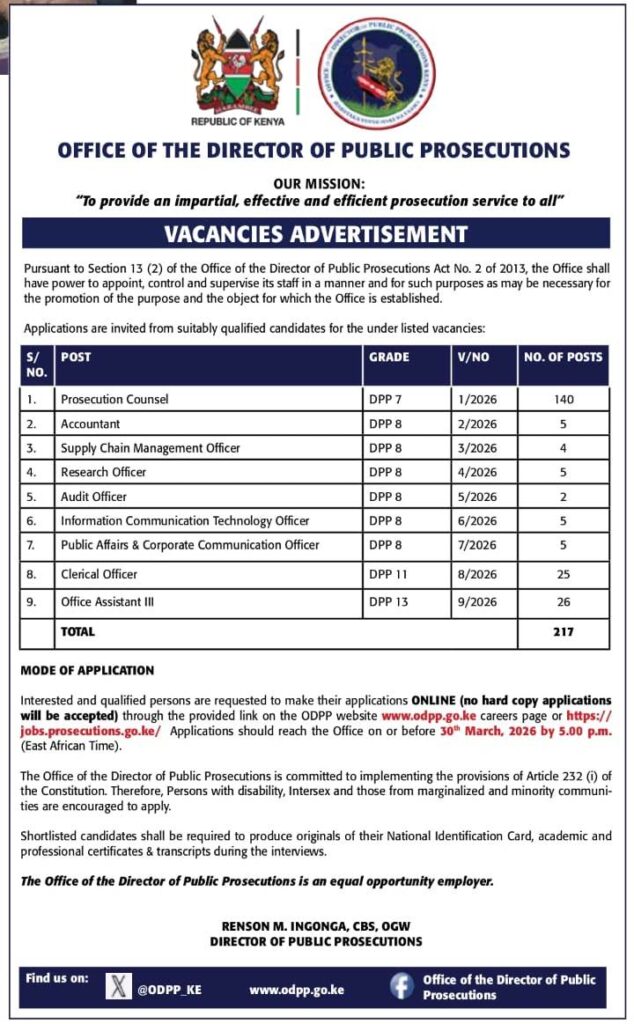
The Office of the Director of Public Prosecutions (ODPP) has announced 217 job vacancies across various departments, inviting qualified Kenyans to apply for positions aimed at strengthening the country’s prosecution and administrative services.
In a public notice, the ODPP said the recruitment is being conducted pursuant to Section 13(2) of the Office of the Director of Public Prosecutions Act No. 2 of 2013, which empowers the office to appoint, control and supervise its staff in order to effectively deliver its mandate.
Among the positions advertised are 140 Prosecution Counsel posts (Grade DPP 7), which form the largest share of the vacancies.
Other advertised positions include Accountant (5 posts), Supply Chain Management Officer (4 posts), Research Officer (5 posts), Audit Officer (2 posts), Information Communication Technology Officer (5 posts) and Public Affairs and Corporate Communication Officer (5 posts).
The ODPP is also seeking to fill 25 Clerical Officer positions (Grade DPP 11) and 26 Office Assistant III positions (Grade DPP 13).
According to the advertisement, all applications must be submitted online, as the office will not accept hard copy applications.
Interested and qualified applicants are required to apply through the ODPP careers portal at www.odpp.go.ke or jobs.prosecutions.go.ke.
The deadline for submission of applications is March 30, 2026 at 5:00 p.m. (East African Time).
Shortlisted candidates will be required to present original national identification documents, academic certificates, professional certificates and transcripts during the interview process.
The ODPP also encouraged persons with disabilities, intersex persons and individuals from marginalized and minority communities to apply, in line with the provisions of Article 232(i) of the Constitution on inclusivity in public service.
Director of Public Prosecutions Renson M. Ingonga stated that the office remains committed to strengthening its workforce as part of efforts to improve prosecution services and ensure effective delivery of justice.
Two men accused of violently assaulting their stepfather in Umoja, Nairobi, are now set to face murder charges after the victim succumbed to his injuries more than two months after the attack.
The deceased, Nicholas Kamau Kagecho, 54, was brutally assaulted on the night of December 24–25, 2025, in what investigators have described as a domestic dispute that escalated into violence.
Following the attack, Kagecho sustained serious injuries and was rushed to Metropolitan Hospital for emergency treatment.
Due to the severity of his condition, doctors later transferred him to Kenyatta National Hospital (KNH) where he was admitted to the Intensive Care Unit (ICU).
As doctors worked to stabilize him, police launched investigations into the circumstances surrounding the assault.
Detectives established that the victim had allegedly been attacked by two of his stepsons, Brandon Githinji, 29, and Benard Lee Ngugi, 22.
Preliminary investigations indicated that the assault was linked to ongoing domestic disagreements within the family that allegedly escalated into a violent confrontation.
The two suspects were arrested on December 28, 2025, following investigations by detectives.
They were later presented in court under a Miscellaneous Application, where investigators sought orders to detain them while completing investigations, as the victim remained hospitalized in critical condition.
As the investigation progressed and medical reports confirmed the seriousness of the injuries, the suspects were formally charged with grievous harm contrary to Section 234 of the Penal Code.
The court subsequently ordered that the two be remanded at Industrial Area Remand Prison pending further proceedings.
Meanwhile, Kagecho remained in critical condition at the ICU of Kenyatta National Hospital, where doctors monitored him closely for more than two months.
Despite sustained medical efforts to save his life, he succumbed to the injuries on March 6, 2026.
Following his death, authorities confirmed that the case has now taken a new legal direction.
The charges against Brandon Githinji and Benard Lee Ngugi will now be upgraded to murder contrary to Section 203 as read with Section 204 of the Penal Code.
Detectives are currently finalizing the legal procedures required to formally present the upgraded charges before the court.
The two suspects remain in lawful custody at Industrial Area Remand Prison as investigations continue and prosecutors prepare to proceed with the murder case.
BBC -MPs have rejected an Australia-style ban on social media for under-16s, and have instead backed flexible ministerial powers.
A ban on sites like Tiktok, Instagram, and Snapchat was brought in for children in Australia at the end of last year – the first country to impose a ban – and similar plans were backed by peers in the House of Lords in January.
Supporters include actor Hugh Grant, but critics such as children’s charity the National Society for the Prevention of Cruelty to Children (NSPCC) warned of young people being driven to dark corners of the internet as a result.
The Conservatives said there was an “emergency” and ministers should legislate to protect children.
Responding to the result, the Liberal Democrats said failure to commit to a ban was “simply not good enough”.
Opponents also include the father of Molly Russell, who took her own life at 14 after viewing harmful content online, who said the government should focus on robust enforcement of existing laws.
Plans for a ban were put forward as suggested changes to the Children’s Wellbeing and Schools Bill.
But in the Commons on Monday, education minister Olivia Bailey urged MPs to dismiss the change and support more flexible restrictions.
“Many parents and campaign groups have called for an outright ban on social media for under-16s,” she said.
“Others, including children’s charities, have warned that a blanket ban could drive children towards less regulated corners of the internet or leave teenagers unprepared when they do come online.
“That is why last week, the government launched a consultation to seek views to help shape our next steps and ensure children can grow up with a safer, healthier and more enriching relationship with the online world.”
The consultation will look at whether social media platforms should come with a minimum age requirement and whether platforms should switch off addictive features such as autoplay.
Bailey’s alternative plan will give Science Secretary Liz Kendall powers to “restrict or ban children of certain ages from accessing social media services and chat bots”.
Kendall will also have the option to limit access to “specific features that are harmful or addictive” on social media, as well as the ability to “restrict or limit children’s Virtual Private Network (VPN) use and change the age of digital consent in the UK”.
Conservative shadow education secretary Laura Trott pressed the government to put an age limit on social media access and introduce a ban on phones in schools.
She said polling shows “40% of children are shown explicit content during the school day”, adding: “That’s happening right now. This is an emergency. No more guidance, no more consultations. Legislate, do something about it.”
MPs voted 307 to 173 against the Lords proposal for an outright ban, and supported Bailey’s bid, which left the door to a ban of some sort open.
But more than 100 Labour MPs abstained, including North Somerset’s Sadik Al-Hassan, who said if social media was a drug, it would be banned.
During the debate, he said: “Parents like me are locked in a daily battle that they simply cannot win alone, fighting platforms that have been specifically designed to keep children hooked.
“As a pharmacist, I know if a drug were causing such measurable harm for 78%, it would be withdrawn, reformulated or placed behind a counter with strict controls on who could access it.
“We would act, because that is what the evidence demanded. The same logic must apply here.
“We have an identifiable source, we have overwhelming evidence of harm, and we have the power to act.”
Conservative former education minister Lord Nash, who tabled the amendment in the Lords to prevent under-16s from accessing social media, described the vote result in the Commons as “deeply disappointing”.
He said MPs had “chosen to gamble on a process which may lead to half measures”, adding he will work with peers to “do all that we can” to revive the amendment.
Liberal Democrat education spokesperson Munira Wilson accused the government of failing to grasp the issue.
She said: “The government’s failure to commit to a ban on harmful social media is simply not good enough – families need concrete assurances now.
“We need the government to confirm that their consultation will not result in yet more dither and delay.”
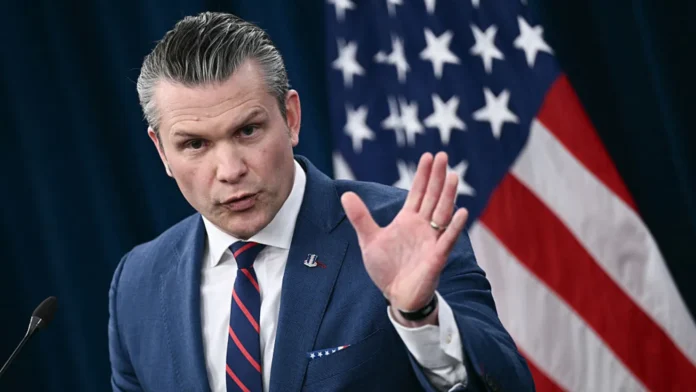
US Defense Secretary Pete Hegseth on Tuesday said, “Today will be, yet again, our most intense day of strikes inside Iran.”
“Iran stands alone, and they are badly losing,” Hegseth said at a press conference at the Pentagon with Gen. Dan Caine, the chairman of the Joint Chiefs of Staff.
He said that in the past 24 hours, the United States had seen “Iran fire the lowest number of missiles they’ve been capable of firing yet.”
Hegseth’s aggressive and confident comments echoed those made a day earlier by President Donald Trump to reporters at his Miami-area golf club.
Trump had predicted that war would end “very soon,” because the destruction of Iranian military assets was happening much fast than he expected when attacks began by the United States and Israel on Feb. 28.
He also warned Iran’s ruling regime against withholding oil from world markets after the war.
“If Iran does anything that stops the flow of Oil within the Strait of Hormuz, they will be hit by the United States of America TWENTY TIMES HARDER than they have been hit thus far,” Trump wrote later Monday night in a Truth Social post.
As Hegseth spoke on Tuesday authorities in Abu Dhabi confirmed that a drone attack by Iran had ignited a fire at the oil refinery in the Ruwais Industrial Complex. No injuries were immediately reported.
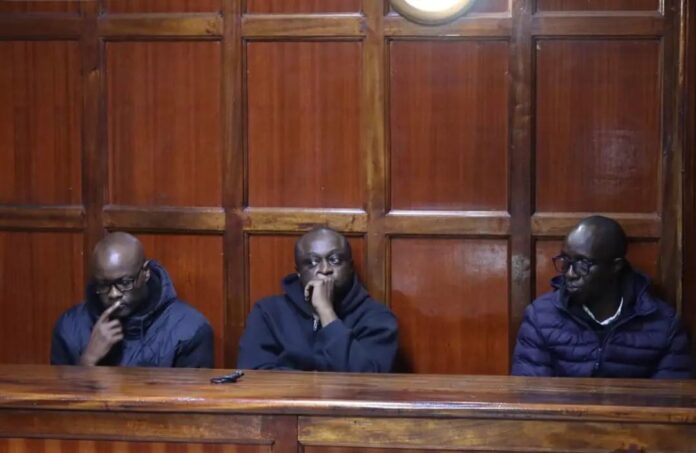
The Office of the Director of Public Prosecutions (ODPP) has opposed the release on bond of three Kenyan nationals facing extradition to the United States over alleged cyber fraud offences.
Appearing before the court, prosecutors argued that the three suspects are fugitives wanted by U.S. authorities and warned that releasing them on bond could undermine the ongoing extradition process.
According to the prosecution, the suspects are the subject of an extradition request submitted by the United States through INTERPOL, seeking their surrender to face charges related to alleged cybercrime activities.
The ODPP told the court that granting them bail would pose a significant flight risk and could interfere with the proceedings aimed at facilitating their extradition.
Prosecutors urged the court to keep the suspects in custody until the extradition application is heard and determined, emphasizing the importance of international cooperation in combating cybercrime.
However, the defence strongly opposed the position, with lawyer Danstan Omari urging the court to consider the current global security situation before allowing the extradition of the three Kenyans.
In his submissions, Omari asked the court to take judicial notice of the escalating tensions between the United States and Iran, arguing that the conflict could pose serious risks to individuals extradited to the U.S. at this time.
According to the defence, sending the suspects to the United States amid the current hostilities could expose them to grave danger due to ongoing security threats linked to the conflict.
Omari cited reports indicating that tensions have intensified into a wider confrontation involving U.S. and allied strikes on Iran, followed by Iranian retaliatory missile and drone attacks on American military bases and regional targets.
The conflict, which began in late February 2026, has reportedly resulted in casualties and increased instability in parts of the region.
The court is expected to consider submissions from both sides before making a determination on the suspects’ bond application and the extradition proceedings.
Former High Court judge Joseph Mutava and three other suspects have been released on cash bail of Ksh 200,000 each as investigations continue into allegations of a Ksh 10.4 million bribery scheme linked to a commercial dispute before the High Court.
Mutava was arrested on Monday following a coordinated operation by detectives.
Authorities confirmed that the suspects will not be arraigned in court immediately, as investigators continue gathering evidence related to the case.
According to investigators, the arrest followed a complaint alleging that the former judge had solicited a bribe of Ksh 10.4 million in exchange for influencing the outcome of a commercial case currently pending before the High Court.
Also arrested during the operation were Advocate Kimani Wachira, auctioneer Dr. Kennedy Ngambau Mulwa, and Tom Awili, who detectives believe may be connected to the alleged scheme.
Following their arrest, the four suspects were taken in for questioning, where detectives recorded statements and examined materials related to the allegations.
Investigators say inquiries into the matter are still ongoing.
Once completed, the investigation file will be forwarded to the Office of the Director of Public Prosecutions (ODPP) for review and a decision on whether criminal charges will be filed.
The probe comes as authorities intensify efforts to combat corruption and interference in judicial processes.
The Committee charged with overseeing the implementation has broken downhits and misses in the implementation of the 10-point deal between President William Ruto and the late Raila Odinga.
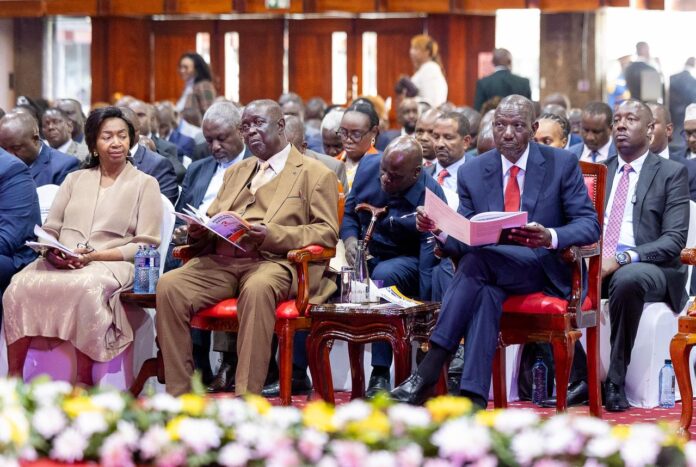
Speaking on Tuesday, March 10, during a joint UDA-ODM Parliamentary Group Meeting, Committee Member Javas Bigambo revealed that a great percentage of the 10 agenda items had been implemented.
Bigambo went through each of the agenda items, highlighting the achievements and shortfalls.
1. Full implementation of the NADCO report
Bigambo revealed that at least nine bills were submitted to Parliament. So far, three bills have been assented into law: the IEBC Amendment Bill (2023), the Statutory Instruments Amendment Bill (2023) and the EACC Bill (2023).
He added that the Election Amendment and the Election Offences Bill (2023) were still under mediation. The Committee confirmed that the IEBC had been reconstituted as demanded in the NADCO report.
Bigambo stated that President Ruto had ensured the implementation of the Public Benefit Organisations (PBO) Act 2013, which allows civil societies to source funds and implement social projects.
He added that the Constitutional Amendment Bill to allow for the entrenchment of the NG-CDF, Senate Oversight Funds and CountyWard Fund was also under consideration.
2. Inclusivity in all spheres of public life
The Committee confirmed that the Broad-based government had worked to ensure the inclusivity of all Kenyans. It stated that the launch of the National Policy on Ethnic Minorities and Marginalised Communities promotes inclusivity.
“A Ksh500 million programme has been railroaded by the policy. The policy has also createda Directorate for Minorities and Marginalised Communities under the Office of the President,” the report read in part.
Bigambo also lauded efforts by the state to promote economic inclusivityby lowering the cost of fertilisers, reducing fuel costs by 14 per cent, the timely repayment of social protection stipends, and increasing the financial pool of the Equalisation Fund.
The Committee noted the government’s efforts to promote inclusivity in healthcare through the Social Health Authority (SHA).
The Kenya Kwanza administration has also been lauded inclusivituy in education and socio-economic activities.
3. Protecting and strengthening devolution
The Committee stated that the government had increased the equitable revenue share to counties from Ksh385billion to Ksh 415 billion.
“This increase is a major gain for devolution. Counties now receive timely monthly disbursements with no pending carry-overs as of June 30, 2025,” Bigambo stated.
4. Promoting and Protecting the livelihood of the youths
The Committee cited many achievements under this agenda. The report revealed that over 90,000 youths were undergoing business training.
Notably, the state was lauded for the NYOTA fund, which has created employment opportunities for more than 820,000 young entrepreneurs.
Other employment opportunities were created under the affordable housing, stadium construction, and climate works programmes.
5. Leadership and integrity
Ruto received acknowledgement for the enactment of the Conflict of Interest Act, which strengthens the commitment to reducing conflict of interest within the public sector.
6. The right to peaceful assembly and compensation of victims of protest riots
Bigambo reported that the government had set aside Ksh2 billion in the 2025/26 Supplementary Budget towards the compensation of victims of protests and human rights violations.
He revealed that the Independent Policing Oversight Authority (IPOA) has secured convictions in 35 cases involving 49 officers engaged in police misconduct.
The Committee confirmed that the Demonstration bill, which was meant to curtail the rights and freedoms of protesters, had been withdrawn from Parliament.
Bigambo added that new policy directives on the use of force by police and the retraining of police officers will further ensure that protesters are protected.
7. National Debt
The Committee confirmed that the government had commissioned a comprehensive audit of the public debt by the Auditor General to strengthen transparency and the use of borrowed funds.
It also welcomed the government’s decision to seek alternative sources of funds other than national debt, and the management of Kenya’s debt portfolio through liability management.
8. Fight against corruption
The Report revealed that the procurement of an e-government procurement system has digitised several government services, hence promoting transparency.
“The single Treasury account system has consolidated government cash collection and management, improved transparency and minimised idle funds in commercial funds,” the report read in part.
The Committee also reported that the state had passed the Money Laundering Bill, and the Combating of Terrorism Financing Laws Amendment Act has curbed the flow of illicit money in Kenya.
9. Stop the waste of public resources
The Committee reported that austerity measures had been put in place to do away with the budgets of the office of the First Lady, Second Lady and the Wife of the Prime Cabinet Secretary.
Furthermore, the report revealed a 12-month ban on the purchase of government vehicles except in the security sector.
10. Protecting and promoting the sovereignty of the people, the rule of law and Constitutionalism
The Report established that the broad-based government has facilitated the judiciary to ensure that it has enough officers to improve access to justice and reduce case backlogs.
In addition, the Committee established that the government has been keen on adherence to the rule of law by respecting court orders and all decisions by the court.
Recommendations by the Committee
1. The formation of a broad-based committee between the Senate and the National Assembly to facilitate all outstanding bills.
2. Parliament to conclude outstanding bills within 90 days.
3. Kenya National Commission on Human Rights to enhance legislation to safeguard protesters and protect property and livelihoods.
4. County governments to implement the National Policy and Ethnic Minorities and Marginalised Communities
5. Fast Tracking the National Resources Amendment Bill (2022)