Sponsored Ad

Ad 1
Ad 2
Ad 3
Ad 4
Ad 5
Ad 6
23.6 C
Kenya
Friday, May 8, 2026
Home Blog Page 298

ODM postpones delegates elections in Kisumu

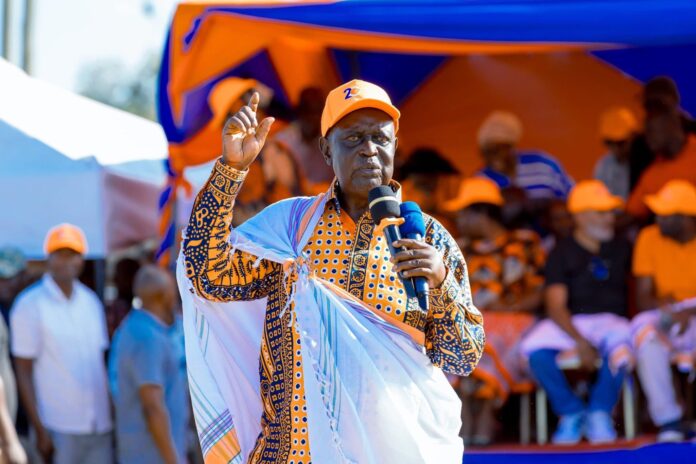
Delegates’ elections for the Orange Democratic Movement (ODM) in Kisumu County have been postponed following a directive from party leader Oburu Oginga.

In a letter dated March 6, 2026, addressed to the chairperson of the ODM Party National Elections Coordination Committee, Oburu directed that the polls scheduled for Friday be cancelled due to concerns over the prevailing political environment.

“Following the prevailing polarised environment informed by intelligence, I have made a decision to inform you to cancel the elections slated for tomorrow, Friday,” the letter reads in part.

Oburu, who also serves as the senator for Siaya County, instructed the committee to comply with the directive and notify all concerned parties about the postponement.

The elections were meant to select party delegates in Kisumu county as part of ODM’s internal party structures and preparations for future political activities.

The ODM elections committee has yet to announce a new date for the Kisumu delegates’ elections.

The postponement comes amid heightened political activity within ODM as the party continues reorganizing its grassroots leadership structures across several counties.

On March 3, the ODM Parliamentary Group have endorsed a series of key party decisions, including the installation of Oburu Oginga as Party Leader and plans to negotiate a coalition with the United Democratic Alliance (UDA) ahead of the 2027 General Election.

The resolutions were reached during a joint ODM Parliamentary Group meeting held on March 3, 2026, under the leadership of Party Leader Oburu .

According to a press statement issued after the meeting, members received a briefing on recent party activities, reviewed upcoming programmes within and outside Parliament, and developed positions on anticipated issues.

The meeting was described as the first Parliamentary Group session since the one addressed by the late Party Leader Raila Odinga at the Argyle Hotel on September 22, 2025.

Following what the statement termed “frank deliberations”, members approved and upheld all recent decisions taken by the party’s Central Committee and National Executive Committee (NEC).

Among the resolutions, the Parliamentary Group endorsed the decision by an emergency NEC meeting to install Dr Oburu Oginga as Party Leader.

The MPs further backed a Central Committee decision supporting the ongoing working arrangement between ODM and UDA.

In addition, they supported a mandate requiring the party to engage in structured negotiations with UDA for the purpose of forming a coalition ahead of the 2027 election.

The Parliamentary Group also approved a decision by relevant party organs to pursue compensation for victims of past election-related human rights abuses. On this matter, the MPs undertook to work with partners and explore alternative mechanisms to ensure the issue is acted upon urgently and conclusively.

In another significant move, the Parliamentary Group endorsed the decision by relevant party organs for the party to withdraw from the Azimio coalition.

The MPs also endorsed a decision by the NEC to convene a special National Delegates Convention on March 27, 2027.

Labour MP ‘voluntarily suspends herself’ amid China spy probe

Labour MP Joani Reid has stepped down from the party after her husband was arrested on suspicion of spying for China.

In a statement, Reid said she was “voluntarily suspending herself” from the Labour party while an internal investigation was carried out.

Taylor, a businessman and former Labour adviser, was one of three men arrested on suspicion of assisting a foreign intelligence service on Wednesday.

The East Kilbride and Strathaven MP said she was not personally under investigation by police and had done nothing wrong, but said she would “not sit as a Labour MP” until the probe was concluded.

The Labour Party described the allegations as “incredibly serious” but said Reid was “co-operating fully” with the investigation.

It is understood that both Reid and Taylor have been administratively suspended.

Reid said she had taken the decision to temporarily stand down to avoid becoming a “distraction” for the government.

She also said it was to protect her children from “intrusion”.

“This week has been the worst of my life. The shock of recent days has been difficult for me and my family,” Reid said in a statement.

“I am not under investigation by the police and no accusations have been against me. I have done nothing wrong.

“I am voluntarily suspending myself from the whip and will not sit as a Labour MP until internal investigations are concluded. I will welcome and co-operate with any questions and worries the party may have.”

Taylor was arrested in London and has since been released on bail.

Matthew Aplin, 43, and Steve Jones, 68, have also been bailed after being arrested in Wales.

Counter-terrorism police have searched properties where the men were arrested as well as others in Cardiff, East Kilbride and London.

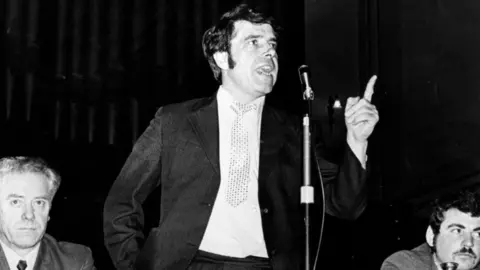
Getty Images A black-and-white photo of a Jimmy Reid, who has dark hair and side burns, speaking into a microphone. He is wearing a dark suit with a white shirt and patterned tie. He has his left hand raised in front of him, with his index finger pointing upwards.
Joani Reid’s grandfather Jimmy Reid was a famed trade unionist

Following Taylor’s arrest, Reid, elected to the East Kilbride and Strathaven seat in 2024, said she had never been to China, nor spoken on any China-related matters in the House of Commons.

Taylor, a former advisor to Welsh Labour politicians, ran as the party’s candidate to become North Wales police and crime commissioner.

On Thursday, The Herald newspaper reported Reid’s consultancy company, Reid Strategy Limited, had received more than £23,000 in interest-free loans from two of Taylor’s businesses.

Taylor, meanwhile, was paid more than £600,000 by a now-wound up construction firm, Moblake, in the form of an interest-free loan with no repayment terms and paid a further £300,000 in dividends and £30,000 in an interest-free loan by PR and communications consultancy Earthcott since 2021.

There is no suggestion of any wrongdoing by either spouse in relation to these transactions reported to Companies House.

Reid was born in Glasgow and is the granddaughter of famed trade unionist and journalist Jimmy Reid.

She has spent most of her career in London but moved to East Kilbride in 2022.

The other men arrested have both spent time as political advisers.

Jones is a former Welsh government special adviser and Aplin was previous a Labour press officer.

All three have been bailed to a date in May and inquiries remain ongoing.

Healey visits Cyprus after criticism of UK response to drone attacks

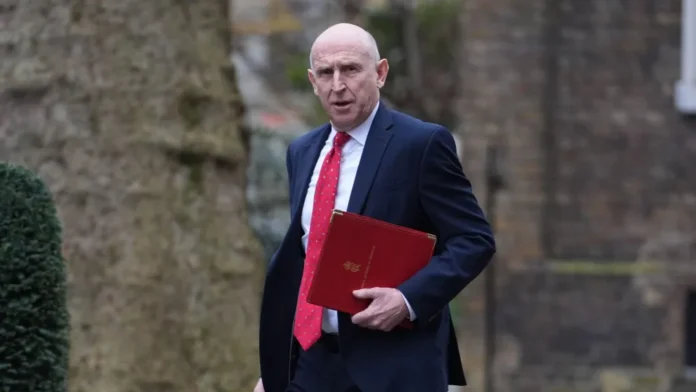
Defence Secretary John Healey has met his counterpart in Cyprus after criticism over the UK’s response to drone attacks on the RAF base on the island.

Healey met Vasilis Palmas to discuss how UK was reinforcing air defences to support “our shared security,” the PM’s spokesman said.

Cyprus’s High Commissioner to the UK Dr Kyriacos Kouros told the BBC people had been “disappointed” with the information shared after the base was hit on Sunday night.

Downing Street rejected suggestions the government failed to have enough military assets in the Middle East after the base was hit.

The attacks on Cyprus came days after the US-Israel strikes on Iran on Saturday and retaliatory strikes by Iran.

Sir Keir Starmer told reporters on Thursday protective measures at the airbase have always been in place.

“We pre-deployed further assets to Cyprus in January and February for that purpose and we’re bolstering that,” he said.

“I want to be really clear to everybody in Cyprus that we are taking every measure that is needed to protect them, to protect the airbase along with the other places in the region.”

The British warship HMS Dragon – which has air defence capabilities – is being sent to Cyprus but will not sail until next week.

Asked on Thursday if the UK was not fully prepared with the ship not yet in the Mediterranean, the prime minister’s spokesman said: “I don’t accept that. I think the fact is, operational questions, operational decision-making is always kept under review.”

The spokesman was asked about reports that the decision to send reinforcements to the region came weeks after the first US request to use UK bases for strikes against Iran.

“I think we set out yesterday that our defensive capabilities have been deployed since January,” he said.

“That includes air defence, radar systems and F-35 jets in Cyprus and Typhoons in Qatar.”

Healey’s visit to Cyprus on Thursday comes as the UK government warned the situation in the Middle East could last for months.

Minister Hamish Falconer told the Commons: “There are indications this is a crisis not of days but of weeks and possibly months” as he called on Iran to end the “reckless” strikes.

Responding, Shadow Foreign Secretary Priti Patel said: “Britain cannot sit on the fence and our adversaries must know that we must not stand back when our allies are under such attack.”

Earlier, Conservative leader Kemi Badenoch told BBC Radio 4’s Today programme: “Sometimes the best way to de-escalate a situation is to try and finish it quickly, rather than let it drag out because you don’t want to get involved.”

“Once our bases had been attacked, I think we became part of this, whether we liked it or not.”

US President Donald Trump has already criticised Sir Keir Starmer’s initial refusal to let the US use British bases for the strikes before the UK then decided to allow their use for “defensive” strikes.

The French Armed Forces have a warship positioned off the coast of Cyprus while the Spanish government has said it would deploy a frigate to the eastern Mediterranean which is due to reach the waters off Cyprus early next week.

Badenoch warned the UK’s allies “think we’re abandoning them”.

“Even if we’re not talking about Iran, Cyprus feels that we have not been helpful. It’s extraordinary that Bahrain and Kuwait and the UAE are publicly criticising us.”

Sir Keir has already said that protecting British nationals was his “number one priority”.

John Healey/X Jonathan Healey shakes the hand of the Cypriot defence minister
Jonathan Healey met with Cypriot Defence Minister Vasilis Palmas

The drone strike on the British military base in Cyprus over the weekend which caused “minimal damage” and did not result in any casualties.

Western officials said the Shahed-type drone was not fired from Iran. However, officials would not say where the missile originated from.

British military officials’ current best assessment is the drone was launched by Hezbollah in Lebanon.

Further drones were intercepted and the Ministry of Defence temporarily moved family members from the base.

On Newsnight Kouros was asked if people in Cyprus felt protected.

He said: “Let’s say the people are disappointed, the people are scared, the people could expect more.”

He added he would “thank [Starmer] for paying attention to our worries and I’d love to see more”.

Earlier, Home Office minister Alex Norris told BBC Breakfast: “We are absolutely resolute in protecting the nation’s interests – and that’s what we’re doing and we’re working of course with our partners of which Cyprus is obviously a really close one,” he added.

Separately, the first chartered flight due to bring British nationals back home from the region did not depart as scheduled on Wednesday night and remains in Oman on Thursday, as the Foreign Office cited technical issues.

Some commercial airlines have started flights from the region to help people get home.

Suspected Cybercriminal Arraigned Over Sh52 Million Bank and SACCO Fraud

A cybercriminal suspect was arraigned at the Milimani Law Courts, where he was charged with Access with Intent to Commit a Further Offence contrary to Section 15(1) and Computer Fraud contrary to Section 26 (1) (b) as read with Section 2 (a) of the Computer Misuse and Cybercrimes Act No. 5 of 2018.

Albert Komen Kipkechem alias Jonathan Kiptum Barmasai is the main suspect behind two incidents affecting a payment service provider, a local bank, and a SACCO, where the institutions lost over fifty-two (52) million shillings in June 2025.

Upon discovery of the fraud, the affected entities reported the matter to Economic and Commercial Crimes Unit detectives attached to the Cyber Fusion Unit at the Central Bank of Kenya, who recorded their statements and immediately launched investigations.

During investigations conducted in collaboration with experts drawn from the National Forensic Laboratory (NFL) and the Crime Research and Intelligence Bureau (CRIB), it was established that the suspect, was the mastermind behind the brazen heist.

Further investigations revealed that the modus operandi in both incidents was similar. It was established that the suspect used remote access software to gain unauthorized access to the payment platform and bank information systems and effected unauthorized transactions that did not follow the normal payment flow before the fraud was eventually detected.

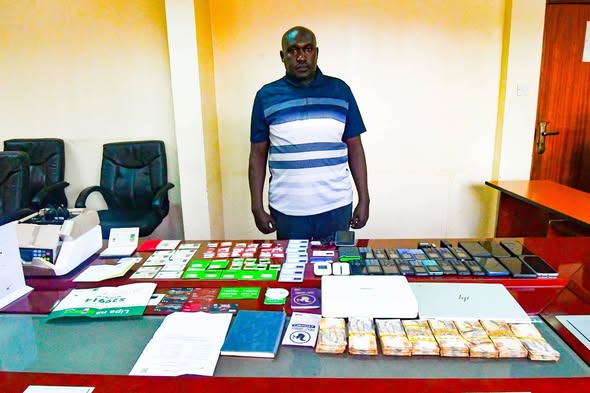
After collecting relevant digital artifacts from the affected institutions and obtaining the necessary court orders and search warrants, detectives arrested the suspect in Thome area within Nairobi County, and escorted him to his Nakuru home, where several items linked to the fraud were recovered.

Among the recoveries were electronic gadgets, fraudulently registered identity cards, a money counting machine, cash in Kenyan currency, assorted SIM cards from various telecommunications service providers and ATM cards registered under other people’s names. Also recovered were a Congolese passport bearing Albert Komen Kipkechem’s photograph but registered under the name Katempa Ngoy Alexisa and a Congolese identity card bearing the same name, among other items believed to have been used in the commission of the fraud.

The suspect was escorted back to Nairobi and was processed accordingly.

The suspect pleaded not guilty upon arraignment and was remanded at Capitol Hill Police Station until March 12, 2026, when the court will give directions on his bail and bond terms.

Teachers issue seven-day strike notice over ‘failed’ SHA medical cover

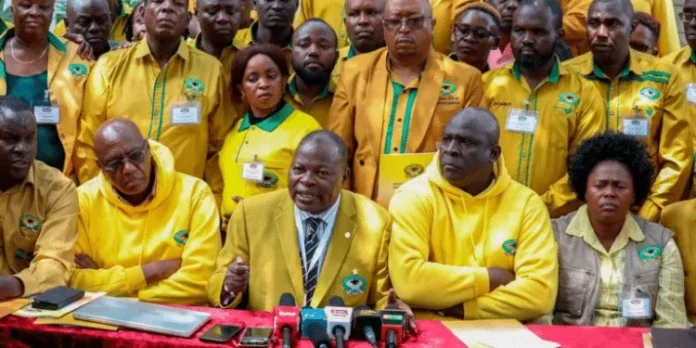
The Kenya Union of Post-Primary Education Teachers (KUPPET) has announced plans to withdraw from their new medical scheme run by the Social Health Authority (SHA), saying the scheme is failing teachers.

The union cites frequent system breakdowns, a limited number of hospitals accepting the scheme, and what it calls inadequate funding allocations, particularly for accident and emergency services.

KUPPET also says several teachers have been denied treatment, while others have reportedly been detained in hospitals over unpaid medical bills.

Teachers have issued a seven-day strike notice to compel their employer, the Teachers Service Commission, TSC, to save their members from the pain.

One of the victims of an accident that struck teachers outside City Primary in Ngara, Nairobi in January this year is stranded at Aga Khan Hospital a week after he was discharged due to a huge bill.

After undergoing three surgeries, the family was handed a medical bill of Ksh.3.9 million. They were informed that the Social Health Authority would cover only Ksh.1 million, forcing the family and the Kenya Union of Post Primary Education Teachers to organise fundraising efforts to raise the remaining amount.

“Mzee wangu alikaa HDU for more than two weeks, Mungu alikuwa ameumia lungs na kifua,” said Joska Kwamboka, Alex’s wife.

“We have teachers who have been held, especially those who have passed on. When a teacher has only stayed for three days and SHA says the cover has lapsed, a teacher from Busia, the body is detained at Nairobi West,” said Akello Misori, Secretary General, KUPPET.

“Hospitali nyingi saa hizi zinakataa kuadmit walimu, wanasema SHA haitawalipa, na hii inatendeka Bungoma, Coast, Western,” said Omboko Milemba, National Chair, KUPPET.

According to KUPPET officials, a limited number of hospitals are accepting the scheme, making it difficult for many teachers to access healthcare, especially those in remote areas.

“SHA yenyewe pia inapromote hospitali kuchukua pesa kwa walimu, hospitali zinafanya kazi ni chache na malipo yake hayadhibiti medical cover and we will not allow,” said Omboko Milemba, National Chair, KUPPET.

The Kenya Union of Post Primary Education Teachers is now calling for immediate action from the management of the Social Health Authority, warning that failure to address the concerns could push the union to lead teachers in exiting the medical cover.

In a statement, Health Cabinet Secretary Aden Duale has disputed claims of the alleged crisis, saying over 249,000 teachers and their dependents have accessed services through SHA, translating to Ksh.3.5 billion in claims. Duale says isolated teething hitches are being resolved to ensure zero disruption to service delivery.

Nottingham Forest tell Edu to stay away from training ground

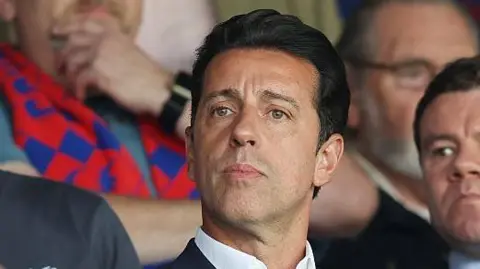
Nottingham Forest have told Edu Gaspar, their global head of football, to stay away from the club as his departure moves closer.

Edu’s turbulent tenure at the City Ground is approaching an end after less than eight months in the role, with Forest notifying him not to visit either the club’s training ground or stadium.

According to sources, Edu was not at Forest’s 2-2 draw with Manchester City on Wednesday night. It is the third successive match that the Brazilian has missed.

Forest appointed the former Arsenal sporting director in July but his time at the City Ground has proven difficult with four different managers and a number of poor signings made in a £200m spending spree.

Edu Gaspar, global head of football for Nottingham Forest
Edu Gaspar, Nottingham Forest’s global head of football, has missed the club’s last three games Credit: Robbie Jay Barratt /Getty Images

Evangelos Marinakis, the club’s owner, was keen to use Edu’s experience to develop his portfolio of clubs, with the remit to “oversee all football-related functions, including recruitment, performance, squad strategy and player development”.

Yet it has been a disappointment and his departure is expected before the end of this season. Forest insist he is continuing to work as normal.

Former Forest manager Nuno Espírito Santo fell out with Edu weeks after his appointment. It was that relationship breakdown which is ultimately viewed as the major contributory factor behind Nuno’s sacking in September.

Nuno has since been succeeded by Ange Postecoglou, Sean Dyche and now Vítor Pereira. Dyche was sacked last month and has called the decision to dispense with him after 114 days in charge a “head-scratcher”.

He told The Football Boardroom podcast: “Our current form at that time was ninth in the Premier League.

“The stats and facts were there, clear as day. From my record, from when we got there to when we ended, we’d have been 12th in the Premier League.

“So on factual data and analysis, I can’t understand any of the decisions that were made. But football is changing, and we witnessed it.”

Forest are currently 17th in the Premier League table, outside the relegation zone on goal difference, and have nine games left to avoid relegation to the Championship.
Pereira’s team return to the Europa League next Thursday with a round-of-16 first-leg tie at home to FC Midtjylland.

Title Wildlife Justice Commission reflects on a decade of impact with multimedia report: Fighting Wildlife Crime here 

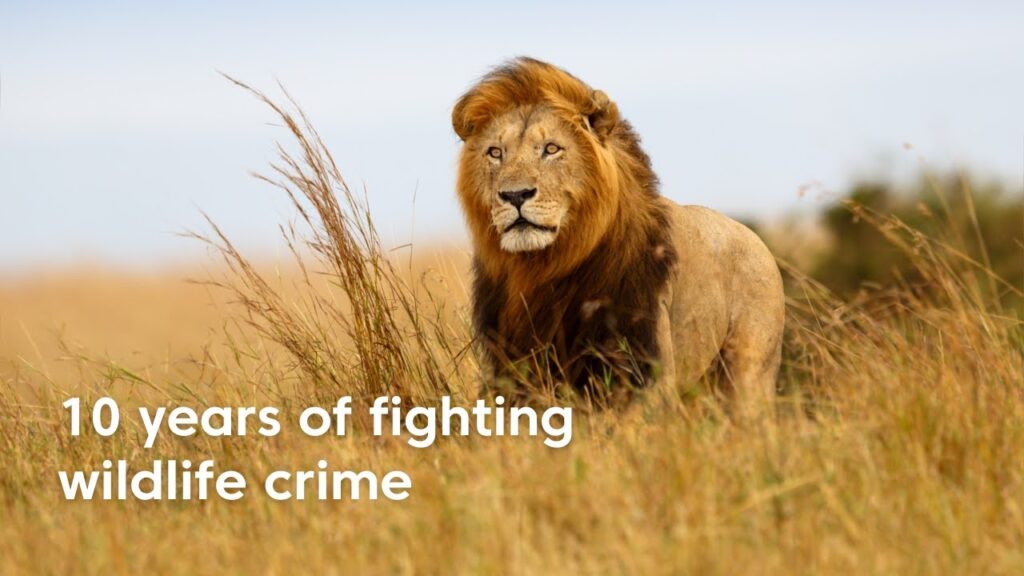
The Hague, the Netherlands, 5 March 2026 — The Wildlife Justice Commission today launches Fighting Wildlife Crime: A Decade of Impact, a dynamic new multimedia web feature marking ten years of disrupting transnational organised crime and protecting endangered species.

A Decade of Impact: Fighting Wildlife Crime is a visually driven digital experience that brings the organisation’s work to life through compelling case highlights and defining milestones.

Combining powerful infographics, operational footage, and first-hand insights, it captures ten years of investigations, strategic policy engagement, and capability building.

The report showcases how intelligence-led investigations, undercover operations, and close collaboration with national law enforcement partners have translated evidence into action — leading to arrests, prosecutions, and convictions of wildlife traffickers.

Founded in 2015 at the height of Africa’s poaching crisis, the Wildlife Justice Commission was established with a clear and urgent mission: to dismantle the criminal networks trafficking wildlife, timber, and fish by turning evidence into accountability.

Over the past decade, the organisation has worked alongside law enforcement partners across multiple countries and continents to disrupt 104 criminal networks and support more than 355 high-level arrests — achieving a 100% conviction rate in cases concluded before the courts.

Beyond these courtroom outcomes, Wildlife Justice has played a critical role in disrupting major transnational trafficking networks operating across Africa and Asia, exposing the infrastructure, financial flows, and logistics that underpin the illegal trade.

These results demonstrate that targeted, intelligence-led enforcement delivers measurable impact — not only in arrests and prosecutions, but in making wildlife crime a higher-risk enterprise, reducing criminal capacity, and weakening the networks that profit from species extinction.

With the ability to deploy investigative teams within 24 hours and infiltrate the upper echelons of trafficking networks, Wildlife Justice’s model combines speed, agility, and precision — helping close the impunity gap that has long enabled wildlife traffickers to operate unchecked.

By Anthony Solly

Africa’s Green Economy Summit (AGES) 2026 delivers definitive roadmap to turn Africa’s climate ambition into bankable, scalable reality

The summit opened with a focus on innovative finance for nature, exploring green, blue, and wildlife bonds, including the “Rhino Bond” and emerging biodiversity credits

CAPE TOWN, South Africa, March 5, 2026/ — Africa’s Green Economy Summit (AGES) 2026 concluded in Cape Town with a resounding call to action, urging the continent to leverage its digital revolution, transform water financing and redesign agriculture to unlock a sustainable, net-zero future. The four-day platform united over 600 delegates from 42 countries, including global investors, project developers and policymakers. The consensus was clear that with sound policies and financial innovation, Africa can convert its climate vulnerabilities into economic opportunity.

Pioneering new models for climate finance

The summit opened with a focus on innovative finance for nature, exploring green, blue, and wildlife bonds, including the “Rhino Bond” and emerging biodiversity credits. A key lesson was the importance of engaging communities as core stakeholders, not merely beneficiaries.

Carl Roothman, CEO of Sanlam Investment Group, stressed the urgency of scale: “Africa needs billions of dollars. It’s great to dream, but we must act and at scale.” Iain Banner, co-founder of Go Green Africa and AGES, framed the shift as fundamental: “The green and blue economies are the new operating systems of the modern world.”

Government calls for practical collaboration

Deputy Minister of Forestry, Fisheries and Environment, Narend Singh, set a pragmatic tone: “This is where the rubber hits the road.” He emphasised moving from policy to tangible results, citing South Africa’s Just Energy Transition Partnership (JETP) and renewable energy procurement programme as examples. Singh urged African nations to move beyond exporting raw materials: “A low-hanging fruit is developing local value chains and beneficiating minerals here, creating jobs and advancing technology.”

A digital imperative for climate action

Integrating climate goals with digital transformation emerged as a central theme. Siddhartha Raja, Senior Digital Specialist at the World Bank, noted that data centres could act as “anchor loads” to stimulate new renewable energy but warned that climate resilience must be designed in from the start. From flood-proofing to managing e-waste, which could spawn new recycling industries.

Chrissy Meier of the Digital Impact Alliance highlighted a critical gap, noting that most African cities have climate plans but lack local data for implementation. She cautioned against AI models trained on non-African data, which risk missing the realities of African communities. Raja’s advice: “Carpe Digital, seize the digital to make economies more efficient, inclusive, and greener.”

Making water infrastructure bankable

A high-level panel tackled the perception that water projects are uninvestable. Obadiah Mungai of the World Resources Institute Africa argued the real issue is translation: “How do you convert water outcomes into bankable outputs?”Fixing governance and data is the first step to attracting capital.

Louise Stafford of The Nature Conservancy cited Cape Town’s post-“Day Zero” investment in catchment restoration, which proved far more cost-effective than desalination. “There is a bigger risk in business as usual than in investing in water,” she said. The panel concluded that with robust preparation and blended finance, water resilience can become an attractive asset class.

Strengthening food security through renewable energy

Energy instability directly threatens food systems, without reliable power, irrigation fails and cold chains break. Henry Roman of the International Water Management Institute called for a holistic approach to the water-energy-food nexus, showcasing data tools helping farmers optimise water use.

Ian de Jager of I&F Engineering noted a new trend: farmers becoming energy producers, using small-scale hydropower to power operations and sell excess renewable energy certificates. Andrea Campher of Standard Bank added that with the Carbon Border Adjustment Mechanism (CBAM) now in effect, a farmer’s emissions profile is as critical as product quality. “Renewable energy strengthens ESG credibility,” she said.

AGES 2026 has laid the cornerstone for a resilient green economy, proving that when climate goals are woven into the continent’s core systems, ambition transforms into tangible progress. The next summit takes place 17-19 March 2027 in Cape Town.

About Africa’s Green Economy Summit (AGES): 
Africa’s Green Economy Summit (AGES) is a premier pan-African platform dedicated to accelerating Africa’s transition to a sustainable, inclusive, and climate-resilient economy.

Hosted by VUKA Group, AGES brings together policymakers, investors, project developers, innovators and business leaders to unlock green finance, scale bankable projects, and drive actionable solutions across energy, mobility, infrastructure, agriculture, water, waste, and the blue economy.

Through high-level content, deal-making opportunities, and strategic networking, AGES turns ambition into action for Africa’s green future.

About VUKA Group: 
VUKA Group brings people and organisations together to connect through platforms that drive growth and transformation across Africa’s key industries.

With over 20 years of experience on the continent, VUKA delivers sector-leading platforms across Energy, Mining, Mobility, Retail, Sustainability, and Women Empowerment – creating spaces where knowledge is shared, partnerships are formed, and real economic impact is achieved.

By Anthony Solly

How relegation could cost Spurs more than £250m

The prospect of one of the Premier League’s six wealthiest clubs being relegated to the Championship should be essentially impossible, given the immense resouces they have at their disposal.

But with 10 games left to play Tottenham Hotspur are just a point above 18th-placed West Ham, and in the kind of wretched run of form that makes it difficult to see where enough points are going to come from.

With Wolves and Burnley almost certainly set to occupy the bottom two places at the end of the season, and the likes of the Hammers, Nottingham Forest, and Leeds still at risk too, Spurs are by no means favourites for the drop.

But they are now at enormous risk.

So, what would be the financial impact on Spurs if the unthinkable really does happen?

How would Spurs’ income be impacted?

Spurs earned £690m worth of income last year, according to data from the Uefa European club finance and investment landscape report, putting them ninth overall in Europe.

That income would take a serious hit if they were to drop into the Championship.

According to BBC Sport analysis, the reduction could be as much as £261m overall.

One key area in which they would be harmed is ticket revenue, which earned the club £130m, the fifth-highest across the continent.

Currently, Spurs charge an average of £76 per fan for each home match, with only five clubs in Europe costing more.

Since building their new stadium for around £1bn, Spurs have focused heavily on selling hospitality tickets and corporate packages for matches in order to maximise matchday takings.

But they will simply not be able to charge the same amount for an opening day fixture against a side like Lincoln City – who are currently chasing promotion from League One – in the second tier in August, should they ultimately finish in the bottom three, and a drop in attendances would likely occur too.

Elsewhere, Spurs’ broadcast revenue would plummet too. They would no longer have access to the funds generated from the Premier League’s lucrative domestic and international broadcast deals, which last year meant Ipswich Town earned more in broadcast revenue than Barcelona.

And the tens of millions they earn from Champions League TV income will drop to nothing, unless they manage to win the tournament, which would guarantee them a place in next year’s competition even if they are playing second-tier football.

Furthermore, the club-record £269m of commercial income Spurs earned last year would likely take significant damage.

Sponsorships such as kit manufacturer Nike and front-of-shirt sponsors AIA’s deals (worth around £70m combined annually) will have their values slashed thanks to relegation clauses.

Playing four more home matches in the Championship could also have an impact on Spurs’ ability to host other lucrative events and concerts, which the club has heavily focused on.

“For a club of Spurs’ ambitions and financial scale, relegation would not simply be a short-term sporting setback”, says football finance expert Kieran Maguire. “The economics of English football make recovery a multi-year project.”

Expenses wouldn’t drop enough to make up the difference

Spurs lost £129m last year, according to the data, and the risk of even greater losses going forward if relegated is evident.

In some regards, Spurs’ expenses would be reduced by dropping to the Championship. It has been widely reported, for example, that their players’ contracts include a clause dropping their salaries by 50% in case of relegation.

If that clause is inserted into the contract of every player in the squad, then last year’s record wage bill of £276m could be turned into £138m when the contractual period ticks over to the new season on 1 July.

But in a variety of other ways outgoings would remain the same, and potentially even rise.

One of the major financial issues clubs across the continent have been facing in recent years is rising operational costs, including things like utilities, transport, insurance, marketing, and administration.

Last year, Spurs had the third-highest operating costs in all of Europe, paying out £260m. That was a rise of £27m on the previous year, and the figure could rise again if essentials like energy prices continue to increase in the wider global economy.

Many of those day-to-day operating bills won’t simply be reduced by playing at a lower level – the price for powering the stadium for a night match against Norwich City in the Championship is the same as doing so for Newcastle in the Premier League.

Spurs also had 877 full-time employees last year, an increase of 57 on the previous year, giving them the 12th-biggest workforce in Europe.

Barring a cull of that workforce, Spurs will have to keep paying top-tier European salaries while not even playing in the English top flight.

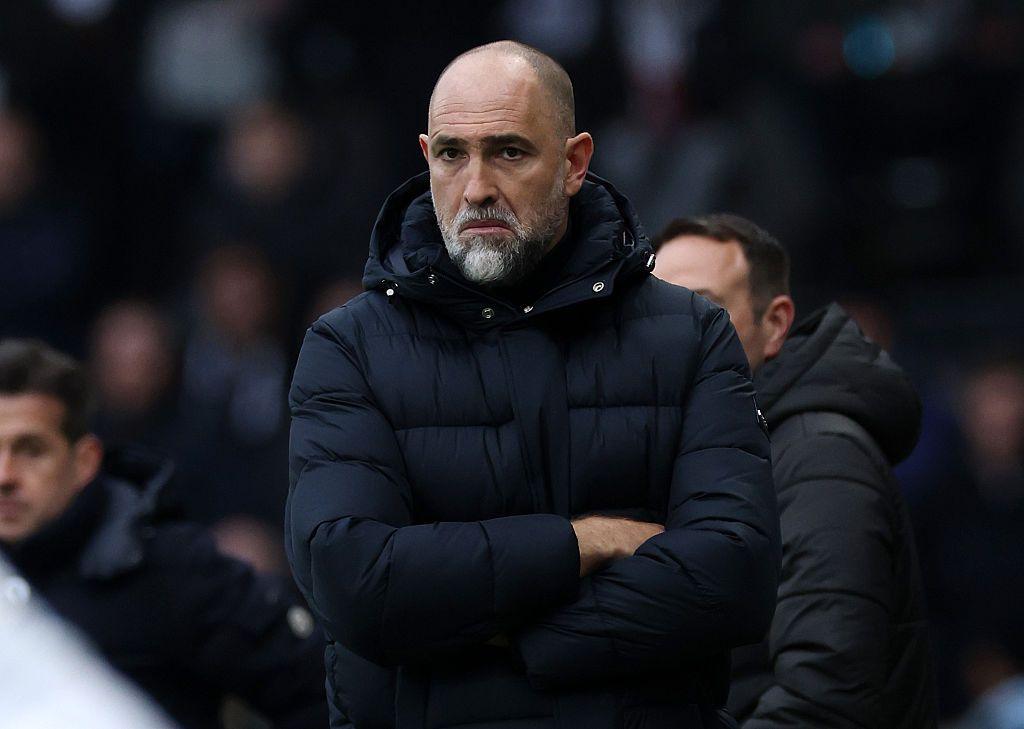
Tottenham Hotspur manager Igor Tudor looks on during his team's 2-1 defeat against Fulham in the Premier League
Image caption,Spurs have lost their first two matches under new boss Igor Tudor, conceding six goals and scoring twice

‘Spurs should have taken more financial risks’

In recent years Spurs have been simultaneously lauded for being one of the most sustainably-run clubs in Europe, while also drawing criticism from fans for not using more of their revenue to pay higher wages.

Some believe that the financial peril that plummeting to the Championship would bring is partly due to a reluctance to take financial risks in recent years.

“I would say money,” ex-Spurs winger Gareth Bale told The Overlap podcast when asked why the club finds itself at such great risk of relegation.

“Look at the wage bill – it’s lower [than other clubs with big ambitions].

“They always seem to buy young and hope they’re going to grow into something bigger, which has worked in the past with me and a few other players, but they’re an established club now.

“They have the stadium, they have the training ground, they have the fan base. They need to be buying bigger players, maybe paying a bit more. It’s that bit of a gamble that you maybe need to take that, from a business point of view, they’re not willing to do.

“For me that’s probably the biggest issue – they don’t sign the finished player.

“A £50 million player is not what it used to be. You have to be spending £80m, £90m, £100m now just to get a good player.

“It’s like they just need to gamble a bit more, other clubs are more willing to take a risk financially.”

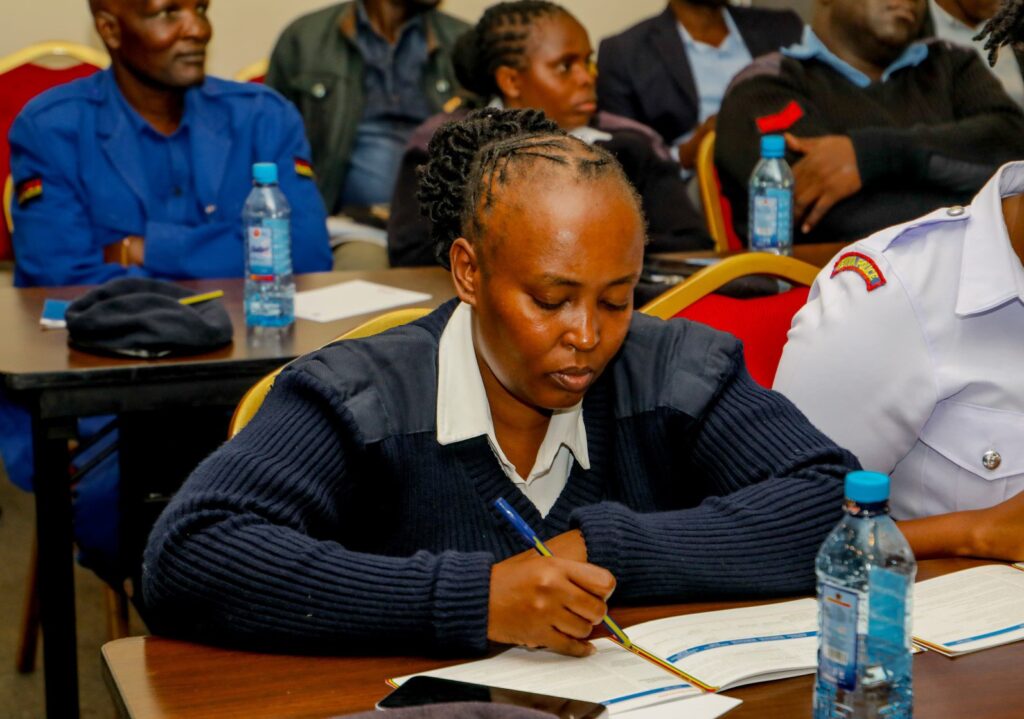
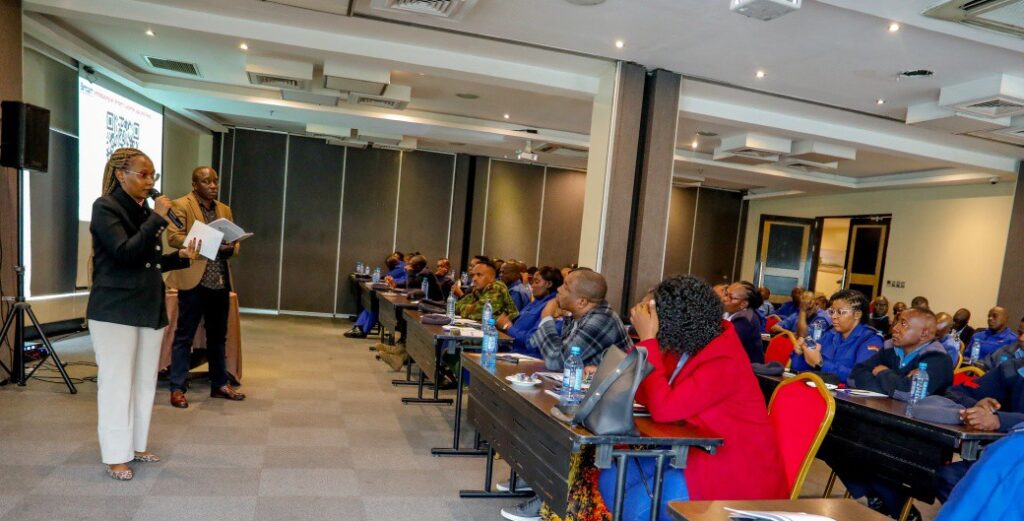
Britam Life Assurance Sensitisation Programme Continues for the Fourth Day

To ensure the welfare and operational readiness of its personnel, the Government of Kenya provides a robust dual-insurance framework for the National Police Service (NPS) and Kenya Prisons Service (KPS). This safety net is divided into two primary schemes: comprehensive health coverage and life/injury protection.

The comprehensive health coverage scheme is currently provided by APA Insurance until 31st March 2026, covering officers, one spouse, and up to five children. It includes inpatient, outpatient, maternity, dental, optical, and last expense benefits.

On the other hand, the life/injury protection scheme is provided by Britam Life Assurance Company (K) Ltd. The scheme includes last expense coverage, group life assurance, Work Injury Benefits Act (WIBA) and Group Personal Accident (GPA) for injuries or death occurring both in the course of duty and outside official working hours.

The Work Injury Benefits Act (WIBA) and Group Personal Accident Scheme collectively cover:

Accidental Death Benefit, which covers accidental injuries leading to death in the course of employment.

Permanent Total Disability Benefit, which takes care of a condition where a member is no longer able to work due to sustained injuries.

Temporary Total Disability Benefit, which covers a member when they are completely unable to perform any job functions on a temporary basis due to work-related injuries and have been signed sick off by their attending doctor.

Medical Expenses Benefit, which refunds out-of-pocket medical expenses reasonably incurred by a member as a result of an accident that leads to injury in the course of their employment. This covers medical expenses (including treatment travel costs) that are not covered by any other medical insurance cover.

Occupational Psychiatric Disease Benefit, which covers occupational psychiatric illnesses that lead to loss of employment.

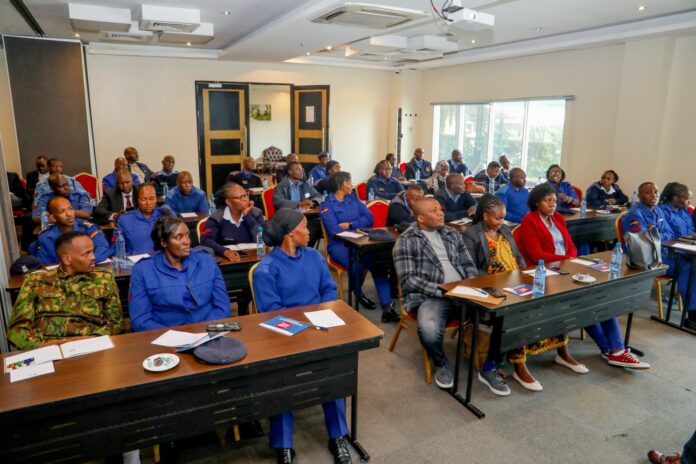
The National Police Service encourages officers to take advantage of the nationwide sensitisation windows, attend the sessions in their designated locations, and freely interact with the sensitisation team to gain a deeper understanding of the schemes.

The sensitisation programmes were carried out today in Nairobi, Webuye, Trans Nzoia, Kitui, Bomet, Mombasa and Nyahururu.

By Anthony Solly

Create a free account, or log in.

Gain access to read this content, plus limited free content.

Yes! I would like to receive new content and updates.

Sponsored Ad

Ad 1
Ad 2
Ad 3
Ad 4
Ad 5
Ad 6