Sponsored Ad

Ad 1
Ad 2
Ad 3
Ad 4
Ad 5
Ad 6
23.6 C
Kenya
Friday, May 8, 2026
Home Blog Page 300

Vybz Kartel Denies East Africa Tour, Disowns Talanta East Afrika Festival Announcement

By Andrew Kariuki

Dancehall star Vybz Kartel has publicly denied claims that he will headline the Talanta East Afrika Festival tour scheduled to take place across East Africa in May 2026, raising questions about the earlier announcement made by event organisers.22

In a statement posted on his official social media pages, Kartel said he had become aware of circulating reports claiming he would embark on an East African tour, but clarified that neither he nor his management team had authorised or confirmed any such performances.

“Let me be absolutely clear: neither my management nor I have any knowledge of, or involvement in, any such tour. No East African shows have been announced or confirmed by my team,” Kartel stated.

The Jamaican dancehall icon further warned fans, promoters and venues against engaging with individuals claiming to organise the shows on his behalf, cautioning that such claims could potentially be fraudulent.

“Any individuals, promoters, or platforms claiming to be booking or advertising these shows are acting without authorization and are misleading the public,” he said.

“Fans, promoters and venues are strongly advised not to engage with or send money to anyone making such claims, as these may be scams.”

Kartel’s statement comes just days after organisers of the Talanta East Afrika Festival announced during a press conference in Nairobi that the dancehall star would headline the newly launched regional cultural showcase.

According to the organisers, the festival was expected to tour three cities; Kampala, Kigali and Nairobi, beginning on May 1, 2026 at Lugogo Cricket Oval in Uganda, followed by a performance at BK Arena in Kigali on May 2, before concluding in Nairobi on May 8 at Laureate Gardens.

The event had been promoted as a cross-border cultural platform aimed at celebrating East Africa’s music, fashion, cuisine and artistic expression, while positioning the region as an emerging force in the global entertainment industry.

Organisers had also announced that Kenyan artist Charisma would be among the performers appearing at the festival, with additional East African artists expected to be revealed in the coming weeks.

They had further indicated that tickets for the festival would go on sale online starting March 9, 2026 and that the event would primarily target audiences aged between 18 and 35, while also boosting tourism and employment in the host cities.

Kartel’s denial now casts uncertainty over the festival’s headline act and could force organisers to clarify the status of the event and the claims surrounding the star’s involvement.

As of now, the organisers of the Talanta East Afrika Festival have not issued an official response to Kartel’s statement.
Committee Approves Regulations to Establish Sh2 Billion Kitty for DPP Office

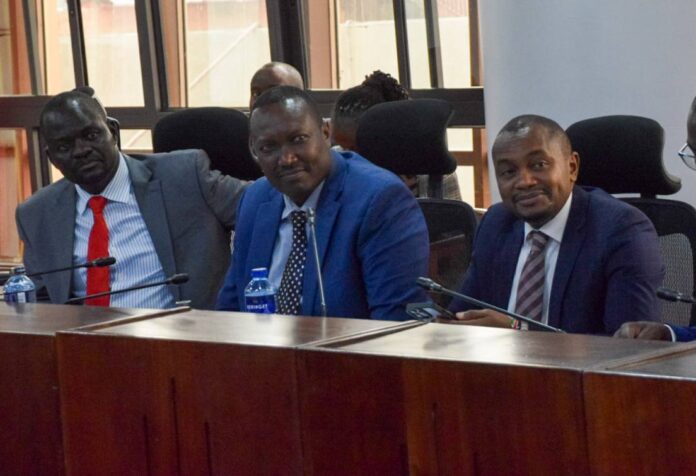
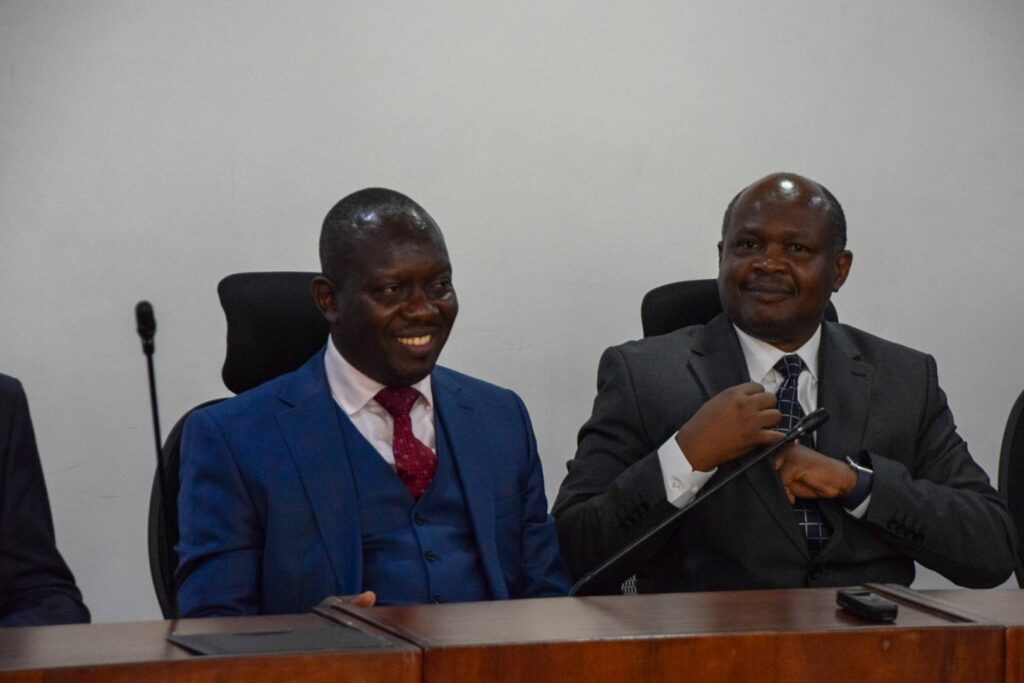
The Committee on Delegated Legislation, chaired by Hon. Samuel Chepkong’a (Ainabkoi), has approved regulations seeking to establish a special fund for the Office of the Director of Public Prosecutions (ODPP).

Members of the Committee supported the creation of the independent fund with an initial capital of Sh2 billion, noting that the resources will help improve the timely delivery of justice to the public.

The decision was made during the consideration of the Public Finance Management (Public Prosecution Fund) Regulations, 2025. Director of Public Prosecutions Renson Ingonga, accompanied by officers from his office, appeared before the Committee during the meeting.

The Statutory Instruments Act, 2013 gives the Hon. Chepkong’a-led Committee the legal authority to review, approve, or reject regulations, rules, and other laws made by government ministries and agencies, ensuring they follow the law and serve the interest of the public.

At the session, Mr Ingonga explained that the fund, to be known as the Public Prosecutions Fund, will support the ODPP in handling complex criminal investigations, prosecutions, and asset recovery efforts.

“The initial capital of the fund shall be Sh2 billion appropriated by the National Assembly in the 2026/2027 financial year,” he said.

He added that the creation of the independent fund will enhance efficiency in the delivery of justice, strengthen the justice system, and support anti-corruption efforts.

To ensure sustainability, Ingonga said the fund will also receive resources from grants and donations, deferred prosecution agreements, and proceeds from plea agreements.

Other sources will include proceeds from preservation orders arising from criminal proceedings, compensation and restitution orders issued by courts, and interest generated from investments of the fund.

After thorough consideration, the Committee adopted the regulations.

“We have reviewed the regulations and are satisfied that they conform to the law and comply with the Statutory Instruments Act, 2013,” said Hon. Chepkong’a.

The Committee will now compile a report on the regulations and present it to the National Assembly for debate and approval.

By Anthony Solly

Chelsea’s Pedro Neto hit with FA charge after Arsenal red card

Chelsea forward Pedro Neto has been hit with a Football Association (FA) charge following his sending off against Arsenal.

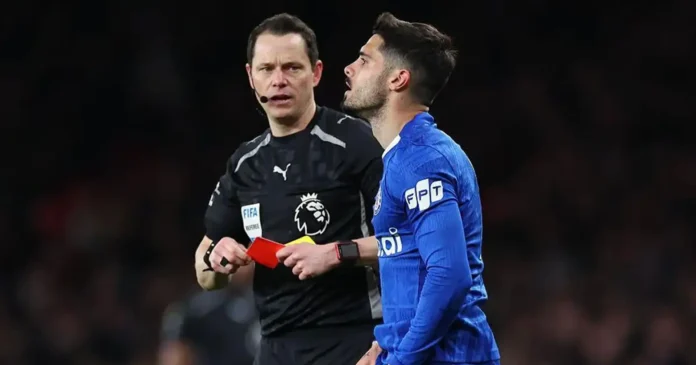
Neto was shown two yellow cards during last weekend’s 2-1 defeat in the Premier Leagueone for dissent after Jurrien Timber’s goal and another shortly after for taking down Gabriel Martinelli, thus stopping an Arsenal attack in the process.

The winger protested his innocence to referee Darren England before belatedly heading down the tunnel, with Chelsea playing the final 20 minutes plus stoppage time at the Emirates Stadium with a man less.

Neto has now been charged by the FA after it was alleged that he “acted in an improper manner by failing to leave the pitch promptly and/or using abusive words towards the match official/s”.

Neto has until March 9 to respond to the charge. If the charge is proven, it remains to be seen the winger will face an extended suspension or a fine.

Neto has already served his one-match ban as he sat out Chelsea’s impressive 4-1 win over Champions League qualification rivals Aston Villa on Wednesday night.

As it stands, he will be back in contention for their FA Cup fifth round tie against Wrexham this weekend and the Premier League match at home to Newcastle on March 14.

Dismissed: Pedro Neto (Chelsea FC via Getty Images)

Neto’s red card against Arsenal was Chelsea’s seventh in the Premier League this season, prompting Liam Rosenior to admit a“deep-lying” problem at the club.

“As a group, me as the leader as well, we have to take more accountability for some of the decision-making we’re having in terms of our discipline and in terms of the moments of the goals,” Rosenior said.

“Some of them are just not acceptable at this level.

“You can fine players. It’s not about the punishment, it’s about finding the reason why. It’s a focus and a concentration thing that we need to get right.

“I know the record of the club is not great from the start of the season, and now it’s getting bad. We had 10 games when I was in where we didn’t have these issues, but we’ve had two in two games. There’s something deep-lying that we need to get to the bottom of.

“The thing is, for me, if we get to the bottom of those two main things, we can be a very, very good team and we can achieve all the things we want to achieve.”

CAF Postpones Women’s AFCON Days After Kenya Travelled for the Competition

The Confederation of African Football (CAF) has rescheduled the Women’s Africa Cup of Nations (WAFCON) 2026 in Morocco, just days after the Kenya Women’s national team travelled to Ivory Coast to prepare. 

In a statement on Thursday, March 5, CAF confirmed that the adjustments followed high-level discussions among the federation, FIFA, and other stakeholders.

The tournament was initially scheduled for March 17 to April 3, 2026, but was rescheduled to begin from July 25 to August 16, 2026.

CAF noted that this adjustment was made to ensure the tournament’s success in light of unforeseen circumstances.

“After discussions between CAF and its partners, FIFA and other stakeholders, CAF decided to reschedule the dates of the TotalEnergies CAF WAFCON 2026, to July 25 – August 16 2026; to ensure the success of this important women’s competition, in the light of certain unforeseen circumstances,” CAF said in a statement.

Despite the reschedule, the federation maintained that preparations for the competition were underway and expressed confidence that the tournament would be a success.

It remains uncertain, however, whether Morocco will still host the competition, with South Africa mentioned as a potential alternative following the rescheduling.

Before the rescheduling, there had been widespread confusion in the media about whether the tournament would proceed on the originally scheduled dates.

This uncertainty arose because CAF had not yet finalised the competition calendar, confirmed the venues for the knockout rounds, issued media accreditation, appointed tournament officials, conducted its media workshop, or deployed security officials to the competition sites in Morocco.

The developments come at a time when the Kenyan team has already travelled to the Ivory Coast to prepare for the tournament that was to start in two weeks.

The Harambee Starlets have been drawn into group A, a group that is considered highly competitive as it consists of hosts Morocco, Senegal, and Algeria.

Kenya’s 2026 qualification for the competition marked the second-ever appearance in the tournament’s history. It first appeared at the tournament in 2016 in Cameroon, where the team lost all group stage matches, leading to ultimate elimination.

As uncertainty continues to surround WAFCON, Kenya, Uganda, and Tanzania have intensified their preparations to host the 2027 AFCON for men, including the construction of modern, high-end stadiums such as the Raila Odinga Talanta Stadium in Nairobi.

F1 Star Lewis Hamilton wants African grand prix before retiring

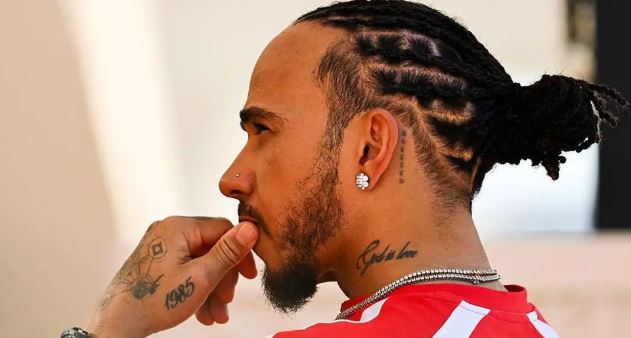
Lewis Hamilton says he does not want to retire from Formula 1 until he can race in a grand prix in Africa.

The seven-time world champion said he had been “fighting in the background” for the past six or seven years, asking the sport’s bosses “why are we not in Africa?”.

“I don’t want to leave the sport without having a grand prix there, without getting to race there,” Hamilton said. “I’m chasing them – when is it going to be?

“They’re setting certain dates. I’m like, damn, I could be running out of time, so I’m going to be here for a while until that happens, because that would be amazing, given that I’m half-African.”

Hamilton – F1’s first black driver, with a father of Afro-Caribbean background and a white mother – said he knew F1 bosses were “really trying” to arrange a race on the continent.

However, there is no imminent prospect of one appearing on the schedule, and the chances of there being a race in Africa before the end of this decade are low.

Rwanda was the most recent country linked to hosting a race, but the chances of that have rescinded.

There were also talks in recent years about returning to South Africa – at Kyalami near Johannesburg or in Cape Town – but both collapsed.

Kyalami hosted races from 1967-85 and 1992-93, when South Africa was still under apartheid.

Hamilton said he was concerned about the way many African countries continue to be exploited by richer Western nations, especially those that colonised the continent in the 18th and 19th centuries.

“It is the most beautiful part of the world, and I don’t like that the rest of the world owns so much of it and takes so much from it and no-one speaks about it,” Hamilton said.

“I’m really hoping that the people that are running those different countries all unite and come together and take Africa back. That’s what I want to see.

“Take it back from the French. Take it back from the Spanish. Take it back from the Portuguese and the British.

“It’s so important for the future of that continent. They have all the resources to be the greatest and most powerful place in the world, and that’s probably why they are being controlled the way they are.”

‘I lost sight of who I was’

Before the first race of the season in Australia the weekend, Hamilton said he has “rediscovered” himself after a difficult first season at Ferrari last year.

Amid a series of poor performances in 2025, Hamilton made a series of negative comments about his own performances, including that he was “useless” and was “not looking forward” .

He said he spent the winter cultivating a “positive mental attitude”.

“The break was really positive,” he said. “It was my surroundings. It was the people that I was with. It’s not my first rodeo. So it’s understanding how to flip things. And it’s not that easy to do each time.

“But I always talk about cultivating a positive mental attitude. And that’s what I focus on the winter doing.

“A lot of it came from training. Training hard on Christmas Day. Also knowing that I find it hard.

“I believe in myself that I’ve put more work in than anyone around me. And I believe in myself. Rediscovering myself was really a big part of it as well.

“As I said in one of my [Instagram] posts, I kind of lost sight for a second of who I was. And that person’s gone. You won’t see that person again.”

Hamilton said he felt more settled with Ferrari after a season’s experience of the “very different culture” at the team from what he knew at Mercedes and McLaren.

“It’s massively different to the first year,” he said. “And it’s a much nicer feeling coming, having spent a year with the team, understanding the culture, understanding ways, finding ways of working together.

“We’re in a good place now together as a team. And I feel very gelled with the team today. I’m much happier.”

Ferrari failed to win a race in 2025 but are optimistic they start this season in a more competitive position as F1 introduces its biggest regulation change in history.

Hamilton said: “We’re leaving behind the bad and taking the head, moving forward with the good. We’re sharp, prepared and we know what we need to do.

“But we also know there are massive challenges for all of us with the new rules and regulations.”

Team-mate Charles Leclerc said: “I prefer to be in a position where we have to calm the expectations down rather than having to manage a lot of negativity around the team. That’s always a bit of a better situation to be in.

“But in both ways I don’t think that this is something that needs to change our own mood inside the team.”

Gareth Bale says secret back injury ended his career

Gareth Bale has revealed he carried a secret injury throughout his career, with the problem eventually leading to his early retirement.

Bale, 36, won five Champions League titles with Real Madrid to become one of Britain’s most successful players.

He called time on his playing days at the age of 33 shortly after playing for Wales at the 2022 World Cup in Qatar.

He has now disclosed details of a back injury suffered while a teenager at Spurs that he says contributed to his decision to step away from the game.

Speaking on the Stick to Football podcast, Bale said: “I tore my disc in my back when I was 18 at Tottenham. I played my whole career with that.

“I had a lot of calf injuries which was due to my back. I never came out and said this when I was playing because some people would say ‘he’s making excuses’.

“It was manageable but over time it caught up with me.”

Bale’s move to Real Madrid in 2013 broke football’s transfer record and he says the Spanish giants were aware of the issue.

He called the problem “manageable” but said it hung over his time in La Liga, where he played a key role in the club’s return to European dominance.

He says he was even forced to brush his teeth while standing on his heels because of the risk of injury to his calf.

“I never knew when it would come,” he said, “and obviously people were like, ‘oh, he doesn’t look after himself’ [but] I would literally make sure my calves and soleus were bulletproof.

“But again, if it misfires and it goes, there’s nothing I could do about it. I’d have an injection in my back to calm it all down.”

Arguably Wales’ greatest footballer, Bale broke records for appearances and goals for the men’s national side having made his debut as a 16-year-old.

He was talismanic as Wales reached the semi-finals of Euro 2016 and also helped them reach the last 16 of Euro 2020 before scoring the goal against Ukraine that booked a place in the country’s first World Cup in 64 years.

“I always got to a point where I guess a lot of people do in their career, do you keep going for what reason? What else do I want to achieve?” said Bale, who retired with 111 Wales appearances and 41 goals, having also played in MLS with LAFC.

“I felt like I achieved everything I wanted to. The last thing I did was qualify for a World Cup, which was the one thing that was last on my list.

“I felt it was the right time. It was a few years prior that I was probably ready but it just caught up with me.”

Bale also said a family illness was a factor in retiring and added he had considered post-retirement plans for several years before announcing in January 2023 he was hanging up his boots.

That has included an interest in club ownership, with Bale forming part of a consortium that showed an interest in buying hometown club Cardiff City last summer.

Cardiff did not give serious consideration to the proposal that Bale admits “didn’t materialise” but he says ownership remains an ambition.

“I always said when I retired, I wanted one, two, three years just to decompress, enjoy the kids and then try and find a few paths I want to do,” he added.

“Something like that interests me more than… going into management. I feel like I’ve done that as a player and you’ve got to put even more hours in as a coach and a manager.”

CIOC Engages EACC on Leadership & Integrity Ahead of 2027 General Elections

The Constitution Implementation Oversight Committee (CIOC), chaired by Bernard Kitur, today held a consultative meeting with officials from the Ethics and Anti-Corruption Commission (EACC) to review the implementation of Chapter Six of the Constitution on Leadership and Integrity and its relationship with electoral representation under Chapter Seven.

The meeting focused on the country’s electoral preparedness ahead of the 2027 Kenyan General Election, with lawmakers receiving a report from the Commission outlining constitutional and legal challenges that hinder the enforcement of integrity standards for candidates seeking elective office.

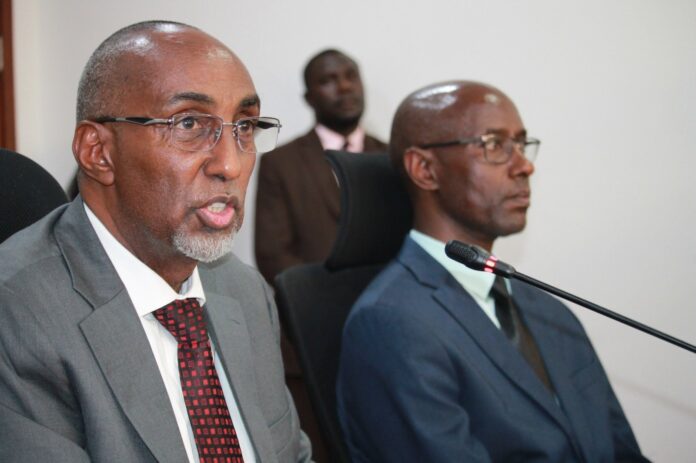
During his presentation, EACC Chief Executive Officer, Abdi A. Mohammud briefed the Committee on the Commission’s mandate and highlighted key constitutional provisions that complicate efforts to bar individuals with integrity violations from contesting elections.

He explained that Articles 99(2)(h) and 193(2)(g) of the Constitution of Kenya 2010 provide grounds for disqualification of candidates seeking election as Members of Parliament and Members of County Assembly if they are found to have misused or abused public office or violated Chapter Six.

However, Articles 99(3) and 193(3) of the Constitution, alongside Section 24(3) of the Elections Act 2011, provide an exception to such disqualification where an individual has not exhausted all avenues of appeal or review against the decision.

According to Mohammud, these provisions have become the “biggest hindrance” in enforcing ethical and integrity requirements for candidates.

“They allow individuals who have been convicted or found to have violated the Constitution to remain eligible for clearance as long as they demonstrate that an appeal or review is pending,” he said.

The CEO noted that such provisions not only enable candidates with integrity concerns to contest elections, but also allow public officials who have been found culpable to remain in office while their appeals remain unresolved.

To address the challenge, the Commission recommended amendments to the constitutional provisions so that individuals remain disqualified from elective office until their conviction or decision has been successfully overturned on appeal or review.

He further warned that some individuals exploit the current provisions by filing appeals that remain pending indefinitely, effectively circumventing integrity enforcement mechanisms.

Members of the Committee questioned why many corruption-related cases take long to conclude and raised concerns about enforcement tactics used by investigators.

Lawmakers however took the Commission to task to explain why some operations, including raids, are often conducted late at night and widely publicized, sometimes only for suspects to later be cleared without public apologies.

In response, Mr. Mohammud told the Committee that delays in prosecution are largely due to institutional limitations, including the Commission’s lack of direct prosecutorial powers.

He called on Parliament to consider legislative reforms that would grant the EACC authority to prosecute corruption cases directly.

“Most investigations conducted by the commission are forwarded to the Office of the Director of Public Prosecutions (ODPP), where they sometimes stall, he stated.

“The DPP has extensive discretion to open or close cases, which can sometimes limit the Commission’s ability to see investigations through to prosecution,” Mr. Mohammud explained.

The Committee also raised concerns about the timelines for integrity vetting of electoral candidates.

Mr. Mohammud further informed lawmakers that the law does not set clear statutory timelines for the Independent Electoral and Boundaries Commission (IEBC) to submit candidate details to the EACC for integrity verification, nor does it prescribe deadlines for the commission to return its vetting report.

He said that during general elections, the Commission often receives a large number of candidates for vetting within a period of less than three weeks, making thorough investigations difficult.

However, Committee Member Hon. Wamaua asked why the Commission was not keen to seek the Committee’s support to establishing clear timelines for candidate vetting ahead of the next elections.

Lawmakers also questioned why public servants are increasingly seen engaging in early political campaigns. Hon. Mukunji sought clarification on whether such activities violate constitutional requirements on political neutrality, and if there are any on going investigations on public officers breaching the law.

In response, Hon. Mohammud explained that the Constitution allows certain senior officials, including Cabinet Secretaries and County Executive Committee Members, to engage in politics.

“However, the exemption does not extend to Principal Secretaries, Chief Officers, and other public sector employees, who are required to maintain political neutrality”, he observed.

In his closing remarks, Mr. Mohammud reaffirmed the Commission’s commitment to working with Parliament and other institutions to strengthen ethical leadership and accountability.

“The Commission remains committed to working closely with Parliament and other stakeholders to promote ethical leadership, strengthen accountability frameworks, and safeguard the integrity of Kenya’s electoral processes,” he said.

Despite these progressive deliberations, several concerns remained unresolved. Chairman Hon. Kitur noted that the Committee would hold follow-up engagements with the Commission to address outstanding issues.

He also thanked the EACC for its continued collaboration with Parliament in advancing the fight against corruption and promoting ethics and integrity in public service.

By Anthony Solly

Osula stunner sinks Man Utd – 12 years after winning skills contest

Followers of Manchester United may have been familiar with William Osula’s name long before his stunning winner for Newcastle United in the Premier League on Wednesday.

In 2014 Osula – then aged 11 – won the Manchester United Soccer Schools World Skills Final.

United published a social media post with a picture of Osula being presented with a prize on the Old Trafford pitch by club legends Bryan Robson and Gary Pallister.

Manchester United post on X/Twitter from 2014 congratulating William Osula for winning a skills contest

Unsurprisingly, that post has resurfaced into the wider consciousness in the aftermath of Osula’s superb late goal that secured a 2-1 win for Newcastle against United.

Born in Copenhagen, he joined Sheffield United’s youth set-up in 2018 and has played for Denmark Under-21s.

Now 22, Osula has been predominantly used as a substitute by Newcastle since his move to St James’ Park from the Blades in the summer of 2024.

His goal on Wednesday was his third in 30 Premier League appearances for Newcastle, although 29 of those outings have been from the bench.

Ethiopia experiments with ‘smart’ police stations that have no officers

Computer tablet screens glow inside a row of partitioned booths at a new-style Ethiopian police station.

There is no commotion. There is no front desk, no bench of anxiously waiting civilians, no officer calling out names.

It is a pilot project of what is being called a “smart” – or unmanned – police station in the Bole district of the capital, Addis Ababa, is the latest chapter in Ethiopia’s bid to catch up with the digital revolution.

A large monitor on the wall cycles through welcome messages as well as images of Prime Minister Abiy Ahmed.

But at the moment there are uniformed officers standing by to demonstrate how the system works, which makes it feel more like a tech showroom.

Recently opened, the staff “are here to help people get used to it”, the police’s head of technology expansion department Cdr Demissie Yilma tells the BBC.

Inside a booth, he taps a screen and goes through the steps to make a report.

Demissie selects the type of incident – a crime, a traffic report or a general concern – enters the details and presses a button to submit the comment.

Then, an officer – who is a real person in a remote location rather than a chatbot – pops up on the screen and begins to ask questions and take down information.

“If there is a problem, officers respond immediately and patrol the area mentioned by the reporter,” Demissie says.

In its first week last month, the smart police station (SPS) received just three reports – a lost passport, a financial fraud case and a routine complaint.

But Demissie believes the number of reports will grow as locals become more aware of it.

“The future police service should be near the citizens,” he says.

The use of a computer tablet to communicate with officials may mean less human-to-human contact but the authorities believe that the SPS could increase access to the police in places where there may not be enough personnel to man a fully fledged station.

At the project’s launch on 9 February, the prime minister was quoted in state media as saying that it was aimed at making “law enforcement institutions competent and competitive” and he framed it as part of a wider digital reform drive.

A screen on a computer tablet showing the smart police station portal.
Users of the smart police station enter details on a tablet before a real person appears on the screen

The smart police station is part of a broader move to change how citizens interact with the state.

The national strategy launched last year – known as Digital Ethiopia 2030 – is the government’s blueprint for digitising public services, from identity systems and payments to courts and public administration.

The proportion of Ethiopians who have access to the internet remains quite low, meaning that the country has lagged behind others on the continent in terms of digital transformation.

Also, conflict and political upheavals in recent years have led to internet blackouts.

But as the telecoms sector has opened up, the country is embracing mobile phone digital payments in birr, the local currency.

The government has also introduced a national digital ID system and put several government services online.

Supporters of the moves argue that these changes are long overdue in a country with rapid urban growth and a young population.

Birhan Nega Cheru, a senior software engineer in Addis Ababa, is pleased with the shift.

“When they work well, they reduce paperwork and visits to offices,” he tells the BBC.

But he also recognises security and privacy issues and the dangers that those “who are not digitally literate can easily be scammed”.

“Urban users, younger people, businesses, those with smartphones and skills, benefit most,” the software engineer says.

“Older people, rural communities and low-income groups are at risk of being left out.”

And the numbers support his assertions.

In a report last year, the UN’s educational organisation, Unesco, found that 79% of its citizens were not connected to the internet.

But Zelalem Gizachew, a technology policy analyst, argues that the government’s strategy has been chipping away at the digital divide.

“Digital literacy remains a challenge,” he says. “That is why the Digital Ethiopia 2030 strategy puts emphasis on training and skills, not just technology.”

He points to measurable changes over the past five years.

“Digital payments have boomed with trillions of birr now moving through electronic transactions. Broadband access has expanded sharply, and more than 130 government services have been digitised.

“These are foundational investments,” Zelalem says. “You cannot modernise public services without infrastructure, policy and skills.”

For now, the smart police station remains a pilot.

It is in a controlled environment where officers guide users through a system which is still finding its footing. Traditional stations continue to operate, and most citizens still rely on in-person reporting.

Whether the model expands will depend less on how sleek the technology looks, and more on whether people choose to use it when no-one is there to explain the screens.

In that sense, the quiet room in Bole is not a finished product. It is an experiment, and a small window into how Ethiopia’s broader digital ambitions may play out in everyday life.

Kajiado County Assembly Committee Reviews Fire and Emergency Response in Kitengela Municipality

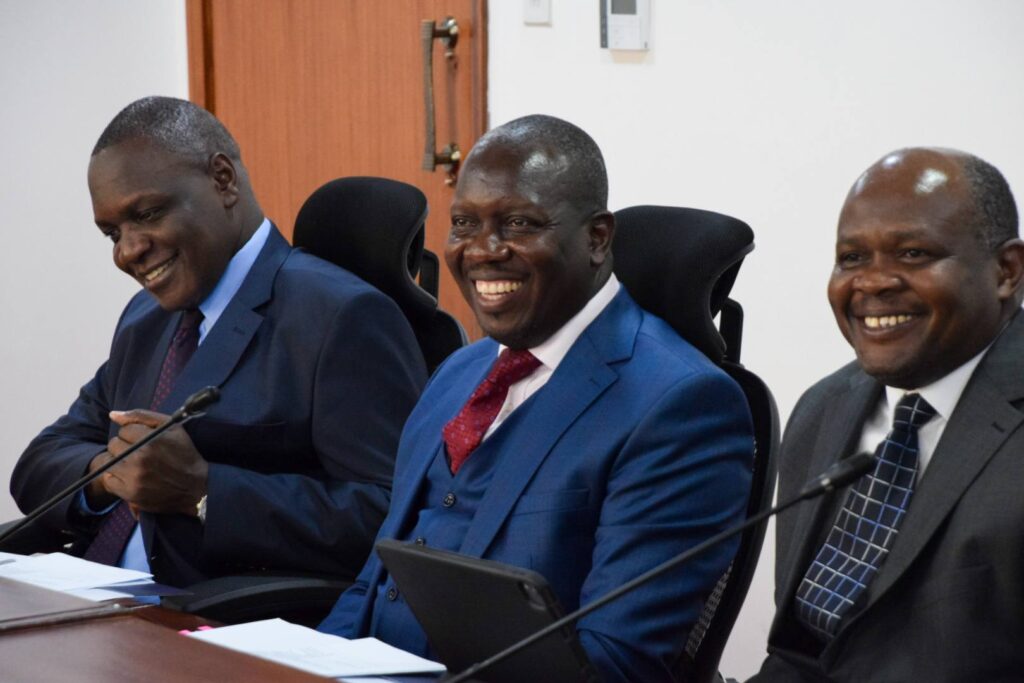
The County Assembly Sectoral Committee on Roads, Transport and Energy today held an engagement with the Municipal Manager of Kitengela and officers from the Fire Department to assess the status of fire and emergency response services in the rapidly growing cosmopolitan town.

During the meeting, the Municipal Manager informed the Committee that despite existing challenges, the municipality has been responding to fire and flooding emergencies within the town and currently operates one functional fire engine.

However, the Committee noted several operational concerns affecting service delivery. These include the transfer of fire officers to other departments without formal procedures, which has significantly reduced the workforce at the fire station from an initial 18 officers to the current 7.

Members also emphasized the urgent need for capacity building and specialized training to strengthen the preparedness of the remaining personnel.

The Committee further observed that although emergency response services have been devolved to municipalities, a substantial portion of the resources remains centralized at the departmental level, posing challenges to effective operations within the municipality.

Additionally, officers raised concerns over unpaid allowances despite working long hours under demanding and hazardous conditions. The Committee also noted the lack of adequate protective gear necessary for officers to safely and effectively carry out their duties.

The Committee heads to Loitoktok tomorrow.

By Anthony Solly

Create a free account, or log in.

Gain access to read this content, plus limited free content.

Yes! I would like to receive new content and updates.

Sponsored Ad

Ad 1
Ad 2
Ad 3
Ad 4
Ad 5
Ad 6