Recent reports regarding the incident in Nyamira and similar protests across Kenya highlight growing tension over political mobilization and unfulfilled financial promises:
In Nyamira, youth reportedly set fire to UDA merchandise at Sironga after receiving Ksh 1,200. They claimed they were mobilized with the promise of higher pay to chant the “Tutam” slogan (shorthand for Tutaona Mbele) but felt exploited when the actual cash handed out was less than expected.
The “Tutam” slogan has recently been used by youth groups at rallies, such as the “Linda Mwananchi” event in Busia, where some alleged they were paid by government-aligned actors to disrupt proceedings.
This is part of a broader trend of merchandise-burning protests. In Eldoret, youth burned UDA t-shirts while chanting “Wantam” (One Term) as a sign of dissatisfaction with the current administration.
A similar incident occurred in Mbeere North ahead of a local by-election.Despite these protests, UDA leadership has urged grassroots supporters to wear party colors with “pride” and is moving forward with grassroots elections scheduled for March 28, 2026.
The unrest coincides with local grievances in Nyamira County, where residents have also protested the suspension of World Bank funds due to alleged mismanagement and exclusion from national road projects.
Principal Secretary for Housing and Urban Development Charles Hinga has revealed that he lost 35 kilogrammes in one year following personal guidance from President William Ruto.
The PS described the change as a lesson in discipline and determination.
Hinga recounted that shortly after his appointment, the President encouraged him to address his weight.
“When you appointed me as your principal secretary, you told me you didn’t doubt my capacity to work, but you said there was a small problem that needed to be fixed. You said I have a lot of weight and that I should lose it. I thought you were joking,” he said.
At the time, Hinga weighed 121 kilograms and said social media users would often tease him during public interactions.
“One year ago, I was 121 kilogrammes, and when I was interacting with Kenyans on social media, and I gave them good points, and they had no comeback, they used to tell me ‘unfat.’ I’m delighted that I am 35 kgs lighter, and those who doubt you when you say that you are going to achieve something must not take you for granted,” he said.
Hinga said his weight-loss journey coincides with the government’s push to transform Nairobi.
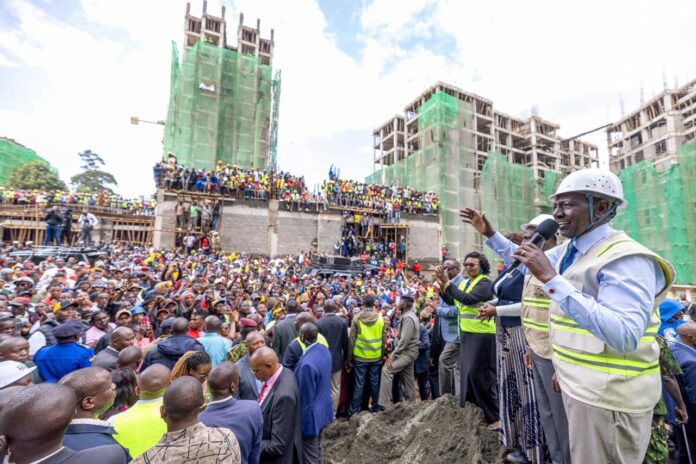
During a recent visit to Westlands Constituency, he highlighted ongoing projects, including the construction of 314 classrooms and efforts to clean up the capital city’s roads and public spaces.
“A month ago you told us that you were ashamed to be the President of a capital city full of rubbish and potholes, and you told us that you were going to fix it, the same way you fixed me in one year, this time you told us that in six months you are going to fix Nairobi, and we don’t take it lightly,” he added.
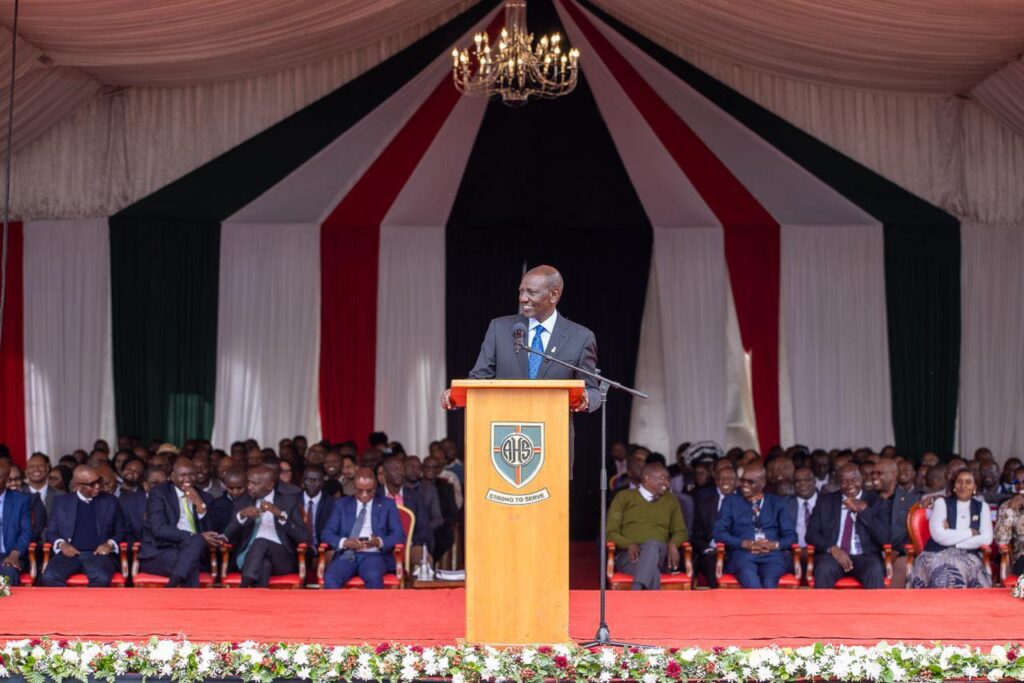
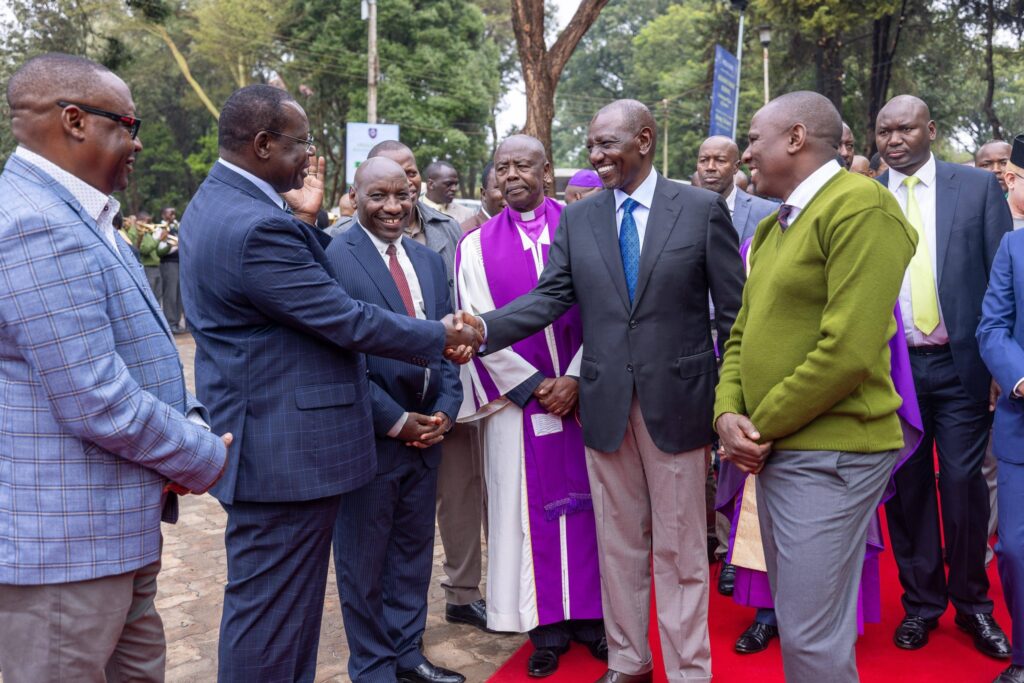
He spoke on Sunday when he joined President Ruto in celebrating 100 years of Alliance High School, imparting knowledge, discipline, hard work, and excellence.
The President said he had the opportunity to interact and work with the school’s alumni and can attest that they are among the finest in the country.
“We will keep supporting the institution to uphold its legacy, investing Sh550 million, including Sh60 million for 40 classrooms, Sh60 million for a sports academy, and Sh200 million to improve the road network around the school,” the President said.
At the neighbouring Alliance Girls School, Ruto said the government has also invested Sh155 million for a 640-student dormitory and Sh40 million for 24 classrooms.
“Congratulations, Alliance High School, on your centenary celebrations; may Strong To Serve continue to be your rallying call,” he said.
President William Ruto on Sunday expressed confidence that the country is on the path to achieving first-world status, insisting Kenya has the potential needed to compete with developed nations.
Speaking during centenary celebrations at Alliance High School in Kiambu county, Ruto reiterated his administration’s commitment to moving the country to a first-world status.
The President said he has held talks with a number of first-world countries and that he’s convinced Kenya is moving in the right direction.
“There is absolutely no reason why Kenya cannot be as good as the countries in the first-world status,” he said.
“I have had discussions with the Prime Minister of Malaysia, Prime Minister of Singapore and the President of South Korea, Kenya has what it takes to move to the next level.”
He called on Kenyans to back the government’s efforts in transforming the country. “Dear Kenyans, we can do it, and we must do it.”
Ruto said his administration is focused on strengthening key sectors of the economy while addressing long-standing gaps in the education system.
He said reforms introduced in the education sector are aimed at improving the quality, equipping learners with practical skills and aligning training with the needs of the modern job market.
“We will continue knowing that education is a right of every Kenyan and not a privilege for the children of a few.Today, we have substantially solved the challenges we had in our education system.”
Ruto highlighted the recruitment of 100,000 teachers, a new university funding model and an extra 23,000 classrooms across the country as some of the interventions that have saved the sector.
During the event, Ruto announced a Sh550 million allocation to support projects and various programmes at Alliance High School.
These included an additional Sh155 million dormitory, dining hall (Sh88 million), Sh60 million for 40 new classrooms and a sports academy at a cost of Sh100 million.
The President also extended a Sh155 million dormitory to the neighbouring Alliance Girls as well as 24 classrooms at Sh40 million.
The girls’ school will also get an additional Sh100 million to complete the Science Complex, which is at 50 per cent done.
He said the investment is part of the government’s broader plan to improve learning institutions across the country.
The President maintained that strengthening schools will play a critical role in nurturing future leaders and professionals who will drive the country’s economic transformation.
“As we develop the infrastructure, we are doing it because the education of the children of Kenya is central to the transformation of this country,” Ruto stated.
He added that the government will continue investing in education reforms to ensure learners are equipped with skills that match global standards
The President was accompanied by Senate Speaker Amason Kingi, Interior Cabinet Secretary Kipchumba Murkomen, PS Basic Education Julius Bitok, former CS Mose Kuria and National Assembly Majority Leader and area MP Kimani Ichung’wah.
Bitok lauded Ruto for the huge investment in the education sector, something he noted has never happened in the past.
“Today, Sh700 billion budget is going to education, something that has never happened since the beginning of the country,” Bitok said.
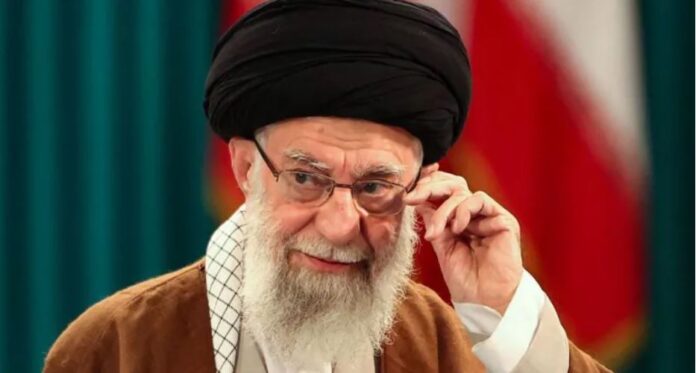
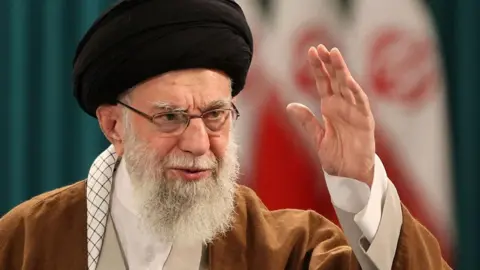
Ayatollah Ali Khamenei has been killed on the first day of massive US and Israeli air strikes on Iran, US President Donald Trump has announced.
The death of the 86-year-old ruler of the past three decades – one of the longest in the world – was later confirmed on Iranian state TV.
Iran has had only two supreme leaders since the 1979 Islamic Revolution.
Khamenei headed an all-powerful office – he was head of state and commander-in-chief of the armed forces, including the elite Revolutionary Guards.
He was not quite a dictator, even though he had put himself in the middle of a complex web of competing power centres, able to veto any matter of public policy and hand pick candidates for public office.
Young Iranians have never experienced life without him in charge.
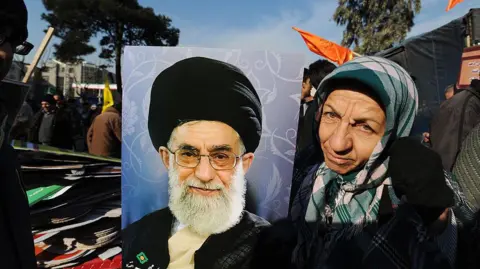
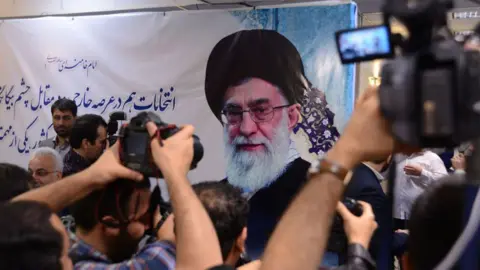
State television covered Khamenei’s every move. His image is plastered on billboards in public spaces and his photograph is ubiquitous in shops.
Abroad, successive Iranian presidents have often hogged the limelight. But, at home, it was Khamenei who pulled the strings.
His death, in such violent circumstances, heralds a new and uncertain future, both in Iran and the wider region.
Many Iranians have known no other Supreme leader
Ali Khamenei was born in the city of Mashhad, in north-eastern Iran, in 1939.
The second of eight children in a religious family, his father was a mid-ranking cleric from the Shia branch of Islam, the dominant sect in Iran.
Khamenei would later romanticise his “poor but pious” childhood, saying he frequently ate nothing but “bread and raisins”.
His education was dominated by the study of the Quran, and he qualified as a cleric by the age of 11. But, in common with many religious leaders of the time, his work was as much political as spiritual.
An effective orator, Khamenei joined the critics of the Shah of Iran – the monarch who was eventually overthrown by the Islamic revolution.
For years, he lived underground or festered in jail. He was arrested six times by the shah’s secret police, suffering torture and internal exile.
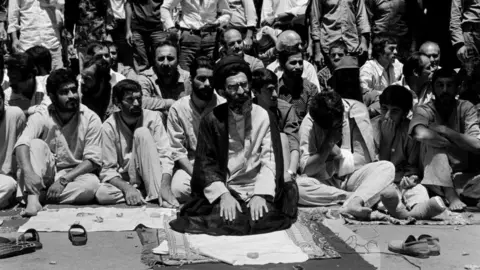
Khamenei at prayer in Tehran after the Iranian revolution in 1979
After the Islamic revolution, its leader Ayatollah Ruhollah Khomeini appointed him Friday prayer leader of the capital, Tehran.
Every week, his political sermons were broadcast throughout the country. It firmly established Khamenei as part of the new leadership of the country.
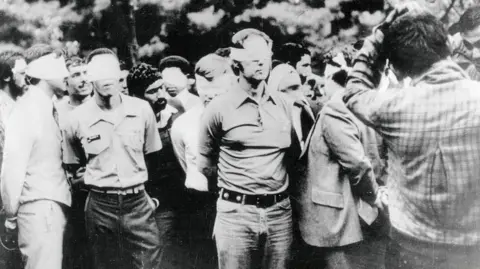
In the tumultuous first months after the revolution, a group of militant university students loyal to Khomeini occupied the US embassy. Dozens of diplomats and embassy staff were taken hostage.
Iran’s revolutionary leaders – including Khamenei – supported the students, who were protesting against America’s decision to give sanctuary to the deposed shah.
The hostage-taking lasted for 444 days.
It helped destroy the Carter administration in the United States and set Iran on the anti-American and anti-Western path that came to define the revolution.
The episode also marked the beginning of decades of international isolation for Iran.
American hostages being paraded by their militant Iranian captors after the US embassy was occupied
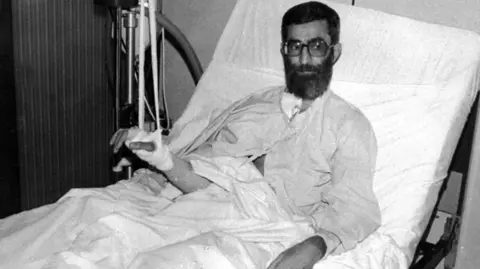
Shortly after the crisis, Khamenei was fortunate to survive an assassination attempt.
In June 1981, a dissident group hid a bomb inside a tape recorder. It exploded as he delivered a lecture.
He was badly injured. His lungs took months to recover, and he permanently lost the use of his right arm.
Later that year, President Mohammad-Ali Rajai was assassinated and Khamenei stood in the ensuing election to succeed him in the largely ceremonial role.
With Khomeini controlling who had the right to stand, the outcome was never in doubt. Khamenei won with 97% of the vote.
His inaugural address set the tone for his presidency, with him condemning “deviation, liberalism, and American-influenced leftists”.
Khamenei recovers from an assassination attempt in 1981
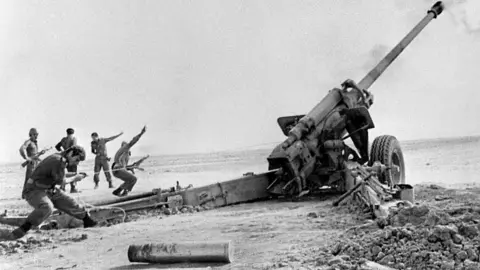
In office, Khamenei became a wartime leader.
Months earlier, the country’s neighbour, Iraq, had invaded. Saddam Hussein, Iraq’s president, feared that Khomeini’s Islamic revolution would spread abroad and undermine his own regime.
It was a vicious and bloody war that lasted eight years, with hundreds of thousands of deaths on both sides.
Khamenei spent months at a time on the front lines, where many of the commanders and soldiers he met and knew were killed.
Iraqi soldiers invaded Iran in 1980
The Iraqi army used chemical weapons against border villages in Iran and bombarded far-flung cities, including the capital, Tehran, with missiles.
Iran, for its part, relied on human waves to break Iraqi lines, made up of devout youngsters, some barely of fighting age. There were huge casualties.
The war solidified Khamenei’s deep distrust of the US and the West – which had backed Saddam Hussein’s invasion.
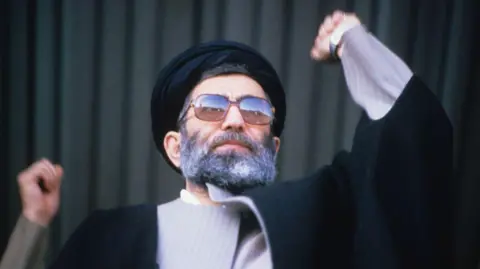
In 1989, Khamenei was selected by the Assembly of Experts, a council of clerics, as the successor to Khomeini, who had died at the age of 86.
The new supreme leader was chosen despite what was seen as a weak record of achievement in religious scholarship.
“I am an individual with many faults and shortcomings and truly a minor seminarian,” he admitted in his first speech in office.
“However, a responsibility has been placed on my shoulders and I will use all my capabilities and all my faith in the almighty in order to be able to bear this heavy responsibility.”
Khamenei became supreme leader after the death of Ayatollah Khomeini in 1989
Lacking both the respect of the clergy and Khomeini’s personal popularity, the new supreme leader moved cautiously to build his own power base.
But, over the next 30 years, Khamenei developed networks of loyalists in every area of the Iranian establishment – including parliament, the judiciary, the police, the media, and the clerical elite.
According to Karim Sadjadpour, a fellow at the Carnegie Endowment for International Peace in Washington, the supreme leader’s power has depended on a “tight-knit cartel of hardline clergymen and nouveau riche Revolutionary Guardsmen”.
Khamenei also encouraged a cult of personality to ensure public devotion, backed up by political repression and the arbitrary arrest of political opponents.
He rarely went abroad and – reportedly – lived frugally in a compound in central Tehran with his wife, six children and many grandchildren.
Ayatollah Khamenei relied on Iran’s security and military apparatus – rather than its religious hierarchy – to cement his power
At home, he crushed opposition.
In 1999, student protests were a moment of peril, but they were put down.
A decade later, a revolt against an allegedly rigged presidential election saw demonstrators pepper-sprayed, beaten, and shot.
In 2019, when spiralling fuel prices resulted in street protests, Khamenei shut down the internet for days to prevent illegal marches. According to Amnesty International, the police then shot protesters dead with machine gun fire.
He did remove his predecessor’s barriers to the education of women. But Khamenei was no believer in gender equality.
Women who campaigned against the wearing of the hijab were arrested, tortured and held in solitary confinement. Those who supported them were also targeted. One human rights lawyer was given 38 years in prison and 148 lashes.
And, in 2022, the one of the biggest challenges to the Islamic revolution followed the death in police custody of Mahsa Amini, a 22-year-old woman who was accused of failing to wear her hijab properly.
Human rights groups said more than 550 people were killed and 20,000 detained by security forces during the protests following her death.
Ayatollah Khamenei photographed in 2024
Abroad, Khamenei has been widely accused of leading a pariah state. After the 11 September 2001 attacks on the US, President George W Bush included Iran as part of his “Axis of Evil” – alongside Iraq and North Korea.
Iran has used Hezbollah – the armed Shia group in Lebanon – as a Khamenei proxy in a semi-permanent conflict with Israel.
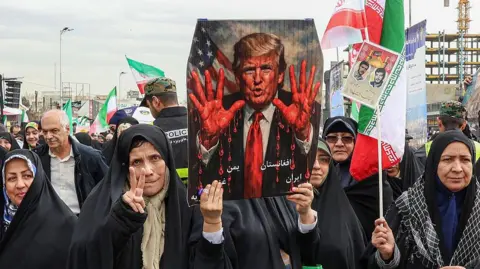
But, although he has bathed his people in a “Death to America” rhetoric, his foreign policy was carefully crafted to be neither accommodation nor direct confrontation with Washington.
The area of greatest friction was nuclear weapons.
Twenty years ago, Khamenei declared they were un-Islamic and issued a fatwa banning their development.
But, under his rule, Israel and the West became convinced that Iran had sought to secretly develop a nuclear weapons capability.
The sanctions imposed by world powers in response helped impoverish a country that was once one of world’s biggest exporters of oil – and high unemployment led to widespread discontent.
Khamenei did not oppose a nuclear deal agreed in 2015, which placed limits on Iran’s nuclear activities in return for sanctions relief, but he expressed doubt that the US would uphold it in the long term.
In 2018, Trump abandoned the nuclear deal and reinstated sanctions on Iran to compel it to negotiate a replacement.
Two years later, the president ordered the assassination in Iraq of Qasem Soleimani – a top Revolutionary Guards general close to the supreme leader – Khamenei swore revenge and aligned more closely with Russia and China.
In June 2025, when Israeli forces attacked Iran, targeting its nuclear programme, ballistic missile arsenal and top military commanders, the country launched barrages of missiles towards Israeli cities.
When the Americans joined the war, striking three key Iranian nuclear facilities, Khamenei vowed never to surrender. But, for the first time in years, he looked weak.
In January 2026, Khamenei’s regime faced a wave of street protests that were sparked by the failure of the Iranian economy. It responded with a brutal crackdown, which human rights groups said left at least 6,488 protesters dead and another 53,700 in detention.
In the following weeks, Trump ordered a US military build-up in the region and threatened to strike Iran if it did not agree a new deal on its nuclear programme and give up what he called its “sinister nuclear ambitions”.
But Khamenei refused to abandon uranium enrichment.
“The Americans should know that if they start a war, this time it will be a regional war,” he warned at the end of January 2026.
Khamenei kept a firm and often brutal hand on the levers of power in Iran.
At times, the supreme leader presented himself as almost above politics – looking down on the squabbling between Iran’s reformists and conservatives. But rarely did Ayatollah Khamenei allow dissent to grow too loud or policies he disapproved off to develop.
Life in Iran is currently governed by the laws he laid down. Few can say safely predict what changes may come now that Khamenei’s rule has ended.
Thousands of flights have been delayed or cancelled in the biggest disruption to global air transport since the Covid pandemic as airlines suspend services to the Middle East following the US and Israeli attacks on Iran.
Iran, Iraq, Israel, Syria, Kuwait and the United Arab Emirates all announced at least partial closures of their skies after Saturday’s strikes and Iran launching missiles at capital cities around the wealthy Gulf region.
Major carriers from the Middle East, Europe, Asia-Pacific and the United States announced widespread cancellations, leaving thousands of passengers stranded.
Notable airlines that cancelled services included Emirates, Etihad, Air France, British Airways, Air India, Turkish Airlines, and Lufthansa.
According to aviation analytics company Cirium, of around 4,218 flights scheduled to land in Middle Eastern countries on Saturday, 966 (22.9 percent) were cancelled, with the figure rising above 1,800 if also including outbound flights.
For Sunday, 716 flights out of 4,329 scheduled to the Middle East have been cancelled, Cirium said.
Flight tracking website FlightAware meanwhile said more than 19,000 flights had been delayed globally and more than 2,600 were cancelled as of 0230 GMT Sunday.
– Airspace closures –
Iran swiftly closed its airspace as the strikes began “until further notice”, said the spokesman of Iran’s Civil Aviation Organisation, quoted by the Tasnim news agency.
Israel also closed its airspace to civilian flights, Transport Minister Miri Regev announced.
Qatar’s civil aviation authority said it had temporarily closed the Gulf state’s airspace.
Iraq shut down airspace, state media said.
The United Arab Emirates said it was closing its skies “partially and temporarily”.
Syria closed part of its airspace in the south along the border with Israel for 12 hours, the Civil Aviation Authority said.
Jordan’s air force was conducting drills to “defend the kingdom’s skies”, its military said.
Kuwait closed its airspace.
– Middle East and North Africa airlines –
Gulf carriers Emirates and Etihad cancelled 38 percent and 30 percent of their flights respectively, Cirium said.
Qatar Airways suspended all flights from Doha. It cancelled 41 percent of total flights, according to Cirium.
Syria Air, the country’s national carrier, cancelled all flights until further notice.
Egypt’s national airline, EgyptAir, announced the suspension of its flights to cities across the Middle East, including Dubai, Doha, Manama, Abu Dhabi, Beirut and Baghdad among others.
– European airlines –
Russia’s air transport authority Rosaviatsia said all commercial flights to Israel and Iran were cancelled “until further notice”.
Turkish Airlines cancelled flights to Lebanon, Syria, Iraq, Iran, and Jordan until March 2.
Air France cancelled its Dubai, Riyadh and Beirut flights for Saturday, and flights to Tel Aviv until Sunday.
British Airways said it was not flying to Tel Aviv and Bahrain until March 4, and cancelled flights to the Jordanian capital Amman on Saturday.
Swiss International Air Lines suspended flights to and from Tel Aviv until March 7, and cancelled flights from Zurich to Dubai scheduled for Saturday and Sunday.
Germany’s Lufthansa, which comprises Swiss and ITA Airways, cancelled its flights to and from Tel Aviv, Beirut, Amman, Erbil and Tehran until March 7.
The airline group and its subsidiaries suspended flights to and from Dubai and Abu Dhabi until Sunday.
– North America airlines –
Delta Air Lines suspended New York–Tel Aviv flights until Sunday.
American Airlines “temporarily suspended” Doha-Philadelphia flights.
United flights to Tel Aviv are cancelled until Monday, and flights to Dubai until Sunday.
Air Canada said it cancelled flights from Canada to Israel until March 8 and to Dubai until March 3.
– Asia-Pacific airlines –
India’s two largest private carriers IndiGo and Air India suspended flights to all destinations in the Middle East.
Pakistan International Airlines, the flag carrier of the country that borders Iran, said it had suspended flights to the UAE, Bahrain, Doha and Kuwait.
Hong Kong’s Cathay Pacific suspended flights to Dubai and Riyadh.
Garuda Indonesia, Indonesia’s flag carrier, temporarily suspended flights to and from Doha “until further notice”, the company said in a statement Sunday.
Singapore Airlines and Singapore’s Scoot cancelled six flight routes in the region until the end of Sunday, local media reported.
Philippine Airlines flights from Manila to Doha, Riyadh to Manila, and Dubai to Manila were cancelled on Saturday, as well as one Doha-Manila flight on Sunday.
Other major airlines including Australia’s Qantas and Japan’s All Nippon Airways did not announce any flight cancellations.
– Africa airlines –
Ethiopian Airlines cancelled its flights to Amman, Tel Aviv, Dammam, and Beirut.
Kenya Airways has suspended its flights to Dubai and Sharjah until further notice
China said Sunday it “strongly condemns” the United States and Israel’s killing of Iran’s supreme leader Ayatollah Ali Khamenei, calling again for a halt to military actions.
The killing was “a serious violation of Iran’s sovereignty and security, a trampling on the aims and principles of the UN Charter and the basic norms of international relations”, Beijing’s foreign ministry said in a statement.
“China firmly opposes and strongly condemns this,” it added, calling for an “immediate halting of military operations”.
The condemnation came just after Chinese state media reported a phone call between Beijing’s top diplomat Wang Yi and Russian counterpart Sergei Lavrov.
During the conversation, which state news agency Xinhua said was initiated by Lavrov, Wang said the “blatant killing of a sovereign leader and the incitement of regime change” by the United States and Israel was “unacceptable”.
China is “highly concerned” that the “situation in the Middle East could be pushed into a dangerous abyss”, Wang told Lavrov, according to Xinhua.
“The international community must send a definite and clear message opposing the world’s regression to the law of the jungle,” Wang said.
Russian President Vladimir Putin on Sunday called the killing “a cynical violation of all norms of human morality and international law”.
At least one Chinese citizen has been “injured” in the strikes and “some temporary travellers are stranded”, Beijing’s foreign ministry said late Sunday.
The statement did not provide details on the number, physical condition or location of affected Chinese nationals in the region.
Beijing has in recent days urged its citizens in Iran to evacuate from the country “as soon as possible”.
Reiterating those calls Sunday, the foreign ministry said Chinese passport holders could leave Iran on visa-free land routes into Azerbaijan, Armenia and Turkey.
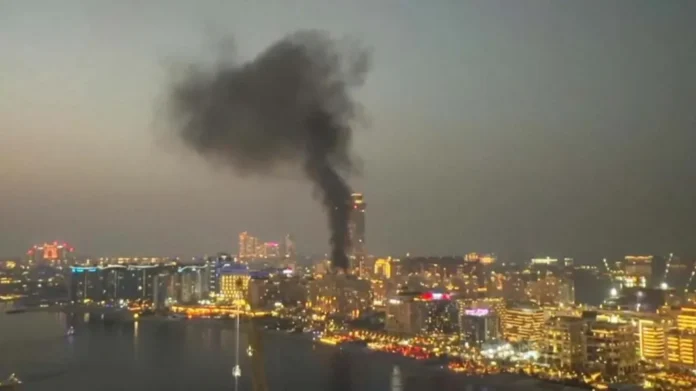
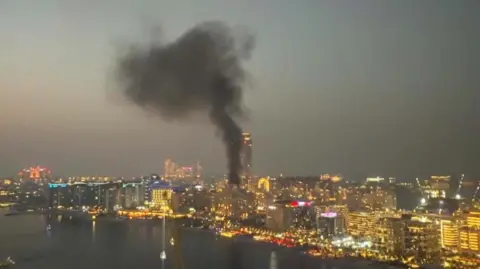
BBC -For two days now, Dubai residents have mainly stayed indoors as their city is hit by missiles and drones – part of an attack launched by Iran across the region in response to the latest massive and ongoing attack against it by US and Israel.
Luxury hotels and its main airport – the world’s busiest by passenger traffic – were damaged.
The media has spoken to people who live in the United Arab Emirates (UAE), as well as those on holiday, who describe situations far from the usual flow of daily life.
Resident Becky Williams said she saw about 15 missiles “launched from behind my house yesterday”, referring to missiles fired by UAE authorities to intercept incoming Iranian projectiles. “You can hear the interceptions happening in the air.”
But she added that she and her family were remaining calm and trusted the UAE military to defend its airspace, saying she believed it would “all blow over soon”.
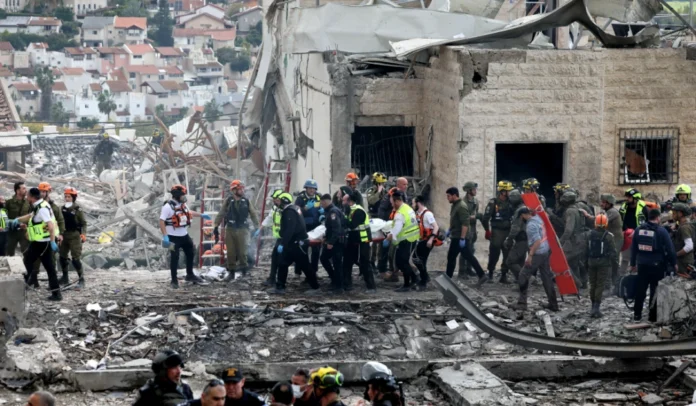
Iran’s attacks in retaliation for the US-Israeli strikes continued into Sunday.
On the Palm Jumeirah, Dubai’s luxury man-made archipelago, the five-star Fairmont The Palm hotel was struck by a large explosion.
Debris from an intercepted drone resulted in a “minor fire” on the outer facade of the five-star Burj Al Arab hotel, authorities have said.
Another Dubai resident told the BBC: “What we’ve lived through over the past 24 hours is a fraction of what others have been living through in areas of conflict so it puts things in perspective.”
Meanwhile, Satya Jaganathan’s weekend plans for a hike on Sunday were foiled by the events.
“And here we are, sheltering in place,” she said.
The 35-year-old said her sister’s family and pets had to seek shelter in their apartment because they lived close to the Jebel Ali port, where there was “a lot of debris falling”.
Smoke rising into the sky after Iranian strikes
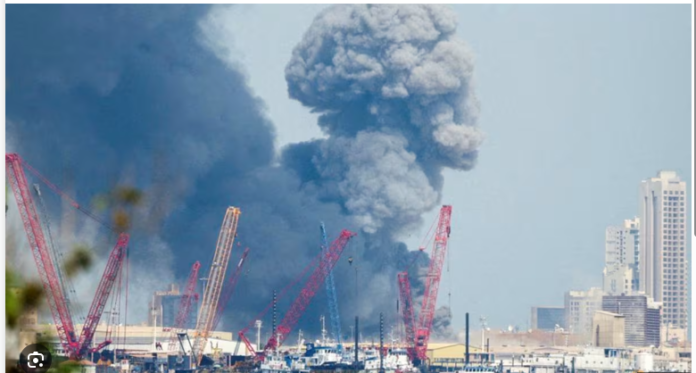
On Saturday, officials said debris from an “aerial interception” caused a fire in a berth at the port, which is the world’s ninth busiest.
“It’s still relatively calm as there are only loud noises every few hours, but it is eerie because this is not the Dubai we are used to,” Jaganathan explained.
Dubai International Airport was also damaged in what authorities have called an “incident”.
Video shows debris across floor of damaged Dubai airport
Thousands of flights have been grounded to and from the Middle East, in one of the most serious disruptions to global travel since the Covid-19 pandemic.
Judy Trotter was supposed to return to London from her holiday on Saturday, but was told all flights were cancelled when she arrived at the airport.
“I’ve met people who were very upset about their travel plans, there were thousands of people in the airport, I met people who told me they were missing funerals,” she said.
She added a lot of passengers “were in transit, just passing through” and are now stuck.
Trotter was one of around 1,000 stranded passengers sent to stay at a hotel, where they were warned to stay away from the windows.
“There is a lot of glass in the hotel which is worrying,” she said, adding, they have heard “several missiles throughout the day”.
Another British holidaymaker – Kate Fischer from Buckinghamshire – said she and her family are “very frightened.”
On Saturday evening, she and her partner packed “a grab bag” as the children slept, she said, adding that she “doused bathrobes and towels” in water in case they needed to “escape during the night in fire conditions”.
Sunday, she said, was a strange day.
“It’s a very surreal experience being surrounded by everyone trying to enjoy their holiday and trying to entertain their children whilst we can see visible smoke from nearby areas that have been hit by drones or missiles.”
Strictly Come Dancing competitor Vicky Pattison was among those who had to take shelter in Dubai, which is also popular destination for the rich and famous.
Pattison had been enjoying a break with her husband, Ercan Ramada, but their outbound flight to Australia was cancelled.
Writing on her Instagram, the former I’m A Celebrity… Get Me Out Of Here winner said: “We’re thinking of everyone who is feeling unsettled and unsafe right now.”
Arsenal won their set-piece battle with 10-man Chelsea as Jurrien Timber sealed the Premier League leaders’ crucial 2-1 victory over their London rivals on Sunday.
Mikel Arteta’s side struck twice from corners and also conceded from the same route in a match that underlined the increasing importance of set-pieces in the Premier League.
William Saliba’s first goal since December 2024 put Arsenal ahead in the first half at the Emirates Stadium.
Piero Hincapie’s own goal drew Chelsea level from one of Reece James’ deadly corners just before the break.
But Timber won a priceless three points for Arsenal with his second-half header before Chelsea winger Pedro Neto was sent off for a second booking.
The Gunners’ second successive league win reestablished their five-point lead over second-placed Manchester City, who have a game in hand and had closed the gap with a 1-0 victory at Leeds on Saturday.
After enduring scathing criticism of their mentality during a recent wobble that breathed new life into the title race, Arsenal have got back on track just in time as they followed last weekend’s 4-1 rout of Tottenham with a far more tense triumph.
Arsenal travel to Brighton on Wednesday with nine games left in their bid to win a first English title since 2004.
The Gunners, through to the League Cup final, the Champions League last 16 and the FA Cup fifth round, have just one top-flight match left against sides currently in the top six — a potentially decisive trip to Manchester City on April 18.
Chelsea’s third consecutive game without a win was a blow to their bid to qualify for next season’s Champions League.
They dropped to sixth place after losing to Arsenal for the third time in Liam Rosenior’s brief reign.
Robert Sanchez nearly gifted Arsenal an early goal when the Chelsea goalkeeper stumbled under pressure from Viktor Gyokeres, but he managed a last-ditch clearance to avert the danger.
Kenya has issued a travel and safety advisory to citizens living in or transiting through the Middle East following an escalation in the region after reported attacks on Iran and subsequent retaliatory strikes.
In a statement dated Sunday, March 1, 2026, the Ministry of Foreign and Diaspora Affairs said the advisory follows attacks by Israeli and US forces on Iran on Saturday morning and retaliatory attacks by Iran on Israel and US bases in some Gulf states.
The ministry urged Kenyans in Iran, Israel, Qatar, the UAE, Bahrain, Kuwait, Saudi Arabia, Jordan, Iraq and surrounding areas to exercise extreme caution, avoid non-essential movement—especially near military facilities and crowded public spaces—and follow guidance from local security authorities.
Kenyans were also advised to remain alert, monitor official communication from host governments, and be aware of possible flight and airspace disruptions.
The ministry further asked Kenyans who have not registered with their nearest Kenyan mission to do so immediately to enable timely updates and emergency assistance.
Prime Cabinet Secretary and Foreign Affairs CS Musalia Mudavadi said the government is monitoring the situation and remains in contact with Kenya’s diplomatic missions in the region, adding that further updates will be issued through official platforms.
Benjamin Sesko stretched his hot streak with the winning goal as Manchester United beat Crystal Palace 2-1 to go third in the Premier League, while Tottenham failed to dispel relegation fears after defeat at Fulham.
Sesko was handed his first start in seven games since Michael Carrick took charge at Old Trafford and rewarded his boss with another vital goal to edge United closer to a return to the Champions League.
Palace had taken an early lead at Old Trafford when Maxence Lacroix outmuscled Leny Yoro to guide in a header from Brennan Johnson’s corner.
But United hit back to remain unbeaten under Carrick and take their tally to 19 points from a possible 21.
Sesko was handed his first start in seven games since Michael Carrick took charge at Old Trafford and rewarded his boss with another vital goal to edge United closer to a return to the Champions League.Bruno Fernandes confidently stroked the resulting spot-kick past former team-mate Dean Henderson.
Fernandes was then the creator for the second as his curling cross was powered in by Sesko.
The Slovenian has now scored seven times in his last eight appearances to quieten critics of his £74 million ($100 million) price tag after a slow start to his career in England.
“It feels like a big result,” said Fernandes. “We were behind and had to show some character.”
No Tudor turnaround for Tottenham
Tottenham remain perilously poised just four points above the relegation zone as interim boss Igor Tudor again failed to halt their alarming slide after a 2-1 defeat at Craven Cottage.
“We were not good, (we) lacked everything attacking and defending,” said Tudor after two defeats in his two games in charge.
“There are problems here, big problems. We need to stay calm, believe in what we are doing in training, and get out (of trouble), staying all together.”
Harry Wilson and Alex Iwobi gave Fulham a deserved half-time lead as they moved up to ninth and back into contention for European football next season.
Richarlison headed in a late consolation for Tottenham, but they remain the only Premier League side without a win in 2026.
The one crumb of comfort for Spurs was a defeat for relegation rivals Nottingham Forest, 2-1 at Brighton.
All three goals arrived in the first 15 minutes as Diego Gomez and Danny Welbeck netted for the Seagulls either side of Morgan Gibbs-White’s reply.
Forest sit two points above the drop zone ahead of a daunting trip to Manchester City on Wednesday.
The pressure is on Arsenal leaders in Sunday’s showpiece match at home to Chelsea later.
The Gunners’ lead at the top of the table was reduced to two points after City battled to a 1-0 win at Leeds on Saturday.
Chelsea are also in need of the points after dropping to sixth in the table, with only the top five set to qualify for next season’s Champions League.