Sponsored Ad

Ad 1
Ad 2
Ad 3
Ad 4
Ad 5
Ad 6
28.2 C
Kenya
Wednesday, May 6, 2026
Home Blog Page 333

Israel Intercepts Iranian Missiles Amid Heavy Bombardment in the North

DUBAI, United Arab Emirates

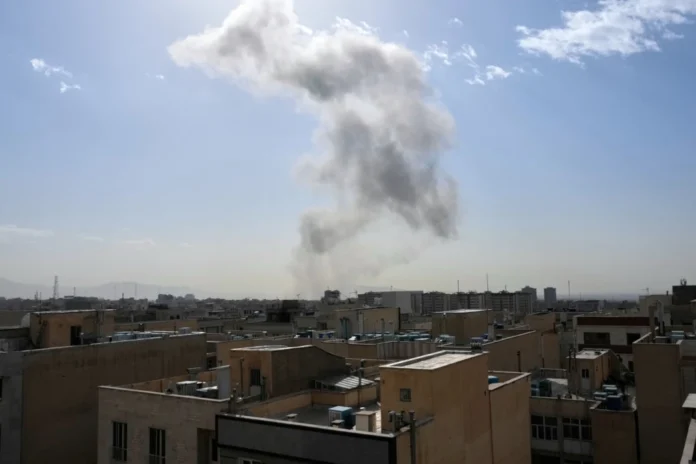
Explosions echoed across northern Israel on Saturday as the country’s air defense systems moved to intercept a barrage of incoming Iranian missiles. The attack comes hours after the U.S. and Israel launched a joint military operation targeting sites inside Iran.

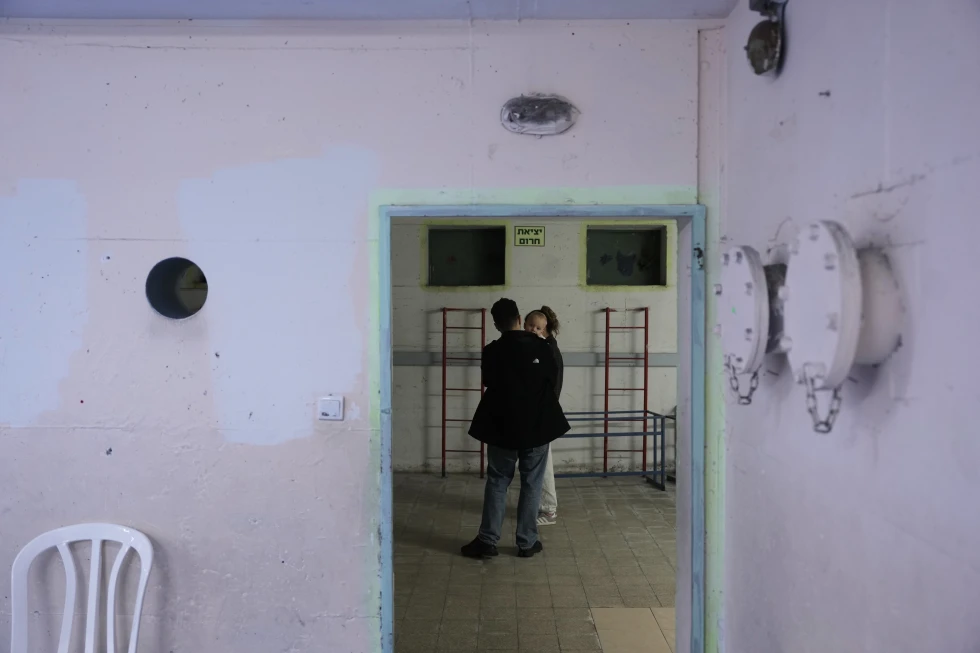
The Israeli military confirmed it had activated its aerial defense arrays to counter the Iranian fire. Sirens wailed in multiple communities, and witnesses reported hearing thunderous blasts as interceptors engaged targets in the sky.

There was no immediate information on casualties or damage resulting from the ongoing exchange.

The Iranian missile launch is the latest escalation in a rapidly deteriorating situation, following a significant American-Israeli strike on Iranian soil earlier in the day.

Earlier Developments: Strikes Inside Iran

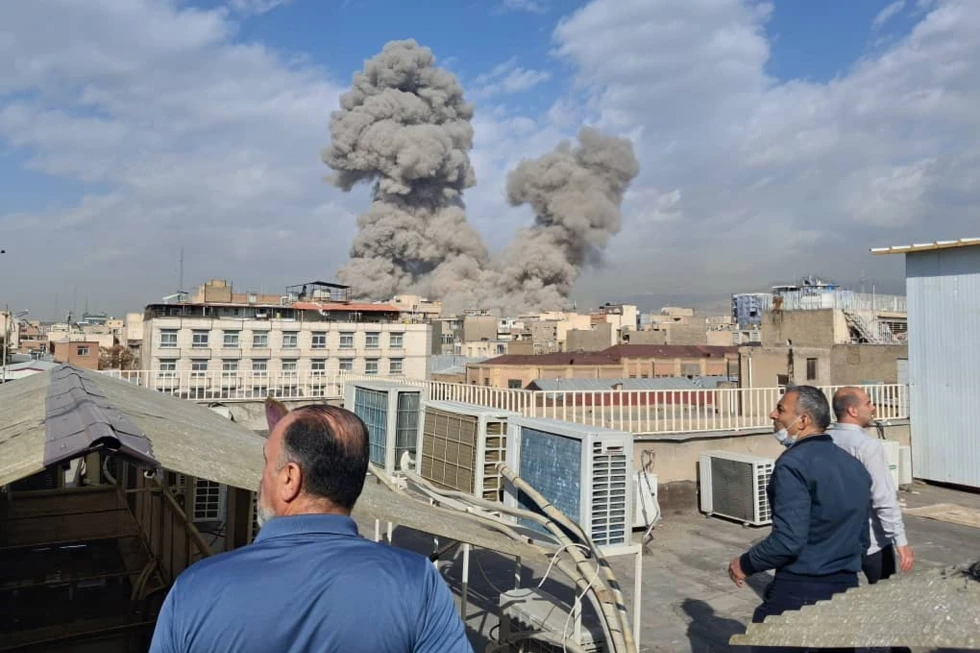
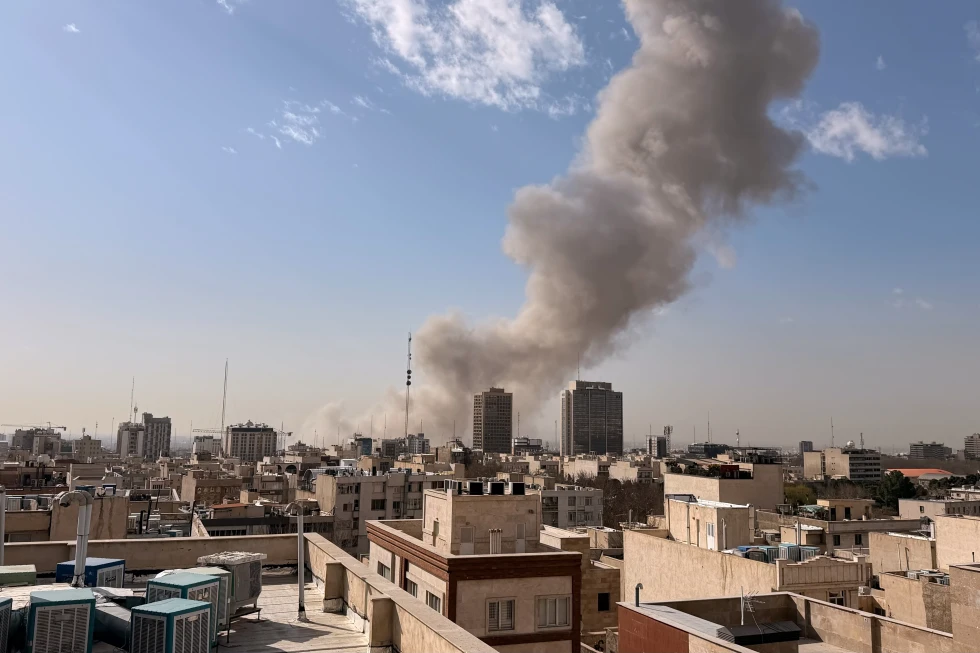
The initial assault targeted the heart of Iran’s leadership. Explosions were reported in the vicinity of the offices of Supreme Leader Ayatollah Ali Khamenei in Tehran, according to Iranian media.

State-run outlets confirmed strikes across multiple provinces, with smoke visible rising from the capital.

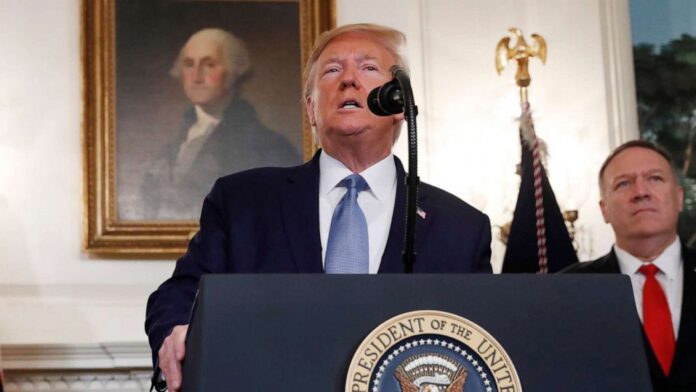
In a video posted to social media, President Donald Trump announced the commencement of what he described as “major combat operations in Iran.”

He alleged that Tehran had continued to advance its nuclear program and was developing long-range missiles capable of reaching U.S. territory.

In a direct appeal to the Iranian populace, the president suggested they should “take over your government — it will be yours to take.”

He also acknowledged the potential for American casualties in the operation, noting, “that often happens in war.”

By James Kisoo

Trump ‘not thrilled’ with Iran after latest talks on nuclear programme

President Trump has said he is not happy with Iran in the wake of the latest talks on its nuclear programme, but said he had not yet decided whether to attack the country.

“I’m not happy with the fact that they’re not willing to give us what we have to have. So I’m not thrilled,” Trump said in his first comments on negotiations in Geneva that broke up on Thursday without a deal.

The US president stressed that he did not want to use military force against Iran, but said sometimes “you have to”.

Concern over the prospect of US strikes against Iran led a number of countries to issue warnings to their citizens in the region on Friday.

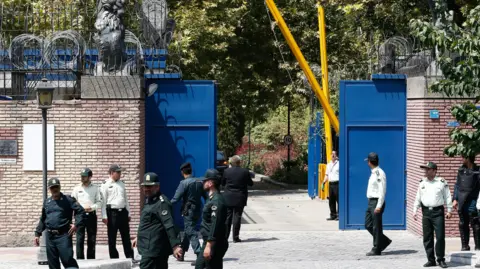
The UK temporarily withdrew staff from its embassy in Tehran and updated its travel guidance to advise against “all but essential travel” to Israel.

Countries including China, India and Canada urgedtheir citizens to leave Iran as soon as possible due to the prospectof hostilities. Germany advised “urgently” against travel to Israel while France reiterated its advice not to do so.

Meanwhile, the US urged its citizens in Iran to leave “immediately”. Itsembassy in Israel also told some non-emergency staff and their families they could leave the country,advising that they may wish to do so “while commercial flights are available”.

Trump has threatened military action against Tehran if it does not reach a deal about its nuclear ambitions.

He has ordered the largest US military build-up in the Middle East since the US-led invasion of Iraq in 2003, while Iran has vowed to respond to an attack with force.

Washington and its allies suspect Iran is moving towards developing a nuclear weapon, which Tehran has always denied. It claims its programme is intended for peaceful, civilian purposes despite having enriched uranium up to near weapons-grade level.

The president told reporters on Friday: “I say no enrichment… I think it’s uncivil.”

It came as Oman’s Foreign Minister Badr Albusaidi, who was mediating the talks, said Tehran had agreed never to stockpile enriched uranium, making “the enrichment argument less relevant”.

“If you cannot stockpile material that is enriched then there is no way you can actually create a bomb,” Albusaidi told CBS News.

EPA British Embassy in Tehran, Iran, August 23rd 2015

He had said on Thursday that US and Iranian officials made “significant progress” in the high-stakes nuclear talks in Geneva, but the chances of a deal that could avert a war remain unclear.

Albusaidi said the two sides planned to resume negotiations “soon” after consultations in their capitals, and technical-level discussions would take place next week in Vienna.

Iran’s Foreign Minister Abbas Araghchi, who led his country’s delegation, said “good progress” had been made but while there had been agreement on some issues, differences remained on others.

He said more negotiations would happen in a less than a week. President Trump’s comments on Friday were the first official reaction from the US.

Meanwhile, the State Department announced US Secretary of State Marco Rubio would travel to Israel on Monday, where he is expected to meet Prime Minister Benjamin Netanyahu and discuss “a range of regional priorities”, including Iran.

Rubio also said on Friday he had designated Iran a “state sponsor of wrongful detention”. It marked the first use of a power created in September under which the US can sanction or take other measures against countries unjustly detaining its citizens.

“We reiterate our call for Americans who are currently in Iran to leave immediately,” he said in his statement announcing the move.

Earlier, US Ambassador to Israel Mike Huckabee advised embassy staff who wished to leave Israel to “do so TODAY”, the New York Times reported.

Hereportedly said in email there was “no need to panic, but for those desiring to leave, it’s important to make plans to depart sooner rather than later”.

A statement on the embassy’s website said they “may wish to consider leaving Israel while commercial flights are available”.

It came days after the US government ordered all non-essential staff to leave its embassy in the Lebanese capital of Beirut, following a security review.

Nasa announces change to its Moon landing plans

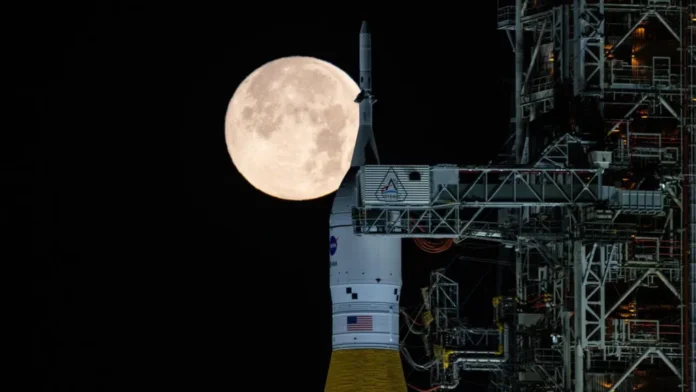
VVC -Nasa is adding an extra mission to its Artemis programme before it attempts to land astronauts on the Moon for the first time in half a century.

The original plan was to fly around the Moon for the Artemis II mission, which is currently scheduled for April, and then attempt a lunar landing with Artemis III in 2028.

Now Artemis III will stay closer to home – a crew will head to low-Earth orbit in 2027 to practice docking with a lunar lander.

Nasa said this additional flight would not slow down its return to the Moon – it is still aiming for 2028 for one or even two lunar landings in what will be Artemis IV and V.

Nasa administrator Jared Isaacman told a media briefing that he was adding an extra step to the Artemis programme because he did not want such long gaps between launches.

He added that the extra flight to low-Earth orbit would help to test the technology before a Moon landing.

The US space agency also provided an update on the Artemis II mission, which will see four astronauts fly around the far side of the Moon and back to Earth.

Nasa was targeting March for the launch, but its plans were delayed after a helium leak was discovered on the Space Launch System (SLS) rocket.

The rocket has now been taken from the launchpad to the Vehicle Assembly Building at the Kennedy Space Center in Florida where it will be repaired.

The earliest launch opportunity is now in April – but Nasa said the exact date would depend on how long the technical work would take.

The new plans are a significant change to Artemis programme.

Isaacman said the current architecture was “not a pathway to success.”

“You don’t go from one uncrewed launch of SLS [Artemis I], wait three years, go around the Moon [Artemis II], wait three years and land on it.”

He said sending the Orion capsule – which is the spacecraft that the astronauts will travel to the Moon in – and a lunar lander into low-Earth orbit first would reduce risks.

“I would certainly much rather have the astronauts testing out the integrated systems of the lander and Orion in low-Earth orbit than on the Moon,” he said.

“It’s also an opportunity for us, maybe, to get our suits up there before the astronauts actually have to wear them on the surface of the Moon … this is all going to help take down risk for a subsequent landing.”

However Nasa’s lunar plans have a major missing part – the lander that will take astronauts to the Moon’s surface has not yet been selected.

Elon Musk’s SpaceX company has a contract to build the lander – which will be flown to the Moon on a SpaceX Starship rocket. But delays to the Starship rocket have led Nasa to ask SpaceX for a new streamlined plan to speed a return to the Moon.

Nasa has also asked rival company Blue Origin – which is owned by Jeff Bezos – to come up with an accelerated plan for a lunar lander.

Isaacman said the Artemis III docking in low Earth orbit could take place with one or both of the landers.

The US is under pressure to return to the Moon. China is aiming for a lunar landing by 2030, and has been making steady progress towards this.

Both nations are planning to land at the Moon’s south pole – and are competing for the best spots to build their lunar bases.

At least 11 killed after military plane carrying banknotes crashes in Bolivia

At least 11 people have been killed after a Bolivian air force cargo plane crashed in the western city of El Alto, according to media reports quoting firefighters.

The incident happened at 18:15 local time (22:15 GMT) on Friday as the plane was arriving at El Alto’s airport from the city of Santa Cruz, aviation officials said. It reportedly skidded off the runway and hit nearby vehicles.

The defence ministry later confirmed its C-130 Hercules was involved and that it had been transporting banknotes to the Central Bank of Bolivia. It did not say how many people were on board, and gave no casualty numbers.

Police fired tear gas to disperse crowds allegedly trying to take the scattered banknotes.

Video footage showed people running away from the tear gas and police officers, some holding shields, forming a line. Some in the crowds are seen throwing rocks at police.

The crashed plane can be seen on the ground and badly damaged vehicles can be seen in other videos.

“I want to make it clear to those who are trying to take money from the plane involved in this tragedy that this money has no legal value since it has not been issued by the Central Bank and does not have a serial number, and that attempting to use this money is a crime,” the Minister of Defence, Marcelo Salinas, said.

“We also ask all those who are engaging in acts of vandalism in this area to refrain from doing so and to respect the mourning and grief we are experiencing at this difficult time.”

Firefighters working at the crash site said that at least 20 people were injured, local media reported.

El Alto International Airport was temporarily closed following the crash.

“My sister told me that she was in the car when the plane crashed. The plane’s tire fell on the car, and my sister was injured because the impact of the tire hit her on the head, so we rushed her to the hospital,” a man told the Reuters news agency.

It was not immediately clear what caused the crash, but some witnesses said the weather at the time was treacherous.

“A heavy hailstorm” was falling and “there was lightning” when the plane went down,” a woman whose car was struck by the aircraft wreckage told the AFP news agency.

By Anthony Solly

UN nuclear watchdog says it’s unable to verify whether Iran has suspended all uranium enrichment

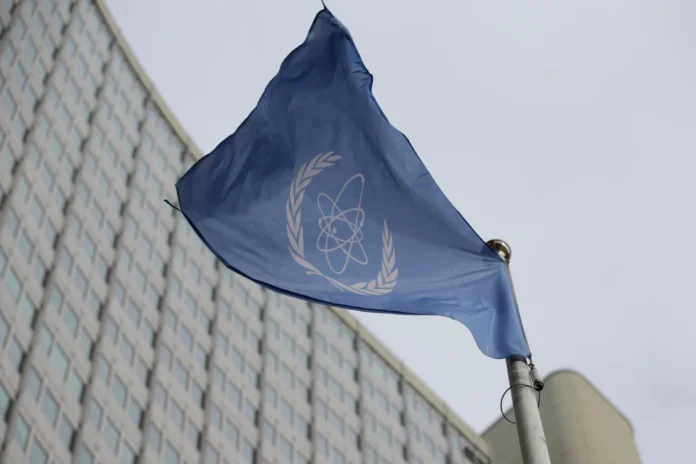
(AP) — Iran has not allowed the United Nations nuclear agency access to its nuclear facilities bombed by Iran and the United States during a 12-day war in June, according to a confidential report by the watchdog circulated to member states and seen Friday by The Associated Press.

The report from the International Atomic Energy Agency stressed that it “cannot verify whether Iran has suspended all enrichment-related activities,” or the “size of Iran’s uranium stockpile at the affected nuclear facilities.”

Iran has four declared enrichment facilities, but the report warned that because of the lack of access, the IAEA “cannot provide any information on the current size, composition or whereabouts of the stockpile of enriched uranium in Iran.”

The report stressed that the “loss of continuity of knowledge … needs to be addressed with the utmost urgency.”

Iran has long insisted its program is peaceful, but the IAEA and Western nations say Tehran had an organized nuclear weapons program up until 2003. The U.S. is seeking a deal to limit Iran’s nuclear program and ensure it does not develop nuclear weapons.

Highly enriched material should be verified regularly

The IAEA reported that Iran had informed the agency in a letter dated Feb. 2 that normal safeguards were “legally untenable and materially impracticable,” as a result of threats and ”acts of aggression.”

The confidential report also said Friday that Iran did provide access to IAEA inspectors “to each of the unaffected nuclear facilities at least once” since June 2025, with the exception of a power plant at Karun that is under construction.

Iran is legally obliged to cooperate with the IAEA under the Treaty on the Non-Proliferation of Nuclear Weapons, but suspended all cooperation after the war with Israel.

According to the IAEA, Iran maintains a stockpile of 440.9 kilograms (972 pounds) of uranium enriched up to 60% purity — a short, technical step away from weapons-grade levels of 90%.

That stockpile could allow Iran to build as many as 10 nuclear bombs, should it decide to weaponize its program, IAEA director general Rafael Grossi warned in a recent interview with the AP. He added that it doesn’t mean that Iran has such a weapon.

Such highly enriched nuclear material should normally be verified every month, according to the IAEA’s guidelines.

IAEA observes activity around nuclear sites

In the absence of direct access to the nuclear sites, the IAEA turned to commercially available satellite imagery.

Observation of the Isfahan facility, some 350 kilometers (215 miles) southeast of Tehran, showed “regular vehicular activity” around the entrance to a tunnel complex used to store enriched material, the report said.

Isfahan was struck by both Israel and the United States in June.

The IAEA said it also observed activity at the enrichment sites in Natanz and Fordow, but added that “without access to these facilities it is not possible for the Agency to confirm the nature and the purpose of the activities.”

IAEA joined Geneva talks

The IAEA reported on Friday that Grossi attended negotiations between the U.S. and Iran on Feb. 17 and Feb. 26 in Geneva at which he “provided advice” on the verification of Iran’s nuclear program. The report said that those negotiations are “ongoing.”

Thursday’s talks, the third round this year under Omani mediation, ended without a deal, leaving the danger of another Mideast war on the table as the U.S. has gathered a massive fleet of aircraft and warships in the region.

An Omani official said lower-level technical talks would continue next week in Vienna, the home of the IAEA. The agency is likely to be critical in any deal.

Iran says it is not pursuing weapons and has so far resisted demands that it halt uranium enrichment on its soil or hand over its stockpile of highly enriched uranium.

Similar talks last year between the U.S. and Iran about Iran’s nuclear program broke down after the start of the war in June. Before then, Iran had been enriching uranium up to 60% purity.

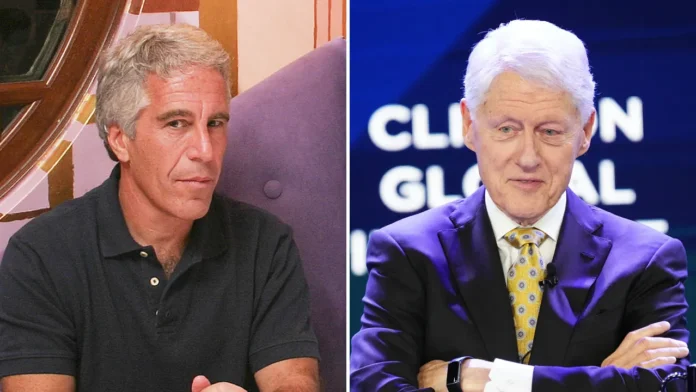
‘I did nothing wrong’: Bill Clinton testifies in Epstein investigation

Former U.S. President Bill Clinton told members of Congress on Friday that he “did nothing wrong” in his relationship with Jeffrey Epstein and saw no signs of Epstein’s sexual abuse as he faced hours of grilling from lawmakers over his connections to the disgraced financier from more than two decades ago.

“I saw nothing, and I did nothing wrong,” the former Democratic president said in an opening statement he shared on social media at the outset of the deposition.

The closed-door deposition in Chappaqua, New York, marks the first time a former president has been compelled to testify to Congress.

It comes a day after Clinton’s wife, former Secretary of State Hillary Clinton, sat with lawmakers for her own deposition, where she told lawmakers that she had no knowledge of how Epstein had sexually abused underage girls and had no recollection of even meeting him.

Bill Clinton has also not been accused of any wrongdoing. Yet lawmakers are grappling with what accountability in the United States looks like at a time when men around the world have been toppled from their high-powered posts for maintaining their connections with Epstein after he pleaded guilty in 2008 to state charges in Florida for soliciting prostitution from an underage girl.

“Men — and women for that matter — of great power and great wealth from all across the world have been able to get away with a lot of heinous crimes and they haven’t been held accountable and they have not even had to answer questions,” said Republican Rep. James Comer, the chair of the House Oversight Committee, before the deposition began Friday.

Hillary Clinton told lawmakers Thursday that she had no knowledge of how Epstein had sexually abused underage girls and had no recollection of even meeting him. But Bill Clinton will have to answer questions on a well-documented relationship with Epstein and his former girlfriend Ghislaine Maxwell, even if it was from the late 1990s and early 2000s.

Bill Clinton in his opening statement said that he would likely often tell the committee that he did not recall the specifics of events from more than 20 years ago. But he also expressed certainty that he had not witness signs of Epstein’s abuse.

Still, Republicans were relishing the opportunity to scrutinize the former Democratic president under oath.

“No one’s accusing anyone of any wrongdoing, but I think the American people have a lot of questions,” Comer said.

Republicans finally get a chance to question Bill Clinton

Republicans have wanted to question Bill Clinton about Epstein for years, especially as conspiracy theories arose following Epstein’s 2019 suicide in a New York jail cell while he faced sex trafficking charges.

Those calls reached a fever pitch late last year when several photos of the former president surfaced in the Department of Justice’s first release of case files on Epstein and Maxwell, a British socialite who was convicted of sex trafficking in December 2021 but maintains she’s innocent. Bill Clinton was photographed on a plane seated alongside a woman, whose face is redacted, with his arm around her. Another photo showed Clinton and Maxwell in a pool with another person whose face was redacted.

Click to play video: 'Epstein files: Trump says ‘I don’t like the pictures being shown’ of Bill Clinton, blames Democrats'

2:39Epstein files: Trump says ‘I don’t like the pictures being shown’ of Bill Clinton, blames Democrats

Epstein also visited the White House several times during Clinton’s presidency, and the pair later made several international trips together for their humanitarian work. Comer claimed the committee has collected evidence that Epstein visited the White House 17 times and that Bill Clinton flew on Epstein’s airplane 27 times.

“We are only here because he hid it from everyone so well for so long,” Bill Clinton said in his opening statement. “And by the time it came to light with his 2008 guilty plea, I had long stopped associating with him.”

Comer pledged extensive questioning of the former president. He claimed that Hillary Clinton had repeatedly deferred questions about Epstein to her husband.

Bill Clinton went after Comer for calling his wife before the committee, telling him that “including her was simply not right.”

The committee was working to quickly publish a transcript and video recording of her deposition.

Has a precedent been set?

Democrats, who have supported the push to get answers from Bill Clinton, are arguing that it sets a precedent that should also apply to U.S. President Donald Trump, a Republican who had his own relationship with Epstein.

“I think that President Trump needs to man up, get in front of this committee and answer the questions and stop calling this investigation a hoax,” said Rep. Robert Garcia, the top Democrat on the committee, on Friday.

Comer has pushed back on that idea, saying that Trump has answered questions on Epstein from the press.

Click to play video: 'Hillary Clinton testifies she ‘never met Jeffrey Epstein, never had any connection or communication’'

3:42Hillary Clinton testifies she ‘never met Jeffrey Epstein, never had any connection or communication’

Democrats are also calling for the resignation of Trump’s Commerce Secretary Howard Lutnick. Lutnick was a longtime neighbour of Epstein in New York City but said on a podcast that he severed ties with Epstein following a 2005 tour of Epstein’s home that disturbed Lutnick and his wife.

The public release of case files showed that Lutnick actually had two engagements with Epstein years later. He attended a 2011 event at Epstein’s home, and in 2012 his family had lunch with Epstein on his private island.

“He should be removed from office and at a minimum should come before the committee,” Garcia said of Lutnick.

Republican Rep. Nancy Mace questioned Hillary Clinton about Lutnick’s relationship to Epstein during the deposition on Thursday. On Friday morning, Mace joined in calling for the commerce secretary to come before the committee.

“I believe we will have the votes to subpoena him,” Democratic Rep. Ro Khanna said.

Senator Asige raises alarm over SHA dropping persons with disabilities from parental cover

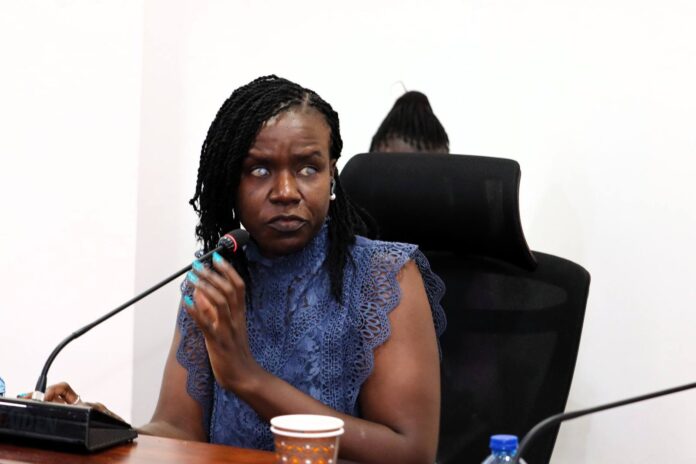
Nominated Senator Crystal Asige has raised concerns over reports that a section of persons with severe disabilities can no longer be covered under their parents’ Social Health Authority (SHA) cover once they turn 18. 

Asige cited a recent case in Trans Nzoia County where a 28-year-old person with severe disability was reportedly informed they could no longer remain under their parents’ SHA cover and would be required to pay independently.

The senator criticised the move, arguing that it fails to reflect the realities faced by persons living with lifelong disabilities who depend on caregivers for daily support, decision-making, and access to healthcare.

“Disability is about ability not age. Many adults with severe disabilities rely on caregivers for daily living, decision-making and accessing healthcare. Cutting coverage at 18 even for those with lifelong disabilities, ignores reality and violates their rights,” Asige posted on X. 

Asige pointed to the provisions of the Persons with Disabilities Act 2025, which guarantee free healthcare for persons with disabilities without discrimination and obligate public health services to meet their needs.

She warned that policies that impose age limits on coverage risk undermining the rights of vulnerable individuals, emphasising that dependency linked to disability does not end upon reaching adulthood.

“Ministry of Health policies must reflect lived realities because disability dependency does not end with a birthday,” she added.

Asige urged the government to act swiftly to align health policies with existing legal protections, warning that failure to do so would amount to discrimination.

“Kenya cannot fail its people with disabilities. We must uphold their rights without delays or arbitrary decision-making,” she stated.

Her remarks come amid ongoing scrutiny of the Social Health Authority and the Ministry of Health, with Health Cabinet Secretary Aden Duale recently dismissing calls for his resignation over alleged financial and operational challenges within the scheme.

“…why should I resign? I don’t need to resign. If I commit anything contrary to my oath of office, there are various ways of dealing with me: impeaching me by Parliament; the criminal justice system dealing with me if I have integrity issues; I’m a political appointee, the President can one morning say I need another minister for Health,” Duale stated on January 28, 2026.

SHA Fraud Web Uncovered: Multiple Medical Facilities and Officials Charged Over KSh 20.5 Million Scheme

By Andrew Kariuki

A shocking fraud case involving millions of shillings allegedly siphoned from the Social Health Authority (SHA) has taken a new turn at the Milimani Law Courts, after the key suspects denied multiple charges while the court issued arrest warrants for several co-accused persons who failed to appear.

The criminal proceedings, covering multiple cases filed on February 27, 2026, expose what prosecutors describe as a coordinated scheme involving fraudulent registration of medical facilities, manipulation of government systems, and unlawful claims for payments running into tens of millions of shillings.

At the centre of the case is Harun Liluma, who appeared before the court and pleaded not guilty to all counts leveled against him across the cases.

He is accused of playing a critical role in unlawfully accessing and manipulating the Kenya Medical Practitioners and Dentists Council’s digital system (rHRIS), enabling unqualified facilities to be registered and subsequently benefit from public funds.

The court granted Liluma a ksh500,000 cash bail or an alternative one million bond in each case which ultimately tallies to a cash bail of Ksh 4 million or an alternative bond of Ksh 8 million.

Pending the fulfillment of the bail terms, he was ordered to be remanded at Industrial Area Prison.

In the same proceedings, the court issued warrants of arrest against all other accused persons who were not present in court.

The cases, filed under several criminal case numbers, detail a large web of alleged fraudulent dealings by different medical facilities and individuals.

Prosecutors allege that between January and August 2025, the accused persons conspired to irregularly secure registration of health facilities with the aim of accessing funds from the Social Health Authority.

Among the entities named is Dimtu Nursing Home Limited, whose directors are accused of conspiring to fraudulently obtain registration, leading to payments amounting to Ksh 6,103,391.91.

In the same case, one of the directors is also charged with operating the facility without a valid license and laundering proceeds of crime.

In a separate case, Adfaal Kids Care Medical Centre Limited and its directors face charges of conspiracy to defraud and operating without proper licensing, with allegations that they received Ksh 1,273,969.10 through irregular means.

The prosecution further claims that the facility’s registration was facilitated through unauthorized access and manipulation of government systems.

Another case involves Danaba Care Hospital Limited, where the accused are alleged to have fraudulently obtained Ksh 7,593,485.10 by falsely presenting the facility as an approved healthcare provider.

They also face charges of money laundering and operating an unlicensed medical institution.

Similarly, Kamsihawa Medical Centre and its officials are accused of fraudulently obtaining Ksh 5,608,819.35 through false representations, alongside charges of operating without a license and conspiracy to defraud.

The other individuals named in the cases include Yussuf Siat Jelle, Mohamed Mohamud Sheik, Ali Ahmed Adan, Mohamednoor Ismael Omar, Mohammed Kulow Ali, Hassan Adan Ibrahim, Kamsia Hassan Kala and Hawa Alinoor Malo, all of whom are alleged to have participated, at different levels, in a coordinated scheme to fraudulently procure registration of medical facilities, operate without valid licences and obtain funds from the Social Health Authority through false pretences.

Across all cases, Harun Liluma is consistently accused of unauthorized access to the rHRIS system, altering records and abusing his position as a public officer to facilitate the fraudulent registration of the facilities, actions which prosecutors say resulted in significant financial loss to the public.

Investigators allege that their actions, carried out on various dates in 2025, contributed to the irregular acquisition of millions of shillings in public funds, forming part of a broader network under scrutiny in the ongoing criminal proceedings.

The prosecution’s case also further indicates that the alleged scheme relied on manipulation of official systems to bypass regulatory safeguards, allowing unlicensed or improperly registered facilities to receive payments from the national health scheme.

The total amount in dispute across the consolidated cases stands at Ksh 20,579,665.46, highlighting the sheer scale of the alleged fraud.

The court also noted that several witnesses are expected to testify in the matter, including government officials and other individuals linked to the registration and payment processes.

With one suspect now in custody and others facing arrest, the case is expected to test the integrity of regulatory systems within the healthcare sector and raise broader questions about oversight of public funds.

The matter will be mentioned on March 12, 2026, for pretrial directions as investigations and efforts to apprehend the remaining suspects continue.


Landmark Ruling: Explicit WhatsApp Messages Can Be Used to Prove Workplace Sexual Harassment, Court of Appeal Rules

By Andrew Kariuki

The Court of Appeal sitting in Mombasa has delivered a landmark judgment clarifying the law on workplace sexual harassment, significantly expanding the interpretation of employee protection under the Employment Act, 2007.

A three-judge bench comprising Justices Murgor, Nyamweya and Ngenye overturned key findings of the Employment and Labour Relations Court (ELRC), setting out authoritative guidance on what constitutes sexual harassment in the workplace.

The case arose from a dispute in which an a lady, M. K, who worked as a Communications Officer and Alumni Affairs Coordinator, accused her employer’s Chief Executive Officer, Jeremiah Kambi, of subjecting her to repeated sexual advances through WhatsApp messages.

She argued that the messages were sexual in nature, unwelcome and offensive and that they created a hostile work environment that ultimately forced her out of employment.

The respondents denied the allegations, maintaining that the communications had been taken out of context and were influenced by a pre-existing family relationship between the parties.

They further contended that the employment relationship ended by mutual agreement and not due to any misconduct.

At the trial court, Justice Ongaya dismissed the claim for sexual harassment, finding that the messages did not meet the legal threshold under Section 6 of the Employment Act.

The court held that there was no evidence of promises of employment benefits or threats linked to the alleged conduct, and characterized the exchanges as private communications within a complex personal relationship.

Dissatisfied with that decision, M.K moved to the Court of Appeal, challenging the interpretation of the law and the evaluation of the evidence.

In its judgment, the appellate court undertook an extensive review of both domestic and international legal frameworks on sexual harassment, including constitutional provisions on equality and dignity, international human rights instruments, and the Employment Act.

The court emphasized that sexual harassment is a form of discrimination and a violation of human dignity and clarified that Section 6 of the Employment Act recognizes two distinct forms of sexual harassment.

The first, commonly referred to as “quid pro quo” harassment, involves situations where sexual conduct is tied to employment benefits or threats.

The second, which the court found applicable in this case, is “hostile work environment” harassment, which includes unwelcome sexual language, conduct or materials that are offensive and have a negative impact on an employee’s working conditions.

The judges found that the trial court had erred by focusing solely on whether there was evidence of quid pro quo harassment and failing to properly consider whether the conduct amounted to a hostile work environment.

Upon re-evaluating the evidence, the Court of Appeal noted that the respondent did not deny sending the WhatsApp messages, and that the messages were overtly sexual in nature.

It further found that the appellant had clearly indicated that the advances were unwelcome.

The court stressed that the determination of whether conduct is unwelcome is subjective, stating that it is the victim, not the perpetrator or the court, who determines what is offensive.

Importantly, the judges rejected the argument that private electronic communication falls outside the scope of workplace harassment, holding that messages sent through platforms such as WhatsApp, SMS or email can constitute sexual harassment where they occur within an employment relationship.

The court further ruled that the existence of a familial relationship between the parties did not negate the power dynamics of the workplace, noting that the respondent was the appellant’s direct supervisor.

The appellate court concluded that the sexual communication, viewed within the employment context, was unwelcome, offensive and detrimental and that it created a hostile work environment that contributed to the appellant’s exit from employment.

In setting aside the findings of the trial court, the Court of Appeal awarded the appellant Ksh 531,000 in terminal dues and Ksh 1,000,000 in general damages for sexual harassment.

The judgment is expected to have far-reaching implications in Kenyan employment law, particularly in defining the scope of workplace sexual harassment and the use of digital communication in professional relationships.

It firmly establishes that unwelcome sexual communication, even when conducted through informal digital platforms, can amount to workplace harassment where it occurs within an employment relationship and undermines an employee’s dignity, well-being or working environment.

Court of Appeal Halts Labour Court Decision on Police Commission Powers Pending Appeal

By Andrew Kariuki

The Court of Appeal in Nairobi has suspended a decision by the Employment and Labour Relations Court (ELRC) that had removed key human resource functions from the National Police Service Commission (NPSC), pending the hearing and determination of an appeal.

In the earlier ruling delivered on October 30, 2025, Justice Hellen Wasilwa held that the NPSC does not qualify as a national security organ under Article 239(1) of the Constitution and therefore lacks the mandate to conduct recruitment within the police service.

The court further found that the Commission had no authority to assign, promote, suspend or dismiss police officers.

That decision effectively cleared the way for Inspector General of Police Douglas Kanja to oversee the recruitment of 10,000 police officers.

Following the ruling, the Law Society of Kenya (LSK) moved to the Court of Appeal seeking to halt its implementation, arguing that the judgment had far-reaching implications on the management of police personnel and the constitutional structure governing the National Police Service.

In its application, LSK warned that allowing the ruling to stand would disrupt the established legal framework governing recruitment, promotions and disciplinary processes within the police service.

“That unless the judgement of the Employment and Labour Relations Court is stayed, the processes of recruitment, appointment, promotion, removal, and dismissal within the National Police Service are likely to be undertaken by an organ that lacks constitutional authority to perform those functions,” LSK stated.

A three-judge bench of the Court of Appeal, comprising President of the Court Justice Daniel Kiio Musinga, Justice Mumbi Ngugi and Justice George Odunga, granted the stay orders on February 27, 2026.

In their ruling, the judges observed that the dispute raises complex constitutional questions regarding the respective roles of the National Police Service Commission and the National Police Service, which require detailed examination at the appeal stage.

“We hereby stay the judgement of the ELRC made on October 30, 2025, in ELRC Petition No. E196 of 2025, to the extent that it declared that the Constitution vests in the National Police Service and the Inspector General the exclusive and independent command concerning promotion and dismissal of the members of the service,” the judges ruled.

However, the appellate court clarified that its decision does not automatically restore the contested powers to the NPSC. Instead, the exercise of those functions will remain in abeyance until the appeal is fully heard and determined.

The case is expected to play a significant role in clarifying the constitutional boundaries between the National Police Service Commission and the National Police Service, particularly in relation to recruitment, promotions and disciplinary control within the police service.

Create a free account, or log in.

Gain access to read this content, plus limited free content.

Yes! I would like to receive new content and updates.

Sponsored Ad

Ad 1
Ad 2
Ad 3
Ad 4
Ad 5
Ad 6