Sponsored Ad

Ad 1
Ad 2
Ad 3
Ad 4
Ad 5
Ad 6
28 C
Kenya
Wednesday, May 6, 2026
Home Blog Page 341

UN Vehicle Caught Selling Mangoes in Nairobi Sparks Online Fury

A UN vehicle caught selling mangoes on the streets of Nairobi at night has left Kenyans furious and laughing in equal measure after a video went viral overnight.

The clip, shared widely on X, Facebook, TikTok, and Instagram starting around February 25, shows a black SUV with clear United Nations number plates parked under street lights. From the back, someone unloads crates of ripe mangoes, calling out to passersby like any roadside hawker.

The scene plays out in what looks like a busy Nairobi spot – perhaps along Thika Road or one of the city’s night markets – with cars honking past and people stopping to buy or just stare.

The video lasts under a minute but packs a punch. Comments exploded fast. “How did a UN car end up hustling mangoes?” one user asked. Another wrote, “Diplomats now doing side gigs? Times are tough even for internationals.”

Plenty joked about the perks of UN plates – no traffic stops, easy parking – now turned into a fruit-selling advantage. Others got serious quick, questioning misuse of official vehicles meant for aid work, peacekeeping, or agency duties in Kenya.

Kenya hosts one of the biggest UN presences in Africa. Agencies like UNHCR, UNICEF, WFP, and UNEP run offices here, with fleets of black SUVs bearing those famous red-and-white plates.

These cars get tax breaks, diplomatic immunity in many cases, and priority on roads because they support refugees, health programs, food distribution, and climate projects. Seeing one turned into a mobile mango stand feels like a slap to that image.

No one has confirmed who owns or drives the vehicle yet. The plates look genuine in the footage, but without a clear view of the full registration, it’s hard to pin down if it belongs to an agency staffer, a contractor, or someone who borrowed (or worse) the car.

UN rules strictly ban personal use of official vehicles, especially for business. If this turns out real, heads could roll – from the driver up to whoever signed off on the keys.

The timing adds salt to the wound. Mango season peaks around now, with farmers in places like Makueni and Coast pushing hard to sell their harvest. Street vendors everywhere battle for customers, paying taxes or bribes to stay put.

Meanwhile, UN staff earn solid salaries, often tax-free, with housing allowances and transport perks. The contrast stings. “While locals struggle to make ends meet, UN guy sells mangoes tax-free?” one popular reply read. Another said, “This is why people lose faith in aid organisations.”

Some share old stories of UN vehicles spotted at malls or beaches on weekends, hinting this isn’t the first time rules got bent. A few defend the driver – maybe it’s a local staffer supplementing income in hard times – but most call for accountability. Calls mount for the UN mission in Nairobi to investigate and explain.

The UN country team has not issued any statement yet. Past incidents involving misuse of plates – like accidents or traffic violations – usually prompt quick internal probes and apologies.

If this video holds up, expect similar action soon. For now, the clip circulates wider, drawing laughs from some and real frustration from others who see it as another sign of double standards in a city where inequality shows up everywhere.

Nairobi never sleeps, and its streets tell stories every night. This one, with a UN twist, has everyone talking. Whether it ends with a quiet reprimand or bigger changes to vehicle rules, the mango seller in the black SUV has given Kenyans plenty to chew on.
Manchester City faces potential 60-point deduction in unprecedented 115-charge scandal

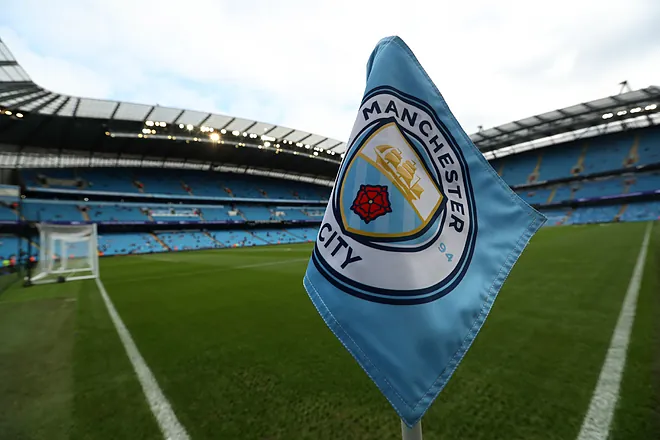
Manchester City‘s prolonged battle with the Premier League over what’s become known as the “115 charges” has reached a pivotal moment, and the stakes could not be higher.

According to financial experts following the saga, the club could face a staggering 60-point deduction if the most serious allegations are upheld, a sanction that would not only derail their current season but potentially plunge the club from title contention into a relegation fight.

City has consistently rejected any wrongdoing, and the team maintains its conduct has complied with league regulations.

But the case, which revolves around alleged breaches of financial fair play and other Premier League rules, has dragged on since charges were formally laid nearly three years ago in February 2023.

At the heart of the dispute is a sprawling set of accusations spanning nine seasons, which the Premier League claims involve improper financial reporting and failure to cooperate with investigations.

The independent hearing wrapped up in late 2024, yet more than a year later, a verdict has still not been announced.

Football finance specialist Kieran Maguire has emerged as a leading voice on the potential gravity of the punishment. Speaking to The Overlap, Maguire explained why a points penalty, rather than relegation, is the only realistic sporting sanction available under Premier League rules.

What the punishment would mean

Maguire’s assessment underscores how far this case could depart from precedent. While smaller clubs have faced modest sanctions in the past, such as Everton’s six-point deduction for a three-year breach, the sheer scope of City’s alleged offenses suggests a penalty potentially ten times greater.

“You have to add a zero to what we’ve seen,” Maguire said, placing a 40- to 60-point deduction firmly within the realm of logic based on historical cases.

Under Premier League regulations, the league cannot unilaterally relegate a club to the English Football League (EFL), meaning City cannot be dropped to the third or fourth divisions as some commentators have speculated.

Instead, any sporting sanction would need to come in the form of points lost in the top flight, which could have similarly dramatic effects.

A deduction of this magnitude would not merely dim Manchester City’s title hopes but could propel them into a relegation battle.

Such an outcome would reverberate across the English game and reshape the landscape of the ongoing Premier League season, with potential knock-on effects for rivals near the bottom of the table.

“How can you be in a meeting room with other members of the Premier League… with this accusation being proven?” Maguire went on. “Corporate fraud is a very serious accusation… the board has to go, and that could be a complete restructure of the club.”

City’s confidence has not wavered, however. The club insists it has “a comprehensive body of irrefutable evidence” to clear its name, particularly concerning allegations of non-cooperation, a core component of the 115 counts.

Yet for rivals and neutrals alike, the lack of a final ruling has only prolonged uncertainty. With vast amounts of evidence presented by both sides, the process has taken far longer than initially anticipated, and many within the sport believe that a decision could still arrive before the end of the current campaign.

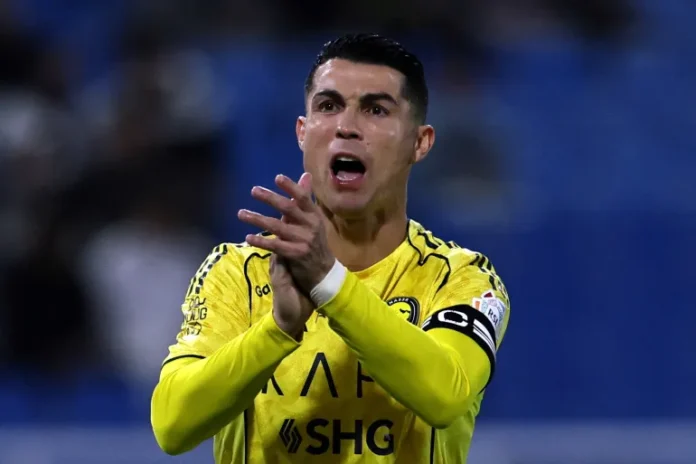
Cristiano Ronaldo buys 25 percent stake in Spanish second-tier club Almeria

Cristiano Ronaldo has bought a stake in Spanish second-division football club Almeria, according to a consulting firm representing the Portuguese athlete.

Brunswick Group said in a statement on Thursday that Ronaldo bought a 25 percent share of the club that has a Saudi Arabian owner.

Ronaldo, 41, moved to Saudi Arabia to play for Al-Nassr at the end of 2022.

“It has been a longtime ambition of mine to contribute to football, beyond the pitch. UD Almeria is a Spanish club with strong foundations and clear potential for growth,” Ronaldo said in the statement.

The five-time Ballon d’Or winner, who spent ⁠nine years at Real Madrid and is the club’s all-time top goalscorer, bought the stake in Almeria through his CR7 Sports Investments subsidiary, according to Brunswick Group.

Almeria has been under the control of Saudi Arabian owners for more than six years.

Saudi businessman Mohamed al-Khereiji became the new owner and president of the club in 2025 when he bought it from Turki Alalshikh, who, in his role as head of Saudi Arabia’s General Entertainment Authority, has become a key figure in sports promotion.

“We are very pleased that Cristiano has chosen our club to invest in,” al-Khereiji said in the statement. “He knows the Spanish leagues very well and he understands the potential of what we are building here both in terms of the team and the academy.”

The financial details were not disclosed.

Almeria are currently in third place in Spain’s second division. They were relegated from La Liga in 2023-24.

In October, it was announced that Ronaldo had become the first footballer to reach billionaire status, according to the latest Bloomberg Billionaires Index, which has valued the Portugal great’s net worth at an estimated $1.4bn.

ODM unveils new party DJ after Spider defected to Sifuna’s faction

The Orange Democratic Movement (ODM) has unveiled a new party DJ following the exit of its longtime entertainer, Spider, who recently aligned himself with Nairobi Senator Edwin Sifuna’s faction.

Acting Secretary General Catherine Omanyo announced the update in a brief social media post declaring, “Tuko na DJ” (We have a DJ), signalling the party’s refreshed entertainment team ahead of upcoming rallies and events.

Photos shared alongside the post showed the new DJ standing next to sound equipment, underscoring ODM’s intention to sustain its vibrant grassroots mobilisation style.

The announcement comes amid internal wrangles within ODM. The party’s National Executive Council (NEC) removed Sifuna from the Secretary General position on February 11, triggering legal and political disputes. Omanyo, who previously served as deputy SG, was subsequently appointed to act in the role.

DJ Spider

While Omanyo did not reveal the identity of the new DJ, the move has been widely interpreted as a symbolic show of stability and continuity within the party’s ranks.

Sifuna’s Linda Mwananchi faction has been charting its own path, organising rallies and grassroots engagements under a distinct banner. The senator has previously spoken openly about DJ Spider’s involvement with his camp, maintaining that the entertainer joined them voluntarily and served without pay.

The Linda Mwananchi wing has positioned itself as more outspoken on issues affecting ordinary citizens, occasionally clashing with the party’s central leadership over strategy and alliances. Meanwhile, Sifuna is contesting his removal, with a tribunal expected to determine the legality of the NEC’s decision.

Online reactions to Omanyo’s announcement reflected the party’s deepening divisions, with supporters and critics alike weighing in on the unfolding developments.

Pesalink, PAPSS Unlock Cross-Border Payments in Local Currencies in Kenya

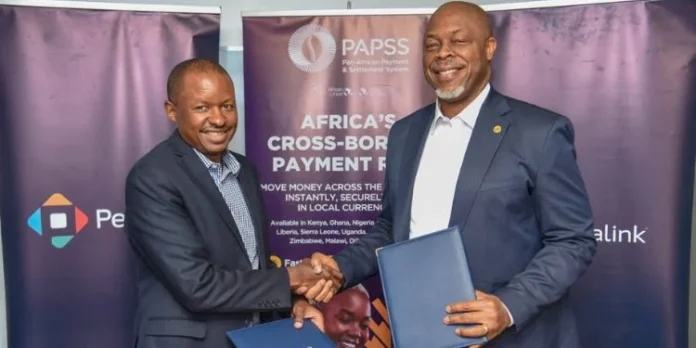
Pesalink, Kenya’s de facto instant payment network, has partnered with the Pan-African Payment and Settlement System (PAPSS) to ease cross-border payment and speed up regional financial integration.

The partnership enables instant 24/7 cross-border payments from PAPSS participants into banks and mobile money operators within the Pesalink network in Kenya, all settled in local currencies.

This reduces complex correspondent banking requirements and reliance on foreign reserve currencies.

PAPSS, an initiative of the African Export-Import Bank (Afreximbank) in collaboration with the African Union and the AfCFTA Secretariat, enables cross-border payments between African countries.

Pesalink is now a Technical Connectivity Provider. It means that 80 plus Kenyan bank, fintech, SACCO and telco participants on the Pesalink network will be connected to 160 plus commercial banks and fintechs on the PAPSS platform.

Cross-border payments remain expensive and slow for many African businesses. The 2023 (http://apo-opa.co/4baDSh7) World Bank Remittance Prices report indicates that sending money across African borders incurs on average 7-8% of the total value sent (above the global average of 6–7%). Settlement can also take three to seven business days.

The Pesalink–PAPSS partnership will reduce costs, speed up settlements, and help individuals, SMEs and businesses send money more efficiently across borders.

Speaking during the partnership signing held at Pesalink offices in Nairobi, PAPSS CEO Mike Ogbalu III said, “For PAPSS to deliver true impact, collaboration with national and private switches like Pesalink is essential.

Pesalink is the first switch we’ve piloted for transaction termination in Kenya, and we are already seeing greater adoption by opening more channels for seamless, local-currency cross-border payments across Africa.”

Pesalink CEO, Gituku Kirika, said “Kenyan banks will now be able to offer faster, cheaper cross-border payments. They will be helping their customers grow more regional trading relationships and thrive in a more integrated digital economy.”

Regulatory Clarity in Venezuela Shows How Africa Can Unlock Energy Capital

Just days ago, Shell announced that newly issued U.S. general licenses for oil and gas exploration in Venezuela would allow it to advance its long-stalled Dragon gas project, tapping into an estimated 4.5 trillion cubic feet of natural gas reserves off Venezuelan shores and potentially bringing first production online within three years.

The development reflects broader shifts in investor sentiment and regulatory frameworks in one of the world’s most resource-rich but politically complex energy landscapes – and holds timely lessons for African energy producers seeking foreign capital and technical partners.

Since the Trump administration’s sanctions regime in 2019, Venezuela’s hydrocarbons sector has been largely isolated from global markets. Chevron, bp, Repsol and Shell now stand among the companies authorized to engage in energy projects and transactions, following an expansion of licenses issued by the U.S.

Treasury’s Office of Foreign Assets Control (OFAC). Under these general licenses – including GL 46A and GL 48 – U.S. companies can participate in certain exploration, production and service activities previously prohibited, provided they comply with strict oversight, reporting and contractual conditions.

Shell’s Dragon project, which had been stalled for years due to shifting U.S. policy and sanction uncertainties, illustrates how regulatory clarity can reshape risk perceptions. More than a decade in planning, the Dragon field’s revival depends on OFAC’s clear, predictable licenses that provide foreign investors with a defined legal pathway for engagement.

This recalibration of U.S. sanctions policy coincides with legal reforms inside Venezuela. A recent draft amendment to the Hydrocarbons Law promises to expand private participation, granting greater operational autonomy and offering more attractive terms for investors – a significant departure from decades of strict PDVSA-dominated control.

Together, these changes are reshaping investor sentiment in Caracas and beyond. Energy companies and project developers who once dismissed Venezuela as unbankable are now cautiously evaluating opportunities, recognizing that legal certainty, enforceable contracts and predictable policy signals – not just resource potential – unlock capital flows.

Similar dynamics are playing out in Africa. Despite abundant reserves – with Nigeria, Angola and Mozambique among the continent’s most resource-rich nations – investment often stalls at the project development and financing stage rather than at resource discovery. Clear regulatory frameworks, credible market participants and enforceable contracts remain prerequisites for attracting significant capital.

“The conditions that are unlocking foreign capital in Venezuela are precisely what Africa must prioritize to attract and sustain global energy investment,” says NJ Ayuk, Executive Chairman of the African Energy Chamber. “Strong host-government agreements, enforceable fiscal terms and reliable dispute-resolution mechanisms will distinguish projects that receive funding from those that remain on paper.”

These themes are front and center as industry leaders prepare for African Energy Week 2026, scheduled for 12–16 October in Cape Town. With capital markets tightening and competition for investor attention intensifying, African producers must demonstrate that their regulatory frameworks are as certain and transparent as the resource potential beneath their ground.

In Venezuela’s case, a market long sidelined by sanctions is beginning to re-enter global investment channels – not because the resources changed, but because policy frameworks and sanctions relief provided a credible pathway for engagement. For Africa, the lesson is clear: credibility and legal clarity are strategic imperatives for unlocking the investment it requires.

Quidax and Lisk Partner to Power the Next Generation of Digital Finance in Africa

African-founded cryptocurrency exchange, Quidax has announced a partnership with Lisk blockchain. This collaboration marks Lisk’s first partnership with an African exchange licensed by Nigeria’s Securities and Exchange Commission (SEC), creating a bridge between regulated digital assets infrastructure (www.Quidax.io) and the rapidly expanding Lisk Layer 2 (L2) ecosystem.

In 2024, Quidax made history as the first crypto exchange to receive a provisional operating license from Nigeria’s SEC. This partnership builds on that regulatory foundation, enabling Quidax customers to trade and move value seamlessly using USDT, USDC, LSK, and Ether (ETH) on the Lisk network.

Beyond retail trading, the partnership provides a critical gateway for the developer community. Builders on the Lisk network can now leverage Quidax’s robust digital asset infrastructure to access stablecoins and local currencies at competitive rates.

This institutional-grade infrastructure is designed to power “future-forward” financial products, ranging from neobanks and cross-border payment platforms to regional exchanges and global fintech solutions.

“The partnership with Lisk enables us to extend our platform to serve more people and cater to the increasing demand from products and services that want to integrate our stablecoin and digital assets product (https://apo-opa.co/4qVVBh7) to build products across Africa,” said Morris Ebieroma, Chief Infrastructure Officer at Quidax.

Lisk, which recently transitioned to an Ethereum Layer 2 to focus on high-growth markets, sees this partnership as a cornerstone for its African expansion.

“Africa represents one of the most critical frontiers for blockchain innovation, where the demand for reliable and inclusive financial tools is urgent,” said Chidubem Emelumadu, Ecosystem Lead (Africa) at Lisk. “Our partnership with Quidax expands access to stablecoins and onchain financial opportunities for everyday users and businesses. At the same time, it gives founders building on Lisk the critical infrastructure they need to create solutions that can scale meaningfully across the continent.”

By combining Quidax’s deep local liquidity and compliant framework with Lisk’s scalable L2 technology, this partnership is set to accelerate the adoption of Web3 solutions that solve real-world financial challenges for millions of customers across Africa.

KCB Eyes Victory over Young Spikers in KVF League

Former Champions KCB will lock horns with Young Spikers in the second leg of the Kenya Volleyball Federation (KVF) League action tomorrow afternoon at the Moi International Sports Centre Indoor Arena.

The bankers, under the tutelage of head coach Japheth Munala, will be hoping to secure maximum points and move up the ladder in the current standings. As it stands, KCB sits 6th on the table with 4 points, having won once and lost twice in the first leg.

Speaking ahead of the highly awaited fixture, head coach Japheth Munala noted: “We know the task ahead is daunting, but we are determined as a team to head into the upcoming fixtures with the right mentality. Our objective is to win each game at a time and build towards winning the title at the end of the season.”

The team will then shift their focus to a blockbuster clash against DCI on Sunday, March 1. The two sides have already developed a fierce rivalry this season, having met twice in different competitions. KCB narrowly fell 3-2 to DCI in the semi-finals of the Kipchumba Karori Tournament before bouncing back dramatically, recovering from two sets down to secure a 3-2 victory in the Kenya Cup.

“DCI is a formidable side, and their recent performances speak for themselves. Finishing second in last season’s league shows their consistency and quality, and they’ve already demonstrated their strength again this season. However, we’ve prepared thoroughly for this encounter, and we are determined to prove that our last victory over them was well deserved and no coincidence,” added Munala.

The Bankers head into the competition with a fully fit and complete squad, brimming with confidence and depth across all departments. Head coach Japheth Munala will lean on the wealth of experience within his ranks, counting on seasoned campaigners Mercy Moim, Juliana Namutira, Esther Mutinda, and Belinda Barasa to provide leadership, stability, and composure on the big stage.

At the same time, he is expected to inject youthful energy and dynamism into the team’s campaign, with rising stars Fridah Boke and Marlene Terry poised to play a pivotal role as the side pushes strongly for the title.

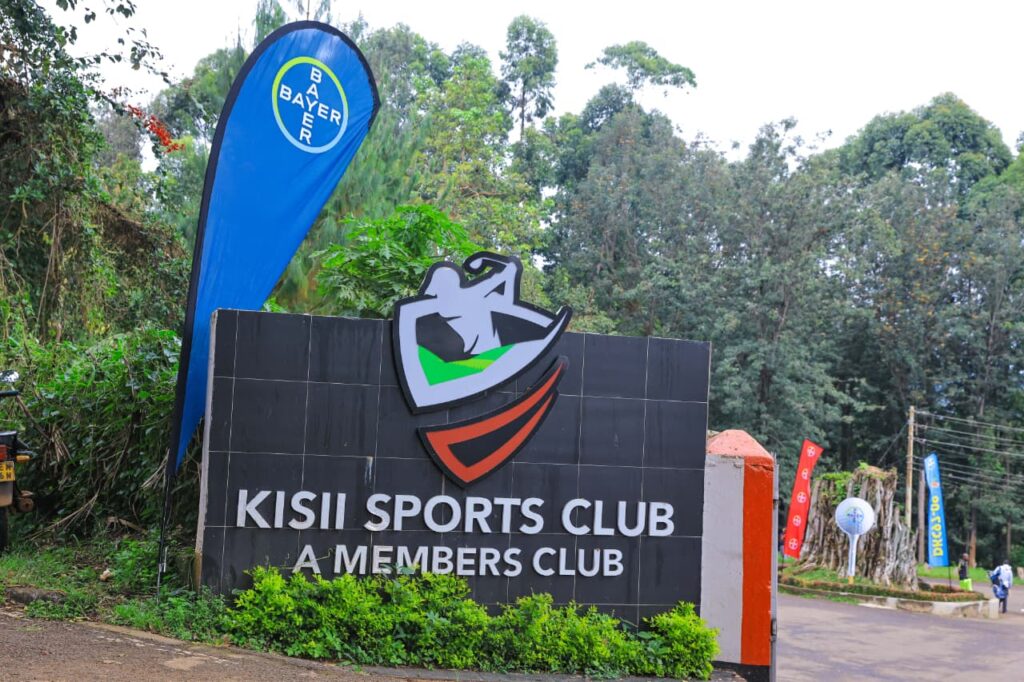
Kisii Sports Club to Host Over 100 Golfers for CBK Tournament

Kisii Sports Club is set to host more than 100 golfers on February 28 for the highly anticipated CBK Golf Tournament, a flagship event expected to draw top amateur players from across the region.

The one-day tournament will be played in the Stableford format, allowing golfers of varying handicaps to compete fairly while maximizing participation and excitement on the lush Kisii course. The format awards points based on net scores per hole, ensuring competitive balance across all divisions.

Club Captain Adrian Monari expressed confidence in the club’s readiness to host the prestigious event, noting the steady rise of Kisii Sports Club as a preferred destination for major golf tournaments.

“We are proud to welcome over 100 golfers for the CBK tournament. Over the years, Kisii Sports Club has grown tremendously, both in infrastructure and reputation. Under our current leadership, we have positioned the club as a hub for major golf events in the region. This tournament is a testament to that progress and our commitment to growing the game,” said Monari.

Participants will battle for top honors in multiple categories, including the coveted Overall Winner title. The tournament will also recognize the Men’s Winner and Ladies’ Winner, alongside 1st and 2nd Runners-Up in the main categories.

Competition will be further segmented into Division 1, Division 2, and Division 3, each featuring Winners, 1st Runners-Up, and 2nd Runners-Up. Additional accolades will be awarded for Guest Winner and Guest Runners-Up, Sponsor Winner with 1st and 2nd Runners-Up, as well as Senior Winner and Junior Winner.

Skill-based prizes will spice up the contest, with awards for Longest Drive (Men and Ladies), Nearest to the Pin, and Best Effort, ensuring every participant has something to play for.

Sophie Ongalo, CBK Kisii Centre Manager, has also assured the Golfers of a practical learning experience through the DhowCSD platform on investing in Treasury Bills and Bonds. Empowering Golfers with both knowledge and confidence in government securities

Under Monari’s stewardship, the club has strengthened its tournament calendar, improved course standards, and attracted high-profile sponsors, cementing its status as a competitive golfing venue in the country.

The February 28 tournament is expected to boost local sports tourism while offering golfers a professionally organized and highly competitive experience in the heart of Kisii County.

African Energy Chamber (AEC), Venezuelan Petroleum Leadership Forge Structured Hydrocarbon Partnership

Venezuela is positioning itself for accelerated oil and gas growth, targeting a near-term increase in production from 1.1 million barrels per day (bpd) to 1.2 million bpd, with a 2027 objective of 1.5 million bpd and a longer-term return toward its installed capacity of 2.8 million bpd. For African investors and service companies, the message is clear: there is structured opportunity, backed by regulatory reform, defined contract models and political commitment at the highest levels.

This strategic direction was reinforced during high-level engagements between the African Energy Chamber (AEC) and Venezuela’s petroleum leadership. Part of a high-level working visit to Caracas this week, the Chamber met with Eduardo Antonio Ramirez Castro, Deputy Minister of Hydrocarbon Geopolitics, Luis González, Deputy Minister of Gas and Jovanny Martinez Executive Vice President at the state-owned oil corporation PDVSA. The parties agreed to draft a 12-month joint work plan covering upstream cooperation, refining rehabilitation, gas commercialization, finance structuring, trade flows and training implementation.

“This was not a symbolic engagement – it was a serious, high-level discussion where Africa was clearly recognized as a strategic partner. The fact that all ministers in charge of the petroleum sector were present, including Deputy Minister of Petroleum Eduardo Antonio Ramirez Castro, Deputy Minister of Gas Luis González and the highest executive of the PDVSA, is a strong signal that Venezuela is ready to drive its hydrocarbon sector forward,” stated NJ Ayuk, Executive Chairman of the AEC.

“There is a clear understanding within the Ministry and at PDVSA of what African companies have achieved across complex and mature hydrocarbon markets. They have an aggressive, structured plan to develop their fields and accelerate production, and they are ready to move,”  he added.

Towards a Venezuelan Hydrocarbon Resurgence

Venezuela holds approximately 303 billion barrels of crude reserves – largely concentrated in the 54,000 km² Faja del Orinoco, home to 272 billion barrels – alongside 195 trillion cubic feet of gas. With 56,000 wells already drilled and over 100,000 additional wells targeted in the coming years, the scale of redevelopment potential is significant.

Considering this potential, discussions during the Caracas meetings centered on joint rehabilitation of priority PDVSA assets, including mature oil fields, Category 2 and 3 wells suitable for rapid workovers, offshore assets such as Perla and Mariscal Sucre and refinery upgrades at Paraguaná, El Palito and eastern facilities. These projects represent relatively low-capex entry points capable of delivering incremental barrels in the short term.

The country’s January 29 Hydrocarbons Law reform, alongside administrative simplification measures and optimized fiscal terms, is designed to attract new participation. Investment vehicles include Production Participation Contracts (CPPs), ATFs and Empresas Mixtas – a form of private-public partnership. Officials highlighted the success of existing CPP structures – including Petrozamora, which reportedly increased production from 23,000 bpd in 2024 to 100,000 bpd in 2026 – as evidence that the model can deliver growth.

The AEC will facilitate African participation in these structures, supporting evaluation of asset data, commercialization rights and export provisions. Majority shareholders retain export freedom, while minority partners may export under defined pricing conditions – clarity that enhances bankability. Finance will underpin execution. Premier Invest – also a participant at the meetings – is expected to structure trade finance backed by PDVSA barrels and inventory, alongside project and infrastructure finance for upstream and midstream rehabilitation. Capital mobilization discussions include Gulf partners, African national oil companies and private operators.

Strengthened South-South Energy Corridors

Gas development and Global South trade also emerged as strategic priorities. Venezuela aims to scale production from approximately 4,100 million cubic feet per day (mmcf/d) toward a 6,000–6,500 mmcf/d range, supporting domestic supply, industrial feedstock and future LNG and LPG exports. For Africa, this presents dual opportunity.

First, African firms with experience in offshore gas, LNG modularization and pipeline development can participate in infrastructure recovery and expansion. Second, commercial trade flows – particularly LPG and bitumen – offer immediate South–South cooperation pathways. The parties explored establishing long-term LPG supply channels to African markets to support clean cooking programs and reduce energy poverty. Structured bitumen agreements could also provide African infrastructure markets with more stable supply and lower import premiums.

Beyond hydrocarbons, education and technical exchange were identified as strategic pillars. Structured one-week technical programs for African executives at Venezuelan petroleum institutions, including the Bolivarian University of Hydrocarbons, will form part of a reciprocal exchange model covering petroleum engineering, geology, trading and energy law.

For the AEC, the engagement signals a shift toward deeper South–South hydrocarbon integration – positioning African companies not only as domestic operators, but as outward investors and strategic partners in one of the world’s largest resource bases.

Create a free account, or log in.

Gain access to read this content, plus limited free content.

Yes! I would like to receive new content and updates.

Sponsored Ad

Ad 1
Ad 2
Ad 3
Ad 4
Ad 5
Ad 6