Sponsored Ad

Ad 1
Ad 2
Ad 3
Ad 4
Ad 5
Ad 6
24.5 C
Kenya
Thursday, May 7, 2026
Home Blog Page 346

Last-gasp penalty sends Atalanta past Dortmund and into last 16

Lazar Samardzic slotted home a stoppage-time penalty to complete a dramatic 4-1 victory for Atalanta over Borussia Dortmund on Wednesday, sending the Italian side into the Champions League’s last 16 with a comeback 4-3 aggregate triumph.
Dortmund’s Ramy Bensebaini was sent off after his studs caught the head of Atalanta’s Nikola Krstovic in the penalty area and Samardzic converted the spot kick in the 98th minute to send the Italians through. Atalanta will now face either Arsenal or Bayern Munich in the round of 16 with the draw on Friday.


The hosts had ⁠to fight back ⁠following last week’s 2-0 loss in Germany, and Gianluca Scamacca tapped in at the far post to give them a fifth-minute lead as they got off to a dream start.
Dortmund had their share of chances but it was their keeper, Gregor Kobel, who was busiest in the first half, ⁠twice denying Nicola Zalewski. He was beaten, however, on the stroke of halftime when Davide Zappacosta’s shot was deflected into the net off Bensebaini to make it 2-0.
Atalanta keeper Marco Carnesecchi made the save of the match when he tipped Serhou Guirassy’s low drive wide in the 49th minute, to protect their two-goal advantage. Dortmund went even closer in the 53rd with Maximilian Beier’s shot bouncing off the post.
Instead it was the hosts who scored again thanks to Mario ⁠Pasalic’s header ⁠at the far post to go 3-0 up and take control of the tie.
Dortmund, however, bounced back with substitute Karim Adeyemi adding instant pace to their game and curling his 75th-minute shot into the top corner as the visitors hoped to take the contest into extra-time.
Yet Bensebaini then tried to clear a cross in the box with a backheel but caught the head of Krstovic, who went down bleeding. The hosts were awarded a penalty following a lengthy VAR review and Samardzic beat Kobel to send his team through with the last kick of the game.

Ksh.7 billion for new Nithi Bridge released, reconstruction to commence -DP Kindiki

The reconstruction of Nithi Bridge is set to commence in the next few weeks, and its completion will be accelerated to prevent further deaths along the stretch, Deputy President Kithure Kindiki has said.

The DP stated that the government has already allocated funds for the construction of a new bridge, which will be safer for motorists travelling along the deadly section of the main road connecting Tharaka Nithi and Meru Counties.

“We needed Sh7 billion for the bridge, and we now have the funds. The contractor will be here soon. The public was engaged for their input on Monday, and I will be bringing the contractor to start construction shortly,” the DP said.

The Deputy President spoke on Wednesday while inspecting the ongoing construction of the Mikinduri-Kunati-Gatithini Road in Tigania East, Meru County.

Prof. Kindiki said the new bridge will be one of the longest in the region and will be properly designed to enhance safe travel along the road.

“We will have the longest bridge in this region. It will be 880m long and will link Marima and Mitheru sections,” the DP added.

Further, the DP said the expansion of the Makutano-Embu-Chuka-Meru-Maua Highway is underway, promising that construction will begin before the end of the year.

“We are going to ensure this road becomes a dual carriageway, and the construction will commence this year,” he said.

He also stated that the government is keen on establishing the National Infrastructure Fund to support the construction of more roads and other infrastructure projects across the country.

The DP said the government has allocated funds for the completion of over 6,000 km of roads nationally, including over 350 km in Meru County.

“We now have adequate funds. We have paid all the contractors Sh177 billion, and they are back to complete the projects. By next Christmas, we will have completed all the 6,000 km of roads that had stalled for many years. On top of these roads, we have more funds for new roads,” he declared.

The DP said the Mikinduri-Kunati-Gatithini Road will be completed on time, despite having stalled for many years.

“We have 10 roads in Meru County that had stalled, which have now been revived and are ongoing. We have funds, and they will be completed on time,” the DP assured.

The DP dismissed claims by political opponents that the government has done nothing in the region, saying many development projects are progressing.

“Those saying the Ruto government has done nothing for the people of Meru will be ashamed because there is a lot of work going on. Those claiming to be friends of Meru people should tell them what they did when they were in power,” he added.

On miraa exports, the DP said the government has finalised plans to capitalise on the reopening of the Kenya-Somalia border to ease transportation of the crop to the neighbouring country.

“We will provide security for miraa exports through the Mandera, Liboi, and Kiunga border points,” the DP revealed.

source citizen digital

Key Shakahola suspect admits role in starvation deaths, confesses to burying two of his own children

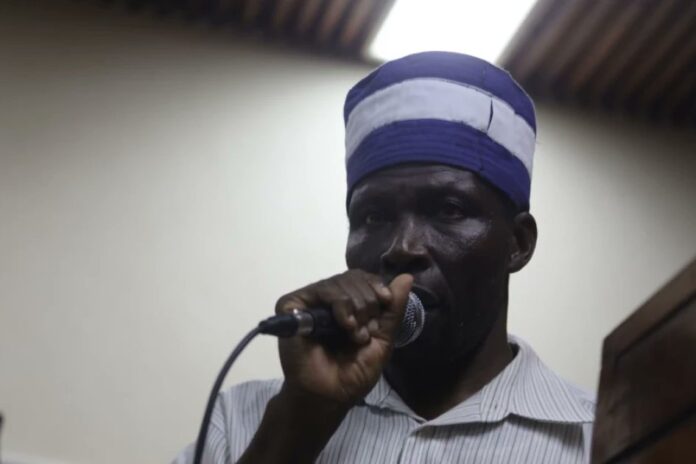
A key suspect in the Shakahola massacre trial has told a court in Mombasa that guilt, fear and mounting evidence pushed him to confess to his role in one of Kenya’s most disturbing cult-linked tragedies.

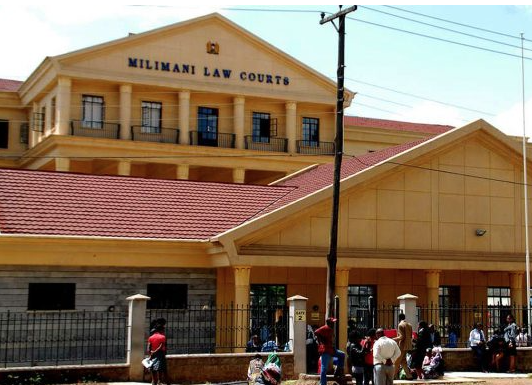
Enos Amanya Ngala, alias Haleluya, made the admission on Wednesday while appearing before Chief Magistrate Alex Ithuku at the Shanzu Law Courts in Mombasa, according to a statement from the Office of the Director of Public Prosecutions (ODPP).

Haleluya told the court that his decision to come forward was driven by his conscience, fear for his safety, and what he described as overwhelming evidence gathered by prosecutors.

He recounted living under constant intimidation inside the Shakahola forest, claiming followers were too afraid to speak out against controversial preacher Paul Mackenzie and his inner circle.

“He described Mackenzie as a dangerously manipulative leader who denounced prayer, praise, and worship, and even instructed followers to burn the Holy Bible and other scriptures, actions he said sharply contradicted mainstream Christian teachings,” stated the ODPP.

He further told the court that members were promised “special seats in heaven” if they starved themselves to death, adding that Mackenzie allegedly claimed he would be the last to die, thereby symbolically “closing heaven’s door.”

The suspect said coded language was used to conceal the deaths, with terms such as “Jeti” referring to fasting to death and “Shujaa” used to describe those who had already perished.

Haleluya admitted participating in digging graves and burying victims in shallow mass graves. In an emotional account, he revealed he lost all six of his children to the extremist doctrine.

“He revealed that he lost all six of his children to the extreme doctrine, burying two himself before later learning of the deaths of the others,” the ODPP noted.

“He acknowledged that he and fellow accused persons orchestrated deaths through enforced starvation and other cruel acts under Mackenzie’s direction.”

The court also heard that after his arrest, Haleluya disclosed his involvement to a senior officer from the General Service Unit, who advised him to formally record his confession before a judicial officer.

He later wrote letters expressing his intention to admit responsibility, prompting the court to notify both the prosecution and his defence lawyers.

In the case, Mackenzie and 94 others are facing 283 counts of manslaughter.

Source -Citizen Digital

Court of Appeal declines to suspend High Court ruling on President Ruto advisors

The Court of Appeal has declined to stay the High Court decision that declared the office of the President’s advisors unconstitutional. This means the lower court’s decision remains in force as the appeal process moves forward.

In a ruling delivered under a certificate of urgency on Wednesday, the appellate court considered an application seeking interim relief pending the hearing and determination of the intended appeal.

The applicant had approached the Court of Appeal seeking orders to suspend the effect of the advisory judgment while challenging the lower court’s decision.

After reviewing the materials presented, the Court of Appeal declined to grant the stay orders sought. Instead, the judges issued directions to guide the parties on the next steps, effectively setting timelines for the filing of the necessary documents to facilitate the hearing of the substantive appeal.

The court’s decision means that the advisory judgment will remain in effect as the dispute proceeds to a full hearing. However, the appellate bench emphasised the need for an orderly and structured process, directing the parties to comply with procedural requirements within the specified timelines.

The matter will now proceed to a hearing in accordance with the court’s directions, where the substantive issues raised in the appeal will be determined.

The High Court ruled that the creation and staffing of the advisers’ offices was unconstitutional, rendering their appointments null and void.

A Man dies in Kitengela after being thrown out of Super Metro bus, then run over.

A grieving family is demanding swift police action after crew members of a Super Metro bus allegedly pushed a 25-year-old man to his death from a moving vehicle.

The family of Joseph Mureithi claims he was thrown out of the bus on Tuesday night along the Kitengela–Namanga Highway.

They allege that moments after he was ejected, the same vehicle ran over him before speeding off, leaving him fatally injured by the roadside.

Police have since arrested two crew members as investigations intensify. Meanwhile, Super Metro says it is still piecing together the circumstances surrounding the tragic incident.

Mureithi, a petrol attendant at a station in Athi River, had reportedly just finished work.

Witnesses say he arrived at the stage along the busy Kitengela-Namnaga highway, just a few metres from Shalom Hospital, and boarded a Super Metro bus heading to Nairobi from Kitengela at around 11pm.

But what was meant to be a routine ride home would turn tragic. Passengers claim the bus was overcrowded, and that the crew appeared chaotic and confrontational.

Moments after Mureithi boarded, the vehicle pulled away. In less than a kilometre, the 25-year-old was allegedly pushed out of the moving bus.

His life cut short in an instant, with witnesses alleging that the same bus ran over him before speeding off into the night.

Juma Otieno, a witness, said: “Aliingia kwa gari, gari ikatoka. Kufika pale chini ndio ni kama msukosuko ikaanza na huyo kijana akatolewa kwa gari akaanguka chini. Nilikuwa nafikiria ameanguka tu hivi hivi, kufika hapo kumbe ameanguka na kichwa ikapasuka.”

Patrick Muthomi, a family member of the deceased, stated: “Badala ya kurusha mtu nje, afadhali umwambie hii pesa haitaweza, kaa nje ungojee gari next. Kijana wetu sasa ametuwacha namna hiyo, na alikuwa ametoka tu kazi vizuri akapanda matatu imfikishe Mlolongo. Wakafanya tu kumrusha nje, wakapitia juu yake na wakakimbia hawataki kujua.”

It took the swift intervention of a standby Directorate of Criminal Investigations (DCI) Subaru patrol vehicle to bring the bus to a stop.

Detectives pursued and eventually impounded the vehicle. The bus, registration number KDK 060H, was later towed to the Athi River Police Station. The driver and the conductor are in police custody.

“Huyo ndio alikuwa first born…ni yeye alikuwa anafanya kazi at least analipia mama yake rent na anasaidia kijana mdogo mwenye ako nyuma yake. Naomba kama serikali inaweza tuangalia,” said Muthomi.

Mureithi, a young man who had only recently secured a job to help settle his ailing mother’s hospital bills was pronounced dead on arrival at Shalom Hospital.

An autopsy will be carried out on Thursday as detectives appeal to witnesses to come forward with any information that could shed light on the circumstances surrounding his death.

The Super Metro management has since expressed regret over the incident, maintaining that they are still piecing together events leading up to and after the tragic occurrence.

It is another disturbing incident of reckless driving, resulting in death and now a family is in mourning demanding justice for a young soul gone too soon. 

Controller of Budget flags loopholes in Ksh.5 trillion National Infrastructure Fund

Several experts including the Controller of the Budget (CoB) and the Auditor General have has raised concerns over the establishment of the Ksh.5 trillion National Infrastructure Fund.

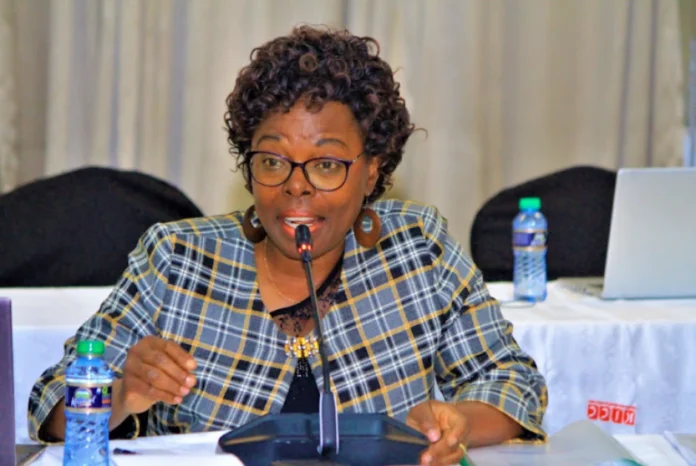
In a statement submitted to the National Assembly Finance Committee during stakeholder engagement on the National Infrastructure Fund Bill 2026, CoB Margaret Nyakang’o’s office says the Fund has been established as a corporate entity and not a public fund, this making it prone to abuse.

She questioned the legality of excluding her office from authorization of withdrawal and expenditure of the proceeds.

Other financial institutions have also questioned the governance and institutionalization of the Fund, insisting that it should be managed by an independent entity and not National Treasury.

The CoB says the bill is ambiguous and does not address the applicability of the PFMA Act to the Fund, how it will be oversighted by the office CoB and who authorizes withdrawals and expenditure.

In addition, Nyakang’o says the National Infrastructure Fund Bill 2026 does not explicitly provide for the exclusion of money from the consolidated fund, therefore, the proceeds must first be deposited into the consolidated fund before being transferred to the infrastructure fund; a concern also raised by the Institute of Public Finance.

“For example, if we are to sell KICC, how do we ensure that the money goes to National Infrastructure Fund and not Consolidated Fund?” Posed the institute.

In its submission to the National Assembly Finance Committee, the Institute of Certified Public Accountants of Kenya (ICPAK) stated that the Ksh.5 trillion National Infrastructure Fund should be managed by an independent entity in order to enhance credibility and transparency.

ICPAK council member Hesbpn Omollo stated: “We want oversight and credibility…which must be enhanced through funds management by an independent body.”

In calling for the amendment of the Bill, the Office of the Controller of Budget, the Institute of Public Finance and ICPAK recommended that the bill provides authorization of withdrawals by the CoB; intergrates the fund fully into the budget cycle; quarterly and annual reporting of the fund’s performance to the CoB; and clarify the governance and regulatory framework applicable to the fund.

The National Infrastructure Fund Bill 2026 has undergone its first reading in Parliament even as it returns to the House for the second reading next week ahead of public participation. 

Trump’s theatrical State of the Union address offers little hint of any change in course

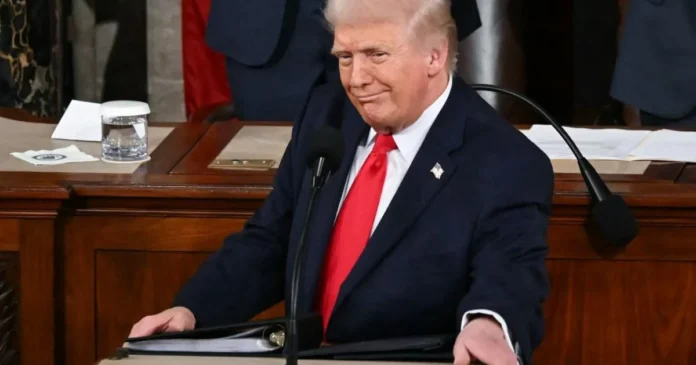
Donald Trump delivered a combative State of the Union address on Tuesday night that hailed what he said was an American “turnaround for the ages”.

At a time when polls suggest many in the US are dissatisfied with the current state of the nation – and with Trump’s leadership of it – the president offered little hint of a change of course.

Instead, with an eye on crucial midterm elections later this year, he delivered a sales pitch to the nation, a patriotic rallying cry to his loyal supporters and taunts for his political opponents.

It was a speech filled with theatrical flourishes – the kind of made-for-the-cameras moments the man who once hosted a reality television show seems to enjoy.

Early on, he welcomed the US Olympic men’s hockey team to the gallery. They held up their gold medals as Republicans chanted “USA!” and even Democrats stood and applauded.

Later, Trump praised military heroes including a 100-year-old World War Two veteran who received a Medal of Honor, and a Coast Guard swimmer who rescued 165 people trapped in last year’s Texas flooding and was given a Legion of Merit award for Extraordinary Heroism.

Although his speech set a record for length at 107 minutes, these moments quickened the pace of the evening and fit with the president’s larger theme of American patriotism and accomplishment.

His speech opened with familiar lines. “Our nation is back,” he said. It was the “hottest” country in the world. At one point, after blaming Democrats for creating a crisis of “affordability”, he added: “We are doing really well.”

He pointed to the rising incomes, a growing stock market, lower petrol prices, a southern border with dramatically reduced undocumented migrant crossing and tamed inflation.

“Our country is winning again,” he concluded.

The challenge for the president is that his public approval ratings are hovering around 40 percent, and the American public wants him to do more to address their concerns.

Two months ago, he gave a national address from the White House where he struck similar themes and cited similar statistics – but it hasn’t convinced the public. The president and his aides appear to be hoping that with a bigger State of the Union audience, which should measure in the tens of millions, the results will be different.

What Trump didn’t do in this speech, however, was offer much in the way of new policies.

He sprinkled the nearly two-hour address with a handful of ideas, including new retirement savings accounts for working-class Americans and a deal with AI companies to provide sufficient electricity for their plants to avoid consumers being hit with higher bills.

He made new pitches for other, older ideas, such as a healthcare plan that provides direct payments to Americans to help cover insurance premiums, a law to require all voters to prove their citizenship and a ban on providing commercial driver’s licences to undocumented migrants.

He also pledged to continue to push ahead with his broad tariff regime, even in the face of last Friday’s Supreme Court decision striking down many of the duties he had previously imposed.

Three of the justices who had ruled against the president remained expressionless as they watched on from the front row. Earlier, Trump and Chief Justice John Roberts – who penned the court’s tariff opinion – briefly shook hands, but neither man smiled.

In a speech that was frequently interrupted by cheering Republicans in the crowd, Trump’s tariff discussion prompted murmurs from Democrats and uncomfortable silences from Republicans, many of whom have been uneasy about their economic cost and the threat their unpopularity with the public might pose to their electoral chances.

If tariffs sucked the air out of the chamber, when Trump turned to immigration tempers flared.

Trump’s passages on what he said was the threat of “illegal aliens” prompted some of the most thunderous applause from Republicans in the chamber and angry shouts and icy stares from Democrats.

The immigration issue had been one of Trump’s political strengths, but his enforcement surge in Minneapolis, which resulted in the shooting deaths of two American citizens by federal agents, has significantly eroded his standing.

The president made no mention of those fatal shootings – or the “softer approach” to enforcement he had suggested might be needed in the aftermath. Instead, Trump’s speech, with its focus on crimes committed by undocumented migrants – murders, accidents and corruption – was an attempt to wrest back the issue.

“The only thing standing between Americans and a wide-open border right now is President Donald J Trump and our great Republican patriots in Congress,” he said.

That was a tacit acknowledgement that in just over eight months, Americans will head to the polls in midterm elections that will determine the composition of both chambers of Congress.

As is typical with these congressional addresses, no matter who the president is, foreign policy tended to take a back seat. Despite the massive build-up of American forces near Iran, Trump did little to make the case to the American public that a sustained US military action was necessary.

“My preference is to solve this problem through diplomacy, but one thing is certain: I will never allow the world’s number one sponsor of terror to have a nuclear weapon,” he said, and then moved on.

For the moment, the political winds are blowing in the president’s face. But Trump may believe that the public’s mood is poised for a change.

Perhaps he is convinced Americans will begin to feel the economic benefits of his policies. Or maybe he believes the mood will shift, with a renewed sense of patriotisim, during the nation’s 250th birthday celebrations this summer.

His speech, with call-outs to military heroes and gold-medal-winning hockey players in the audience, could hint that this is a political wager he has placed.


Martin Short’s daughter Katherine dies at 42

Canadian actor Martin Short has said his daughter Katherine “will be remembered for the light and joy she brought into the world” following her death at the age of 42.

Katherine Short was a social worker, US media reported, and the eldest of three children her father adopted with actress and singer Nancy Dolman.

“It is with profound grief that we confirm the passing of Katherine Hartley Short,” Martin Short’s representative said in a statement to BBC News. “The Short family is devastated by this loss and asks for privacy at this time.”

Law enforcement sources told the Los Angeles Times and TMZ her death was an apparent suicide.

Her father, known for his roles in films such as The Three Amigos, Father Of the Bride and Innerspace, has postponed a string of live shows with his comedy partner Steve Martin.

The Miller High Life Theatre in Milwaukee, Wisconsin, said: “Due to unforeseen circumstances, Steve Martin & Martin Short’s show, originally scheduled for Friday, February 27th in Milwaukee, has been postponed.”

An appearance in Minneapolis, Minnesota, on Saturday, 28 February, has also been postponed.

Short is nominated for best male actor in a comedy series at this weekend’s Actor Awards for his performance as Oliver Putnam in Only Murders in the Building.

Dolman died from ovarian cancer in 2010.

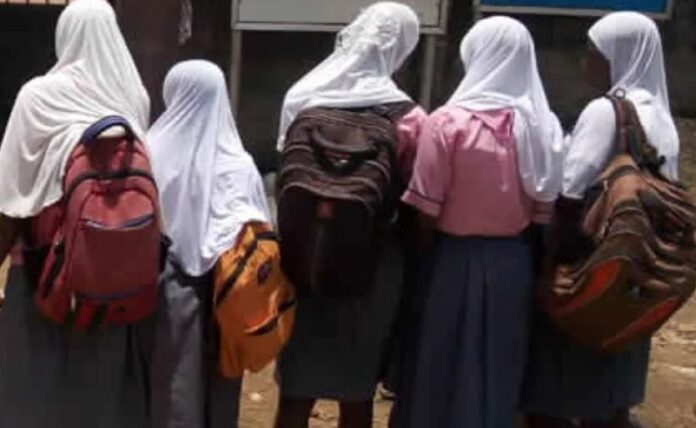
Uproar as Siaya school bars Grade 10 student from wearing hijab

A school in Siaya County is on the spot following reports that it restricted Muslim students from wearing the hijab, reigniting debate over religious freedom in public schools.

According to Citizen.Digital, St. Mary’s Lwak Girls High School is accused of barring Samira Ramadhan, a Grade 10 student, from donning the hijab despite assurances given at the time of her admission that she would be allowed to wear her religious outfit.

According to Samira and her parents, the position taken by the school changed barely a month after she reported, denying her the freedom she had been promised. The incident has sparked a fresh debate on religious rights and education.

Fifteen-year-old Samira Ramadhan reported to St. Mary’s Lwak Girls High School with pride and optimism, hopeful as she embarked on a new chapter of her academic journey. But that optimism, she says, was short-lived.

“I was a proud student,” stated Samira Ramadhan.

Barely weeks into the term, Samira alleges that school management instructed her to stop wearing her hijab, a directive that directly contradicted assurances given at the time of her admission that she would be free to don the religious cloth.

“Two to three days, Sister Melanie called me and said I remove the hijab. I have been harassed since then. The school father called me last Monday and said that this is a Catholic school, hijabs are not allowed,” stated Samira.

“Amekuwa na challenge kwa sababu yeye ni Muslim, amekuwa mwenye kutengwa sana,” stated the parent, Nasib Ali Ramadhan.

“These girls are not allowed to put on hijab. They are not allowed to practice their religion. These girls are forced to participate in religious activities that are not of their choice,” stated Ibrahim Otieno, Chair, Siaya Muslims Association.

Her parent says repeated attempts to seek clarification from the school’s administration over the decision to bar his daughter from wearing the hijab were met with silence.

“Nilikuwa nimemalizana na school fees ya hii term nimeamua kutoka na mtoto wangu nimpeleke kwenye wanakubali waislamu,” stated Nasib Ali Ramadhan, parent.

Efforts to seek clarity from the school’s management proved futile. The County Director of Education, whom the media was referred to by PS Basic Education Julius Bitok, failed to return calls or respond to messages, leaving the concern unaddressed.

Samira’s experience is not an isolated case. There have been widespread reports of Muslim students facing discrimination in non-Muslim schools, particularly through restrictions on wearing the hijab.

The incident has reignited debate on the delicate balance between religion and education, more so at a time when parents and learners have limited or no options to transfer schools under the government’s learner placement system for senior secondary education.

The Supreme Court of Kenya set precedent in its 2019 ruling when it overturned a 2016 Court of Appeal decision that had allowed Muslim students to wear the hijab in non-Muslim schools, ruling that every school has a right to determine its own dress code.

However, questions about religious accommodation in schools persist, especially when students are placed by the government in institutions with strict religious traditions despite clearly indicating their faith during application.

UN sanctions paramilitary leaders over Sudan atrocities

The UN Security Council has announced new sanctions on four leaders of Sudan’s paramilitary Rapid Support Forces over atrocities committed in the western Sudanese city of el-Fasher.

The deputy commander, Abdul Rahim Hamdan Dagalo and Brigadier General Al-Fateh Abdullah Idris, more commonly called Abu Lulu, who became known as the “Butcher of el-Fasher”, are among those proscribed. The others are RSF deputy commander Gedo Hamdan Ahmed and field commander Tijani Ibrahim.

The RSF’s capture of the city in October was one of the most brutal chapters of Sudan’s nearly three-year civil war.

Last week a UN fact-finding mission concluded that the violent takeover bore the hallmarks of a genocide.

The UN said Dagalo, brother of RSF chief Mohamed Hamdan Daglo, known as “Hemedti”, had overseen operations on the day the RSF captured el-Fasher, citing atrocities carried out by his forces including mass killings and ethnically targeted executions.

This is the fourth time Dagalo has been sanctioned – following earlier designations by the United States, the United Kingdom and the European Union.

War crimes investigators from The Sentry – an investigative and policy organisation that seeks to disable networks that benefit from violent conflicts – have said it is encouraging to see alignment in targeting officials, but far more is needed to impose real financial consequences on the RSF and the networks that sustain it.

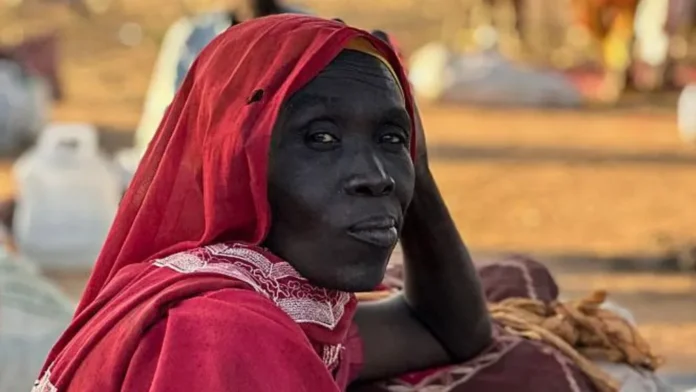
Sudan has been engulfed in conflict since April 2023, as fighting between the RSF and the army has escalated into what the UN describes as a “war of atrocities”, leaving tens of thousands dead and triggering the world’s worst hunger and displacement crisis.

For 18 months, the RSF besieged el-Fasher – the capital of North Darfur and the last major city they did not control in the western region of Darfur – before taking the city on 26 October.

The UN fact-finding mission described the campaign as “three days of horror”, marked by summary executions, systematic sexual violence and mass detention, primarily targeting the city’s ethnic Zaghawa population.

Abu Lulu became known as “the Butcher of el-Fasher” for graphic videos he himself posted of the takeover.

Abu Lulu appears in footage “giving orders to his men to kill innocent people”, the UN said. It added that video footage shows him executing civilians and boasting about killing over 2,000 people.

The US imposed sanctions on Daglo, Ahmed and Ibrahim last week over their roles in the “ethnic killings, torture, starvation and sexual violence” committed in el-Fasher.

The UN did not specify what sanctions it had imposed on the four but it has the powers to order measures such as an assets freeze and a travel ban.

More than 70,000 people have fled el-Fasher since it was captured, with civilians remaining trapped or missing, or being held by the RSF inside the city, according to the UN’s refugee agency.

Create a free account, or log in.

Gain access to read this content, plus limited free content.

Yes! I would like to receive new content and updates.

Sponsored Ad

Ad 1
Ad 2
Ad 3
Ad 4
Ad 5
Ad 6