





Sponsored Ad

Ad 1
Ad 2
Ad 3
Ad 4
Ad 5
Ad 6
27.4 C
Kenya
Thursday, May 7, 2026
Home Blog Page 363

Uganda court awards Ksh6.82m to man wrongly put on ARVs for seven years

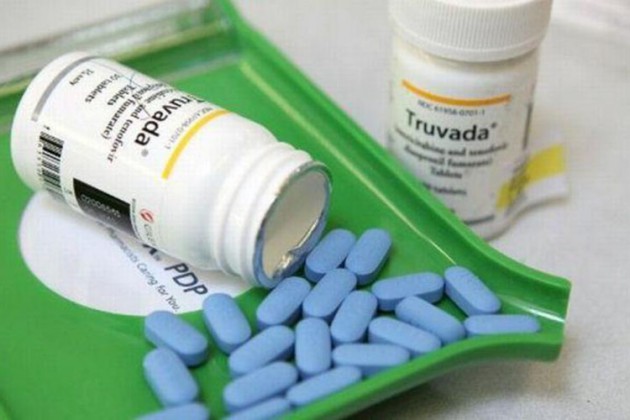
The High Court in Jinja has awarded Ksh6.82m (Ush190 million) in damages to John Wataka after finding that he was wrongly initiated and retained on HIV treatment for seven years despite being HIV negative.

The Ugandan court heard that Wataka was tested HIV positive by The AIDS Support Organisation (TASO) in July 2016 and was immediately enrolled on Anti-Retroviral Therapy (ARVs), which he continued taking until 2023.

However, doubts about his status emerged in 2022 when Wataka applied to access his benefits from Uganda’s National Social Security Fund (NSSF) under a scheme for HIV-positive persons. Independent tests conducted by the fund returned negative results.

Wataka reported the findings to TASO, which carried out fresh tests that also returned negative.

In its defence, TASO maintained that it followed approved testing algorithms from the Ministry of Health and noted that HIV test kits are not 100 percent accurate.

Court documents further revealed that in July 2021, TASO conducted viral load tests on Wataka — meant to measure the amount of HIV in the body — and the results indicated less than 50 copies per millilitre, suggesting the virus had been detected at the time.

“The case demonstrates the danger of substituting protocol for professional judgment. Mr Wataka entrusted TASO but was ultimately failed by systems that prioritised procedure over the individual,” said Justice Joanita Bushara in her ruling.

Justice Bushara awarded Wataka Ksh5.02 million (Ush140 million) in general damages for enduring unnecessary medication for seven years, losing his marriage, and suffering psychological trauma.

An additional Ksh1.8 million (Ush50 million) was awarded in aggravated damages for negligent diagnosis and dispensing of medication he did not need.
UK Govt Greenlights Release of ‘Rude’ Andrew Files

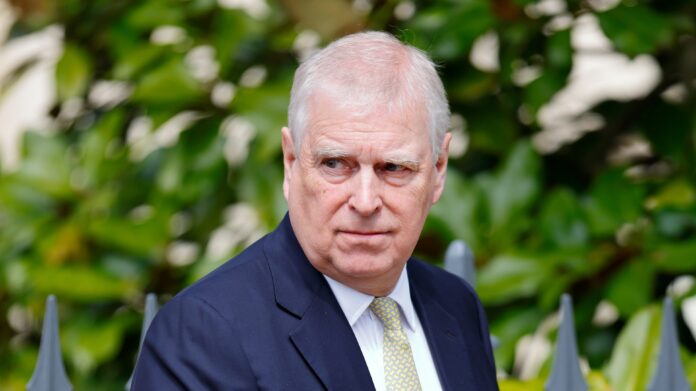
On February 24, 2026, the UK government confirmed it would back a Liberal Democrats motion to release documents related to Andrew Mountbatten-Windsor’s 2001 appointment as a trade envoy.

Trade Minister Sir Chris Bryant told the House of Commons that the government would comply with the “humble address” motion in full, supporting transparency regarding the former prince’s role.

During the debate, Bryant described the former prince as a “rude, arrogant and entitled man” who operated on a “self-aggrandising and self-enriching hustle” and failed to distinguish between public and private interests.

While the government supports the release, Bryant warned that documents required by the police for their ongoing investigation will not be made public until officers are satisfied that doing so will not prejudice legal proceedings.

The former prince was arrested on February 19, 2026, on suspicion of misconduct in public office and was subsequently released under investigation.

The investigation centers on allegations that he shared sensitive government information with Jeffrey Epstein during his decade-long tenure as trade envoy (2001–2011).

The move for transparency follows the arrest of Lord Peter Mandelson on February 23, 2026, also on suspicion of misconduct in public office related to the Epstein case.

Following his arrest, the British government is reportedly considering legal changes to formally remove him from the line of succession to the throne.

By Anthony Solly

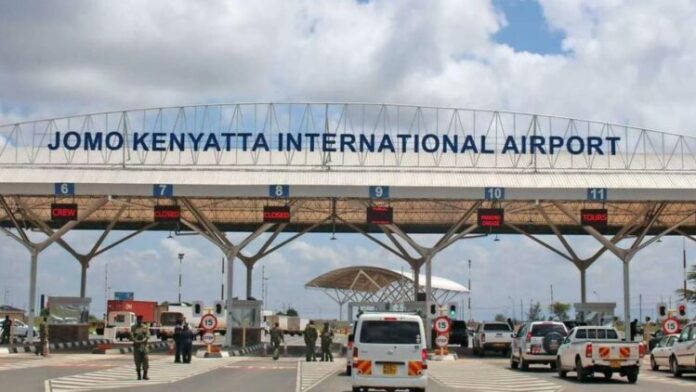
Kenya Airports Authority to Launch Taxi-Hailing App at JKIA in Bid to Rival Uber and Bolt

Kenya Airports Authority (KAA) is set to launch its own taxi-hailing platform at Jomo Kenyatta International Airport (JKIA) in Nairobi, aiming to capture a share of the airport transport market currently dominated by global ride-hailing companies.

The authority recently closed a tender for the design and operation of a mobile and web-based system under a public-private partnership.

The selected partner will manage the platform and share a portion of the revenues with KAA. The tender period ends on 25 February, with plans for rapid implementation.

Initially, the service will focus on airport-regulated taxis, allowing passengers to book vetted drivers via mobile apps, a web portal, or kiosks at the terminal.

Features will include real-time fare estimates, vehicle tracking, automated dispatch, and trip notifications.

Geofencing technology will ensure that operations are restricted to designated taxi ranks, improving safety, reducing congestion, and preventing unauthorised pickups.

The move addresses long-standing concerns about unregulated drivers operating around JKIA, contributing to traffic issues and security risks.

By consolidating taxi bookings onto a single monitored platform, KAA seeks to enhance order and accountability in airport transport.

The tender notice also suggests broader ambitions for the platform.

In the future, the app could expand to include services such as lounge reservations, duty-free shopping, parking management, and flight information, aligning with global trends to use digital platforms to improve passenger experience.

However, the initiative may have significant impacts on the livelihoods of many drivers.

JKIA handles approximately 8.6 million travellers annually, many of whom rely on ride-hailing companies for airport transfers. 

Sifuna Signals 2027 Presidential Bid, Says Intimidation Won’t Stop Him

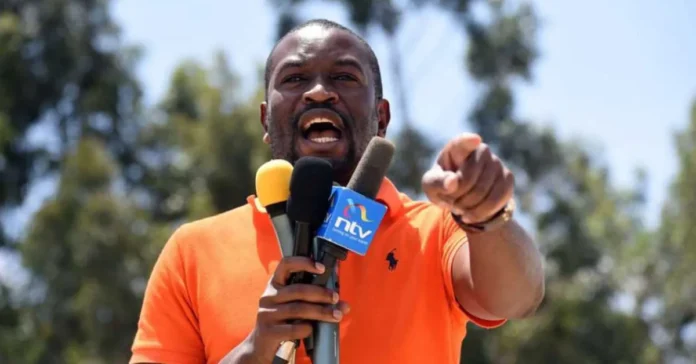
Nairobi Senator Edwin Sifuna has indicated that he may consider running for president in 2027, framing the potential bid as a response to public demand rather than personal ambition.

In a recent radio interview, Sifuna, who serves as the Secretary General of the Orange Democratic Movement (ODM), urged young Kenyans to register and vote in the upcoming elections, emphasising that low voter turnout has long hindered opposition efforts.

His comments come amid ongoing internal disputes within ODM, where efforts to remove him from his post have been blocked by the Political Parties Disputes Tribunal.

Sifuna also unveiled the “Mimi Ndio Sifuna” initiative, which he described as a collective movement rather than a personality-driven campaign.

He stressed that uniting the opposition will be crucial to challenging President William Ruto in 2027.

He outlined his vision for a government focused on upholding freedom and the rule of law, rather than prioritising infrastructure projects. 

“Please don’t ask me how many kilometres of road I am going to do,” Sifuna said.

Sifuna also accused state agencies of interfering with opposition activities, alleging that a local airline leaked his team’s travel plans to the Interior Ministry, which led to disruptions at a rally in Kakamega.

Interior Cabinet Secretary Kipchumba Murkomen has denied these claims, suggesting Sifuna may have orchestrated the incidents himself. In response, Sifuna called for stronger investigative powers for the Independent Policing Oversight Authority.

Despite these challenges, Sifuna expressed confidence that intimidation would not deter the movement. He warned that it would take more than force to silence the opposition’s voice.

The senator also criticised Nairobi Governor Johnson Sakaja’s agreement to transfer certain county functions to the national government, describing the arrangement as inconsistent with Kenya’s constitutional principles of devolution.

MPs Reject IEBC Plan to Raise 2027 Election Budget to Sh63 Billion

Kenyan parliament has rejected a proposal by the Independent Electoral and Boundaries Commission to increase funding for the 2027 General Election from Sh43 billion to Sh63 billion.

The commission presented its budget policy statement on Tuesday, stating that the additional funds were required to meet key operational costs. It projected Sh12.4 billion for staff wages and Sh6.9 billion for voter registration. 

A further Sh6.2 billion was allocated for replacing Kenya Integrated Election Management System (Kiems) kits, the electronic devices used to verify voters. Commission officials said that most of the 45,352 kits currently in use are obsolete and must be replaced. 

Only 14,000 devices acquired in 2022 remain usable, though each would require upgrades costing Sh175,000. Members of Parliament rejected the request, maintaining that the Treasury’s allocation of Sh43 billion is adequate. 

They instructed the commission to provide expert evidence demonstrating that the existing kits cannot be reused before approving any new purchases. The commission also projects an increase in polling stations to 55,393 in 2027, up from 46,229 in 2022. 

Despite this expansion, the limit of 700 voters per station is expected to remain in place to reduce congestion and improve efficiency on polling day.

The commission maintains that technological upgrades and expanded access are necessary to ensure credible polls, while legislators are seeking to contain public spending amid fiscal constraints.

Murang’a tops ranking as rural counties lag in service automation

Murang’a County has been ranked the top-performing devolved unit in Kenya for service automation and job creation, according to a new report by the Vision 2030 Delivery Secretariat released on 24 February 2026. 

Murang’a led with a score of 98.3%, significantly outperforming other top counties like Nakuru (87.3%), Kiambu (83.9%), Kisumu (81.2%), and Meru (81%).

The county was lauded for achieving full automation of services, including digitising hospital operations (making them paperless) and implementing online systems for building permits and bursary applications.

Through automation, Murang’a increased its own-source revenue from approximately Ksh 500 million to over Ksh 1.3 billion without raising taxes.

Programs such as Inua Mkulima, which provides quarterly subsidies directly to farmers via mobile phones, were cited as benchmark models for rural digital transformation. 

While top-tier counties showed rapid progress, the report highlighted a significant disparity in the adoption of e-government services:Six counties (representing 4.3% of the total) scored below 40%, with Wajir, Garissa, West Pokot, and Tana River identified as the lowest-performing in automation and job creation initiatives.

Only about 15% of counties scored above 80%, while over 36% fell into the moderate range (40–59%), reflecting a “crawling stage” for ICT implementation in many rural areas.

By Anthony Solly

IEBC warns against voter intimidation ahead of Thursdays by-elections

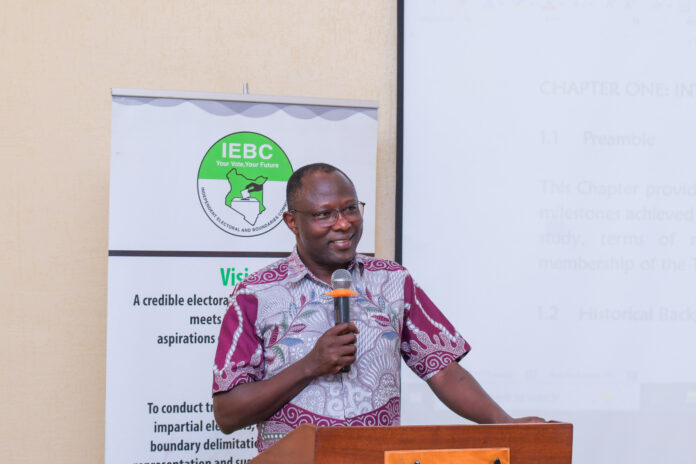
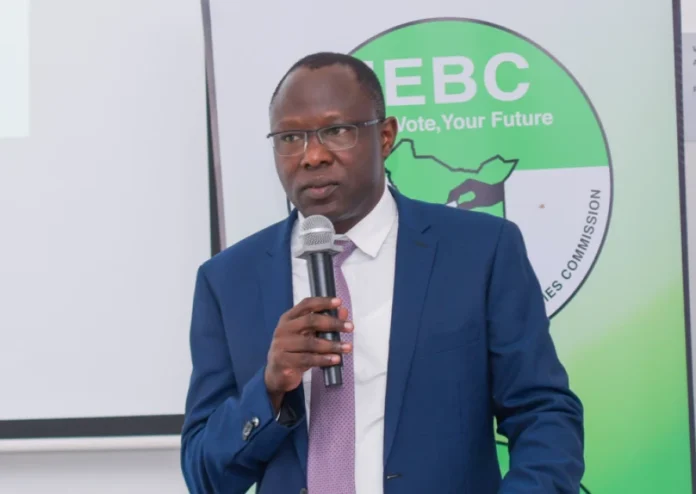
The Independent Electoral and Boundaries Commission (IEBC) Chairperson, Erastus Ethekon, has issued a stern warning against voter intimidation, violence, and unauthorized interference ahead of the by-elections scheduled for Thursday, 26 February 2026.

The IEBC prohibits voter intimidation, obstruction, and harassment of officials, emphasizing that such actions will not be tolerated.
To protect ballot secrecy, the use of mobile phones is banned inside polling booths, with strict prohibition against taking photos or recordings.

Candidates and officials are restricted to their designated polling stations and cannot move between different locations.Official campaigning concluded on Monday, 23 February 2026.
Election Areas include;

Isiolo South Constituency: National Assembly seat.
Mbeere North (Embu): MCA seats for Muminji and Evurore wards.
Malava (Kakamega): MCA seat for West Kabras ward.

Enhanced security measures include, in part, the deployment of police to The Star.Voting is scheduled from 6:00 a.m. to 5:00 p.m..

By Anthony Solly

Sifuna denies claims of Uhuru Kenyatta funding Linda Mwananchi tours

Embattled ODM Secretary General Edwin Sifuna has dismissed claims that he has been receiving political support from former president Uhuru Kenyatta to mobilise backing for the Linda Mwananchi tours conducted by his faction.

Speaking during an interview on NTV on Tuesday morning, the Nairobi senator said he has not been in any political conversations with the former head of state, describing the online allegations as unfounded.

The ODM Secretary General noted that public expectations that he would automatically be part of the Azimio leadership structure were misplaced, maintaining that his current focus is only on activities within ODM and the Linda Mwananchi movement.

”No, I have not had a conversation with him (Uhuru Kenyatta). People expected that because Sifuna is the SG of ODM, he is automatically a member of the council of Azimio. So I do not have information on what is happening in Azimio. You can only ask me questions about what is happening in ODM and Linda Mwananchi,” Sifuna said.

The outspoken senator also addressed rumours suggesting that the Linda Mwananchi tours were being financed by the former president’s political network, saying the movement has largely relied on grassroots goodwill and public contributions.

”We will give you a breakdown of our expenses in our past campaigns, and before that, we can tell you that we have been largely relying on goodwill and support from the common mwananchi, which we are very happy about,” he added.

On his political ambitions, Sifuna said the primary objective of the Linda Mwananchi caucus is to build a strong opposition force capable of challenging the administration of President William Ruto in future elections.

He said the opposition faction will eventually front a presidential candidate, maintaining that the choice will be made through extensive consultations and informed by empirical political analysis within the coalition.

”The issue of settling on the leader and who will lead us against Ruto must be a structured process. We will look at how many votes we can command from our followers. We have a duty of a lifetime to rescue our country, and this should therefore not be about Sifuna,” he said.

Sifuna further argued that the movement should cultivate several strong presidential contenders rather than concentrate power around a single figure, suggesting that at least ten viable candidates should emerge from the faction.

”I want us to grow this movement to a point that there are like 10 viable candidates for the presidency so that if they somehow go for one, nine others can be able to vie for the presidency,” he said.

He added that defeating the current administration would require a significant electoral margin, stating that the faction should aim to beat President Ruto by at least five million votes to demonstrate public dissatisfaction with the government.

”We must beat William Ruto by at least 5 million votes to make it clear that we are tired of his administration. We must be one force against William Ruto,” he said.

Regarding possible cooperation with the United Opposition formations, Sifuna dismissed the matter as not a major agenda item, saying the faction should operate with a strategic approach rather than align immediately with other groups.

United opposition condemned violence after events disrupted in Kisii

The United Opposition leaders—led by Kalonzo Musyoka, Rigathi Gachagua, and Dr. Fred Matiang’i—strongly condemned the violence and disruption of their political rallies in Kisii on Monday, 23 February 2026.

Chaos erupted as rival groups of youths clashed ahead of the opposition’s arrival in Kisii town.A vehicle suspected to be carrying “goons” was torched in Keroka, and offices at Gusii Stadium were set on fire shortly after the rally concluded.

Businesses in Kisii town were forced to shut down as running battles took place on major streets.

The leaders accused the government of using “state-sponsored goons” and “tactics” to silence dissent.Former DP Rigathi Gachagua specifically accused Kisii Governor Simba Arati of hiring youth to block the visit and attack supporters.

Wiper leader Kalonzo Musyoka and others demanded that Inspector General of Police Douglas Kanja take action against the perpetrators or “ship out”.

Despite the teargas and skirmishes, the opposition proceeded with the rally at Kisii Stadium, where Matiang’i was declared the “community spokesperson” for the Abagusii.

This incident follows similar disruptions in Kakamega and Kitengela, leading the United Opposition to warn of a “dangerous erosion” of the constitutional right to assemble. The group has threatened mass action if political violence targeting their leaders and supporters continues. “

By Anthony Solly

Kenya Navy Commander concludes high-level strategic visit to India

Kenya Navy Commander Major General Paul Otieno successfully concluded a high-level strategic visit to India from 16 to 23 February 2026. The visit aimed to deepen bilateral maritime cooperation and address shared security challenges in the Indian Ocean.

Kenya was elected Chair of the Indian Ocean Naval Symposium (IONS) for the 2030–2032 period during the 9th Conclave of Chiefs in Goa.

Major General Otieno participated in the International Fleet Review (IFR) 2026 in Visakhapatnam and Exercise MILAN, the Indian Navy’s largest multilateral naval exercise.

He attended the 5th Goa Maritime Conclave (GMC 2026) and held discussions with Indian naval leaders, including Vice Admiral Krishna Swaminathan, on operational interoperability and maritime security.

The Commander visited Goa Shipyard Limited and Zen Technologies in Delhi to explore opportunities for joint shipbuilding and technology transfer.

He paid a courtesy call to Kenya’s High Commissioner to India, H.E. Peter Maina Munyiri, and met with India’s Defence Secretary and Chief of the Army Staff to advance the “BAHARI” joint maritime vision.”

By Anthony Solly

Create a free account, or log in.

Gain access to read this content, plus limited free content.

Yes! I would like to receive new content and updates.

Sponsored Ad

Ad 1
Ad 2
Ad 3
Ad 4
Ad 5
Ad 6