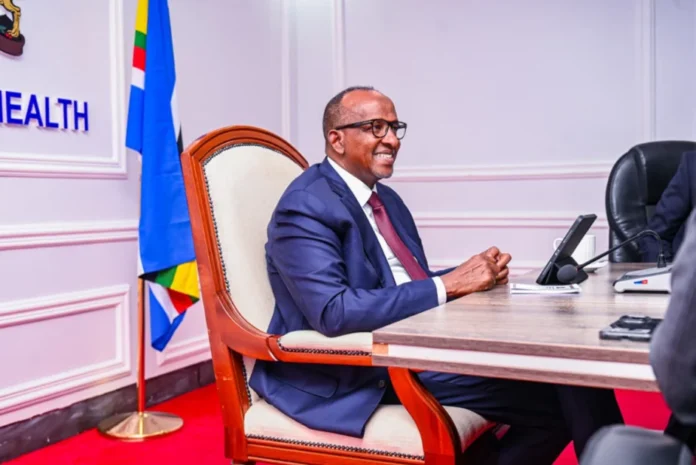
The Ministry of Health (MoH) has unveiled the Maternal Perinatal Death Surveillance and Response (MPDSR) Committee, a major initiative aimed at reducing preventable maternal and newborn deaths across the country.
Principal Secretary for Public Health and Professional Standards, Mary Muthoni, said the multi-sectoral committee will strengthen systematic reviews of maternal and newborn deaths, identify critical gaps within the health system, and coordinate timely, evidence-based interventions.
The committee’s mandate includes improving the quality of care at all levels of service delivery by identifying, reviewing, and addressing preventable deaths promptly.
“This intervention is urgent and necessary as Kenya works toward achieving the Sustainable Development Goals — reducing maternal mortality to less than 70 deaths per 100,000 live births and neonatal mortality to below 12 deaths per 1,000 live births by 2030,” Muthoni said.
She emphasized that the initiative demonstrates the Ministry’s renewed commitment to surveillance, accountability, and coordinated action to safeguard every pregnancy and every newborn life.
According to the Ministry, Kenya loses approximately 5,000 mothers annually — translating to an estimated 13 to 25 maternal deaths every day.
The National Assembly has raised alarm over reports that Kenyan youth are being recruited to fight in Russia’s war in Ukraine under the pretext of overseas employment.
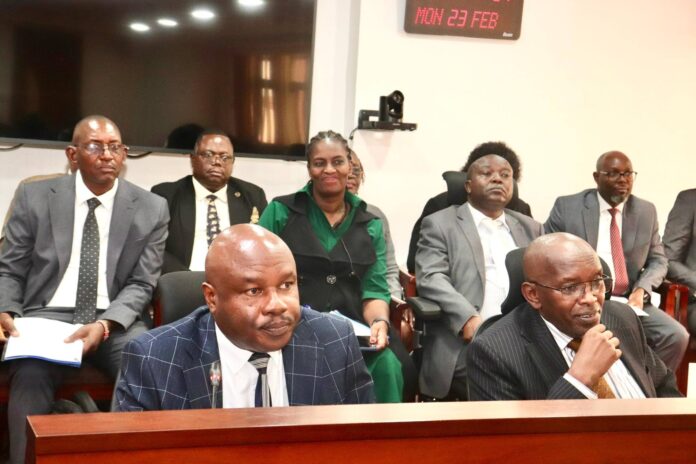
During a session on Monday, Principal Secretary Shadrack Mwadime appeared before the Departmental Committee on Labour and acknowledged that young Kenyans are being lured into unsafe situations.
He noted that official labour migration programs are not fully reaching vulnerable populations.
The Committee, chaired by Kilifi South MP Ken Chonga, pressed the PS on how citizens ended up involved in a foreign conflict despite Kenya having no bilateral labour agreements with Ukraine.
The inquiry follows a report by Leader of the Majority Party Kimani Ichung’wah, implicating officials from agencies, including the National Employment Authority (NEA), in allegedly facilitating travel to Russia under false employment pretences.
Multiple accounts have emerged in recent months of youth being recruited to participate in Russia’s war effort, often promised legitimate jobs abroad.
Legislators described the situation as a growing crisis requiring urgent intervention.
PS Mwadime told the Committee that fraudulent recruitment agencies are exploiting young people, who often travel on visitor visas only to encounter life-threatening circumstances.
“Genuine labour migration programs, processed through official government channels and Kenyan embassies abroad, are designed to ensure safe, dignified, and legally protected employment,” Mwadime said.
MPs also questioned the Ministry’s measures to identify and shut down rogue agencies that exploit job seekers, including those seeking work in the Middle East.
They noted that budget constraints have limited the State Department’s capacity to regulate labour migration and monitor recruitment practices effectively.
After extensive deliberations, the Committee concluded that urgent action is needed to eliminate rogue recruiters, enhance oversight, and safeguard Kenyan youths from exploitation abroad.
Members of Parliament vowed to pursue further investigations and ensure official channels reach those most at risk.
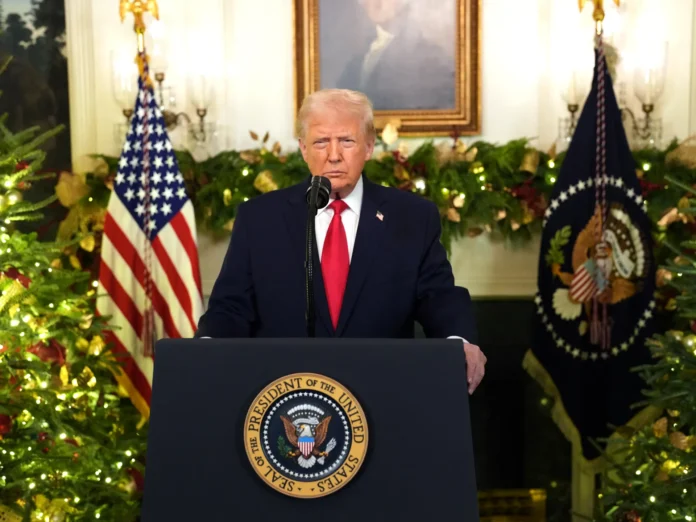
Few of Donald Trump’s speeches to Congress have had as much riding on the outcome as the State of the Union address he will deliver on Tuesday night.
Over the course of the past year, Trump has pushed the envelope of presidential power in a multitude of directions.
He has achieved substantive accomplishments, both domestically and in foreign policy. But not all of his achievements have been popular – and some have been highly divisive.
Regardless of how his policies have been perceived, Trump will address an America notably different than the one he returned to lead last year.
He has enacted his sweeping second-term agenda at breakneck speed; cracking down on illegal immigration and effectively sealing the border, upending foreign alliances, challenging the checks and balances that are foundational to the American political system, and fundamentally redefining the role of the presidency.
He has, however, run headfirst into significant obstacles, both from the public and key institutions that have curtailed his ambitions.
Opinion polls suggest public mood has soured on Trump in his second term. A recent CNN poll indicated only 36% of Americans approved of the job Trump is doing. A Washington Post survey returned a similar figure at 39%. This State of the Union address represents an opportunity for Trump to stop the bleeding at a pivotal time.
In just over eight months, voters will pass judgement on Trump’s second presidential term in November’s midterm elections. They could preserve his Republican majority in Congress or hand power to the Democrats, assuring two years of legislative gridlock and aggressive oversight that could, in his own words, see him impeached once again.
Several weeks after Dancan Chege left his home in Kimende town in Kenya’s Kiambu County for Russia, having been promised a job as a truck driver, he instead found himself on the front lines of the war in Ukraine.
With no combat experience, it was not something he had signed up for. But the trainer readying Chege and other fighters told him: “This is the Russian military, and once you are in, you either fight or die,” he said.
Last week, Kenya’s National Intelligence Service (NIS) unveiled a report which said more than 1,000 Kenyans have been recruited “to fight in the Russia-Ukraine war”, with 89 currently on the front line, 39 hospitalised and 28 missing in action.
Chege, a 30-year-old father of one, is one of the few who made a narrow escape, but dozens of families are demanding that the government take action to ensure their loved ones’ safe return home.
Many of the returnees and families of those still abroad say they were lured or tricked into joining the war on Russia’s side.
Chege, who used to work as a truck driver, delivering fresh vegetables from his town to the coastal city of Mombasa, was fraudulently recruited last year after he lost his job and decided to look for other opportunities.
He asked a friend who worked as a driver in the Gulf for advice. “He connected me with an agent in Nairobi who had taken him there,” Chege recounted, sitting in his living room in Kimende. “After we spoke, she [the agent] told me that jobs in Dubai, where I wanted to go to work as a driver, would take long and that she would get back to me when she had a good offer.”
Two weeks later, the agent called back, saying she had a good offer for him to work in Russia as a truck driver delivering supplies to military barracks.
He accepted, and within three days in October, Chege had a visa and an air ticket. “A Russian agent asked me whether I was ready to travel … He had called me at 6am and by 11am I already had a plane ticket for 3am the next morning,” he said.
Chege’s family took him to the airport, where he left on a connecting flight via Istanbul, Turkiye, before landing in Moscow, the Russian capital.
In Russia, he was sent for a week of ballistics training before being transferred to a Russian base in Ukraine, where he says he was given a full combat uniform, and his civilian clothes were burned.
“On the way, some Chinese and Russians asked me through a translator why I was there, and I insisted that I was going to drive the military trucks. They were surprised but told me that they were specifically there to ‘fight and kill the Ukrainians’,” Chege recounted.
“When I asked some Ugandans and Kenyans that I met later, and seeing what training we were being given, we realised that we had been fooled and we were going to the war front.”
Chege shows army boots that he was given as part of a military uniform in Russia [Dominic Kirui/Al Jazeera]
‘I saw thousands of dead bodies’
In recent months, reports have surfaced from South Africa, Zimbabwe and elsewhere in Africa about young men fraudulently recruited for work abroad, only to end up on the front lines in the Russia-Ukraine war.
All in all, nationals from 36 African countries are known to be fighting for Russia in the four-year war, Ukraine’s foreign minister said in November.
At the base he was sent to in Ukraine, Chege went through a one-month training and was sent to what he called the “yellow zone” before eventually going to the “red zone”.
“Our trainer there told us that it was going to get tough. He prepared us for the worst and told us that we should be courageous enough to see dead bodies.”
Soon after, Chege witnessed this firsthand. “I saw thousands of dead bodies that were piled into something like a wall.” That’s when he knew he had to find a way out.
“I tried to call my agent and went to the commander, asking to leave,” he said, but was told he was in it until the end.
A week into fighting, Chege thought he would not survive. He called his wife and told her that if he went offline, his family would know that he had died.
“Three of my friends from the six of us had been killed by a drone,” he lamented.
With no other options, Chege decided to feign a mental breakdown.
“I decided to discharge my firearm aimlessly into the woods, and after all 12 magazines were spent, I pretended to be mad, collecting cartridges from the ground and eating them while talking to myself, unbothered by my two friends who rushed to check on me.”
The other soldiers were ordered to take him back to base, which was “a relief”, he said, as he was afraid they would kill him then and there.
He was later taken to a military hospital for mental health treatment, where, with the help of a Russian soldier who was a patient, he got access to a phone to contact his family. He asked them to send fake car accident photos from his mother’s phone, explaining that his wife and three children had been killed and he was needed back in Kenya.
“That made the doctor give me permission to go to the commander,” he said, “and that is how I went to the Kenyan embassy and flew back home.”
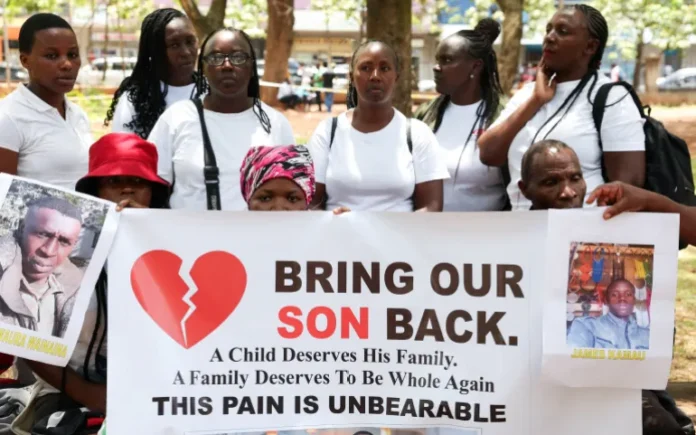
Relatives of Kenyan nationals conscripted by the Russian army in Ukraine pose with their photos during a peaceful demonstration demanding urgent government action to repatriate their kin, in Nairobi, on February 19, 2026 [Simon Maina/AFP]
Fighting ‘shoulder to shoulder’
Chege returned to Kenya last month at a time when more reports were surfacing of Africans trapped or killed on the front lines of the Ukraine war.
On February 10, Kenya’s Prime Cabinet Secretary (PCS) Musalia Mudavadi announced that the government had repatriated more than two dozen Kenyans from the war zone and that Moscow’s use of its citizens in combat was unacceptable.
“We have facilitated 27 Kenyans to come back home away from the front line and from what they thought were different jobs but ended up being lured into battle,” he said.
The PCS also said he would put the issue of fraudulent recruitment of Kenyan civilians into war on the agenda at a planned meeting in Russia.
“We have seen loss of lives, and I am planning to make a visit to Moscow so that we can emphasise that this is something that needs to be arrested,” he said in a statement to the media.
In its report last week, the NIS said that to facilitate Kenyans’ travel to the front lines, recruitment agencies had colluded with rogue airport staff and immigration officials of the country, as well as with staff at the Russian embassy in Nairobi and at the Kenyan embassy in Moscow.
The Russian embassy in Kenya denied wrongdoing, calling the claims a “dangerous and misleading propaganda campaign”.
“The embassy refutes such allegations in the strongest possible terms,” it said in a statement on X, adding that the Russian government had “never engaged in illegal recruitment of Kenyan citizens in the Armed Forces”.
However, it added that Moscow does not preclude citizens of foreign countries from “voluntarily enlisting in the armed forces” and fighting “shoulder to shoulder” with Russian servicemen.
Relatives of Kenyans believed to be fighting for Russia in Ukraine demand accountability for them, in Nairobi, Kenya, February 19, 2026 [Monicah Mwangi/Reuters]
‘Deceptive recruitment’
Andrew Franklin, a Nairobi-based security analyst and former United States marine, says the Russian military has been recruiting all kinds of people into its army, including from the country’s own prisons and labour camps.
“What the Russian military is looking for are bodies, just bodies to fill holes in the ranks and keep the war going,” he said, explaining that Ukraine does not have the military power to overcome the Russians, so extending the ground war works in Moscow’s favour.
According to Franklin, Africa has a huge youth population, which is a selling point for such recruitment efforts, especially in Anglophone Africa. The level of education in East Africa and people’s ability to operate in the English language are helpful for issuing orders on the battlefield, he said.
Rights groups have condemned the fraudulent recruitment of civilians into Russia’s war.
“The deceptive recruitment of Kenyan youth into foreign conflicts is a grave violation of their rights and dignity,” said Irungu Houghton, Amnesty International executive director in Kenya.
“It is deeply concerning that recruitment agents have been openly operating within our borders without legal consequences to date. We encourage Kenyan youth to thoroughly research opportunities abroad and remain vigilant against fraudulent recruitment,” he said.
Bibiana Wangari shows a photo of her son in a full combat Russian military uniform, which he sent her while in Ukraine, before being killed on the front lines in December [Dominic Kirui/Al Jazeera]
‘My son is gone’
A day after the NIS released its report, dozens of families protested in Nairobi, demanding the government take action against the network of officials and syndicates tricking locals into joining the war.
Many are still awaiting news about their loved ones’ whereabouts and when they might return. Meanwhile, other families are grieving the deaths of their sons and brothers.
In Nairobi’s Kamulu estate, Bibiana Wangari and her family are recovering from the loss of her son, who was fraudulently recruited into the Russian army with a promise of a plant operator job.
Charles Waithaka, like Chege, ended up joining the fight in Ukraine, where he was killed.
His mother remembers his last moments in Kenya before he left.
While packing his bags, she told him to be careful not to inadvertently transport things like drugs for someone else, something she now wishes he had done.
“I wish he had drugs in his bags because he would be arrested at the airport and jailed here locally. I would be seeing him in jail here, but alive,” Wangari said through sobs.
After Waithaka left, Wangari heard on a local radio station that young Kenyan men were being lured by rogue agents to travel for well-paying jobs in the Gulf and, on getting there, they were flown to Moscow instead.
“That got my attention because Charles told me they first landed and spent the night in Sharjah, before flying to Moscow,” she said.
Wangari lost communication with Waithaka after that. Later, at the end of January, she was informed by her son’s friend that he had been killed.
A Catholic priest leads a prayer during a funeral service of Charles Waithaka, who was killed while fighting in Ukraine, next to a symbolic grave after failing to retrieve his body from Russia for burial, at the family’s village of Mukurweini, in Nyeri, Kenya, on February 6, 2026 [Daniel Irungu/EPA]
“His friend told me that he had been killed [on December 27] alongside five of his troop members after he stepped on a landmine, with only one surviving after losing his hand,” she said.
The family conducted a burial ceremony without Waithaka’s body in their village of Mukurweini in Nyeri County on February 6.
“My son is gone, and I will never see him,” Wangari said. But her wish now is that the government “should close down the borders and try to bring back the few [Kenyans] that are left … in any condition they are in.”
Chege, now at home with his family in Kimende, says he knows many other Kenyans who died on the battlefield, lamenting that their bodies cannot be retrieved.
For escapees such as himself – many of whom are still in need of jobs – he says he hopes the government will find ways to put their new skills to use locally.
“We are well-trained. I can handle bombs, bazookas, and all types of guns,” he said. “The government should consider recruiting us even into the police service at least.”
The High Court has temporarily halted the reappointment of members to the Board of Kenya Electricity Transmission Company (KETRACO), issuing an interim conservatory order pending further directions.
In the ruling, Justice Lawrence Mugambi directed that any Gazette notice seeking to appoint or reappoint members of the current board be suspended until the next mention date, unless the court extends the orders.
The judge ordered that the interim conservatory orders remain in force until the matter is mentioned again and emphasized that the case should be heard and determined within 20 days.
The decision follows a constitutional petition filed by Benjamin Okumu, who alleges that the KETRACO Board has violated constitutional principles on national values and governance, particularly regarding inclusivity and ethnic diversity in public appointments.
According to court filings, Okumu claims the board presided over recruitment and appointment processes that heavily favored one ethnic community, undermining the constitutional requirement for representation of Kenya’s diverse population.
The petition states that five out of eight senior executive positions — approximately 63 percent — are currently held by individuals from a single community.
It further alleges that shortly after the present board assumed office, several top executives were removed and replaced, resulting in five out of nine senior management roles being occupied by individuals from the same ethnic group.
Huduma Kenya has dismissed claims of an ongoing mass recruitment drive after a purported appointment letter began circulating online.
In a statement on Tuesday, February 24, Huduma Kenya clarified that the alleged appointment letter is fake and does not originate from the government service delivery agency.
“Huduma Kenya wishes to alert wananchi that a fraudulent appointment letter, which has been circulating online, is not authentic and should be disregarded,” the statement read.
Huduma Kenya maintained that any recruitment notices, updates, or public communication would only be shared through its recognized and verified platforms.
“All official Huduma Kenya communications are issued only through our verified channels, including our official website, Huduma Contact and Tele-Counselling Centre 1919, and verified social media accounts,” the statement added.
Huduma Kenya further urged Kenyans to exercise caution and verify the authenticity of any recruitment-related information before acting on it.
“We urge citizens to remain vigilant and to confirm any information directly with Huduma Kenya before taking action. Any suspicious documents should be reported immediately,” the statement concluded.
Members of Parliament have cautioned state departments under the Ministry of Water, Sanitation and Irrigation against initiating new projects in the upcoming financial year.
Speaking during the 2026 Budget Policy Statement (BPS) meeting on Tuesday, February 24, Committee on Blue Economy, Water & Irrigation Chairperson, Marakwet East MP Kangogo Bowen, warned that limited resources should be directed toward completing stalled and ongoing works.
He made it clear that the committee would not support the rollout of new projects under the 2026 BPS framework.
“You cannot spend what’s not available nor stretch beyond the limits. You can’t say you have a shortage of resources when you keep bringing new projects,” he said.
The committee drew the line following the Ministry’s request for additional funding, part of which is expected to fund new projects.
Legislators insisted that with numerous incomplete and underfunded initiatives across the country, priority must be given to delivering existing commitments before launching fresh ones.
Appearing before the committee, the Cabinet Secretary for the Ministry of Water, Sanitation and Irrigation, Eric Mugaa, accompanied by the Principal Secretaries for the State Departments for Water & Sanitation and Irrigation; Julius Korir and CPA Ephantus Kimotho, defended the Ministry’s budget requirements against the 2026 proposed Budget allocations.
Korir briefed the Committee that the State Department for Water and Sanitation requires Ksh120.1 billion against the 2026 BPS proposed expenditure ceiling of Ksh56.8 billion.
He explained that enhanced funding would ensure equitable access to clean and safe water across the country through the implementation of key projects.
On his part, Kimotho sought an additional funding of Ksh20.5 billion, over and above the proposed BPS allocation of Ksh943 million.
Kimotho warned that inadequate funding will adversely affect implementation of ongoing projects and also cause delays on projects completion, resulting to stalling and possible pending bills.
Defending the State Departments, Mugaa emphasized that climate change has significantly reduced the reliability of rain fed agriculture, making irrigation development the most sustainable solution for food security challenges.
Owing to the shortfall in the ministry’s budget requirement, the CS implored the committee to assist the ministry by raising the budget ceilings for the two State Departments to increase the capacity to fund projects, improve service delivery and even accommodate more programs to cushion the growing demand of Kenyans.
The National Transport and Safety Authority (NTSA) has entered into a Public-Private Partnership (PPP) to improve Smart Driving Licences issued in the country.
In a notice published on Tuesday, February 24, NTSA announced that the PPP will reduce the production timeline of Smart DLs within 48 hours.
The PPP signed by the Authority, the Kenya Commercial Bank, and Pesa Point will purchase three production machines to facilitate faster production of the digital licenses.
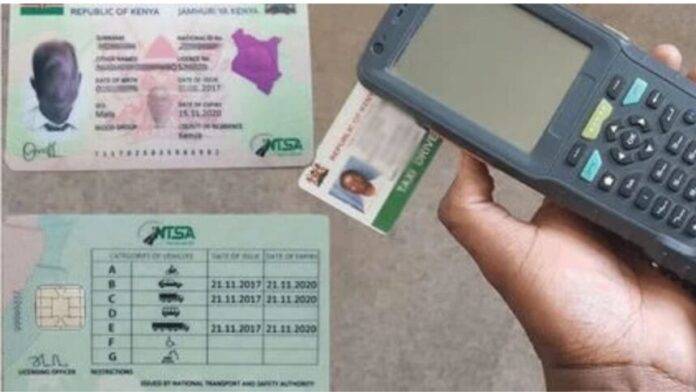
The new smart licences will be five-layered polycarbonate smart cards, and drivers will pay Ksh3,000 for issuance, duplication or replacement.
NTSA stated that the smart driving licenses will contain a record of the driver’s history and the driver’s life cycle.
Drivers will also have access to a digital mobile driving wallet incorporated into the smart DLs, where they can deposit money, which can be used to pay fines or license renewals.
PHOTO | COURTESY A sample of a Smart Driving Licence.
“The PPP will incorporate the deployment, implementation, and operationalisation of the instant fine infrastructure, including mobile driving licence wallet, driver merit and demerit point system, driver history, driver life cycle management and general information,” the Safety Authority explained.
NTSA disclosed plans to establish 102 enrolment centres and deploy 392 enrolment kits across the country to ensure that all drivers have the smart DLs.
“There is low driver enrolment due to inadequate enrolment kits and centres. Out of the estimated 5 million drivers, only 1,3 million have acquired smart driving licenses,” the notice read in part.
NTSA will also install a total of 1,000 speed enforcement cameras and set up a National Control Command Centre, where information on speeding drivers will be sent and fines processed.
The PPP has been estimated at Kh42 billion and will enable the production of 5 million smart licences every 3 years for 21 years.
NTSA estimated the economic costs of road accidents at Ksh450 billion in medical care, which totals to 5 percent of Kenya’s GDP.
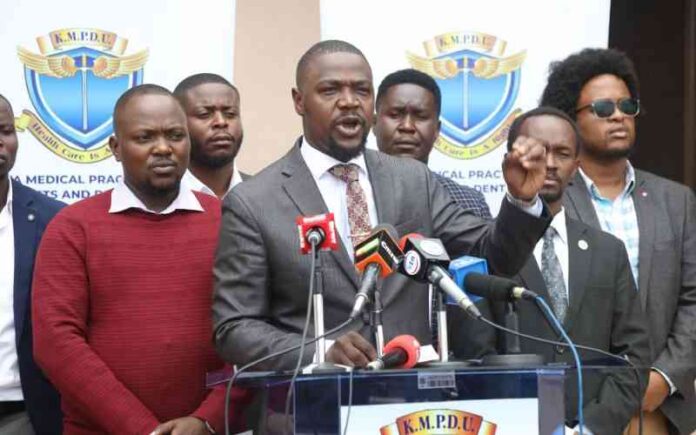
The Kenya Medical Practitioners, Pharmacists and Dentists Union (KMPDU) has issued a seven-day strike notice in Mombasa County following the suspension of Coast General Teaching and Referral Hospital (CGTRH) CEO, Iqbal Khandwalla.
In a statement on Tuesday, February 24, the union faulted the county administration’s handling of the matter, questioning both the procedure followed and the broader working environment for doctors in the coastal county.
KMPDU said it had reviewed the county’s explanation regarding the suspension but found it unsatisfactory.
“The KMPDU has taken note of the County Government of Mombasa’s position statement regarding the suspension of our member, Dr. Iqbal Khandwalla.
“While the County describes the suspension as a standard procedural step and assures the public of an impartial process, the circumstances surrounding this action raise serious concerns,” the statement read.
KMPDU maintained that doctors were increasingly speaking out about the challenges they face in public health facilities and would not accept what it described as victimisation.
“Doctors are now willing to speak up about the conditions they work under. We shall not be silent as we are being used as sacrificial lambs in a failed system. We urge our fellow citizens to accord us a hearing,” the statement added.
KMPDU further questioned whether due process had been followed in the suspension, particularly regarding the role of the County Public Service Board.
“To date, there has been no clear demonstration of a properly deliberated and authorised resolution of the County Public Service Board. Assurances of fairness cannot substitute statutory compliance,” the statement continued.
File image of Dr. Iqbal Khandwalla
KMPDU also alleged that Khandwalla had been subjected to a hostile working environment prior to the suspension.
According to the union, offensive remarks were directed at the doctor while he was on duty, yet no corrective action was taken.
“Equally concerning is the failure to address the hostile environment created prior to this action. Tribal and demeaning expletives were publicly directed at our member while on duty. No formal condemnation has been issued. No administrative action has been taken to safeguard doctors from political intimidation,” the statement noted
As a result, KMPDU announced that doctors in Mombasa would significantly reduce services while prioritising their safety.
The union clarified that only emergency and life-saving services would continue during the notice period.
“Accordingly, doctors in Mombasa County will continue to prioritise their safety; only minimal emergency and life-saving services shall be provided; there shall be no consultants’ clinics and no elective procedures until the situation de-escalates and adequate administrative safeguards are put in place; we have given a 7-day strike notice that ends on 3rd March 2026,” the statement concluded.
Khandwalla was suspended over concerns related to his conduct and job performance.
In a statement on Sunday, February 22, the Mombasa County Secretary’s office announced that the hospital’s board reached the decision during a special meeting convened to deliberate on operational issues that have impacted public trust in the facility.
While explaining the move, the board cited governance and stakeholder concerns that have affected the hospital’s leadership standing.
“The Board noted with concern a sustained deterioration in institutional governance climate and stakeholder relations affecting the Hospital’s leadership interface with the community it serves, and general members of the public,” the statement read in part.
The board underscored the hospital’s position within the county’s healthcare system, stressing the importance of maintaining stability, accountability and credibility.
Khandwalla will remain suspended as a comprehensive governance review is undertaken.
Sood Mohamed has since been appointed to serve as acting CEO.
KMPDU has threatened industrial action after the interdiction of Coast General Hospital CEO Dr. Iqbal Khandwalla, as residents and hospital board defend the decision.
Davji Bhimji Atellah, KMPDU National Secretary General, condemned the move, describing it as “politically motivated” and procedurally flawed.
“The interdiction of Dr. Iqbal Khandwalla raises serious concerns about due process and respect for professional institutions. He was interdicted without a mandatory show-cause letter and without the opportunity to respond to the allegations,” Atellah stated.
He warned that such actions risk scapegoating individuals for systemic challenges within the healthcare sector, which he said require structured and transparent solutions rather than punitive measures.
“This sets a dangerous precedent for the management of our health facilities. Healthcare workers must not be turned into targets when systems fail. Accountability must follow the law,” he added.