Sponsored Ad

Ad 1
Ad 2
Ad 3
Ad 4
Ad 5
Ad 6
23.6 C
Kenya
Friday, May 8, 2026
Home Blog Page 372

Babu Owino, Sifuna Visit Family of Man Killed During Kitengela Rally

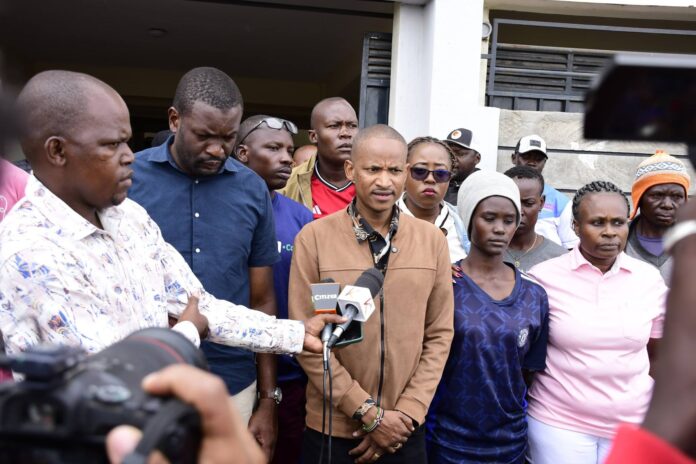
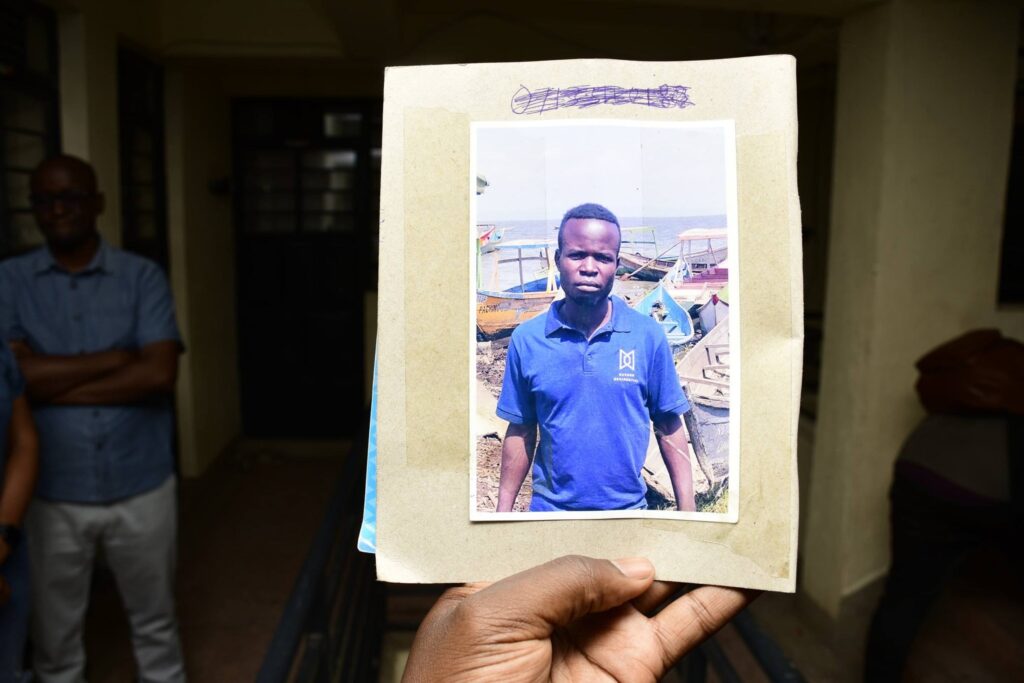
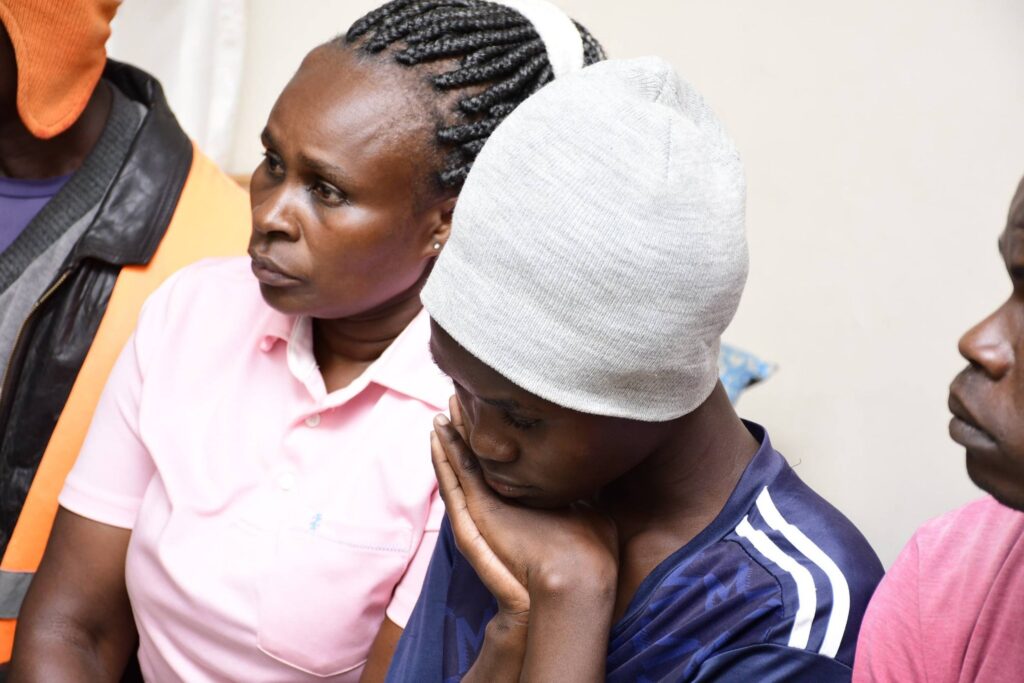
Nairobi Senator Edwin Sifuna and Embakasi East MP Babu Owino on Monday, February 23, visited the family of Vincent Ayomo, who was shot dead during a political rally in Kitengela.

Speaking during the visit, Sifuna expressed sympathy to the bereaved family and directly blamed the government for the death, insisting that those holding the rally were not responsible for the shooting.

“We just want to express our condolences for the loss of your relative, and the person who should be blamed is the Government of Kenya because we did not shoot anyone. Vincent was killed by a police bullet,” he said.
Sifuna clarified the circumstances under which Ayomo was shot, stating that the incident occurred after the rally had concluded and reiterating that their meetings are meant to engage citizens peacefully.

‘Vincent was not shot while the meeting was ongoing; he was shot after the meeting had ended. Our intention is to speak with citizens, and we do not expect that anyone should lose their life because of meetings,” he added.

Sifuna further assured the family of their support and pledged to push for investigations, arguing that the bullet used could be traced back to the officer responsible.

“The little we can do for now is to help ease your burden. We see how you are living here, and even after the burial, we will follow up to ensure that justice is served. All government bullets have serial numbers, and the police officer responsible can be traced and identified. We want accountability from the government, and the person involved in Vincent’s killing must be known,” he stated.

File image of Edwin Sifuna and Babu Owino at Vincent Ayomo’s home

The Independent Policing Oversight Authority (IPOA) has since launched investigations following Vincent’s death.

In a statement released on Monday, February 16, after monitoring events in both Mombasa and Kajiado County, the authority confirmed that it had been present to observe police conduct as part of its constitutional mandate. 

“The Independent Policing Oversight Authority (IPOA), pursuant to its mandate, monitored police conduct during the political rallies held in Mombasa and Kajiado counties on 15th February 2026 to ensure compliance with Article 244 of the Constitution of Kenya and other applicable laws,” the statement read.

IPOA expressed concern over the reported fatality and injuries during the rally, stating that the incident occurred as police officers sought to maintain public order.

“The Authority noted with great concern the loss of life and injuries during the Kitengela political rally, allegedly occurring as members of the National Police Service (NPS) endeavoured to maintain law and order,” the statement added.

Following the incident, the oversight body said it had immediately moved to initiate an independent inquiry. 
A rapid-response team made up of monitoring and investigation officers has been dispatched to collect evidence, interview witnesses, and establish the sequence of events that led to the death.

“Accordingly, in compliance with Part B (5) of the Sixth Schedule of the NPS Act, CAP. 84 of the Laws of Kenya, read together with Section 6(a) of the IPOA Act, CAP. 86 of the Laws of Kenya, IPOA has deployed a rapid-response team comprising monitoring and investigation officers to Kitengela to conduct independent inquiry into the matter,” the statement continued.

IPOA said the investigation will focus on determining the circumstances surrounding the incident, including the role played by law enforcement officers and whether the force used was necessary and proportionate under Kenyan law.

“The investigations aim to establish the circumstances surrounding the incident, determine the extent of police involvement, assess whether the use of force was justified, and evaluate whether it was proportionate as defined by law,” the statement noted 

IPOA pledged transparency once the inquiry is complete, saying the findings will be released to the public and recommendations issued to relevant government agencies if wrongdoing is established.

“The Authority will make its findings public and issue recommendations to the relevant agencies to address identified issues where culpability is established,” the statement concluded.
Top Mexican cartel leader ‘El Mencho’ killed in military operation

(AP) — The Mexican army killed the country’s most powerful cartel leader and one of the United States’ most wanted fugitives on Sunday, notching a major victory while cartel members responded with a wave violence across the country.

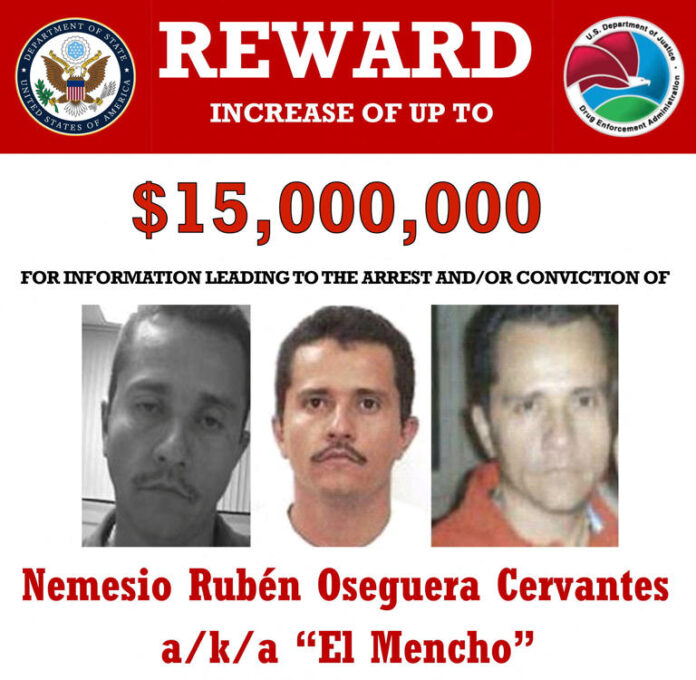
The killing of Jalisco New Generation Cartel leader Nemesio Oseguera Cervantes during an attempt to capture him in Jalisco state was the highest-profile blow against cartels since the recapture of former Sinaloa cartel boss Joaquín “El Chapo” Guzmán a decade ago.

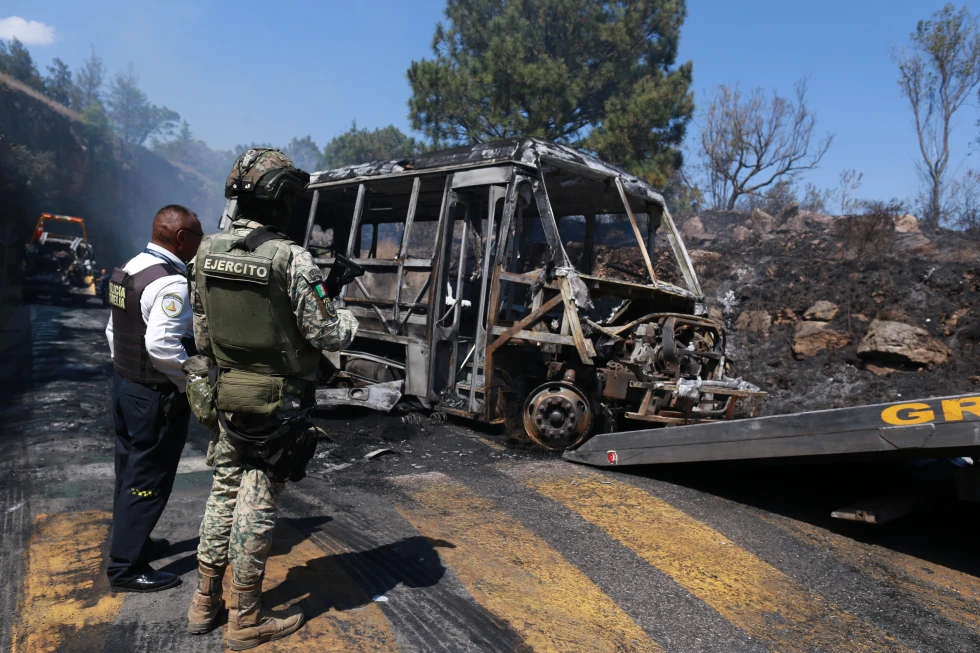
Following Oseguera Cervantes’ death, gunmen unleashed violence across the country. Cars burned out by cartel members blocked roads in 20 Mexican states and left smoke billowing into the air. People locked themselves in their homes in Guadalajara, Mexico’s second-largest city and Jalisco’s capital, and school was canceled Monday in several states as security forces were placed on alert all over the country. Even Guatemala reinforced security on its border with Mexico.

The killing could give the government a leg up in its dealings with the U.S. Trump administration, which has been threatening tariffs or unilateral military action if Mexico does not show results in the fight against the cartels.

But the long-term effect on Mexico’s security landscape remains unclear.

Here’s what to know:

‘El Mencho’ was the leader of a fast-growing criminal group

Oseguera Cervantes, better known as “El Mencho,” was 59 years old and originally from the western state of Michoacan. His ties to organized crime went back at least three decades.

In 1994, he was tried for trafficking heroin in the U.S. and sent to prison for three years. Upon returning to Mexico, he quickly rose through Mexico’s drug trafficking underworld.

Around 2009, he founded the Jalisco New Generation Cartel, which became Mexico’s fastest-growing criminal organization, moving cocaine, methamphetamines, fentanyl and migrants to the United States, and using violence with the use of drones and improvised explosive devices.

The cartel earned a reputation for brazen attacks on Mexican security forces, including downing a military helicopter in Jalisco in 2015 and attempting a spectacular, but unsuccessful, assassination of Mexico City Police Chief Omar García Harfuch, who is now Mexico’s federal security secretary.

It recruited aggressively, experimenting with new ways to reach potential members online, and generated revenue through fuel theft, extortion and timeshare fraud, among other activities.

Oseguera Cervantes died in a battle with troops sent to capture him

Oseguera Cervantes was killed during an attempt to capture him, as his followers attempted to fight off Mexican troops.

Mexico’s Defense Department said in a statement that the army launched an operation in the southern part of Jalisco state to capture Oseguera Cervantes, involving the Mexican Air Force and special forces.

The cartel counterattacked, and in the ensuing confrontation, federal forces killed four members of the criminal group, and wounded three others, including its leader, who died later during transfer by air to Mexico City, according to the statement.

Three soldiers were injured and two people were detained in the action. Rocket launchers capable of shooting down aircraft and destroying armored vehicles were seized at the scene.

Mexico is keen to show Trump results in the fight against cartels

Oseguera Cervantes’ will help Mexico’s government show results to the U.S., which is pressuring its neighbor to pursue drug cartels more aggressively. Both countries said intelligence cooperation helped lead to Sunday’s operation.

Oseguera Cervantes was facing multiple indictments in the United States and the U.S. State Department had offered a $15 million reward for information leading to his arrest. The Trump administration designated his cartel and others foreign terrorist organizations a year ago.

U.S. Deputy Secretary of State Christopher Landau, who was U.S. ambassador to Mexico during the first Trump administration, applauded the operation via X, writing: “The good guys are stronger than the bad guys. Congratulations to the forces of law and order in the great Mexican nation.”

Mike Vigil, former chief of international operations for the DEA, said Mexico had sent a “a strong message to Donald Trump’s administration that they are fighting aggressively and effectively” against the most powerful cartels. He added that “the majority of the information came from the Mexican armed forces and all credit goes to Mexico.”

Cartel leader’s death leaves a power vacuum

It’s not clear who will succeed Oseguera Cervantes, or if any one person can.

The Jalisco cartel has a presence in at least 21 of Mexico’s 32 states and is active in almost all of the United States, according to the U.S. Drug Enforcement Administration. But it is also a global organization and the loss of its leader could be felt well beyond Mexico.

“El Mencho controlled everything, he was like a country’s dictator,” Vigil said.

His absence could slow the cartel’s rapid growth and expansion and leave it initially weakened against the Sinaloa cartel on several fronts where they or their proxies are fighting. The Sinaloa is locked in its own internal power struggle, however, between the sons of “El Chapo” and the faction loyal to Ismael “El Mayo” Zambada, who is in U.S. custody.

Vigil said Mexico should seize the moment to launch “an effective frontal assault based on intelligence.”

“This is a big opportunity for Mexico and the United States if they work together,” he said.

Security analyst David Saucedo said that if relatives of Oseguera Cervantes take control of the cartel, the violence seen Sunday could continue. If others take power, they could be more willing to turn the page and continue operations.

The greatest fear would be that the cartel turns to indiscriminate violence. They could decide to “launch narcoterrorism attacks … and generate a scenario similar to what Colombia lived in the 1990s,” a full-on attack against the government “car bombs, assassinations and attacks on aircraft.”

ODM announces date for NDC to confirm Sifuna’s ouster

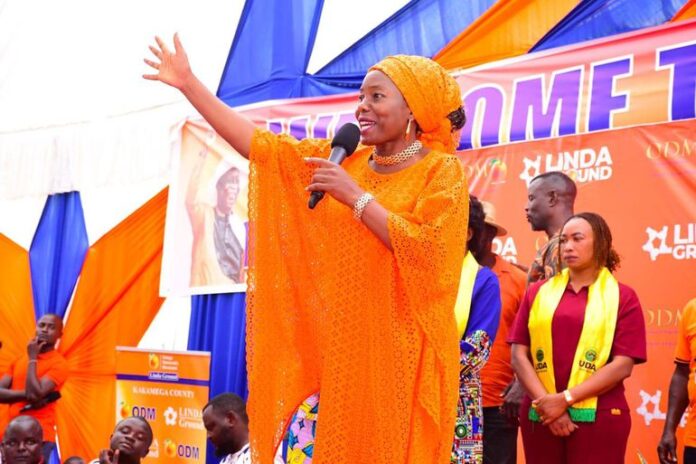
Busia County Woman Representative Catherine Omanyo has announced that the Orange Democratic Movement (ODM) party shall have the National Delegates Conference (NDC) on March 27, 2026.

The NDC is expected to address key party matters including confirming the removal of party secretary general, Edwin Sifuna. 

In a statement on Sunday, February 22, 2026, Omanyo said the party’s constitution clearly outlines how the NDC should be convened, including the issuance of notice and publication requirements.

“The ODM Constitution is clear on how the NDC should be convened. The notice and agenda convening the meeting shall be sent out by the Secretary General, failing which any other party official specifically appointed for that purpose by the National Executive Committee at least twenty-one days before such date,” she stated.

She added that the notice must also be published on the party’s website and/or in at least one English daily newspaper with wide national circulation, or broadcast through at least one leading Swahili radio station.

Omanyo confirmed that the party will hold its National Delegates Conference on March 27, 2026, in line with the constitutional provisions.

The NDC is ODM’s highest decision-making organ and is expected to deliberate on key party matters.

Under normal circumstances, according to the ODM constitution, an NDC should be announced by the party secretary general, in this case Nairobi Senator Edwin Sifuna.

However, ODM’s National Executive Committee (NEC), on February 11, 2026, sought to remove Sifuna as the secretary general of the party, a move that was halted by the Political Parties Disputes Tribunal (PPDT).

PPDT also barred ODM from publishing the resolution in the Kenya Gazette, a move that would have formalised and effected his removal.

The conservatory orders will remain in force pending the hearing and determination of a notice of application filed by Sifuna challenging his removal as the party’s SG.

This was after the ODM NEC declared Sifuna’s removal on Wednesday, February 11, 2026.

Stranded, Desperate and Forgotten: Kenyans Trafficked to Cambodia Cry for Help as Rescue Efforts Stall

By Andrew Kariuki

A group of Kenyans stranded in Cambodia after falling victim to alleged human trafficking has issued a desperate plea for help, raising serious concerns over their safety and the government’s response to their dillema.

In a message seeking legal intervention, the victims say they were lured to Cambodia under false promises, only to find themselves abandoned and unable to return home.

“Hello sir, good evening. We’re reaching out in desperation,” reads part of the message sent to Kenyan lawyer Danstan Omari. “We were victims of human trafficking, brought to Cambodia and left stranded. It’s been a month and a half now, we’re unable to afford return tickets home.”

According to the victims, their situation has become increasingly dire, with no clear pathway back to Kenya due to financial constraints.

Through their lawyers, Danstan Omari and Shadrack Wambui, the victims further alleged during a press briefing that those who managed to escape into Thailand have been given up to February 28 to return to Kenya, failing which they risk facing legal action, including possible imprisonment.

According to the victims, they were lured to Cambodia with promises of employment opportunities, only to be issued with tourist visas and one-way tickets.

Upon arrival, they claim they were instead forced into exploitative working conditions after being issued work permits under unclear circumstances.

The victims allege that they were subjected to inhumane treatment, including torture and forced labour in scam operations.

One young Kenyan woman recounted that after failing to meet assigned targets, she was allegedly taken into a dark room where individuals attempted to sexually assault her.

She stated that she fought back and narrowly escaped unconsciousness, only to later find herself abandoned in a forest, left for dead.

Others claimed they were confined in dark rooms and forced to work under constant threats and when they failed to meet targets, they were allegedly subjected to electric shocks, including in sensitive parts of their bodies such as their private parts.

Additional accounts described severe physical abuse, starvation and deprivation, with some victims alleging they were given food only once every three days.

Although these claims have not been independently verified, they paint a distressing picture of the conditions the victims say they endured while trapped in Cambodia.

After escaping to Thailand, they say attempts to seek assistance from the Kenyan embassy have yielded little help.

“The embassy’s response is telling us to arrange our own travel to get home,” the message adds.

The victims, who have remained in a group communication channel identified as “Team Cambodia,” say they are struggling to survive while stranded in a foreign country, with limited resources and growing uncertainty about their future.

Screenshots from the group indicate that embassy officials have maintained that they do not have funds to facilitate repatriation.

In one message shared within the group, an official explains that from the beginning, the embassy had been clear that it does not assist with travel costs for those seeking to return home.

“I have told you that the Embassy does not assist in repatriations as we have no funds for repatriation. I have remained consistent on that,” the message reads.

In a blatant move of what can be seen as lack of empathy, the official further urged members of the group to maintain decorum, noting that the platform includes government officials and that discussions criticizing leadership should be taken elsewhere.

For the stranded Kenyans, however, such responses have only deepened their frustration and sense of abandonment.

They insist they are victims of trafficking and not ordinary travellers, arguing that their situation warrants urgent intervention.

“We humbly request your legal intervention to help us get assistance from the Kenyan government,” the victims humbly appealed.

“Your expertise and influence could be our only hope in getting back home safely.” They continued.

Human trafficking remains a growing concern globally, with victims often lured abroad through promises of lucrative employment, only to be exploited or abandoned.

Without adequate support systems, many find themselves trapped in foreign countries, unable to return home.

The situation of the Kenyans in Cambodia highlights the challenges faced by victims seeking repatriation, especially where financial assistance is not readily available.

As their ordeal stretches into weeks, the victims say time is running out and they fear for their safety and well-being if urgent help is not provided.

Their appeal now raises pressing questions about the extent of government responsibility in assisting citizens who fall victim to trafficking abroad and whether more can be done to bring them home.

The Sh11 Billion Question Hanging Over the Talanta Stadium Project

An audit has revealed that the construction cost for Nairobi’s Talanta Sports City has been inflated by a staggering KSh 10.85 billion, according to a new report from Auditor-General Nancy Gathungu.

Ms Gathungu’s findings raise serious questions about the significant price discrepancy in the development of the 60,000-seat stadium. The report, as reported by Nation Sport, highlights that the tender award process breached procurement laws.

Furthermore, it notes that the contract was awarded without securing the necessary clearance from the Attorney-General, pointing to major procedural violations in the project’s approval.

Gathungu’s report, which reviewed the Ministry of Defence’s accounts for the 2024/25 fiscal year, found that while the Treasury had sanctioned Sh35 billion for the project from the Sports and Arts Social Development Fund (SASDF) over six years, the final contract was awarded for Sh45.85 billion. This discrepancy created what the report calls an “unsupported price variation of Sh10.85 billion.”

he Ministry of Defence entered into a two-year contract with a foreign contractor on May 26, 2024, for the design, construction, and equipping of the 60,000-seat stadium, valued at Sh45,848,051,675 (US$344,514,966). The venue is a key part of Kenya’s preparations to host the 2027 Africa Cup of Nations.

Crucially, the audit notes that the contract was awarded without prior clearance from the Attorney General, a legal requirement for state contracts exceeding Sh5 billion.

“Clearance from the Attorney General for the award of the contract was not provided for audit,” the report states. At the time, Justin Muturi held the office of Attorney General.

The report also criticises the procurement method used. The Ministry of Sports, Culture and Social Services had transferred procuring responsibility, and Sh2.01 billion to the Ministry of Defence before the contract was signed.

The audit states, “The contract was awarded through a direct procurement method which did not meet competitive procurement and direct procurement criteria demanded by the Public Procurement and Asset Disposal Act of 2015.”

The law mandates open tendering as the standard method, permitting direct procurement only under specific circumstances like urgent need, national security threats, or when a supplier has exclusive rights.

As of June 1, 2025, progress reports showed the project was 44.54% complete, with cumulative payments to the contractor standing at Sh2 billion, or about 4.5% of the total contract sum.

The audit warns that any late payments could incur interest at 3% above the Central Bank of Kenya’s average base lending rate, leading to “additional avoidable project expenditure.”

Further concerns were raised about the project’s financing model, as full details were not provided for review. The report notes that a new funding structure was implemented to ensure the project’s completion, but the lack of transparency calls for a special audit “to determine value for money.”

The Talanta Sports City is being financed through a bond on the Nairobi Securities Exchange, serviced by the SASDF, with payments estimated at Sh3.4 billion every six months.

To put the Sh10.85 billion overrun into perspective, the amount could fund 9.5 kilometres of the Rironi–Mau Summit dual carriageway or support the education of millions of Kenyan students for a year.

This revelation comes after Kiharu MP Ndindi Nyoro warned that the bond issued to fund the project could ultimately cost taxpayers up to Sh100 billion.

“If this cannot make us angry as Kenyans, I don’t know what will,” Nyoro stated. “Every child born in the next 15 years will have a loan tag for money they have no idea how it was used.”

The National Treasury has greenlit Sh35 billion in project funding, which will be disbursed from the Sports and Arts Social Development Fund (SASDF) over six years, according to a recent statement.

Arsenal star rushed to hospital after being stretchered off with worrying injury

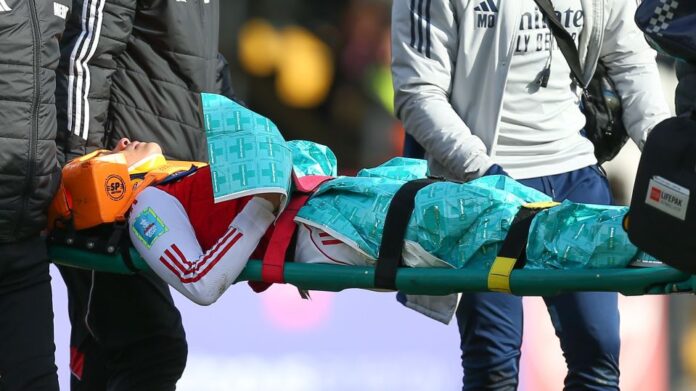
ARSENAL endured a scare during their Women’s FA Cup win over Bristol City when Olivia Smith was stretchered off.

The Canadian was then rushed to hospital for checks with boss Renee Slegers ‘hopeful’ it’s not too serious.

Smith, the first-ever £1 million player in the women’s game, was feared to have suffered a concussion after a clash of heads.

The match was halted for an extended period of time that led to 14 minutes being added on at the end.

Fans have rushed to social media to wish the forward well after the worrying scenes at the Mangata Developments Stadium.

One commented: “Olivia Smith isn’t having much luck with injuries this season is she.”

Another posted: “Speedy recovery Olivia Smith! Rest up.”

A third commented: “Horrible scenes with Olivia Smith who is stretchered off the pitch.”

A fourth remarked: “Prayers up for Olivia!”

The 21-year-old only moved from Liverpool last summer but as one fan commented, she has not had the best run with injuries since arriving at the Emirates Stadium.

A hip injury suffered on international duty back in October interrupted her season just as it was gaining momentum.

Still, Smith is Arsenal’s second-joint top scorer in all competitions this season with eight goals.

Arsenal did ultimately win the game 3-0 thanks to goals from Kim Little, Victoria Pelova and Frida Maanum, who replaced Smith.

Africa’s $29.5T Mineral Wealth Poised to Boost Mining Sector Jobs

Africa’s mining sector maintains its role as a key contributor of employment creation, fuelled by rising global demand for critical minerals. According to the Compendium of Africa’s Strategic Minerals 2026, released last week by the Africa Finance Corporation (AFC), the continent holds an estimated $29.5 trillion in mineral wealth – about 20% of global reserves – with $8.6 trillion still untapped. The study highlights a clear opportunity for the continent to accelerate industrialization and job creation by focusing on value addition across downstream industries, including aluminium, fertilizers, battery materials and alloys.

Expanding Production, Expanding Jobs

As African countries advance greenfield developments and expand or restart brownfield operations, mining’s contribution to employment is expected to strengthen.

In Namibia, the resumption of uranium production in 2025 and 2026 is supporting renewed sector growth. Speaking in Cape Town, Deputy Minister of Industries, Mines and Energy Gaudentia Krohne reported that the country’s mining industry directly employed 20,843 people at the end of 2024. With diversification underway into rare earths, copper, lithium and other critical minerals – alongside the finalization of a new minerals bill – Namibia is positioning itself to attract fresh capital and expand workforce participation.

“Namibia is committed to supporting small-scale miners and improving livelihoods. We are focusing on finance support schemes and training support programs to equip our workforce with emerging skills,” stated Krohne.

In South Africa, the government has outlined plans to mobilize R2 trillion over the next five years to strengthen its critical minerals value chain. The strategy spans exploration, project development, manufacturing and skills training, reinforcing the sector’s role in employment and export growth.

The announcement follows stable mining employment levels in 2025, with approximately 468,000 formal workers recorded mid-year.

In Zambia, mining continues to be a key employment driver, supporting over 73,000 jobs in 2025. Planned expansion through greenfield and brownfield copper projects is set to further boost the sector’s contribution to national employment. For instance, US-startup KoBold Metals’ $300 million development of the Mingomba Mine is expected to create more than 700 jobs. Vedanta Resources is also investing $1.5 billion at Konkola Copper Mines while First Quantum Minerals announced a $1.25 billion investment at Kansanshi S3 Expansion project, generating significant new employment opportunities.

Translating Capital into Jobs

The link between capital investment and job creation is clearly demonstrated by the AFC. At African Mining Week (AMW) 2025, Molebogeng Mazibuko, AFC’s Associate Vice President of Investment, highlighted the importance of deepening partnerships between African investors and global financiers to unlock new funding and accelerate employment growth. To date, AFC’s $700 million in mining investments has generated over 15,000 jobs, with up to 70% of funding directed toward critical minerals.

Global Critical Minerals Demand and Employment Prospects

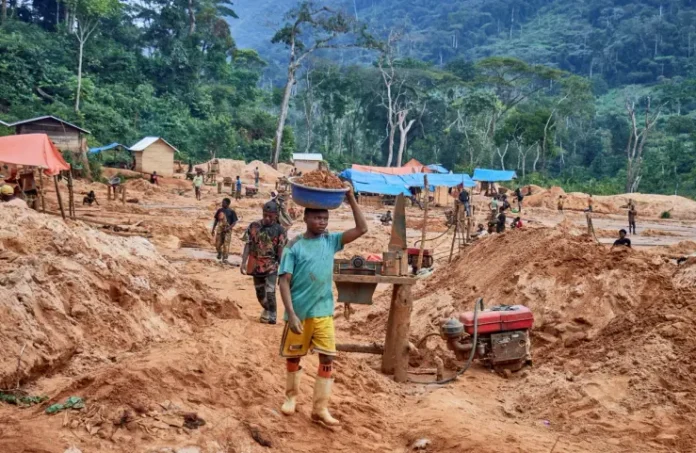
The global scramble by the U.S., Europe, and China to secure African minerals presents significant employment opportunities across the continent. A December 2025 agreement between the U.S. and the DRC on mineral extraction, value addition, and trade is expected to boost job creation in the country’s mining sector. Already a major employer, the DRC’s mining industry supports over 100,000 jobs, according to Minister of Mines Louis Watum Kabamba at AMW 2025. With just 10% of the nation’s estimated $24 trillion in mineral reserves currently exploited, and strengthened partnerships with the U.S. and China, the potential for mining-led employment growth remains substantial

Addressing Investment Gaps

Despite mining’s growing role in job creation, access to capital remains a constraint, particularly for local operators and small-scale miners seeking to scale projects. Limited financing slows development timelines and restricts employment expansion.

Against this backdrop, AMW 2026, scheduled for October 14–16 in Cape Town, aims to connect global investors with bankable opportunities across the continent. By catalyzing partnerships and facilitating deal-making, the event seeks to translate capital inflows into project execution, industrial growth and sustained employment creation across Africa’s mining sector.

KBL Reaffirms Commitment to Sports Development as 2026 Magical Kenya Open Concludes

Kenya Breweries Limited (KBL) has reaffirmed its commitment to sports development, focusing on elevating the global profile of Kenyan events and enhancing the fan experience.

Speaking at the Karen Country Club during the 2026 Magical Kenya Open, KBL Managing Director Andrew Kilonzo emphasized that KBL’s involvement in major sporting events is designed to provide a world-class platform for both athletes and fans.

“What we are doing is just making sure that they get the best sport experience and then after that… they’ll have the best enjoyment, the best village experience,” Kilonzo stated.

“You get a balance of both: you come enjoy fantastic talented sports at world-class level.”

KBL’s support for the 57th edition of the Magical Kenya Open was delivered through its Johnnie Walker brand, with a sponsorship package valued at KES 65 million.

The investment, which included both cash and in-kind support, was instrumental in hosting the tournament’s entertainment village.

This year’s “19th hole” experience featured a headline performance by Nyashinski and Njerae, supported by a lineup of prominent DJs including Nijo, Redbone, Vera, Festa, Trixy, and Benitez.

Kilonzo noted that the success of the Kenya Open, a premier event on the DP World Tour, reflects the growing global profile of Kenyan sports.

He noted that the tournament reached an estimated 750 million households worldwide over its four-day run. “The eyeballs on this tournament have elevated the Magical Kenya Open to the status that it is,” he added.

The KES 65 million sponsorship follows KBL’s recent KES 40 million injection into the HSBC SVNS 2 rugby tournament, signaling a sustained period of investment across multiple disciplines.

“We also want to do more to ensure that the grassroots talent that is here can start reaching for that level,” Kilonzo affirmed, noting that the company is not holding back on its over half-billion-shilling sports sponsorship across its portfolio.

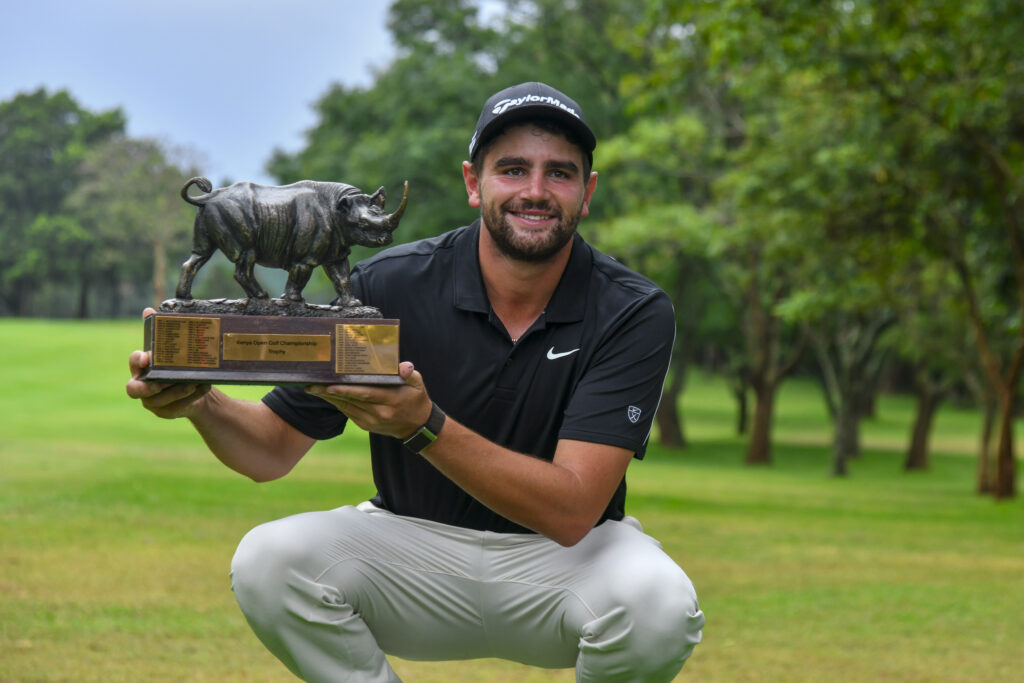
This year’s Magical Kenya Open, held from February 19-22, 2026, saw South Africa’s Casey Jarvis clinch his first DP World Tour title with an impressive score of 25-under-par 255.

Kenyan participation was notably led by Njoroge Kibugu, who finished tied for 61st place, after being the only Kenyan to make the cut at the tournament.

DCI Dismisses Officer’s Alleged Death at Kiambu Road Headquarters

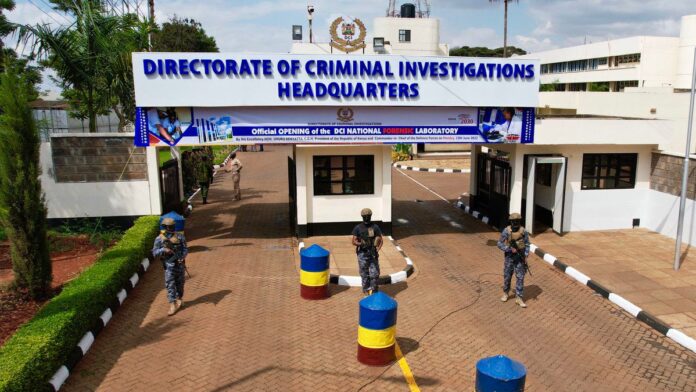
The Directorate of Criminal Investigations (DCI) has dismissed reports circulating on social media claiming that one of its officers died at its Kiambu Road headquarters.

In a statement on Monday, February 23, the agency confirmed the death of Corporal James Muiruri Mburu, who was attached to DCI Kajiado North Sub-County.

The agency also expressed sympathy to the officer’s family, friends, and colleagues, assuring the bereaved family of its support during the difficult period.

“The Directorate of Criminal Investigations (DCI) deeply regrets the tragic and untimely death of one of our own, Corporal James Muiruri Mburu, attached to the DCI Kajiado North Sub-County. He passed away on February 21, 2026.

“The entire DCI family extends our heartfelt condolences to the family, friends, and loved ones of Corporal Muiruri. We mourn with you the loss of a beloved son, colleague, and dedicated officer. May God grant you strength, comfort, and abundant grace to carry you through this painful time,” the statement read.

Addressing claims that he died at DCI Headquarters, the agency clarified that the incident did not occur at its Kiambu Road offices. 

Instead, it happened in Ngong, and the officer was rushed to hospital where he was declared dead on arrival.

“We however wish to clarify certain inaccuracies circulating on social media. Corporal Muiruri did not pass away at DCI Headquarters. The incident occurred in Ngong, and he was taken to Ngong Level IV Hospital, where he was pronounced dead on arrival,” the statement added.

The DCI further clarified that contrary to online claims, the officer’s body was not discovered by his family members but a neighbor’s house help who found him unresponsive in his kitchen garden.

“His body was not discovered by family members, but by a neighbor’s house help who found him lying unresponsive in his kitchen garden and immediately raised the alarm,” the statement continued.

According to the agency, three fellow officers responded quickly after being alerted and transported him to the hospital.

“Three fellow officers responded swiftly and rushed him to the hospital where he was pronounced dead. The matter was formally reported at Ngong Police Station under OB No. 38/21/02/2026,” the statement further read.

According to the DCI, preliminary investigations conducted at the scene pointed to possible electrocution. 

Crime Scene Investigation officers, working together with Kenya Power personnel, discovered a live electrical wire buried beneath the garden surface.

“Preliminary scene documentation conducted by Crime Scene Investigation (CSI) officers, alongside personnel from the Kenya Power and Lighting Company (KPLC), identified a live electrical wire beneath the surface of the garden, which is believed to have caused electrocution as he tilled the land,” the statement noted.

The DCI confirmed that a formal inquiry has been launched and that a postmortem examination will be conducted to establish the exact cause of death.

“An inquiry into the incident has been launched, and a postmortem examination is scheduled to establish the exact cause of death. As investigations continue, we respectfully urge the public to refrain from speculation and to allow the family the privacy and dignity they deserve as they grieve this immense loss,” the statement concluded.

Human Rights Activist Mugambi Kiai is Dead

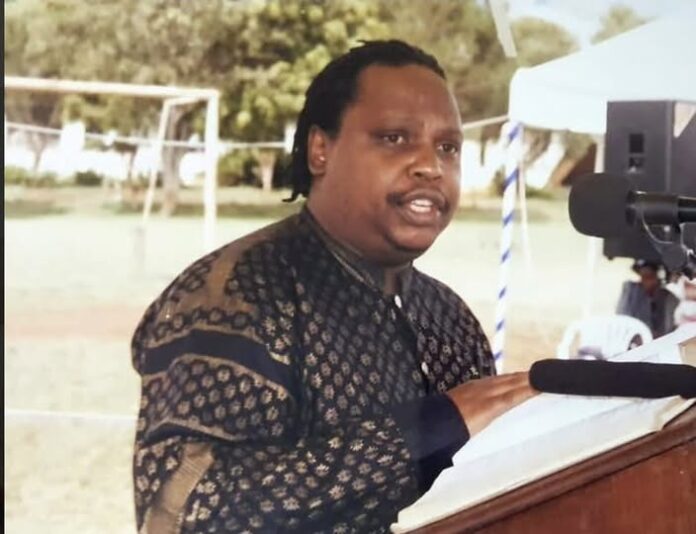
Human rights activist Mugambi Kiai is dead.

Mugambi, who is the brother of lawyer and activist Maina Kiai, died after struggles with unexpected kidney failure.

The activist’s death, confirmed on Monday, February 23, has drawn tributes from leaders and human rights organizations, who described him as a fearless defender of justice and constitutionalism.

In his tribute, law scholar Makau Mutua mourned Kiai as a towering figure in the country’s democratic struggle, praising his unwavering commitment to civic space and accountability.

“I have learnt with shock and deep sadness of the sudden passing of Mugambi Kiai, a stalwart of Kenya’s civil society, and a great thinker. Mr Kiai’s immense contributions to the struggle for democracy and civic space, and against impunity, have made Kenya a better society,” he said.

Lawyer Willis Otieno also paid glowing tribute, describing Kiai as a close friend and a committed advocate for justice whose influence extended beyond activism.

“I am deeply saddened to learn of the passing of Mugambi Kiai. Mugambi was not just a human rights activist ; he was a steadfast voice in the struggle for justice, accountability, and the dignity of the Kenyan people. As a friend and compatriot in the civil society movement, I witnessed firsthand his courage, clarity of thought, and unwavering commitment to constitutionalism,” he stated.

Reflecting on Kiai’s resilience even while unwell, Otieno emphasized that his legacy remained firmly rooted in resistance and solidarity.

“Even in the face of illness, his legacy remained one of resistance against impunity and solidarity with the oppressed. Kenya has lost a principled defender of justice. The civil society fraternity has lost a comrade. I have lost a friend,” he added.

Otieno further extended his condolences to the family and called on Kenyans to carry forward Kiai’s ideals.

“May his family find strength during this painful time. May his contribution to the human rights movement continue to inspire us to press on firmly, fearlessly, and faithfully,” he further said.

In a separate statement, Amnesty International-Kenya hailed Kiai’s leadership and lasting impact on the human rights movement.

“We express our appreciation for the leadership and impact of Mugambi Kiai who passed away this morning. We shall remember him as a warm, compassionate and courageous human rights defender. Our deepest condolences to the entire Kiai family and his wider family of human rights defenders and journalists,” the organization said.

Kiai was a lawyer by training and held degrees from the University of Nairobi and Harvard Law School. 

He worked extensively in human rights, governance and freedom of expression. 

In January 2020, Kiai became the Regional Director for Eastern Africa at ARTICLE 19, a global civil liberties organisation advocating for freedom of expression and access to information. 

In this role, he led advocacy on press freedom, civic space and democratic rights across Kenya and the broader Eastern Africa region. 

Kiai was also known for writing and commentary on human rights, governance and democratic issues published in outlets such as the Daily Nation.

In February 2023, he was diagnosed with end-stage kidney failure, a condition in which the kidneys can no longer adequately filter the blood. 

His condition required ongoing dialysis and ultimately a kidney transplant to sustain his life without continuous dialysis. 

A fundraiser was organised in mid-2024 to support the transplant surgery and medical costs.

He underwent a transplant in March 2025 as part of his fight against the disease, but ultimately succumbed after the long health battle.

Create a free account, or log in.

Gain access to read this content, plus limited free content.

Yes! I would like to receive new content and updates.

Sponsored Ad

Ad 1
Ad 2
Ad 3
Ad 4
Ad 5
Ad 6