Sponsored Ad

Ad 1
Ad 2
Ad 3
Ad 4
Ad 5
Ad 6
24 C
Kenya
Saturday, May 9, 2026
Home Blog Page 397

‘Difficult’ Russia-Ukraine peace talks end without breakthrough

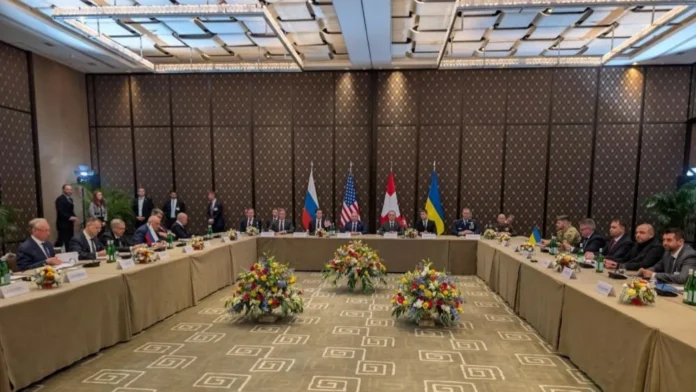
BBC -Talks between Russia, Ukraine and the US aimed at ending Moscow’s war in Ukraine have concluded without a breakthrough.

The trilateral meetings, held in Geneva, went on late on Tuesday but only lasted two hours on Wednesday.

Although US envoy Steve Witkoff had expressed optimism over the talks, both the chief Russian negotiator and Ukraine’s Volodymyr Zelensky indicated they had been “difficult”.

After the main talks concluded, Kremlin negotiator Vladimir Medinsky returned to the venue and held a closed-door meeting with the Ukrainian side for about an hour and a half. No details from that meeting have emerged.

Some progress was made on “military issues”, including the location of the front line and ceasefire monitoring, according to a Ukrainian diplomatic source.

But an agreement on the issue of territory – without which no ceasefire can be envisaged – remains elusive, with Moscow and Kyiv’s positions still far apart.

Russia has not budged in its demand for full control of the eastern Donbas region – made up of the Donetsk and Luhansk regions – which is a non-starter for Ukraine.

While conceding talks were challenging, Kremlin negotiator Vladimir Medinsky added that they had been “businesslike” and said another meeting would take place “soon”.

Zelensky also described the negotiations as “not easy” due to the difference in the two sides’ positions.

Rustem Umerov cut a less downbeat tone, saying the discussions had been “substantive and intensive” and that while there had been progress, no details could be disclosed “at this stage”.

“This is complex work that requires alignment among all parties and sufficient time,” Umerov said.

Shortly before the end of the talks was announced, Zelensky accused Russia of “trying to drag out negotiations that could already have reached the final stage”.

The Russian and Ukrainian delegations last metin US-brokered talks in Abu Dhabi earlier in February, which led to the first prisoner exchange in several months. On Wednesday, Zelensky indicated that another swap might be forthcoming.

US President Donald Trump, who spearheaded diplomatic efforts to end the war, has been signalling impatience with the deadlock between the two sides.

On Monday, he said Ukraine had “better come to the table, fast” – a sentiment Zelensky has since rejected, saying it was “not fair” that his country should be the one asked to compromise.

Four years on from the start of Russia’s full-scale invasion of Ukraine, substantial distance still exists between Moscow’s demands and what Kyiv might consider a “just peace”.

Kyiv has long rejected Russia’s demand for the eastern Donbas, which would mean relinquishing Ukrainian sovereign territory, including several heavily fortified cities and a long defensive line in the region of Donetsk.

Many Ukrainians believe giving that territory up would leave the country vulnerable to another Russian invasion. Zelensky himself has drawn parallels with the 1938 Munich Agreement, when European powers let Hitler annex the Czech territory of Sudetenland.

On Tuesday, Zelensky told US media outlet Axios that any plan to hand over the Donbas would be rejected by Ukrainians if it were put to a referendum.

The Ukrainian president is also working to ensure that robust security guarantees to deter Russia from attacking again are provided by Kyiv’s western allies.

Another sticking point in the talks is the status of the Zaporizhzhia Nuclear Power Plant.

The power plant – Europe’s largest – sits on the front line and has been under Russian control since March 2022. Ukraine wants Moscow to return it and Zelensky has previously said Kyiv could share control of the plant with the Americans – an arrangement Moscow is unlikely to agree to.

Officials from Britain, France, Germany and Italy were present in Geneva and held talks with the Ukrainians on the sidelines of the trilateral meeting.

European representatives have struggled to be included in the US-led negotiations, but Zelensky said European participation was “indespensable” for any final agreement.

Next Tuesday will mark the fourth anniversary of Moscow’s full-scale invasion of Ukraine.

The war, which has resulted in tens of thousands of military and civilian casualties and displaced millions across Ukraine, continues to shape the lives of Ukrainians, with daily deadly aerial attacks across the country.

Four people were killed and 30 injured in Russian artillery and air strikes overnight on Tuesday. Power infrastructure too continues to be targeted across the country, leaving millions without light or heating in one of Ukraine’s coldest winters in years.
CS Murkomen accuses opposition of hiring ex-police officers to disrupt rallies, vows crackdown

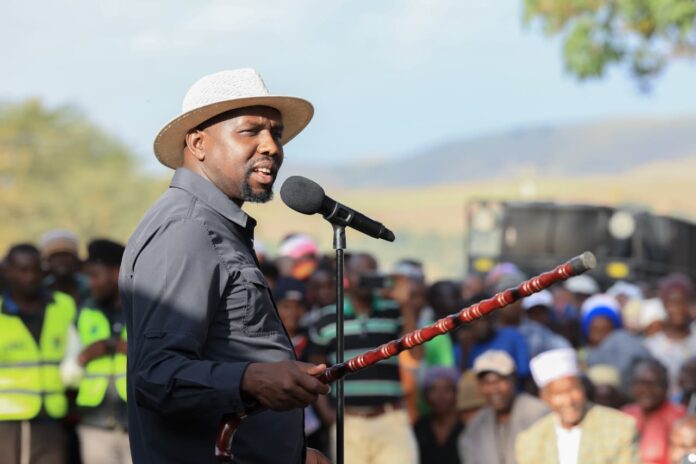
Interior Cabinet Secretary Kipchumba Murkomen has accused opposition leaders of deploying former police officers at political rallies to create chaos, warning that the government will not tolerate such actions.

Speaking on Wednesday in Naivasha, Nakuru County, Murkomen said security agencies will take action against politicians allegedly ferrying goons and exploiting security networks to destabilise public gatherings.

“Stop moving around with goons and looking for police officers; I hear some are going around recruiting former police officers to come and gradually use those networks; they carry teargas to the rallies they attend. The Inspector General will be ruthless on those people because we will not allow it,” he said.

He urged politicians to engage locals rather than bringing outsiders from other towns, saying this undermines proper democratic processes. He warned that incitement, especially as the country approaches elections, will not be tolerated, and any offenders will face legal consequences.

“If you want to attend a rally in Nakuru, talk to people from Nakuru. If it’s in Naivasha, engage people from Naivasha. Why are you bringing people from Nairobi, or from Jambini, or Nanyuki? Don’t speak for people who are not from there; make your case locally, and if they like you, they will elect you, and then we move forward together. Therefore, I am warning that incitement, especially as we approach the elections, will not be tolerated. We will act,” he said.

The CS emphasised that while courts may release individuals arrested for such activities, law enforcement will continue to act to uphold order, insisting that neither he nor Inspector General Douglas Kanja would be blamed for enforcing the law.

“Let the courts release them if they wish, but from a security perspective, we will do our part. We will take them to court. If the Chief Justice, Martha Koome, and the judiciary decide to release them under the banner of freedom of expression, they may do so, but we will arrest them again if necessary,” he said.

“When the history of Kenya is reviewed, if anything happens, no one will blame IG Kanja, no one will blame CS Murkomen, and no one will blame the executive, because we are doing our part to enforce law and order.”

He described the Inspector General as deserving of respect and urged leaders to stop undermining security institutions.

He further condemned what he termed petty attacks on security institutions.

“Don’t bring your petty, silly politics. I have kept quiet for far too long. We will meet those inciters face to face. And let them stop disrespecting the Inspector General; he is not their child. Kanja and the entire police leadership deserve respect. Let there be some decorum,” he said, adding that leadership must be anchored on integrity.

“If we were to bring their files now, they cannot stand the test of leadership. We want leaders who speak from a point of integrity. Before you lecture us, we will assess your past.”

Murkomen also condemned ethnic and divisive politics, asserting that leaders should promote their policies rather than reduce national discourse to tribal considerations. Without naming individuals, he criticised leaders who personalise government efforts and repeatedly frame issues around themselves or other political figures.

“All political leaders in this country should sell policies to the people. Why are you obsessed with this tribe, that tribe?” he posed, noting that some leaders personalise government efforts and frame national issues around individuals and communities.

“I see there is one of them who forgets everything else. Every time he speaks, it is ‘Ruto alisema, Murkomen alisema’ as if there is nobody else in the entire architecture of security.”

Kindiki: State settles Sh177bn pending bills for road contractors

The government has cleared all the unpaid bills for road contractors, amounting to Ksh.177 billion, which have been pending since 2020. 

Deputy President Kithure Kindiki said the settling of the bills has paved the way for the resumption of construction of roads that had stalled for years because of non-payment. 

On Wednesday, the DP at the Official Residence in Karen, Nairobi received a status report on the ongoing roads, bridges and other major infrastructure projects being undertaken by the Ministry of Roads and Transport. 

“The Government has cleared the entire amount of pending bills owed to contractors, a total of Ksh.177 billion, which remained unpaid since 2020, leading to the stalling of the construction of 6,000 kilometers of roads across Kenya,” DP noted. 

The Deputy President said the government is working hard to provide funds for the completion of the 6,000 km of roads to avert delayed payments. 

“Contractors are now back on site and adequate resources have been mobilized to ensure contractors are paid promptly,” he stated. 

Prof. Kindiki challenged the Ministry and the contractors to adhere to the highest quality standards and deliver the projects on time. 

​President Ruto confirms the early completion of the Sh3.5 billion Ngong-Naivasha road flyover

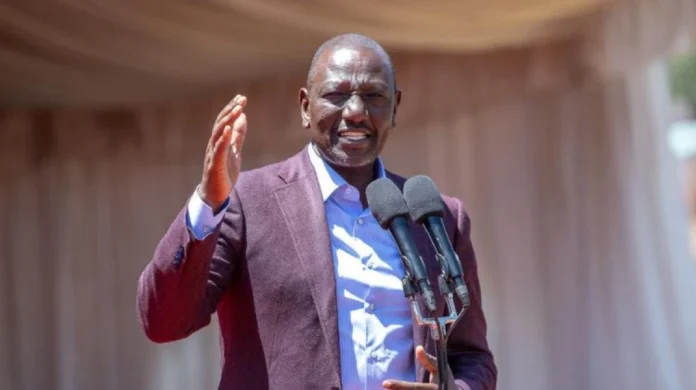
President William Ruto Attends a Church service at Gospel Embassy Chapel Kisii, Kisii County, on November 22, 2025. Photo/PCS

President William Ruto announced on Tuesday, February 17, 2026, that the KSh 3.58 billion flyover at the Ngong Road–Naivasha Road junction is set for completion by June 2026, nearly a year ahead of its original July 2027 schedule.

During an inspection of the site near Junction Mall, the President confirmed the project is 85–90% complete. Key details of the project include:

The project features a 255-metre viaduct (elevated roadway) designed to separate express commuters from ground-level traffic.

It is financed through a concessional loan from the Spanish Corporate International Fund (FIEM).The works are being executed by the Spanish firm Centurion under the supervision of the Kenya Urban Roads Authority (KURA).

Beyond the four-lane flyover, the upgrade includes modern street lighting, improved drainage systems, and Non-Motorized Transport (NMT) facilities such as dedicated cycling lanes and pedestrian walkways.

Once operational, the flyover is expected to significantly reduce congestion at the busy intersection connecting Ngong Road, Naivasha Road, and Kingara Road, potentially cutting travel time to the CBD to just 25 minutes.

President Ruto also noted that this project is part of a broader plan to modernize 80 kilometres of roads within Nairobi to enhance urban mobility

By Anthony Solly

“Police were not informed of Sifuna-led Kitengela rally” CS Murkomen Says

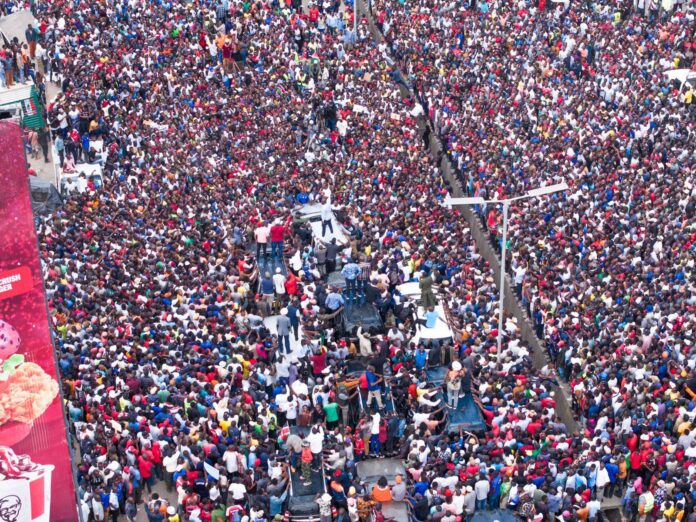
Interior Cabinet Secretary Kipchumba Murkomen has revealed that police were not briefed about the political rally in Kitengela led by embattled Orange Democratic Movement (ODM) party Secretary General Edwin Sifuna that drew thousands of supporters this past Sunday.

Sifuna led a rival ODM faction rally attended by Embakasi East MP Babu Owino, Siaya Governor James Orengo and ODM Deputy Party Leader Godfrey Osotsi among other leaders.

Chaos erupted during the event after police lobbed teargas and fired shots to disperse the crowd. Following the rally, Sifuna confirmed that one person was fatally shot by police officers.

Speaking during a Huduma na Usalama mashinani forum in Nakuru County on Wednesday, Murkomen alleged that the rally took place on a market day, adding that many residents were caught up in the fracas.

He further claimed that goons had been ferried from Machakos and Nairobi to attend the meeting.

Murkomen’s remarks come as the Sifuna-led faction prepares to tour Kakamega County under the ‘Linda Mwananchi’ tour, in what is seen as a test of the faction’s popularity.

In response to the Kitengela chaos, Sifuna faulted President William Ruto and CS Murkomen for the violence, accusing them of deploying police and hiring goons to disrupt public gatherings.

“They do not respect the rights of Kenyans and are intolerant of democratic competition. They have chosen to unleash state violence on Kenyans instead of addressing the many challenges facing them,” he said.

“They wrongly believe that the use of state violence will deter Kenyans from exercising their political rights. To the contrary, Kenyans will not surrender and live on their knees. Instead, they will defend their rights and use their votes to effect change through the ballot.

Sifuna vowed to pursue legal action and ensure those responsible are held accountable.

CS Murkomen claims police were not informed of Sifuna-led Kitengela rally

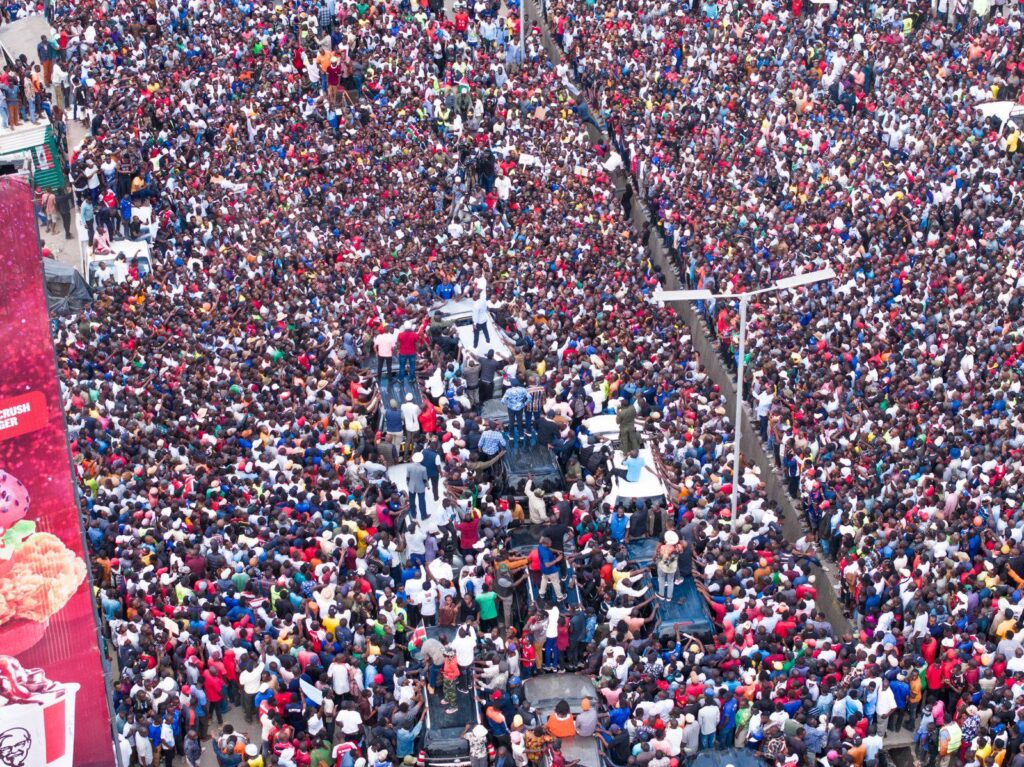
Interior Cabinet Secretary Kipchumba Murkomen has revealed that police were not briefed about the political rally in Kitengela led by embattled Orange Democratic Movement (ODM) party Secretary General Edwin Sifuna that drew thousands of supporters this past Sunday.

Sifuna led a rival ODM faction rally attended by Embakasi East MP Babu Owino, Siaya Governor James Orengo and ODM Deputy Party Leader Godfrey Osotsi among other leaders.

Chaos erupted during the event after police lobbed teargas and fired shots to disperse the crowd. Following the rally, Sifuna confirmed that one person was fatally shot by police officers.

Speaking during a Huduma na Usalama mashinani forum in Nakuru County on Wednesday, Murkomen alleged that the rally took place on a market day, adding that many residents were caught up in the fracas.

He further claimed that goons had been ferried from Machakos and Nairobi to attend the meeting.

Murkomen’s remarks come as the Sifuna-led faction prepares to tour Kakamega County under the ‘Linda Mwananchi’ tour, in what is seen as a test of the faction’s popularity.

In response to the Kitengela chaos, Sifuna faulted President William Ruto and CS Murkomen for the violence, accusing them of deploying police and hiring goons to disrupt public gatherings.

“They do not respect the rights of Kenyans and are intolerant of democratic competition. They have chosen to unleash state violence on Kenyans instead of addressing the many challenges facing them,” he said.

“They wrongly believe that the use of state violence will deter Kenyans from exercising their political rights. To the contrary, Kenyans will not surrender and live on their knees. Instead, they will defend their rights and use their votes to effect change through the ballot.

Sifuna vowed to pursue legal action and ensure those responsible are held accountable.

Zimbabwe: Govt commissions climate-smart farming equipment to strengthen dryland livelihoods and restore degraded landscapes

The Government of Zimbabwe commissioned a tranche of small-scale agricultural equipment to support climate-smart agriculture, sustainable land management and rural livelihoods in the country’s dryland areas, under the Drylands Sustainable Landscapes Impact Programme (DSL-IP) funded by the Global Environment Facility (GEF-7) and supported by the Food and Agriculture Organization of the United Nations (FAO).

The commissioning ceremony, held at the Community Technology Development Organisation (CTDO) in Harare, was officiated by the Minister of Environment, Climate and Wildlife, Hon. Evelyn Ndhlovu, with senior officials from the Ministry of Lands, Agriculture, Fisheries, Water and Rural Development, FAO, project implementing partners and members of the development sector.

Speaking at the event, Hon. Ndhlovu said the provision of mechanised equipment marks a critical milestone in the Government’s efforts to transform agriculture in Zimbabwe’s most climate-vulnerable dryland regions, while safeguarding ecosystems and natural resources.

“Today’s commissioning represents a strategic shift from environmentally destructive coping practices towards productive, climate-smart and land-positive livelihoods. Mechanisation is not merely about increasing output. It is a powerful enabler of sustainable land management, reducing labour drudgery for women and youth while improving productivity and resilience,” said Hon. Dr. Ndhlovu.

Part of a global drylands programme

The DSL-IP project is implemented by the Ministry of Environment, Climate and Wildlife, through the Environmental Management Agency (EMA), with FAO as the GEF-accredited entity, in partnership with CTDO, World Vision, the Forestry Commission and the Zimbabwe Parks and Wildlife Management Authority.

The Zimbabwe child project forms part of a global FAO-led Drylands Sustainable Landscapes Impact Programme being implemented in eleven countries in Southern Africa, West Africa and Asia, supporting countries to meet their Land Degradation Neutrality (LDN) targets under the United Nations Convention to Combat Desertification (UNCCD).

“The equipment commissioned today builds on earlier distributions in 2025 that have significantly reduced labour requirements, improved timeliness of farm operations and encouraged wider adoption of sustainable practices, even beyond project-supported Farmer Field Schools,” noted Rene Czudek, FAO Forestry Officer Rene Czudek and Lead Technical Officer for the DSL-IP.

Scaling up farmer-centred mechanisation

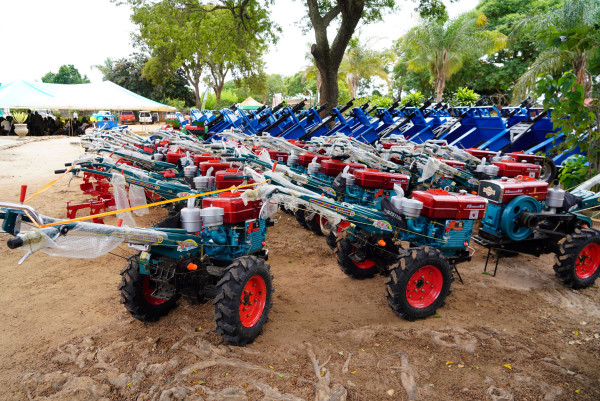
A total of 1 050 additional pieces of small-scale agricultural equipment were commissioned, bringing the cumulative total to 1 960 units procured under the project. The equipment includes two-wheel tractors, double-furrow ploughs, planters, trailers, multi-crop threshers, earth augers and post-harvest processing machinery, and is supporting 600 Farmer Field Schools across the Save and Runde catchments.

The labour-saving technologies are benefiting 15 000 direct beneficiaries, of whom at least 52 percent are women, by improving land preparation, planting precision and post-harvest handling, while reducing pressure on forests, rangelands and riverbanks.

According to the Permanent Secretary for Lands, Agriculture, Fisheries, Water and Rural Development, Obert Jiri, in a speech read on his behalf, smallholder mechanisation is a key driver of agricultural modernisation and rural transformation.

“Research has shown that mechanisation enhances productivity through timeliness and precision of operations. By increasing output on existing arable land, it limits the expansion of agriculture into forests and fragile ecosystems, directly contributing to Zimbabwe’s land degradation neutrality commitments,” said Obert Jiri.

Delivering national and global commitments

The DSLIP contributes directly to National Development Strategy 2 (NDS2) priorities on food security, climate resilience and rural development, while aligning with the Government’s Pfumvudza/Intwasa climate-smart agriculture programme and broader national mechanisation initiatives.

Across the Save and Runde landscapes, the project is expected to restore 2 150 hectares of degraded land, bring 172 540 hectares under improved sustainable land and forest management practices, mitigate 1.26 million tonnes of CO₂-equivalent greenhouse gas emissions, and strengthen resilience across 44 wards in eight districts.

As the project approaches completion, stakeholders emphasised the importance of strong governance, maintenance systems and equitable access to ensure that the equipment continues to deliver benefits beyond the life of the project.

“Every piece of equipment commissioned today must translate into improved productivity, restored landscapes and dignified livelihoods for our rural citizens,” said Andrew Mushita, CTDO Director, in his remarks.

Uganda, Saudi Arabia Deepen Investment Cooperation with Focus on Value Addition and Coffee Industrialisation

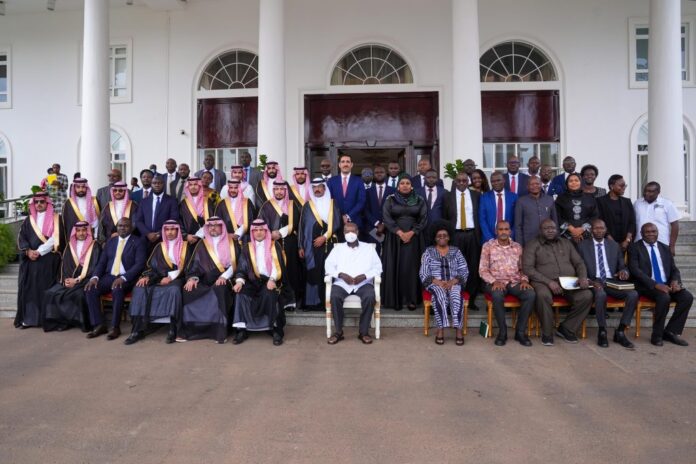
President Yoweri Kaguta Museveni on Tuesday 17th February, 2026 hosted a high-level delegation from the Kingdom of Saudi Arabia at State House, Entebbe.

The investment-focused meeting aimed at strengthening bilateral economic cooperation and unlocking new commercial opportunities between the two countries.

Led by Mr. Ali O Alswayeh, the Saudi delegation expressed appreciation to the President for the audience and reaffirmed Saudi Arabia’s commitment to expanding investment in Uganda.

The delegation highlighted agriculture, particularly coffee value addition as one of the Kingdom’s priority areas of interest.

President Museveni welcomed the delegation and commended them for recognising Uganda’s untapped investment potential. He observed that although Uganda and Saudi Arabia have maintained cordial relations for many years, both countries had not fully maximised available economic opportunities.

“We have been working together for a long time, but we have not fully engaged to maximise our investment opportunities,” the President noted.

The two parties also discussed the Value at Source Coffee Project (VASP), an agro-industrial initiative spearheaded by Nonda Coffee. The project seeks to transition Uganda from exporting raw coffee beans to exporting branded, high-value finished coffee products.

At the centre of this transformation is the proposed Luwero Coffee Park, an integrated industrial complex in Luwero District with a projected annual processing capacity of 42,000 metric tons of coffee and a targeted annual revenue of USD 850 million.

The facility will handle the full coffee value chain including cleaning, grading, roasting, grinding, soluble and specialty coffee production, packaging, branding, and export of finished products.

The project is expected to among others, create approximately 1,500 direct jobs as well as generate about 3,000 indirect jobs in logistics, retail, and auxiliary services as well as integrate over 100,000 coffee farming households into a structured supply chain.

The Saudi market is viewed as a strategic gateway into the broader Middle East, one of the fastest-growing coffee consumption regions globally. The expansion is expected to drive demand for premium Ugandan coffee, strengthen bilateral trade ties, and create sustainable downstream markets for Ugandan farmers.

The meeting underscored a shared commitment to investment-led growth, private sector development, and value addition as key drivers of economic transformation.

President Museveni has consistently emphasised value addition as a central pillar of Uganda’s development strategy, noting that exporting finished goods rather than raw materials is critical to increasing export earnings, creating jobs, and accelerating industrialisation.

The discussions concluded with renewed commitment from both sides to deepen trade and investment cooperation, particularly in agro-processing, industrial development, and market expansion.

The engagement marked a significant step toward strengthening Uganda–Saudi Arabia economic relations and advancing mutually beneficial partnerships in strategic sectors.

How Brave Machakos Girl Turned Dream into a Vibrant Cash Cow

A young Dorcas Katei always imagined herself farming. From a young age, she dreamed of working the land, growing food, and feeding communities with natural produce. This is an inspiration she acquired while growing up at Mutula village, in Machakos County.

However, as she grew older, that dream felt like it had evaporated. Dorcas did not own land, could not afford to lease any, and she felt like life was moving faster than her farming ambitions.

Instead of giving up, she found another path. If she could not grow the food herself, she could source it, refine it, and bring it closer to people who valued natural living.

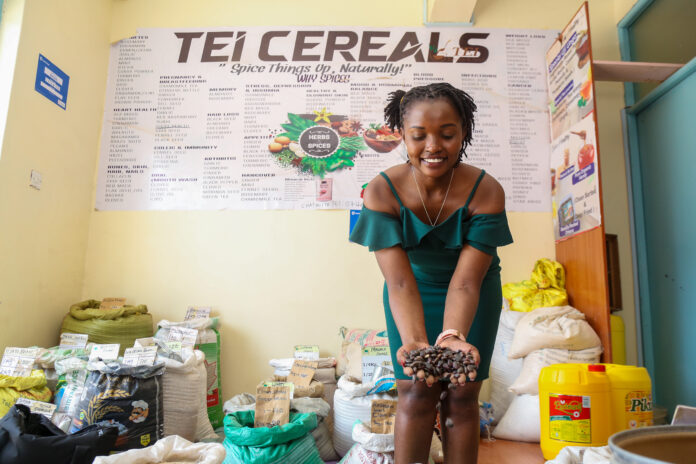
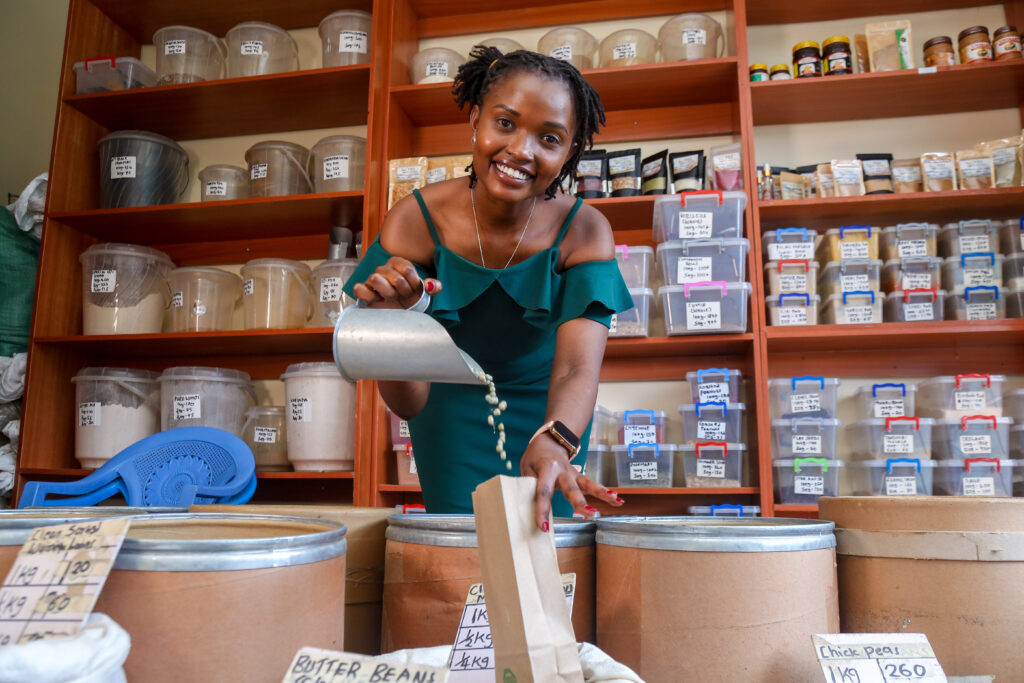
That is how Tei Cereals & Spices, located in Syokimau, was born, offering natural spices, cereals, and supplements to customers seeking healthier solutions for their skin, meals, and wellbeing.

Two years in, the journey has been anything but smooth. Dorcas has learnt patience and the discipline of building something from the ground up.

“The mistake most people make is expecting a business to sustain their lifestyle immediately. You get in and realise it takes time, focus, and consistency.”

Her sister eventually introduced her to the KCB Foundation 2Jiajiri Programme to help her business grow, although she admits she did not show up the first time. Her sister persisted, shared her contact, and that second chance changed everything.

The programme exposed her to young entrepreneurs like herself, showing her she was not alone in the struggle. It also helped her refine her business, teaching her record keeping, understanding her market, customer relations, risk analysis, and even evaluating whether her shop was in the right location.

The highlight was the one-on-one coaching. Business coaches visited her shop, went through her records, and helped her identify gaps and opportunities for growth. That personalised support encouraged her to push Tei Cereals and Spices further than she thought possible.

Now, the Actuarial Science graduate from KCA University is still learning, still building, and still driven by the dream that began in her childhood, a dream of nourishing people naturally. “It is not easy, but it is not difficult when you find yourself doing what you love.

I have been following my passion, and now, I have employed someone and am looking forward to expanding Tei Cereals and Spices into a supplier, not just a retail business.”

​Senator Sifuna Blames State House for Sh16bn Unpaid NMS Bills

xr:d:DAFSSmOzfz8:2091,j:4876773400,t:23051710

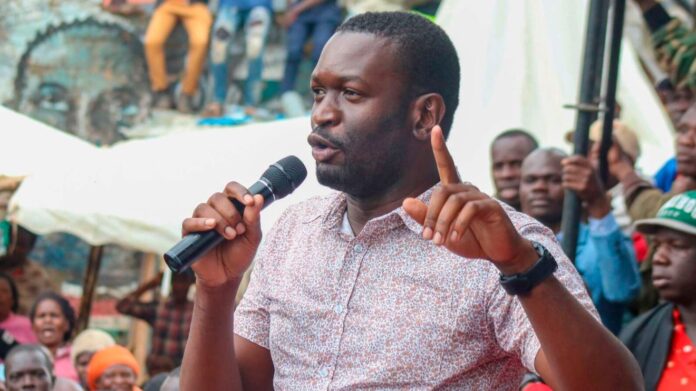
Nairobi Senator Edwin Sifuna has criticized the National Government for failing to settle KSh 16 billion in pending bills left by the defunct Nairobi Metropolitan Services (NMS).

During a press briefing on February 18, 2026, Sifuna argued that these liabilities are the sole responsibility of State House, as the NMS accounting officer was the Comptroller of State House.

He reminded Governor Johnson Sakaja that the Senate previously ruled that NMS’s outstanding bills—which Sakaja himself recently described as a “Sh16 billion hole”—must be cleared by the National Government, not the county.

Sifuna dismissed the recently signed KSh 80 billion Cooperation Agreement between Ruto and Sakaja as a “ruse”.He claimed that State agencies actually owe Nairobi County over KSh 100 billion in unpaid rates and rent.

He emphasized that thousands of contractors and workers are facing financial ruin because State House continues to ignore these verified debts.

Sifuna has threatened legal action to halt the new agreement, terming it an “unconstitutional takeover” that bypasses Senate oversight and reduces the Governor’s role to that of a deputy.

This criticism comes amid a wider political fallout, as Sifuna is also fighting a legal battle to block his ouster as ODM Secretary General, which he claims is being orchestrated from State House.

By Anthony Solly

Create a free account, or log in.

Gain access to read this content, plus limited free content.

Yes! I would like to receive new content and updates.

Sponsored Ad

Ad 1
Ad 2
Ad 3
Ad 4
Ad 5
Ad 6