Sponsored Ad

Ad 1
Ad 2
Ad 3
Ad 4
Ad 5
Ad 6
25.9 C
Kenya
Sunday, May 10, 2026
Home Blog Page 420

Places of Worship Act is no ‘shield’ for illegal construction: Madras High Court rules against temple on government land.

The Madras High Court recently rejected a plea challenging an eviction notice issued against a temple allegedly built on public land and observed that the Places of Worship Act, 1991, does not protect religious structures on government land. 

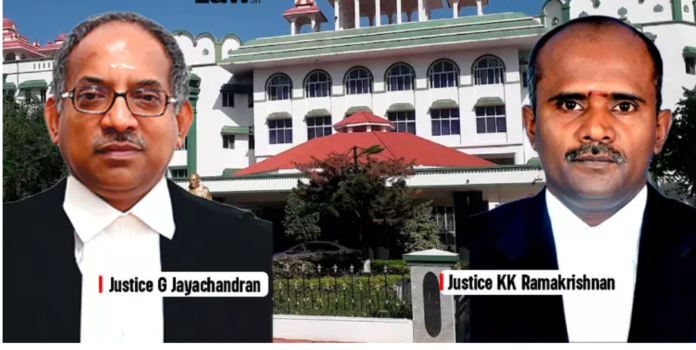
A bench of Justices G Jayachandran and K K Ramakrishan rejected the plea of a man claiming to be the managing trustee of Sri Arulmighu Raajakaliamman Temple in Ramanathapuram, alleging that the eviction notice was issued without ensuring fairness in decision-making and violated Article 300 A (No person shall be deprived of his property save by authority of law) of the Constitution of India.

The court observed that, being “non-residential”, the religious structure was not covered under the government’s order (GO), which regularises residential structures. The bench added that the petitioner, citing the Places of Worship Act, was only to “mislead” and carried no merit.

“Neither the intention of the legislation nor any provision in this Act gives protection to a structure put up on the Government Land by encroaching,” the bench noted, dismissing the plea on February 6, 2026.

Grant of patta is liable to be ignored

  • The petitioner has encroached upon the land, and the temple put up on it is constructed without any permissions.
  • The temple is a non-residential structure put up on the government’s land and is not applicable under the government order issued for regularising residential encroachment.
  • A patta for land on a water body obstructing the pathway cannot be granted by any authority.
  • Therefore, any patta grant made is liable to be ignored.
  • The intention of the legislation or any provision under the Places of Worship Act, 1991, gives protection to the temple enchroaching the government land.

The temple encroached upon the public place

  • Sri Arulmighu Raajakaliamman Temple was built on the bund of a water body classified as Orruni Poramboke Road.
  • The petitioner claimed to be the managing trustee of the temple.
  • The commissioner of Ramanathapuram Municipality issued a notice dated November 29, 2025, under Section of the Tamil Nadu Local Bodies Act, 1998.
  • The issued notice served as a formal communication for the removal of encroachment within 7 days from the date of its issuance.  
  • The petitioner challenged the notice before the court with his petition, claiming that the temple existed before his birth and he had put up the structure and maintained it at his own expense since 1991.
  • The court dismissed his plea on consideration of the grounds of his challenge.

Right to file an appeal or review

  • The petitioner issued a notice citing the dismissal of his plea and his right to file an appeal or review against the order.
  • He called for the authorities to refrain from coercively taking steps before the expiry of the appeal period.
  • On November 15, 2025, he made an appearance before the Thasildar, Ramanathapuram, seeking pakka for the land under his encroachment.
  • The petitioner also made a representation to the commissioner, Ramanathapuram, informing that he had sought a land patta and his request lay pending, hence to abstain from taking any action for the removal of the temple.
  • His representation was rejected in the absence of the furnished documents of title and building permission for the structure.
  • Later, a second notice was issued on December 30, 2025, for the removal of the temple on the encroached land.
  • On behalf of the residents of Rajamalayetu Street, a legal notice was issued on January 23, 2026, stating no action should be taken against the temple, as the request to grant a land patta was pending.

‘The Third and final notice’

On January 27, 2026, the third and final notice of eviction was issued under the relevant section of the Tamil Nadu Local Bodies Act, 1998.

Petitioner’s case

  • The petitioner challenged the eviction notice.
  • He claimed that the temple’s existence was immemorial and under the worship of the public without any hindrance or disturbance.
  • The temple was being assessed for tax and was providing electricity service under his administration.
  • He further stated that the eviction notice against the temple was issued without considering the principles of natural justice.
  • The notice was arbitrary and violated Article 300-A(No person shall be deprived of his property save by authority of law) and other relevant Articles of the Constitution of India, he added.
  • He also mentioned that his request for a grant of patta was still pending.
  • Further, the petitioner also claimed that the temple was protected under the Places of Worship (Special Provision) Act, 1991, and therefore was not eligible for eviction.

State’s arguments

  • The state argued that the temple was constructed on the bund of a water body, which was used as a pathway by the public.
  • No permission was taken before establishing the construction of the temple.
  • The service connection or tax assessment does not give any right to the encroacher to seek a patta.
  • The petitioner’s request for the issuance of a patta was related to a government order (GO) issued for regularising residential encroachment on unobjectionable government land; therefore, the temple situated on objectionable government land was not covered under the order, he relied on.
  • The state further submitted that the Places of Worship Act, 1991, had no relevance to the present case, the temple encroached on the water body, causing obstruction to the pathway.
  • Petitioner’s reliance on the GO and the Act meant for places of worship was contradictory in itself.
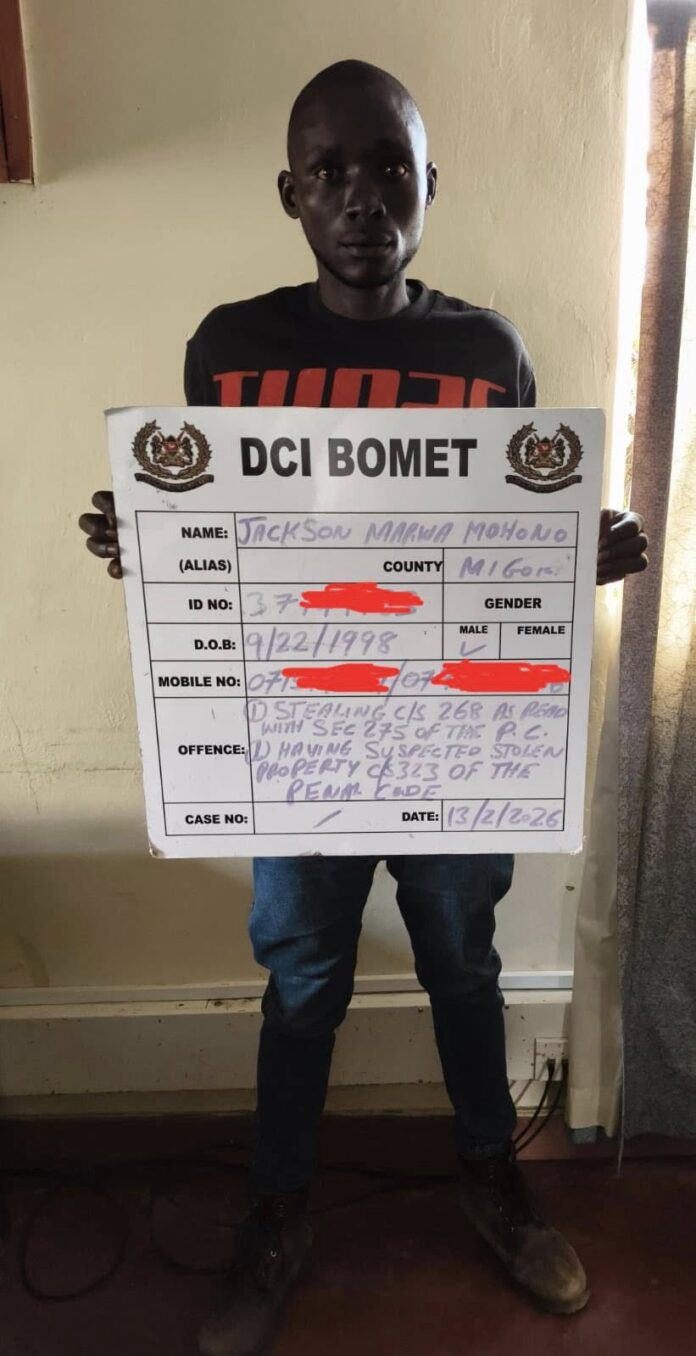

NOTORIOUS PHONE SNATCHER NABBED IN BOMET

Detectives from Bomet Central have put the handcuffs on a notorious phone snatcher who had turned the streets into his personal hunting grounds.

The 29-year-old Jackson Mahono was arrested, and several stolen mobile phones was recovered from his possession.

They included Vivo, Infinix, Samsung, Tecno, and Nokia smartphones, snatched from innocent members of the public in Kehancha, Migori, and Bomet.

Preliminary investigations reveal that Mahono was planning to flash the gadgets before selling them off to unsuspecting buyers in Migori.

The suspect is currently behind bars, undergoing processing before being arraigned, while the recovered phones await forensic analysis to help reunite them with their rightful owners.

“Through intelligence-led operations, forensic analysis, and close collaboration with members of the public, the DCI remains relentless in its war against mobile phone theft and all forms of street crime that rob hardworking Kenyans of their hard-earned property” DCI Stated

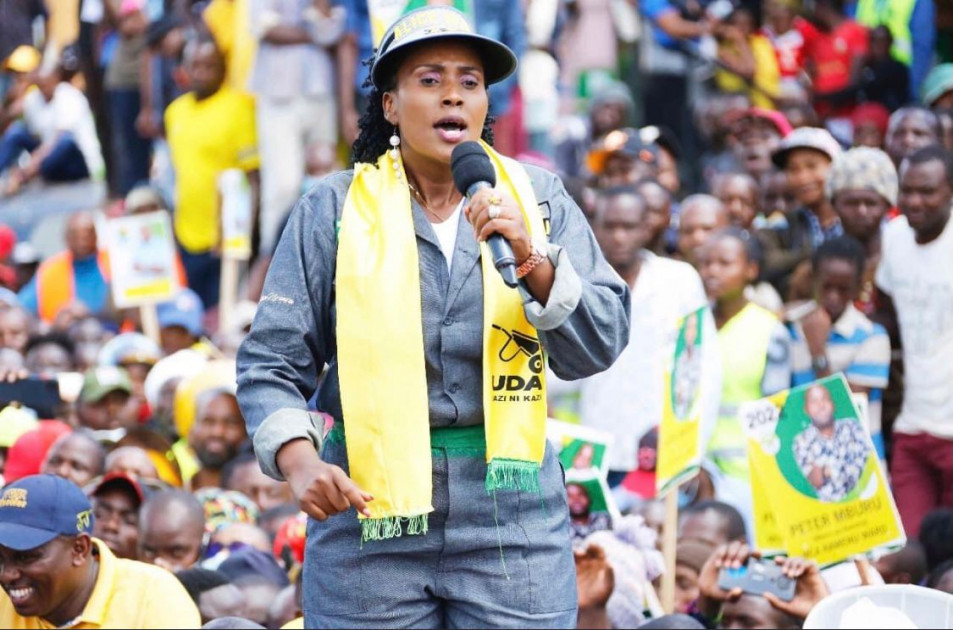
Esther Passaris officially declares 2027 bid for Makadara MP Seat: “Aladwa amenipea blessings”

Nairobi Woman Representative Esther Passaris officially declared her candidacy for the Makadara Member of Parliament (MP) seat in the 2027 General Election during a ceremony at Bidii Primary School in Buruburu on February 13, 2026. 

Passaris confirmed that the current MP, George Aladwa, has given her his “blessings” to succeed him. Aladwa is reportedly shifting his focus to the Nairobi Gubernatorial seat and has been linked to a potential running mate role for Moses Kuria.

She framed her transition from the county-wide Woman Rep seat to a constituency-based role as a move to increase the number of women in leadership positions.

She previously announced in late 2025 that she would not seek a third term as Woman Representative, citing it as an affirmative action seat that should be held for a maximum of two terms.

This shift positions Passaris as a major contender in Makadara, which is expected to be a competitive “battlefield” in 2027. Other potential candidates mentioned for the seat include Anthony Waithaka (Anto) and Mark ‘Tosha’ Ndung’u.

The declaration took place during the commissioning of a modern administration block at Bidii Comprehensive School (formerly Bidii Primary), a project funded through the Esther Passaris Foundation.

Following her decision to vacate the Nairobi Woman Representative seat, Passaris has publicly endorsed nominated Senator Karen Nyamu of the UDA party as her preferred successor, encouraging her to run “boldly” for the position.

By Anthony Solly

South Africa to deploy troops to tackle crime gangs

South African President Cyril Ramaphosa said he will deploy the army to help the police fight criminal gangs and illegal mining in the country.

Gang violence is a major problem in South Africa, which has one of the world’s highest murder rates.

“Organised crime is now the most immediate threat to our democracy, our society and our economic development,” Ramaphosa said in his annual State of the Nation Address (Sona) on Thursday.

“I will be deploying the South African National Defence Force to support the police,” he added.

Last month, Police Minister Firoz Cachalia said the country’s police were not yet able to defeat the deadly criminal gangs, in a stark admission that underscored the scale of the country’s crime crisis.

In his address to parliament, Ramaphosa said he had directed the chiefs of the police and army to draw up a plan on where “our security forces should be deployed within the next few days”.

He said the military deployment would start in the provinces of Western Cape and Gauteng, home to the cities of Cape Town and Johannesburg, because of rising gang violence and illegal mining respectively.

“Children here in the Western Cape are caught in the crossfire of gang wars. People are chased out of their homes by illegal miners in Gauteng,” said Ramaphosa.

Authorities blame illegal miners, known as “zama zamas”, typically armed, undocumented foreign nationals, for their involvement in organised crime syndicates.

Ramaphosa ruled out deploying troops to Cape Town just two weeks ago, saying soldiers were trained for combat and not community policing. He did not explain why he changed his mind but there have been increasing calls for him to take action to tackle gang violence.

Beyond the military deployment, Ramaphosa announced additional measures to combat crime, including recruiting 5,500 police officers, strengthening intelligence, and targeting crime syndicates.

South Africa, the continent’s most industrialised nation, has long struggled with entrenched organised crime.

Police data shows that an average of 63 people were killed each day between April and September last year.

Valentine’s Day: DCI issues safety advisory over first meetings from dating apps and social media flatforms

The Directorate of Criminal Investigations (DCI) has urged Kenyans to prioritise their safety when meeting people they connect with through dating apps and social media platforms, warning that online interactions can sometimes expose users to crime.

In a Valentine’s Day message themed around love and celebration, the agency reminded the public that while digital platforms can spark genuine relationships, they may also conceal risks.

The DCI advised individuals planning to meet someone for the first time to choose well-lit, public places with plenty of people around, and to inform trusted friends or family about their plans and whereabouts.

The agency also encouraged Kenyans to trust their instincts and leave immediately if a situation feels unsafe, cautioning against allowing excitement or romance to cloud judgment.

“Exercise utmost caution when meeting someone from dating apps or social platforms for the first time,” the statement read in part.

“Choose well-lit public places bustling with people for initial encounters; share your plans and location with trusted friends or family; trust your instincts—if anything feels amiss, step away without hesitation. Never let haste or romance cloud your judgment, for true love honors safety above all.”

The reminder comes amid the growing popularity of online dating and social networking across Kenya, where more people are forming connections in digital spaces before meeting physically.

The DCI said personal responsibility and vigilance remain key to preventing incidents such as fraud, theft, or physical harm during meet-ups, adding that public safety should come first even during celebrations.

KNEC eleases 2025 KCSE Result Slips

Candidates who sat for the Kenya Certificate of Secondary Education (KCSE) examination in 2025 can now collect their official result slips after the Kenya National Examinations Council (KNEC) announced their release.

In a notice to schools and candidates, the council confirmed that the 2025 KCSE examination result slips are ready for collection.

“The 2025 KCSE examination result slips are ready for collection. Candidates are advised to visit their schools and collect the result slips,” KNEC said in a statement on Saturday.

The council further revealed that the documents have already been dispatched across the country.

“The 2025 KCSE Examination Result Slips have been dispatched to all Sub-County Directors of Education (SCDE) offices countrywide. Schools that presented candidates for the examination are advised to liaise with the respective SCDEs to collect the result slips,” the statement read.

The 2025 KCSE examination results released early this year highlighted a marked improvement in overall learner performance and an increase in the number of students qualifying for university entry.

Education Cabinet Secretary Julius Migos Ogamba at the time announced that 993,226 candidates sat the 2025 examinations, up from 962,512 in 2024, representing an increase of 30,714 candidates (3.19%).

A total of 1,932 candidates (0.19%) attained an overall mean grade of A (plain), compared to 1,693 candidates (0.18%) in 2024.

The number of candidates who achieved the direct university entry grade of C+ and above rose to 270,715 (27.18%), up from 246,391 (25.53%) in 2024.

Similarly, those scoring C– and above increased to 507,131 (50.92%), compared to 476,889 (49.41%) the previous year. Candidates attaining a pass grade of D+ and above also rose to 634,082 (63.67%), up from 605,774 (62.76%) in 2024.

Tragedy as Two Tseikuru Senior School Students Drown in River Tana During School Trip

Two students from Tseikuru Senior School drowned in River Tana on Saturday during a school-organised trip.

The victims, a Grade Ten pupil and a Form Three student, were among a group of learners taken out of school for the activity.

A student who witnessed the incident said they were transported by the school bus under the impression they were heading to swimming pools near Kyuso market, but were instead taken to the river.

The learner further alleged that following the incident, the school administration attempted to silence students.

The Sub-County Police Commander described the drowning as unfortunate and urged teachers and caregivers to exercise caution when supervising learners during high-risk activities.

“It is an unfortunate incident. Teenagers are very adventurous, and such a situation could have been avoided if extra caution had been taken,” the officer said, confirming that investigations are ongoing.

Parents have since accused the school of withholding information about the trip.

“The head teacher told me he had not gone with my child, and when I asked for the list of students who had travelled, he refused to give it to me,” said Muithya Mbuvi, a parent.

“I am heartbroken. We had cleared all the school fees, and now my heart is heavy,” said Mawea Mueke, the mother of one of the boys.

Another parent, Mueni Kyalo, said her son had been looking forward to completing school and supporting the family.

“He used to tell me, ‘Mum, I will work hard and help you because I only have one year left to finish school,’” she said.

Parents are demanding accountability, questioning why students were taken to a fast-flowing river without lifeguards, safety equipment or prior notice to guardians.

The Tseikuru community remains in mourning as investigations continue, with calls for stricter safety measures during school activities.

Steve Bannon courted Epstein in his efforts to ‘take down’ Pope Francis

Steve Bannon, a former White House adviser to US President Donald Trump, discussed opposition strategies with convicted sex offender Jeffrey Epstein against Pope Francis, with Bannon saying he hoped to “take down” the pontiff, according to newly released files from the US Department of Justice.

Messages sent between the pair in 2019, released in the massive document dump last month, reveal Bannon courted the late financier in his attempts to undermine the former pontiff after leaving the first Trump administration.

Bannon had been highly critical of Francis whom he saw as an opponent to his “sovereigntist” vision, a brand of nationalist populism which swept through Europe in 2018 and 2019. The released documents from the DOJ appear to show that Epstein had been helping Bannon to build his movement.

“Will take down (Pope) Francis,” Bannon wrote to Epstein in June 2019. “The Clintons, Xi, Francis, EU – come on brother.”

Pope Francis was a significant obstacle to Bannon’s brand of nationalist populism.

By Anthony Solly

“Untouchable!” Mt. Kenya UDA leaders oppose ODM bid for Deputy President’s position in 2027

Mt. Kenya region leaders loyal to the broad-based government have dismissed the Orange Democratic Movement (ODM) party’s ambitions for the Deputy President’s seat, terming the proposal made by orange leader Oburu Oginga as a non-starter.

The Mt. Kenya leaders say the number 2 position is not up for negotiation, with a number of them threatening to leave the broad-based government should ODM insist, with others suggesting that DP Kithure Kindiki should just cross over and join ODM.

Speaking in Mombasa recently, Oburu openly declared that his party is keen on the Deputy President’s seat in any coalition talks with the ruling United Democratic Alliance (UDA) party, remarks that have sparked uproar among Kindiki’s allies.

Tharaka Nithi Governor Muthomi Njuki said: “As much as we are in a broad-based government, the seat of the Deputy President is non-negotiable. That is a dream. ODM’s numbers cannot match what we have on this side.”

Public Service Cabinet Secretary Geoffery Ruku added: “If ODM wants the Deputy President’s seat, we can discuss that in 2032 when Kindiki becomes President. For now, the seat is not vacant.”

Some of the leaders said insistence by ODM on taking the seat would be the breaking point with the broad-based government.

Kiambaa MP Njuguna Kawanjiku said: “Waende juu, waende chini, hatuwachilii. Kama kuna kitu inaweza fanya tutoke kwa hii serikali na hiyo muungano, ni kiti ya namba mbili…tunaambia ODM warelax.”

His Thika counterpart Alice Ng’ang’a chimed in: “Naibu wa Rais, usiku na mchana, ni Kithure Kindiki…non-negotiable!”

The leaders who spoke separately in Meru, Kiambu and and Tharaka said they are behind the Deputy President and accused ODM of trying to dictate terms.

Laikipia East MP Mwangi Kiunjuri stated: “Kila mtu anaona msichana mzuri anaitwa kiti ya Deputy President, lakini huyu msichana ako na mwenyewe. Ni bibi ya mtu, ametolewa mahari, kunyemelewa sisi ni kuhakikisha tumelisha vizuri, kwa nini tuogope mwanume mwengine?”

Imenti Central lawmaker Kirima Nguchine said “Lakini Kusema Kweli ata nikikuita kwa nyumba yangu unakalia kiti yenye nimekalia ama ile yenye nakupatia?”

Tharaka Nithi Governor Muthomi Njuki, speaking tongue-in-cheek, suggested that the Deputy President could as well cross the aisle.

“Should ODM really insist that they want to stay in broad-based with that seat, we are willing to make only one basic compromise. We give them Kithure Kindiki to join ODM,” he said.

The resistance from Mt. Kenya leaders sets the stage for what could be tough and delicate negotiations between ODM and UDA ahead of 2027.  

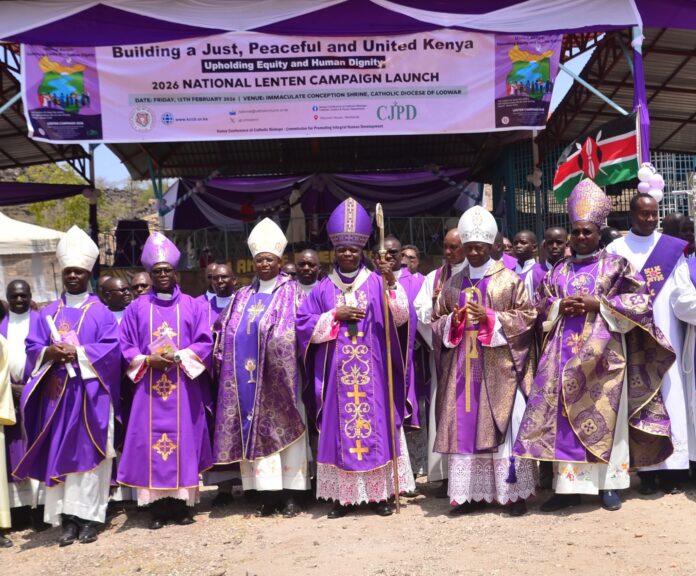
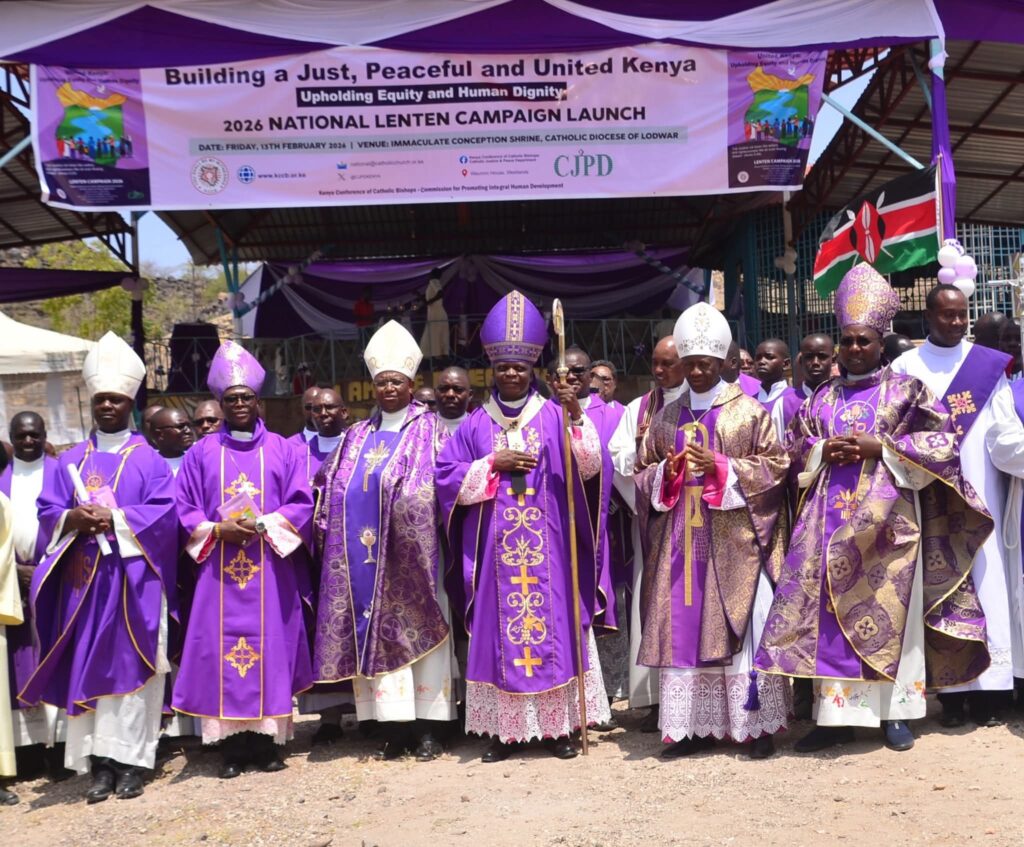
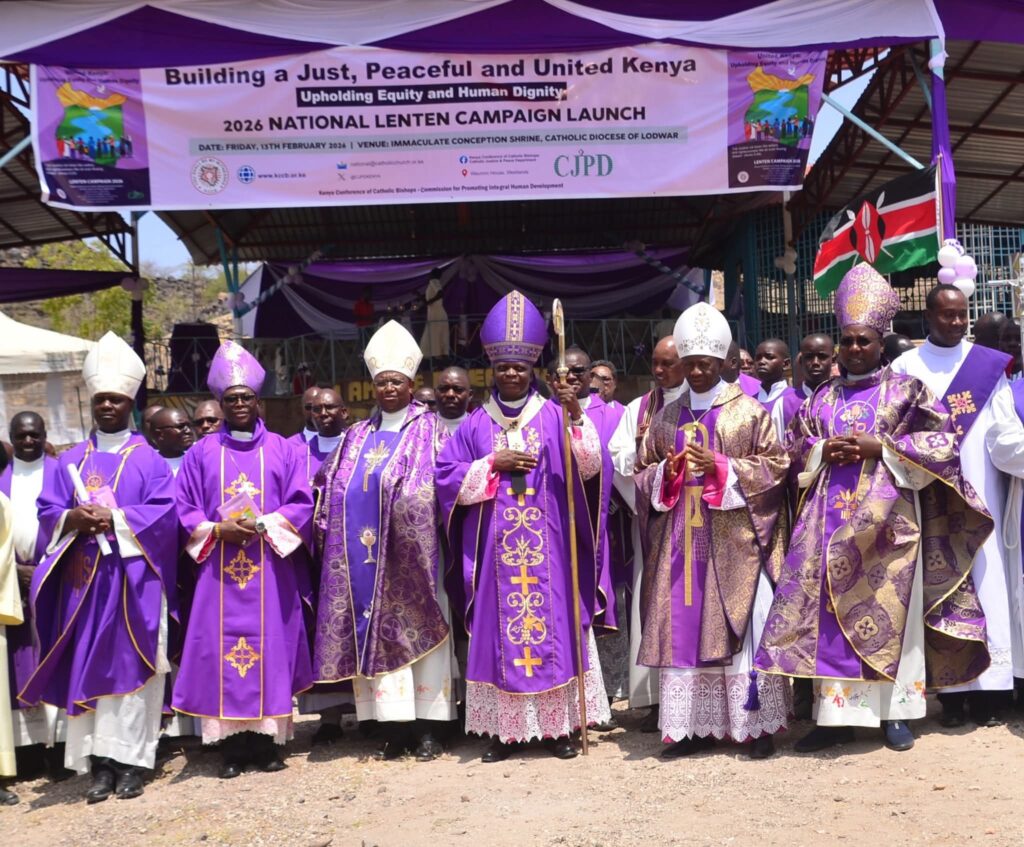
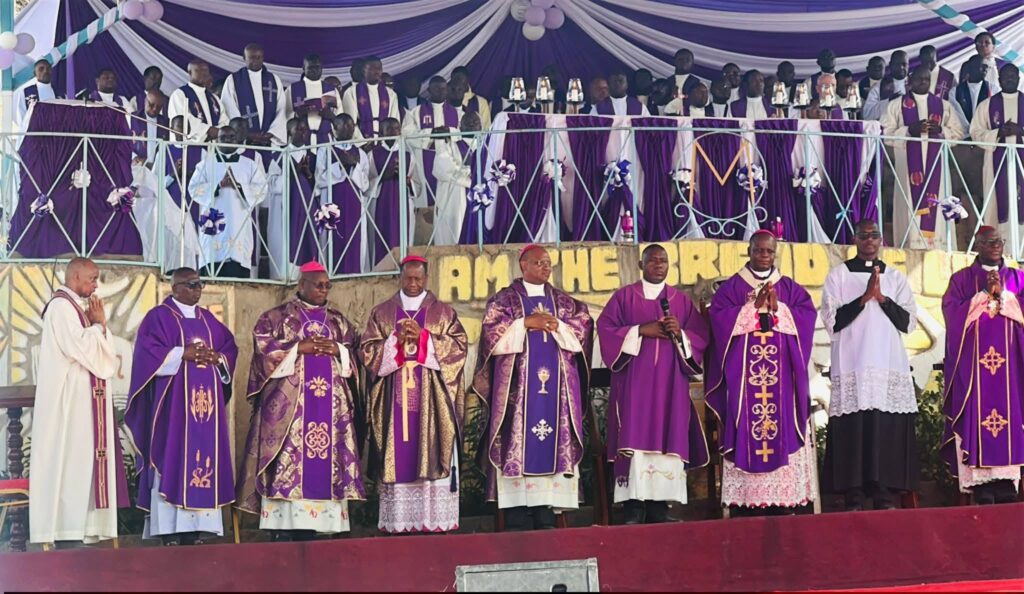
Kenya Conference of Catholic Bishops Launch 2026 Lenten Campaign.

The Kenya Conference of Catholic Bishops (KCCB) has launched its 2026 Lenten Campaign in the Catholic Diocese of Lodwar, issuing a wide-ranging pastoral statement that calls for the protection of human dignity, responsible political leadership, electoral preparedness and an end to violence and intimidation ahead of the 2027 General Elections.

The theme of this years’ Lenten campaign is “Building a Just, Peaceful and United Kenya, Upholding Equity and Human Dignity.”

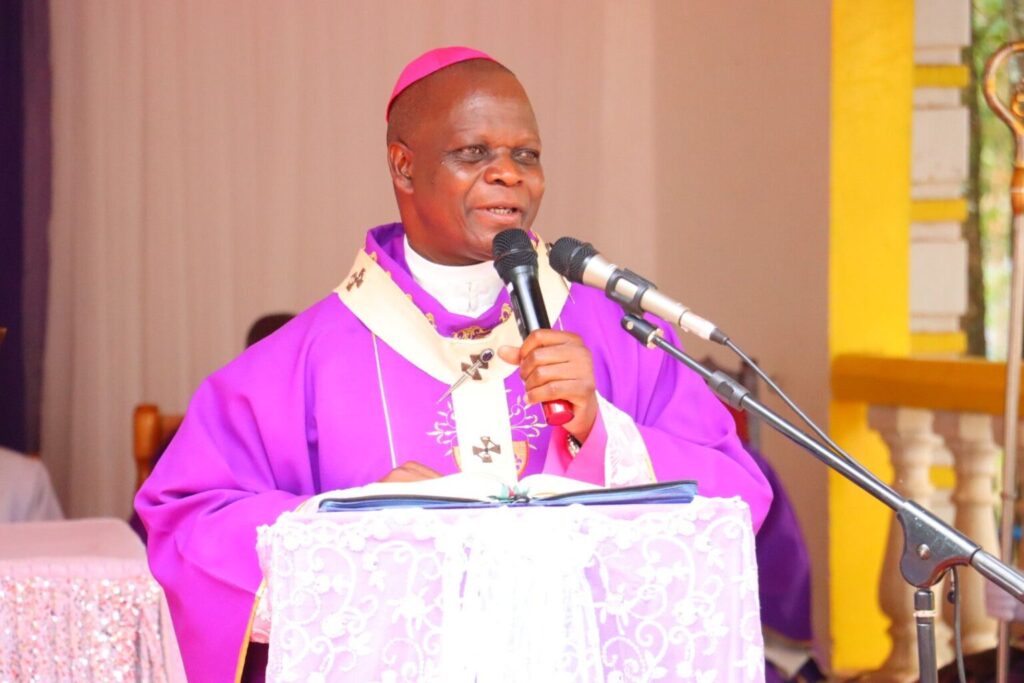
Speaking during the launch in Turkana County on February 13, Most Rev. Maurice Muhatia Makumba, the Chairman of KCCB, grounded the campaign in Catholic Social Teaching and underscored the Church’s concern over the country’s moral and political trajectory, affirming that the campaign is rooted in the principle of human dignity, which he described as inherent and inviolable.

“Human dignity lies at the heart of the Catholic Social Teaching. Every human person is created in the image and likeness of God; therefore, dignity is inherent, inviolable, and non-negotiable. It is not granted by the State, nor can it be taken away by any authority,” he said.

He lamented that many Kenyans continue to endure poverty, unemployment, hunger, corruption, insecurity and limited access to quality healthcare, education, water and housing, arguing that such realities amount to daily indignities.

“A nation cannot claim progress while a significant portion of its people live without hope or opportunity. Development that excludes the poor is neither just nor sustainable,” stated the Archbishop of Kisumu.

Concern over Premature Political Campaigns

Turning to the political climate, the KCCB Chair expressed alarm over early political mobilization ahead of the 2027 elections, warning that premature campaigns risk destabilizing the country: “As we get closer to the next electoral cycle, we are deeply concerned about the ongoing premature campaigns and political mobilization. This early jostling for positions ahead of the 2027 general election is disturbing because it is riddled with inflammatory rhetoric, political thuggery and violence.”

He cautioned leaders to halt early campaigns and refocus on service delivery, warning against hate speech, ethnic profiling and incitement, describing them as corrosive to national unity.

“We caution the leaders to stop these premature campaigns, as they are distracting them from their responsibility to serve the people and risk plunging the country into unnecessary tension. Politics must never become a battlefield for personal ambition at the expense of national cohesion and social harmony,” he counseled.

Governance, Corruption and Public Debt

In a strong critique of governance failures, Archbishop Muhatia cited entrenched corruption, misuse of public resources, weak accountability, and selective application of the rule of law, poor service delivery and rising public debt as persistent national challenges. He urged the Government to strengthen transparency and accountability mechanisms and to ensure meaningful citizen participation at all levels.

The prelate explained “Taxes must be utilized for the common good, ensuring essential services reach all Kenyans. This requires stringent anti-corruption measures to prevent the embezzlement of public funds, alongside deliberate, responsible strategies to manage and reduce the national debt.”

He emphasized that economic policies must prioritize equity, fairness and long-term sustainability, with the well-being of citizens at their centre.

Rising Violence and Violation of Rights

Archbishop Muhatia also raised concern over increasing incidences of violence and intimidation, including what it described as excessive use of force by security agencies and the shrinking of civic space.

“True peace cannot exist without justice. We are deeply concerned over increased violation of human rights, including excessive use of force by security agencies, arbitrary arrests, harassment of citizens, and the shrinking of civic and democratic space,” he noted.

Particularly troubling, the Archbishop said, were incidents where peaceful gatherings, including places of worship, were disrupted by violence: “Churches are sacred places and must always be respected. Lobbing tear gas canisters at worshippers inside the church is a gross violation of the constitutional right to worship provided under Article 32 of the Constitution of Kenya.”

He demanded investigations and prosecution of those involved in political thuggery, including sponsors.

“The use of force against unarmed citizens, including women, children, and the elderly, is unacceptable and we unequivocally condemn such heinous acts. Accountability must prevail, without fear or favour,” he admonished.

Youth Participation and Electoral Preparedness

Addressing Kenya’s youth, Archbishop Muhatia encouraged active civic engagement, describing young people as central to national renewal. He urged them to register as voters, engage in public discourse and offer themselves for leadership, noting that their energy and creativity are vital in confronting corruption, nepotism and political violence.

 “Kenya’s youth are not merely the leaders of tomorrow; they are citizens of today.”

He urged them to register as voters, engage in public discourse and offer themselves for leadership, noting that their energy and creativity are vital in confronting corruption, nepotism and political violence.

On electoral preparedness, the bishops called on Parliament to expedite necessary reforms and urged the Independent Electoral and Boundaries Commission (IEBC) to begin comprehensive preparations.

 “Early, transparent and credible preparation is the bedrock of free, fair, and peaceful elections.”

The Archbishop called for immediate nationwide voter education and a sustained mass voter registration drive to ensure no eligible Kenyan is disenfranchised, especially the youth.

Create a free account, or log in.

Gain access to read this content, plus limited free content.

Yes! I would like to receive new content and updates.

Sponsored Ad

Ad 1
Ad 2
Ad 3
Ad 4
Ad 5
Ad 6