Sponsored Ad

Ad 1
Ad 2
Ad 3
Ad 4
Ad 5
Ad 6
20.6 C
Kenya
Thursday, June 11, 2026
Home Blog Page 4822

Octopizzo: Wajackoyah Was The Only One With A Plan

Octopizzo, a multiple award-winning Kenyan Hip Hop star and philanthropist, appears to have thrown his support behind Roots Party presidential candidate Prof. George Wajackoyah ahead of the August 9 showdown.

The ‘Tom Mboya’ hitmaker supported Wajackoyah’s candidacy during a Citizen TV Twitter Spaces session on Tuesday night, saying he has the most concrete manifesto that resonates with young people.

According to the activist, the lawyer-turned-selling politician’s point of producing bhang and harvesting snake poison for export to boost the country’s economy if elected to the highest office makes sense to him and other young people.

He stated that, in contrast to his three other competitors for the State House job, whose pledges he described as theoretical, Wajackoyah has managed to separate himself from the pack by being more practical with the solutions he is proposing.

“I haven’t heard the best manifesto apart from Wajackoyah, and I’m saying Wajackoyah not to be sarcastic but because I think for the first time in so many years of listening to politicians campaigning, his manifesto was about economics. Everything was about ‘if we do this, we will make this money. If we do this, we will pay this…’ Before it’s just been tribal, or ‘this person is bad, I’m better than this. I’m not corrupt…’” said Octopizzo.

“That is the first leader to actually vie for the seat without anyone asking ‘what is his tribe?’ The people considered big have not even had like really dope manifestos. It is the same old stuff, it’s theory. Theory is like going to school, then you pass Biology and because you pass Biology in theory you think you’re also going to pass the practicals.”

“But the practicals are surgery, and surgery you need to be more careful. You need to be more calculative, and I feel like everything that most of them are giving us is not calculated, except Wajackoyah,” he added.

Octopizzo also sought to debunk claims that the country’s youth are uninterested in voting in the upcoming elections.

He claims that the youth are simply unaware of the electoral process because civic education has not been properly implemented by the relevant government bodies.

The rapper went on to say that the country’s youth are also interested in voting for people who understand the issues that affect them and can offer practical solutions.

“I don’t think there’s a very big number of people that don’t want to vote, it’s just that they don’t know how to vote. The civic education that happens in this country is like 2% compared to 98% that actually should be done, so most young people don’t know the process; most young people don’t know why they should vote,” he said.

“I’ve been doing civic education since March until now and every town I have gone to…I have gone to six towns…every young person wants to vote, but they want to vote for somebody who looks like them; they want to vote for somebody who knows what they’re going through and not someone who will tell them ‘vijana vijana nyinyi ndio viongozi wa kesho.’ People are tired of that narrative.”

He added: “It’s sad, but that’s just the truth. So I don’t think young people don’t know what’s going on, for the first time they’re curious like ‘ohh so if we sell weed, we could actually make more money. Ohh, so we can actually sell poison…’ Nobody has ever talked about these things. Like how are we going to make money? How are we going to create jobs? That’s the most important thing for the young people.

“But the rest are just like ‘tutawapatia kazi’ – that’s not a guarantee. But ‘tutapata kazi tukifanya hivi’ is a guarantee. I don’t think there’s a strong relatable manifesto from most of those guys that is practical, except Wajackoyah.”

Most Wanted Drug Trafficker Arrested In Meru

Detectives from the Directorate of Criminal Investigations (DCI) Serious Crimes Unit arrested a suspect wanted in the United States for allegedly trafficking wildlife and narcotics.

On Tuesday, Abdi Hussein Ahmed, alias Abu Khadi, was apprehended at a rental room in Maua, Meru County, following a tip from local residents via the DCI’s anonymous hotline.

Ahmed, along with his accomplices Moazu Kromah (aka Kampla Man), Amara Cherif (aka Bamba Isiaka), and Mansur Mohamed Suru (aka Mansour), were wanted in the United States for allegedly participating in a plot to smuggle rhinocerous horns and elephant tusks worth more than USD 7 million (approx. Ksh.833.4 million) between December 2012 and May 2019.

Their headquarters were allegedly in Uganda, where they smuggled approximately 190 kilograms of rhinoceros horns and at least 10 tonnes of ivory from various East African countries to ready markets in the United States and Southeast Asia.

The transnational criminal enterprise, according to the DCI, is responsible for the deaths of over 100 elephants and more than 35 rhinoceros.

“Their indictment, followed a joint investigation of the U.S. Fish and Wildlife Service (USFWS) and the Drug Enforcement Administration (DEA), where a federal grand jury in the Southern District of New York, charged Ahmed and his other co-conspirators with conspiracy to distribute and possess with intent to distribute one kilogram or more of heroin, which carries a mandatory minimum sentence of 10 years imprisonment,” said the DCI in a statement. 

In May, the Kenyan and US governments offered a USD 2 million (approx. Ksh.233 million) reward for information leading to the arrest of Ahmed and Badru Abdul Aziz Saleh, who were accused of trafficking heroin into the US and smuggling wildlife destined for international markets out of Kenya and Uganda.

“Ahmed’s arrest follows the arrest of his accomplice Badru Abdul Aziz Saleh, alias “Badro” on May 31, one week after a reward of $ 1Million USD was announced by the U.S. Department of State, through the Transnational Organized Crime Rewards Program (TOCRP) for information leading to the arrest and/or conviction of Abdi Hussein Ahmed, for participating in transnational organized crime, i.e. narcotics trafficking.”

The arrests come just two months after DCI boss George Kinoti and US Ambassador Eric Kneedler held a joint briefing in Nairobi on combating transnational organized crime.

The prosecution of this case is being handled by the U.S. Attorney’s Office’s Complex Frauds and Cybercrime Unit. Assistant United States Attorneys Sagar K. Ravi and Jarrod L. Schaeffer are in charge of the prosecution.

The Kinoti-led agency lauded the public for partnering with the security agencies in the fight against crime and called for further improved collaborations.

Murkomen Trashes Poll, Says Ruto Is At 53 percent

Senator Kipchumba Murkomen of Elgeyo Marakwet now claims that the Deputy President William Ruto-led Kenya Kwanza coalition has conducted its own internal polls that place their candidate ahead of his competitors.

According to Murkomen, Kenya Kwanza has about five independent pollsters who place DP Ruto ahead of his main opponent Azimio la Umoja One Kenya flagbearer Raila Odinga at around 53%.

“We do our own internal polls and we have all the qualified pollsters, machines and everything… To be very fair, even the latest I have seen is 53 percent,” Murkomen said on Citizen TV’s News Night on Tuesday.

“We have also commissioned about five independent pollsters to do it for us that I am privy of and have rated us between 53 and 56 percent.”

While dismissing recent public polls by InfoTrak, Ipsos, and TIFA that showed Ruto trailing Odinga, the senator claimed that the companies were compromised to favor the Azimio candidate, insisting that their own internal pollsters were credible.

Referring to the 2017 election results, in which President Uhuru Kenyatta easily defeated the ODM leader, Murkomen questioned the companies’ credibility, claiming that they had also rated Odinga ahead of Kenyatta days before the elections.

“In 2017, Uhuru was at 41% and Raila was at 53% but it was not the truth. We cannot say, because of the longevity, and the fact that they have done opinion polls for many years that they have credibility, in any case, they have never predicted any president,” said the legislator.

Homa Bay Senator Moses Kajwang’, who was also on the platform, dismissed Murkomen’s remarks, calling the ‘internal polls’ cited by Murkomen a mere community-based census.

According to Kajwang, who is affiliated with Azimio, Odinga’s popularity is much higher than what opinion pollsters predict.

“They have understated our ratings, we believe we are 50 plus one and unlike Kipchumba’s team that is doing an ethnic census to ascertain their positioning,” Kajwang said.

“We are not looking at the ethnic perspective where you are counting this tribe and lumping another tribe and saying that since we have this and that figure from this community then you are community then we have the entire country.”

With five days until Kenyans go to the polls, three pollsters have ranked Azimio La Umoja One Kenya presidential candidate Raila Odinga ahead of his main challenger William Ruto.

On Tuesday, August 2, 2022, Infotrak gave Odinga 49 percent to Ruto’s 42 percent. IPSOS, on the other hand, put Odinga ahead by 6%, at 47 percent, while TIFA said their figures put Odinga ahead of Ruto in Nairobi and Kajiado counties.

Undecided voters were estimated to be between 4 and 6 percent by pollsters.

Man Who Made Millions Unlocking Phones Found Guilty

A jury has found Argishti Khudaverdyan, a former owner of a T-Mobile store, guilty of using stolen credentials to unlock “hundreds of thousands of cellphones” from August 2014 to June 2019 (via PCMag). According to a press release from the Department of Justice and an indictment filed earlier this year, Khudaverdyan made around $25 million from the scheme, which also involved bypassing carrier blocks put on lost or stolen cell phones.

For years, he reportedly used several tactics to acquire the T-Mobile employee credentials needed to unlock phones, including phishing, social engineering, and even getting the carrier’s IT department to reset higher-ups’ passwords, giving him access. The DOJ says he accessed over 50 employees’ credentials, and used them to unlock phones from “Sprint, AT&T and other carriers.” 

According to the indictment, Khudaverdyan was able to access T-Mobile’s unlocking tools over the open internet until 2017. After the carrier moved them onto its internal network, Khudaverdyan would allegedly use stolen credentials to access that network via Wi-Fi at T-Mobile stores.

The DOJ says that Khudaverdyan co-owned a T-Mobile store called Top Tier Solutions Inc for a few months in 2017, though the carrier ended up terminating the store’s contract because of suspicious behavior. (The other co-owner, Alen Gharehbagloo, was also accused of fraud and illegally accessing computer systems and has plead guilty.) Throughout the years, the DOJ says that Khudaverdyan marketed his unlocking services via email, brokers, and various websites, telling customers that they were official T-Mobile unlocks.

Khudaverdyan’s indictment describes a few of the purchases he and Gharehbagloo made with the money they got from unlocking phones; properties in California, a $32,000 Audemars Piguet Royal Oak watch, and a Land Rover. Gharehbagloo and Khudaverdyan are accused of leasing a Mercedes-Benz S 63 AMG and aFerrari 458, respectively. A Rolex Sky-Dweller was also seized from one of the properties.

Waita: Elect Leaders With A Vision, Shun Party Politics

Machakos governor-candidate Nzioka Waita has urged residents to vote in leaders with a vision and resist party politics. 

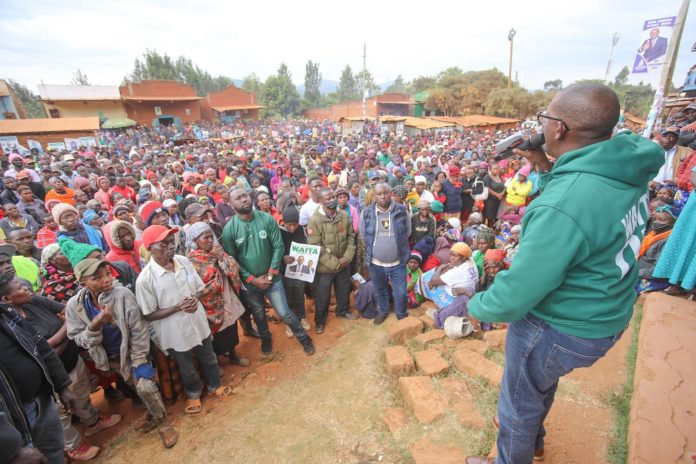
Speaking during a series of rallies in Kangundo East, Waita affirmed his commitment to serve Machakos by implementing his manifesto to eradicate poverty. 

“What we are promising here will be made possible if you elect leaders who know what they are doing. I walk around with a team that knows how to address your troubles” 

He added that his government will improve the state of ECDE education, coffee production, cash programmes for the old, market upgrades and jobs for the youth.

On the Wiper onslaught, Nzioka Waita urged residents to resist calls for a six-piece vote. 

“You are at liberty to scrutinize the leaders and vote wisely. Do not be cheated to vote for leaders on the basis of party ‘suit’ politics. Whomever you elect to serve with me I will work with them.” 

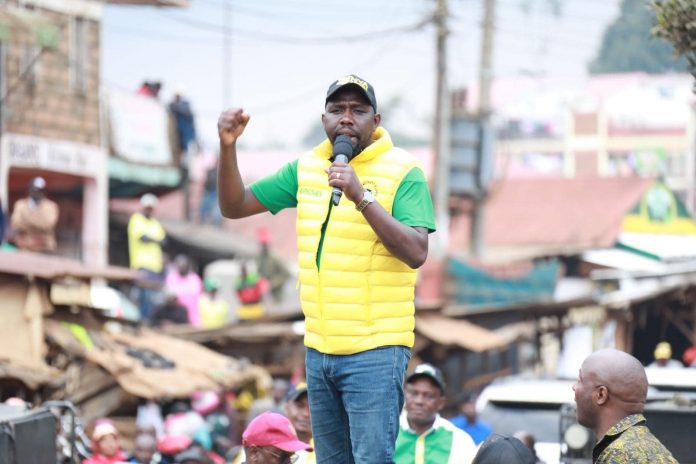
Waita was accompanied by his running mate Hon. Florence Mwangangi Suluhu, and former Maendeleo Chapchap Deputy governor candidate Rose Wambua.

The team commissioned the Kwa Kathúle Water Borehole after clearing the debts owed to Kenya Power. 

The project will ensure the provision of water to residents in the area who have decried neglect from the current county leadership. 

Uhuru Passes Ksh. 500M Bailout To Reopen Nzoia Sugar Factory

The Nzoia Sugar Factory is set to resume production this coming Sunday following President Uhuru Kenyatta’s announcement of Kshs 500 million bailouts to offset arrears owed to farmers and workers.

The President, who made the announcement on Tuesday when he visited the factory located in Bungoma County, directed Agriculture Cabinet Secretary Peter Munya to ensure Kshs 450 million owed to farmers is accredited to their bank accounts while Kshs 50 million is paid to the factory workers by Friday this week.

President Kenyatta emphasized that his administration has been working to empower sugarcane farmers but some leaders charged with that responsibility sabotaged the Government’s efforts by crippling the operations of the sugar sector.

He pointed out that despite allocating close to Kshs 1.2 billion to the Nzoia Sugar Factory, the investment amounted to nothing because the funds were not used for the intended purposes.

“Managing Director, Mr. Crispin Omondi, has promised that by Sunday the factory will again start its operations,” President Kenyatta said.

At the same time, the President cautioned Kenyans against falling into the trap of smooth-talking politicians who do not have the interests of the country at heart.

“Some individuals are moving around promising to undertake projects and yet while they were in Government they did not do anything to improve the welfare of the people. Be wary of sweet talking leaders who say they will do many things and yet when they had opportunity they didn’t do anything,” he cautioned.

President Kenyatta urged Kenyans to vote for the Azimio La Umoja-One Kenya Alliance presidential candidate Raila Odinga, saying he has proved to be a genuine leader who cares for the interests of all citizens.

“Please try this old man who is humble and focused. This job requires someone with wisdom to run the affairs of the country,” President Kenyatta added.

In affirmation, residents of Kanduyi constituency assured the President of their support for Azimio La Umoja-One Kenya Alliance.

CS Munya said already 900 farmers have received their payment and the remaining farmers will be paid by Friday.

Bungoma Governor Wycliffe Wangamati and Defence Cabinet Secretary Eugene Wamalwa thanked President Kenyatta for providing good leadership and assured him that they will mobilize Bungoma residents to vote the Azimio La Umoja-One Kenya Alliance candidates  for the country to continue on its development trajectory.

Kanduyi Member of Parliament who is also the chairman of Democratic Action Party Kenya (DAP-K), Wafula Wamunyinyi, said sugarcane farmers are grateful to President Kenyatta for bailing out the sector that is their main source of livelihood.

Kenya’s Import Cover Drops To Six-year Low

After the National Treasury cancelled more than a $1 billion sovereign bond, reducing the country’s dollar reserves, Kenya’s import cover decreased to its lowest levels in six and a half years. 

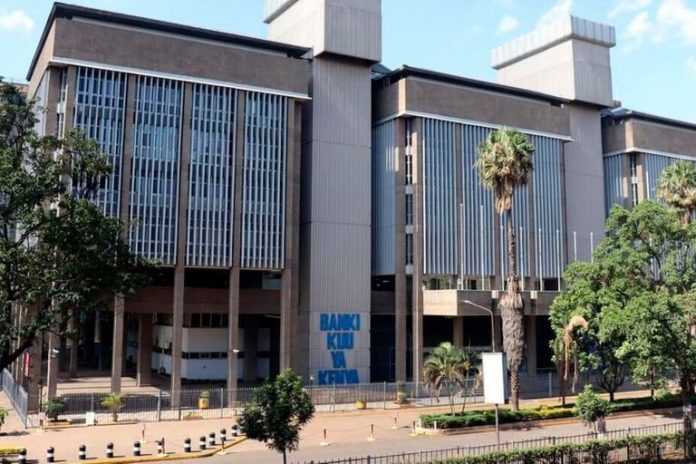
The Central Bank of Kenya held foreign currency reserves totaling $7.74 billion (Sh919.90 billion) as of last Thursday, the lowest backup since January 28, 2016, when 4.44 months of cover were available. 

The government mostly uses its foreign exchange reserves to make payments, such as repaying external debt and purchasing necessities like medications. 

Investors can feel secure knowing that there are reserves, the majority of which are in US dollars, in case of an unforeseeable emergency like the devaluation of the shilling.

“It is true we did not get $1.1 billion that the National Treasury had planned to borrow last fiscal year [ended June]. This is something that was obviously exogenous to us,” CBK Governor Patrick Njoroge told a press conference last Thursday.

“But we had expected that [Eurobond funds] to come as part of our reserves. I am sure there would be a sort of substitution of some kind, and so that’s not an issue.”

Kenya abandoned plans to borrow at least $1 billion (Sh118.85 billion) from international capital markets — Eurobond — in the recently ended fiscal year after interest demanded by investors doubled to about 12 percent from 6.3 percent Kenya paid a year earlier for a similar amount.

The import cover is, however, still within the target level of four months, but has fallen below the desired 4.5 months cushion recommended by the seven-nation East African Community bloc.

“We are planning when to have a buildup [of reserves because]… we have timelines for all those things stretching out to one year. During that period, we expect reserves to be adequate,” Dr Njoroge said.

“Generally, our (target) number is four months of import cover. When it will be below four months then we will be more concerned. But the 4.5 months of import cover is not a trigger. In the context of EAC, they talk about expectations which are not the same as a target that you have to hit.”

The last Thursday’s $7.740 billion (Sh919.90 billion) reserves were slightly improved from $7.727 billion (Sh918.35 billion) a week earlier, the lowest levels since $7,474 billion (Sh888.28 billion) on June 17, 2021, just before the $1 billion Eurobond was tapped.

IEBC Addresses Power Outage Fears In Marsabit

Constant power outages have paralyzed business operations in Marsabit town for the last four days, and electoral officials are now concerned that the August 9 elections will be affected as well.

Power outages could jeopardize the credibility of the elections, according to Joseph Mukewa, the county returning officer for the Independent Electoral and Boundaries Commission (IEBC).

“We fear that the unreliable operations and power supply of the power utility could potentially result in an interruption in the upcoming August 9 polls,” Mr Mukewa said.

He claimed he was keeping Kenya Power officers in the county on their toes.

Mr Mukewa was concerned that blackouts and delays in transmitting voting data would undermine voter credibility.

Because there was no electricity, IEBC officers in the county were unable to charge their BVR kits in time for the August 9 elections.

Despite having purchased enough power banks for emergencies, the agency still heavily relies on Kenya Power.

Meanwhile, the IEBC has put adequate measures in place to ensure that there is an internet connection so that election results can be transmitted from remote corners of the vast border county.

Standby helicopters have also been hired to help with the transport of ballot papers.

Marsabit County has 448 polling places, each with its own presiding officer and deputy. Additionally, there are six polling clerks per station and one queuing clerk per polling center.

The county has 169,912 registered voters.

Mr Mukewa assured voters that the elections would be fair and transparent. He also stated that security had been increased.

Kenya Increases Stake In Shelter Afrique

Kenya solidified its position as the lender’s top stakeholder by acquiring a further stake in Pan-African housing financier Shelter Afrique for Sh1.1 billion ($9.28 million) in the year ended December 2021. 

Kenya’s stake increased from 14.82 percent to 17.44 percent during the review period because to the additional capital infusion. 

The second and third largest shareholders, respectively, are Nigeria with a stake of 13.02 percent and the African Development Bank (AfDB), with a stake of 12.58 percent.

“The Kenyan government was the most significant contributor, with a payment of $9.28 million accounting for 37 percent of the total collections,” Shelter Afrique head of investor relations Kahumbya Bashige said in the firm’s latest annual report.

Shelter Afrique is owned by 44 African countries and two development institutions — AfDB and African Reinsurance Corporation — the latter being class B shareholders.

The firm in 2013 and 2017 signed up deals with shareholders to recapitalise the company through additional equity.

Besides Kenya, the financier said 10 other countries also gave Shelter Afrique additional capital, bringing the fresh capital received by the housing financier in the year to December to $24.83 million (Sh2.95 billion).

“During the year, shareholders continued to demonstrate their support of the institution and its mandate by injecting $24 million equity into the company,” said Shelter Afrique.

“This amount represents 143 percent of the annual target of $17 million and 46 percent growth over the 2020 collections of $16.7 million.”

Other members that contributed capital include the Democratic Republic of Congo ($4.18 million), Cameroon ($3.53 million), Tanzania ($3.08 million), and Mali ($2.06 million).

Capital Markets Authority Goes After Kakuzi CEO

The chief executive and finance director of the publicly traded food manufacturer Kakuzi have been questioned by the Capital Markets Authority (CMA) on claims that Camellia Plc, the company’s principal shareholder, has shifted earnings offshore and created conflicts of interest. 

The CMA has gotten in touch with the general manager of finance Benjamin Okiring, financial director Ketan Shah, and CEO Christopher Flowers of Kakuzi recently, according to three persons familiar with the investigation. 

In response to claims of a conflict of interest, the CMA said it is looking into the contracts between Kakuzi and its parent firm, Camellia Plc.

The regulator is also investigating the financial effects of transfer pricing, which occurs when businesses make transactions among various divisions of the same organization. 

Kakuzi stated that it was speaking with the regulator directly and declined to comment further. Minority shareholders of the business had previously claimed that they couldn’t participate in the board meetings because Camellia Plc, a British corporation, controlled it. 

The multinational owns a controlling 50.7 percent ownership in Kakuzi as a result of its holdings in Bordure Limited and Lintak Investments.

“Together with Mr Chris Flowers, the three have been interviewed in the course of the last three weeks,” said a source at the CMA who spoke to local media houses on condition of anonymity. Kakuzi’s principal activities include growing, packing and selling avocados, macadamia nuts, blueberries, tea green leaf and forestry products.

The company also engages in livestock farming and sale of beef. It has a presence in Muranga County in Central Kenya and Nandi County in the Rift Valley.

“Camellia Plc is the ultimate parent of the group. There are other Camellia Plc group companies that are related to Kakuzi Plc through common shareholdings,” says the firm in its 2021 annual report.

“Fellow subsidiaries within the Camellia Plc Group act as brokers and managing agents for certain products and operations of the group.”

The Kakuzi dealings with its fellow subsidiaries was worth Sh369.4 million last year and involved Eastern Produce Kenya Limited, Robertson Bois Dickson Anderson (RBDA) Kenya Branch and Eastern Produce Regional Services Limited.

“The Group transfer pricing policy gives guidance on related party transactions, which are carried out using the arm’s length principle,” Kakuzi says in the annual report.

These transactions will be the focus of the CMA probe. The market regulator has stepped up surveillance of agricultural counters for irregular practices that have hurt small shareholders and farmers while benefiting majority owners.

Create a free account, or log in.

Gain access to read this content, plus limited free content.

Yes! I would like to receive new content and updates.

Sponsored Ad

Ad 1
Ad 2
Ad 3
Ad 4
Ad 5
Ad 6