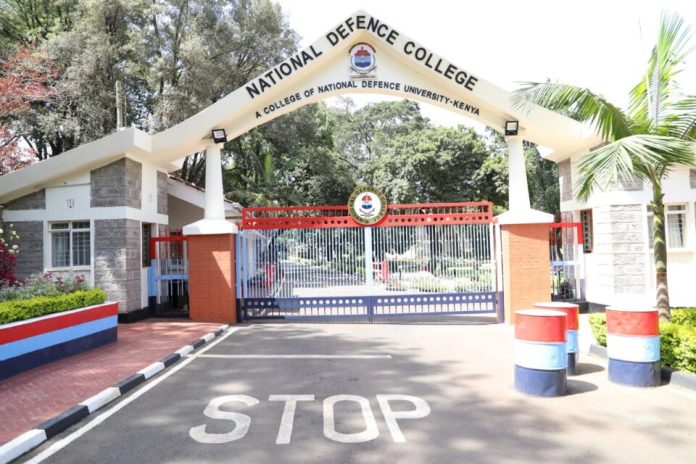
President Uhuru Kenyatta will launch the National Defence University-Kenya (NDU-K) on Wednesday at the Kenya Military Academy in Lanet, Nakuru County.
The National Defence College was granted full university status after the Head of State granted it a University Charter in May of last year.
During the institution’s 24th Graduation ceremony, Chief of Defence Forces General Robert Kibochi stated that the move will strengthen the forces’ human resource.
He also stated that it will benefit regional integration by serving as a training facility.
The National Defence University-Kenya (NDU-K), which brings together premier colleges linked to National Security Organs (currently the KDF and the National Intelligence Service), was chartered on May 27, 2021, and a core military staff was deployed to Lanet on August 5, 2021.
The team succeeded a transition committee formed by Defence Headquarters to oversee the charter award process.
NDU-K admitted its first undergraduate students at the Kenya Military Academy (KMA) and Master of Arts students at the National Intelligence and Research University College (NIRUC) in March 2022.
In the following months, the National Defence College (NDC), Joint Command and Staff College (JCSC), International Peace Support Training Centre (IPSTC), Defence Forces Technical College (DEFTEC), and Defence College of Health Sciences (DCHS) all began their programs.
The President granted charters to eight institutions of higher learning on Tuesday, transforming them into full-fledged universities.
The eight institutions located in eight counties were Kaimosi Friends University (Vihiga), Alupe University (Busia), Tom Mboya University (Homa Bay), Tharaka University (Tharaka Nithi), Lukenya University (Makueni), Zetech University (Kiambu), Kiriri Women’s University of Science and Technology (Nairobi) and East African University (Kajiado).
President Kenyatta urged universities of higher learning to streamline activities to prevent corruption in the issuance of degree certificates at the event in Kakamega State Lodge.
With only five days until the August 9 General Election, Roots Party presidential candidate George Wajackoyah has backed Azimio La Umoja One Kenya Coalition Party rival Raila Odinga.
Addressing revelers in a nightclub, Wajackoyah in his signature durag, told his supporters that he supports Raila, the leader of the Orange Democratic Movement (ODM) because he was among those who pushed for Kenya’s second liberation.
“Because of that, man (Raila). The man whose tears come out every day because of what happened to him in jail, including myself. I am here to join liberators. And the person I look at, the person who makes me stand here is none other Raila Odinga,” Wajackoya said.
His sentiments come a day after an opinion poll by Trends and Insights for Africa (TIFA) placed him third in Nairobi county if elections were today, after Azimio’s Raila Odinga and UDA’s William Ruto.
Nairobi County has a total of 2.41 million voters this year, IEBC data shows.
A think tank backed by the Bill & Melinda Gates Foundation is looking for 50 billion dollars to help distressed debt-ridden African countries reenter the capital markets and guard against future defaults.
According to Daniel Cohen, chairman of the Paris-based Finance For Development Lab, which was established last month, the sum is the “median estimate” of what is required.
According to Cohen, the funds would be used to “enhance” the quality of debt by providing guarantees.
They might also be used to assist African commodity exporters and importers in hedging against price changes.
Some African countries are on the verge of defaulting as a result of the economic effects of the COVID-19 pandemic and Russia’s military action in Ukraine.
These countries rushed into the capital markets as global interest rates fell to record lows. Already, Zambia has defaulted on its debt.
Investors are forcing the most vulnerable nations to pay a high-risk premium, pricing them out of the market as they prepare for a wave of restructurings.
A commonly accepted definition of debt distress is met by the average trading price of the sovereign dollar bonds of African countries, which is 1,007 basis points higher than the yield on US Treasury securities.
Debt levels in Ghana are 1,989 basis points, 3,489 basis points in Ethiopia, and 3,699 basis points in Zambia.
Following a successful debut launch of 1,500 gold coins in late July, the Reserve Bank of Zimbabwe (RBZ) reports that an additional batch is now available for purchase.
On July 25, RBZ introduced the Mosi-Oa-Tunya coins to lessen the demand for dollars as a store of value following the collapse of the Zimbabwean dollar.
Compared to the US dollar this year, the Zim dollar has lost more than two-thirds of its value.
The coins are expected to reduce annual inflation, which reached 257 per cent in late July.
Individual and institutional buyers loved the coins.
“A total (of) 1,500 gold coins were sold by the bank’s agents during the first week of their release into the market, with 85 percent having been bought in local currency and the balance of 15 per cent in foreign currency,” said John Mangudya, the central bank’s governor.
An additional 2,000 gold coins hit the market on Monday.
The 22-carat coin is now selling for 1,841 U.S. dollars, slightly up from its debut price of 1,823 on July 25.
Their high cost is a concern to some observers who say the coins are elitist and excluded low-income citizens.
The daily price of the gold coins is announced by the RBZ every morning based on the previous day’s London Bullion Market Association gold price, plus five per cent to cover production and distribution costs.
The gold coins are being sold through the RBZ and its subsidiaries, Fidelity Gold Refinery and Aurex, local banks and selected international banking partners.
US House Speaker Nancy Pelosi landed in Taipei on Tuesday, marking a significant show of support for Taiwan despite China’s threats of retaliation over the visit.
Pelosi’s stop in Taipei is the first time that a US House speaker has visited Taiwan in 25 years. Her trip comes at a low point in US-China relations and despite warnings from the Biden administration against a stop in Taiwan.
Pelosi and the congressional delegation that accompanied her said in a statement on Tuesday that the visit “honors America’s unwavering commitment to supporting Taiwan’s vibrant democracy.”
“Our discussions with Taiwan leadership will focus on reaffirming our support for our partner and on promoting our shared interests, including advancing a free and open Indo-Pacific region,” the statement said. “America’s solidarity with the 23 million people of Taiwan is more important today than ever, as the world faces a choice between autocracy and democracy.”
Pelosi is traveling with House Foreign Affairs Chairman Gregory Meeks of New York, Veterans’ Affairs Chairman Mark Takano of California and Reps. Suzan DelBene of Washington state, Raja Krishnamoorthi of Illinois and Andy Kim of New Jersey.
The House speaker is expected to visit Taiwan’s presidential office and parliament on Wednesday morning (local time), a senior Taiwanese official told CNN. She will first visit the parliament before heading to the presidential office for a meeting with Taiwan’s President Tsai Ing-wen, the official said.
Pelosi is expected to depart Taiwan later on Wednesday, according to a news release issued by the foreign ministry. The official was not authorized to speak about Pelosi’s travel plans that have not been publicized.
The American Institute in Taiwan said Pelosi’s delegation will meet with senior Taiwanese leaders “to discuss US-Taiwan relations, peace and security, economic growth and trade, the Covid-19 pandemic, the climate crisis, human rights, democratic governance, and other significant issues of mutual interest,” the institute said in a statement.
Pelosi wrote an op-ed that published in The Washington Post after she landed Tuesday, arguing that her trip demonstrated the US commitment to Taiwan under threat from China. “In the face of the Chinese Communist Party’s accelerating aggression, our congressional delegation’s visit should be seen as an unequivocal statement that America stands with Taiwan, our democratic partner, as it defends itself and its freedom,” the California Democrat wrote.
Pelosi’s stop in Taiwan was not listed on the itinerary of her congressional visit to Asia, but the stop had been discussed for weeks in the lead up to her trip. The potential stop prompted warnings from China as well as the Biden administration, which has briefed the speaker about the risks of visiting the democratic, self-governing island, which China claims as part of its territory.
China’s Ministry of Foreign Affairs released a statement after Pelosi landed, charging that her visit “has a severe impact on the political foundation of China-U.S. relations, and seriously infringes upon China’s sovereignty and territorial integrity.”
“It gravely undermines peace and stability across the Taiwan Strait, and sends a seriously wrong signal to the separatist forces for ‘Taiwan independence,'” the foreign ministry said. “China firmly opposes and sternly condemns this, and has made serious démarche and strong protest to the United States.”
Traditionally, political debates have been shaped by mainstream media. Kenya’s mainstream media, however, remain strongly wedded to factional ethnic and class interests. This has undermined their capacity to facilitate fair and open debate, most evidently during elections.
Social media platforms have exploited this trust deficit, acting as important alternative sites for political deliberation. But they have also become powerful tools for disinformation and misinformation.
Platforms like Facebook, Twitter and WhatsApp are reframing democracy and the way citizens engage and organise in digital space. Through these platforms, politicians can engage directly with voters, which is especially important for independent candidates, who may not have the backing of a major party.
Reflecting the growth in the power of the internet, many governments have moved to regulate it – or even shut it down. Ethiopia, Cameroon, Uganda, the Democratic Republic of Congo, Republic of Congo, Chad, Sudan and Zimbabwe have all used internet shutdowns to try to limit free expression.
Kenya, which will hold a hotly contested election on 9 August 2022, has yet to order an internet shutdown. The government has issued assurances that it will not do so.
Kenya’s media landscape is an important field of research and analysis – highlighted in this selection of previously published articles.
Media risk and reward
As Kenya heads towards elections, concerns about the outbreak of electoral violence tend to rise. Research has explored the question of how, when and why political elites encourage ordinary citizens to engage in violent conflict.
Newspapers, television, radio, and online platforms can inform perceptions of what’s at stake in elections. Media narratives, in other words, can offer an early sign of the risk of violence.
There is no evidence that disinformation and misinformation practices can on their own influence the outcome of elections. Still, they pose a danger to democratic processes.
In politically charged environments, such as Kenya’s, they have the capacity to exploit long-held divisions with the potential to trigger violence.
African political parties are spending huge sums hiring consultants with expertise in digital campaigning and even manipulation of social media content. It is evident that those with political power and money can easily hire automated systems, like bots, to influence the flow of political content across social media. They can also distort information.
Social media has the potential to allow for more direct communication between politicians and citizens. But an analysis of candidates’ tweets in the 2017 election does not suggest that Twitter democratised political discourse in Kenya. While candidates in the upcoming election will continue to expand their reach and visibility through social media, Twitter may not yet replace patronage networks and traditional campaigning.
Value of TV debate
Political debates have become part of the election calendar. Their stated intention is to give citizens the information they need to decide whom to elect. But debates are held at the end of an election season. They cannot replace the electorate’s need for the granular, mundane, day-to-day information about candidates and what they stand for.
President Uhuru Kenyatta has challenged universities to change tack in the delivery of higher education in the country to cope with the market demands.
The President said the next phase in the development of the country’s institutions of higher learning should shift focus to university education that is more responsive to a dynamic global economy.
“This is because in an increasingly globalized employment and entrepreneurship landscape, our children are no longer merely competing with their fellow citizens here in Kenya but actually with learners from across the world,” the President said.
President Kenyatta spoke at Kakamega State Lodge where he awarded charters to eight institutions of higher learning elevating them into fully-fledged universities.
The eight institutions located in eight counties were Kaimosi Friends University (Vihiga), Alupe University (Busia), Tom Mboya University (Homa Bay), Tharaka University (Tharaka Nithi), (Lukenya University (Makueni), Zetech University (Kiambu), Kiriri Women’s University of Science and Technology (Nairobi) and the East African University (Kajiado).
At the same time, the Head of State urged universities and institutions of higher learning to streamline their activities to prevent corruption in the issuance of degree certificates.
He pointed out that corruption does not only erode the reputation of the Kenyan education system but it also undermines the confidence of young graduates in the job market.
“We want to combat corruption and corruption is not only the theft of public funds but it is also the theft of degrees that are handed over to unqualified people,” the President said.
President Kenyatta emphasized that it should be the cardinal duty of university administrations to ensure only diligent students earn the certificates from their hard work.
The President also spoke against ethnicity in the institutions of higher learning, saying they should draw their student population from across the country to promote national integration and cohesion.
“Our Universities should be open, not just to people from our backyard but to all Kenyans and indeed even to international students,” the President said.
He also asked institutions of higher learning to innovate so as to remain relevant in the increasingly competitive global market.
“In today’s world, knowledge and innovation are increasingly becoming life’s key differentiators in determining success. It is for this reason that our investment in university education has been targeted to enhance access to relevant and marketable courses that will herald a new era of innovation; thereby propelling our country to higher levels of economic and social development,” the President said.
President Kenyatta also pointed out that his administration has been keen on transforming Kenya’s education landscape by implementing various programs and projects to boost transition rates and give Kenyan students a comparative advantage in the global market.
“During my tenure in office, my administration has allocated more than Kshs 4 trillion to the sector to fund primary, secondary and university education, the Teachers Service Commission and Vocational and Technical Training,” the Head of State said.
As a result, President Kenyatta said the number of tertiary institutions has increased from 52 in 2013 to the current 238, an increase of 435 percent.
“We have not only done this by giving institutions full autonomy, as we are doing here today but also by selecting a few specialized institutions to address matters of national importance such as we did with the National Defence University,” President Kenyatta said.
Citing the implementation of the Competency-Based Curriculum (CBC), President Kenyatta said the transformation in the education sector is on course.
“Through the Competency-Based Education that is now underway in the lower levels, we are permitting our young learners to determine from an early stage their area of specialization,” President Kenyatta said.
On his part, Education CS Prof. George Magoha congratulated President Kenyatta for his commitment to improving and transforming the education sector in the last 10 years.
He singled out the President’s support in ensuring a 100% transition from primary to secondary school and the expanded access to secondary and tertiary education that has produced 15 public and eight private universities in the country.
The event was also attended by Defence CS Eugene Wamalwa, Kakamega Governor Wycliffe Oparanya and Vihiga Governor Wilber Ottichilo among other senior Government officials.
KCB Group Plc has entered into a definitive agreement with shareholders of TMB to acquire a majority stake in the Democratic Republic of Congo (DRC)-based lender.
The transaction is expected to close by the end of the third quarter of 2022, subject to regulatory, shareholders and other approvals.
This will see KCB acquire 85% of the shares in TMB while the existing shareholders will continue to hold the balance for a period of not less than 2 years after which, KCB will acquire their shares.
KCB will pay cash consideration for the shares determined based on the net asset value of TMB at the completion of the proposed transaction, and using a price to book multiple of 1.49.
TMB, a public company limited by shares, is one of DRC’s largest banks with US$1.5 billion in total assets. TMB has a strong offering in Retail, SME, Corporate and Digital banking channels. It has over 110 branches and numerous agency banking outlets spread across DRC.
This acquisition is aligned with the Group’s strategic focus of scaling its regional presence. Once completed, this acquisition will complement KCB Group’s regional footprint with an asset base of KShs. 1.5 Trillion (USD 12.6 billion) and is expected to strengthen the Group’s Retail and Corporate banking franchises.
“This is part of our ongoing strategy to tap into opportunities for new growth while investing in and maximizing returns from the Group’s existing businesses. It gives us strong headroom to accelerate our growth ambitions to deliver better value for our shareholders and to bolster the push for deeper financial inclusion and social and economic transformation in Africa and beyond. We are excited that we can now play a role in catalyzing DRC’s and indeed East Africa’s economic expansion agenda,” said Andrew Wambari Kairu, KCB Group Chairman.
“We are very excited about the opportunities KCB offers in this transaction and we are proud to bring our unique DRC insights and experience to the KCB Group. We believe that by combining our local knowledge and standing with the size and expertise of KCB Group, we should be able to increase market share and shareholder value through unlocking our synergies and business opportunities,” said Robert Levy, TMB Chairman.
With the acquisition, TMB customers will benefit from best-in-class digital capabilities, transactional banking solutions, trade finance expertise and access to regional business opportunities offered by KCB Group. TMB will give KCB Group access to Africa’s second-largest country with a population of over 93 million people.
In the three months ending March 2022, KCB Group PLC profit after tax surged 54.6% to KShs. 9.9 billion.
This rise from KShs. 6.4 billion in a similar period last year was boosted by growth in total income and reduction in loan loss provision.
Revenues increased by 26.0% to KShs. 29.0 billion on account of an increase in interest income, increase in non-funded income from lending activities and service fees and a 21.1% rise in earning assets.
Kaspersky analysis has revealed that attacks related to data loss threats (phishing and scams/social engineering) increased significantly in Africa in Q2 2022 in comparison with the previous quarter.
The company’s security solutions detected 10,722,886 phishing attacks in Africa in Q2.
Kenyan users were influenced the most by this type of threat: there were 5,098,534 phishing attacks detected in 3 months – a growth of 438% when compared to the previous quarter.
It was followed by South Africa (4,578,216 detections and a growth of 144%) and Nigeria (1,046,136 detections and a growth of 174%).
Social engineering, which is sometimes called “human hacking” scams, are used in many ways, and for different purposes, to lure unwary users to the site and trick them into entering personal information.
The latter often includes financial credentials such as bank account passwords or payment card details, or login details for social media accounts.
In the wrong hands, this opens doors to various malicious operations, such as money being stolen, or corporate networks being compromised.
Phishing is a strong attack method because it is done at a large scale. By sending massive waves of emails under the name of legitimate institutions or promoting fake pages, malicious users increase their chances of success in their hunt for innocent people’s credentials.
Phishers deploy a variety of tricks to bypass e-mail blocking and lure as many users as possible to their fraudulent sites.
A common technique is HTML attachments with partially or fully obfuscated code. HTML files allow attackers to use scripts, obfuscate malicious content to make it harder to detect, and send phishing pages as attachments instead of links.
In particular, while vacation season is high across the globe, scammers are trying to lure travelers who are looking for interesting places to go, cheap places to stay and reasonably priced flights.
Kaspersky researchers have observed intensified scamming activities, with numerous phishing pages distributed under the guise of airline and booking services.
The number of attempts to open phishing pages related to booking and airline services in the first half of 2022 was 4,311 in the Middle East, Turkey and Africa (META) region.
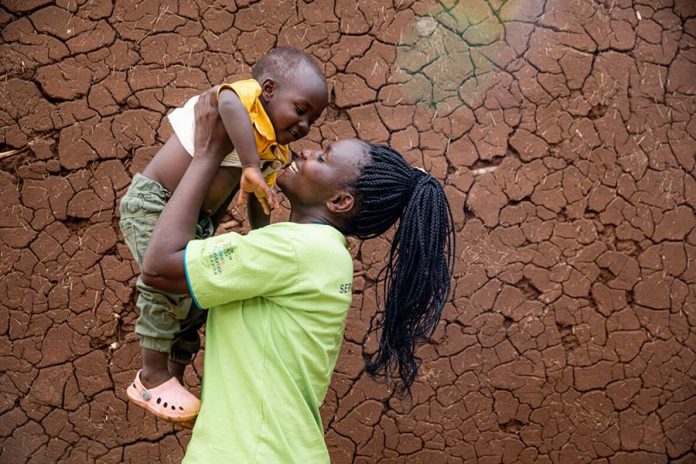
Phiona (38 yrs) at her home with her youngest son. Phiona works as a Peer Mother at the Rugaga IV Health Centre in Uganda. Through the program, a number of peer mothers have been trained, mentored and facilitated to support mothers to deliver HIV free babies. The peer mothers provide counseling, psychosocial support to HIV positive mothers and their spouses, “It makes it easier for people when you visit them, you talk to them and introduce yourself and share your own story with HIV. It brings trust between you and that person. It gives them assurance that you are all the same, it makes the fear go away and gives them courage to keep coming to you for assistance.” - Phiona. Through the breakthrough partnership, UNICEF and its partners have helped train primary health care and community service providers in case finding, using multiple approaches, to reach undiagnosed children of all people living with HIV.
21 April 2022 photo: UNICEF/Schermbrucker
Globally, only half (52%) of children living with HIV are on life-saving treatment, far behind adults where three-quarters (76%) are receiving antiretrovirals, according to the data that has just been released in the UNAIDS Global AIDS Update 2022.
Concerned by the stalling of progress for children, and the widening gap between children and adults, UNAIDS, UNICEF, WHO and partners have brought together a global alliance to ensure that no child living with HIV is denied treatment by the end of the decade and to prevent new infant HIV infections.
The new Global Alliance for Ending AIDS in Children by 2030 was announced by leading figures at the International AIDS Conference taking place in Montreal, Canada.
In addition to the United Nations agencies, the alliance includes civil society movements, including the Global Network of People living with HIV, national governments in the most affected countries, and international partners, including PEPFAR and the Global Fund.
Twelve countries have joined the alliance in the first phase: Angola, Cameroon, Côte d’Ivoire, The Democratic Republic of the Congo (DRC), Kenya, Mozambique, Nigeria, South Africa, Tanzania, Uganda, Zambia, and Zimbabwe.
Consultations by the alliance have identified four pillars for collective action:
1) Closing the treatment gap for pregnant and breastfeeding adolescent girls and women living with HIV and optimizing continuity of treatment;
2) Preventing and detecting new HIV infections among pregnant and breastfeeding adolescent girls and women;
3) Accessible testing, optimized treatment, and comprehensive care for infants, children, and adolescents exposed to and living with HIV;
4) Addressing rights, gender equality, and the social and structural barriers that hinder access to services.
Addressing the International AIDS Conference, Limpho Nteko from Lesotho shared how she had discovered she was HIV positive at age 21 while pregnant with her first child.
This led her on a journey where she now works for the pioneering women-led mothers2mothers programme. Enabling community leadership, she highlighted, is key to an effective response.
“We must all sprint together to end AIDS in children by 2030,” said Ms. Nteko. “To succeed, we need a healthy, informed generation of young people who feel free to talk about HIV, and to get the services and support they need to protect themselves and their children from HIV. mothers2mothers has achieved virtual elimination of mother-to-child transmission of HIV for our enrolled clients for eight consecutive years—showing what is possible when we let women and communities create solutions tailored to their realities.”
The alliance will run for the next eight years until 2030, aiming to fix one of the most glaring disparities in the AIDS response. Alliance members are united in the assessment that the challenge is surmountable through partnership.