Sponsored Ad

Ad 1
Ad 2
Ad 3
Ad 4
Ad 5
Ad 6
24 C
Kenya
Wednesday, April 29, 2026
Home Blog Page 5702

Jumwa to spend three nights in remand

Vocal Malindi MP, Aisha Jumwa is to remain in custody for three nights as she awaits to take plea on Thursday October 22.

Jumwa and co. accussed have been charged with murder of a man who was shot during the Ganda ward by-elections in kilifi county in October 2019

In her ruling Judge Njoki Mwangi directed that Jumwa be remanded, pending plea taking on Thursday, October 22 in a murder case.

“The two accused persons shall be remanded at port police station pending psychiatric examination. Pre-bail assessment shall be undertaken on each of the accused.

“Accused to be escorted to Coast General on 21st Oct for psychiatric examination,” noted Mwangi.

Jumwa and her co-accused is Geoffrey Okuto Otieno, who then was her bodyguard.

The vocal Tanga tanga is not new to remand as recently she was remanded over NG-CDF,where she is facing corruption charges

Mashujaa Day: Meet KDF’s first female Foreign Liaison Officer

cjtf-hoa-foreign-liaison-officers-visit-the-4
Kenyan Air Force Lt. Col. Rodah Mwasigwa, Kenyan Liaison Officer, Combined Joint Task Force – Horn of Africa (CJTF-HOA), listens to an informational briefing by the Civil Affairs Battalion commander, Sept. 29, 2020, at Camp Lemonnier, Djibouti.

The ability to work with various task forces and units is key to the success of an organization like the Combined Joint Task Force-Horn of Africa (CJTF-HOA). – By Gerald Gekara and News Agencies.

The crucial task force is being headed by Kenya Air Force Lt. Col. Rodah Mwasigwa who was fronted by the Kenya Defence Forces to spearhead communication between the command and foreign militaries and strengthen the partnership between our African and other allied partners.

“My roles as a FLO are to facilitate timely and accurate communication between CJTF-HOA and Kenya Defense Forces (KDF), assist in the organization of key leadership engagements, and facilitate subject matter expert exchanges and participation in multinational exercises in East Africa,” said Lt. Col. Mwasigwa.

“I am glad to mention that I am the first female officer to be appointed as the KDF FLO at CJTF-HOA, and honored to be such since the inception of CJTF-HOA.” Lt. Col Mwasigwa said.

Her role is crucial in mitigating Kenya and the African Union Mission in Somalia, to ensure adequate flow of communication, and co-ordinate coalitions to execute military excellence.

“I liaise between KDF headquarters and CJTF-HOA on matters pertaining to operations and training, brief Joint Task Force headquarters on activities within Kenya or the African Union Mission to Somalia’s (AMISOM) area of responsibility, and liaise with coalition partners and nations represented at CJTF-HOA for a seamless, accurate flow of information.”

Since her arrival at CJTF-HOA, Mwasigwa has facilitated training for KDF personnel, coordinated multiple key leader engagements, and assisted CJTF-HOA leaders following the attack on Manda Bay, Kenya, on Jan. 5, 2020. 

Prior to her assignment to CJTF-HOA, Mwasigwa served as a staff officer in charge of welfare and compensation at the headquarters for the Kenya Air Force.

Lt. Col. Mwasigwa has facilitated training for KDF personnel and coordinated multiple key leader engagements, including a ceremony in which U.S. Army Maj. Michael Turello, commanding general of CJTF-HOA, presented six MD-530F helicopters to the KDF in late January.

Covid-19 ” threatening war on HIV, Polio and TB” in Africa, Uhuru warns

By Wilson Wambua

President Uhuru has raised a red flag on the increase in HIV Aids and TB infections in Africa. Kenyatta said the fixation on Covid 19 fight by the global community has starved TB and Polio control efforts of funding and attention.


Consequently, Kenyatta has warned that the gains made in controlling the prevalence of the three diseases and conditions in Kenya and Africa will be reversed.


Kenyatta said the Covid 19 fight must go hand in hand with these other tropical diseases, which are a bigger challenge in Africa.
Kenyatta acknowledged the Covid 19 threat to the health and economic equilibrium in Kenya, but warned for balance.


Consequently, the President wants the global community to enhance financial and logistical support to these diseases.
Kenyatta said the Covid 19 fixation may wipe out the gains made to control spread and manage these diseases, especially in Kenya and the rest of Africa.


” I appeal to the global community not to allow the fight against Covid-19 interfere with efforts to eradicate malaria, polio, HIV/AIDS, tuberculosis and other diseases in Africa”, President Kenyatta said.

The President said success stories and lessons from the global Covid-19 response should be harnessed and applied in the battle against these diseases to hasten their eradication.

“Even as we face current challenges (Covid-19), it shouldn’t be at the expense of pulling back on the progress that we have made in other areas such as malaria and polio,” the President cautioned.

The Head of State spoke Monday evening at State House, Nairobi during this year’s End Malaria Annual Council meeting convened virtually by the Bill and Melinda Gates Foundation.

President Kenyatta is a new member of the apex organ of the organization whose mandate is to bring together private and public sector leaders to drive global advocacy and action against malaria.

The President, who is the current chairperson of the African Leaders Malaria Alliance (ALMA), reiterated that resource constraints brought about by Covid-19 risks rolling back the progress made in the fight against malaria.

“Covid-19 has had a huge impact in terms of where we’ve needed to focus government resources and in some cases at the expense of ongoing programs that have been having success,” President Kenyatta told the council that is chaired by American philanthropist Bill Gates.

He said the fight against malaria on the African continent was witnessing less interest from developed nations and multilateral partners as the countries and agencies redirect scarce resources to the more pressing Coronavirus pandemic

Going forward, the President, who was accompanied to the meeting by Health CS Mutahi Kagwe, urged African governments to apply information sharing and pooling of resources as seen during the continental Covid-19 response to the fight against malaria.

“By pulling together as a continent to fight the Covid-19 situation, we have found that we’re much better able to deal with the scenario through greater sharing of information but also of pooling resources…this is something that we’ve learnt from Covid-19 that we can translate into our malaria agenda,” he said.

The Head of State advocated for greater application of information technology in the fight against malaria saying digitization had greatly assisted the fight against Covid-19.

On the role of the private sector in the war against malaria, the President said businesses hold the greatest potential to fill the resource gap occasioned by Covid-19.

The Head of State lobbied for greater involvement of the youth in the anti-malaria war saying young people have the eagerness, stamina and innovativeness to sustain the fight.

“I believe they (the youth) can be a a great asset not only in terms of field outreach but also in terms of this being a way and a process of them to also earn a living,” President Kenyatta said.

Mr Gates said the ongoing global push for a Covid-19 vaccine had presented an opportunity for accelerating the search for HIV/AIDS and TB vaccines.

The American philanthropist who is also the co-chair of Bill and Melinda Gates Foundation applauded Africa CDC saying its achievements in the fight against Covid-19 should be replicated in the anti-malaria war.

Nigerian billionaire businessman Aliko Dangote who also spoke during the meeting reiterated President Kenyatta’s call for greater participation of the private sector in the fight against malaria in Africa.

Malawi activists to sue government over gender parity

Gender activists in Malawi are planning to sue the government over lack of gender balance in parastatal board appointments announced by President Lazarus Chakwera in September.

The Women’s Manifesto Movement (WMM) said despite trying to engage the government to rethink the appointments, the parastatals had started working without the matter being resolved in violation of the country’s constitution.

They said they will challenge in court any decisions made by the parastatals.

Malawi’s constitution stipulates that not more than 60% of one gender shall be represented in public service appointments. The body says at least 10 parastatals have no female representation while others have not achieved the 60:40 balance.

WMM said the government had come up with “poor excuses” to explain its position.

Local newspaper The Nation has quoted the president’s Press Secretary Brian Banda as saying that Mr Chakwera was fully committed to addressing the organizations’ concerns and was open to dialogue on the matter.

Uganda authority’s crackdown on fake Covid-19 test documents

Police in Uganda have arrested 25 travelers suspected of presenting forged Covid-19 test certificates.

Some 23 travellers were arrested on Sunday while checking in at Entebbe International airport near the capital, Kampala, while two others were apprehended on arrival.

The Uganda Civil Aviation Authority spokesperson, Vianney Luggya, said the suspects are being held by aviation police. They will face charges of forgery and uttering of false documents.

Uganda reopened its international borders on 1 October – six months after they were closed to slow the spread of coronavirus.

It now requires departing travelers to present negative test results taken 120 hours before leaving.

Arriving passengers have to present certificates of test results taken within 72 hours before their flight.

The East Africa country has so far confirmed 10,590 coronavirus cases and 97 deaths from about half a million tests carried out.

About eight facilities are accredited to run Covid-19 Polymerase Chain Reaction (PCR) tests but they are costly. Some facilities charge as much as $126 (£97) for each test.

Ethiopian Prime Minister chids Mps over their fashion choice

Ethiopia’s Prime Minister Abiy Ahmed has dressed scolded members of the House of Representatives about their sartorial choices, saying his locally-made suit was “superior” to what the MPs were wearing.

“This fabric I am wearing is from the Konta area [south western Ethiopia],” Mr Abiy has said.

“I believe this clothing if not superior to the suits you are wearing, it is at least not inferior. It’s handmade. Its quality is high. If I don’t respect and show it, who will?” he said.

He told them to value products made in Ethiopia.

The prime minister was answering questions from MPs, which also included growing tension between the federal government and the regional authorities in Tigray region, which he said “will be resolved by the law.”

He also addressed the recurring violence in the western Ethiopian state of Benishangul-Gumuz where dozens of people have been killed in ethically motivated violence since September.

Mr Abiy said the violence is likely being sparked by efforts to undermine the country’s mega dam project which is being built in the region.

Why looming constitution change is fueled by power struggles

former Attorney General Amos Wako.
Former President Mwai Kibaki signs the new constitution in Nairobi in 2010 before former Attorney General Amos Wako. Tony Karumba/AFP via Getty Images

Why Kenya’s constitutional duels are all about power struggles among the elite

Kenya is in the throes of another agonised constitutional debate. Proponents of the new push for amendments argue that the time is right to cure deficiencies in the 2010 constitution. Yet that document is only a little over 10 years old, and followed a referendum that ushered in the most comprehensive constitutional reforms since independence in 1963.

A look back in history helps us understand Kenya’s perennial quest for constitutional change.

In the colonial era, constitutional demands were led by white settlers who ruled over the African population. Africans had no rights to land or civil amenities. In 1907, Britain conceded to white settler demands and created the Legislative Council. It began as a nominated, exclusively European institution with no provision for natives. Eventually, it became an elected body and a white missionary was nominated as the first official member to represent the interests of the African community. African elites challenged the privilege of white missionaries speaking for Africans.

Policy changes followed. The government appointed Eliud Mathu the first “native” to the Legislative Council in 1944. His appointment gave birth to Kenya African Union, the predecessor of the independence ruling party, Kenya African National Union. In the 1950s, demands by African led to the Mau Mau War. The armed movement sprang up in protest over colonial land alienation, economic inequalities and political oppression under British rule. The organisation’s mobilisation forced further governance policy adjustments.

In 1960, 1962 and 1963 Britain organised three Lancaster House Constitutional Conferences to decide Kenya’s future. On 12 December 1963 Kenya finally became an independent state.

From then on in constitutional power play became a domestic affair as local power brokers competed against one another. This resulted in power-hungry politicians faulting existing structures and demanding changes to the constitution. This was the case at the outset of colonialism and is still the case in 21st Century post-colonial Kenya.

The current push for constitutional change is reminiscent of these earlier trends – it is all about competition for power among the country’s elite.

Moments of crisis

There have been three major phases to constitutional reform in post-colonial Kenya.

The first followed the death of Jomo Kenyatta, the country’s first president. The second revolved around the consolidation of power, and the survival, of the country’s second president Daniel arap Moi. The latest is to push to amend the 2010 constitution.

When Kenyatta began ailing, rival politicians engaged in constant mischief as they schemed to identify a suitable successor. Constitutional Affairs Minister Tom Mboya, who belonged to the ruling Kenya African National Union, ensured that the 1963 constitution sidelined his party-mate, Kenya’s first Vice-President Jaramogi Oginga Odinga in the succession line up.

Ruling party honchos then turned to infighting as the then Vice-President Daniel Moi, formerly the chairman of the opposition’s Kenya African Democratic Union, looked on. Moi began to see how he could use the wrangling to ascend to the presidency. His first opportunity came in 1968 when successful constitutional amendments ruled Mboya out of the succession picture.

The law stipulated that in the event the president died, the vice-president would take office for 90 days and then call an election. In addition, the president was granted powers of detention without trial, meaning that he could detain his opponents as he saw fit.

Moi’s second opportunity came in the 1970s when he himself was the target of proposed constitutional amendments. His proponents wanted to return to the previous formula. Moi outwitted them by forming alliances with influential players across the country.

When he ascended to the presidency in August 1978, part of his control strategy was to constantly remind the public about how he foiled the amendments. That narrative ignored the successful constitutional change in 1968, of which he was the main beneficiary.

Moi’s survival amendments

Moi held the presidency for 24 years. Crafty in exploiting perceived weaknesses, his main constitutional concern was to consolidate his grip on power.

To secure his position, he engineered a constitutional amendment in June 1982 to make Kenya a one-party state. KANU was the “party”. This was the “Section 2A” amendment to the constitution the purpose of which was to stop the former vice-president Oginga Odinga from starting another political party.

A number of additional amendments were added, also designed to give Moi more power. These included the removal of tenure for constitutional office holders and an egregious amendment that replaced secret ballot at elections with voters lining up behind their candidate or agent at the 1988 elections.

These amendments backfired on the president, produced new national heroes, and eventually forced the repeal of Section 2A in December 1991 to pave way for the 1992 multiparty elections.

Following the repeal, the debate centred around Moi’s survival. In 1992, when he was still in control of Parliament, he took three far reaching steps. First, he introduced an amendment that required winning candidates to obtain 25% of votes cast in five of Kenya’s eight provinces. This made it difficult for any opposing candidate to win outright.

Second, he imposed a two-term limit for future presidents, just in case he lost. And third, he appointed retired judge and ally Zacchaeus Chesoni chairman of the electoral commission. Chesoni declared Moi the winner in the contested 1992 elections, despite the president garnering just 36% of the vote, and swore him in immediately probably to avoid court challenges.

After he won the 1992 election, Moi became preoccupied with repealing the two-term limit he had previously imposed. The period between 1993 and 1997 became charged with the constitution debate. This led to the formation of the Inter-Parliamentary Party Group, which committed to a review of the constitution after the 1997 election.

Two other groups had also emerged: the Ufungamano House group comprising religious leaders and civil society activists, and the Constitution of Kenya Review Commission, which was convened by Moi and opposition ally Raila Odinga, son of former vice-president Jaramogi Oginga Odinga.

Moi and Raila recruited lawyer Yash Pal Ghai who unified the review commission and Ufungamano initiatives, and together the two groups prepared a draft constitution. That draft became the basis of constitutional debate between 2003 and 2005. The debate culminated in the 2005 constitutional referendum. The draft was voted against, setting the stage for the chaotic 2007 elections.

Beyond 2007

The third post-colonial phase of constitution-making came about as a direct result of the 2007 election chaos.

What finally emerged was a grand coalition government between Raila Odinga and the incumbent Mwai Kibaki. The two finally agreed to a co-presidency with Kibaki as the president and Odinga in the new position of prime minister.

The co-presidency shepherded in the 2010 constitution because they were required to pass the new law as part of the national accord agreement that set up the grand coalition government.

But the document had many flaws which meant that its promulgation created new constitutional conflicts.

Ten years on and gyrations around Kenya’s constitution continue. The current drive for change is happening under the guise of the Building Bridges Initiative. This suggests that, once again, constitutional reform is being driven by political power agendas.

The changes that are likely to be effected will, therefore, not be the last because there always will be groups or individuals who will question the existing power structure. They are interested in grabbing power, not the effective functioning of constitutional structures in a state.The Conversation

Macharia Munene, Professor of History and International Relations, United States International University

This article is republished from The Conversation under a Creative Commons license. Read the original article.


DCI nabs 23-Year-old man who co-habited with a missing minor

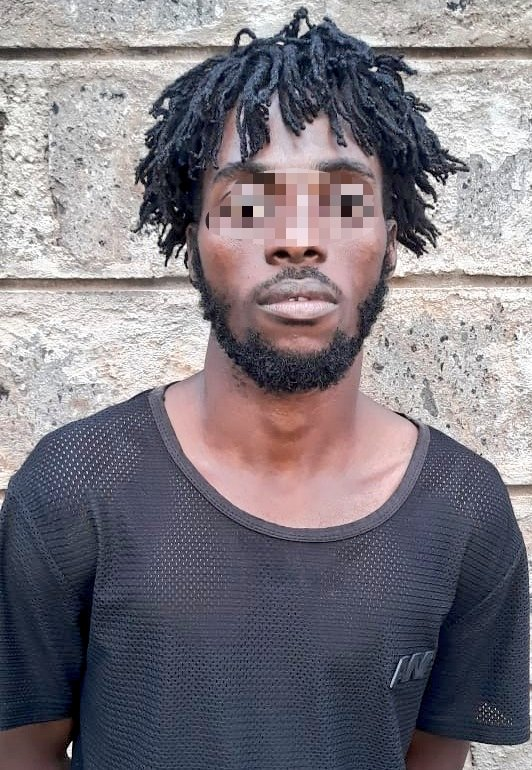
A 23 year old is set to have it rough at the state correctional facilities after being allegedly found cohabiting with a minor, and evaded arrest by shaving off his dreadlocks.

According to the Directorate of Criminal Investigations, detectives working on the case of a missing 13 year-old girl, arrested one Marcos Menza Masumbuko who is said to have lured the girl to his house.

The suspect allegedly used a social media platform to befriend and lured the minor to his house.

She later escaped to aunt’s place in Nyakach, Kisumu County, and assisted the Police in arresting her captor.

Marcos upon learning of her dissapearance, shaved off his dreadlocks immediately after a missing child report was published.

The sleuths warned against any Kenyan found mistreating a child and promised stern action to those found culpable.

They also warned Kenyan parents to monitor their children’s activities on social media, owing to the increasing engagement of social media for e-learning materials.

President Uhuru Kenyatta vowed to deal firmly with sexual offenders and victims of domestic violence, forming a special unit to investigate into the happenings that have so far been reported.

Second Wave: Europe tightens restrictions as covid -19 infections rebound

Photo by Marco Di Lauro/Getty Images

A number of nations have strengthened their approach to coronavirus as the so-called “second wave” of infections continues to increase. – By Enock Mukoma.

France saw a record number of new cases on Saturday at 32,427 and there was close to another 30,000 on Sunday.

However, the rise in confirmed cases in Europe has to be set against the vastly increased testing that is now taking place compared to the first big wave back in March.

Nine major French cities, including the capital Paris, are under a 21:00 to 06:00 curfew for at least a month. Anyone out then must have a valid reason or could be fined €135 ($158; £123).

From Monday, all bars and restaurants in Belgium will be closed for four weeks, and a curfew will be in force from 00:00-05:00. with the sale of alcohol banned afer 20:00.

“I am fully aware that those measures are very, very severe,” said Belgian Prime Minister Alexander De Croo. “The coming weeks will be very difficult but we must take those measures to avoid the worse.”

Switzerland on Sunday reacted to a sharp increase in infections by making the wearing of face-coverings in indoor public spaces compulsory from Monday. Gatherings of more than 15 people in public are also banned.

The Czech Republic said on Sunday it would wait two weeks before deciding on whether a full lockdown was needed. The country currently has the highest coronavirus infection rate in Europe and has closed most of the hospitality sector and moved schools to distance-learning.

Ireland is set to announce tighter restrictions on Monday. A minister said a localised policy had not been sufficient and implied the cabinet was looking at a “level four” approach that would close all non-essential businesses.

Germany hit a daily record of new infections on Saturday and Chancellor Angela Merkel urged people to stay at home and avoid travel where possible.

In the Netherlands, PM Mark Rutte admitted he should have given better advice to the royal family after they cut short a trip to Greece amid public anger that they were holidaying shortly after the government had introduced a partial lockdown.

Parties gear up for Msambweni showdown after IEBC greenlight

Feisal Bader is supported by Deputy President William Ruto | PHOTO COURTESY

Political parties and their candidates have now gone back for tactical planning and mounting aggressive campaigns after the Independent and Electoral and Boundaries Commission (IEBC) cleared nine candidates to for the Msambweni byelections. – By Ramadhan Kambi 

On Friday, all roads led to Msambweni in what is billed as a battle never witnessed in Msambweni, pitting the Orange Democratic Movement (ODM) and Ruto allies fronting an independent candidate. 

Among those who were cleared by IEBC included four independents and five candidates sponsored by their political parties.

Sharlet Mariam Akinyi, Mansury Kumaka, Charles Bilali and Feisal Bader who is supported by Deputy President William Ruto are the independents candidates cleared by commission. 

The DP allies have all been on the prowl wooing voters to vote for Mr Bader while ODM Deputy Party leader Hassan Joho has been leading an ODM brigade to make sure that Omar Boga wins the seat.

Shee Abdulrahman (Wiper) Omar Boga (ODM), Ali Hassan Mwakulonda (Party of Economic Democracy), Marere Wamwachai (National Vision Party) and Khamis Mwakaonje (United Green Movement) were also cleared.

On Friday officials and supporters coloured the streets leading to the IEBC offices to present their nomination papers.

ODM led by Mombasa Governor Hassan Joho held their campaigns for their candidate at Sawa Sawa grounds where they unanimously endorsed their candidate Mr Boga. 

“I want to make it clear as people are spreading propaganda. Before his death Dori met our party leader Raila Odinga and asked for forgiveness,” he said.

The Mombasa Governor promised a heavy loaded campaign which will include a door to door campaign. 

“There is no need for you Baba (Raila Odinga) to come to Msambweni because with me and the team here, we are winning this seat, the Governor said. 

Joho was in the company of Senators Orengo (Siaya) Issa Juma Boy (Kwale) MPs Ken Chonga (Kilifi South) Teddy Mwambire (Ganze) Imran Okoth (Kibra), Junet Mohammed (Suna East) Abdulswammad Nassir (Mvita), Badi Twalib (Jomvu) William Kamote (Rabai) Mishi Mboko (Likoni) and Kwale Woman Representative Zuleikha Hassan among others.

On Thursday Ruto’s allies led by former Senators Johnstone Muthama, Boni Khalwale and Hassan Omar went to the same ground to drum support for Mr Bader. 

They were accompanied by Didmus Baraza (Kimilili), Benjamin Tayari (Kinango), Khatib Mwashetani (Lunga Lunga), nominated Senators Christine Zawadi (Kilifi) and Senator Falhadha Iman (Garissa) among other leaders.

Wiper national chairman Ali Mwakere has also been crisscrossing the constituency seeking votes for their candidate. 

Mr Bader who has promised the residents that he will take on Mr Dori’s development projects to a higher level urged his opponents and residents to embrace development politics as opposed to divisive politics.

“We want peace in the constituency as we conduct our campaigns because the by-election will come and go,” he said, adding that he will transform the lives of the locals.

Create a free account, or log in.

Gain access to read this content, plus limited free content.

Yes! I would like to receive new content and updates.

Sponsored Ad

Ad 1
Ad 2
Ad 3
Ad 4
Ad 5
Ad 6