PRUDENCE WANZA – The trial of Sharon Otieno’s murder case involving Governor Okoth Obado has been adjourned.
Court adjourns Hearing of Sharon Otieno Murder case
Heading to a region with malaria? Some simple steps to keep you safe
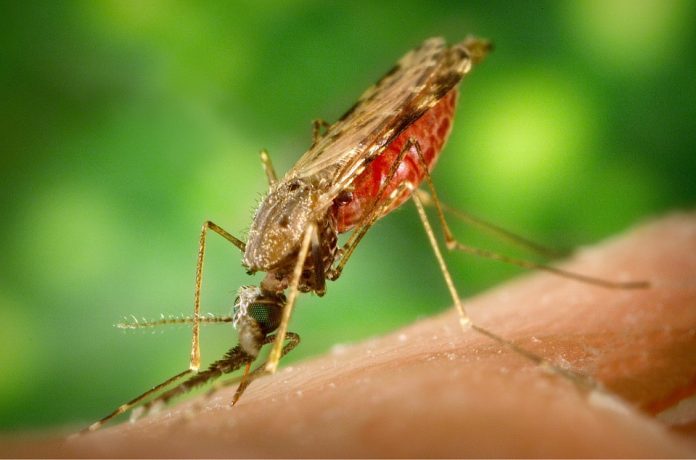
Every death from malaria is a tragedy. But many infections can be prevented. This is particularly true for holidaymakers, travellers, or people visiting their families in malaria endemic areas. All they need to do is follow some very simple rules. Malaria is a complicated disease – I should know, after studying it for more than 30 years – but the solutions to avoiding and treating it can be as simple as “ABCD”. If the basics of prevention are followed, a great deal of unnecessary illness and mortality can be avoided.
Avoidance to detection
A is for Awareness and Avoidance of malaria risk
Several factors influence your chance of getting malaria in a particular area. Understanding these can help you to avoid or least minimise the risk.
The first question to ask is: how much malaria normally occurs in the area, and when? The answer will depend on altitude and climate – generally the lower, warmer and more humid the place, the more suitable it is for malaria vectors, the Anopheles mosquitoes.
In southern Africa, most malaria is seasonal. It increases during warmer and wetter summer months (September to May in the southern hemisphere). The risk in winter is generally lower, but that doesn’t mean it’s absent.
Longer exposure, involving overnight stays, puts you at higher risk than brief visits, for example day trips to game reserves. Hiking and camping outdoors is riskier than staying in air-conditioned accommodation.
Some people are at higher risk for severe malaria and should ideally avoid malaria transmission areas altogether. These include pregnant women, babies and young children, people who’ve had their spleens removed and those with weak immune systems.
B is for mosquito bites – and avoiding them
Avoiding mosquito bites is the most important preventive measure. This is because the mosquito bite is what transmits the parasite. No bite, no transmission.
Contact between mosquitoes and people isn’t random. Mosquitoes actively seek people out. They have sensory organs that detect people’s warmth, exhaled carbon dioxide, and odours from sweat.
There are a number of ways to avoid mosquito bites. These include staying indoors between dusk and dawn and covering up bare skin when outside at night. (Mosquitoes find ankles particularly attractive.)
There are also a number of repellents and insecticides that can deter mosquitoes. Repellents should be applied to bare skin, and clothes can be treated. Other ways to avoid being bitten include burning mosquito coils or using heated insecticide mats in living and sleeping areas at night, and using insecticide-treated mosquito nets.
Using ceiling fans and air conditioners discourages mosquito activity indoors, likewise making sure screens on windows are closed and in good condition. Just because you don’t hear mosquitoes buzzing around doesn’t mean you are safe – the malaria mosquitoes fly silently.
C is for Chemoprophylaxis and Compliance
You should consult a health care practitioner with travel medicine experience well before travelling to an endemic malaria area. During this consultation, you can figure out whether you need chemoprophylaxis (medication to prevent infection) in addition to personal protection measures.
Several factors will influence this decision. These include the risk of contracting malaria (the area and type of accommodation, time of year, and duration of visit); personal factors such as age, current medication and existing illness; and medication options, their availability and price, adverse effects and resistance.
There are two type of medications used for malaria prophylaxis, they act at different life stages of the parasite in the body. Atovaquone-proguanil products stop infection early, soon after the mosquito bite. The second type (doxycycline, mefloquine and atovaquone-proguanil) treat a later stage of infection, but before the parasites can multiply enough to cause symptoms.
Whichever medication your doctor recommends, if any, it’s important to take it exactly as directed and to finish the course.
There’s a dangerous myth that chemoprophylaxis “masks” symptoms and makes malaria more difficult to diagnose. Prophylactic medications are highly effective if taken properly. But the infection may take longer to show if compliance is poor and doses are missed or prematurely stopped. It’s important to understand that no prophylactic regimen is 100% effective – but infection is still likely to be milder than if no prophylaxis was used.
D is for Detection
Sometimes precautions can’t protect you entirely. That’s when it becomes important to diagnose malaria as early as possible. If you get ill with flu-like symptoms such as headache, fever, chills, joint and muscle pains up to three months after returning from a malaria area, be sure to mention this to your health care providers.
A single negative test doesn’t rule out malaria, and tests should be repeated until either malaria is confirmed, or an alternative diagnosis is made. Occasionally, malaria is transmitted outside endemic areas by mosquitoes that have hitched rides in cars or taxis, and because there’s no travel history to alert doctors to the possibility of malaria, the diagnosis is often delayed, sometimes with fatal consequences. One clue to malaria here is a low platelet count. This is often picked up accidentally when tests are being done for a feverish illness with no obvious cause.
To wrap it up
A number of steps are key to ensuring a quick recovery. These are: reporting the illness early after travelling in a malaria area; prompt diagnosis; and, finally, early and effective treatment.
If any of these steps are delayed the chances of developing severe and complicated malaria are much higher – and the rate of survival substantially lower.![]()
John Frean, Principal Pathologist, Centre for Emerging, Zoonotic and Parasitic Diseases, National Institute for Communicable Diseases and Wits Research Institute for Malaria, University of the Witwatersrand
This article is republished from The Conversation under a Creative Commons license. Read the original article.

How the world’s largest democracy casts its ballots
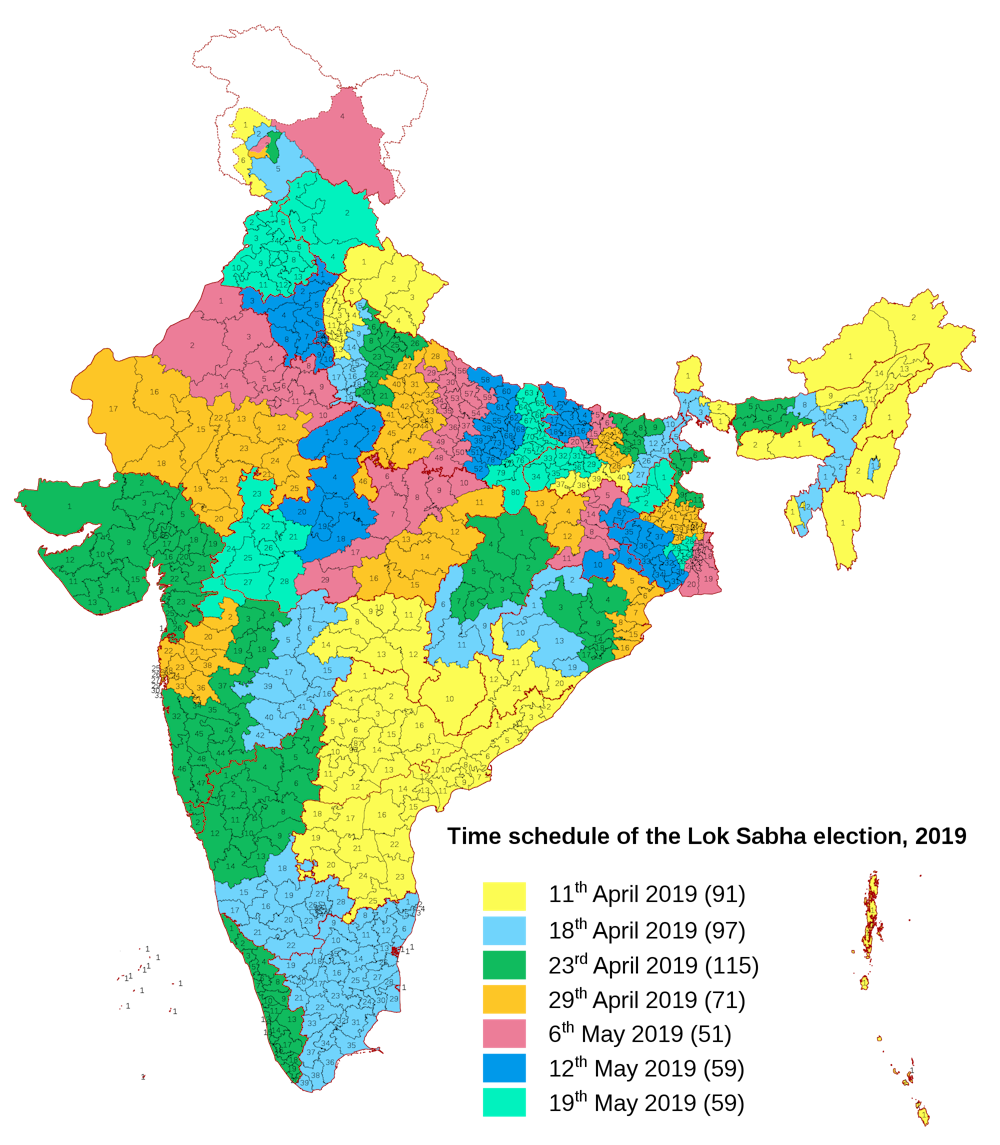
About 600 million Indian citizens are expected to cast their votes over a period of 39 days ending May 19, in the ongoing election for their country’s parliament. There are roughly 900 million eligible voters, and the country has typically seen about two-thirds of them turn out to polling places.
I have been working on the security of electronic voting systems for more than 15 years, and, along with other colleagues, have been interested in understanding how a nation can tally that many votes cast over such a long period. India uses a domestically designed and manufactured electronic voting machine – as many as 4 million of them at 1 million polling places, at least some in extremely remote locations.
The first version of the Indian electronic voting machine debuted in the state election in Kerala in 1982. Now they’re used in elections throughout the country, which happen on different days in different areas.
How does it work?
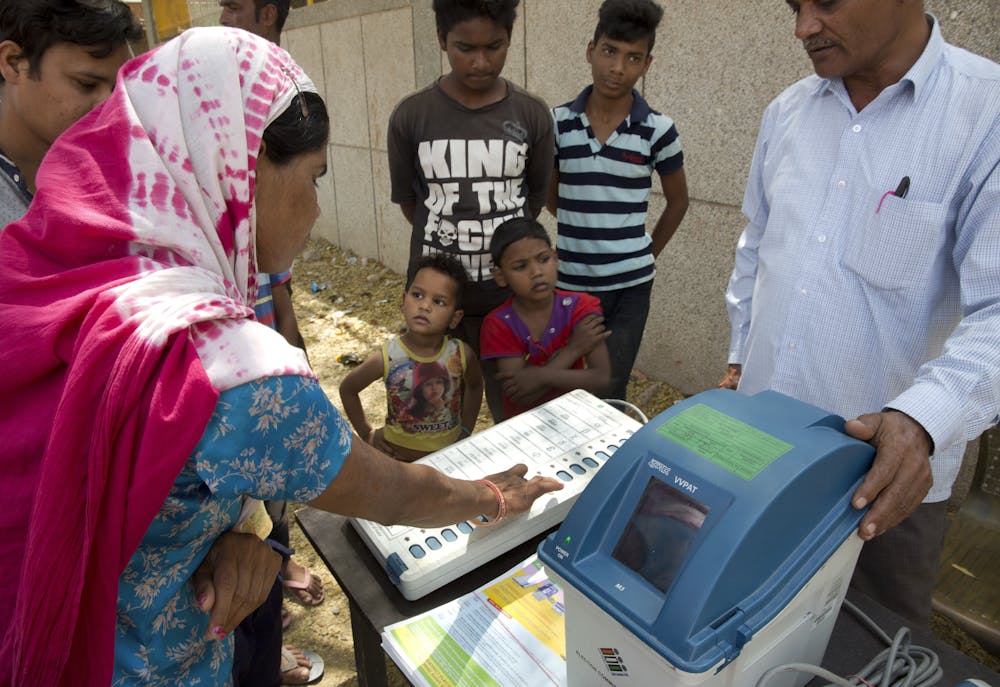
When a voter arrives at the polling place, she presents a photo ID and the poll officer checks that she is on the electoral roll. When it’s her turn to vote, a polling official uses an electronic voting machine’s control unit to unlock its balloting unit, ready to accept her vote.
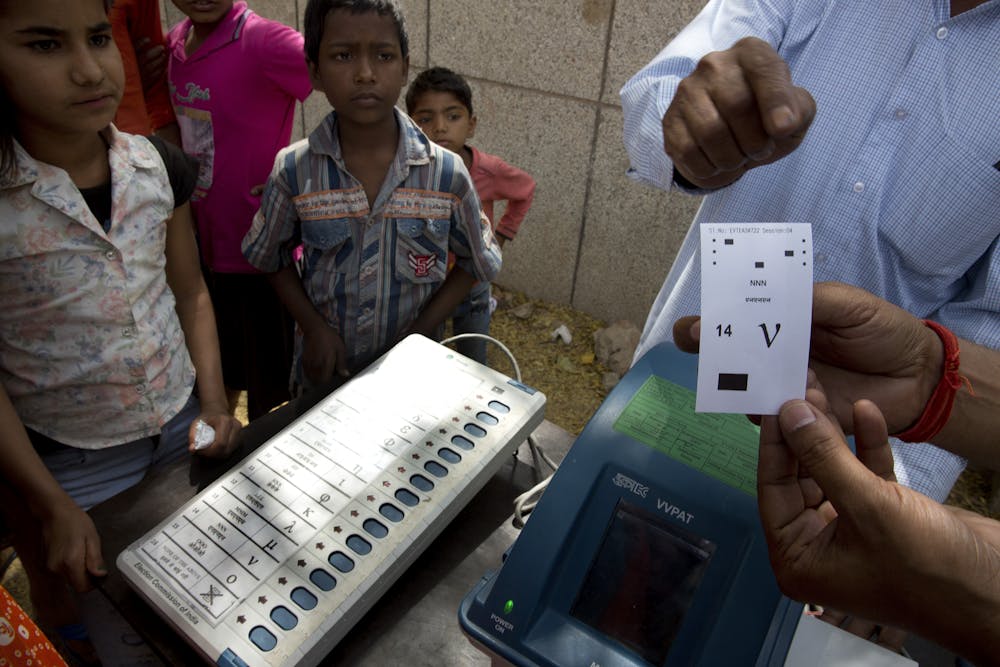
The balloting unit has a very simple user interface: a series of buttons with candidate names and symbols. To vote, the voter simply presses the button next to the candidate of her choice.
After each button press, a printer prints out the voter’s choice on paper and displays it to the voter for a few seconds, so the person may verify that the vote was recorded correctly. Then the paper is dropped into a locked storage box.
The whole system runs on a battery, so it does not need to be plugged in.
When it’s time for the polling place to close at the end of the voting day, each electronic voting machine device and paper-record storage box is sealed with wax and tape bearing the signatures of representatives of the various candidates in that election, and stored under armed guard.
After the election period is over and it’s time to tally the votes, the electronic voting machines are brought out, the seals opened and the vote counts for each control unit are read out from its display board. Election workers hand-tally these individual machine totals to obtain the election results for each constituency.
Security protections – and concerns
The Indian electronic voting machine primarily runs on specialized hardware and firmware, unlike the voting machines used in the U.S., which are software-intensive. It is intended for the single purpose of voting and specially designed for that, rather than relying on a standard operating system like Windows, which needs to be regularly updated to patch detected security vulnerabilities.
Each machine requires only a connection between a balloting unit and a control unit; there are no provisions to connect an electronic voting machine to a computer network, much less the internet – including wirelessly.
This design does offer some protections against possible tampering with how votes are recorded and tallied. The Election Commission of India has repeatedly claimed that the electronic voting machines are tamper-proof. However, a scholarly study has demonstrated there are ways to rig the machines. In particular, the simplicity of the design allows for simple attacks, such as intercepting and modifying the signal carried over the machine’s cable.
The Election Commission has not made public any independent security evaluations, so it’s unclear exactly what is – or isn’t – possible. Parties that lose elections often suspect malfeasance and question the equipment.
Manufacturing the machines
As I and others have observed, when the machines are being made, there are a number of opportunities for someone to physically tamper with an electronic voting machine in ways that preelection device testing might not detect. The machines’ software is designed, written and tested at two electronics companies owned by the government of India: Bharat Electronics Limited and Electronics Corporation of India Limited. The chips for the machines are manufactured outside India. In earlier versions of the machine, the chip manufacturer also wrote the machine code into the chip; today the electronics companies do it themselves.
At any time during manufacture, testing and maintenance, it may be possible to introduce counterfeit chips or swap out other components that could let hackers alter the results.
The Election Commission of India argues that any manipulation or error would be detected because the electronic voting machine is tested frequently and candidate representatives have opportunities to participate in mock elections immediately before a machine is used in a real election. However, it is possible to make changes that will not be detected. Testing can reveal only some problems, and the absence of problems during testing does not mean that problems do not exist.
Auditing the machines’ results
There is, however, a mechanism for detecting attacks – that printed-out paper bearing the vote and stored securely with the electronic equipment. A 2013 Supreme Court directive asked the Election Commission to create that process to protect the integrity of the balloting process.
In each constituency, five electronic voting machines will have their results audited by comparing a manual count of the printouts with the electronic tallies. (This means about 1% or 2% of each constituency’s machines will be tested.) Opposition parties have asked the Supreme Court to order audits of half of all electronic voting machines, but that may not happen with this year’s election.
While the electronic voting machine system is useful and functional, officials and observers shouldn’t assume there’s no way to tamper with the results. The Election Commission should certainly continue to improve testing and provide public reports of independent testing. However, because no technology can be tamper-proof, each election outcome should be verified by a manual audit, to ensure that the results are correct, whatever they may be.![]()
Poorvi Vora, Professor of Computer Science, George Washington University
This article is republished from The Conversation under a Creative Commons license. Read the original article.

The four suspects captured assulting a man at Kilimani charged in court
BY PRUDENCE WANZA – The four suspects captured on video assaulting a man at estate 24 along Kirichwa road in Kilimani area have been charged today at Milimani Law courts.
Kenyans Angry at Ruto for Defending Waititu’s Corruption Allegations
Deputy President William Ruto yesterday chose to defend Kiambu Governor Ferdinang Waititu over his alleged 2.5 billion budget expense presented before the Senate last week.
Kenyans however are angry over the issue, claiming that Deputy President is dragging himself into the mud by defending the embattled governor.


Magoha to Suspend Setting up of New Public Universities
Dr. George Magoha has annoumced that there will not be any new public universities until further notice.
Speaking tough against those that have opposed his methods, Magoha has claimed that the existence of 6 universities offering duplicate courses is stretching the government resources that are meagre at the moment.
Barely two months since taking up the role as the Education Cabinet Secretary, Prof. George Magoha has started rubbing shoulders with the education department stake holders, with the recent war being the implementation of the new curriculum.
Huduma Namba Servers were Not Hacked: Dr Fred Matiang’i
Cabinet Minister Dr. Fred Matiang’i has come out to crush speculations that Huduma Namba excercise was sabotaged by an alleged breach by a University of Nairobi student.
While speaking about the update of the ongoing mass registeration excercise, Dr. Matiang’i also confirmed that the kits and other materials used for the registeration excercise were safe and that the government is fully behind the excercise.
This is inlight of an article that claimed a university student had managed to infilterate the databaseand deleted files associated with several information of Kenyans.
Huduma Namba mass registeration excercise is expected to be complete by 18th May 2019
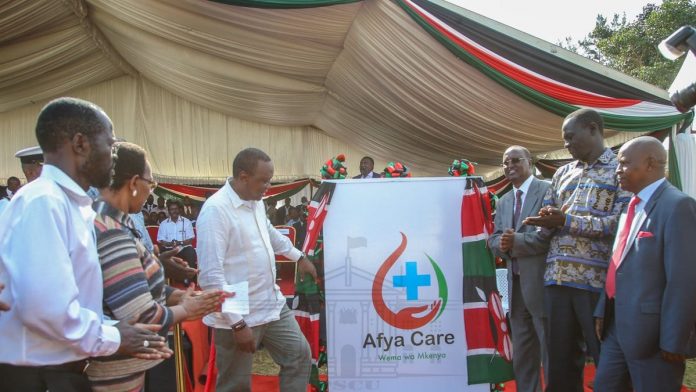
Kenya keen on working with The Global Fund in the implementation of Universal Health Coverage
President Uhuru Kenyatta has lauded the partnership between the Government of Kenya and The Global Fund to Fight AIDS, Tuberculosis and Malaria (The Global Fund) in the delivery of health services to Kenyans, especially in the war against malaria, TB and HIV/AIDS.
Speaking during a meeting with the Global Fund Executive Director Peter Sands who paid him a courtesy call at State House, Nairobi, President Kenyatta said his administration was keen on working with the Global Fund to ensure the successful implementation the Universal Health Coverage (UHC) programme.
“We are putting a lot of money in UHC and we are determined to see it through,” President Kenyatta said.
The Head of State noted that Kenya’s success in the implementation of UHC, which is one of the key pillars of the Big 4 Agenda, will encourage its replication in other countries in Africa.
The Global Fund Executive Director commended President Kenyatta’s leadership and commitment in the implementation of the UHC, saying the piloting of the programme in four counties was a good approach.
Mr. Sands also praised Kenya’s contribution to the Global Fund and urged President Kenyatta to mobilise other leaders to support the Fund’s initiatives in curbing malaria, TB and HIV/AIDS.

“Your continued support to the Global Fund is highly appreciated,” Mr. Sands said.
The President assured that The Global Fund can count on Kenya’s support in its efforts to enhance the delivery of health services.
The Global Fund is a Geneva based international financing organization that aims to mobilize resources including finances to end the epidemics of HIV/AIDS, Malaria and TB.
Present during the meeting were the Head of Public Service Joseph Kinyua, Health Cabinet Secretary Sicily Kariuki and State House Chief of Staff Nzioka Waita among other senior Government officials.