Independent Police Oversight Authority (IPOA) former chairman Macharia Njeru has won the Law Society of Kenya (LSK) male LSK representative to the Judicial Service Commission elections.
In the hotly contested elections carried out in 28 centres across the country by the IEBC, Njeru managed 2,738 votes, while Prof Tom Ojienda who was defending his seat, got 2,545 votes.
Mr. Njeru in a tweet, thanked the Law Society of Kenya and vowed to restore dignity in the society, which has been on the spotlight for irregularities and bribery
Charles Ongwae, Kenya Bureau of Standards (KEBS) Managing Director, sits at the dock before a hearing at the Milimani Court in Nairobi, Kenya, June 25, 2018. REUTERS/Baz Ratner
BY PRUDENCE WANZA – Five people among the 11 charged with attempted murder in the case relating to the ‘mercury’ fertilizer have been acquitted. The five, Benson Oduor Ngesa, Karim Lofti, Malika Kirama, Younese Addou and OCP Kenya Limited were acquitted by trial magistrate Kenneth Cheruiyot after a plea successful bargaining Agreement with the Director of Public Prosecution.
The DPP, through his Senior Assistant Director Alexander Muteti urged the court to adopt the plea agreement and discharge the five accused persons from the case owing to new facts availed.
“The
plea agreement is made without prejudice to the criminal case
1151/2018 as against the other six accused persons and is made pursuant
to new facts availed to the prosecution by the accused persons that
clearly indicates that the decision to charge was made without the full
benefit of the full factual scenario being provided to the investigators
and the prosecution by all accused person in the matter,” states the
DPP.
The
court heard that Karim Lofti, Malika Kirama, Younese Addou and OCP not
having been heard by the investigators before the decision to charge was
made since they were out of jurisdiction, provided information and
documents that have given a new dimensions to the matter prompting a
review of decision to charge based on new facts and it is on that basis
the charge against the parties have been withdrawn.
The terms of the plea bargaining agreement are that the acquitted persons shall unconditionally withdraw the application filed by Ngesa and supported by the other four accused persons for retesting of the fertilizer that is the subject of the criminal trial pursuant to this agreement. The parties further agreed that the investigating officer shall concurrently release the impounded consignment of fertilizer held at Ballore warehouse in Mombasa to OCP (K). The court heard that at the time of filing the plea agreement, the acquitted persons had recorded their statements and supplied the necessary supporting documentation, information and evidence to the investigating officer.
“The parties shall fully cooperate with the DPP in seeking justice in relation to this matter and the the parties undertake not to lay any claim for damages or any other relief as a result of the action taken by the government in pursuit of/or related to the investigations and prosecution of this case in future either locally or internationally,” states the agreement.
BY PRUDENCE WANZA – A man has been arraigned in court for conspiracy to defraud Kapiti Plains Estate Limited a parcel of land worth Kshs. 54.8 billlion.He is alleged to have committed crime on or before 20th January,2017.
He also
faces a second charge of making a false allotment letter dated 23rd
August, 1994 for a parcel of land in the name of New Konza Ranch Association,
purporting it to be a genuine letter of allotment issued by Commissioner of
lands.
The accused,
Julius Matheka, denied the charges before Chief Magistrate Martha Mutuku at the
Milimani Law Courts.
However
according to Mr. Kalwa his lawyer there is another case before the court where
the accused person was released on cash bail of Sh.300, 000 and therefore the
two matters should be consolidated.
He was
released on a bond of Sh.1m and a cash bail of Sh. 300,000. The case will be
mentioned on 30th May, 2019 for consolidation and pretrial.
First Lady Margaret Kenyatta has said she will remain steadfast in her efforts to take healthcare services closer to Kenyans in all parts of the country.
She emphasized her commitment to her promise of ensuring that the people of Kenya, especially mothers and children, are protected from preventable illnesses and deaths.
“I believe that everyone – girls and boys, men and women – must have a chance to reach their full potential; an opportunity to pursue their dreams and contribute to the development of their community. This is all possible with good education and access to quality healthcare services,” the First Lady said.
The First Lady was speaking today at Makutano Stadium, West Pokot County, where she officially launched the 3rd Beyond Zero Medical Safari.
“I am deeply touched to see so many women, men and children participate in this medical camp, many of you coming from far and wide,” she said.
The medical safaris are part of the second phase of the First Lady’s efforts to boost delivery of healthcare services in the country, especially women and children through her Beyond Zero Initiative. The first phase entailed the delivery of fully equipped mobile clinics to all the 47 counties.
First Lady Margaret Kenyatta voiced her support for efforts geared towards curbing harmful cultural practices that affect the wellbeing of women and girls among them early marriages and Female Genital Mutilation (FGM).
During the four-day medical safari which started on May 7th and ends on May 10th, residents of West Pokot are receiving free treatment for various medical conditions including fistula surgeries.
The First Lady, who had earlier opened a reproductive health theatre and commissioned a cryotherapy machine at the Kapenguria County Referral Hospital before launching a satellite blood bank constructed and equipped at a cost of Kshs 40.1 million, commended the West Pokot County Government for giving provision of healthcare services the attention it deserves.
“I commend the efforts the county leadership has made towards increasing the number of nurses and resource allocation to its health facilities, including the new satellite blood bank, so that this county can achieve better health outcomes and continue to save many more lives,” the First Lady said.
“These are valuable steps in leading this region to become a model centre of excellence in health,” she added.
She pointed out that the Beyond Zero medical safaris are aimed at bolstering county government efforts to bring healthcare services closer to the people and respond adequately to critical health challenges that affect the poor and vulnerable populations.
The First Lady praised the partnership of stakeholders in the health sector including the National and County Governments, the UN family, NGO’s, the Private Sector and the media, saying it is a testament of the country’s collective aspiration to achieve Universal Health Coverage for all Kenyans.
“I am confident that by working hard together we will, as a nation, achieve our health targets and leave no one behind,” she pointed out as she thanked County First Ladies for their continued support of the Beyond Zero Initiative.
To scale up the fight against obstetric fistula, the First Lady launched the National Female Genital Fistula Strategic Framework, the National Training Curriculum for Health Care Workers and the National Training Curriculum for Community Health Volunteers. The three documents are aimed at consolidating national efforts in addressing the problem of fistula.
She expressed optimism that the National Strategic Framework for Fistula will strengthen the resolve to eradicate the burden of obstetric fistula in Kenya.
“This will accelerate our efforts to provide our women and girls access to treatment as well as help us to better plan for budget inclusion and training of medical staff to increase capacity of our health workers in this area,” she said.
The First Lady also launched the West Pokot Business Plan for the elimination of Mother-to-Child Transmission (eMTCT) of HIV which outlines how the county will increase resource allocation for eMTCT.
The event saw the signing of the Facility Improvement Bill for West Pokot County by Governor Prof. John Lonyangapuo. The Bill, the first of its kind for county governments, is set to revolutionize the improvement of health facilities in the county.
Speaking during the occasion, Governor Lonyangapuo thanked First Lady Margaret Kenyatta for her support in the provision of healthcare services in West Pokot and singled out the Beyond Zero mobile clinic as a key health asset to the county.
Health Chief Administrative Secretary Dr. Rashid Aman, Members of Parliament Peter Lochakapong (Sigor), Samuel Moroto (Kapenguria), Lillian Tomitom (West Pokot County MP) and Mark Lomunokol (Kacheliba) also spoke at the event.
Others who spoke included the spouse of the West Pokot Governor Mary Lonyangapuo and her Makueni counterpart Nazi Kivutha, Acting Chief Executive Officer of AMPATH Prof. Sylvester Kimaiyo, Merck Foundation Program Director Leonard Saika and West Pokot County Executive Committee (CEC) Member for Health Geoffrey Lipale.
County First Ladies Lydia Khaemba (Trans Nzoia), Priscilla Oparanya (Kakamega), Elizabeth Ongwae (Kisii), Ivy Kiptis (Baringo), Sheila Sang (Nandi), Dorothy Nyong’o (Kisumu) and Caroline Wangamati (Bungoma) also attended the event.
BY PRUDENCE WANZA – Public outcry for whereabouts of baby Kiano continues 35 days after his abduction. Today the couple guardians was hoping to get answers in court but the Judge, Luka Kimaru was not sitting, therefore the case would not proceed.
As a result a group of people demonstrated outside Milimani Law Courts agitating for baby Kiano to be brought back home. According to the lawyer of the couple, James Gitau, they hoped to appear before Judge Luka Kimaru but they have made an application to have the case heard in court on 15th May.
Baby Kiano was abducted on from the home of his legal guardians, Matt and Daisy Mazzoncini on 5th April, 2019. The baby is suspected to have been abducted by unidentified individuals claiming to be members of Department of Criminal Investigations (DCI) associated with infamous Child Welfare Society of Kenya. On that same day the DCI at its official twitter account, tweeted about the abduction, calling it a child rescue and posted the names of the parents and child just hours after the abduction took place. The DCI would later delete the tweet on 6th April, 2019.
On 12th April, 2019 the DCI further clarified their position stating they were actively searching for the assailants as well as for Kiano, claiming the abduction was an “unsanctioned action” carried out by unknown assailants.
Later on 4th May, 2019 Chief Bonati of the DCI confirmed that baby Kiano is still alive and that the DCI carried out the raid. But as of today the whereabouts of baby Kiano remain unknown.
This has now led to the public staging demonstrations calling for justice from the court, the ministry of labour and social protection and the Child Welfare Society of Kenya.
The Mazzoncins were granted legal guardianship of three-year-old Kiano in February 2017 from an orphanage when he was 6 months old.
Baby Kiano’s story attracted both local and international media attention including Kenyans taking to social media to call for justice of baby Kiano. Prominent Kenyan activist, Boniface Mwangi also spoke on twitter saying, “the DCI and NPSO have a case to answer for lying to the public and Framing an innocent couple. The Mazzoncins are a target of a cartel run by Irene Mureithi, CEO of the Child Welfare Society of Kenya”. Mwangi addeded that, “She is the one who lied Kiano was a victim of trafficking and orchestrated the kidnapping of baby Kiano. There are many adoptive parents who have gone through hell because of Irene Mureithi, and if you’re a victim or a victim, please speak out. “
They will now wait until 15th May, 2019 to be heard in court.
Separating fact from fiction accurately can seem daunting. But getting to the truth is always worth the effort – even if it’s not what you want to hear! Use these six steps to weed out the truth from the lies:
1. Develop a Critical Mindset
One of the main reasons fake news is such a big issue is that it is often believable, which means it’s easy to get caught out. Many fake news stories are also written to create “shock” value.
This means it’s essential that you keep your emotional response to such stories in check. Instead, approach what you see and hear rationally and critically .
Ask yourself, “Why has this story been written? Is it to persuade me of a certain viewpoint? Is it selling me a particular product? Or is it trying to get me to click through to another website?”
2. Check the Source
If you come across a story from a source that you’ve never heard of before, do some digging! Find out a bit more about the publisher – is it a professional and well-known news agency or is it someone’s personal blog?
Check the URL of the page, too. (A URL, or Uniform Resource Locator, is a web address that helps browsers to find a site on the internet.) Strange-sounding URLs that end in extensions like “.infonet” and “.offer,” rather than “.com” or “.co.uk,” or that contain spelling errors, may mean that the source is suspect.
If the information is something that you’ve been told by another person, consider his reputation and professional experience. Is he known for his expertise on the matter? Or does he tend to exaggerate the truth?
Tip:
Trusted online sources like Snopes can help you to verify stories that sound too good to be true.
3. See Who Else Is Reporting the Story
Check whether the story has been picked up by other well-known news publishers. Stories from organizations like Reuters, CNN and the BBC, will have been checked and verified beforehand. If the information you have isn’t from a well-known source like these, there’s a chance that it could be fake.
However, you need to be careful even here. People who spread fake news and “alternative facts” sometimes create web pages, newspaper mockups, or “doctored” images that look official, but aren’t.
So, if you see a suspicious post that looks like it’s from CNN, for example, check CNN’s homepage to verify that it’s really there.
4. Examine the Evidence
A credible news story will include plenty of facts – quotes from experts, survey data and official statistics, for example. If these are missing or the source is an unknown expert or a “friend,” question it!
Does the evidence prove that something definitely happened? Or, have the facts been “twisted” to back up a particular viewpoint?
5. Look for Fake Images
Modern editing software has made it easy for people to create fake images that look professional and real. In fact, research shows that only half of us can tell when images are fake.
However, there are some warning signs you can look out for. Strange shadows on the image, for example, or jagged edges around a figure. If you still have doubts, you can use tools such as Google Reverse Image Search to check whether the image has been altered or used in the wrong context.
6. Check That It “Sounds Right”
Finally, use your common sense! If a story sounds unbelievable, it probably is. Bear in mind that fake news is designed to “feed” your biases or fears. And, remember, just because a story sounds “right” and true, doesn’t mean that it is.
For example, it’s unlikely that your favorite designer brand is giving away a million free dresses to people who turn up to its stores. Equally, just because your colleague believes that two married co-workers are having an affair, doesn’t mean it’s true.
First Lady Margaret Kenyatta at State House, Nairobi, hosted the Chief Executive Officer of Merck Foundation Dr. Rasha Kelej where they discussed the training of more oncologists and experts in diabetes and infertility management.
The First Lady said Kenya is in need of more oncologists, especially in the counties to handle the rising cases of cancer.
Merck Foundation, a US-based charity organization, supports institutions and innovative programs that are aligned with its three focus areas of health, education and the community. It’s objective is to improve health and wellbeing of people through science and technology.
The Foundation is currently working with the University of Nairobi on a 2-year oncology fellowship program in which five doctors are undergoing specialist training.
The Foundation CEO who doubles up as the President of “Merck more than a mother” programme said the training of more oncologists will ensure more cancer patients have access to specialized treatment and care.
Besides the training of cancer specialists, Dr. Kelej said her organization is ready to sponsor the capacity building of experts in diabetes management adding that several Kenyan doctors are already undertaking an online training program on diabetes with the support of Merck Foundation.
As part of the ongoing implementation of Universal Health Coverage (UHC), the Government last year brought in specialist Cuban doctors, among them experts in diabetes, in an exchange programme where several Kenyan doctors are undergoing postgraduate training in Cuba.
The First Lady and Dr. Kelej also spoke about the growing need to train more Kenyan infertility specialists saying stigma and lack of awareness are major challenges facing those affected by the medical condition.
Merck Foundation, said Dr. Kelej is working on a sponsorship package for several Kenyan doctors to attend a three-month training programme on infertility in India.
Through “Merck more than a mother” program, the Foundation seeks to empower infertile women and break the stigma around infertility in Africa.
Recently, the Foundation held a Summit in Dubai that brought together 15 First Ladies to discuss challenges associated with infertility.
First Lady Margaret Kenyatta and her guest also discussed increased partnership between Merck Foundation and Beyond Zero especially in the innovative health programmes including the integrated medical safaris.
The First Lady thanked Dr. Kelej for Merck’s continued support for Beyond Zero saying her office will continue working closely with the Foundation.
Other areas of Merck’s work on Kenya an initiative dubbed “computer laboratories for the blind program” through which the American organization supports 16 schools for the blind across the country.
The Foundation further works with female researchers and healthcare providers through the annual UNESCO Merck Africa Reasearch Summit with the Best African Woman Researcher Award and Best Young African Researcher Award.
Dr Kelej was accompanied to State House by Merck’s Program Director and Regional Head for Africa Saika Leonard.
Others who attended the meeting were National AIDS Control Council (NACC) CEO Dr Nduku Kilonzo and Beyond Zero Technical Advisor Jane Kiragu.
“Kenyan Revolutionary Human Rights Activist Boniface Mwangi arrested at his Home”
This was the headlines that seemingly caught many Kenyans unaware, given that Boniface Mwangi is known to have been on the forefront on the war against corruption. Kenyans from all over social media demanded that the Police free the ‘young Mandela’ with the trending #FreeBonny hashtag. Boniface Mwangi then went on to tweet his location, and quoted that he was arrested for reasons unknown. See tweet below.
Upon further investigation at the Central Police Station where he was supposedly held, something is amiss. The statement that he submitted had no police case number. Well, for the Kenyans that may have not been caught by the arm of the Law know very well that each and every case has a number, and the absense of such, may pave way for either bribery or failure to follow Police protocol in dealing with cases.
Moving on, a statement issued by boniface Mwangi read that “I’m the above mentioned Kikuyu male…” is contrary to everything the anti tribalism protests have been working to eradicate, classification of a person by his tribal affiliation. This therefore means that the statement was supposed to trigger an emotion. But some Kenyans were quick to spot the blurred lines.
Thereafter, a detective from Central Police emerged from the station moments before Boniface’s release. He clarified that Boniface was not in any police custody, and that he wasnt really picked up from his home, but was rather brought in for questioning, concerning a “Revolution likely to cause Civil Unrest”.
As he struggled to explain to the press, who actually appeared to have broken the script by constantly invoking the term “arrest” and “Detained” to the officer, Boniface appeared from the station to address the gathering supporters. In extraordinary fashion, Boniface is comfortably rallying about a revolution that the Police had him questioned for in the first place. In a normal arrest situation, such words could have landed him in Trouble, as part of the evidence of a revolution.
The time is ripe for a revolution indeed, but not with fellows who are after fame, donor funding and sympathy. Real revolution means that one must give selfless committment to the fight against bad governance. But as for Boniface Mwangi, maybe its his time to eat the fruits of his labour. Besides, Even Ruto braved the scorching sun to sell chicken to motorists at the railway crossing point then, as a student. That was years before he got his big break.
Earlier this week, residents along Kangundo Road woke up to rumbling noises from wide load trucks, loaded with earthmovers and bulldozers. This resulted in nerve wrecking traffic jams, but for the better.
The Kenya Urban Roads Authority has embarked on an expansion of Kangundo Road, in an effort to ease traffic from Mombasa road, by providing a link to the Eastern Bypass.
“The project has been long overdue and we are confident that finally these painful traffic jams will finally go away” Said one Maina, a resident from Njiru Estate
Being a popular destination to land owners, the expansion of the link road will obviously see a shoot up in land prices, as this has been the main reason why land is cheap in the area.
“People have been complaining about how underdeveloped this area is because of the narrow road but at least now we will be able to convince them to invest in this part of town” Mugure, Real estate agent
Other major developments to be witnessed along the road include Nairobi’s Wakulima Market, City County Fire Station
A yearslong saga between a middle-distance runner and her sport’s ruling body may be nearing something that resembles a conclusion.
In 2018, the International Association of Athletics Federations dictated that female runners with naturally occurring high testosterone levels and specific “differences of sex development” must lower their testosterone in order to compete in events ranging from 400 meters to one mile.
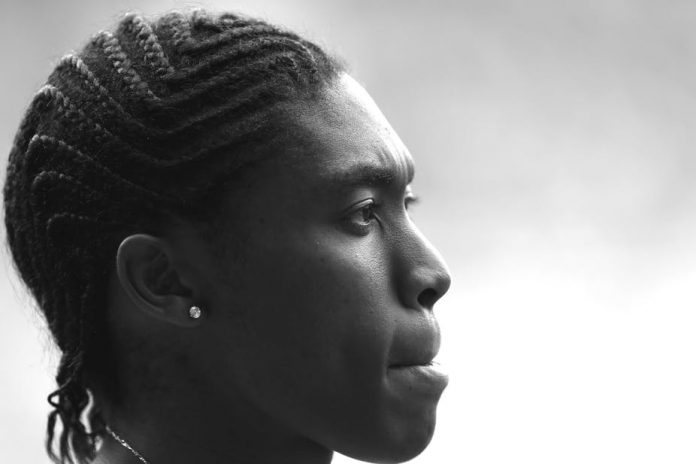
Two-time Olympic champion Caster Semenya challenged the 2018 policy. It was discriminatory, she argued, lacked scientific grounding and did “irreparable harm to affected female athletes.”
But on May 1, in a blow to Semenya and an untold number of other women, the Court of Arbitration for Sport upheld the regulations. The policy is now set to go into effect on May 8
As a scholar who studies women’s sports I’ve been following this story closely. At the heart of the conflict is how to define “femaleness” for the purpose of athletic competitions. Since sports are segregated by sex, what criteria – if any – should we use to distinguish female from male?
Originally, athletes presented affidavits from their personal and team physicians confirming that they were, in fact, women. In the 1960s, athletic administrators turned to gynecological examinations, visual inspections and chromosomal analyses. In the 1990s, they implemented genetic testing.
By the 21st century, most systematic testing had been discontinued, unless someone “challenged” a female athlete’s sex. This happened to Semenya at the 2009 Track and Field World Championships. Someone apparently issued such a challenge and the press caught wind of it. The International Association of Athletics Federations confirmed that she was undergoing “gender verification” procedures, just before she cruised to victory in the 800-meter race.
Although her test results were never made public, the IAAF subsequently issued a new policy for women with hyperandrogenism, or high testosterone. Arguing that high testosterone gave these athletes an unfair advantage, hyperandrogenic female athletes had two choices: suppress their testosterone or drop out of the sport.
Indian sprinter Dutee Chand refused to do either. In 2014, the Sports Authority of India diagnosed her as hyperandrogenic and disqualified her from competition. Chand challenged that disqualification in the Court of Arbitration for Sport, where adjudicators ruled the IAAF had “insufficient evidence” to enforce its policy. The decision gave the organization two years to find evidence that associated enhanced performance with naturally high levels of testosterone. If not, the policy would be invalidated.
As the 2017 deadline approached, researchers affiliated with the IAAF published a study that claimed women with high testosterone performed as much as 3% better than those with lower testosterone in a handful of events.
Although it rejected Semenya’s claims, the Court of Arbitration for Sport’s panel conceded that the regulations are “discriminatory” but “necessary” to preserve “the integrity of female athletics.” The regulations are additionally discriminatory, panel members noted, because they “do not impose any equivalent restrictions on male athletes.”
No one is concerned about male athletes with unusually high, naturally occurring testosterone. Taking hormones out of the equation, there are a host of biological advantages that some athletes enjoy over others. Nordic skier Eero Mäntyranta, for example, had a genetic condition that caused the excessive production of red blood cells, giving him an advantage in endurance events. Michael Phelps’ unique and optimally shaped swimming body allows him to cut through the water with remarkable speed and efficiency. No one suggests these men should muzzle their assets.
This is because we don’t divide sport into categories based on hemoglobin or foot size, regardless of the advantages each confers.
We do, however, carve sport into male and female categories, and for good reason. Studies show that elite male athletes tend to outperform elite female athletes by about 10%. Segregating men and women in most elite sports gives women more opportunities to compete and succeed.
Here’s where it gets tricky. If we insist on sexual segregation in sport, how do we decide who’s a female and who’s a male? Do those criteria influence sport performance? And what happens when athletes do not fit neatly into sport’s definition of femaleness?
This is precisely what the new regulations attempt to address, albeit in a clumsy and confounding way. Specifically, the policy is aimed at women who are legally recognized as women but who are diagnosed with specific differences of sex disorders and have high levels of functional testosterone. The IAAF explains that these disorders involve male-typical sex chromosomes and the presence of testes or testicular development. The threshold for women’s testosterone is below the “normal” male range but more than two times higher than the upper limit of the “normal” female range.
Semenya and her supporters argue that since the women affected by the policy are, in fact, women, they should be allowed to compete without restriction.
“I just want to run naturally, the way I was born,” she said. “It is not fair that I am told I must change.”
It’s worth noting that although Semenya is the top athlete in her class, her times don’t come anywhere near the times of elite male runners – despite allegedly having “male levels” of testosterone.
Semenya blows away her female competitors, but her times wouldn’t allow her to compete against the top male runners.AP Photo/Claude Paris
Sporting rights versus human rights
The controversy has divided activists for sporting rights and human rights.
The IAAF regards women’s sport as a “protected class” and insists that it must “place conditions” on the female category in order “to ensure fair and meaningful competition.”
Human rights activists disagree. If an athlete is legally a woman, that should be good enough. In fact, the United Nations Human Rights Council resolved that the new regulations “may not be compatible with international human rights norms and standards.” Citing the assertions of esteemed scientists and bioethicists, the council criticized the “lack of legitimate and justifiable evidence for the regulations.” Put differently, there is no conclusive, incontrovertible correlation between high natural testosterone and better performance. Without such evidence, they argued, the IAAF’s regulations shouldn’t be enforced.
The Court of Arbitration panel members did note that they’re concerned about how the IAAF’s regulations will be practically applied. In addition, the IAAF regards the regulations as a “living document,” which means that it can and probably will change as time goes on.
Will the testosterone restrictions expand to additional track and field events?
Meanwhile, the International Olympic Committee is reportedly working on guidelines to help international federations devise their own policies regarding “gender identity and sex characteristics.” In other words, we can expect to see policies similar to the IAAF’s in other sports.
Semenya has 30 days to appeal the arbitration ruling to the Swiss Federal Tribunal. If this appeal fails, she and countless other women must reduce their testosterone, probably with medication, to keep competing in women’s events. What will this do to their bodies? To the sport? To issues of fairness and human rights?
The Court of Arbitration decision is just one leg in what looks to be a never-ending and perhaps futile relay to establish “fairness” in women’s sports.