








President Uhuru Kenyatta has signed into law the Health Laws (Amendment) Bill of 2018 and the Assumption of the Office of County Governor Bill.
The new health law amends the Pharmacy and Poisons Act (Cap 244), the Medical Practitioners and Dentists Act (Cap 244), the Nurses Act (Cap 257), and the Kenya Medical Training College Act (Cap 261).
Other legislations amended through the Health Laws (Amendment) Act include the Nutritionists and Dieticians Act, the Kenya Medical Supplies Authority Act, the Counsellors and Psychologists Act, the Physiotherapists Act, the Health Records and Information Managers Act and the Clinical Officers (Training, Registration and Licensing) Act.
The brief signing ceremony at State House Nairobi was attended by Speaker of the Senate Ken Lusaka, Majority Leader in the National Assembly Aden Duale and his Senate counterpart Kipchumba Murkomen, Solicitor General Ken Ogeto and the Head of Public Service Dr Joseph Kinyua.
President Kenyatta signs Health Laws (Amendment), Assumption of the Office of County Governor bills into law

Matiang’i: There Won’t be any Extension of Huduma Namba Mass Registration Exercise

Interior CS Dr. Fred Matiang’i has issued a clarification on the ongoing Huduma Namba registration exercise claiming that there will be no extension of the exercise.
Speaking diuring a press briefing on the progress of the excecise, Matiang’i said that no one is being forced to register for Huduma Namba and that Kenyans should consider joining the exercise as it is for the benefits of the common mwananchi.
According to a tweet sent via the Interior CS twitter account, Matiang’i is impressed that 31 million Kenyans have so far registered for the exercise, which is 65% of the total projected target
14 People Dead in a Deadly Bus Accident at Tula – Garissa
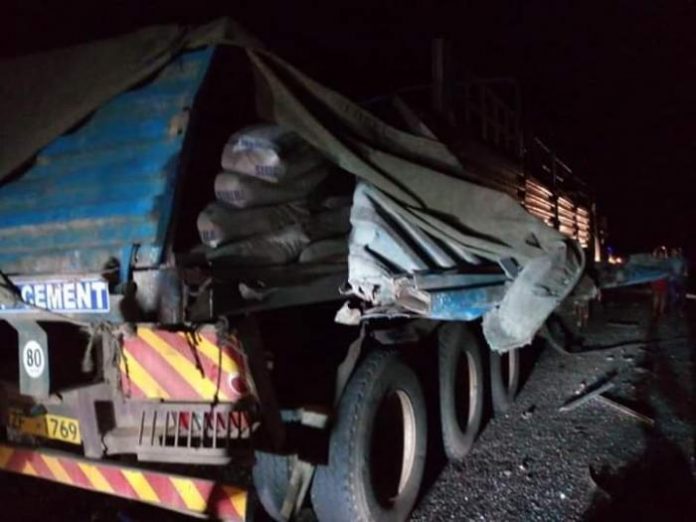
Residents in Tula area woke up to a sad morning after a bus they were travelling in rammed into a cement loaded truck that had stalled at Tula area on Garissa-Mwingi Road
14 people who were injured in the accident were rushed to the Garissa Provincial Hospital for treatment.
This comes hardly a month after a similar accident involving a Public service bus and a stalled Lorry at Matuu that killed 13 adults and a child, while more than 10 others were injured.
President Kenyatta mourns former clerk of the National Assembly Justin Bundi

President Uhuru Kenyatta has sent a message of condolence and comfort to the family, friends and relatives of former clerk of the National Assembly Justin Bundi who succumbed to cancer over the weekend.
Describing him as a seasoned and committed public servant who had a deep understanding of legislative processes, the President said the late Bundi distinguished himself as forthright and dependable public officer.
“The late Bundi’s commitment and devotion to his work saw him rise through the ranks from a District Officer in the then Provincial Administration to the position of National Assembly Clerk, where he again demonstrated his acumen and deep understanding of legislative processes, all aimed at improving the lives of fellow Kenyans,” said the President.
“His service and interaction with members of parliament, who are representatives of the people, enabled him to understand and appreciate the challenges facing us, as a nation, thereby ensuring that all legal aspects of Bills coming from the National Assembly fulfilled the aspirations of Kenyans,” he added.
The President said the late Bundi has left an indelible mark, not only in Kenya but in the whole region having previously served as the Clerk of the East African Legislative Assembly (EALA)
Kirinyaga Governor Waiguru forms a taskforce to Restore Kerugoya Hospital

Kirinyaga county governor Ann Waiguru has formed a taskforce to oversee the restoration and clean up of Kerugoya Refferal Hospital.
Kirinyaga county governor has issued a statement concerning the health facility vowing to correct the situation at the hospital by restoring manpower to clean up in the next 3 days
Waiguru blamed the deepening state of the facility on the rise of patients visiting the facility that has nmade the hospital stretch its resources beyond limits.
“With the recent upgrade of facilities …. the Kerugoya County Referral Hospital has witnessed an influx of more patients seeking treatment and has consequently been stretched beyond its capacity, putting pressure on its equipment and human resource capacity,”
Since the onset of devolution, There has been an uproar by the common wananchi over the sorry state of public hospitals in regards to sanitation,courtesy and poor services offered. This has seen a shift to private health facilities which then come at an extra price, but how many can afford it?
Bishop Philip Anyolo urges Kenyans not to give up on fight against Corruption.

BY PRUDENCE WANZA – Bishop Philip Anyolo has urged Kenyans not give up on the face of rampant corruption happening in the country during the Kenya Conference of Catholic Bishops (KCCB).
He has raised concerns of the current political bickering and utterances that are slowing our country from moving forward in a meaningful way that will bring development and National Integration to the country. The bishop has reiterated on the issue of Kenyans in many parts of the country languishing in poverty, lacking food and having to depend on handouts and relief yet billions of shillings have been allocated for the emergencies are stolen.
The Bishop also raised concerns on the worrying trend of youths taking their own lives while others are murdered in bizarre circumstances never heard before. “It is obvious that a society where the young people see no hope and no future is doomed and sooner or later will descend into chaos, instability, and civil unrest.” He added that a unless we all come back to our senses and seek the right way, peace and stability we so far experienced will be a thing of the past.
In his press statement the Bishop has proposed the actions to be taken in order to tackle this menace of corruption.
That the Catholic church in Kenya, the Kenya conference of Catholic Bishops,priests,dioceses, parishes and small Christian communities will fight corruption by all means, by rejecting all forms of corrupt practices.

Secondly, as a society to re-awaken our consciences and listen to that voice within us which tells us that corruption is evil and abominable.
He has invited all the faithful and people of goodwill to externally commit by freely and sincerely append their signatures where and when needed, to fighting corruption and corrupt practices.
Bishop Anyolo has called the constant push by lawmakers for salary increment and allowances while millions of Kenyans are wallowing in poverty as a form of corruption. The huge wage bill and billions of loans that the government is borrowing is already enough reason for Kenyans to worry as we will be forced to pay for those loans for many years to come.
He has further questioned the government on what it is doing on making sure the culprits are prosecuted and jailed. He has also questioned the DPP, DCI, and EACC on why they are not able to process water tight cases and have the corrupt prosecuted.
In conclusion the bishop said that the only way to deal with corruption is to turn our backs against the corrupt practices and walk towards the path of integrity and justice. “The fight begins with each one of us, individually and collectively,” he said.
Man charged in court for trying to steal EABL shares worth Sh 8.6M

A man has been charged in court for attempting to steal East African Breweries Limited shares worth 8.6m, property of Custody Registrar Group Limited.
He is alleged to have committed the offense on 22nd May, 2017 at Custody Registrar Group limited in Nairobi.
The accused, Benjamin Nguthu Mutuku, denied the charges before Chief Magistrate, Martha Mutuku, at the Milimani Law Courts.
He was released on a bond of Sh. 500,000 and an alternative cash bail of Sh. 500,000.
The case will be mentioned on 23rd May, 2019 for pretrial and the hearing on 10th June, 2019.
Wildebeest migrations in East Africa face extinction. What must be done
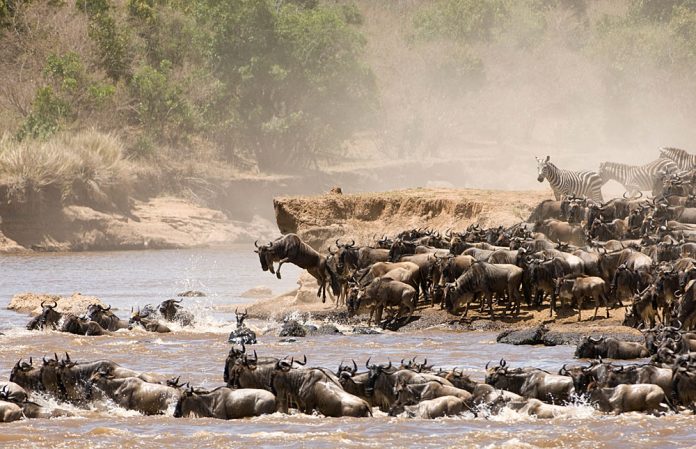
Across the world, migratory animals like wildebeest – which rely on movement to find food, water and calving grounds – are under threat.
This is mainly because their migration routes are being cut off by fences, settlements, farms, roads and other developments, and the areas where they roam are getting smaller. The animals also face the additional challenges of poaching and having less food to eat because of livestock overgrazing and agriculture.
We wanted to know how wildebeest migrations in East Africa were faring. To do this we analysed trends in the region’s five remaining migratory wildebeest populations. We used maps from the colonial era, literature reviews and aerial survey databases. We also GPS collared animals and held interviews with researchers and residents to assess how wildebeest migration routes and populations have changed over time.
We found extreme declines in the numbers of migrating wildebeest and loss of most migration routes in Kenya and Tanzania. Four of the five contemporary migrations, including the Mara-Loita migration, are severely threatened and have virtually collapsed.
This collapse increases the risk of local extinctions of wildebeest in four historically wildlife-rich East African ecosystems. This is because they are obstructed from accessing critical resources.
The study
East Africa’s remaining populations of migratory wildebeest are found in five ecosystems. Using aerial survey monitoring data, collected over almost 60 years (from 1957 to 2016) in Kenya and Tanzania, we found that four migrations have virtually collapsed. The Athi-Kaputiei, Amboseli and Mara-Loita migrations are the most severely threatened.
Serengeti-Mara
This covers about 40,000 km2 and straddles Kenya and Tanzania.
Since 1977, the total number of wildebeest in the area stayed at roughly 1.3 million individuals. But the number of wildebeest crossing from the Serengeti to the Maasai Mara went down by 73%, from 588 000 animals in 1979 to 157 000 in 2016.
Greater Amboseli
Covering an area of about 7,730 km2, this area also straddles Kenya and Tanzania.
The Amboseli’s migrating population declined by 85% from 16 300 animals in 1977 to under 2 400 in 2014.
Mara-Loita
This covers about 7,500 km2 in south-western Kenya.
The number of migrating wildebeest here has crashed by 81% from over 123 000 animals in 1977 to under 20 000 in 2016.
Athi-Kaputiei
This spans 2,200 km2 and is near Nairobi, Kenya’s capital. The Athi-Kaputiei’s migrating population fell by 95% from 27 000 animals in 1977 to less than 3 000 in 2014.
Tarangire-Manyara
Found in northern Tanzania, the Tarangire-Manyara ecosystem, and adjoining village lands, covers 35,000 km2. The number of migrating wildebeest has decreased by 72% animals since 1990. From 48 800 to 13 600 in 2016.
Leading threats
The threats facing the various populations differ in each area. The leading causes of decline are poorly planned agricultural expansion, fences, settlements, urban centres, roads and other infrastructure, poaching and competition with livestock for food, space and drinking water. Government policy in Kenya also encourages private over communal land tenure. This promotes land subdivision.
Fences, for example, are expanding fast in the Mara-Loita ecosystem. This was driven by the splitting up of former group ranches – communally owned land – and the formation of some wildlife conservancies.
Ultimately, the threats are driven by increasing human and livestock numbers. The way land is used (from former grazing areas to farmland) is changing and there’s also more human-wildlife conflict as more animals come into contact with people.
So, there have been failures on a number of fronts. These include policies that don’t regulate where people settle, wildlife conservation and management policies.
A key government wildlife policy failure in Kenya is that it has focused primarily on protected areas. But these areas cover only 8% of the country’s land surface and support only 35% of the wildlife. The other 65% occupy private lands, which all the four threatened wildebeest migrations cross.
A huge problem here is that there isn’t incentive for private landowners to look after wildlife. They receive little to no benefit from wildlife. This is because Kenya banned the use of and trade in wildlife and wildlife products in 1977. This restricts opportunities to game viewing. But tourists don’t visit many areas and so other land uses, like agriculture and livestock production, are more appealing.
What must be done
Urgent action is needed to save these migrations. Unfortunately, warnings like this are often ignored by the national institutions that conserve wildlife.
Saving the migrations means much more regulation, securing more land, partnering with local communities and, ultimately, reducing human population growth. In particular, regulation of livestock numbers, fences, settlements, farms and roads.
Land must be restored – meaning settlements cleared and cultivation on migration routes stopped – and key rivers (like the Mara river which could be dammed) must be protected. Deforestation must also be better managed.
Major roads that cut across migratory routes should include under or over passes for migrating wildlife. And robust law enforcement is needed to reduce the illegal hunting of animals for bushmeat.
There have been attempts to protect migratory pathways by forming wildlife conservancies. These have been set up by private land owners, usually in collaboration with a tourism partner, to protect areas while providing land rents and jobs to local communities. But more support is needed by communities and investors in tourism to plan, expand and manage these conservancies which are outside state protected areas.
The weakness of these conservancies is that they usually lease land from communities for a short period. But they’re expensive to maintain because the land that’s leased covers large areas. Another option would be for the state and other conservation actors to buy land for conservation.
Another intervention is that the community benefit more from wildlife, in terms of jobs and income, predominantly through tourism. This would reduce incentives for poaching and habitat degradation.
There must also be greater coordination and collaboration between Kenya and Tanzania to conserve the trans-boundary migrations.
The fact that intense droughts have become more frequent makes these changes the more urgent.
Read more: Droughts in East Africa: some headway in unpacking what’s causing them
The consequences of not acting will be huge. Migrations of zebra and Thomson’s gazelle in Kenya’s Rift Valley and elephants in Kenya have already been lost. Wildebeest could go the same way.
Joseph Ogutu, Senior Statistician, University of Hohenheim
This article is republished from The Conversation under a Creative Commons license. Read the original article.
Two business men a Bulgarian and an Indian national charged in court for obtaining money falsely

BY PRUDENCE WANZA – Two business men arraigned in court over allegations of obtaining money by false pretences.
Mohammed Akbar Rashid and Bulgarian National Yulian Pentrov Stankov were presented before court by DCI officers attached to transnational organized crime unit who are investigating the matter.
The two Were arrested on 9th may at Lavington mall in connection with the offence.
They two were arrested and several exhibits namely; mobile phones and profoma invoices for Africargo Ltd.
The Investigating Officer Sergeant Stanley Musembi told the court that the mobile phones need to be taken to cyber crime unit for forensic examination and the profoma invoices need to be authenticated by the registra of companies.
Stankov is believed to be a foreigner and has no identification document and his presence in the country is questionable and there is need to contact the immigration department to verify the same.
“It is with this reason why I swear this affidavit requesting this court to order the detention of the respondents for a period of five days so that investigations may be completed, “states the investigator.
The court ordered that the Bulgarian be detained for a period of three days at Gigiri Police station while the Indian was released on a Sh. 50,000 cash bail and ordered to be reporting to the Investigating Officer every day.
The matter will be mentioned next week on Tuesday for further directions.
Why the Indian Ocean is spawning Strong and Deadly Tropical Cyclones
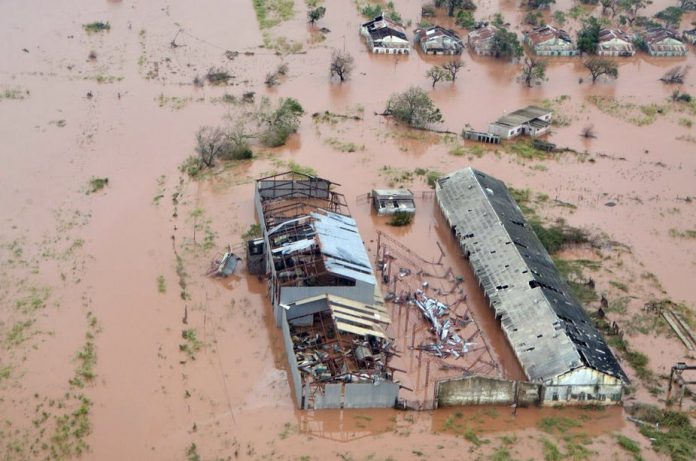
The Indian Ocean has made its mark on the global news cycle this year. In March, tropical cyclone Idai made headlines as one of the most severe storms to have made landfall in Mozambique. Current estimates indicate that more than 1,000 people died. This makes it the most deadly tropical cyclone ever to have made landfall on the southern African subcontinent.
Until Idai, tropical cyclone Eline, which struck in 2000, was the most devastating tropical cyclone to make landfall in Mozambique.
After Idai, Eline was the strongest – though not the deadliest – cyclone to have hit the southern east African cost. This ranking as the strongest was soon after challenged by tropical cyclone Kenneth, a category 4 tropical cyclone that made landfall over the border of Mozambique and Tanzania six weeks after Idai.
Kenneth, in many regards, took the region by surprise. The storm was the northernmost tropical cyclone to make landfall on Mozambique, and the first to make landfall on Tanzania. It occurred very late in the season. Most cyclones in the region occur from January to March. It was also unusual for the Mozambique Channel to experience two severe tropical cyclones that made landfall within one season.
The third major cyclone to emerge out of the Indian Ocean came a few weeks after Kenneth, when cyclone Fani, a tropical cyclone on the border of Category 5 intensity wind speeds, hit the east coast of India. Category 5 tropical cyclones were only first recorded in the North Indian Ocean from 1989 so, again, this storm is unusually severe in the context of the longer historical records.
These high intensity storms have been tied to the very warm sea surface temperatures in the Indian Ocean. Temperatures of 30°C are occurring more often and over longer periods of time. This is a result of gradual warming on a global scale, which has resulted in a net increase in ocean temperatures.
Warmer ocean temperatures allow stronger storms to form. These conditions are exacerbated by global forcing mechanisms including El Niño and the Indian Ocean Dipole, which concentrates warm ocean waters in smaller geographic areas.
High intensity storms have been a frequent feature along the coast of the US throughout recorded history. Their increased frequency in the Indian Ocean should be raising alarm bells because countries like the US are much better equipped to help people prepare ahead of time, and to handle the fallout.
Measuring intensity
Tropical cyclone intensity is classified according to the Saffir Simpson scale. Categories are measured on the basis of the sustained wind speed and the storm’s central pressure. Each category is accompanied by estimates of the likely severity of damage and possible storm surge height.
Tropical cyclones form and intensify due to a combination of seven primary climatological conditions. Among other things, these include warm sea surface temperatures, high humidity levels and atmospheric instability.
For a storm to intensify, these conditions have to be maximised while the storm remains over the ocean.
Tropical cyclones require a sea surface temperature of 26.5°C to form, while the highest intensity storms require much warmer sea surface temperatures of 28-29°C. This is important because it’s one of the reasons why southern Africa is experiencing more intense tropical cyclones.
The South Indian Ocean is warming rapidly. This means that regions that previously experienced the temperatures of 26.5°C that facilitated tropical cyclone formation are now experiencing temperatures as warm as 30-32°C.
Simultaneously, regions further from the equator which didn’t previously have sufficiently warm water for tropical cyclone formation, with sea surface temperatures of 24-26°C are more regularly experiencing the threshold temperature. This increases the range in which these storms occur, making storms like tropical cyclone Dineo, which made landfall in February 2017 in southern Mozambique, more common.
These very warm sea surface temperatures are not a factor of global scale warming alone. They’re further influenced by a range of global and local forcing mechanisms. These include El Niño Southern Oscillation, the Indian Ocean Dipole and the Southern Annular Mode. For this particular cyclone season, scientists are seeing the strongest impact from the [Madden-Julian Oscillation].
This is a band of moisture in the tropical regions which moves eastward over a 30 to 90 day period. The strong Madden-Julian Oscillation is also affecting tropical cyclones in Australia.
Comparing storms
Ranking storms on the basis of their Saffir Simpson classification is not always the most valuable measure. That’s because it can’t take the characteristics of the location of landfall into consideration.
This results in two key shortcomings. First, it doesn’t take the flooding potential into account. This is difficult to identify for a particular storm, because it’s not only a function of how much rain is experienced and over what period – or even the height of storm surge – but also the nature of the region of landfall.
Lower-lying, relatively flat areas are more prone to flooding than higher elevation regions or those with rugged topography. This is part of the reason that Idai caused such severe flooding. Some regions will have better suited storm water infrastructure. And when flooding does occur, some regions are better able to warn and evacuate people to prevent or minimise the loss of life.
Another factor which determines the devastation resulting from a tropical cyclone is the population density of the area of landfall. The higher the population density, the more people who are at threat of losing their life, their homes and livelihoods.
This also means more people who would need to be evacuated in a short period, and more people who need shelter until the storm’s immediate effects have subsided. This is why Idai and Eline resulted in far greater losses and fatalities than the stronger intensity Kenneth, and why the total damage from Fani is projected to be particularly devastating. We need to start measuring storm destructiveness in addition to climatological metrics.
Jennifer Fitchett, Senior Lecturer in Physical Geography, University of the Witwatersrand
This article is republished from The Conversation under a Creative Commons license. Read the original article.