






Home Blog Page 6270

Death on Everest: the boom in climbing tourism is dangerous and unsustainable

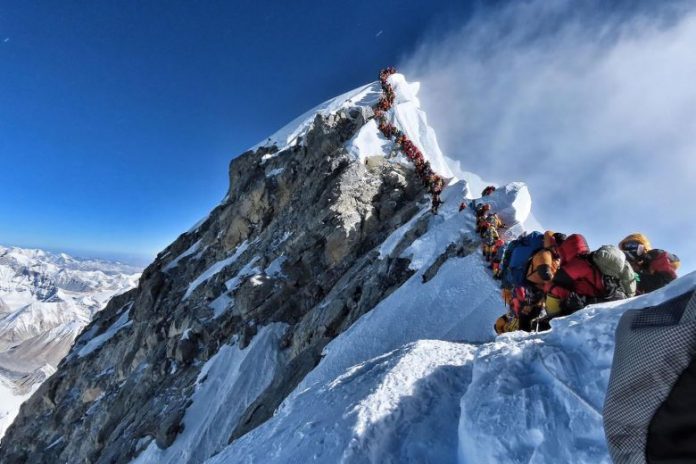
The last days of Mt Everest’s spring window for 2019 witnessed the deaths of 11 climbers. Images of hundreds of mountaineers queuing to reach the summit and reports of climbers stepping over dead bodies dismayed people around the world, many wondering how human beings had got it so wrong.

After the conquest of Annapurna and Everest in the 1950s, mountaineering became popular among the more privileged. But in the past two decades, mountaineering has taken on a increasingly commercial angle with disastrous results.

Experts report that aside from a very short weather window to climb Everest this season, a new generation of guides offering cheap expedition rates attracted a rash of novice mountaineers, which contributed to the high number of deaths. Those inexperienced climbers, some of whom had only climbed Mont Blanc (4,810m) and Aconagua (6,962m), should not have been there.

Modern climbing

Until the beginning of the 21st century, mountaineering was an exclusive activity accessible only to a few. Twenty years later, despite being a high-risk activity that requires a high level of specialised skill, its popularity among recreational climbers has drastically increased. Climbing legend Reinhold Messner once said that for a fee, “almost anyone could brave a top-class peak” – meaning regardless of skill, ability or experience.

Many modern mountaineers are attracted by the Seven Summits Challenge, introduced by Messner in the 1980s, with the aim of climbing the highest peak on every continent. Cashed-up adventure tourists lured by the challenge face expensive mountain expedition packages – from £3,000 for Aconcagua and £30,000 for Everest.

Aconcagua in the Argentinian Andes is the second highest of the Seven Summits after Everest, and one of the cheapest to climb. The number of climbers attempting Aconcagua has increased by 400% since 1990 – 4,000 people a year now push for the summit.
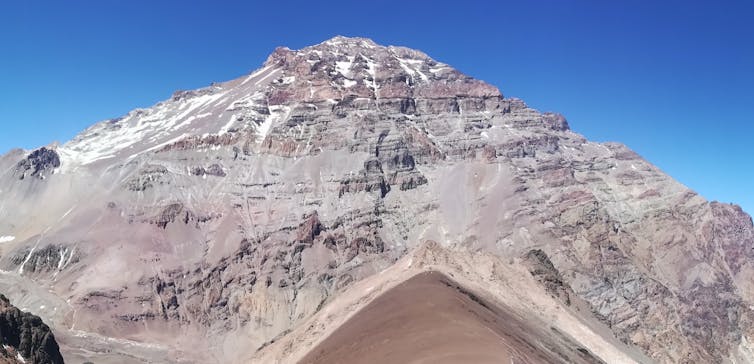
Mount Aconcagua in Argentina. Yana Wengel, Author provided

Our current research project focusing on mountaineering tourism shows that this recent trend can be explained by the transformation of mountaineering from personal exploring to a commercial guided-tour industry which is capitalising on better accessibility to big mountains, affordable transportation and more advanced equipment. This boom in commercial adventure sports means “real” mountaineers are often outnumbered by tourists whose ambitions exceed their climbing skills.

Although technically Aconcagua is not considered a difficult climb, it reaches a high altitude, where climbers struggle with low humidity, low oxygen and severe winds, so the summit success rate is 30-40%.

In February 2019, we spent three weeks at Aconagua’s base camp, where rangers told us that the popularity of the mountain has triggered an increase in accidents and fatalities. But reinforcement of safety measures implemented over the past five years have minimised casualties, averaging two to five deaths a season – with no deaths in 2019 so far.

Such measures include climber check-in and medical checks at ranger stations, and the availability of doctors and rescue teams up to 5,500m. Our interviews with rangers, guides and porters reveal that accidents are associated with an high number of inexperienced climbers who often carry insufficient equipment and underestimate the difficulty and risks of a high-altitude mountain environment. The question is, should everyone be allowed to climb any mountain they decide to?
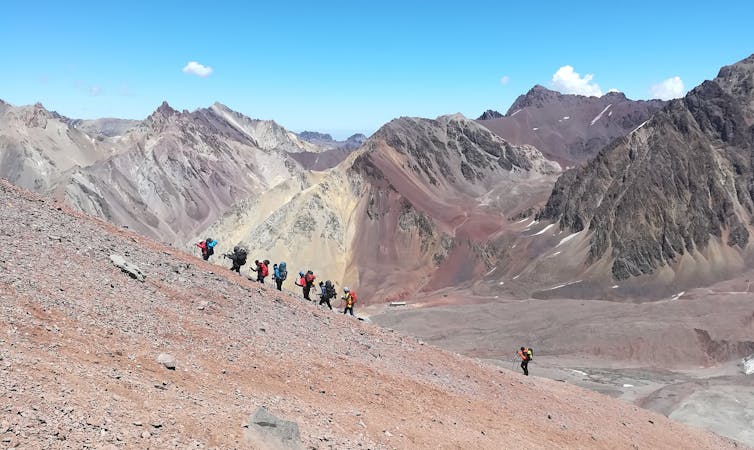
A commercial expedition heads up to Nido de Condores at 5,550m on Aconagua. Yana Wengel, Author provided

Many recreational mountaineers opt for package expeditions, relying solely on the experience of service companies and the help of porters and guides. Without this professional support, they would fail. The paradox of modern mountaineering is that the provision of necessary expedition support and all-inclusive packages also encourages inexperienced climbers who wish to reach the desired summit at any cost, putting others at risk.

Of course even the most skilled mountaineers need logistics and local support on the world’s highest peaks. But experienced climbers possess the knowledge, skill and strength to reach the summit – and often rely on themselves as far as possible. But their achievements, together with the “all-inclusive” adventure tourism industry, lull inexperienced climbers into a false sense of security about what they are capable of.

Experience and permits

Each country manages climbing permits in different ways – and only a handful of authorities check mountaineering experience seriously. To climb Alaska’s Mt Denali (6,190m), the highest peak in North America, climbers are required to have advanced mountaineering skills along with backcountry winter camping experience.

Only seven mountain guide companies are authorised to lead expeditions on Denali and solo climbers need to prove their mountaineering experience to obtain a climbing permit. This strict control minimises the risks to climbers and the impact on the environment, allowing sustainable management of expeditions without casualities – which was achieved in 2018.

Other countries have much looser requirements. The New York Times reported that to get a climbing permit for Everest all a climber has to do is submit a copy of their passport, limited biographical data and a certificate of good health.
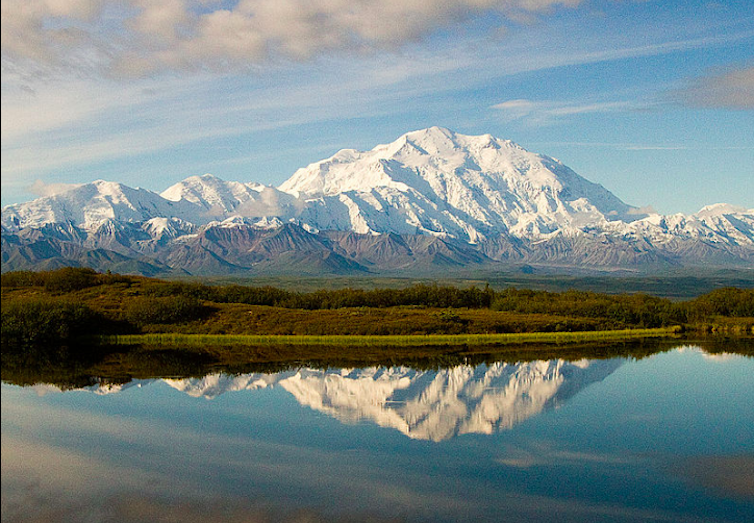
Mt Denali in Alaska has strict conditions regarding experience when it comes to issuing climbing permits. Denali National Park

Climbing a mountain is mentally and physically demanding. Climbers need to have good ethics – such as taking responsibility for their actions, respecting local climbing traditions, taking care with the environment and so on – proper equipment and real mountaineering experience. In our view high-altitude climbers should be required to demonstrate a standard of experience to obtain a permit. But mountaineering is a lucrative industry and brings huge amounts of money to often impoverished local economies. Over the years, overcrowding and safety issues have become a serious problem.

Mountain tourists lack the experience and the requisite attributes to summit difficult peaks. This foolhardy arrogance can lead to tragedy, as we saw on Everest this year. The global mountaineering community needs to call for specific conditions of ability and experience be met when issuing permits for high-altitude mountain expeditions. It has to be about more than simply being able to afford to take on the world’s most difficult peaks.

But how do we achieve that? Who is responsible for managing modern mountaineering in a safe, responsible and sustainable way? If we don’t address these issues, avoidable tragedies caused by commercialised mountaineering will continue to appal the world.The Conversation

Yana Wengel, Lecturer Work, Emplyoment and Organisation, University of Strathclyde

This article is republished from The Conversation under a Creative Commons license. Read the original article.

Attitudes to gender and sexual diversity: changing global trends

Changes in geopolitical forces are sweeping rapidly across the world, affecting the lives of many, for better and for worse. In much the same way, attitudes towards gender and sexual diversity are dynamic. They are moving towards greater acceptance in some parts of the world, while in others there is push back against this diversity.

The result is that lesbian, gay, bisexual, transgender and intersex (LGBTI) people are experiencing increasing freedom to express their diversity in some countries and communities. But in others they face discrimination, abuse, violence and even death because they don’t fit into the expectations of what certain sectors of society consider to be the norm.

The determinants of gender and sexual diversity can be understood from several perspectives. These include biological or physical sex – what we see or can measure; gender identity – how people identify independently of their biological sex; and sexual orientation.

Together, all elements contribute to a person’s gender expression. In other words, how they live their lives. Gender expression in turn is context dependent, and this includes the society in which people live.

The problem is that those who wish to impose their own beliefs frequently overlook the extent – and complexity – of natural human diversity.

Biological sex determination

Biological sex determination starts in the first trimester of pregnancy with the differentiation of the gonads (ovaries and testis). Male development is driven by the Y chromosome; X chromosomes (in the absence of a Y chromosome) drive development in the female direction. There are variations on this theme, some of which defy a binary classification.

This is followed by the development of the internal reproductive organs and external genitalia. In males this is androgen dependent and in females, estrogen dependent. There is an indeterminate phase early in the development of external genitalia, and variability can occur at any point in the process.

One of the ways in which diversity between people manifests is through what is now referred to as ““disorders of sex development”, previously referred to as intersex or hermaphroditism.

People whose physical sex characteristics do not fit into culturally established gender norms feel strongly that the word “disorder” should not be used. Rather, they argue, it should be seen as a naturally occurring variation in development. Use of the terminology “differences in sex development” might therefore be more appropriate.

Surgery is often performed early in childhood on people who don’t fit into the binary classification of male or female with regard to their external genitalia. The aim is apparently to allow these people to fit into a socially accepted gender category.

Genitalia are often “corrected” towards female. But if this is done at a time in early infancy when the individual has not had a chance to establish their gender identity, it may create a disjunction between gender identity and physical identity later in life.

In addition, there are many consequences related to the surgery. These can include infertility, incontinence, scarring, loss of sexual pleasure, pain, mental suffering and depression.

Gender identity

What determines gender identity?

From a biological perspective, it appears that the determination of gender identity occurs once the gonads and organ systems are in place. During development, our gender identity is female by default. The brain becomes masculinised in the presence of testosterone and remains feminised in the absence or inactivity of testosterone.

One well recognised naturally occurring variation may be that the degree of masculinisation of the genitalia does not reflect the degree of masculinisation of the brain. When gender identity does not correlate to physical sexual characteristics, this may result in transgenderism. People in this situation may decide to transition to achieve a match between their physical and psychological sex.

Identifying as transgender has previously been classified by the World Health Organization (WHO) as “gender identity disorder”. On May 25 of this year, in the most recent International Classification of Diseases manual, the WHO reclassified transgenderism as “gender incongruence” rather than as a mental health disorder. Gender incongruence has now been moved to a new chapter dedicated to sexual health, which it is believed will reduce stigma while ensuring access to healthcare.

The reclassification came about because the WHO now has a better understanding that gender incongruence per se is not a mental health condition.

With regard to sexual orientation, although the mechanisms which determine individual preference have not been determined, both genetic and epigenetic factors are believed to be involved.

Difference versus disorder

Embracing human gender and sexual diversity requires acceptance of the fact that alignment between physical sex, gender identity and sexual orientation does not necessarily adhere to heteronormative rules. Each facet may be determined independently of the others in the course of the development of an individual, both in utero and in post-natal life.

When does a difference or a variation become a disorder or a disease?

One answer might lie in linking the difference or variation to subjective distress or suffering. Take for example heart disease or cancer. A person is subjected to distress or suffering as a result of the condition, which in this case is referred to as a disorder or a disease.

If the difference or variation per se does not cause distress or suffering, it should not be considered a disorder or a disease, even though distress or suffering may be imposed by others, which is frequently the case in LGBTI individuals. In societies where gender diversity is accepted, the magnitude of externally imposed distress and suffering is reduced.

There are numerous countries that have moved closer to embracing gender and sexual diversity.

For example, the state of Minnesota in the US is moving towards banning “conversion therapy” for people whose sexual orientation differs from a heteronormative pattern, while Taiwan has recently become the first country in Asia to legalise same-sex marriage.

Similarly, the move by Malta to ban “normalisation” surgery on infants will allow for the self-determination of gender identity in people with differences in sex development. And several countries and communities are moving towards a gender neutral option on official documents.

But other countries have gone in the opposite direction and have hardened their stance. Examples include recent legislation enacted in Kenya and a ban on transgender people being allowed to join the military in the US.


Read more: Homosexuality remains illegal in Kenya as court rejects LGBT petition


Fundamental human rights

Self-expression is a fundamental human right. Gender and sexual diversity are part and parcel of being human. This is a fact. It is also a fact that this diversity occurs in many other species.

Whether or not one wishes to embrace this diversity is a separate issue.

Acceptance of diversity should not be predicated on scientific data. Furthermore, data in any shape or form is unlikely to convince people who wish to impose their own beliefs.

The key question is: does anyone have the right to judge?The Conversation

Michael Sean Pepper, Director of the Institute for Cellular and Molecular Medicine, University of Pretoria

This article is republished from The Conversation under a Creative Commons license. Read the original article.

Man suspected to Belong to Outlawed Alshabaab group to be Detained for 8 days

BY PRUDENCE WANZA – A man has been charged in court with being a member of alshabaab, Islamic state of Iraq and ISIL which are outlawed terrorist organizations.

The accused, Job Kimathi Gitonga alias Khaleed alias Kim, also faces counts of being found with articles related to commission of a terror attack and collection of information related to the commission of a terror attack.
On 30th May, 2019, at CBD in Nairobi, he is alleged to have been found with videos in his laptop such as; operations Ak 47, BA’YAN of MUJAHEED BRO IMAN. Mp4, Masimba Mp4 and other videos related to commission of a terror attack.

He is also alleged to have been in possession of a Samsung mobile with videos connected to commission of a terror attack.
The prosecution through an affidavit, opposed his release on bond or bail citing that they needed more time to conduct investigations as the crimes committed by the accused person are serious and of threat to national security.

Magistrate Paul Mayova, allowed the prosecution to detain the accused person for 8 days at Anti Terror Police Unit.
The accused will be presented in court on 18th June, 2019 for further directions.

Man Charged with Assault and Property Destruction at Kamulu Estate

BY SHARON NYAWIRA – A man accused by one Escah Kameme has been charged with Assault by causing bodily harm, malicious damage of property and creating disturbance in a manner likely to cause breach of peace.

The accused, Mr. John kimani Kinyanjui allegedly committed all crimes on the 5th of June 2019 at Ng’undu estate Kamulu in Njiru Sub County within Nairobi County.
The accused is said to have assaulted the complainant Escah Kameme and willfully and unlawfully damaged an iron sheet fence valued at Ksh. 20,000 belonging to Rose Njambi Mugo.
John Kimani is said to have created disturbance and also threatened to kill the mother Josephine Wambaire Kinyanjui and grandmother Rose Njambi Mugo.
8 witnesses have come forth to testify against the accused.
The next hearing is on 18th July,2019

Businessman charged with falsely obtaining Sh. 8M in land sale deal

BY PRUDENCE WANZA – A businessman has been charged with falsely obtaining over Sh. 8 million through his company, MIAMI PROPERTIES LIMITED, in land sale deal.

David Somoire Shanka is accused of obtaining the Sh 8,970,002 from Deepak Prenchand Shah of Sigma Supplies Limited on 24th April 2010 at I&M Bank in Nairobi with intent to defraud.
The accused alleged to be in a position to sell to Shah a parcel of land Nos. Kajiado/Kaputiei North/6742 and 6743 a fact he knew to false.
Shankar further faced two counts of obtaining registration of the two parcels of land belonging to Herman Syanda Kanyoro falsely on 2nd August 2004 and 12th August 2010 respective to his company.
He denied the charges before Cheid Magistrate Francis Andayi. He was releases on a sh 500,000 cash bail.
The case will be heard on 21st August.

Man arraigned in court for conspiring to steal Sh. 26M from Equity Bank

BY PRUDENCE WANZA – Joshua Kirika Ndungu is accused that on 1st November, 2018 and 28th April, 2019 at an unknown place with others not before court conspired to steal the money from the bank.
He also faces charges of stealing over Sh.100,000 which was found in his equity bank account having reasons to believe that it was stolen money, the property of equity bank of Kenya.
Alternatively the accused was charged with handling stolen property to wit the above amount.
He denied the charges before chief Magistrate, Francis Andayi at the Milimani Law Courts.
He however said that he did not steal the money but he found it in his bank account neither did he understand how the money got in to his account.
He was released on a bond of Sh. 300,000 and an alternative cash bail of Sh. 200,000.
The case will be mentioned on 24th June, 2019.

University Student arrested at State House for Trespass

Press Statement from STATE HOUSE

.
Brian Kibet Bera, a 25-year-old Jomo Kenyatta University of Agriculture and Technology (JKUAT) student was yesterday arrested at State House, Nairobi, for trespass.

The student, who climbed over one of the State House gates, was shot and wounded on the left shoulder by officers manning the gate after he drew a knife when he was challenged to stop.

The incident occurred at 4.05 pm and the suspect was booked at Kileleshwa Police Station vide Ob No. 39 before he was taken to Kenyatta National Hospital for treatment. Investigations are ongoing to establish the motive of the trespass and appropriate action will be taken upon conclusion.

We take this opportunity to remind the public that State House is a designated protected area under the Protected Areas Act. For that reason no person is allowed access to the premise without the permission of the prescribed authority.

Troubled Suraya to recieve 1.6 Billion bail out to complete stalled projects

Troubled property and real estate group Suraya, have announced that the firm has recieved a 1.6B bail out from local banks to finish its incomplete projects.

The company CEOs who happen to be spouses too, Peter Muraya and Sue Muraya, said that the funds recieved will be used to complete pending projects, such as Lync Royal, which have been stalled for 5 Years.

Breakdown

Diamond Trust Bank (DTB) pumped in Sh700 million for Lavington Development, which consists of 133 units of apartments.

Fourways project secured Sh 130 million from Equity Bank and Lynx West project at Nairobi West has secured Sh 40 million from DTB.

National Bank has also chipped in to save Lynx project (Ngong Road) for Sh 600 million to complete apartments.

The much radioed Encasa at Mlolongo that consists of 625 apartments,  has been injected an additional Sh 130 million from Co-operative Bank of Kenya.

The same property is ironically listed for auction if an advertisement doing rounds on social media is anything to go by.

However on Monday 10th June, investors took to the Directorate of Criminal Investigations to record statements against the Suraya, claiming that they were conned into buying property that was never there.

According to one Mrs. Gathoni Gatabaki, the 105 acre plot that Suraya Properties sold to investors is not up for sale and that they used fake title deeds to swindle unsuspecting Kenyans.

The Gatabaki family hired a private investigator who established that the couple acquired fake documents to the 105 acre piece of land.

The property sector is suffering from lack of sufficient and stringent measures to curb fraud. With the current spark in cases relating to fraudulent off plan buying, many Kenyans may shy away from purchasing property.

Genuine Property investors are calling for strict regulations in the property market to protect it from crumbling.

‘OLX Fraudster’ arraigned in court over Ksh 2 million Fake Car Deal

BY LYNN KYALO – It is alleged that one Mr Paul Mogaya Mokere attempted to defraud Mr Thomas Kyumwa Ksh 2 Million by falsely pretending to be in a position to sell him a Toyota Hi-ace car, in Kilimani area, Dagoreti sub-county. The complainant wanted to buy a vehicle from an online retail platform – OLX platform.

He made contacts and the accused pretended to be the owner of the car and signed an agreement using a different name. The accused denied charges before chief magistrate Hon Gandani at the Kibera law courts today the 10th of June.

Upon a rejected request to be released on free-bond, Paul was given a bond of 1 million or a cash bail of ksh200,000

The case will be mentioned on 24th June,2019.

Ngilu, Safaricom chief raise Sh.29M for Matinyani School

Kitui County Government will construct a fly over at St.Mathhias Mulumba-Matinyani Secondary School to protect the students from the challenges associated with crossing the busy Matinyani road.


Governor Charity Kaluki Ngilu said the County had set aside some Sh.12million to construct the fly over akin to the one at Starehe Boys and Pangani girls.


Ngilu was responding to an appeal by Kitui West Mp Edith Nyenze during a fundraising at the school to construct a dining hall.
The harambee raised Sh.17Million.


Board Chair Nicholas Mulila thanked the Governor and Nyenze for supporting the school.


“We have just commissioned a brand new modern dormitory funded by the Kitui West CDF through Hon Nyenze. We are grateful” Mulila said.


Senator Enoch Wambua, an alumni of Matinyani said the School had curved a niche for itself as the silent education giant in Kitui. He said his legacy will be defined by the school.


Vicar General, Kitui Catholic Diocese the Very Rev Father Joseph Mwongela, an alumni of the school said the Church will continue to assist the youth to navigate challenges of growing up.


Also present was Kaiti MP Gidion Kimilu, several MCAs and leading Kitui Professionals