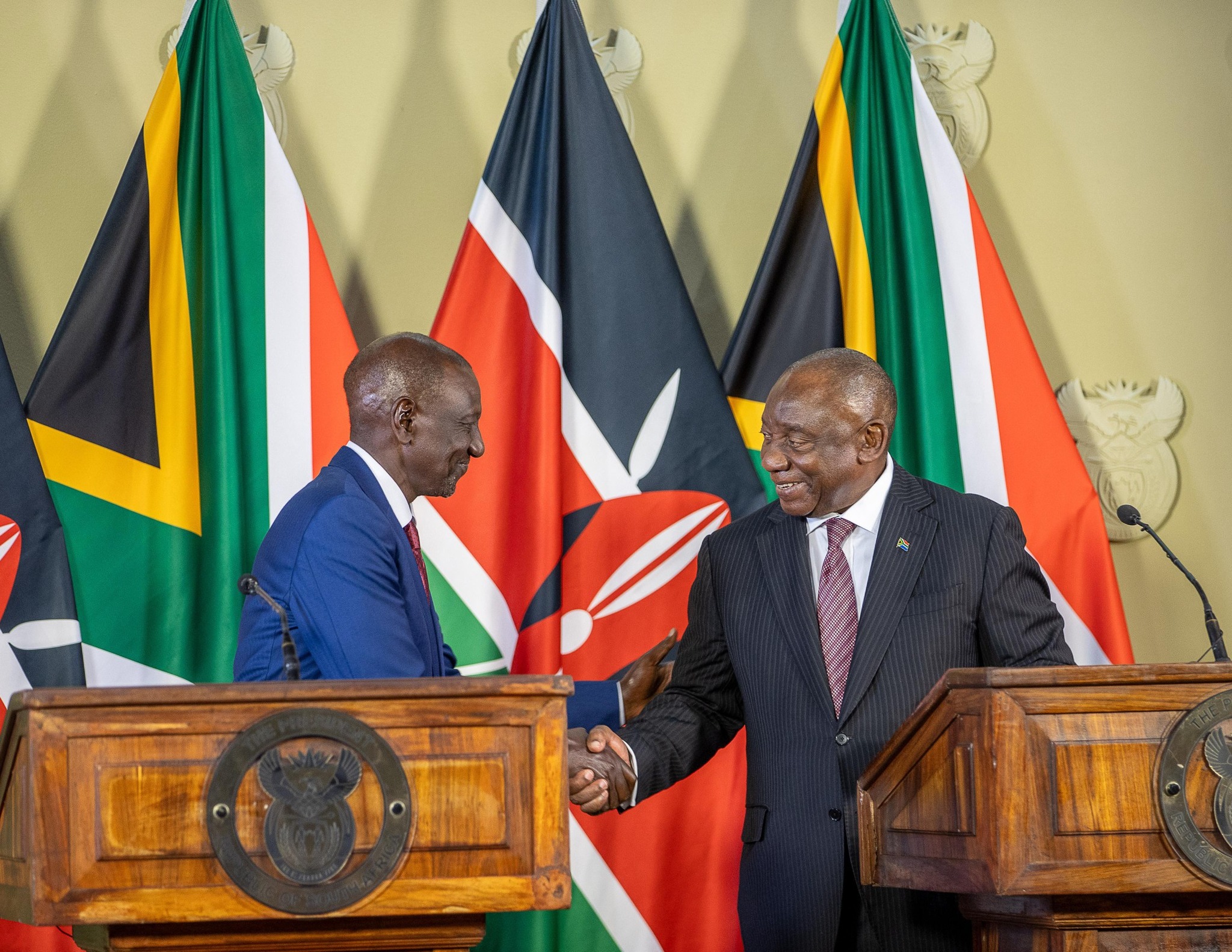
South Africa has agreed to reopen its market to Kenyan tea, coffee and spices, marking the end of a trade dispute that had strained economic relations between two of Africa’s largest economies.
Speaking at a Kenya-South Africa business forum on Thursday, South African President Cyril Ramaphosa said both countries had agreed to move beyond tariff-related disagreements that had led to restrictions on key exports.
“We said, let’s stop this nonsense,” Ramaphosa said, referring to duties imposed on Kenyan tea and coffee after Nairobi introduced tariffs on South African steel imports.
The move is expected to provide a boost to Kenya’s tea sector, one of the country’s most important export industries. Kenya’s tea industry generated approximately $1.7 billion in total value in 2025, with exports accounting for the bulk of earnings.
The country remains one of the world’s leading exporters of black tea, supplying markets across Africa, Europe, the Middle East and Asia.
A push for stronger intra-African trade
Ramaphosa argued that trade disputes should not be allowed to undermine broader economic cooperation among African nations, particularly at a time when governments are seeking to expand intra-African trade under the African Continental Free Trade Area (AfCFTA).
“Let’s bring down the deficit between us. We should not behave like some big countries in the world that punish other countries because of disparities in tariffs,” he said, in remarks widely interpreted as a criticism of the growing use of tariffs in global trade disputes.
The breakthrough comes as Kenya and South Africa seek to deepen commercial ties and unlock new opportunities for businesses operating across the continent.
Trade tensions between the two countries have periodically flared in recent years over market access and tariff policies, creating uncertainty for exporters and investors.
By reopening its market to Kenyan tea, coffee and spices, South Africa is signaling a renewed commitment to strengthening economic integration and reducing barriers to trade within Africa, a key objective of the continent’s push toward a more unified market.
The development is also expected to strengthen trade flows between East and Southern Africa, while offering Kenyan exporters improved access to one of the continent’s most advanced consumer markets.