Kenya’s creative industry is set for a major overhaul after President William Ruto announced a new digital system for managing artists’ royalties, aimed at ensuring creators receive direct and transparent payments for their work while closing gaps that have allowed exploitation in the past.
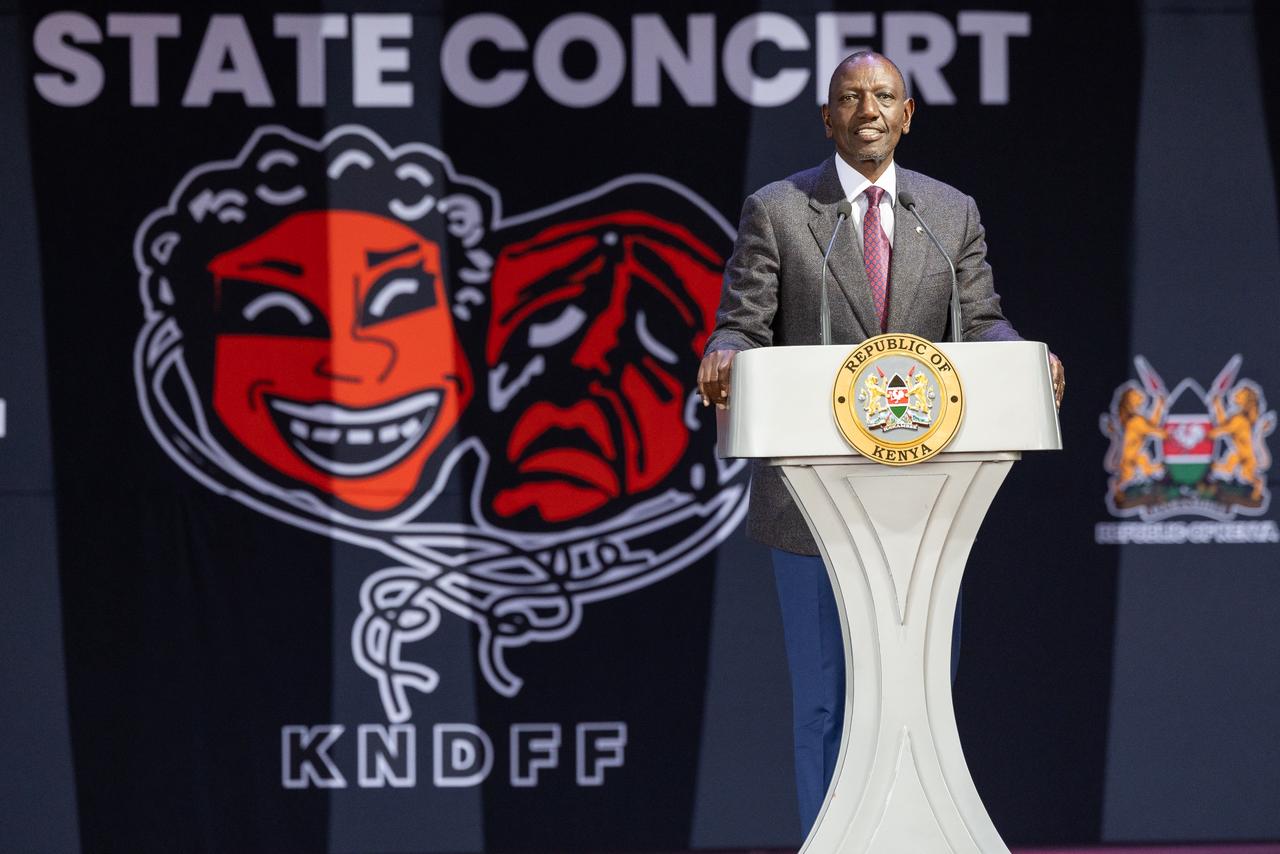
The President said the reforms are part of a wider transformation of the sector into a structured part of the economy, speaking on Friday during the Kenya National Drama Festival State Concert held at State House, Nairobi, where school performances showcased the country’s young talent.
Ruto said the new royalty system will rely on a transparent digital platform that will make it easy to track how much money is collected and how it is shared among stakeholders in the creative value chain.
“Today, we are going to ensure that the collection of royalties happens on a transparent platform, so that it is possible to know how much money has been collected,” he said.
He added: “The process should be open to everyone, and it should also be possible to track how the funds have been distributed among all stakeholders.”
He stressed that the reform is meant to restore fairness in the sector, saying artists should remain at the centre of all earnings from their work and not be sidelined by middle actors.
“It is my position that the rightful owners of royalties are the artists—not the collectors or any other parties.”
He also called for openness and accountability across the entire system, saying: “artists deserve full transparency. Royalties must be collected openly, tracked clearly, and distributed fairly—because the true owners of that money are the artists, not the collectors.”
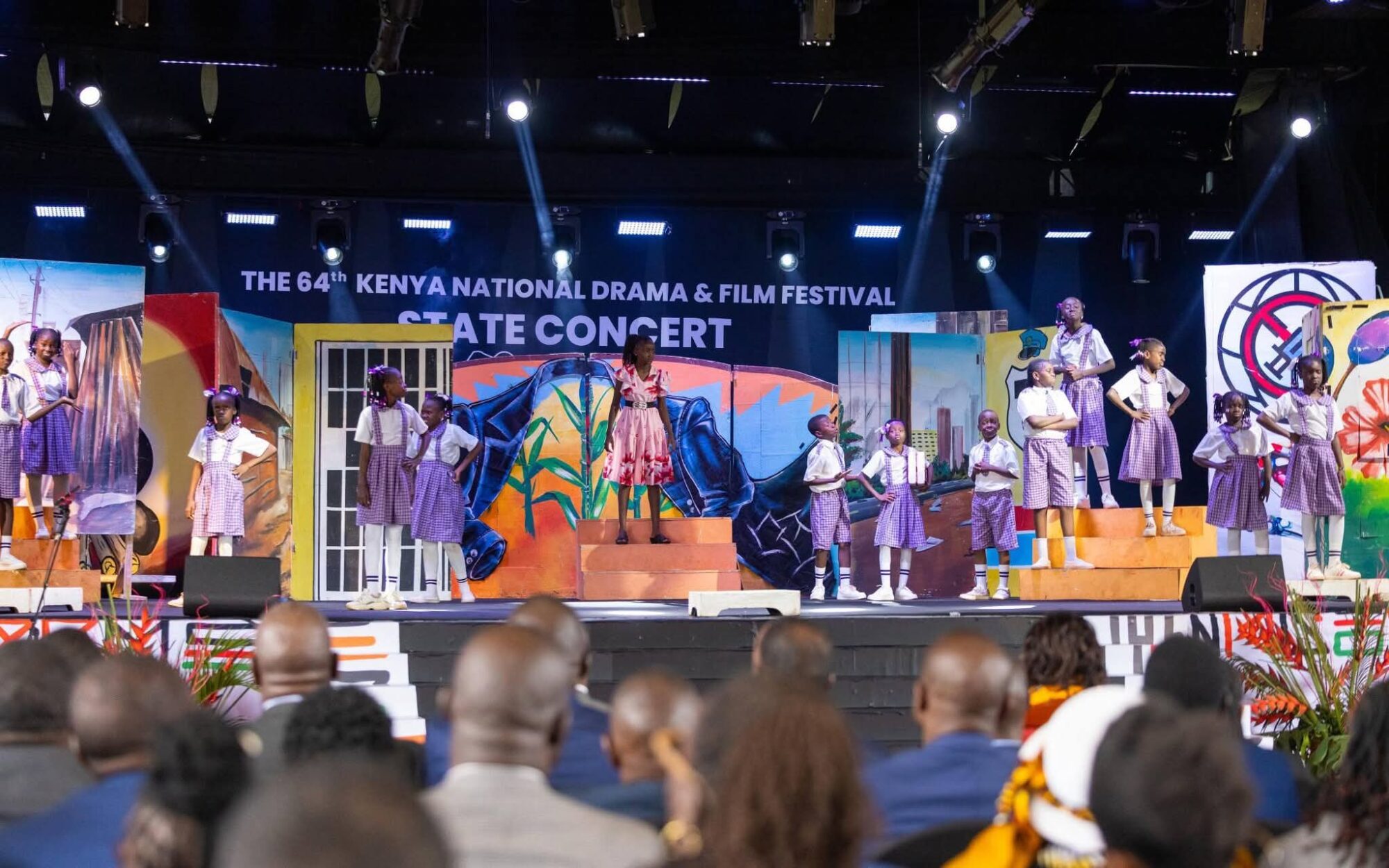
School kids performing during the 64th Kenya National Drama and Film Festival State Concert at State House, Nairobi on April 17, 2026. PHOTO/PCS
Ruto said past weaknesses in royalty management had left many creatives underpaid despite their work generating significant revenue, a situation the government now seeks to correct through digital tracking and stronger oversight.
At the same time, the President outlined broader plans to expand Kenya’s creative economy through legal and institutional reforms, anchored by the Creative Economy Bill 2026 currently before Parliament.
“The Creative Economy Bill, 2026, now before Parliament, will anchor the creative sector by establishing a fund to support creatives, expanding access to financing, and creating institutions to professionalize the industry,” he said.
He added that the Bill will also enable the government to back major creative productions, saying the country must invest in telling its own stories at a larger scale.
“It will also enable the government to invest in large-scale productions, because telling our own stories at scale is no longer optional, it is an imperative necessity,” he said.
Ruto noted that the global creative space has expanded rapidly through platforms such as YouTube, TikTok, Instagram and Facebook, allowing artists to earn directly from audiences without relying only on traditional distribution systems.
He encouraged young people to take advantage of digital opportunities, saying technology has opened global markets that were previously out of reach for many creators.
The President also revealed a pilot programme linking schools and the Kenya Institute of Curriculum Development to creative monetisation systems, saying it will help learners identify and benefit from their talents at an early stage. He added that the model will later be expanded to counties and grassroots levels, and eventually extended to sports and science fairs.
He further said creative subjects including drama, film and arts have now been fully integrated into the Competency Based Education system, making them part of formal learning pathways rather than optional activities.
Ruto also announced plans to involve content creators in government communication, saying ministries will be required to allocate part of their budgets to digital platforms that shape public engagement. He said the government is working toward a policy where at least 30 percent of state advertising is directed to creatives, backed by monthly reporting to ensure compliance.
On education-related arts funding, he said the government will introduce more predictable budget allocations for national cultural festivals through the Ministry of Education. He noted that this will help stabilize drama, film and arts programmes, especially those linked to schools and national events.
He added that creative arts will now be fully recognized in national budgeting systems following their formal integration into the education framework, ensuring consistent support for festivals and related activities.
Ruto also said ongoing digital reforms, including the migration of music royalty collection and distribution to the eCitizen platform, are intended to improve transparency and accountability. He explained that the system will allow artists to monitor collections and payments, reducing inefficiencies and ensuring fair distribution of earnings.
He praised the performances at the festival, describing them as “world class,” and said Kenya has strong potential to become a global leader in arts and culture if talent is properly nurtured through policy, funding and investment.
He urged young people to embrace creativity, unity and innovation, saying the youth remain central to building a competitive creative economy that can generate jobs and income.
He added that stronger funding systems, digital platforms such as eCitizen, and improved institutional support will help position the creative sector as a key driver of national development.