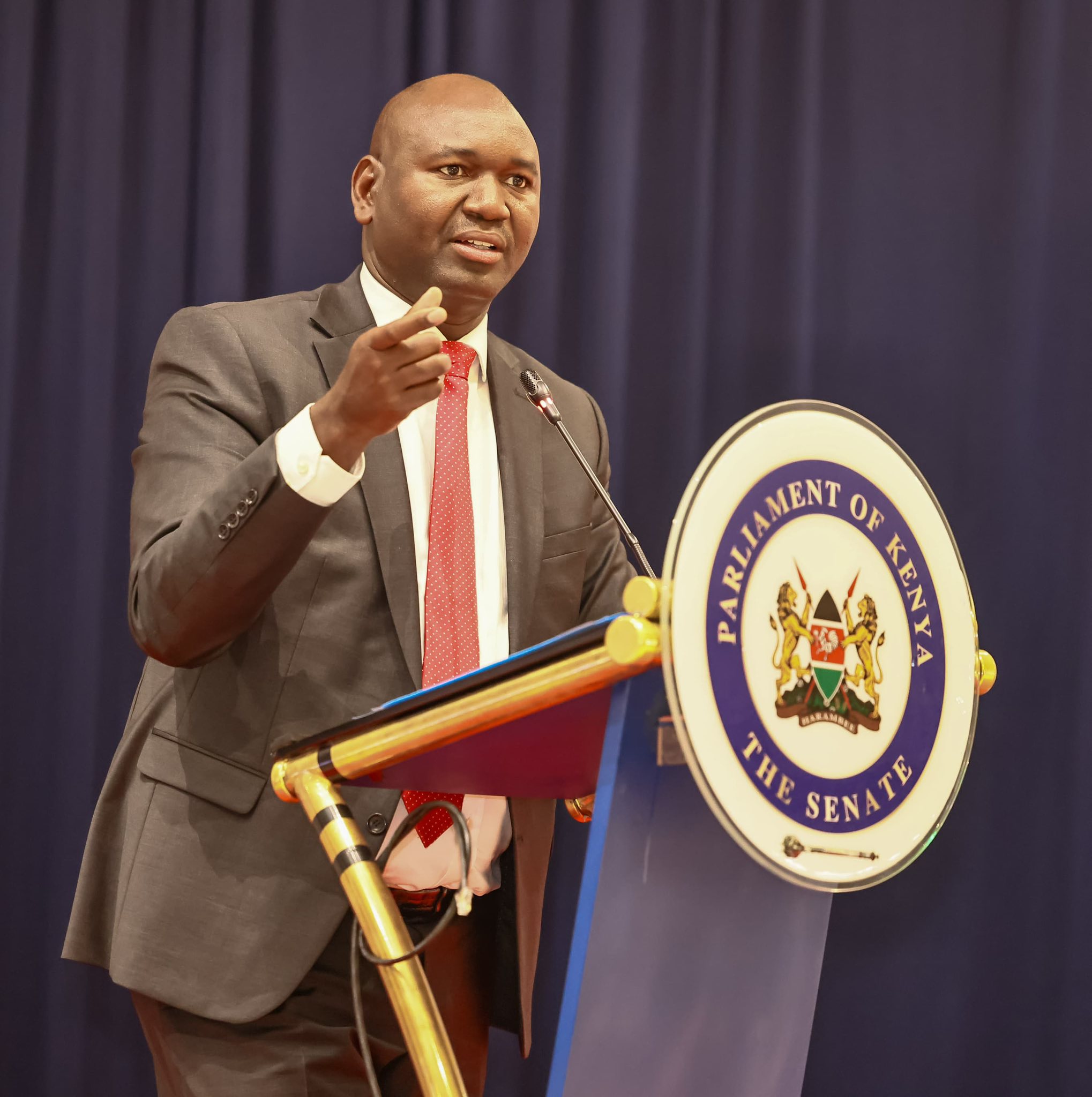
Education Principal Secretary Julius Bitok has opposed the punishment of entire classes over cases of examination cheating.
Speaking on Tuesday, March 3, the PS noted that responsibility has shifted in recent years and called for a fair system that protects blameless students.
“Cheating has moved from learners to teachers but I agree that we should not punish innocent students for a mistake of one or two students. The system should be able to identify the culprits without penalizing the innocent,” he said.
Meanwhile, Bitok reassured parents and school administrators that the government remains committed to funding education despite concerns over delayed disbursements.
He noted that engagements with key institutions were ongoing to safeguard capitation funds and enhance budgetary allocation to the education sector.
“Free primary education policy is intact. We are in conversation with Treasury to ensure that the full amount of capitation is released to our schools. We are also in discussion with Parliament to try and increase the allocation to Ministry of education,” he added.
On digital transformation in schools, Bitok outlined measures the Ministry is taking to integrate technology into learning institutions across the country.
He revealed that the rollout of a national digital system and distribution of devices was underway to strengthen digital learning infrastructure.
“The Ministry of Education is doing everything possible to ensure that there is digital learning in our schools. We are rolling out Kenya Education Management Information System (KEMIS), that will connect all our education institutions and aid digital learning. We are also rolling out a program under World bank where we are distributing 25,000 laptops to all primary and Junior schools around the country,” he further said.
Bitok also addressed concerns about teacher distribution and staffing levels, noting disparities between urban and rural areas.
“The national ratio of teachers to students is 1:26; in Kakamega it is 1:31. Majority of our teachers want to be stationed in urban areas. They want to teach in schools within posh areas and that is the problem. We must distribute teachers fairly around the country,” he explained.