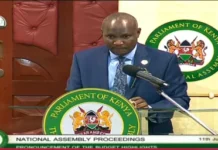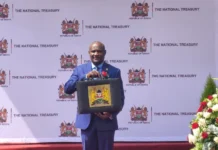








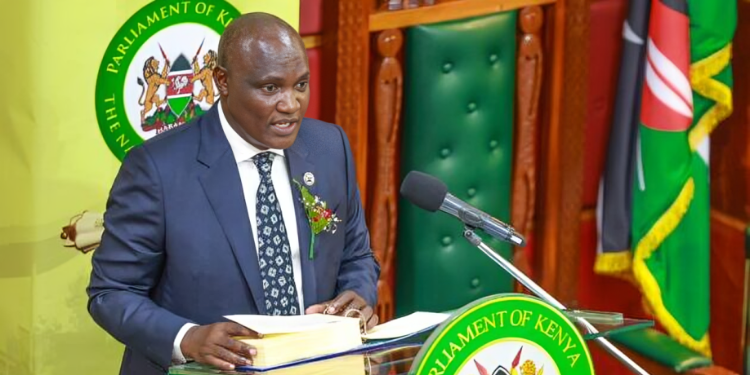
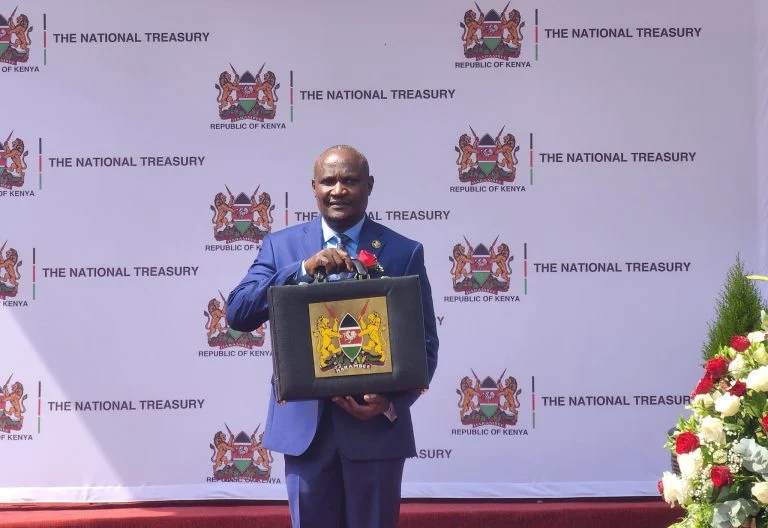
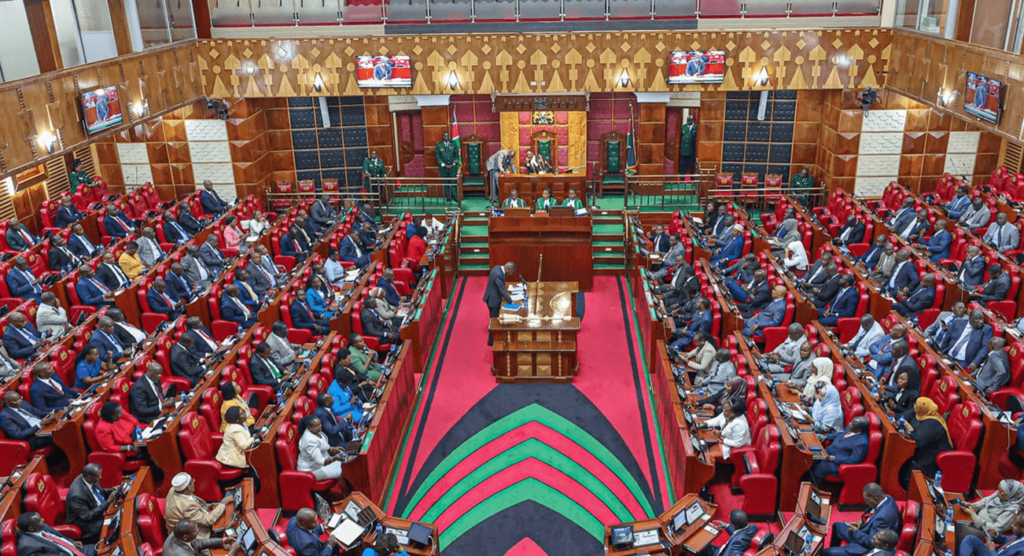
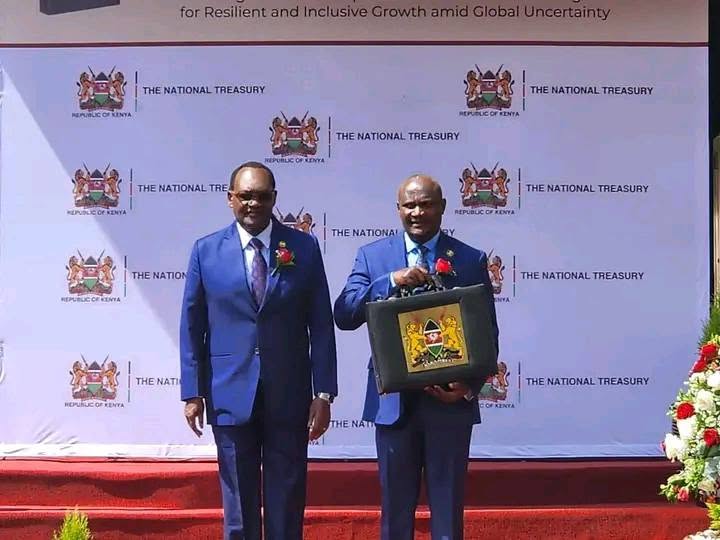
Treasury Cabinet Secretary John Mbadi has unveiled a Ksh 4.82 trillion budget for the 2026/2027 financial year, with the government banking on higher tax collections and changes in tax laws to finance its spending plans.
Mbadi presented the budget in Parliament at a time when escalating conflict in the Middle East has disrupted global markets, raising concerns over rising fuel prices, supply chain disruptions, and increased pressure on the cost of living in many countries, including Kenya.
Presenting the budget on Thursday, June 11, 2026, Mbadi said the government will focus on increasing revenue faster than expenditure as part of efforts to reduce the budget deficit and keep public debt under control.
The budget is themed “Sustaining the Bottom-Up Economic Transformation Agenda for Resilience and Inclusive Growth Amid Global Uncertainties.”
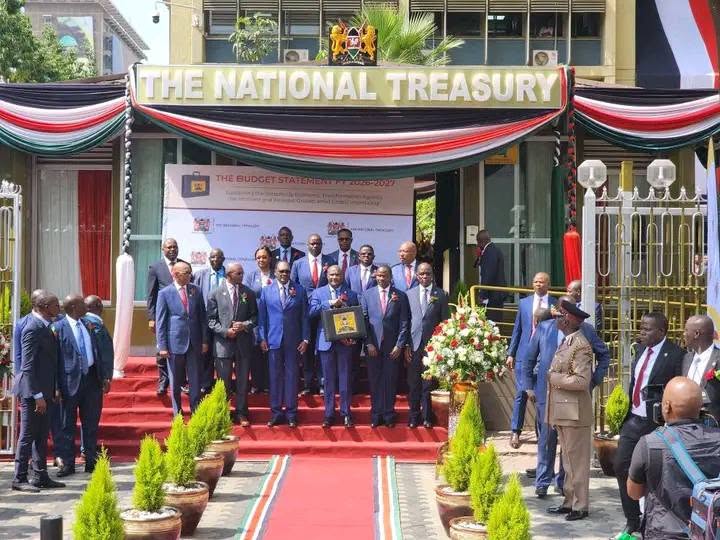
Mbadi Unveils New Tax Measures in Ksh 4.8 Trillion Budget
To support the ambitious spending plan, the National Treasury has proposed several amendments under the Finance Bill 2026, including changes to tax laws, tax procedures and excise duty regulations.
The proposed measures are expected to generate an additional Ksh 120.3 billion in revenue.
The government plans to collect Ksh 2.99 trillion in ordinary revenue during the next financial year, representing a 7% increase from the current year.
Among the key tax categories expected to bring in more revenue are income tax, excise duty, VAT and import duty.
Excise duty collections are projected to increase by 18% to Ksh 382.2 billion, making it one of the fastest-growing revenue streams.
Income tax collections are expected to rise by 9% to Ksh 1.38 trillion, while import duty revenues are projected to increase by 12%.
The Treasury is also targeting Ksh 829.2 billion from Value Added Tax (VAT), representing a 7% increase from the current financial year.
Relief Measures for Consumers and Farmers
Despite seeking higher tax revenues, the government has maintained several measures aimed at easing the cost of living for Kenyans.
Mbadi noted that VAT on fuel was reduced from 16% to 8% earlier this year, a move aimed at lowering fuel prices and reducing transport and energy costs.
The government will also continue implementing targeted fuel subsidies to cushion consumers from sudden price increases.
In the agriculture sector, the fertilizer subsidy programme has been increased to Ksh 18 billion, while a new seed subsidy programme has been introduced to boost food production and improve farmers’ earnings.
The budget also proposes changes to the fuel levy allocation. The share of the levy allocated to the Road Annuity Fund has been reduced from Ksh 3 to Ksh 1.50 per litre.
The remaining amount will be redirected towards settling pending bills in the roads sector.
Marginalized Regions Set to Benefit in the Budget
Counties and marginalised regions are also set to benefit from several allocations contained in the budget.
The government has set aside Ksh 10.25 billion for the Equalisation Fund, which supports the provision of essential services such as roads, water and healthcare in historically underserved areas.
Mbadi also announced that the national government has fully funded its share of the County Aggregation and Industrial Parks programme covering 34 counties.
Under the arrangement, each county government will contribute Ksh 250 million towards the projects, which are expected to create jobs and support local manufacturing.
The Treasury has further been directed to review agreements between the national and county governments to ensure county finances remain sustainable and do not face funding shortfalls.
Education, Health, and Security Take Largest Share
Education remains the biggest beneficiary of government spending, receiving Ksh 781.4 billion.
Part of the allocation will be used to confirm 20,000 intern teachers to permanent and pensionable terms.
The health sector has been allocated Ksh 175.5 billion, including Ksh 19.1 billion for the Primary Healthcare Fund to support the government’s Universal Health Coverage programme.
The government has also increased funding for security agencies, including the National Intelligence Service and the Department of Defence, citing emerging global and regional security threats.