Stacy Boit,

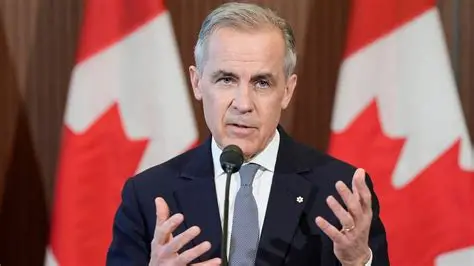
Canadian Prime Minister Mark Carney has ruled out making concessions ahead of further talks with the US while a top US official warned the two countries remain fundamentally misaligned on trade.
The comments come at a tense time for US-Canada trade and as the future of a major North American free trade deal remains unclear.
On Wednesday, US trade representative Jamieson Greer told Congress that Canada is “doubling down on globalisation when we’re trying to correct for the problems of globalisation”.
Carney meanwhile told reporters that Ottawa will not let the US “dictate the terms” of free trade negotiations. “It’s not a case where there is someone making demands, and a supplicant,” he said.
He added: “We have a negotiation, we can come to a mutually successful outcome – it will take some time.”
Canada, the US and Mexico are staring down a deadline of 1 July for a mandatory review of the free trade agreement between the three countries, called the USMCA.
Mexico is due to start formal bilateral negotiating rounds with the US in May, Greer’s office has said. He and Mexican President Claudia Sheinbaum met on Monday.
Formal talks between the US and Canada have yet to get underway, though trade officials are in communication.
Canada has already made some concessions to the US. In June, it dropped a planned tax on big US technology firms after the Trump administration flagged it as an irritant.
On Tuesday, Carney convened a new advisory committee on Canada-US trade relations, with their first meeting set for next week.
Jean Charest, a former Quebec premier who sits on the new advisory committee, told broadcaster Radio-Canada that the US is looking for “a lot of concessions from Canada” before bilateral talks began.
The US has raised several trade irritants it hopes to see resolved.
Among them is the decision by most Canadian provinces to remove US liquor from shelves due to tariffs.
“There are two countries that have retaliated economically against the United States in the past year – the People’s Republic of China and Canada,” Greer said.
He warned there may “have to be an enforcement action to deal with this issue”.
Another is dairy quotas, a longtime irritant for the US, which were brought up again by US commerce secretary Howard Lutnick on Wednesday, who told a Senate committee that Canada treats US dairy farmers “poorly”.
Last year, President Donald Trump accused Canada of charging “extraordinary tariffs to our dairy farmers – up to 400 per cent”.
Canadian dairy is produced under a supply-management system, which strictly controls production quotas and imports to support local farmers.
Some US dairy products are allowed in Canada tariff-free up to a certain limit. That limit has never been reached, however, according to the US Department of Agriculture.
Dominic LeBlanc, the Canadian minister responsible for US-Canada trade, told the Globe and Mail newspaper on Wednesday that dairy is off the table.
“We’ve been very clear with them,” LeBlanc said.
But he added that Ottawa has “solutions to most of what the Americans raise”.
“We’re happy to sit down and go through that with them. But it’s got to be part of a larger, more comprehensive arrangement,” he said.
Greer also said that he hopes that negotiators can “get over the hump on some of these things to have significant talks”.
It is unclear when Canadian and American negotiators will formally sit down to hash out these disagreements, though both have signalled it is unlikely a deal will be reached by the July deadline.
Still, Greer, speaking to the House committee, said the US goal with USMCA talks is to “make sure that we maintain market access into these countries”.
In the case a deal is not reached, the USMCA could be subject to annual reviews until it is set to expire in 2036.