By Andrew Kariuki
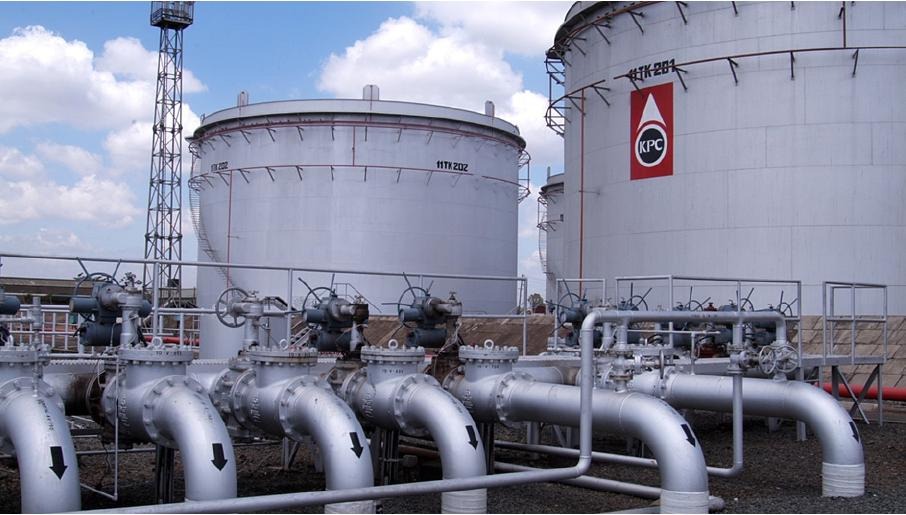
The National Treasury has revoked the designation of Kenya Pipeline Company (KPC) as a state entity, marking a major shift in the management and oversight of one of the country’s key strategic assets.
In a legal notice dated April 22, 2026, Treasury Cabinet Secretary John Mbadi formally removed KPC from the list of National Government Entities under the Public Finance Management Act, Cap. 412A.
“IN EXERCISE of the powers conferred by section 4 (1) of the Public Finance Management Act… the Cabinet Secretary for the National Treasury revokes the declaration of Kenya Pipeline Company as a National Government Entity,” the notice states in part.
The move follows the company’s successful Initial Public Offering (IPO) at the Nairobi Securities Exchange (NSE), through which the government offloaded a 65% stake to individual and institutional investors.
Trading of KPC shares commenced on March 10, 2026, on the Main Investment Market Segment, effectively transitioning the company from full state ownership to a publicly traded entity.
The government now retains a 35% stake, a significant reduction from the 100% ownership it held since KPC’s establishment in 1973.
As part of the transition, the company was converted into a public limited company in January 2026 and is now officially operating as Kenya Pipeline Company PLC.
Despite the ownership changes, the company’s core mandate remains unchanged. According to the Gazette notice, KPC will continue to provide “efficient, reliable, safe, and cost-effective” transportation of petroleum products across East Africa.
However, the revocation of its state entity status has far-reaching implications. KPC will no longer fall under the strict financial oversight framework governing government institutions, nor will it be bound by the Public Finance Management regulations applicable to fully state-owned entities.
The Treasury maintains that the privatisation process complied with the Privatisation Act, 2025, the Capital Markets Act, and relevant listing and disclosure regulations, providing a clear legal basis for the transition.
The development comes at a time when Kenya is grappling with rising fuel prices, with the government attributing part of the pressure to global factors, including instability in the Middle East.
At the same time, concerns have been raised over the influence of entities linked to KPC within the fuel supply chain, with critics cautioning that control over critical infrastructure could have implications for domestic pricing dynamics.
The shift to a publicly owned structure is expected to redefine how KPC operates, with increased market accountability replacing direct state control.