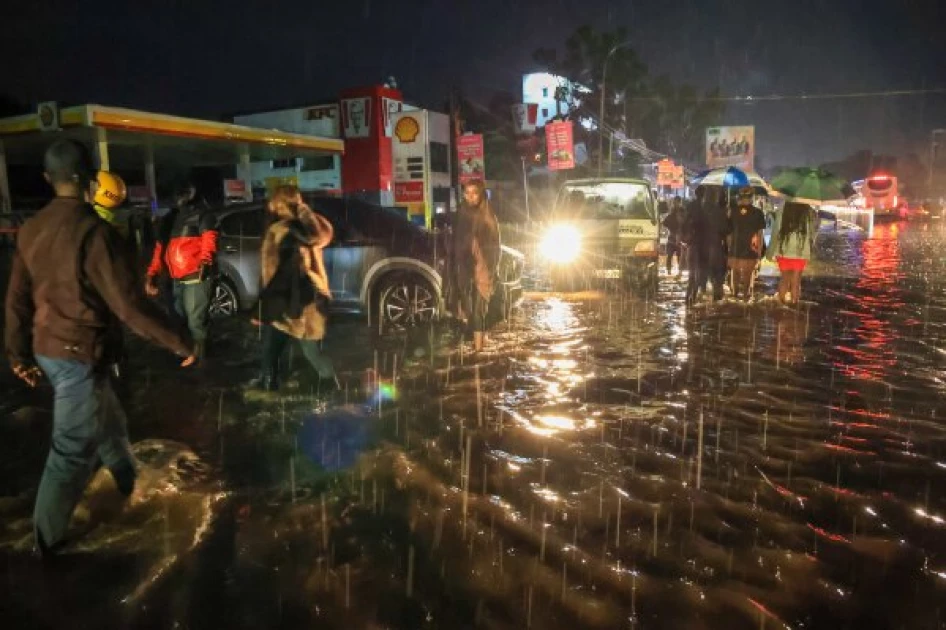
The Kenya Meteorological Department has issued a heavy rainfall advisory for Nairobi, warning that ongoing rains are expected to intensify across several parts of the county.
In the advisory, the weatherman warned that heavy downpours would start on Friday, March 20 at 3pm through to Monday, March 23, at 9am, with rainfall expected to peak over the weekend.
During this period, Met said the rains would be the heaviest between Friday and Sunday, and then it will begin decreasing on Monday.
“Ongoing rainfall across several parts of Nairobi County is forecast to intensify, with accumulations exceeding 20 mm in 24 hours from March 20 to March 23 2026. The heaviest rainfall is most likely between 20 March and 22 March 2026, gradually decreasing in intensity on 23 March 2026,” the statement read.
The department noted that while rainfall is expected to ease toward the end of the period, showers will continue affecting various areas of the county.
Areas expected to be most affected include Westlands, Dagoretti South, Dagoretti North, Kibra, Lang’ata, Kamukunji, Mathare, Roysambu, Ruaraka and parts of Makadara.
The advisory also highlighted heightened risk in informal settlements and low-lying zones along the Nairobi River, Ngong River and Mathare River, as well as the Central Business District and sections of the Nairobi Expressway.
Residents in the affected areas have been urged to remain vigilant and take precautionary measures to avoid potential dangers associated with the heavy rains.
“Residents of the affected areas in Nairobi County are strongly advised to stay alert for potential floods, flash floods, and poor visibility on roads and pathways. Flood waters can appear suddenly even in locations that have not experienced heavy local rainfall, especially in downstream and low-lying zones,” the statement added.
The Met department further cautioned against risky behaviour during storms, including walking or driving through moving water and seeking shelter under trees or near metallic surfaces due to the risk of lightning strikes.
It also advised residents to keep away from flooded areas that may be in contact with electrical installations and to unplug non-essential electrical devices during storms.