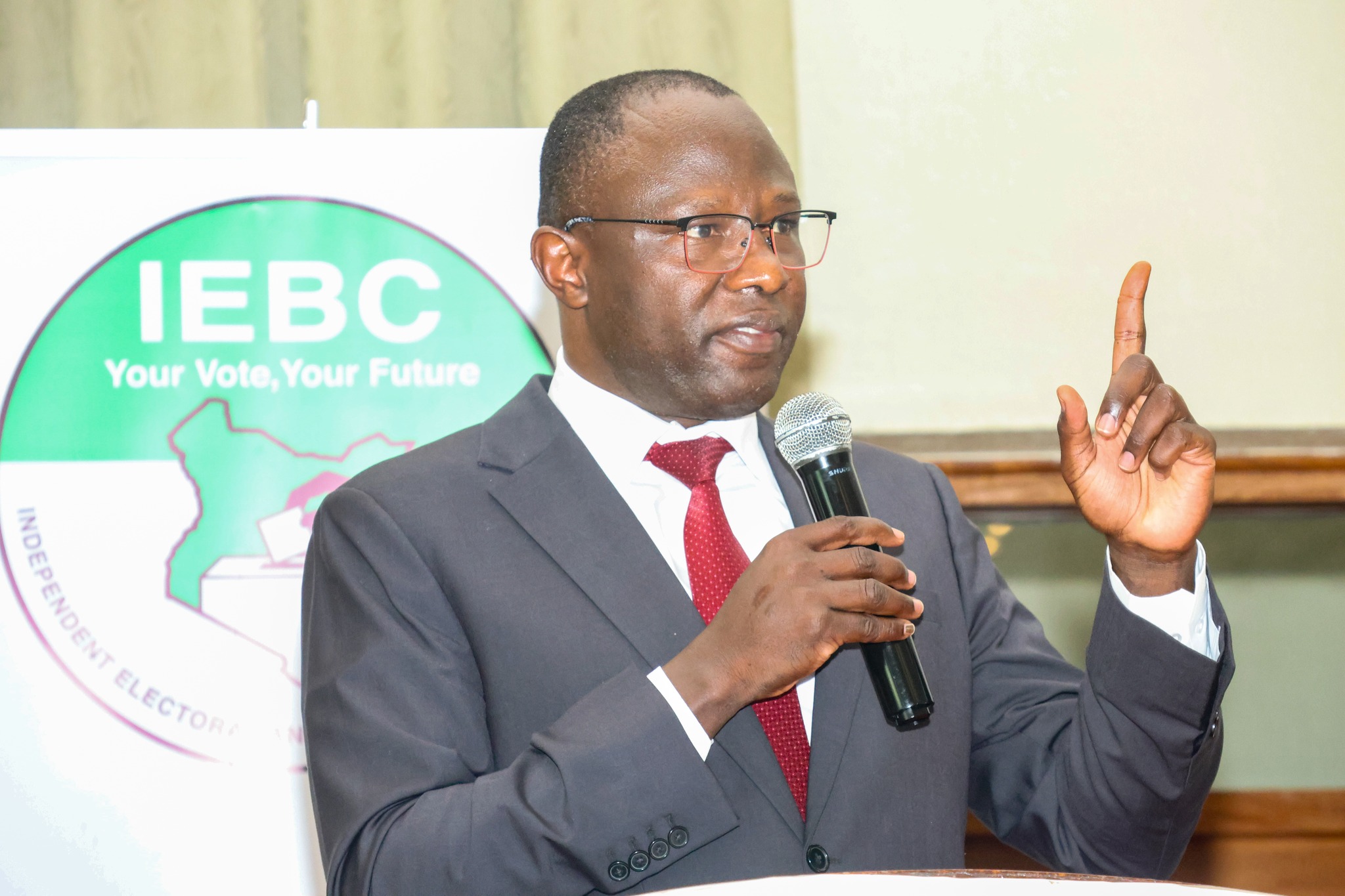
The Independent Electoral and Boundaries Commission (IEBC) has dismissed as false reports circulating on social media alleging that its Chair, Erastus Edung Ethekon, has resigned.
Claims had emerged online suggesting that Ethekon had stepped down through a letter purportedly gazetted on Wednesday, April 1.
The reports quickly spread across various platforms, however, the commission has moved to clarify the situation and reassure Kenyans.
In its response, IEBC cautioned the public against relying on unverified information and urged citizens to depend only on its official communication channels for credible updates.
“Fake news alert. For accurate and up-to-date information , please visit our official website (iebc.or.ke) and our verified social media platforms (@IEBCKenya),” the commission said.

At the same time, IEBC dismissed claims of registering 36,942 new voters on Monday, March 30.
In a statement, the commission flagged the digital card circulating on social media platforms as fake, calling on members of the public not to fall for the fake reports online.
IEBC advised Kenyans to visit its official website and verified social media platforms for accurate information on the ongoing Enhanced Continuous Voter Registration (ECVR) exercise.
“Fake news alert. Beware of fraudulent Enhanced Continuous Voter Registration (ECVR) Data on social media. For accurate and up-to-date information on ECVR, please visit our official website (https://iebc.or.ke) and our verified social media platforms (IEBC Kenya),” the commission stated.

Prior to that, IEBC had raised concerns over the resurgence of early political campaigns across the country.
Speaking in an interview on Tuesday, March 24, IEBC Commissioner Alutalala Mukhwana noted that the issue of premature campaigning has already been addressed by the courts, making its continued practice unlawful.
He stressed that early campaigns compromise the ability of voters to make independent and unbiased decisions.
“In June 2025, the High Court had an opportunity to pronounce itself on the issue of early campaigns. Their verdict was simple: that early campaigns are unlawful, early campaigns deny Kenyans the freedom to make their choices in an impartial manner,” he said.
Mukhwana warned that early campaigns not only tilt the playing field in favor of those who begin campaigning prematurely but also intensify the risk of hate speech.
“Early campaigns compound the problem of hate speech; they make the field unfair because when you start campaigning early, you have a head start,” he added.
Mukhwana highlighted the need for stronger legal measures to address the growing challenge of early campaigning.
“Early campaigns distort the fairness in election competition and direct the Attorney General to come up with a legislative framework that will curb early campaigns,” he further said.