Sponsored Ad

Ad 1
Ad 2
Ad 3
Ad 4
Ad 5
Ad 6
27.3 C
Kenya
Saturday, May 9, 2026
Home Blog Page 417

Obama addresses racist video shared by Trump depicting him as an ape

BBC -Former US President Barack Obama has indirectly addressed a racist video posted on President Donald Trump’s social media, telling a podcast host that the “shame” and “decorum” that once guided public officials is now lost.

The offensive video included a clip depicting Obama and his wife Michelle as apes, which drew widespread criticism from Democrats and Republicans.

The White House initially defended the video, calling backlash “fake outrage”. The post was later blamed on a staff member and deleted.

Obama spoke to liberal podcaster Brian Tyler Cohen, who asked the first black US president about the tone of political discourse. Cohen cited Trump’s post among several recent controversies.

The clip – set to the song The Lion Sleeps Tonight – was included at the end of a video Trump’s Truth Social account shared containing unfounded claims about voter fraud in the 2020 election.

The post led to outrage from politicians, including from senior members of Trump’s Republican party.

Senator Tim Scott – the only black Republican senator – described it as “the most racist thing I’ve seen out of this White House”.

The clip recalls racist caricatures comparing black people to monkeys, and appears to have been taken from an X post shared by conservative meme creator Xerias in October.

Trump has told reporters that he “didn’t see” the part of the video that showed the Obamas.

“I didn’t make a mistake,” he told reporters when asked whether he planned to apologise.

The 47-minute podcast featuring Obama was released on Saturday. The episode begins with the host asking him to comment on US “discourse”, which he says “has devolved to a level of cruelty that we haven’t seen before”.

Cohen notes claims by the White House that the “victims” of Immigration and Customs Enforcement (ICE) are “domestic terrorists”, and adds “just days ago, Donald Trump put a picture of you, your face, on an ape’s body”.

Obama responds by saying: “It’s important to recognise that the majority of the American people find this behaviour deeply troubling.

“It is true that it gets attention. It’s true that it’s a distraction.”

But Obama said that while travelling around the US, he found himself meeting people who “still believe in decency, courtesy, kindness”.

“There’s this sort of clown show that’s happening in social media and on television,” he continued.

“And what is true is that there doesn’t seem to be any shame about this among people who used to feel like you had to have some sort of decorum and a sense of propriety and respect for the office, right?

“That’s been lost.”

He did not mention Trump by name in his response.

During the interview, Obama spoke about a range of issues. He praised protesters who have peacefully organised against immigration operations, discussed electoral redistricting and talked about his presidential library, which is due to open in Chicago next year.

Another Shutdown, Another Paycheck Missed for TSA Agents

WASHINGTON

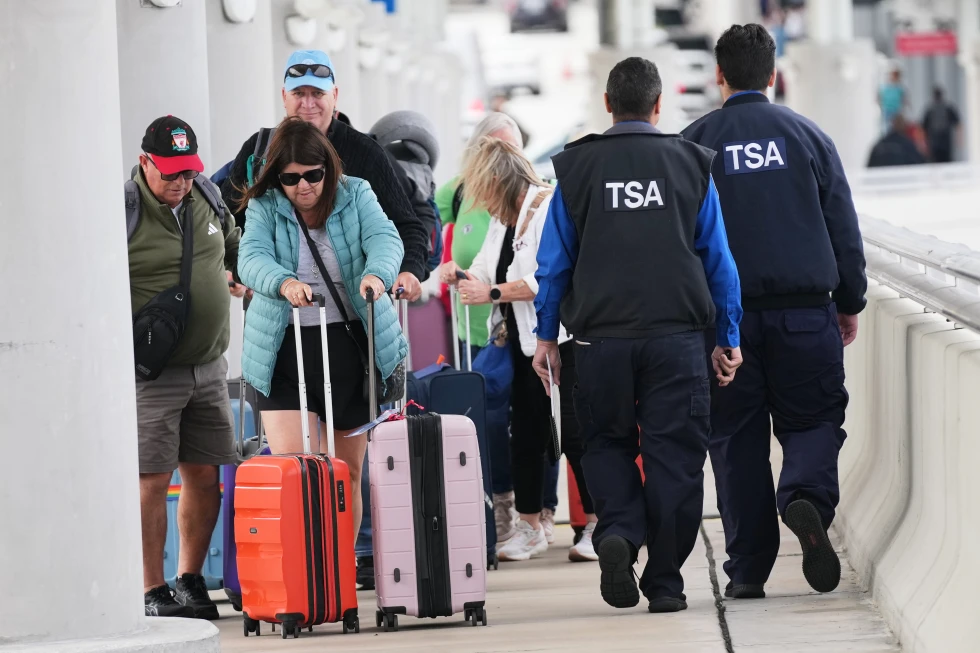
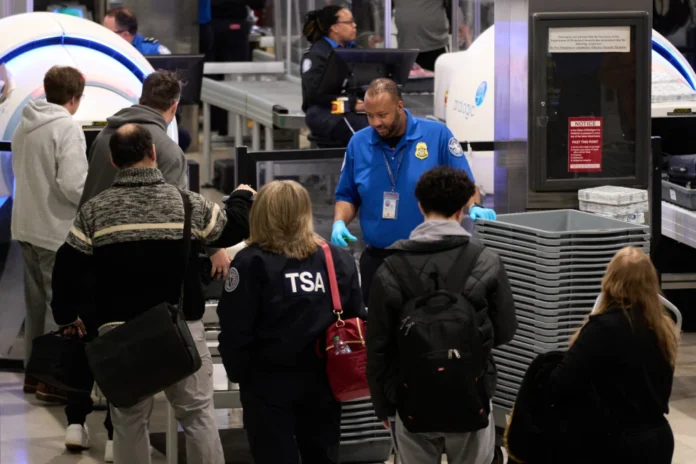
At airports across the country, the security lines are still moving. The bags are still being screened. But the people doing that work are doing it for free.

A shutdown of the U.S. Department of Homeland Security took effect early Saturday, leaving the Transportation Security Administration—the agency responsible for screening millions of passengers—without approved funding.

TSA officers are now expected to report to work without pay while lawmakers remain deadlocked over the agency’s annual budget.

For travelers with upcoming flights, the news carries an uncomfortable echo. Last year’s 43-day government shutdown brought historic flight cancellations and grinding delays to the nation’s airports.

And while TSA officers worked through that record closure—which ended Nov. 12—aviation experts warn that this time could be different.

Trade groups representing the U.S. travel industry and major airlines are already sounding the alarm. The longer the DHS appropriations lapse, they caution, the longer security lines could grow.

A workforce stretched thin by uncertainty is one missed paycheck away from calling in sick—and a system built on vigilance cannot afford to run on empty.

For now, the officers keep scanning, patting down, and waving travelers through. But with no pay and no end in sight, the strain is building behind the checkpoint.

By James Kisoo

Accountant linked to Ksh.16 million Sacco fraud arrested

An accountant has been arrested over an alleged fraudulent scheme that led to the loss of more than Ksh.16 million at a Sacco. 

The Directorate of Criminal Investigations (DCI) on Sunday said Amos Fikiri Ruwa, a former accountant at the Sacco, was apprehended on Saturday, February 14, 2026, and is currently in custody awaiting arraignment.

His arrest comes weeks after his alleged accomplice, Mohamed Abdulrahman, was arrested on January 17, 2026, and presented before the court.

According to detectives from the Banking Fraud Investigation Unit (BFIU), Ruwa allegedly masterminded the scheme by authorising cheque transactions using members’ accounts in collusion with external accomplices.

Investigations revealed that the Sacco initially lost Ksh.6,852,166 through fraudulent transactions, followed by an additional Ksh.9,161,000, bringing the total loss to Ksh.16,013,166.

Detectives allege that Ruwa conspired with Abdulrahman, a businessman and director of a construction company, whose fraudulent cheques were reportedly cashed. The funds were diverted into various unsuspecting members’ accounts.

A total of 58 cheques were fraudulently issued, cleared and deposited into accounts belonging to Abdulrahman and other unsuspecting members, the DCI reports.

Forensic analysis further linked Ruwa to alleged forged withdrawal slips that enabled him to siphon portions of the funds. Investigators noted that the cheques in question were never recorded in the cheque ledger, pointing to a deliberate attempt to conceal the transactions.

Trump’s Renovation of 100-Year-Old Golf Course Sparks Lawsuit

WASHINGTON

Two golfers have sued the federal government to stop the Trump administration from overhauling a more than 100-year-old public course in the nation’s capital, arguing the project violates an 1897 law that created the park for the people—not a presidential renovation.

The lawsuit, filed Friday against the Department of the Interior, targets the planned reconstruction of East Potomac Park and its historic golf course.

The complaint alleges the administration is violating environmental laws and polluting a site listed on the National Register of Historic Places.

At the heart of the legal challenge is a roughly 130-year-old congressional act that established the park “for the recreation and the pleasure of the people.” The golfers argue that the Trump administration’s overhaul betrays that mandate.

The suit is the latest in a growing series of legal battles challenging President Donald Trump’s ambitious efforts to reshape public spaces in Washington.

An avid golfer himself, Trump has also set his sights on renovating a military golf course just outside the city that has been used by presidents for decades.

Late last year, a group of preservationists filed a similar lawsuit seeking to block the administration from demolishing the White House’s East Wing to build a $400 million ballroom.

The East Potomac Park project, critics say, represents another front in the same fight: a president determined to leave his mark on the capital’s landscape, and citizens determined to protect public land they say belongs to everyone.

By James Kisoo

No Glitter? No Problem: This Brazilian Carnival Embraces the Mud

PARATY, Brazil

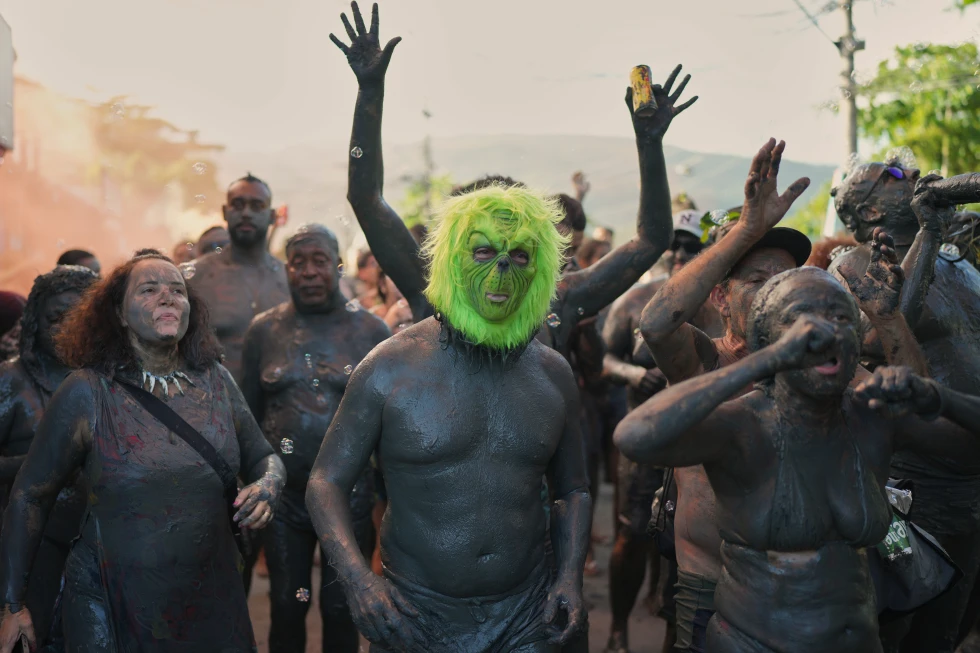
While most of Brazil celebrates Carnival in sequins and sparkle, revelers in the colonial town of Paraty take a different approach: they cover themselves in mud.

At Jabaquara Beach, partygoers wade into the silty shallows, slather themselves in gray sludge, and emerge as a unified, unrecognizable mass.

They dance, drum, and chant caveman-like “Uga! Uga!” calls under the blazing sun.

“Everyone is kind of the same,” said Charles Garcia Pessoa, a 37-year-old entrepreneur. “Those who have money and those who don’t: everyone comes here to jump into the mud.”

The tradition started in 1986 when friends playing in the mangroves realized the mud made them anonymous.

They paraded into the city’s historic center and caused a stir. Nearly 40 years later, the muddy march endures—a leveling ritual in a festival known for flashy excess.

By James Kisoo

Packed Schedule Leaves Eileen Gu Feeling “Disappointed” and Alone

LIVIGNO, Italy

Eileen Gu wants to do something no other female freeskier is attempting at these Winter Olympics. She says the sport’s governing body is making her pay for it.

After qualifying for the big air final on Saturday, the 22-year-old star revealed her frustration with a packed schedule that threatens to shortchange her preparation for her third and final event: the halfpipe.

Gu, who already secured silver in slopestyle earlier this week, is the only woman in the field entered in all three freeski disciplines—slopestyle, halfpipe, and big air. But the ambitious program comes with a logistical catch.

Monday’s big air final directly overlaps with the first of three scheduled halfpipe training sessions, meaning Gu will miss a critical block of practice time that her competitors in that event will receive.

She reached out to the International Ski and Snowboard Federation (FIS), which sets the Olympic schedule, seeking a solution.

Gu emphasized she wasn’t asking for special treatment, just the same amount of practice as everyone else. She even proposed compromises, such as joining the snowboarders for their halfpipe training sessions.

The response, she said, was a firm no.

FIS told her it could not alter the schedule for a single athlete, citing fairness to the rest of the field.

“I’m disappointed in FIS,” Gu told reporters, her voice carrying the weight of an athlete caught between ambition and bureaucracy.

“I think the Olympics should epitomize aspiration, and I think being able to do something that’s beyond the ordinary should be celebrated instead of punished.”

For Gu—one of the biggest names at the Milan Cortina Games—the scheduling conflict turns what should be a showcase of versatility into a test of endurance.

While her rivals in the halfpipe will have hours of training to fine-tune their runs, she will be competing for a medal in big air, then scrambling to catch up.

By James Kisoo

Prevc Soars to Gold in Thrilling Large Hill Final

PREDAZZO, Italy

The rain fell in sheets. The floodlights cut through the mist. And at the top of the towering hill, Domen Prevc stood alone with a simple, childlike instruction for himself: Go play.

Trailing the leader heading into his final jump of the men’s large hill competition, the Slovenian did not calculate distances or obsess over standings. He did what he has done since he was a boy learning to love the flight—he let go.

“I was just here to play and enjoy it, have fun,” Prevc said. “I was like, ‘Do your thing, do your best, enjoy the jump and feel the air.'”

What he felt was perfection.

With a flawless takeoff and a serene soar through the damp Italian sky, Prevc landed a staggering 141.5 meters (464 feet)—a new hill record.

The jump vaulted him from second place to first, securing his second gold medal of the Milan Cortina Olympics and etching his name into a new chapter of his family’s storied legacy.

On a rainy, cold night that tested the nerve of every competitor, Japan’s Ren Nikaido claimed silver—his third medal of these Games—while Poland’s Kacper Tomasiak took bronze, his second.

All three are first-time Olympians, but while they celebrated firsts, Prevc celebrated a familial breakthrough.

He became the fourth Prevc sibling to win an Olympic medal when he stood atop the podium in the mixed team event on Tuesday alongside his sister, Nika. That moment was historic in itself: the first brother and sister to win ski jumping medals at the same Olympics.

But Saturday night was different. This was his alone.

The individual gold had long eluded the Prevc clan. Older brothers Peter and Cene had collected silvers and bronzes in years past, building the family into Slovenian royalty.

Domen entered as the favorite—the reigning world champion on the large hill, the dominant force of the season, the man who already owned the distance record.

Now, he owns the gold.

And in the quiet before his championship-winning flight, the 25-year-old found it not by gripping tighter, but by letting go—reaching back to the joy of a child who simply loves to fly.

By James Kisoo

Brazil’s First Winter Gold Is a Victory That Transcends the Podium

RIO DE JANEIRO

Just as Brazil draped itself in sequins and surrendered to the rhythm of Carnival, a new sound cut through the revelry: the swish of skis on snow, carrying a nation to an unprecedented victory.

Alpine skier Lucas Pinheiro Braathen roared down the slope on Saturday to capture Brazil’s first-ever gold medal at the Winter Games.

In a single, electrifying run, he did more than claim the top prize; he made history for an entire continent. It is the first Winter Olympic gold for any country in South America.

The victory arrived on the opening day of Carnival, the pre-Lenten festival where city streets typically belong to dancers and drummers. But for a moment, even the intoxicating pulse of the “greatest show on Earth” had to share the spotlight.

Pinheiro Braathen’s golden run bumped Carnival coverage from the top slots on major news websites, as a tropical nation stopped to celebrate a champion born of both snow and sun.

Known affectionately in Brazil as “O cara do ski”—the skiing dude—the 25-year-old has long been a novelty in a country without a single ski lift. Now, he is a national treasure.

His victory marks the latest in a string of recent triumphs on the global stage, achievements that many Brazilians feel are finally giving the nation its long-overdue acclaim.

In Campinas, a bustling city in Sao Paulo state where Pinheiro Braathen spent childhood vacations and still has relatives, the celebration was deeply personal. Among the revelers was Thiago Varella, a 41-year-old radio host and self-confessed sports fanatic.

“This has become one of my top five Brazil gold medals in Olympic history, no doubt,” Varella told The Associated Press, his voice buzzing with the kind of pride usually reserved for a World Cup victory “He will be our skiing dude forever.

Even people who don’t understand the sport now will come to admire his story and his Brazilian-ness.”

For now, as the Carnival parades continue and the nation dances into the night, they do so with a little extra glitter—the golden gleam of a champion who proved that in Brazil, the spirit of victory can thrive anywhere, even on ice.

By James Kisoo

Dozens killed in fresh Nigeria attacks

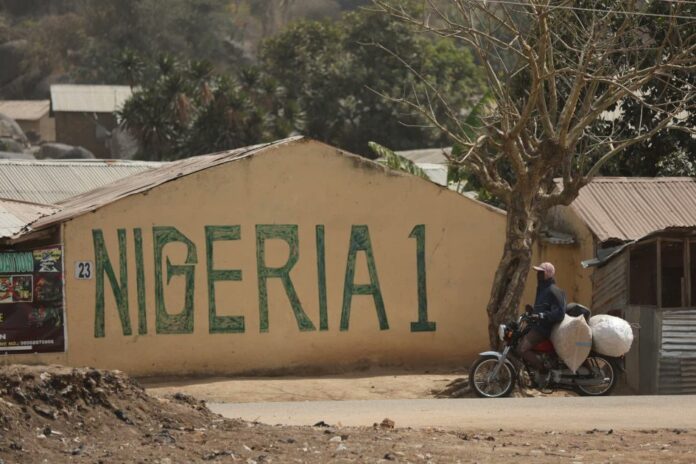
Motorcycle-riding gunmen swept into three villages in a central region of Nigeria, shooting dead or cutting the throats of at least 46 people, a humanitarian source told AFP on Saturday.

The violence again threw the spotlight on Nigeria’s efforts to contain security threats — efforts that have been strongly criticised by US President Donald Trump.

A security report seen by AFP said the attackers had used “41 motorcycles, each carrying two or three men”.

The three villages targeted by the gunmen are part of the Borgu local government area in Niger State, on the border with Kwara State, where jihadists killed more than 160 people in an attack earlier this month.

The bloodiest attack happened in the village of Konkoso, where at least 38 people were shot dead or had their throats slit, the humanitarian source told AFP, speaking on condition of anonymity.

Most of the homes in the village were burned down and apart from those already counted as dead, “other bodies are being recovered,” the source said.

A resident of Konkoso told AFP the gunmen had first attacked the nearby village of Tungar Makeri before heading to his village.

A spokesman for Niger State police told AFP that six people had been killed in Tungan Makeri when the gunmen overran the village at around 6:00 am.

Fears death toll could rise

“Some houses were set on fire and an as-yet undetermined number of people were abducted,” and officers were seeking information about the attacks on the other two villages, the police spokesman.

The Konkoso resident said his nephew was among those killed in Konkoso.

“They burned a lot of houses and abducted four women,” he said.

“After Konkoso, they went to Pissa, where they set a police station on fire and killed one person.”

“At the moment, many people are missing,” he said.

The border between Kwara and Niger states is home to the Kainji Forest, a known haven for bandits and jihadists.

Nigeria has been grappling with a jihadist insurgency in the northeast for over 16 years.

But it has also had to deal with an ongoing conflict between farmers and herders in the north-central region, separatist violence in the southeast, and kidnappings for ransom in the northwest.

Jihadist groups are also active in the northwest and west-central regions, emboldened by growing insecurity in neighbouring countries Niger and Burkina Faso.

Numerous armed gangs, known locally as “bandits”, are also wreaking havoc — looting villages, killing people and kidnapping residents.

Jihadists killed more than 160 people in an attack on the village of Woro in Kwara State at the beginning of February.

The al-Qaeda affiliated Group for the Support of Islam and Muslims (JNIM) claimed its first attack on Nigerian soil, near Woro, last October.

Religious and community leaders from the Borgu area last week called on President Bola Tinubu to establish a military base in the area to put an end to the recurring attacks, Nigerian media reported.

The US military coordinated with Nigerian authorities to carry out airstrikes in Sokoto State on December 25, targeting what Washington said were Islamic State jihadists.

Trump has claimed Christians in Nigeria are being “persecuted” and victims of a “genocide” being perpetrated by “terrorists”.

Abuja and most experts have rejected the claim, saying the violence is indiscriminate, affecting Christians and Muslims alike.

2 killed, 19 kidnapped in Boko Haram attack in Cameroon

Boko Haram Militants raided four communities in Cameroon’s Far North Region late Friday, killing two people and abducting 19 others, security sources said on Saturday.

The attackers struck villages in the Blangoua district while residents were asleep, opening fire indiscriminately, a regional security official told Xinhua on condition of anonymity.

“The terrorists attacked villagers using guns, machetes, knives and clubs. Those who tried to flee were caught and killed on the spot,” the official said.

Women and children were among those abducted, the source added, noting that the army has launched a search-and-rescue operation.

Boko Haram has been active in the region since 2014 and is very notorious for targeting civilians, often kidnapping victims for ransom.

This follows after another raid on February 2, 2026 that targeted a hospital in Cameroon’s Far North.

During the raid, at least two civilians were killed after the terror group Boko Haram raided three communities in Cameroon’s Far North region, security sources.

The attack took place overnight into Monday in Ldama, M’lay and Houlva villages. A military official in the region said that the militants attacked a hospital, killing a security guard and a nurse.

“They also injured some civilians. People are terrified. We have deployed troops to the localities for investigation, and our brave soldiers are working to capture these terrorists,” the official who asked not to be named told Xinhua.

Create a free account, or log in.

Gain access to read this content, plus limited free content.

Yes! I would like to receive new content and updates.

Sponsored Ad

Ad 1
Ad 2
Ad 3
Ad 4
Ad 5
Ad 6