Sponsored Ad

Ad 1
Ad 2
Ad 3
Ad 4
Ad 5
Ad 6
23.2 C
Kenya
Thursday, June 11, 2026
Home Blog Page 4825

New Global Alliance To End AIDS In Children By 2030

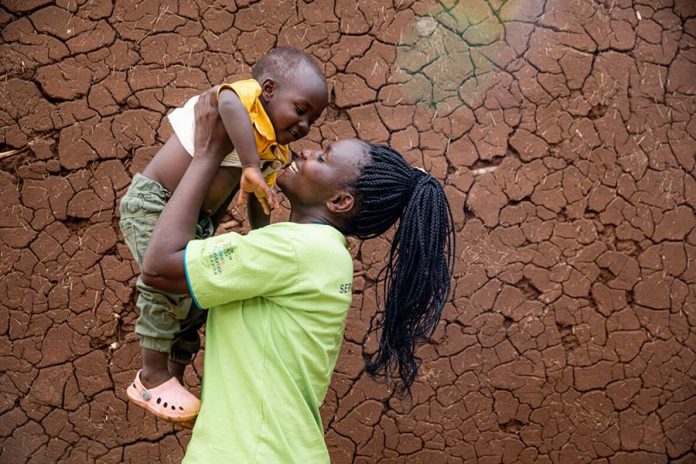
Phiona (38 yrs) at her home with her youngest son. Phiona works as a Peer Mother at the Rugaga IV Health Centre in Uganda. Through the program, a number of peer mothers have been trained, mentored and facilitated to support mothers to deliver HIV free babies. The peer mothers provide counseling, psychosocial support to HIV positive mothers and their spouses, “It makes it easier for people when you visit them, you talk to them and introduce yourself and share your own story with HIV. It brings trust between you and that person. It gives them assurance that you are all the same, it makes the fear go away and gives them courage to keep coming to you for assistance.” - Phiona. Through the breakthrough partnership, UNICEF and its partners have helped train primary health care and community service providers in case finding, using multiple approaches, to reach undiagnosed children of all people living with HIV. 21 April 2022 photo: UNICEF/Schermbrucker

Globally, only half (52%) of children living with HIV are on life-saving treatment, far behind adults where three-quarters (76%) are receiving antiretrovirals, according to the data that has just been released in the UNAIDS Global AIDS Update 2022.

Concerned by the stalling of progress for children, and the widening gap between children and adults, UNAIDS, UNICEF, WHO and partners have brought together a global alliance to ensure that no child living with HIV is denied treatment by the end of the decade and to prevent new infant HIV infections.

The new Global Alliance for Ending AIDS in Children by 2030 was announced by leading figures at the International AIDS Conference taking place in Montreal, Canada.

In addition to the United Nations agencies, the alliance includes civil society movements, including the Global Network of People living with HIV, national governments in the most affected countries, and international partners, including PEPFAR and the Global Fund.

Twelve countries have joined the alliance in the first phase: Angola, Cameroon, Côte d’Ivoire, The Democratic Republic of the Congo (DRC), Kenya, Mozambique, Nigeria, South Africa, Tanzania, Uganda, Zambia, and Zimbabwe.

Consultations by the alliance have identified four pillars for collective action:

1)     Closing the treatment gap for pregnant and breastfeeding adolescent girls and women living with HIV and optimizing continuity of treatment;

2)     Preventing and detecting new HIV infections among pregnant and breastfeeding adolescent girls and women;

3)     Accessible testing, optimized treatment, and comprehensive care for infants, children, and adolescents exposed to and living with HIV;

4)     Addressing rights, gender equality, and the social and structural barriers that hinder access to services. 

Addressing the International AIDS Conference, Limpho Nteko from Lesotho shared how she had discovered she was HIV positive at age 21 while pregnant with her first child.

This led her on a journey where she now works for the pioneering women-led mothers2mothers programme. Enabling community leadership, she highlighted, is key to an effective response.

“We must all sprint together to end AIDS in children by 2030,” said Ms. Nteko. “To succeed, we need a healthy, informed generation of young people who feel free to talk about HIV, and to get the services and support they need to protect themselves and their children from HIV. mothers2mothers has achieved virtual elimination of mother-to-child transmission of HIV for our enrolled clients for eight consecutive years—showing what is possible when we let women and communities create solutions tailored to their realities.” 

The alliance will run for the next eight years until 2030, aiming to fix one of the most glaring disparities in the AIDS response. Alliance members are united in the assessment that the challenge is surmountable through partnership.

Kihika Criticizes Move To Deploy GSU In Molo, Kuresoi

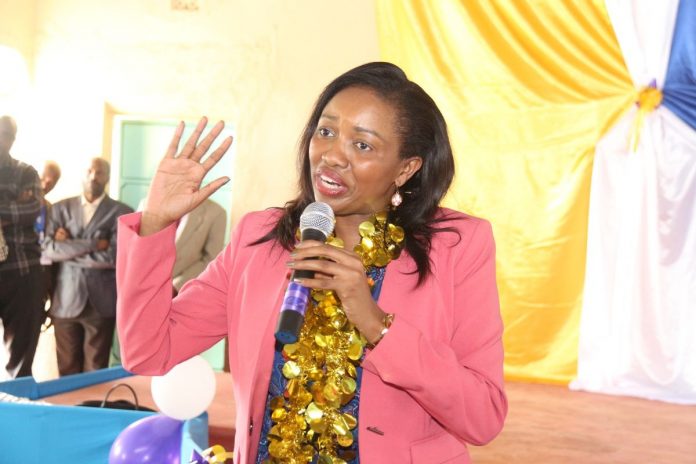
United Democratic Alliance (UDA) Nakuru County gubernatorial aspirant Susan Kihika has claimed that the government’s decision to deploy additional security personnel in Rift Valley areas is intended to suppress voting in UDA strongholds.

Kihika, who commented on her social media page, stated that Nakuru is peaceful and that there is no need for unnecessary deployments.

She accused Interior Cabinet Secretary Fred Matiang’i of sending the GSU to ensure voters did not vote for Kenya Kwanza Alliance presidential candidate William Ruto.

“Ridiculous! Matiangi’s goal is to Create Tension in Nakuru, which is Peaceful. There is no justification for deploying General Service Unit (GSU) to Molo and Kuresoi. His intention is to suppress the vote in our strongholds. The same individuals behind the inciting leaflets are using them as an excuse to deploy GSU! Shameless!” Kihika stated.

Matiangi announced on Tuesday that the decision was reached after a meeting with senior security officials from Rift Valley and that a contingent of General Service Unit (GSU) personnel will be deployed in Eldoret, Kuresoi, and Molo as part of efforts to ensure residents’ safety.

“The GSU officers are not here for any particular aggression but to demonstrate that we are ready to rise up to any challenge that may come up. We are also going to increase surveillance and patrol in the areas,” the CS reiterated.

Al Shabaab Raid Mandera Police Station

On Monday, suspected Al-Shabaab militants attacked Mandera’s Elram base, which is about 10 kilometers from the Somalia border, injuring three Anti-Stock Theft Unit officers.

According to police, the heavily armed militants used six high explosive bombs and PKM rifles in a daring daytime raid around 3 p.m.

The three officers who escaped with multiple injuries were reportedly injured by flying bomb pellets.

“The attack lasted for about thirty minutes after being repulsed by a fierce exchange of fire from the section which was just out on foot patrols,” read a police report.

In order to reinforce the ASTU personnel, a KDF jet fighter from Wajir was dispatched to the area.

The officers who were injured were scheduled to be airlifted to Nairobi for specialized treatment.

The attack came two weeks after three people narrowly escaped death when their vehicle collided with an Improvised Explosive Device (IED) in a suspected Al-Shabaab attack in Mandera’s Wargadud area.

According to police, the victims escaped with minor injuries during the incident, which occurred at Dadach Qatarow on the Wargadud-Takaba road between Ires Kinto and Domog.

Shaban Maalim Alio, 36, suffered a broken left leg; Abdiwahid Gabow Alio, 29, suffered a broken right leg; and Mayow Hussein, 33, was said to have bruises on both hands and legs as well as neck and chest pains.

“It was established that a m/v reg KAK 928N Toyota Landcruiser double white in colour with a green canvas belonging to frontier construction company was being driven from Takaba towards Wargadud and upon reaching the site it ran over an Improvised Explosive Device (IED),” police said on Friday.

Following the attack, the vehicle was partially burned from the front, severely damaging the engine.

Due to their proximity to Somalia, the Al Shabaab militants’ operating base, counties in Kenya’s northeastern region have borne the brunt of the militant attacks.

In recent years, the terror group has primarily targeted security personnel, civil servants, and passenger vehicles in the region, shifting their strategy from direct engagements with security agencies to guerilla-like tactics such as IED planting along routes and attacks on security installations and infrastructure such as communication masts.

Omanyala Sprints Into The Men’s 100m Semi-Finals

Reigning African Champion Ferdinand Omanyala clocked 10.07 seconds to win the men’s 100m qualifying round at the Commonwealth Games in Birmingham, England.

Omanyala overtook Cameroon’s Eseme Emmanuel, who finished second in 10.08 seconds, and Gilbert Hainuka, who finished third, after a slow start.

At the same time, Samwel Imeta, another Kenyan in the race, finished second in his qualifying round with a personal best of 10.12. Australia’s Rohan Browning won the heat in 10.10 seconds.

The top two athletes from each of the ten qualifying rounds have secured spots in the semi-finals, which will take place tomorrow, Wednesday.

Martha Koome Sets Up Nakuru Appellate Court

Chief Justice Martha Koome has announced the establishment of a permanent Court of Appeal bench in Nakuru to address a backlog of litigation from the county and its neighbouring devolved units.

This follows the appointment of seven new Appellate Court Judges, the CJ also stated that the permanent bench at the Nyeri Law Courts, which had been temporarily disbanded due to a lack of Judges, will also be operationalized.

According to Chief Justice Martha Koome,the Court of Appeal as it is currently set up, has fully embraced virtual/remote hearings, electronic filing, and case management systems to serve as many litigants as possible.

Koome also noted that the Judiciary’s ultimate goal under the “Social Transformation through Access to Justice” vision was to have a permanent Court of Appeal in every region of the nation.

The Chief Justice urged the newly appointed Court of Appeal Judges to serve the country with loyalty, integrity, and without fear or favor. During an induction workshop at the Sarova-Woodlands hotel in Nakuru, the Chief Justice asked them to administer justice in a “speedy, accessible, and consistent manner.”

Prosecutor’s Body Held Over Row With Enstranged Wife

The body of former senior prosecutor Fredrick Ashimosi Shitambasi cannot be released by Chiromo Mortuary, according to an injunction issued by a Nairobi court.
The choice was made after his estranged wife filed a lawsuit in an attempt to stop the interment of her ex-husband. She particularly objected to being left out of the process.
Purity Nyawira Mureithi claims in her petition to the court that she and her children were excluded from the plans made by the family of the former state prosecutor to bid him farewell.
Nyawira asserts that she is still the only surviving widow of the deceased even though there is a divorce proceeding at the Chief Magistrate’s chambers.
Edgar Kagoni, the principal magistrate of Milimani Commercial Court, has also certified the application as urgent for a hearing on August 8.
The former legal representative was found dead in his home, Pioneer Estate in Nairobi.

Gachagua: Iam Not A Convict

Rigathi Gachagua, the UDA presidential running mate, has dismissed calls from Azimio presidential candidate Raila Odinga to withdraw from the race.

During an interview on Monday, the Mathira MP stated that he is not a convict and will not resign.

“I have no conviction. I think Raila has lost his senses. Who has been convicted? I have not been convicted of any offence,” he told the Star.

“The constitution is very clear, for you to be barred, you must have been convicted for six months and exhausted all mechanisms of appeal. I have not been convicted.”

He stated that the case before the courts was a civil one between him and the Assets Recovery Agency (ARA), not a criminal one.

Gachagua also stated that he has filed an appeal against the ruling.

Raila said in Machakos on Friday that Gachagua should resign as a result of a court order directing him to hand over Sh200 million to the state.

“Under Section 6 of the Constitution, you cannot contest for presidency or be a presidential running mate if you have been indicted of a crime,” he said. 

“That means Ruto has no running mate because his running mate has been found guilty of one of the most serious economic crimes in the country.”

Raila acknowledged the MP’s decision to appeal, but stated that Gachagua must still step aside pending the decision of the Appellate Court.

“Before he appeals, he is guilty as charged so let him withdraw.”

Gachagua was ordered to forfeit the money after he failed to show any legitimate sources of funds.

ARA had sought the cash’s surrender, claiming it was the proceeds of crime.

It rejected Gachagua’s claims that the Sh200 million came from a seven-year-old tender.

“The allegation that the duo are doing legitimate business and the funds in issue are obtained from legitimate businesses is incorrect, deceitful and a ploy to disguise, conceal and hide the source of the said funds. It’s a classical scheme of money laundering.”

Women Are Better Drivers Than Men – New Research

Women are officially better drivers than men.

New research has concluded that the fairer sex are better at taking back control of modern driverless cars in emergency situations.

The tests showed that females react a lot faster than their male counterparts and display superior control behind the wheel.

The findings concluded that men could need extra software to make sure they drive safely when they drive the cars of the future as their reaction times lag behind the females.

Women’s average reaction times were 2.45 seconds compared with 2.63 seconds for men in the tests – in which participants mimicked taking control of a driverless vehicle to avoid a stationary car.

Dr. Shuo Li, an expert in intelligent transport systems at Newcastle University, said: “Women often do not realise how good they are at driving.

“But our results found they actually perform slightly better.”

Change of Guard: Why East Africa Closely Watches Kenya Elections

1. Participatory politics and term limits

Kenya’s democratic trajectory has always been viewed by east African neighbours as the bellwether for being fairly participatory. The annulment of President Kenyatta’s electoral victory on 1 September 2017 also offered crucial lessons to neighbours.

As court reversed Kenyatta’s win, John Magufuli (Tanzania’s president at the time) had banned all political party activities, ushering in an era of brutal dictatorship. In Rwanda, President Paul Kagame had just been declared winner with 98.8% of the votes.

In neighbouring Burundi, President Pierre Nkurunziza had controversially extended his stay in power through a “third term”. Over in Uganda, President Yoweri Museveni was just clocking 31 years in office and showing no signs of letting go. The other East African Community member state, South Sudan, was still embroiled in a civil war.

Only Tanzania has enjoyed periodic transitions, albeit through the one-party dominant system.

Kenya has experienced many democratic transitions since the reintroduction of multiparty politics in 1992. Despite its ethnic cleavages, Kenyan elections have been competitive. In 2002, there was a transition from the independence party, the Kenya African National Union, to the opposition National Alliance Rainbow Coalition.

Since the 1990s, Kenya has been the only country in east Africa to transfer power smoothly from a ruling party to the opposition.

2. Political and economic network

Kenya has always projected itself as a regional economic hub and an international political player. It has the largest economy in east Africa, almost double that of Tanzania and nearly three times that of Uganda.

Tanzania, which previously had lukewarm relations with Kenya, has benefited immensely from rapprochement between Presidents Samia Hassan and Kenyatta. Recent reports indicate that bilateral trade hit US$905.5 million in the first 11 months of 2021 as their trade relations improved.

Over the years, Kenya has been Uganda’s biggest trading partner. Uganda accounted for 29.3% of Kenya’s exports to Africa in 2020. Kenya’s exports to the East African Community increased from Ksh140.4 billion ($1.28 billion) in 2019 to Ksh158.3 billion (US$1.44 billion) in 2020.

Kenya has also maintained close economic ties with Rwanda and South Sudan.

3. Transit trade

The landlocked countries in the region rely heavily on Kenya’s seaport and transport corridor. The maritime port of Mombasa serves parts of Tanzania, Burundi, Democratic Republic of Congo (DRC), Rwanda, South Sudan and Uganda. These countries often follow very keenly how elections unfold in Kenya.

Kenya’s bungled 2007/8 political transition came as a surprise to many regional traders whose transit goods were destroyed along the transport corridor. The Northern Corridor and the Lamu Port-South Sudan-Ethiopia-Transport Corridor that run through Kenya are designed as key commercial arteries for landlocked countries in the region.

4. Regional integration

In February this year, presidential candidate William Ruto made a diplomatic gaffe when he said the DRC did not have a single cow. He was speaking about Kenya’s dairy and beef investments.

The storm that erupted showed how quickly regional relations could sour. The remark epitomised the low priority assigned to the east Africa policy agenda among Kenyan presidential candidates – Raila Odinga included.

The DRC became the seventh member of the East African Community in April this year. President Kenyatta has steered the regional agenda, including the admission of the DRC. In June he hosted the east African leaders to discuss the tensions between Rwanda and the DRC. He has also taken political leadership in stabilising Somalia and South Sudan.

The neighbouring states may wish to have as Kenya’s next president a person who continues to seek solutions to the conflicts of the region.

5. An ally as Kenya’s president

Who do the east African leaders want to be Kenya’s next president? Today’s personal friendships can be used to advance or safeguard bilateral interests tomorrow. In July 2021, Museveni hosted Ruto as the chief guest when laying the foundation of a new vaccine facility. Museveni’s action was interpreted as an endorsement for Ruto.

Museveni has had a tepid relationship with Odinga since 2007 when Odinga’s supporters uprooted the railway line during the post-election violence, disrupting exports to Uganda. In an apparent attempt to heal old wounds and appear even-handed, Museveni hosted Odinga in May this year. The two later said they discussed ways of strengthening relations between Kenya and Uganda.

Odinga had flown to Uganda from South Sudan, where, as the African Union High Representative for Infrastructure Development, he had gone to commission a 3.6km bridge that will connect Juba to the rest of the east Africa region. He was received there by President Salva Kiir. At the event, Odinga talked of his presidential bid, pledging to reopen the troubled border with South Sudan and prioritise construction of a Mombasa-Juba highway, if he won the 9 August elections. President Kenyatta had in May 2018 appointed Odinga as his special envoy to South Sudan in the effort to reconcile Kiir and his vice-president, Riek Machar.

In Tanzania, the late Magufuli was a key ally of Odinga’s, thanks to a friendship forged when both were works ministers in their countries. Magufuli’s support for Odinga against Kenyatta in the 2013 and 2017 polls led to a perfunctory relationship with Kenyatta and tense relations between the two countries.

His successor Hassan was quick to restore friendly terms. But Tanzania, just like Rwanda and Burundi, has not shown any signs of leaning towards one candidate. Many Tanzanians have however been excited by rank outsider George Wajackoyah’s eccentric promises.The Conversation

Nicodemus Minde, Adjunct Lecturer, United States International University – Africa, United States International University

This article is republished from The Conversation under a Creative Commons license. Read the original article.

Burundi At 60 Is The Poorest Country: What Went Wrong?

Burundi, which marked 60 years of independence on 1 July 2022, ranks as the poorest country on the planet in terms of GDP per capita. This must be understood in the light of a history punctuated by political upheavals. Until 1996, the country lived to the rhythm of coups, massacres and political assassinations – before plunging into a long civil war.

Peace was eventually restored in 2005. However, the country returned to authoritarian governance in 2015. Since then, the UN has noted progress but continues to denounce the political violence that plagues the country.

How did Burundi come to this? Why is change so slow to arrive?

I have studied the politics and economies around the Great Lakes region for more than 40 years – including the links between governance and poverty. The countries that form the region are Burundi, Rwanda, Democratic Republic of Congo and Uganda. , Democratic Republic of Congo and Uganda. It’s my view that the end of the Belgian and British colonial empires upset the political, economic and social frameworks of the two nations formed out of the former Ruanda-Urundi colonial entity.

Present-day Rwanda and Burundi served as reservoirs of labour for the exploitation of the wealth of the vast agricultural and mining areas of the Belgian Congo to the west and the British colonies in the east. Refocused within their borders following independence in the 1962, they were reduced to small, overcrowded and landlocked micro-states.

Burundi is a country familiar with various military regimes since independence. These regimes have succeeded in appropriating state resources while ordinary citizens – mostly rural farmers – have borne the brunt of the civil war.

The divide that has emerged between military elites and “people of the hills” – as rural farmers are commonly referred to – runs deeper than ethnic and regional differences. The peasantry still provides almost all the resources of the party-state. But most of the agrarian policy decisions are taken without consultation, including at the grassroots levels where party delegates, often peasants, do as directed.

The state has imposed itself as the exclusive economic operator. Civil servants and party cadres programme and direct investments. Ordinary people are for the most part powerless.

Nkurunziza’s missed opportunity

Following the gradual return of peace nearly 20 years ago, Pierre Nkurunziza was elected president in 2005. Drawn from the majority Hutu ethnic group, Nkurunziza ended 25 years of pro-Tutsi military regimes. The minority Tutsi make up 14% of the population and the Hutu 85%. In the next five years, the president and his party – the National Council for the Defense of Democracy – Forces for the Defense of Democracy (CNDD-FDD) – went about consolidating power.

Hopes for stability were stronger at the next election in 2010. For the first time in the country’s history, voters were called upon to vote at the normal end of an electoral cycle. CNDD-FDD secured another mandate thanks to a divided opposition and the charismatic personality of the incumbent president, who enjoyed massive support from rural populations.

A party that had managed to reconcile ethnic divisions and to integrate the armed forces with former rebels now had a resounding national mandate.

Unchallenged, Nkurunziza concentrated power in his hands under a de facto one-party state. A youth militia loyal to his party kept an eye on dissent among local populations and neutralised any organised opposition. But the mood soured quickly when Nkurunziza sought a “third term” in the 2015 elections, contrary to the constitution.

A popular protest was immediate and strengthened despite the mobilisation of the police. Within weeks a failed military coup laid bare the fractures within the armed forces. A violent repression followed in which freedom of expression and independent media were crushed.

In July 2015, after elections “neither free nor credible” according to the UN, the CNDD-FDD exceeded the two-thirds majority in the National Assembly.

Nkurunziza’s victory was Burundi’s loss. Amid the repression of opponents, the country’s economy slowed down, foreign capital took flight and infrastructure crumbled. There was looting of public resources and a sharp reduction in social benefits.

At the end of his third term, the leaders of the CNDD-FDD party were happy to see the back of the “eternal supreme leader” who had become a liability.

The electoral rescue of 2020

Burundi’s GDP had been battered badly during the civil war, which ended in 2005. It was on the rise for ten years from 2005 to 2014. Following the Nkurunziza-instigated political crisis in 2015 the economy dipped sharply again. Ranked second poorest country in the world in 2013 and 2014, it fell to the poorest in 2015 and has remained there ever since. The UN Human Development Index, which measures longevity, education and inequality, also attests to this deterioration. Burundi was ranked 180th in 2015, falling to 185th in 2019 and 2020.

Thus, in almost all socio-economic measures, Burundi’s performance is among the lowest on the planet thanks mainly to conflict and elite corruption.

The failed coup of May 2015 upset a delicate balance in which the army – including former rebels – and the police were jointly managed. Pro-Nkurunziza elements in the army who crushed the coup sensed an opportunity for self-enrichment to match the fortunes of their senior Tutsi colleagues and graduates of military schools.

Hitherto contained or concealed, this “financial catch-up” was transformed into an open competition for personal enrichment commensurate with each person’s powers.

In May 2020, General Evariste Ndayishimiye, a wise and withdrawn man, became the new president. Nkurunziza died shortly afterwards officially from COVID-19, a disease whose danger he had always underestimated. Burundi, on the other hand, continues to suffer the effects of Nkurunziza’s political legacy.

Struggle between elites

Having experienced since independence all forms of divisions that can be exploited by authoritarian regimes, the “people of the hills” now know that their lot is the result of struggles between elites for the capture of national resources.

Only the re-appropriation of the state, to make it legitimate once more in the eyes of the population, could free resources for their purposes. This implies that peasants emancipate themselves from co-opted administrative and economic bureaucracies which have appropriated power and wealth by force, first for the benefit of a Tutsi and then of a Hutu elite. Burundians need to impose themselves through free and credible elections as self-organised citizens responsible for the future of a democratic country.The Conversation

André Guichaoua, Professeur des universités, Université Paris 1 Panthéon-Sorbonne

This article is republished from The Conversation under a Creative Commons license. Read the original article.


Create a free account, or log in.

Gain access to read this content, plus limited free content.

Yes! I would like to receive new content and updates.

Sponsored Ad

Ad 1
Ad 2
Ad 3
Ad 4
Ad 5
Ad 6