Recent news reports in the UK of breast ironing portray yet more ways in which culture causes harm to young girls. The reports followed renewed calls for stronger action against the practice, which is observed to prevent the development of a girl’s breasts and subsequently reduce the sexual attention she may receive. It involves using an object to massage, pound, or press the breasts flat.
Breast ironing is common in West and Central Africa, including Guinea-Bissau, Chad, Togo, Benin, Guinea-Conakry, Côte d’Ivoire, Kenya and Zimbabwe. It’s particularly prevalent in Cameroon: there, the number of girls who have been subjected to breast ironing is estimated be as high as one in three (around 1.3 million).
According to the United Nations, 3.8 million teenagers worldwide have been affected by breast flattening. It’s estimated that about 1 000 girls from West African communities across the UK have been subjected to the practice, but the figure could be much higher.
While reports on the horrors of female genital mutilation, forced marriage and so-called honour killings are common, people are perhaps less aware of the practice where young girls, as puberty sets in, have their breasts ironed flat.
I have established this during 15 years of research into “harmful cultural practices” around the world. The practice mirrors ugly misogynistic beliefs and values that underpin other abusive practices. It is ultimately reflective of a power dynamic that demands female submissiveness and complete control over the sexuality of women and girls.
The socialisation of young girls
Breast ironing has been an embedded part of the socialisation of young girls from affected communities for quite some time. The medical consequences can be severe. The practice can include the use of grinding stones, spatulas, brooms and belts to tie or bind the breasts flat. Sometimes leaves which are believed to have medicinal or healing qualities are used, as well as plantain peels, hot stones and electric irons.
The practice is usually carried out by mothers, shamans and healers. Some midwives perform the practice. This makes it a source of income, in a way that’s similar to female genital mutilation.
The growth of a girl’s breasts during puberty is seen as linked to the emergence of her sexuality; if left unchecked, this will bring “problematic” and “destructive” implications for family and community status quo (patriarchy).
However, this gendered reading of the practice is further complicated by research that suggests mothers begin ironing the breasts of their daughters as a way of trying to prevent early marriage and keep daughters in school for longer.
In other words, if a girl’s breasts can be held back from developing they will not be viewed as ready for marriage and childbirth and so will be free to continue with their education for longer.
Understanding the drivers behind the practice is obviously critical if routes to change are going to be identified. Clearly breast ironing is not the answer to child marriage. But in contexts where there are few choices, it seems to offer some mothers the only viable way of giving their daughters a little longer to become educated enough to have options.
A global problem
Female genital mutilation and breast ironing needs to be situated within a broader ideology that sees female sexuality as shameful and something to be hidden and denied.
Globally, there are efforts to reverse this mindset. UK Aid, for example, funds a social movement called The Girls Generation which works throughout Africa to reverse the social norms underpinning female genital mutilation.
The replacement of harmful practices such as female genital mutilation and breast ironing with other new rituals that celebrate the female body will hopefully, in time, help reverse these negative views.
Unravelling the prevalence of this practice and the reasons behind it will not be helped by news reporting – as happened in the UK – that depicts breast ironing as evidence of yet more horrors harboured by “other cultures”.
The focus needs to be on the underlying structural inequalities that continue to devalue the bodies of women and girls. This is a global problem and not something unique to specific parts of the world.
Carlos McKnight, from Washington, D.C., waves a rainbow colored flag outside the U.S. Supreme Court in Washington, D.C., U.S., on Friday, June 26, 2015. The high court will decide by the end of the month whether the Constitution gives gays the right to marry. The court's actions until now have suggested that a majority of the nine justices will vote to legalize same-sex weddings nationwide. Photographer: Andrew Harrer/Bloomberg *** Local Caption *** Carlos McKnight
Many Africans who are not gay or bisexual – sexually attracted only to people of the same sex or of both sexes – claim that being gay or bisexual is not acceptable for religious and cultural reasons. Laws in numerous African countries – as is the case in Nigeria – also reflect this by criminalising same-sex sexual activities and same-sex marriage.
This cultural and legal environment increases the chances that gay and bisexual individuals will be discriminated against. They can also face threats and physical violence. Gay and bisexual people are aware of this, and often anticipate discriminatory acts even when they are not immediately present. This may include going to great lengths to conceal their sexual orientation.
Taken to the extreme, gay and bisexual people can imbibe these negative attitudes and direct them towards themselves – what’s known as internalised stigma or self-hatred. Collectively, these stressful factors increase the likelihood of mental health problems and low life-satisfaction among gay and bisexual relative to heterosexual individuals.
Research has been done on how people – generally speaking – cope with stress . The studies show that some people use helpful strategies such as seeking support. This, in turn, improves their mental health and overall wellbeing. But others take up unhelpful strategies, like drinking, which can worsen their mental health.
Few African studies have investigated how gay and bisexual men manage minority stress. Based on this, my colleagues and I decided to look into what the situation was among Nigerian gay and bisexual men. Specifically, we set out to find out whether self-stigma affected their quality of life. We also investigated what coping strategies they adopted – both positive and negative – and how these affected them.
The findings
We asked 89 gay and bisexual Nigerian men to fill in questionnaires that asked them about self-stigma due to being gay and bisexual, quality of life and the coping strategies they used.
We found that the men in our study were more likely to use positive – or helpful – coping strategies rather than negative ones. These included accepting things as they were – in other words they accepted their sexual orientation and adopted a positive attitude towards it. Strategies like this were also associated with better quality of life.
But there were also those in our study who had adopted unhelpful strategies. These included smoking and drinking. These, in turn, were associated with poorer quality of life.
Other studies have shown that higher levels of stress in situations like this were often associated with more mental health problems and poor quality of life.
Our findings, however, weren’t as straightforward. Overall, self-stigma was associated with poor quality of life, but when the level of self-stigma was low, its effects were offset by using positive strategies. However, when the levels of self-stigma were high, the positive strategies could not offset the associated poor quality of life.
Implications
These findings tell us that gay and bisexual men in Nigeria who have low levels of self-stigma and have adopted positive coping strategies can maintain a good quality of life. This means that one way of helping gay and bisexual men – in Nigeria as well as in other African countries – is to teach them positive strategies. These include accepting themselves for who they are and seeing the positive aspects of being gay or bisexual. This can be done by counsellors, therapists, psychologists, psychiatrists or other medical specialists.
However, these strategies don’t work when the levels of self-stigma are high. This highlights the need to identify factors that can increase self-stigma. These are likely to be connected to the negative attitudes that predominate in many African societies.
This calls for a positive change in the attitude towards gay and bisexual individuals. It also calls for a change in punitive legislation, and positive additions such as laws to protect gay and bisexual individuals from being discriminated against.
First Lady Margaret Kenyatta today made a clarion call to the world to embrace physical exercises as a way of promoting healthy living and curbing non-communicable diseases.
The First Lady pointed out that the burden of non-communicable diseases, especially in developing countries, has taken a toll on already fragile health systems, a situation that demands a change of tact to address the pandemic.
“It (the burden of non-communicable diseases) has shifted our health focus from mortality driven by infectious diseases like malaria, tuberculosis, cholera and typhoid, to mortality driven by non-communicable diseases like diabetes, cancer, cardiovascular and respiratory diseases,” the First Lady said.
“We have been challenged to shift our thinking and consider long-term health system strengthening, that adopts a holistic lifestyle approach and behavioural change,” she added.
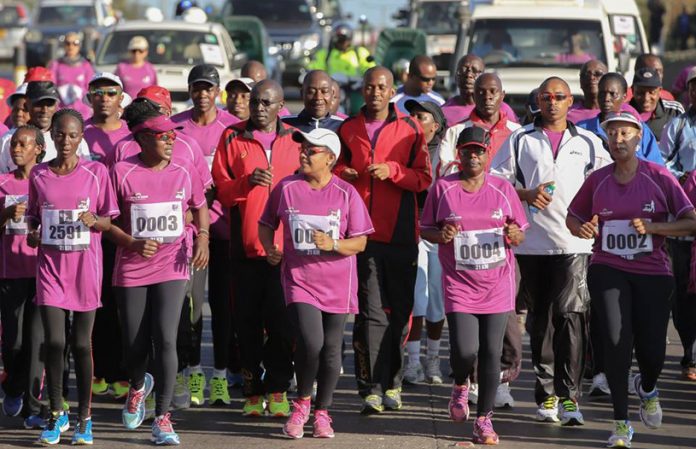
First Lady Margaret Kenyatta spoke shortly before she led participants of all ages and from all walks of life in the 2019 annual WHO’s “Walk the Talk” race in Geneva, Switzerland where she was the chief guest.
Participants in the open health promotion event, that aims at creating awareness on the importance of physical activity as part of a healthy sustainable future and recognition of the role played by the city of Geneva as the hub for global health, were divided into three groups including those who ran, walked or used wheelchairs to cover the eight, five and three kilometres segments of the exercise.
Among participants from Kenya were Health Cabinet Secretary Sicily Kariuki and marathon runner Mary Keitany.
During the event, the Kenyan First Lady was presented with the WHO Director General’s Health Leaders 2019 award in recognition of her outstanding advocacy on global health matters.
The First Lady emphasized that physical activity is the bedrock of healthy living adding that physical exercising has many benefits to the wellbeing of the human body most importantly being prevention of illnesses.
“Linking this to good nutrition and reinforcing healthy habits including physical exercise, is something we as leaders, need to encourage in our communities,” she said.
The First Lady spoke of Kenya’s longstanding athletics heritage saying her health initiatives including the Beyond Zero Half Marathon draws from this foundation.
“Our marathon heritage and medals, tell a great story. Leveraging on this heritage has helped to encourage physical activity as a lifestyle for many Kenyans,” the First Lady said.
The Beyond Zero Marathons, which the First Lady has been hosting, have brought together thousands of Kenyans over the past four years to run for a cause to end maternal and child mortality.
“It has also enhanced awareness about the benefits of healthy living. That is why this event is so important, and I add my voice to ‘Walk the Talk’, as my personal commitment,” the First Lady said.
She encouraged all participants to embrace the idea of wellness and prevention by putting their health first, saying that will be their contribution to saving lives for themselves, their families and communities.
Nakuru East Legislatior David Gikaria was granted a free bond and will be required before Court on Monday.
Gikaria was allegedly arrested for putting up illegal structures at a Disputed piece of Land in Nakuru
The area OCPD who came to arrest with was allegedly met with arrogance and insubordination. It is also claimed that the OCPD was then slapped by the member of parliament, infront of his juniors, a move which prompted junior officers to attack Gikaria.
First Lady Margaret Kenyatta has arrived in Geneva, Switzerland, to
attend the 72nd Session of the World Health Organization’s World Health
Assembly which kicks off on Monday, May 20.
The World Health Assembly is the largest meeting of health policymakers
and actors drawn from across the world, where major decisions on health
are made and experiences shared.
On arrival, the First Lady was received by Dr. Cleopa Mailu, Kenya’s
Ambassador to Switzerland and Permanent Representative to the United
Nations Office in Geneva, and staff of the Kenyan embassy in Geneva.
Besides the World Health Assembly, the First Lady will be the Chief
Guest at the “Walk the Talk” run organized by the World Health
Organization which will take place on Sunday.
The theme of this year’s run, which advocates for the promotion of
health and physical activity as part of a healthy sustainable future, is
“health for all”.
Addressing the press ahead of the First Lady’s arrival, Amb. Mailu said
the First Lady was selected to headline the “Walk the Talk” event in
recognition of her frontline role in advocating for access to quality
healthcare for all Kenyans.
“As you know, Her Excellency the First Lady has been doing marathons.
She has also been spearheading the Beyond Zero Initiative which has
become a brand in the world on how First Ladies can advance the cause
and health of the citizens of a country,” Amb. Mailu said.
Amb. Mailu added that First Lady Margaret Kenyatta will lead several
global dignitaries during the “Walk the Talk” event whose purpose is to
create awareness throughout the world on the benefits of healthy living
especially in the protection of life, prevention of sicknesses and
avoidance lifestyle diseases among populations.
Besides attending the World Health Assembly and her involvement in the
walk, the First Lady will participate in several side events aligned
with Kenya’s Universal Health Coverage (UHC) pillar of the Big 4 Agenda
including one dubbed, “Adolescent health, the missing link in UHC”.
“Universal Health Coverage, which is the theme of this year’s World
Health Assembly, fits well with the Kenya Government’s Big 4 Agenda,”
Amb. Mailu said, adding that the WHO meeting will help enrich efforts by
Kenya to attain her ambitious UHC goals.
Amb. Mailu said adolescent health fits well with the First Lady’s Beyond
Zero Initiative which has fashioned new innovative structures of health
delivery and strengthened existing ones.
The First Lady has also been invited to the UNAIDS headquarters in
Geneva where she will give a keynote address on the elimination of
Mother-to-Child Transmission (eMTCT) of HIV.
“She is invited to participate as a keynote speaker to tell the world
what she has done and to share her experiences in our country so that
others can have some lessons to learn from our First Lady,” Amb. Mailu
said.
The visit to Geneva will provide the opportunity for the First Lady to
engage with leaders in the health sector who will be attending the World
Health Assembly.
“The take-home message is that the First Lady’s visit to Geneva is
placing Kenya on the global arena as far as matters health are
concerned,” Amb. Mailu said.
The First Lady is later today scheduled to hold talks with World Health
Organization Director General, Dr Tedros Adhanom Ghebreyesus.
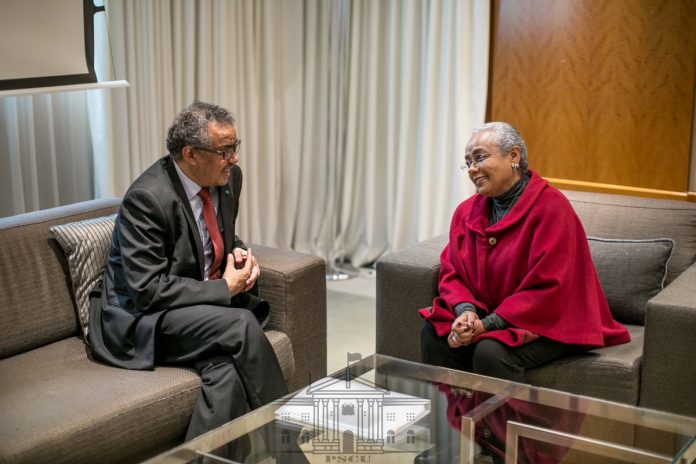
World Health Organization (WHO) Director General Tedros Adhamon Ghebreyesus has praised First Lady Margaret Kenyatta for being a torchbearer in the promotion of healthy living through her Beyond Zero Half Marathon and participation in other marathons including the London marathon.
Speaking today when he met the First Lady in Geneva, Switzerland, to personally welcome her to participate in the “Walk the Talk” run organised by his organization, the Director General said First Lady Margaret Kenyatta has made history by becoming the first holder of her office in the world to run marathons.
Mr. Ghebreyesus expressed optimism that the Kenyan First Lady’s participation in the “Walk the Talk” run will encourage other leaders in the world to take part in the annual event that is now in its second year.
The WHO Director General presented the First Lady with a branded running kit depicting the theme of the run.
He encouraged other countries to embrace and replicate similar events aimed at promoting healthy living.
The First Lady gave an assurance of her commitment to supporting WHO’s initiatives that are aimed at encouraging healthy lifestyles to keep diseases at bay, saying she looked forward to participating in the ‘Walk the Talk’ event.
She said besides the run, she will take part in other events on the sidelines of the WHO main meeting on Monday.
PRESS STATEMENT BY HIS EXCELLENCY HON. UHURU KENYATTA, C.G.H., PRESIDENT OF THE REPUBLIC OF KENYA AND COMMANDER IN CHIEF OF THE DEFENCE FORCES, ON THE CONCLUSION OF MASS REGISTRATION FOR HUDUMA NAMBA
1. Fellow Kenyans, we have come to the end of the mass registration phase of the Huduma Namba exercise. I would like to commend and appreciate the commitment and patience of the 35million Kenyans who have registered so far.
2. Today is the penultimate day of this registration exercise and I take this opportunity to salute the men and women who have made this a success.
4. However, I have observed with concern the long queues formed during these final days of the exercise in different parts of the country. It brings to the fore an ingrained last-minute rush habit that holds us back. Nevertheless, Kenyans are determined to register for their Huduma Namba and I have obliged to the numerous requests to give them an opportunity to do so.
5. I have directed the National Inter-ministerial Committee for implementation of this programme to extend the registration period for another 1 week. In this regard therefore, the exercise will effectively close on Saturday, 25th May 2019 at 6.00pm
6. I wish to urge those who have not registered to take full advantage of this extension and not to wait until the last day.
7. The Diaspora mass registration exercise which started on May 6th, 2019 will continue throughout all our missions globally and shall close on 20th June 2019.
8. I encourage each and every Kenyan to become a part of this momentous change that will help to positively transform Government delivery services for the benefit of all Citizens.
The Law Society of Kenya’s attention has been drawn to the press release dated 13th May 2019, issued by the Ministry of Interior and Co-ordination of National Government.
The same seeks to inform Kenyans that the deadline for the mass registration exercise for Huduma Number is Saturday 18th May, 2019. We also make reference to the notice issued by the Ministry of Transport, Infrastructure, Housing, Urban Development and Public Works in conjunction with the Kenya Revenue Authority via the Daily Nation on 16th April, 2019 informing employers that the first contribution for the Housing Fund Levy is due by 9th May, 2019.
The Society is concerned with the misleading information issued to the members of the public through various media platforms in line with the notices issued by the Executive on these two key issues and particularly on the purported consequences of failing to abide by the directives on the particular timelines.
In light of the foregoing and in execution of its mandate under Section 4 (e) of the Law Society of Kenya Act “to protect and assist the public in Kenya in all matters touching, ancillary or incidental to the law;” the Society therefore seeks to proffer some much-needed clarity on the legal position on these two critical issues of Public Interest.
HOUSING LEVY
On the issue of the Housing Levy, the Society, in exercising its mandate under Section 4 (d) of the LSK Act, moved to the High Court on 28th September, 2018 to challenge the constitutionality of a number of sections in the Finance Act 2018.
Among the provisions challenged were Sections 85 and 86 introducing a mandatory employer contribution at the rate on 1.5% of an employee’s monthly basic salary which contribution is to be paid to the National Housing Development Fund.
On the issue of the Housing Levy, the Society, in exercising its mandate under Section 4 (d) of the LSK Act, moved to the High Court on 28th September, 2018 to challenge the constitutionality of a number of sections in the Finance Act 2018.
Among the provisions challenged were Sections 85 and 86 introducing a mandatory employer contribution at the rate on 1.5% of an employee’s monthly basic salary which contribution is to be paid to the National Housing Development Fund.
The Ministry of Housing issued a notice in the Daily Nation stating that the first contribution for the Levy shall be due by 9th May, 2019.
The Society immediately made an application to the High Court under a Certificate of Urgency, seeking conservatory and injunctive orders prohibiting the Ministry from effecting the payment of the Housing Levy pending the hearing and determination of the matter, relying on among others, the following grounds;-
That there are several Constitutional Petitions in Court challenging the implementation of the Housing Levy none of which are yet to be determined. 2. That the prejudice would be occasioned by the collection of this levy on employers and employees is grave and irreparable. 3. That the regulations on how the levy will be applied are ultra-vires the Employment Act, the Housing Act and violate fundamental rights and freedoms. 4. That the collection of the Housing Levy threatens the right to enjoyment of property as well as freedom from discrimination among other constitutional rights afforded to the people of Kenya. 5. That it is in safeguarding public interest that the collection of the Housing Levy be halted until the hearing and determination of all the Petitions in Court challenging its implementation.
HUDUMA NUMBER
The Law Society of Kenya applied and was enjoined as an Interested Party in the case where Kenya National Commission on Human Rights and two others moved to Court to challenge the assent and coming into effect of the Statute Law (Miscellaneous Amendments) Act 2018 which was assented by the President of the Republic of Kenya on 31st December, 2019.
The Act introduces amendments to the Registration of Persons Act, Cap 107 which infringe on the privacy rights of citizens through introduction of the National Integrated Identity Management System (NIIMS).
The Petitioners moved to Court to challenge the assent and coming into effect the Statute Law (Miscellaneous Amendments) Act 2018 that effectively introduced the ‘Huduma Number’.
The Petitioners filed applications seeking the following conservatory orders; –
I. The amendments to the Registration of Persons Act be suspended pending the hearing and determination of the petitions; II. The Respondents be restrained from installing and implementing NIIMS pending hearing and determination of the petitions.
The Court comprising of Hon. Justices P. Nyamweya, M. Ngugi and W. Korir made the following orders among others in their ruling issued on 1st April 2019; –
I. Collection of DNA and the use of the Global Positioning System (GPS) as identifiers are suspended pending hearing and determination of the petitions.
II. Collection of personal information and data under the NIIMS is allowed pending hearing and determination of the matters in Court.
III. Respondents were however barred from:
a). Making registration of NIIMS mandatory.
b). Setting any time restrictions or deadlines for registration.
c). Denying any unregistered person access to any Government services.
d). Sharing/disseminating any personal information collected with any third parties.
CONCLUSION
Members of the Public are advised that based on the Court Orders, registration for Huduma Number is not mandatory and the Government should not force any one to acquire the Number. No one should be denied any government services for failing to register. In addition, the Government should not set any deadlines for registration.
Further, members of Public are urged to take note that the matter on the remittance of the Housing Levy is still subject of Court proceedings and that they should not be threatened, harassed, penalized or victimized in any way, shape or form for failing to remit the same.
The Law Society of Kenya urges the Government to fast track the finalization of the Data Protection Bill 2018 that is long overdue and further encourages the use of public
I had a momentary brain-fade when I went to the movies this week.
“Three tickets to … what’s it called again?” I asked.
“Endgame”, the ticket seller replied firmly, “What other movie is there?”
At over three hours long, it certainly is a movie for the fans, packed full of emotionally satisfying vignettes and snappy interactions for the cast of thousands that has become the Avengers trademark. I don’t think I’ve ever watched a faster three-hour movie.
Let me say at the outset that this is not a critique of the movie itself. I’m not going to document plot holes, flaws in logic or whether or not the science is correct. I’m happy to suspend a bit of disbelief for the sake of a good story. But I am interested in the function that stories like these play and what they reveal about our broader hopes and fears.
Although not pitched as one, Endgame is an environmental movie – and an apt one for our times. Its predecessor, Infinity War, saw the world under threat from powerful villain Thanos, whose home world had been destroyed by overpopulation and resource exploitation. His grief sets him on a quest (involving, naturally, a gauntlet studded with variously magical and powerful stones) to halve the population of the universe.
Despite being cast as the antagonist, it is Thanos’s character who undertakes the “hero’s journey” in this movie. By the end of Infinity War, Thanos manages to achieve his goal across the universe, without violence – painlessly and humanely, with a click of the fingers – wiping out exactly 50% of the population at random, all at once.
It’s a little unclear in Infinity War what Thanos intends to reduce: half the human population or half of all sentient life. His track record had focussed on people, killing “people planet by planet, massacre by massacre”. In Endgame the goal is broadened. Not just all humans or even all sentient life forms, not just the resource exploiters and over-users, but half of all life forms. It’s a telling ecological misstep.
Clearly, it’s the people that matter and humans in particular. Despite having the breadth of the universe as a stage, even the alien Avengers are strikingly Earth-centric, with the exception of Captain Marvel/Carol Danvers, who is the only one, aside from Thanos, who cares that the same thing is happening across thousands of planets.
Various critics have discussed whether Thanos’s population reduction strategy would work – at least in terms of halving the human population of Earth. And they generally conclude that it wouldn’t.
But this is an over-simplification of the movie’s message. The specific population reduction strategy Thanos employs can also be read as a broader environmental goal – to “restore” ecological balance. Climate change, pollution, species extinctions, overpopulation, resource use and distribution are all connected parts of the broader issue of environmental sustainability. The question is not, is population reduction a viable strategy? (Probably not.) Nor even, would a reduced human population be good for the planet? (Perhaps, if it were sustainable.)
The question Endgame poses for us is, are we willing to make personal sacrifices to save our own futures? To which the answer is a categorical no.
Environmental activists from Greenpeace protest against climate change in Berlin in May 2019.Felipe Trueba/EPA/AAP
Our greatest fears
Eco-catastrophe fiction is often castigated for not being scientifically accurate, and for failing to promote action on any of the various threats that face our planet – overpopulation, pollution, extinction, nuclear fallout, climate change. But when my colleague and I looked at climate change fiction across the centuries, we found that such stories are not about providing answers to our problems, but articulating our greatest fears. These stories – in book or movie form – are reflections of how society imagines the world of the future.
Eco-catastrophe stories have been a part of our culture from the earliest mythological stories of floods, fires, eruptions and storms. These stories of punishment and redemption form the foundation for much of our literature, not least that of superheroes with god-like or even godly powers.
The emergence of both the novel (and modern science) in the 17th and 18th centuries saw a growing awareness of environmental change reflected in fiction. Early Romantic literature may have seen climate change as a metaphor for social progress and human advancement into a Utopia, but that rapidly shifted into the dystopian fears that dominate environmental fictional literature today.
From the mid-19th century onwards, fiction, and particularly science fiction, closely tracked developments in science. Our deeper understanding of past ice-ages and the influence of solar variation, geological instability and the oscillations of the earth on climate, emerged in stories like Gabriel De Tarde’s Underground Man, S Fowler Wright’s Deluge and William Wallace Cook’s Tales of Twenty Hundred.
Extra-terrestrial influences (comets rather than aliens) provided the catalyst for eco-catastrophe fiction in the 19th and 20th centuries. This phase was a phenomenon undoubtedly inspired by the first-hand experience of the “little Ice Age” which caused widespread famine, crop failures, and food riots across the Northern Hemisphere. Astronomer Camille Flammarion’s Omega: The Last Days of the World (1893-4) was perhaps one of the most influential of the comet-inspired fictions and marked the continuing dominance of dystopian over utopian visions for the future.
This pattern continued into the 20th and 21st centuries and, as the climate change debate expanded from a restricted scientific focus to a broader social and political dimension, the literature expanded from science fiction to a broader range of literary forms. Eco-catastrophe has emerged in every genre from thrillers to literary fiction and particularly young adult fiction. And of course, in the visual forms of storytelling – superhero, science fiction and apocalypse movies.
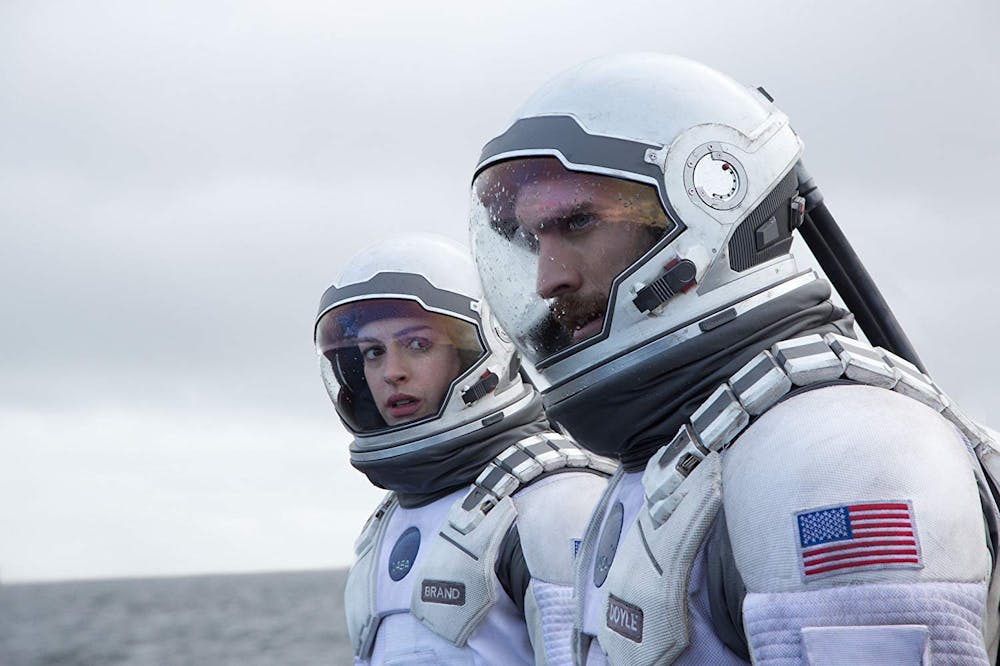
A sense of inevitability and hopelessness pervades much of the modern literature on climate change, irrespective of sub-genre. Rarely is climate change depicted as being solved by human agency. For many, the damage of climate change can only be overcome with the assistance of either supernatural or extra-terrestrial powers. We can see the same patterns in movies where the future of humanity is so often saved by superior intelligence rather than our own, either aliens, angels, or, as in Interstellar, our unrecognisably advanced selves.
Anne Hathaway and Wes Bentley in Interstellar, a film where only our unrecognisably advanced selves can save humanity.Warner Bros/Paramount Pictures/IMDB
The history of eco-castastrophic stories reveals that, far from being agents of resolution and improvement, scientists are mostly depicted as untrustworthy or even responsible for the crisis. Environmentalists are even less trustworthy than the scientists; they are frequently depicted as extremist and violent loonies.
This distrust is reflected throughout the Avengers franchise. The original 2012 Avengers film saw Tony Stark’s (aka Iron Man) sustainable power source, the Arc Reactor, co-opted to create a wormhole entry point for alien invasion. The shadowy law enforcement agency, SHIELD, subverts research into the environmental potential of the Tesseract, an alien object with infinite energy, for weapons development. The same theme recurs – green technology is dangerous and scientists cannot be trusted.
Robert Downey Jr as Tony Stark (aka Iron Man) in The Avengers (2012).Marvel Studios/IMDB
And nor can “environmentalists” like Thanos. On his home planet, his environmental crusade earns him the title “The Mad Titan”. By the end of Infinity War, however, he has completed his quest, accepted the sacrifice his choices entail, and his hero’s journey is at an end. Both he and the world have been transformed into a new order. Thanos sits in the countryside and watches the sunset.
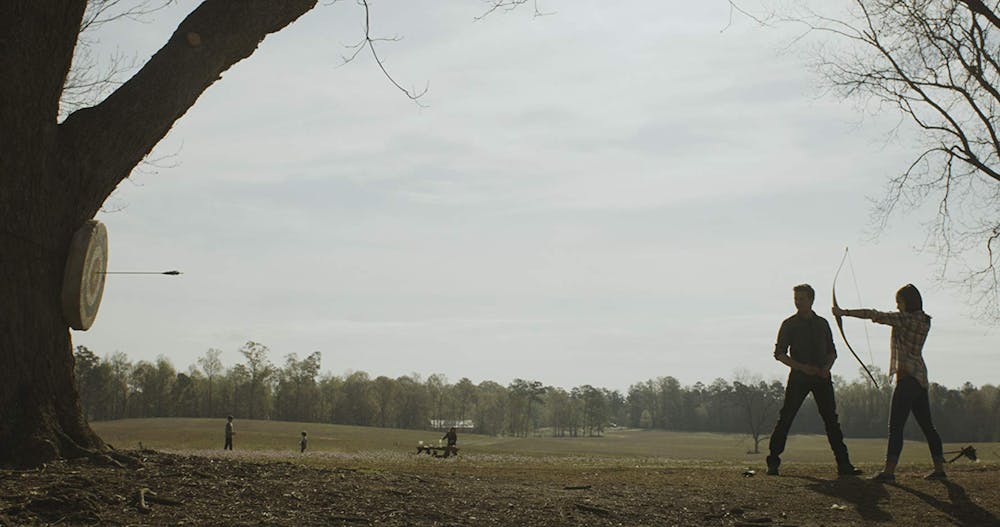
Except that it’s not a happy ending. Endgame opens with a powerful scene that illustrates the central problem. Clint Barton (or to use his “made-up name”, Hawkeye) is picnicking with his family in the country – having given up his action persona – and is teaching his daughter to shoot arrows. As he turns away for a moment, his daughter, wife and two sons all suddenly disappear – victims of the 50% erasure. Hawkeye’s loss is both excessive and insurmountable. He loses everything.
Versions of this continuing loss permeate the movie. Hawkeye retreats into his vengeful violent superhero persona. Thor drinks himself, comically, into oblivion. Captain America runs group counselling sessions helping people to move on.
The differing manifestations of grief are represented in different characters – denial, anger, depression, bargaining, even acceptance. But these are not stages that characters work through. Ultimately all the characters are grief-stricken and unable to move forwards, except for Tony Stark, who has moved on but decides that, in a hastily explained piece of time-travel sleight of hand, he can fix the most of the problems without losing the future he has created for himself.
Nonetheless, the future in which our environmental problems are resolved is infused with melancholy. While Thanos’s rural retreat is a pastoral idyll, the rest of the world is empty, seemingly devoid of life. When Captain America mentions the environmental restoration, he is flippantly dismissed by Black Widow:
You know, if you’re about to tell me to look on the bright side – I’m about to hit you in the head with a peanut butter sandwich.
In traditional superhero stories, the hero(ine) must sacrifice the thing they love most for the betterment of the world. But in Infinity War and Endgame, the heroes sacrifice the betterment of the world to save (or at least reconcile with) the things they love best. Individual interests win out over social or environmental restoration. Rather than securing the future we need, they save the world of the past. With superheroes like this, my sympathies lie with the villains (and not just because of Tom Hiddleston).
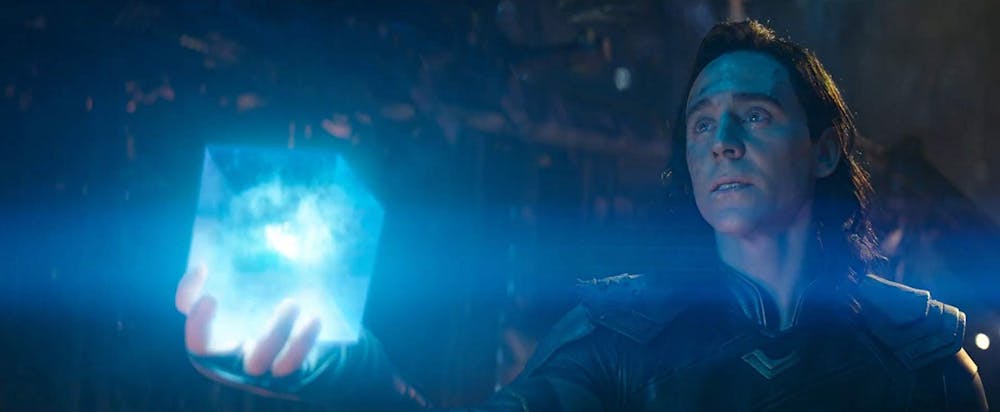
Tom Hiddleston in Avengers: Infinity War. With superheroes like the Marvel team, who needs villains?Marvel Studios/IMDB
So, is Endgame a paean to conservative values, a retreat to an idealised version of the past, a failure to meet the genuine challenges that face the Earth and its ever expanding human population?
Nathaniel Rich, author of Odds Against Tomorrow (2013) once argued: “I don’t think that the novelist necessarily has the responsibility to write about global warming … but I do feel novelists should write about what these things do to the human heart.” This is true of movies too.
What Endgame reveals is that in our hearts we are afraid that the price of environmental salvation is too high, that the losses will be too great, that we will not be able to cope with the scale of the personal sacrifice required.
An insight into the cultural zeitgeist
There is no point in complaining that there are no great climate change movies, or books, with real solutions, or which inspire real action. This is not their purpose. Movies and books don’t help us to overcome our fears, they simply express them. But surely they also reinforce them. Cliched fears about the risks of environmental change, scientists and technology may not be intentionally promoted but they risk promulgating pervasive subconscious biases that both perpetuate and delay vital cultural change.
The real risks of environmental inaction, of course, massively outweigh the risks of any environmental action. But that message does not yet seem to be permeating the popular psyche.
It may well be true, too, that the worst environmental costs will not be borne by the relatively well-off viewers of Avengers movies, but disproportionately by poorer and more vulnerable communities (something that only heightens the irony of fictional East African nation Wakanda’s role in the Avengers franchise).
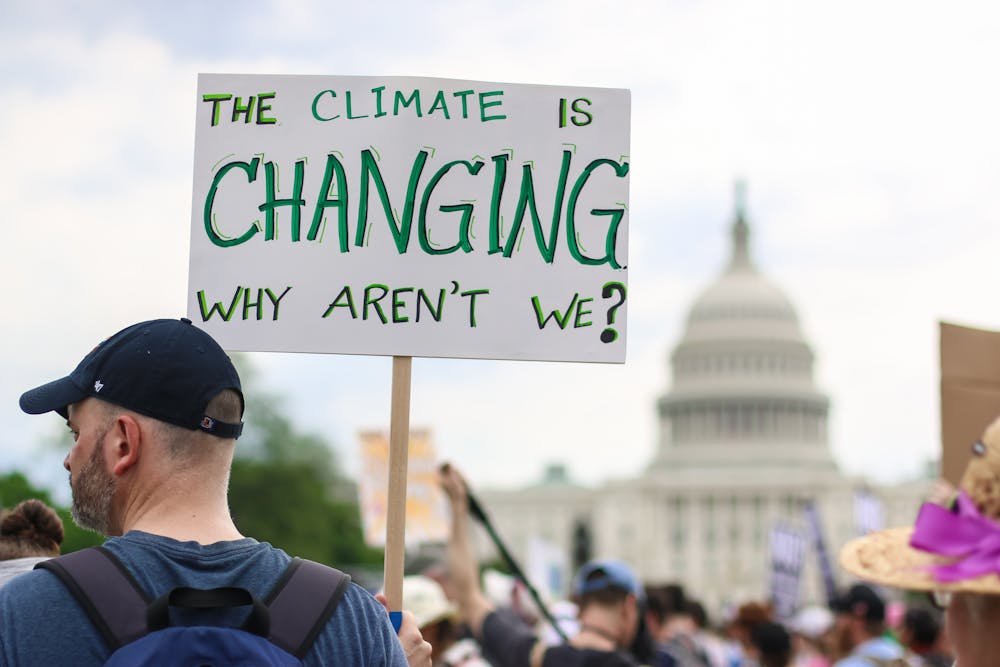
A 2017 climate march in Washington DC.Nicole S Glass/ Shutterstock
Effective environmental action does not demand the destruction of half the human population. But it does require the vastly more efficient use and distribution of resources. The sacrifice is not that of the individual, but the vested interests in old-world resources and technology who would prefer not to incur the costs of change. Responding to environmental change does not threaten our comforts, but failing to act will.
Endgame isn’t the endgame: it’s an insight into the cultural zeitgeist. Neither threats nor solutions come from purple aliens, gods or superheroes. They come from us – politicians, scientists, environmentalists, industry and the general public.
Markets, technology and industries can and will adapt rapidly to changing circumstances, in milliseconds, months or even decades. Economies recover, but species do not. The environment takes millennia to adapt and what is lost never comes back. We need to face our fears and find solutions to these problems, rather than just perpetuating the fantasy of regressing into the past.
As Peter Parker says: “You can’t be a friendly neighbourhood Spider-Man, if there’s no neighbourhood.”
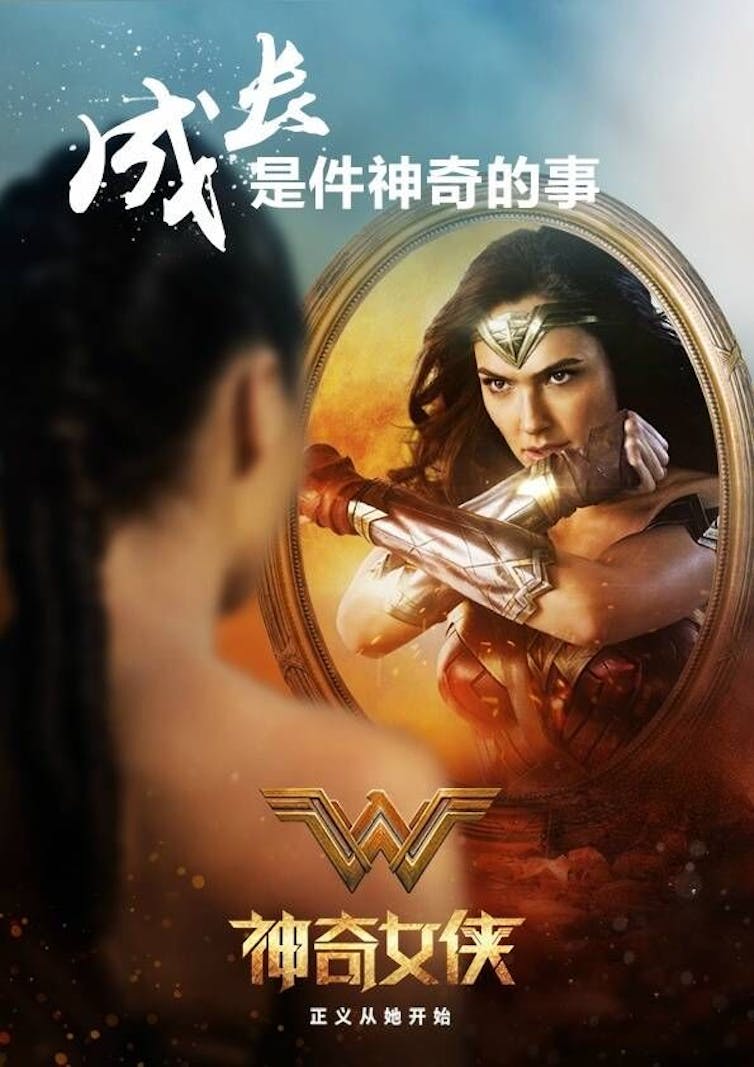
When the film Wonder Woman released in early June, it will surely join the blockbuster ranks of other recent comic book-inspired film franchises, including Batman, Superman, Spiderman, and X-Men. But that’s not just because it features a sword-wielding Gal Gadot in knee-high boots and a metal bodice.
Wonder Woman has long been a bestselling creation, originally imagined in 1941 by the psychologist William Moulton Marston, and the film follows some of the main plot lines developed in the comic books.
Wonder Woman is a superheroine known as Diana, princess of the Amazons, who is trained to be an unconquerable warrior. When an American pilot, Steve Trevor, crashes on the shores of her sheltered island paradise and tells tales of a massive conflict raging elsewhere, Diana leaves her home, convinced she can stop the threat.
We can only wonder – no pun intended! – about the reasons for this imagined link between war and female sexuality. As a sexy but fierce lady warrior, Wonder Woman is hardly alone. Throughout history, cultures across the globe have envisioned and revered the femme fatale, from feline killers to sensual goddesses to sassy spelunkers.
The Sumerian “wonder woman”
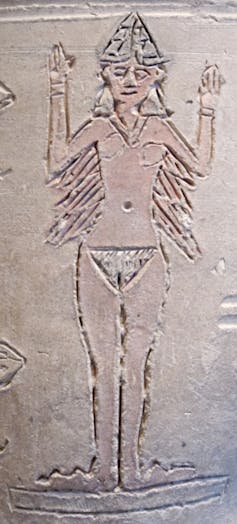
In 3000 BC, in the ancient Sumerian city of Uruk in Mesopotamia, the first kings of human history ruled over the south of modern-day Iraq, protected by Ishtar, a great goddess of war and love often associated with lions.
Ishtar would reveal the kings’ enemies and accompany them to the battlefield. It was said that she fought like an unleashed lioness protecting her young – in this case, the Sumerian people. Like Wonder Woman, Ishtar’s sacred duty was to defend the world.
She could also be sensual. More than merely worship the goddess, the Kings of Uruk claimed to be Ishtar’s lovers, who, according to royal hymns of the era, would enter her bed and “plow the divine vulva”.
For the king, receiving sexual and military favours from a goddess served his political agenda, legitimised his reign and made him into an exceptional hero for his people. In the Wonder Woman film, this role is filled by the American pilot.
What’s more sexy than a powerful woman? Taming her, of course.
In ancient Egypt, the most fearsome goddess was named Sekhmet. Like Ishtar, she had two sides – fierce beast and loving companion.
Sekhmet was often portrayed as a terrible lioness, the butcher of the Pharaoh’s enemies. At times, though, she would transform into an adorable cat named Bastet.
Today, the feline is still symbolic of female sexuality. Catwoman, another comic book heroine, was born a few months before Wonder Woman (not that a lady reveals her age) and is the most contemporary avatar of a feline woman.
With her curves and her bondage fetish, Catwoman has always been hypersexual, though some critics regret that her sexuality – not her intelligence – has become her greatest asset these days.
Amazons, the lonely sailors’ dreams
Warrior women with sexual natures are also found among the ancient Greeks.
He embellished his ancient Amazonian setting with details from the legend of the women of Lemnos, in the Aegean Sea, adopting the isolated island idea as Wonder Woman’s home.
According to the Greek story, the women of Lemnos had revolted and massacred all the men on the island, young and old. Living in a forced sexual abstinence, the ladies were delighted when sailors unexpectedly landed on a local beach. They immediately set upon the Argonauts, a team of beautiful and famous mythological heroes that included Hercules and Theseus, compelling them into long orgiastic intercourse.
The sex-starved but unattached women theme is another favourite male fantasy, offering imaginary satisfaction of sexual scenarios that may be difficult to realise in real life.
By the late 20th century, Lara Croft came along to update the idea of the Amazons and the ladies of Lemnos. Croft, an English archeologist-adventurer who started life as a character in the 1990s video game Tomb Raider, was the ultimate virtual-reality dream girl: she is an expert in martial arts, great with a gun and super smart.
The new Wonder Woman film seems to have made a careful choice of actress, looking beyond just a pretty face and a remarkable body. Gal Gadot has both of those, but she’s a lot like the heroine in other ways, too.