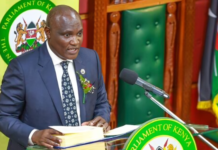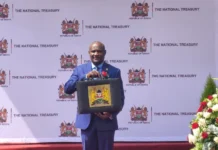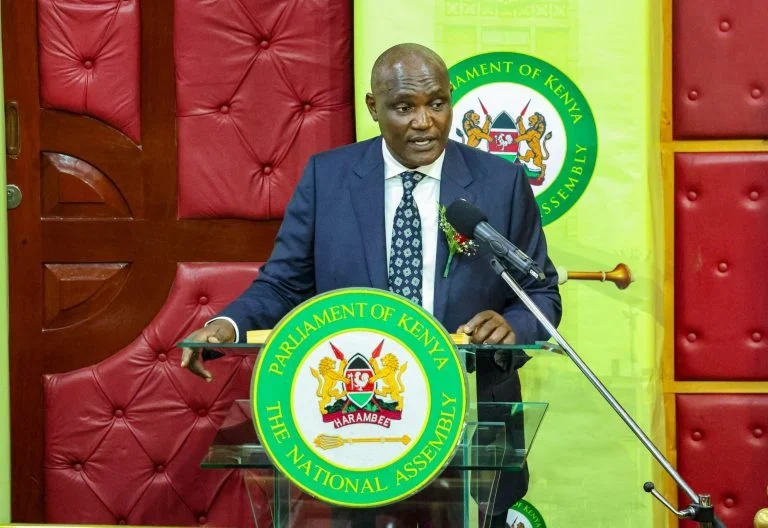
Treasury Cabinet Secretary John Mbadi has announced that county governments are set to receive a total allocation of Ksh502 billion in the upcoming financial framework.
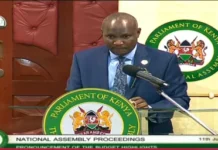
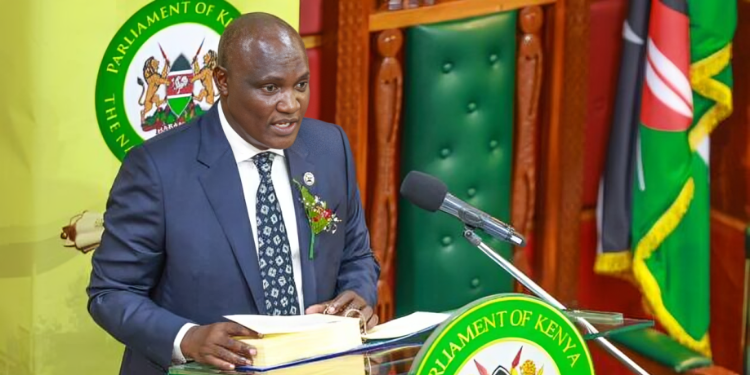
Speaking on the floor of Parliament, while reading the budget on June 11, 2026, Mbadi said the allocation comprises Ksh428 billion as the equitable share to counties, alongside Ksh74 billion categorised as traditional allocations drawn from the national government’s share of revenue, as well as loans and grants from development partners.
“Total allocation to county governments is projected at Ksh502 billion, of which Ksh428 billion is the equitable share and Ksh74 billion is traditional allocation from the national government’s share of revenue, loans, and grants from development partners,” Mbadi said.
Fiscal deficit
He further revealed that the 2026 fiscal deficit, including grants, is projected at Ksh1.1462 trillion, equivalent to 5.5 per cent of Gross Domestic Product (GDP).
“The 2026 fiscal deficit, including grants, is projected at Ksh1.1462 trillion, equivalent to 5.5 per cent of GDP,” Mbadi said, outlining the scale of the budget gap facing the government.
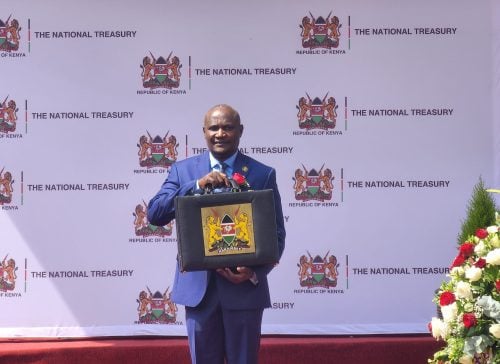
According to the Treasury, the deficit will be financed through a mix of borrowing options, with net external borrowing projected at Ksh116.2 billion (0.6 per cent of GDP) and net domestic borrowing expected to stand at Ksh1.03 trillion (4.9 per cent of GDP).
“The fiscal deficit will be financed by net external borrowing of 116.2 billion, equivalent to 0.6 per cent of GDP, and net domestic borrowing of 1 trillion 30 billion, which is equivalent to 4.9 per cent of GDP,” Mbadi stated.
The government says the financing approach is aimed at balancing development needs with fiscal stability, even as domestic borrowing remains the dominant source of budget support.