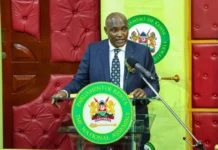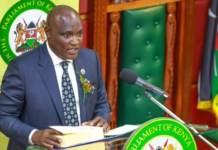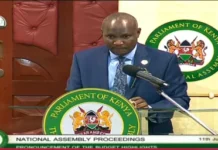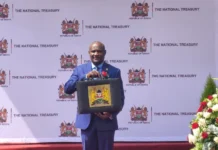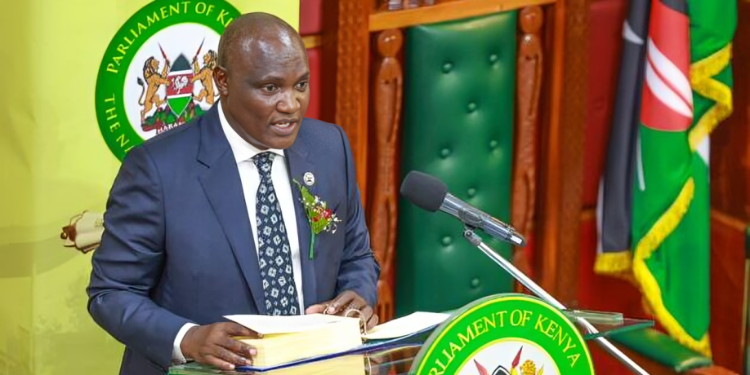
Cabinet Secretary for the National Treasury John Mbadi has outlined a series of measures that the government will implement through the Kenya Revenue Authority (KRA) to enhance revenue collection as the country moves to strengthen fiscal sustainability.
Speaking on the floor of Parliament, while reading the budget on June 11, 2026, Mbadi Mbadi said the government will continue to implement the national tax policy and medium-term revenue strategy to streamline taxation and improve efficiency.
“To boost revenues, the government will continue to strengthen implementation of the national tax policy and medium-term revenue strategy, aimed at simplifying tax laws, rationalising tax expenditures, and creating a fair, predictable, and efficient tax system,” he said.
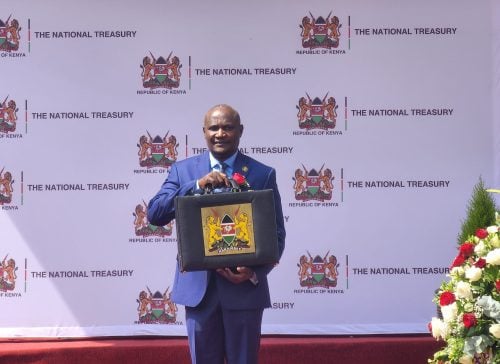
He noted that the Kenya Revenue Authority has intensified reforms to modernise tax administration through technology and innovation, leading to improved compliance and service delivery.
“Mr. Speaker, the Kenya Revenue Authority has intensified reforms to modernize tax administration, enhance compliance, and improve service delivery through technology and innovation,” Mbadi said.
Key measures
He explained that KRA will roll out a fully integrated digital tax system to improve efficiency and provide real-time monitoring of transactions. This will include expanded electronic invoicing, improved point-of-sale integration, mobile tax services, and upgraded domestic tax systems.
“Mr. Speaker, the Kenya Revenue Authority has intensified reforms to modernize tax administration, enhance compliance, and improve service delivery through technology and innovation,” Mbadi said.

To curb tax evasion and illicit trade, Mbadi said the authority will introduce device registration systems and strengthen information sharing between agencies, especially at border points.
He added that taxpayer processes will be simplified through pre-filled tax returns, easier digital payment systems, and expanded online services to reduce compliance costs and burden on taxpayers.
Mbadi further said taxpayer engagement will be strengthened through digital support platforms and outreach programmes such as UshuruGPT, omni-channel customer service systems, Utuma kwa wote, and UshuruMashinani to improve accessibility.
Tax performance
On tax performance, Mbadi revealed that the number of active taxpayers increased by 82,000 to over 6.6 million as of March 2026, up from 6.5 million the previous year, attributing the growth to improved voluntary compliance.
“As a result, the active tax payers increased by 82,000 to over 6.6 million taxpayers as of March 2026 from 6.5 million as at March 2025, reflecting a growing voluntary compliance and improved tax compliance,” he said.