Sponsored Ad

Ad 1
Ad 2
Ad 3
Ad 4
Ad 5
Ad 6
27.3 C
Kenya
Sunday, April 26, 2026
Home Blog Page 6085

China’s ‘Silk Road urbanism’ is changing cities from London to Kampala – can locals keep control?

View of Kampala. Shutterstock. Jonathan Silver, University of Sheffield and Alan Wiig, University of Massachusetts Boston

A massive redevelopment of the old Royal Albert Dock in East London is transforming the derelict waterfront to a gleaming business district. The project, which started in June 2017, will create 325,000 square metres of prime office space – a “city within a city”, as it has been dubbed – for Asian finance and tech firms. Then, in 2018, authorities in Kampala, Uganda celebrated as a ferry on Lake Victoria was unloaded with goods from the Indian Ocean, onto a rail service into the city. This transport hub was the final part of the Central Corridor project, aimed at connecting landlocked Uganda to Dar es Salaam and the Indian Ocean.

Both of these huge projects are part of the US$1 trillion global infrastructure investment that is China’s Belt and Road Initiative (BRI). China’s ambition to reshape the world economy has sparked massive infrastructure projects spanning all the way from Western Europe to East Africa, and beyond. The nation is engaging in what we, in our research, call “Silk Road urbanism” – reimagining the historic transcontinental trade route as a global project, to bring the cities of South Asia, East Africa, Europe and South America into the orbit of the Chinese economy.

By forging infrastructure within and between key cities, China is changing the everyday lives of millions across the world. The initiative has kicked off a new development race between the US and China, to connect the planet by financing large-scale infrastructure projects.

Silk Road urbanism

Amid this geopolitical competition, Silk Road urbanism will exert significant influence over how cities develop into the 21st century. As the transcontinental trade established by the ancient Silk Road once led to the rise of cities such as Herat (in modern-day Afghanistan) and Samarkand (Uzbekistan), so the BRI will bring new investment, technology, infrastructure and trade relations to certain cities around the globe.

The BRI is still in its early stages – and much remains to be understood about the impact it will have on the urban landscape. What is known, however, is that the project will transform the world system of cities on a scale not witnessed since the end of the Cold War.

Silk Road urbanism is highly selective in its deployment across urban space. It prioritises the far over the near and is orientated toward global trade and the connections and circulations of finance, materials, goods and knowledge. Because of this, the BRI should not only be considered in terms of its investment in infrastructure.

It will also have significance for city dwellers – and urban authorities must recognise the challenges of the BRI and navigate the need to secure investment for infrastructure while ensuring that citizens maintain their right to the city, and their power to shape their own future.

London calling

Developments in both London and Kampala highlight these challenges. In London, Chinese developer Advanced Business Park is rebuilding Royal Albert Dock – now named the Asian Business Port – on a site it acquired for £1 billion in 2013 in a much-criticised deal by former London mayor Boris Johnson. The development is projected to be worth £6 billion to the city’s economy by completion.
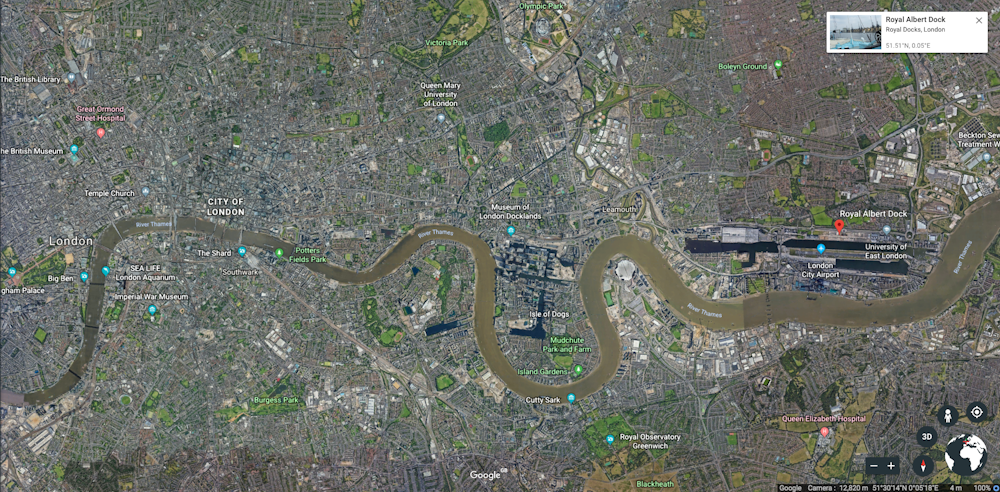
Formerly Royal Albert Dock, now Asian Business Port. Google Earth.

But the development stands in sharp contrast with the surrounding East London communities, which still suffer poverty and deprivation. The challenge will be for authorities and developers to establish trusting relations through open dialogue with locals, in a context where large urban redevelopments such as the 2012 Olympic Park have historically brought few benefits.

The creation of a third financial district, alongside Canary Wharf and the City of London, may benefit the economy. But it remains to be seen if this project will provide opportunities for, and investment in, the surrounding neighbourhoods.

Kampala’s corridor

The Ugandan capital Kampala is part of the Central Corridor project to improve transport and infrastructure links across five countries including Burundi, the Democratic Republic of the Congo (DRC), Rwanda, Tanzania and Uganda. The project is financed through the government of Tanzania via a US$7.6 billion loan from the Chinese bank Exim.
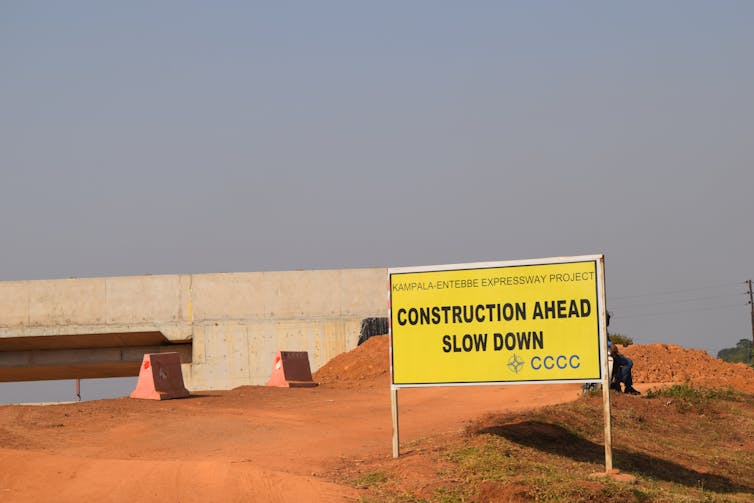
Under construction: the Chinese-funded Entebbe-Kampala Expressway. Dylan Patterson/Flickr., CC BY-SA

The growth of the new transport and cargo hub at Port Bell, on the outskirts of Kampala, with standardised technologies and facilities for international trade, is the crucial underlying component for Uganda’s Vision2040.

This national plan alone encompasses a further ten new cities, four international airports, national high speed rail and a multi-lane road network. But as these urban transformations unfold, residents already living precariously in Kampala have faced further uncertainty over their livelihoods, shelter and place in the city.

During fieldwork for our ongoing research into Silk Road urbanism in 2017, we witnessed the demolition of hundreds of informal homes and businesses in the popular Namuwongo district, as a zone was cleared 30 metres either side of a rehabilitated railway track for the Central Corridor required.

As Silk Road urbanism proceeds to reshape global infrastructure and city spaces, existing populations will experience displacement in ways that are likely to reinforce existing inequalities. It is vital people are given democratic involvement in shaping the outcomes.The Conversation

Jonathan Silver, Senior Research Fellow, University of Sheffield and Alan Wiig, Assistant Professor of Urban Planning and Community Development, University of Massachusetts Boston

This article is republished from The Conversation under a Creative Commons license. Read the original article.

Kenya is keen on enhancing its cooperation with Cuba, President Kenyatta says

President Uhuru Kenyatta has said Kenya is keen on enhancing its cooperation with Cuba especially in the provision of quality healthcare, one of the Government’s Big 4 Agenda.

The President welcomed the ongoing collaboration that has seen the two countries partner in health research and capacity building.

Kenya and Cuba are implementing a medical exchange programme in which Cuban specialist doctors are serving in the country while Kenyan doctors are in Cuba advancing their medical training.

The Head of State spoke during a meeting with visiting Cuba’s Vice President of the Council of State and Ministers, Ines Maria Chapman, who paid him a courtesy call at State House, Nairobi.

President Kenyatta said Kenya has a lot to learn from Cuba’s healthcare delivery model which has seen the Latin American country register a life expectancy of 79.5 years compared to Kenya’s 67.5 years.

The Cuban VP thanked President Kenyatta’s leadership for enhancing the historic bilateral ties between the two countries, saying the ongoing exchange of expertise in the health sector will go a long way in cementing relations between the two countries.

Cuban Vice President of the Cuban Council of State and of Ministers, Ines Maria Chapman | PSCU


Kenya and Cuba have finalized negotiations on a Malaria Vector Control project to be implemented in the malaria prone areas in the country. The project, that will apply Cuban biological larvicides, is set to be launched later this month.

President Kenyatta observed that the relationship between Kenya and Cuba was growing by the day with the two countries also enhancing their collaboration at the multilateral levels.

Speaking after the meeting, Foreign Affairs Cabinet Secretary Monica Juma said the two countries are working very well on the diplomatic front.

“The relationship between Kenya and Cuba is improving across the sectors. For instance Cuba is playing a crucial role in helping Kenyans learn the Spanish language,” the CS said.

Health Cabinet Secretary Sicily Kariuki said Kenya has adopted part of the Cuban medical training curricula that is set to equip students in the Kenya Medical Training Colleges with more skills to address emerging health challenges.

The meeting was attended by Head of Public Service Joseph Kinyua.

President Kenyatta mourns CAS Aman’s father

President Uhuru Kenyatta has sent a message of condolence and comfort to the family of Health Chief Administrative Secretary Dr. Rashid Aman following the death of his father, Mzee  Abdi Aman.

In the condolence message, President Kenyatta described Mzee Aman as a patriarch who was a role model and a mentor to many.

“Mzee Aman was a strong pillar to his family, an elder whose counsel and words of wisdom will be missed by many. Indeed as a respected member of the community, he was a reference point on many on issues of life,” the President said.

“In this hour of sorrow, I convey my deepest sympathies and heartfelt condolences to his family, relatives and friends,” he added.

Mzee Aman, who passed on at the age of 92 years, was also the father of former PS Dr. Mohamed Isahakia.

“It is my prayer that the Almighty God will give you the strength and courage to bear the loss,” the President condoled.

President Kenyatta eulogised Mzee Aman as a champion for education who ensured that all his children acquired quality education.

The President said Mzee Aman will be fondly remembered as an outstanding and gifted person whose legacy will live on for many generations to come.

Last of the giants: What killed off Madagascar’s megafauna a thousand years ago?

A modern mouse lemur Microcebus sits upon the cranium of an extinct Megaladapis lemur. Dao Van Hoang www.daovanhoang.com Nick Scroxton, University of Massachusetts Amherst; Laurie Godfrey, University of Massachusetts Amherst, and Stephen Burns, University of Massachusetts Amherst

Giant 10-foot-tall elephant birds, with eggs eight times larger than an ostrich’s. Sloth lemurs bigger than a panda, weighing in at 350 pounds. A puma-like predator called the giant fosa.

They sound like characters in a child’s fantasy book, but along with dozens of other species, they once really roamed the landscape of Madagascar. Then, after millions of years of evolution in the middle of the Indian Ocean, the populations crashed in just a couple of centuries.

Scientists know that over the past 40,000 years, most of Earth’s megafauna – that is, animals human-size or larger – have gone extinct. Woolly mammoths, sabre tooth tigers and countless others no longer roam the planet.

What’s remarkable about the megafaunal crash in Madagascar is that it occurred not tens of thousands of years ago but just over 1,000 years ago, between A.D. 700 and 1000. And while some small populations survived a while longer, the damage was done in a relatively short amount of time. Why?

Over the last three years, new investigations into climate and land use patterns, human genetic diversity on the island and the dating of hundreds of fossils have fundamentally changed scientists’ understanding of the human and natural history of Madagascar. As two paleoclimatologists and a paleontologist, we brought together this research with new evidence of megafaunal butchery. In doing so we’ve created a new theory of how, why and when these Malagasy megafauna went extinct.

Climate at the time of the crash

The first job is to understand exactly when the megafauna died out.

Radiocarbon dating of over 400 recent fossils demonstrates that animals under 22 pounds lived on Madagascar throughout the last 10,000 years. For animals over 22 pounds, there are abundant fossils up to 1,000 years ago, but relatively few since. The biggest decline in number of large animals occurred rapidly between A.D. 700 and 1000 – practically instantaneous given the long history of their existence on the island.

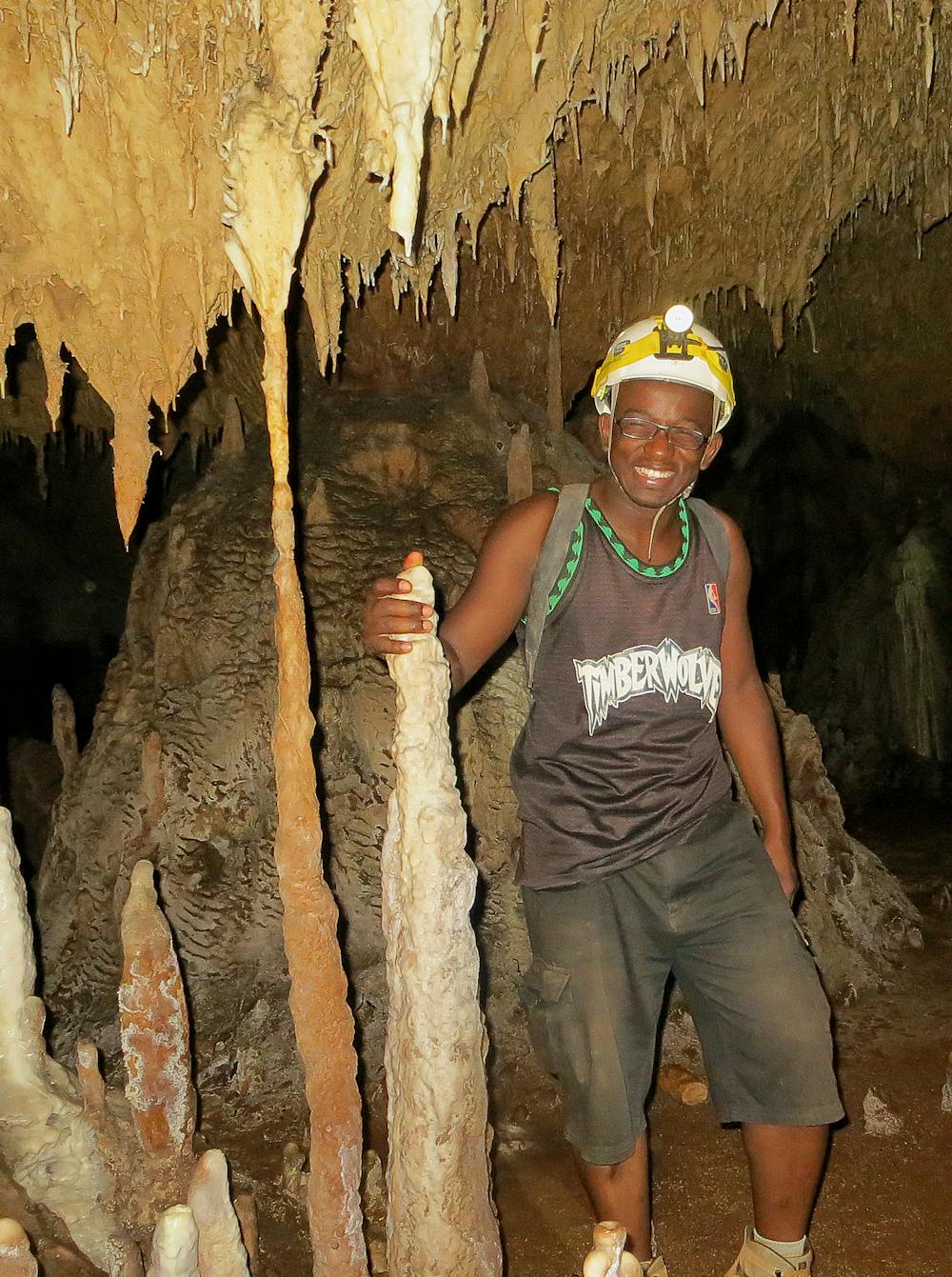
Malagasy graduate student and team member Peterson Faina with stalagmites in a cave in Madagascar. Laurie Godfrey, CC BY-ND

What was the climate doing at that time? One popular theory for the megafaunal extinction has blamed island-wide drying. To test this idea, our team has been exploring the caves of Madagascar, collecting and analyzing stalagmites. As stalagmites grow upwards from the cave floor, layer by layer, differences in the chemistry of each layer document changes in the climate outside the cave.

By analyzing chemical composition and comparing ratios of various isotopes in these stalagmites, we created new high-resolution records of changes in the Malagasy ecosystems and climate. We found minor fluctuations in the strength of the summer rains throughout the last 2,000 years, but no significant drying over that period. In fact, A.D. 780-960 was one of the wettest periods of the last 2,000 years. Chemical analyses of fossils back up this claim.

So it looks like there was no significant drying around the time the megafauna disappeared.

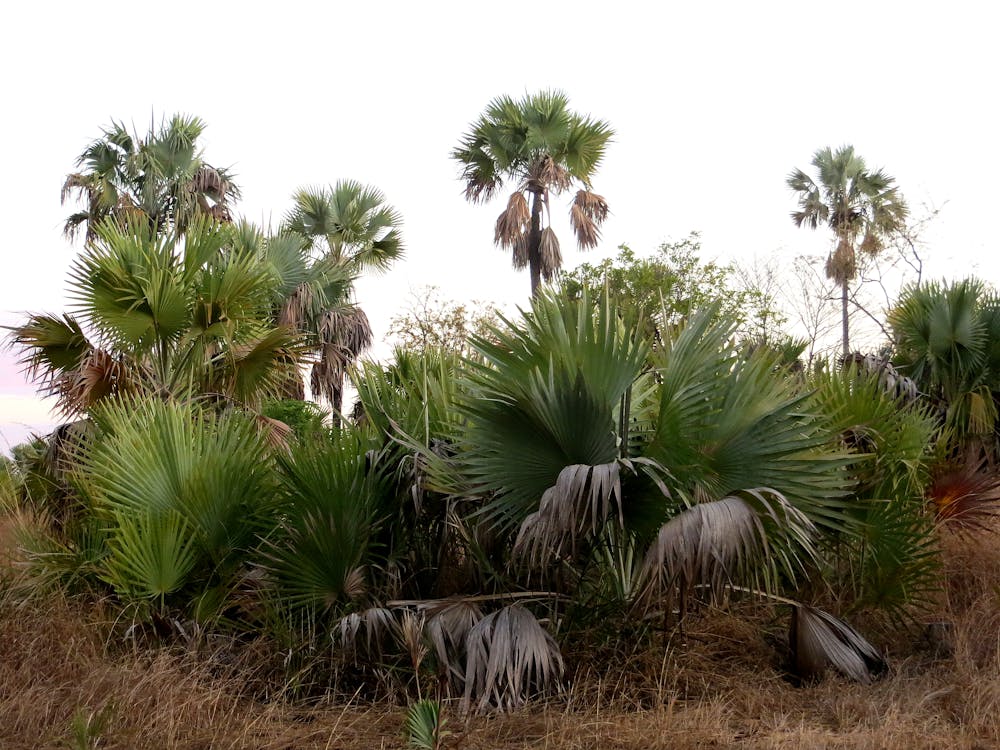
Many of the forests that originally existed on Madagascar are now replaced by more open, human-modified landscapes, like this palm savanna at Anjohibe. Laurie Godfrey, CC BY-ND

Instead, the stalagmite records indicated a rapid and dramatic change in the landscape. Changing ratios of the isotopes carbon-12 to carbon-13 reveal a switch from forests to grassland right around A.D. 900, the same time as the megafaunal population crash. Clearly something big happened around this time.

Cut marks and evidence of butchery

With no significant change in the climate, some point to the arrival of humans on the island as a possible cause of the megafauna population crash. It seems logical that once people arrived on Madagascar, they might have hunted the big animals into extinction. New data suggest that this timing doesn’t add up, though.

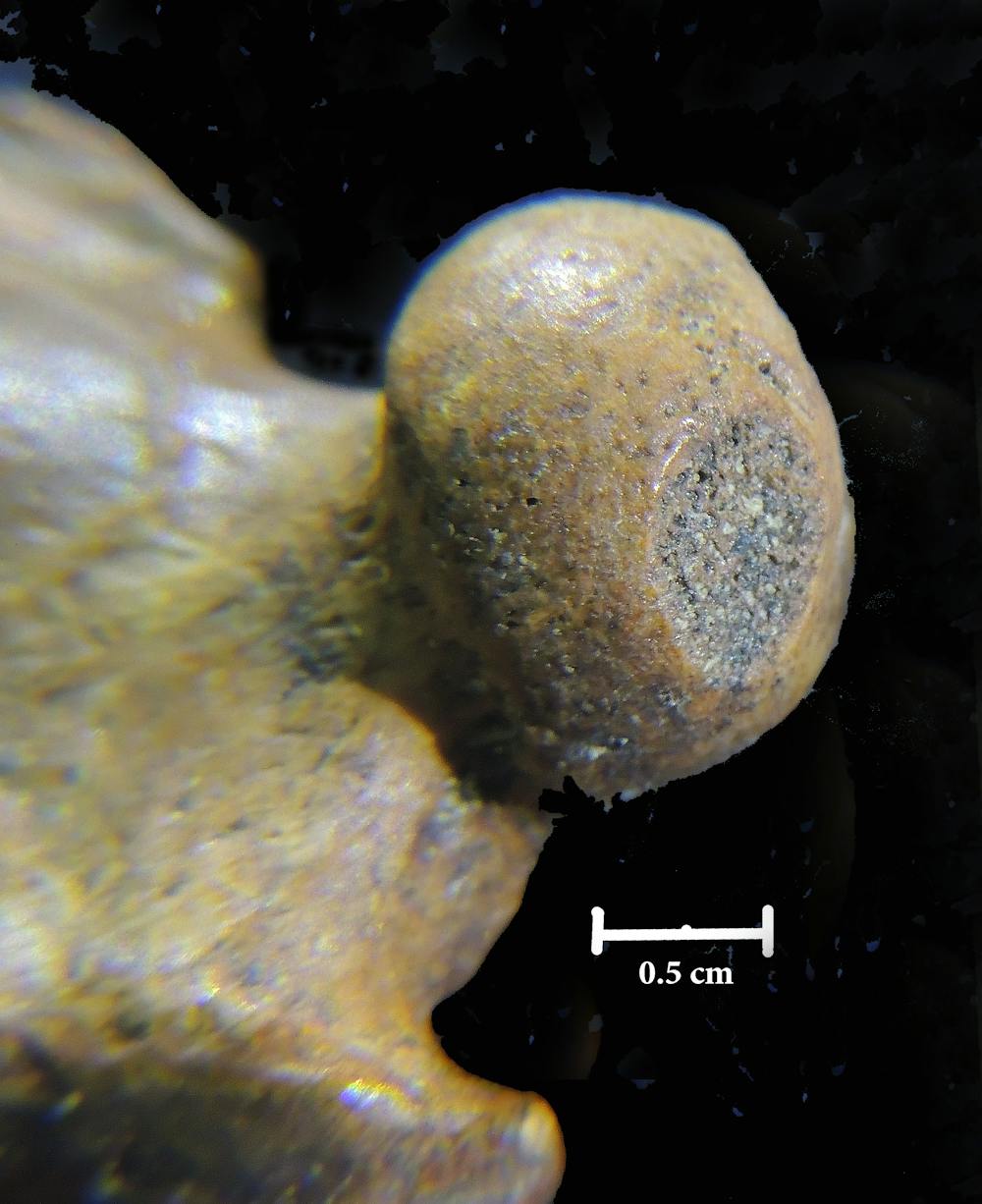
One of two chop marks on the head of a femur of an extinct lemur, Pachylemur. This individual’s hind limb was removed from the trunk at the hip joint, probably with a machete. Lindsay Meador, CC BY-ND

According to new dates on fossil bones with cut marks on them, humans arrived on Madagascar 10,500 years ago, much earlier than previously believed. But whoever these early people were, there’s no genetic evidence of them left on the island. New analysis of the human genetic diversity in modern Madagascar suggests the current population derives primarily from two waves of migration: first from Indonesia 3,000 to 2,000 years ago, and later from mainland Africa 1,500 years ago.

So it seems that people lived alongside the megafauna for thousands of years. How did the humans interact with the large animals?

Our new study found dozens of fossils with butchery marks. Cut and chop marks provide compelling evidence as to which species people were hunting and eating. Evidence of butchery of animals that are now extinct continues right up to the time of the megafaunal crash. Some people on Madagascar hunted and ate the megafauna for millennia without a population crash.

Evidence for a change in land use

If there was no obvious climate shift and humans lived alongside and sustainably hunted the megafauna for up to 9,000 years, what could have triggered the population crash?

The abrupt land use change might hold some clues. The transition from a forest-dominated ecosystem to a grassland-dominated ecosystem appears to be widespread. Scientists have identified this switch not only in the chemical signature of stalagmites but also in pollen grains buried in layers of mud at the bottom of lakes. Ancient lake sediments reveal two other changes occurred at the same time as the shift to grass species: an increase in charcoal from fires and an increase in the fungus Sporormiella, which is associated with the dung of large herbivores such as cows.

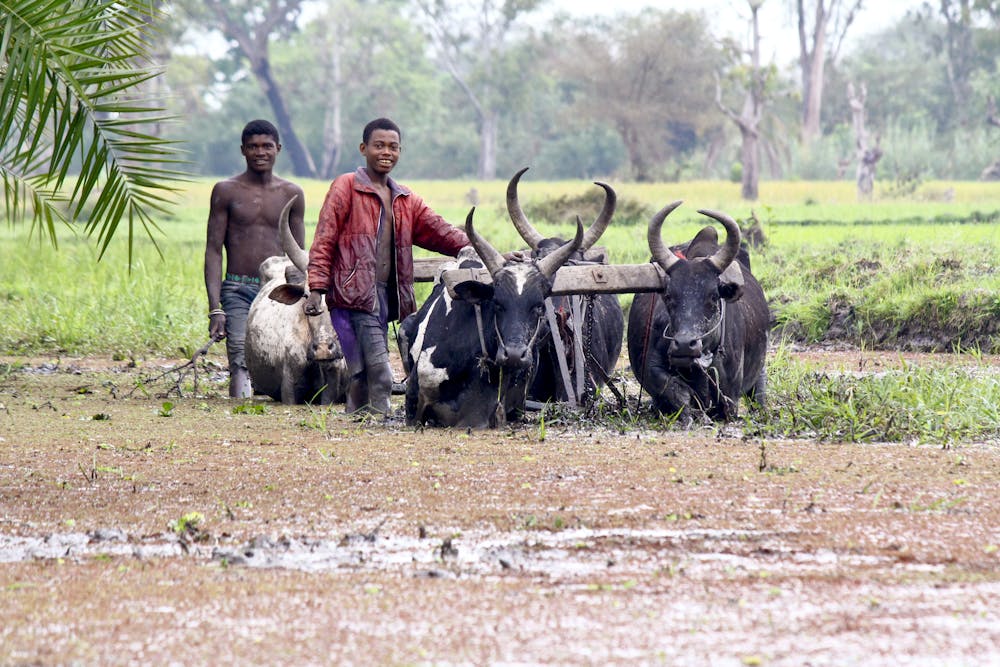
Evidence for simultaneous increases in grassland, fires, and cows and other domesticated animals points to a sudden change in Malagasy lifestyle: the introduction of cattle husbandry and slash-and-burn agriculture known locally as Tavy. Here, forests are cut down to make space for rice paddies, and grassland burned to promote the growth of nutritious seedlings for cow fodder.

This move away from foraging and hunting toward farming meant the land could support more people. The result was a rapid rise in the size of the human population – and that’s what we conclude spelled disaster for the megafauna.

Some Malagasy farmers plow agricultural fields in the traditional way. Damian Ryszawy/Shutterstock.com

Here lies the contradiction of the situation: Hunting megafauna for survival became less important as people could rely on their agriculture and livestock. But cut marks on fossil bones indicate that hunting didn’t altogether stop just because people had other food sources. It turns out that the impact on the megafauna of larger human populations hunting just to supplement their diet was greater than the impact of smaller human populations relying more heavily on the native animals as a vital food source.

Bringing together new data on land use changes, climatic histories, genetics, fossil ages and butchery of the megafauna, we call this change “the subsistence shift hypothesis.” Both the habitat loss and increase in human population arose out of a fundamental change in the way humans lived on Madagascar, from a more nomadic hunter-gatherer lifestyle to an agrarian society. We argue that it was this reorganization on Madagascar around A.D. 700-1000 that led to the crash in the megafaunal population.

Small populations of megafauna lived on in isolated pockets for another few centuries, but their fate was likely already sealed. The majority of the giant birds and animals that were once common across our planet have gone extinct. Many of the remaining giants, such as elephants and rhinos, are threatened or endangered. Will they go the same way as the Malagasy megafauna, casualties of humans’ changing lifestyles?The Conversation

Nick Scroxton, Postdoctoral Research Scholar in Paleoclimatology, University of Massachusetts Amherst; Laurie Godfrey, Emeritus Professor of Anthropology, University of Massachusetts Amherst, and Stephen Burns, Professor of Geosciences, University of Massachusetts Amherst

This article is republished from The Conversation under a Creative Commons license. Read the original article.

End the conspicuous silence of music in classrooms

Kendrick Lamar performing in Portugal. Jose Sena Goulao/EPA
Michael Shakib Bhatch, University of the Western Cape

One of the main challenges that we educators face is getting our students to actively interact with course content, and perhaps explore its application to “real life”. One of the solutions to this age-old problem seems to be right under our ears.

A few years back I stumbled upon the article “Music and Cultural Analysis in the Classroom: Introducing Sociology through Heavy Metal” by Jarl Ahlkvist. He explores cultural analysis of music as a pedagogical tool for enhancing the learning experience of sociology students who are new to the discipline. Ahlkvist beautifully illustrates the value of using music as a bridge between theory and reality, and as a way to get students to actively interact with course content. Since this chance encounter I try – perhaps, not enough – to use music in more or less the same way in my course.

On hearing that hip-hop artist Kendrick Lamar was awarded the Pulitzer prize for his album “Damn” earlier this year I couldn’t wait to share the news with my class and my colleagues teaching English literature. I imagined that they would share my excitement and enthusiasm about what the award meant for the hip-hop community and Lamar’s fans.

But this wasn’t the case.

Many of my colleagues didn’t even know who the iconic artist was. Students didn’t understand the big deal as they hadn’t really listened to the album as social commentary. My exchanges highlighted what I believe is the general disregard that South Africa’s schools and universities have for music as a tool for teaching. They haven’t grasped that it’s of equal scholarly importance to the written word.

This palpable absence of music in the lecture halls of South Africa’s universities and schools is problematic for a range of reasons. At some point it must be addressed, either for the sake of progress or at least experimentation.

But, for now, let me share my initial thoughts. To stimulate discussion around music and its potential role within the context of higher education I have distilled these into five concrete ideas.

Literature is not superior to music

As a record collector it’s glaringly obvious to me that an album is capable of providing as much social commentary, intellectual depth and perspective as a novel could. In fact, an album might, in addition, provide a more robust text for analysis within the context of lecture.

If, for instance, one is teaching a class on colonialism in Zimbabwe, you could draw on the text of the novel “Nervous Conditions” by Tsitsi Dangarembga to explain colonial subjectivity. But you could also play Chimurenga music and analyse it beyond the constraints of the written word. Chimurenga is music from Zimbabwe’s liberation struggle against colonial rule.

Music is the literature of the streets

There’s another reason for the urgent need to include sonic literacy in curricula. It’s to do with access.

Generally speaking, people engage with music more than with books. For example, someone might not read a book on “Black Lives Matter” – the movement started in 2013 that grew in opposition to violence against black Americans – but they will engage with an album like Lamar’s “To pimp a butterfly” from 2015. It not only provided the soundtrack of the times, but also provided social commentary as impactful as any book published on the topic.

Also, music is more accessible and readily available than books. It’s therefore often the best medium to reach larger numbers of people.

Music reflects the times

The music of Afrobeat pioneer Fela Kuti is a powerful telling of what was happening in Nigeria in the 1970s. It also reflects what ordinary people were experiencing and addresses the burning issues of the time.

The same can be said of artists like American icon Nina Simone, Jamaican reggae superstar Bob Marley and the “Lion of Zimbabwe”, Thomas Mapfumo.

These artists have managed to be the mouthpieces of particular generations and social movements. Their music has provided guidance in periods of turmoil. With this understanding in mind, how can we ignore these iconic voices when we engage with the context in which they are embedded?

Music is a vehicle toward the ‘decolonial’

As academics endeavour to decolonise learning spaces they need to consider why the written word takes priority over the spoken. Also, they should question why certain texts are treated with greater respect despite their obvious chronological and socio-cultural irrelevance.

And, why do academics generally treat text that’s accompanied by music as non-intellectual and inferior? I believe that music is an underutilised tool when it comes to steering curricula away from strictly Western and colonial models that have cemented the privilege of certain texts and modes in the knowledge economy.

Remain in the groove

It’s fairly safe to say that a substantial section of the novels and poems that have become permanent, canonical fixtures in curricula across the globe are outdated. This is particularly true since the advent of the internet and social media which have dramatically changed our reality, and how we (and our students) relate to it.

Within a fast moving, highly technologised and globalised era, music provides an analytical framework and sounding board for understanding a rapidly transforming society. To engage with society in real time we can’t always afford to wait for books to be published. We have to listen to the music, and dance while we’re at it.The Conversation

Michael Shakib Bhatch, Lecturer of English. PhD Candidate in Afrofuturism and African Studies, University of the Western Cape

This article is republished from The Conversation under a Creative Commons license. Read the original article.

Why ending HIV still rests on a working cure — as well as prevention

New HIV infections continue to drive the epidemic. Shutterstock Linda-Gail Bekker, University of Cape Town

The global AIDS response has made significant progress in reducing HIV infections and AIDS-related deaths. New HIV infections dropped by 16% from 1.9 million 2010 to 1.6 million in 2017. And the number of AIDS-related deaths decreased from 1.4 million to 940 000 in the same period.

But HIV/AIDS has not been brought under control and new infections continue to drive the epidemic. AIDS remains a leading cause of death in Africa.

Even if new infections are prevented, 36.9 million people with HIV around the world must take antiretroviral treatment to live a healthy life. While treatment is now as simple as taking a single pill a day, there are still many challenges to daily adherence, including ongoing stigma.

An ultimate solution would be a workable cure. At the recent Conference on Retroviruses and Opportunistic Infections researchers confirmed the second ever case of HIV remission or “cure”. Known as the “London patient”, the person went into remission after a stem cell transplant as part of his treatment for cancer. He emerged from the procedure free of both his life-threatening Lymphoma and need for anti-HIV therapy.

The “Berlin patient”, Timothy Brown, made global headlines in 2008 when scientists announced that he had been cured of HIV. It’s been 12 years since Brown was cured, after undergoing chemotherapy, total body irradiation and two stem cell transplants. Brown has been off treatment since the transplant and, after multiple tissue sampling procedures, has no remaining evidence of HIV reservoirs. The London patient is now the longest adult HIV remission after stem cell transplantation since the “Berlin patient”.

This development is a triumph for medical science as well as for the London patient. But, as exciting as it is, stem cell transplant is a gruelling and dangerous procedure and isn’t the magic bullet that will end HIV/AIDS. This is because it’s unfortunately not a scalable, feasible cure for the 39 million people currently living with HIV.

Stem cell transplants

The “London patient” was HIV positive, but it was his Hodgkin’s lymphoma that led to the need for a stem cell transplant.

The HI virus must link to a human host T cell in the blood or lymph nodes to replicate and infect the body. The virus attaches itself to a set of special links on the human T cell. If one of those links isn’t available due to genetic mutations, the virus may find it harder to get an infection foothold.

One such genetic mutation occurs in a link called the “CCR5 receptor”. Some people have this mutation naturally. The “London patient”, while on antiretroviral therapy and virally suppressed, had a bone marrow transplant as part of his lymphoma treatment. The bone marrow donor had the genetic mutation and passed it on to the “London patient” through the procedure, making it more difficult for HIV to replicate.

The “London patient” stopped taking antiretroviral therapy 16 months after the transplant. And 18 months later the virus remains undetectable. Usually, when a person with HIV stops treatment, the virus rebounds within the first month.

The achievement of remission in a second patient has provided further critical information to inform our understanding of how HIV infection occurs and the interaction between human cells and the virus.

As important as this work is, there’s no scalable cure yet and it’s also vital that researchers – and countries – keep putting effort into prevention. Important work continues to be done in this area.

Prevention

As HIV cure research goes on, so does research into HIV prevention tools, such as Pre-exposure prophylaxis (a daily pill that protects you from HIV infection) and the development of a preventative vaccine.

Two late stage vaccine trials are underway in sub-Saharan Africa. Results will be available in 2022. A preventative vaccine would also greatly enhance efforts to being the HIV epidemic under control.

A working cure, together with a preventative vaccine would be the ingredients for HIV eradication. Until then we need to get effective, accessible treatment for all who need it, while deploying the many prevention tools at our disposal.The Conversation

Linda-Gail Bekker, Professor of medicine and deputy director of the Desmond Tutu HIV Centre at the Institute of Infectious Disease and Molecular Medicine, University of Cape Town

This article is republished from The Conversation under a Creative Commons license. Read the original article.
Parties aren’t taking big issues seriously in South Africa’s election campaign

Mmusi Maimane, leader of South Africa’s main opposition party, the Democratic Alliance, on the campaign trail. EFE-EPA /Kim Ludbrook Steven Friedman, University of Johannesburg

Democracy is meant to be a system in which political parties compete to convince the people that they have answers to their most pressing problems. South Africa’s election campaign shows that it does not always operate that way.

The national and provincial elections on 8 May, in which the governing African National Congress (ANC) is hoping to end a decline in its support, is loud and hard-fought. But there is little connection between the problems facing South Africans and the issues over which the campaign is being fought.

South Africa’s core problem is a weak economy which is unable to grow at a rate which preserves people’s living standards. This is a consequence of deeply rooted problems, hold-overs of the country’s minority-ruled past which persist despite 25 years of democracy.

One such hold-over is the exclusion of millions of people from the economy’s benefits. Many South Africans don’t earn a wage or salary because the formal job market is closed to them. Neither government policy nor business practice have found ways to ensure that they can earn a living and contribute to the economy even if they have no formal job. This reduces both the talents available in the mainstream economy and the markets into which businesses can sell their products.

Another is the survival of the racial patterns of the past, albeit in new forms. This ensures a lack of trust between (largely black) government and (largely white) business which makes cooperation to address economic problems difficult.

Although a growing black middle-class has emerged, its members are probably the angriest people in the country because they believe their abilities and qualifications are not recognised by the white business people and professionals who, in their view, remain in charge.


Read more: White monopoly capital: good politics, bad sociology, worse economics


Besides damaging the economy, this ensures middle-class support for demands such as land expropriation without compensation. The ensuing disputes damage confidence and make growth much less likely.

About symptoms, not causes

If life worked in the ways in which textbooks say it does, these issues would be at the centre of the election campaign. We would expect parties to be competing to show that they have the best solutions to slow growth, the exclusion of millions from the economy, and racial tension.

They are doing no such thing. To the extent that the campaign is about anything other than name-calling, it is about symptoms, not causes.

If there is a key campaign issue, it is corruption. The ANC is trying to convince voters that its new leadership is committed to rooting out misuses of public funds and trust while the opposition insists that it has not mended its ways.

Corruption is obviously a huge problem. But there are two problems with the way it is being treated in the campaign. First, the parties are not trying to sell voters concrete plans to root out corruption. Rather, the campaign assumes that corruption will disappear miraculously if some politicians are replaced by others.

The governing party says its leadership will do the trick; the opposition, that only their leaders will. But the problem did not end when the ANC leadership changed and it persists in cities which the opposition won in 2016. It is deep-rooted whoever governs and will continue until concrete plans to tackle it are implemented. None of the parties have any plans.

Second, corruption is a symptom of the economic problem. If ambitious people cannot get into the middle-class because the doors to the formal economy’s benefits are closed to them, they will use politics to move upwards, and won’t necessarily play fair because the stakes are so high.

If poor people cannot get a wage or salary they will, if they can, attach themselves to politicians and support whoever gives them what they need to get on. If the imagination of the political class does not stretch further than claiming repeatedly that they are clean, their claims to good faith will be undermined by continued sleaze below the surface.

Immigration, and platitudes

A more sinister feature of the campaign is that parties are competing to show that they are tough on immigration.


Read more: South Africa’s Democratic Alliance plays populist immigration card


This makes economic problems harder to solve – the country has a skills shortage and keeping out people with abilities and qualifications has to harm the economy: the Minister of Finance, Tito Mboweni, said as much in his February budget speech.

Again this is a response to symptoms, not causes: while hostility to foreigners is a world-wide trend, it takes on its most virulent form when economies cannot meet people’s needs.

The racial issue is, in effect, ignored – except where politicians or parties see mileage in keeping alive the racial stereotypes which cause the problem in the first place. How to encourage South Africans to talk seriously, let alone bargain, across the divide is a non-issue for all the parties.

For the rest, the campaign is about platitudes. All the parties are in favour of creating millions of jobs but no-one knows how. And no-one addresses the reality that the jobs which they claim they will create were extinguished years ago and the crisis will persist until they start talking about how to include in the economy the hundreds of thousands who won’t have formal jobs.

They all support better government services and they all believe their leaders are better than anyone else’s. None of them seem able to move out of their rut to recognise what is ailing the country, let alone to suggest ways of solving problems.

Limitations of party politics

The textbook view would suggest that this means the country is incapable of addressing its problems. It does not. It simply means that party politics cannot do this. Progress will depend on whether the key interests in the economy and the society are capable of making deals which will address the problems. Whether or not this happens does not depend on what parties say on the hustings.

But the election is important. It will decide whether politicians are elected who are open to that deal-making. But, as long as the real issues are absent from the campaign, citizens will be given no say in how these issues are tackled. In a democracy, discussions on how to solve problems should happen in public and parties should implement solutions which voters have chosen. South Africa is still far away from that possibility.The Conversation

Steven Friedman, Professor of Political Studies, University of Johannesburg

This article is republished from The Conversation under a Creative Commons license. Read the original article.
Suspect behind the 2 Billion shilling fake currency probe linked to another scam

One of the suspects behind the scandalous 2 Billion shillings fake currency Ahmed Shah, has been charged at the Milimani Law Courts for obtaining Ksh. 3,300,000 from one Esther Wanjiru Mwaka.

 
The accused, Mohammed Ejaz alias Ahmed Shah allegedly pretended to be in a position to supply her with dental formula powder a fact he knew to be false. 


Appearing before Senior Principal Magistrate, Kennedy Cheruiyot at the Milimani law courts, he pleaded not guilty. 
Mohamed Ejaz is also a suspect in the Barclays bank 2billion fake currency scandal where he paused as a businesses man. 


He will be detained at Pangani police station for 2 days awaiting mention of the case on 3rd April, 201

Gold trader charged in court for not filing taxes

A man has been charged at the Milimani Law Courts for conducting and dealing with gold business and failing to file returns with the Kenya Revenue Authority. 
The accused Yuni Maalim Muktar, is also charged of being in possession of 7 gold metallic bars, 2 gold raw and 1 nugget gold weighing 4433.22grams valued at Ksh. 17,888,117 million without a permit from the state department of geology and mining. 
Appearing before Senior Principal Magistrate, Kennedy Cheruiyot he pleaded not guilty. However through his lawyer the accused is said to be  a junior employee of Pacific Ocean Company Limited and according to KRA his bank account had a huge amount of money and as a Kenyan citizen he defaulted the obligation to pay tax returns. Therefore, it is not yet clear how his bank account had such a huge amount of money. 
He will be released on a bond of Ksh.5M and an alternative cash bail of Ksh. 500,000.

Uhuru: You have brought honour and pride to Kenya, teacher Tabichi

President Uhuru Kenyatta has expressed his gratitude to teacher Peter Mokaya Tabichi for winning this year’s Global Teacher Prize and said the win will uplift the teaching profession in the country.

Speaking when he met teacher Tabichi at State House Nairobi, President Kenyatta said by winning the global award, the Kenyan teacher has demonstrated that commitment and integrity pays off.

“You have brought honour and pride to the people of Kenya and your win will raise the profile of the teaching profession,” said the President.

President Kenyatta said teacher Tabichi is a role model and an inspiration to society especially to fellow teachers and students.

Peter Tabichi who was declared the recipient of the 2019 Varkey Foundation Global Teacher Prize on Sunday in Dubai, is a mathematics and physics teacher at Keriko Mixed Day Secondary School in Pwani village, Nakuru County.

The award comes with a US$1 million prize, which is equivalent to Shs 100 million. The money will be paid in batches over a period of 10 years.

“This is just the beginning, you have become an inspiration and mentor to your colleagues so that they can also aspire to greatness,” said the President.


He commended teacher Tabichi’s commitment and devotion to the work of educating the youth saying Kenyans should aspire to emulate virtues and qualities demonstrated by teacher Tabichi.

“Peter embodies the spirit and qualities that every Kenyan should aspire to,” said the Head of State.

The President committed to donate Shs 20 million to Keriko Mixed Day Secondary School for the expansion of infrastructure and to encourage students to undertake science subjects.

During the award ceremony in Dubai, teacher Tabichi received glowing tributes from all over the world, with the founder of the prize, Sunny Varkey, expressing hope that Tabichi’s story, “will inspire those looking to enter the teaching profession and shine a powerful spotlight on the incredible work teachers do all over Kenya and throughout the world every day.”

At State House Nairobi, Tabichi was accompanied by CS Amina Mohammed, his family members led by his father Lawrence Tabichi and officials of the Varkey Foundation Global Teacher Prize.

Create a free account, or log in.

Gain access to read this content, plus limited free content.

Yes! I would like to receive new content and updates.

Sponsored Ad

Ad 1
Ad 2
Ad 3
Ad 4
Ad 5
Ad 6