Sponsored Ad

Ad 1
Ad 2
Ad 3
Ad 4
Ad 5
Ad 6
32.5 C
Kenya
Sunday, April 26, 2026
Home Blog Page 6089

Two Indians charged for engaging in employment without permits

BY PRUDENCE WANZA – Two Indians have been charged in court for engaging in employment without a permit to do so. 
The two, Vinesh Manji Halal alias Vipul Murji Patel and Purshottam Manji Vekeriya are accused of engaging in employment as hardware salesmen with Kutch International Limited in Ngara, Nairobi County.

They were arrested at Mellow Heights in Ngara Estate, Nairobi

The two pleaded not guilty to the charge before the Senior Principal Magistrate, Peter Ooko at the Milimani Lawn Courts. 
They were released on a cash bail of Ksh. 200,000 and have been further required to deposit their passports to the court. 
The case will be mentioned on 30th April 2019. 

From Right- Vinesh Manji Halal alias Vipul Murji Patel and Purshottam Manji Vekeriya are accused of engaging in employment | PRUDENCE WANZA

There have been rising cases of foreigners engaging in employment without authorizations from the Ministry of Immigration, resulting in mishandling of employees at their business premises and to some extent, being trafficked to other countries.

Uhuru calls for creation of opportunities for youth in Africa

President Uhuru Kenyatta has challenged African nations to create more opportunities for the youth to flourish.

He said the youth are the reason why liberation heroes fought hard for the freedom of African nations and that young people are the reason why African nations exist.

“I call upon African leaders to pay particular attention to the dreams and aspirations of our young people by creating a conducive environment for them to flourish. They are the reason our forefathers fought long and hard for self determination and they are the reason our free nations exist today,” said President Kenyatta.

President Kenyatta spoke at the Independence Stadium in Windhoek during celebrations to mark Namibia’s 29th independence day.

The Kenyan leader was the Chief Guest at the ceremony where he was conferred Namibia’s highest award of honour, the Grand Master of the Order of the Most Ancient Welwitschia Mirabilis, by his host President Hage Geingob for his contribution to democracy and good governance.

President Kenyatta challenged Africans to work harder to unlock the continent’s economic potential noting that Africa has already charted a roadmap through the African Union (AU) Agenda 2063 to accelerate progress towards the “Africa we want”.

He said Kenya remains committed to continue working closely with Namibia and other African nations to realise the goal of a peaceful and prosperous future for all.

“Borders must never be used as an excuse for us to retract back and forget the African spirit of Ubuntu. We remain stronger together,” said President Kenyatta.

The President said Kenya and Namibia enjoy close ties which started in the days the South West African People’s Organisation (SWAPO) fought hard to free the nation from the yoke of the apartheid regime.

Kenya also played a major role in ensuring that Namibia had a stable foundation when a large contingent of Kenyan forces, who were part of the United Nations Transition Assistance Group (UNTAG), remained behind after the end of the peace keeping mission.

The Government of Kenya funded the extended stay of its contingent who were tasked to train the Namibia Defence Forces and ensure stability of the country.

“Our shared values and aspirations and our enduring strong historical bonds of brotherhood have continued to grow from strength to strength,” said President Kenyatta.

President Kenyatta commended Namibia for its commitment to democracy, good governance and adherence to a rules based international system.

“Kenya continues to pursue the agenda of peace and security regionally and globally and believes that the absence of stability threatens our shared aspirations for promoting the well being of our community of Nations,” said President Kenyatta.

President Geingob thanked President Kenyatta for honouring his invitation to be the Chief Guest at the country’s independence day fete.

He said Namibia will always be grateful to the people of Kenya for their contribution to Namibia’s independence.

President Kenyatta, who is in Namibia for a State Visit, will meet Kenyans living in Windhoek. Namibia hosts a sizeable number of Kenyan professionals including medical experts, engineers and architects.

On Friday, President Kenyatta will be formally received at State House, Windhoek, by President Geingob.

The Kenyan leader will be accorded a 21 Gun Salute after which he will hold talks with his host. The two leaders will later chair bilateral talks that will be attended by high-level delegations from both countries.

On Saturday, President Kenyatta is scheduled to travel to Walvis Bay where he is expected to tour the country’s major seaport, NAMPORT, and later tour a number of factories.

This is the second time President Kenyatta is visiting Namibia, the first time being when he attended the inauguration of President Geingob in 2015.

In October last year, President Geingob paid Kenya a three-day visit during which he was the chief guest at the Mashujaa Day celebrations held at Bukhungu Stadium in Kakamega County.

Man threatening to kill security guard released on Sh. 1 Million bond

A man has been arraigned in court for threatening to kill one Yohana Imbwaka, a security guard at Vue Claire Place along Siaya road in Kileleshwa.

The accused, Kevin Obia, is also charged with behaving disorderly while carrying a firearm and pointing it at the security guard at Vue Claire Place.

Appearing before Senior Principal Magistrate, Peter Ooko, at the Milimani Law Courts he pleaded not guilty.

He has been released on a bond of 1Million Kenya Shillings or an alternative cash bail of Ksh. 500,000.

The case is set to be mentioned on 4th April and the hearing will be on 30th April 2019.

Barclays bank Fake 2Billion shillings suspects arraigned in Court

Four suspects nabbed in the 2Billion shilling Barclays bank fake currency heist have been arraigned in Milimani court.

Eric Adede, Ahmed Shah, Irene Wairimu and Elizabeth Muthoni have been were today presented before court to take their pleas. The four charged for being in possession of fake currency.

Ahmed Shah, Irene Wairimu, Eric Adede and Elizabeth Muthoni previously Held at the DCI

Investigating authorities have requested that they be given 10 days to finalize their investigations. This owes to a new discovery that gold was also found. The fake currency will be taken to the central bank of Kenya to verify if the stash is indeed fake or not whereas the gold will be taken to the geology department to determine its fake or not.

The lawyers of the two suspects however requested that their clients be released on bail as they are not at flight risk. The court ruling which will be administered by Zainab Abdul, will be given later today

Sex and sport: how to create a level playing field

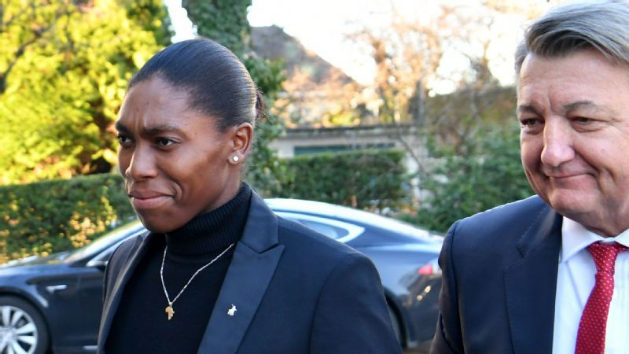
South Africa’s runner Caster Semenya, the current 800-meter Olympic gold and world champion, arrives with her lawyer Gregory Nott (right) for hearings at the international Court of Arbitration for Sport. EPA/Laurent Gillieron, CC BY-NC-SA Brenda Midson, University of Waikato

The Court of Arbitration for Sport is due to rule on an application by the International Association of Athletics Federations (IAAF) that athletes such as South Africa’s Caster Semenya, who have “differences of sexual development”, must medicate to reduce their testosterone levels for six months before competing internationally.

The IAAF claims that the proposed rules will “create a level playing field to ensure all female athletes have an equal chance to excel”. Semenya has filed an appeal against the IAAF.

Those who argue that women with differences of sexual development and transgender should not be allowed to compete in women’s sports usually claim that their testosterone levels and different muscle-to-fat ratios give them an unfair advantage over their competitors. But excluding these women from competition is unfair and potentially a human rights violation.


Read more: Why it might be time to eradicate sex segregation in sports


A breach of human rights

Those with differences of sexual development include women who are born with genetic conditions that give them athletic advantages more commonly attributed to males. Hyperandrogenism, for example, causes the individual to produce more testosterone than is typically present in women.

Semenya and India’s Dutee Chand are both thought to have this condition and have been subjected to intense public scrutiny as a result.

There is also the issue of transgendered women athletes who want to compete against other women. Transgender New Zealand weightlifter, Laurel Hubbard, competed in the 2018 Commonwealth games, amid complaints from the Australian Weightlifting Federation. Another New Zealander, Kate Weatherly, a transgender downhill mountain bike rider, has faced the same kind of scrutiny and challenges to her right to compete against other women.

There is disagreement among experts about whether transgender women do in fact have a physical advantage. Some evidence suggests the opposite is true and the therapy required to transition to a woman results in lower levels of testosterone than are found in women generally.

Laurel Hubbard has been subjected to monthly testosterone tests and her testosterone levels are lower than a “normal” female. Part of the problem here, too, is the assumptions about the characteristics of “normal”.

The level playing field is a myth

These issues aside, what precisely is an unfair advantage? Those who believe transgender women and women with different sexual development should be able to compete in women’s categories point to athletes such as Michael Phelps who has extraordinary physical characteristics that give him a huge competitive advantage in swimming, including his long arms and flexible feet. What makes his advantage fair? Is it because these are qualities Phelps was born with?

If so, then Semenya and Dutee and others who are born intersex or with hyperandrogenism should not cause sporting organisations any problems. But what about transgender athletes? Does the fact they have “chosen” to become women mean they have brought about this state of affairs and so they can justifiably be excluded? And if so, what of all the competitive advantages other women bring with them?

The level playing field is a myth. Aside from these genetic or biological advantages, athletes all differ in terms of the resources they have available to buy the best equipment, trainers and coaches and so on. Should these factors be considered as giving athletes an “unfair” advantage?

Self-identification

In New Zealand, under section 28 of the Births, Deaths, Marriages and Relationships Act 1995, a person may apply to the Family Court to have their birth certificate record they are of the opposite sex to that already recorded on the document. There are certain conditions that must be satisfied, and the application must be supported by “expert medical evidence”.

But a new bill proposes to replace the existing process with one based on self-identification, to “allow people to have greater autonomy over their identity”. The Select Committee also recommended including the options of “inter-sex” and “X (unspecified)” to recognise non-binary sexual and gender identities.

A self-identification policy does have the potential to impinge on women’s rights as well as for abuse by males who do not actually identify as women. Both Semenya and Chand have identified as women from birth. Hubbard and Weatherly are also women, notwithstanding that they were assigned a different biological sex at birth.

They should all be treated as such for all purposes. Regardless of their biological sex – if in fact there is such an incontrovertible thing – they are not men masquerading as women to secure a competitive advantage. A nuanced approach is called for; while a self-identification policy may not be the answer, neither is an approach that requires medical intervention as a pre-requisite for recognition.The Conversation

Brenda Midson, Editor, New Zealand Law Journal; Senior Lecturer in Law, University of Waikato

This article is republished from The Conversation under a Creative Commons license. Read the original article.

Four ways social media platforms could stop the spread of hateful content after of terror attacks

Bertie Vidgen, University of Oxford

The deadly attack on two mosques in Christchurch, New Zealand, in which 50 people were killed and many others critically injured, was streamed live on Facebook by the man accused of carrying it out. It was then quickly shared across social media platforms.

Versions of the livestream attack video stayed online for a worrying amount of time. A report by the Guardian found that one video stayed on Facebook for six hours and another on YouTube for three. For many, the quick and seemingly unstoppable spread of this video typifies everything that is wrong with social media: toxic, hate-filled content which goes viral and is seen by millions.

But we should avoid scapegoating the big platforms. All of them (Twitter, Facebook, YouTube, Google, Snapchat) are signed up to the European Commission’s #NoPlace4Hate programme. They are committed to removing illegal hateful content within 24 hours, a time period which is likely to come down to just one hour.

Aside from anything else, they are aware of the reputational risks of being associated with terrorism and other harmful content (such as pornography, suicide, paedophilia) and are increasingly devoting considerable resources to removing it. Within 24 hours of the Christchurch attack, Facebook had banned 1.5m versions of the attack video – of which 1.2m it stopped from being uploaded at all.

Monitoring hateful content is always difficult and even the most advanced systems accidentally miss some. But during terrorist attacks the big platforms face particularly significant challenges. As research has shown, terrorist attacks precipitate huge spikes in online hate, overrunning platforms’ reporting systems. Lots of the people who upload and share this content also know how to deceive the platforms and get round their existing checks.

So what can platforms do to take down extremist and hateful content immediately after terrorist attacks? I propose four special measures which are needed to specifically target the short term influx of hate.

1. Adjust the sensitivity of the hate detection tools

All tools for hate detection have a margin of error. The designers have to decide how many false negatives and false positives they are happy with. False negatives are bits of content which are allowed online even though they are hateful and false positives are bits of content which are blocked even though they are non-hateful. There is always a trade off between the two when implementing any hate detection system.

The only way to truly ensure that no hateful content goes online is to ban all content from being uploaded – but this would be a mistake. Far better to adjust the sensitivity of the algorithms so that people are allowed to share content but platforms catch a lot more of the hateful stuff.

2. Enable easier takedowns

Hateful content which does get onto the big platforms, such as Twitter and Facebook, can be flagged by users. It is then sent for manual review by a content moderator, who checks it using predefined guidelines. Content moderation is a fundamentally difficult business, and the platforms aim to minimise inaccurate reviews. Often this is by using the “stick”: according to some investigative journalists, moderators working on behalf of Facebook risk losing their jobs unless they maintain high moderation accuracy scores.

During attacks, platforms could introduce special procedures so that staff can quickly work through content without fear of low performance evaluation. They could also introduce temporary quarantines so that content is flagged for immediate removal but then re-examined at a later date.

3. Limit the ability of users to share

Sharing is a fundamental part of social media, and platforms actively encourage sharing both on their sites (which is crucial to their business models) and between them, as it means that none of them miss out when anything goes viral. But easy sharing also brings with it risks: research shows that extreme and hateful content is imported from niche far-right sites and dumped into the mainstream where it can quickly spread to large audiences. And during attacks it means that anything which gets past one platform’s hate detection software can be quickly shared across all of the platforms.

Platforms should limit the number of times that content can be shared within their site and potentially ban shares between sites. This tactic has already been adopted by WhatsApp, which now limits the number of times content can be shared to just five.

4. Create shared databases of content

All of the big platforms have very similar guidelines on what constitutes “hate” and will be trying to take down largely the same content following attacks. Creating a shared database of hateful content would ensure that content removed from one site is automatically banned from another. This would not only avoid needless duplication but enable the platforms to quickly devote resources to the really challenging content that is hard to detect.

Removing hateful content should be seen as an industry-wide effort and not a problem each platform faces individually. Shared databases like this do also exist in a limited way but efforts need to be hugely stepped up and their scope broadened.

In the long term, platforms need to keep investing in content moderation and developing advanced systems which integrate human checks with machine learning. But there is also a pressing need for special measures to handle the short-term influx of hate following terrorist attacks.The Conversation

Bertie Vidgen, PhD Candidate, Alan Turing Institute, University of Oxford

This article is republished from The Conversation under a Creative Commons license. Read the original article.

Tropical cyclone Idai: the storm that knew no boundaries

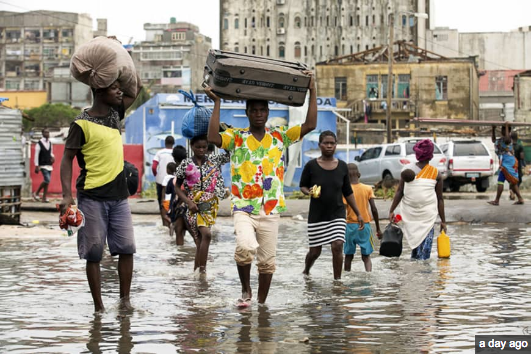
People leaving their homes in the flooded section of Praia Nova, Beira, Mozambique in the wake of tropical cyclone Idai. Denis Onyodi/ IFRC handout Jennifer Fitchett, University of the Witwatersrand

Tropical cyclone Idai has made headlines across southern Africa throughout the month of March. Lingering in the Mozambique Channel at tropical cyclone intensity for six days, the storm made landfall in Beira, Mozambique in the middle of the month, then tracked in a westerly direction until its dissipation.

The greatest impact of the storm was experienced on landfall. It caused flooding, excessive wind-speed and storm surge damage in the central region of Mozambique. Adjacent countries of Malawi and Zimbabwe experienced severe rainfall, flooding and damage from the high wind speed. Madagascar also experienced bouts of high rainfall during the storm’s pathway to Beira.

The flooding has left hundreds of thousands of people homeless and displaced across the region while the death toll has continued to rise in the week following landfall. The effects of the cyclone were felt as far south as South Africa and introduced rolling blackouts due to damaged transmission lines that supply the country with 1100 MW of power from Cahora Bassa in northern Mozambique.

Historically, nine storms that had reached tropical cyclone intensity made landfall on Mozambique. A larger number of weaker tropical systems, including tropical storms and depressions affect the region, with a total landfall of all tropical systems of 1.1 per annum.

The most severe tropical cyclone to make landfall in Mozambique was tropical cyclone Eline in February 2000. It had a category 4 intensity on landfall and resulted in 150 deaths, 1000 casualties from flooding, 300 000 people displaced and four ships sunk.

The storms off Africa’s east coast are weaker than their northern hemisphere counterparts. Category 4 and 5 tropical cyclones make landfall at a near-annual rate in the North Atlantic and North Pacific.

Why the wide impact

Why have so many countries been affected?

Tropical cyclones are large storm systems. Immediately surrounding the eye of the storm – a region of calm weather, no wind and no rain – are spirals of storm clouds that span a minimum radius of ~100km. These cloud bands represent the thunder storm conditions, with the rain and winds typical of a tropical cyclone.

A ~100km radius is typical of category 1 tropical cyclones, the lowest intensity ones. As the storms intensify to categories 2, 3, 4 and 5, the size increases significantly. This means that a high intensity storm, such as tropical cyclone Idai, has a range of impact significantly larger than the storm track that it follows.

In recent years concerns have been growing about the impact of climate change on cyclones. Research has shown that changes to the world’s temperature, as well as ocean warming, are responsible for an increase in the severity of tropical cyclones. This has recently been researched for the South Indian Ocean. As the ocean is warming, the region which experiences temperatures conducive to tropical cyclone formation is expanding and temperatures in the tropical regions are becoming warm enough for cyclone intensification. Category 5 tropical cyclones, which have been experienced in the North Atlantic for almost a century, started to occur in the South Indian Ocean since 1994, and have occurred increasingly frequently since then.


Read more: Rising sea temperatures are shaping tropical storms in southern Africa


This means that as climate change continues and intensifies, so too do these storms. This will mean a greater frequency of not only severe damage from storms, but damage over a larger region. In addition to the impact of warming on the storm intensity, climate warming has also been found to increase the expanse of the storms within any given intensity.

Cyclone Idai

So how intense was tropical cyclone Idai?

Storm track records, which include the geographic location of the storm at set time intervals, the wind speed and the atmospheric pressure, are documented by a number of regional climatological organisations. This data is synthesised by the National Oceanographic and Atmospheric Association, providing a useful resource for scientists to explore storm behaviour.

Tropical cyclones are classified on the basis of their wind speed and central pressure. The weakest storms to be classified as tropical cyclones – category 1 – have a minimum sustained wind speed of 119km/hr. At category 3 the storms have a minimum wind speed of 178 km/h. As the category increases, so too does the potential for damage. Category 1 storms are classified as resulting in dangerous winds that cause some damage, whereas category 3 storms are expected to cause devastating damage.

The history of tropical cyclone Idai is documented in these records. The cyclone reached category 3 intensity between 03:00-06:00 on the 11th March 2019, while positioned at its most easterly extent of the storm track. By 03:00 on the 12th March the storm had dissipated to category 2 intensity, and it fluctuated between intensities of categories 2 and 3 over the 36 hours that followed.

From noon on the 13th March the storm maintained a category 3 intensity which persisted until landfall on the 14th.

What needs to be done

Storms that affect many countries present particular challenges. They clearly have no regard for political boundaries. The fact that they affect lots of countries presents challenges in both preparing for storm events in a proactive way and responding to prevent loss of life and livelihood. This requires countries to communicate effectively with one another, to provide coherent messages about the forecasting of the storm track and potential damage, and to facilitate effective evacuations.

This storm provides a grim prospect of the future of tropical cyclones in a region under continued threat from climate change. Effective adaptation to minimise storm damage is essential in preparing the region for an increase in the severity of these storms. Disaster risk management plans are also very important to minimise the loss of life.The Conversation

Jennifer Fitchett, Senior Lecturer in Physical Geography, University of the Witwatersrand

This article is republished from The Conversation under a Creative Commons license. Read the original article.


Big 4 Agenda presents great opportunities for the youth, says Uhuru

President Uhuru Kenyatta told the youth they stand to benefit from the many employment, job creation and economic empowerment opportunities presented by the Big 4 Agenda projects.

He told Kenyan youth that the transformative development blueprint presents a strong enabling platform to enable them secure a bright future and maximize their potential.

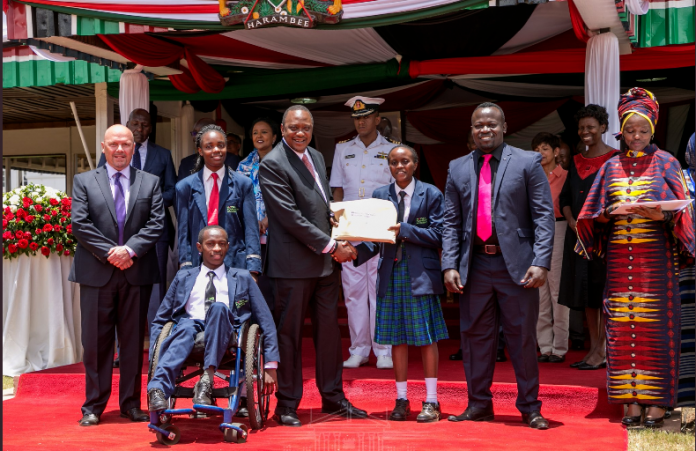
“The Big Four Agenda provides young persons with multiple avenues for self fulfilment, economic empowerment, dignified living and service to Kenya,” said the President when he addressed hundreds of youth at State House , Nairobi, during celebrations to honour the 2019 awardees of the President’s Award Kenya

1601 students drawn from various institutions who received their Gold Awards under the President’s Award Kenya Programme

A total of 1601 students drawn from various institutions across the country received their Gold Awards under the President’s Award Kenya Programme whose role is to nurture key values of team work, resilience, hard-work, determination, leadership, perseverance, community service, discipline, self-reliance and pragmatic thoughts for tangible solutions.

The winners were drawn from national institutions which included academies, secondary schools and universities (both private and public), borstal institutions, technical knstitutes and
the National Youth Service.

The President said the Big-4 agenda programmes are structured to support the development of education, infrastructure, Information Communication Technology, the arts, culture and sports among other sectors, all aimed at benefiting the youth.

“It is the most exciting and rewarding time to be a young person in our nation’s history,” the President told the over 2000 youths.

He added: “You are fortunate to be living in an exciting time, full of opportunities that previous generations could not even have dreamed of.”

The President challenged young people to avoid falling for the lures of modern life by wasting their youth and vigour in pursuits and actions that add no value to their lives.

“Use your time, energy and effort well; take advantage of the facilitative measures that the government has put in place, be dedicated and diligent, and you will prosper beyond your wildest dreams,” he said

President Kenya enumerated other opportunities that the government has recently tapped into and which are highly beneficial for the youth.

“The digital era and my government’s commitment to fostering the innovations and creativity of Young Kenyans is bound to open up new frontiers for you and your peers,” he told the youth.

The President said the decisive action to re-invigorate the education system through a new curriculum, government focus on digital learning and the development of ICT infrastructure and equipment, the ongoing connection of all public schools to the electricity grid and the seamless 100 per cent transition for all learners to secondary school marks a new era for Kenya’s youth.

“These interventions are intended to ensure that our young persons are provided with the positive and enabling environment to excel inside and outside the classroom, to acquire the skills and know-how to navigate the modern world,to be self-reliant and innovative and to have a holistic learning experience,” he said.

The President urged the awardees to be the country’s brand ambassadors for courtesy, civic responsibility, community service and action, integrity, hard work and excellence.

Other speakers at the ceremony included sports CS Ambassador Amina Mohammed and the President’s Award Kenya Executive Director Nellie Munala.

Uhuru calls for removal of barriers that hinder farmers from enjoying coffee profits

President Uhuru Kenyatta has called for the urgent removal of all barriers that hinder coffee farmers from reaping maximum profits from the cash crop.
The President said that lack of proper regulations had given room for middlemen to benefit from coffee at the expense of hardworking farmers thus leading to a decline in production of the crop that was once one of Kenya’s leading foreign exchange earners.
“Coffee is one of Kenya’s key cash crops but unfortunately it has been facing challenges. There is need to streamline the sector so that farmers can benefit,” President Kenyatta said.
President Kenyatta was speaking during a meeting with the International Coffee Organization (ICO) Executive Director José Sette who paid him a courtesy call at State House, Nairobi.
The ICO Executive Director briefed the President on the forthcoming 124th Session of the International Coffee Council meeting that will be held in Nairobi next week, from 25th to 29 March.
Mr Sette said the meeting, which will be attended by delegates from both coffee producing and consuming countries, will provide an opportunity for Kenyan farmers to exchange ideas with their counterparts from other countries and experts in the search for solutions facing the sector.
While acknowledging that Kenya is globally renowned for its premium quality coffee, the ICO Executive Director praised the ongoing efforts by the government to get coffee farming back on track for the benefit of farmers including finding new markets for the crop.


The meeting was attended by the Head of Public Service Joseph Kinyua, Embu Senator Peter Njeru Ndwiga and Chairman of the Coffee Sub-Sector Reforms Implementation Committee Prof. Joseph Kieyah.President Uhuru Kenyatta has called for the urgent removal of all barriers that hinder coffee farmers from reaping maximum profits from the cash crop.
The President said that lack of proper regulations had given room for middlemen to benefit from coffee at the expense of hardworking farmers thus leading to a decline in production of the crop that was once one of Kenya’s leading foreign exchange earners.
“Coffee is one of Kenya’s key cash crops but unfortunately it has been facing challenges. There is need to streamline the sector so that farmers can benefit,” President Kenyatta said.
President Kenyatta was speaking during a meeting with the International Coffee Organization (ICO) Executive Director José Sette who paid him a courtesy call at State House, Nairobi.
The ICO Executive Director briefed the President on the forthcoming 124th Session of the International Coffee Council meeting that will be held in Nairobi next week, from 25th to 29 March.
Mr Sette said the meeting, which will be attended by delegates from both coffee producing and consuming countries, will provide an opportunity for Kenyan farmers to exchange ideas with their counterparts from other countries and experts in the search for solutions facing the sector.
While acknowledging that Kenya is globally renowned for its premium quality coffee, the ICO Executive Director praised the ongoing efforts by the government to get coffee farming back on track for the benefit of farmers including finding new markets for the crop.
The meeting was attended by the Head of Public Service Joseph Kinyua, Embu Senator Peter Njeru Ndwiga and Chairman of the Coffee Sub-Sector Reforms Implementation Committee Prof. Joseph Kieyah.

First Lady holds talks with Ford Foundation President

First Lady Margaret Kenyatta has held talks with the President of the Ford Foundation Darren Walker.
During their talks, the First Lady expressed gratitude to the Ford Foundation for its continued support of her Beyond Zero Initiative which has greatly contributed to the success of the programme.
The First Lady said she looks forward to a continued partnership with the Ford Foundation to enable the Beyond Zero programme fulfil its goals of enhancing access to quality healthcare to vulnerable groups in Kenya.


The First Lady who visited the Ford Foundation Centre, was taken on a tour of the facility by the foundation’s East African Regional Director Maurice Makoloo.
First Lady Margaret Kenyatta is in New York to attend the ongoing 63rd Session of United Nations Commission on Status of Women.

Create a free account, or log in.

Gain access to read this content, plus limited free content.

Yes! I would like to receive new content and updates.

Sponsored Ad

Ad 1
Ad 2
Ad 3
Ad 4
Ad 5
Ad 6