Sponsored Ad

Ad 1
Ad 2
Ad 3
Ad 4
Ad 5
Ad 6
27.3 C
Kenya
Saturday, May 9, 2026
Home Blog Page 6127

Uhuru Launches Kenya Mortgage Refinance Company at Windsor Golf Club

I’m delighted to join you this morning to grace this important occasion, the launch of the Kenya Mortgage Refinance Company (KMRC).

I note with appreciation this initiative is a partnership between the Government and the private sector. It demonstrates the possibilities of the growing synergy between the private sector and the Government towards the delivery of public goods. 

There is no doubt at all we are making progress in the quest for the transformation of the lives of our people.  This ground-breaking initiative only adds the momentum to our quest to enhance access to affordable housing for all. 

As we continue to experience the dividends of our growing population, the housing supply has, over the years, not kept pace with the concurrent growth in the demand for houses.  As a result, this has led to a huge housing deficit, particularly for the lower income households.  

In response to the compelling needs of our fellow citizens, under the Big 4 Agenda, we are making deliberate interventions in the housing sector to make it more responsive to middle and lower income segment of population. 

The intervention is based on recognition that reaching the goal of adequate, safe and affordable housing for all, especially the lower income group, requires a fundamental rethinking of the traditional approach used in the past.  A new approach is required, one that establishes the right legal, regulatory, and market environment for the efficient deployment of private and public capital. 

Kenya has a dynamic mortgage industry; it has been growing rapidly and becoming increasingly competitive.  A number of institutions are now in this sector, including banks, microfinance banks and Savings and Credit Cooperative Organizations (SACCOs). 

According to the Central Bank of Kenya, total outstanding mortgage debt in 2017 stood at about Ksh. 223 Billion.  This represents only about 2.74% of GDP, which clearly shows clearly in Kenya the industry is still very small.  South Africa, as an example, boasts of a mortgage sector accounting for 31% of its GDP

Housing mortgage finance in Kenya remains below its potential.  The major inhibiting factors to the growth of the Kenyan mortgage market include lack of access to long-term finance, high interest rates on mortgages, high cost of houses, high incidental cost of mortgages, low levels of income and difficulties with property registration and titling. 

This seminal initiative that we are launching today is a policy response to the barriers that hinder access to affordable housing.  We have recently rolled out the policy framework that will guide the transformation of the housing sector.  

 On the financing side, the Government has been supporting initiatives aimed at developing innovative instruments to address the housing financing challenges.   Establishment of the Kenya Mortgage Refinance Company that we are launching today is the highlight of these initiatives. 

 In addition, the National Treasury, in consultation with other key stakeholders is developing a credit guarantee scheme.  Once operational, it will support a large proportion of creditworthy potential borrowers that are currently not able to access loans because they do not have a “formal salary”.  The scheme will include a housing guarantee mechanism for those with low incomes or employed in the informal sector to help expand access to housing finance.  

The Launch of Kenya Mortgage Refinance Company today, offers the housing finance market a credible, professional and high-quality large-scale medium to long-term finance. 

 Based on international experience, mortgage refinance facilities are generally owned by the banks or institutions, which use it for refinancing.   The deliberate inclusion of SACCOs in the solution in Kenya, is unique and would broaden the reach of housing finance to borrowers with low and informal incomes.

Kenya Mortgage Refinance Company will be expected to provide fixed rate long-term funding to primary mortgage lenders, which would be passed to home buyers.  Fixed rate mortgages would protect homeowners from the risk of interest rate volatility, hence allowing them to be in control of their monthly commitments and afford their homes. 

The Kenya Mortgage Refinance Company will also benefit the financial institutions by providing a liquidity back-stop and facilitate a much greater level of maturity transformation. 

Indeed, the scheme will enable financial institutions to better leverage their deposit base for on-lending as mortgage loans.

In order for this solution to be successful, primary mortgage lenders need to position themselves to provide more access to affordable mortgage finance.  Equally important, developers too need to position themselves to supply, innovative and affordable housing solutions. This not only allows the property market to function well, but it also stimulates demand at the lower end. 

And the end result is a win-win for both government, and the private sector lenders and developers.

I wish at this point to thank the World Bank and the African Development Bank, for agreeing to support this initiative, committing Ksh. 25 Billion and Ksh. 10 Billion, respectively.  

I am happy to say the capitalization of Kenya Mortgage Refinance Company has been finalized as well as the development of the operational framework and the constitution of the Board.  The Company is now ready to commence business and, therefore, Kenyans can now count on us to deliver lower interest rates to finance acquisition of their homes. 

My Administration’s commitment to the people of Kenya, as enshrined in the Big 4, is steadfast and on course.   Every citizen deserves to live a dignified life that guarantees access to basic needs, provision of a decent shelter over their head being one of them.  

We expect the refinance company to significantly contribute to the development of the housing finance market in Kenya and help reverse the low mortgage penetration, by increasing the number of mortgages from the current 26,000 to over 60,000 by the year 2022. 

Finally, Ladies and Gentlemen, I want to thank the team at National Treasury for working tirelessly to make this project a reality.  I also want to once again, thank the World Bank and the African Development Bank for providing technical and financial support.  I also thank all financial institutions that have graciously agreed to partner with Government as shareholders of Kenya Mortgage Refinance Company. 

With those remarks, it is now my distinguished pleasure and privilege to declare the KENYA MORTGAGE REFINANCE COMPANY, officially launched.

Thank You and God Bless You.

Two Uzbekistan Nationals charged in court for using forged passports.

BY PRUDENCE WANZA – Two Uzbekistan nationals have been charged in court for using forged passports while traveling to Kenya.

They are accused that on 18th May, 2019 at Jomo Kenyatta International Airport, they were found in possession of Turkish passports whose bio data was forged.
They were arrested at JKIA upon arrival from Kiev, Ukraine aboard a Qatar airways flight.
The two, Zarine Shakirova and Maftuna Shakirova pleaded not guilty before Chief Magistrate Francis Andayi at the Milimani Law Courts.
They were released on a bond of Sh. 500,000 and an alternative cash bail of Sh. 300,000.
The case will be mentioned on 4th June, 2019 and the hearing on 21st July, 2019.

UNAIDS applauds Beyond Zero’s innovative approaches in Kenya’s HIV/AIDS response

UNAIDS Executive Director Gunilla Carlsson has commended Beyond Zero’s innovative approaches in HIV/AIDS response and health services delivery in Kenya.

Ms Carlsson assured the First Lady of her organization’s continued support in the fight against the HIV/AIDS scourge and the ongoing measures aimed at taking health services closer to Kenyans in need through the medical safaris.

“You are an incredible advocate for maternal and child health. We are impressed by your contribution to the health sector through the Beyond Zero Initiative,” the UNAIDS head told First Lady Margaret Kenyatta.

Ms Carlsson was speaking when she hosted First Lady Margaret Kenyatta at the UNAIDS headquarters in Geneva, Switzerland, where the First Lady shared experiences of her work through the Beyond Zero Initiative in support of the delivery of healthcare services in Kenya during a townhall meeting attended by hundreds of health stakeholders.

Addressing the meeting, the First Lady said she needed to do something significant to bring everyone’s attention to the high level of prevalence of HIV/AIDS in Kenya at the time she became First Lady.

“I needed to urge the government, plus local and international policy makers, to do more to safeguard the rights of women, mothers and children in the health arena. This formed the birth of my Beyond Zero initiative focusing on maternal and child health,” the First Lady said.

She said Beyond Zero, through its second strategic framework covering the period 2018 to 2022, is investing in interventions to reduce new HIV infections among adolescents and the complete elimination of mother-to-child transmission which threatens to erode the gains made towards curbing new HIV infections in Kenya.

The First Lady cited the Beyond Zero Medical Safaris, a health delivery model that takes free medical services to vulnerable communities in hard to reach regions of the country, as an example of the Beyond Zero’s innovative approaches in promoting better responses to HIV/AIDS and other health challenges.

“These services target women, children, people living with disability, the elderly, and adolescents. So far, these medical safaris have positively impacted over 20,000 lives and we plan more over the next year,” she said.

Outlining some of the achievements of the Beyond Zero initiative, the First Lady said the unique resource mobilization model through the half marathons raised funds to purchase 52 mobile clinics which have increased access to health services, including combating HIV/AIDS across the country.

“Beyond Zero has been instrumental in reducing maternal and child mortality from 52 per 1,000 to 39 per 1,000 live births,” the First Lady explained, pointing out that the mortality rate for children under five years has also gone down from 74 per 1,000 to 52 per 1,000 over the last six years.

“We galvanised resources through unique partnerships with NGO’s, the private sector and individuals through the Beyond Zero marathons including the most recent one held in March 2019,” she added.

To scale up the war against HIV/AIDS, the First Lady challenged individuals, communities and nations to join the efforts to end the scourge.

“I would like to encourage all of us here to take on the spirit of icons like Professor Wangari Mathaai. To turn your ‘little thing’ into a movement that will bring change. Let it grow to make a difference to an individual, to a community, to nations and to the world,” she challenged.

“The HIV/AIDS war continues, we cannot leave the battlefield just yet. We must recommit ourselves towards ‘Ending HIV by 2030’ so that in the years to come, when HIV/AIDS will be spoken of as a thing of the past, we shall remember the roles we played however big or small, in ensuring we left no one behind,” she continued.

First Lady Margaret Kenyatta informed the meeting that her Beyond Zero interventions work closely with communities that provide invaluable insights on how to be more impactful.

“We have incorporated the valuable support of community volunteers and community health workers who provide critical human resources support, especially in rural areas, to drive the health agenda,” she said.

Emphasizing the need for a multi-sectoral approach in the delivery of healthcare services, the First Lady said working with communities has shown that health interventions must be complemented by empowerment and education for women and young people.

“We know that a young girl who is married off early is likely to be at risk of contracting HIV or developing obstetric fistula and haemorrhage which cause the highest rate of maternal deaths among our young people,” the First Lady said.

Court Orders DPP Noordin Haji to Surrender Vehicles Linked to Dam Scandal

The High Court has directed Director of Public Prosecutions (DPP) Noordin Haji to release vehicles that were seized in connection with the ongoing investigation into the multi-billion shilling dam scandal.

Justice Francis Tuiyott ruled that the vehicles be transferred to and stored at Casuarina Ltd’s yard in Nakuru, where they will remain until the case is resolved.

The court order follows a petition by a local bank, which claimed that the Italian construction firm CMC di Ravenna had taken out a loan of Ksh1 billion. The bank argued that it had a financial interest in the vehicles and opposed any plans to dispose of them.

In response, the court instructed the bank to monitor the transfer of the vehicles, pending the hearing scheduled for May 21, 2019.

Meanwhile, according to a report by Citizen Digital, the Directorate of Criminal Investigations (DCI), under the leadership of George Kinoti, has concluded its probe into the dam scandal. Investigation files have been forwarded to the DPP for further review and action.

As the scandal unfolds, political pressure is mounting. Three Cabinet Secretaries are reportedly facing dismissal by President Uhuru Kenyatta over their alleged involvement in the Ksh21 billion dam controversy.

Sources suggest that the President may use his upcoming State of the Nation address to call on Cabinet and Principal Secretaries implicated in corruption to step aside.

Those reportedly linked to the dam scandal include Water CS Simon Chelugui, National Treasury CS Henry Rotich, Devolution CS Eugene Wamalwa, and Agriculture CS Mwangi Kiunjuri.

President Kenyatta holds talks with EU’s Federica Mogherini

President Uhuru Kenyatta today met a high level European Union (EU) delegation led by Ms Federica Mogherini, the Vice President of the European Commission who also doubles up as the EU’s High Representative for Foreign Policy.

The talks between the President and Ms Mogherini, centred on trade relations and Kenya’s role in regional security.

Ms Mogherini assured President Kenyatta of EU’s commitment to continue supporting peace and security activities in the horn of Africa and the entire East and Central Africa region.

Present during the meeting at State House, Nairobi, were Cabinet Secretaries Dr Monica Juma (Foreign Affairs) and Dr Fred Matiang’i (Interior) among other senior state officials.

Earlier, Ms Mogherini inaugurated the new European Union Embassy in Nairobi, the second largest globally, signifying the growing importance of Nairobi to the union.

The EU leader also held a meeting with CS Dr Monica Juma after which they jointly briefed the press on the deepening Kenya-EU ties.

Uhuru Reassures Government Efforts to Enroll Children to School

President Uhuru Kenyatta has said that the government will remain steadfast in its various efforts to ensure that all Kenyan children attain basic education.

The President who spoke at State House Nairobi when he handed over a 52-seater bus to Kamacharia Girls Secondary School from Murang’a County said that the Government will continue investing in the expansion of school infrastructure to ensure that all Kenyan children have access to education.


To show appreciation for the efforts by the government and their parents, the Head of State challenged students across the country to work hard in their studies by avoiding detractors associated with the vain pursuit for short term gratifications including sexual relations.


“Work hard, be diligent. You have a long way to go. Let us not be in a rush, there is no need to rush be focused in your studies,” said the president.

The President reminded students that school equipment and the supporting infrastructure provided by the government are meant to ensure that they are not unnecessarily distracted from their key goal of excelling in their studies.


“This is really to encourage you that as you go along with your studies, you need also to do the best. With this support it would be equally rewarding for us to see good results at the end of the year from you” President Kenyatta told students of Kamacharia Girls.

Besides the bus, President Kenyatta also donated indigenous tree seedlings to the school and challenged the girls to always be mindful and sensitive to their physical environment.


Mathioya Member of Parliament Peter Kimari Kihara who accompanied the school’s board members, teachers and the students expressed gratitude to the President for the ongoing development projects in his constituency.

He cited various complete and ongoing development projects in his constituency among them roads and electricity connections initiated during President Kenyatta’s term.

The MP thanked President Kenyatta for the Shs 150 million allocated for the upgrading of Mathioya Technical College by the national government saying the institution is key to the future wellbeing of the youth in his constituency.

A global survey sheds new light on how bad events affect young people

The percentage of the world’s population that’s aged between 10 and 24 is growing exponentially. It currently makes up a quarter of the world’s population: that’s 1.8 billion people. So it’s increasingly important to understand how people in this age group are affected by events.

A major new study based on surveys done in multiple countries – ranging from Vietnam, China, Bolivia, Egypt, India and Kenya to the UK and the US – across five continents provides groundbreaking insights into the impact that adverse events have on children. The study catalogued the adverse childhood experiences suffered by 1,284 adolescents aged 10 to 14 in “low-income urban settings” around the world. These adverse events include physical and emotional neglect, violence, and sexual abuse.

This is the first global study to investigate how a cluster of adverse childhood experiences work together to cause specific health issues in early adolescence – and have terrible, life-long consequences.

The research found remarkably common experiences with trauma, and very similar impacts, regardless of where the children lived. It found that there was a strong association with both adolescent depression and violence perpetrated by young people.

Other findings included that young girls often suffer significantly. But, contrary to common belief, boys reported even greater exposure to violence and neglect. This makes them more likely to be violent in return.

The study was a major collaboration between the World Health Organisation and the Bloomberg School of Public Health. It aimed to understand more about the development of gender stereotypes in early adolescence and their impact on adolescent health around the world.

The findings buttress a soon to be released report reflecting the assessment of 22 experts from 15 countries. They argue that the world will never achieve gender equality by focusing on girls and women alone and excluding boys and men. This has major implications for both international and national policies.

The research

Overall, the study found that 46% of young adolescents reported experiencing violence, 38% suffered emotional neglect and 29% experienced physical neglect.

Consistent with the literature, we observed that girls tend to exhibit greater internalising behaviours. These include depression and contemplation. Boys tend to show greater externalising behaviours, such as poor behaviour regulation and aggression.

Boys stood out in several categories. They were more likely to report physical neglect, sexual abuse and violence victimisation.

For both boys and girls, the more adversity they experienced, the more likely they were to engage in violent behaviour. This included bullying, threatening or hitting someone.

But the effect of the adversity was more pronounced for boys than girls: boys were 11 times more likely to be engaged in violence, while girls were four times more likely to be violent. The study also found that, in general, the cumulative effect of their traumas tended to produce higher levels of depressive symptoms among girls than boys. Boys, meanwhile, tended to show more external aggression than girls.

In many countries, adolescent boys are more likely to smoke and drink. They are also more prone to both unintentional and intentional injury and death in the second decade of life than their female counterparts.

Conversely, one quarter of adolescent girls worldwide are married by age 18 years. And two million births annually are to girls aged younger than 15 years, while girls’ secondary school education still lags behind boys (56%-63%). Also, social and vocational opportunities are frequently more constrained for girls.

The whole story

But these statistics tell only part of the story.

While the data are cast in terms of gender disadvantage, that disadvantage is not equally distributed across the socioeconomic spectrum. In low- and high-income countries alike, those at the bottom of the ladder are more likely to leave school earlier, have children earlier, and marry earlier.

Poverty and gender inequality together conspire to disadvantage large segments of the adolescent population. To achieve gender equality, we need to redefine the problem as a “gender”, not women’s and girls’, issue. And, as we point out in the report, the evidence is strong that the

links between gender equality and life satisfaction among adults suggest that men as well as women benefit from high levels of societal gender equality.

Conclusion

Our study offers a unique multinational examination of adverse childhood experiences in early adolescence. Its findings show high rates of exposure experienced by young adolescents in resource poor neighbourhoods in low and middle-income countries. Similarly, it shows strong associations between adverse childhood experiences and both depressive symptoms and violence perpetration.

Interventions are often focused on behaviours (such as violence) or clinical symptoms (such as depression). But this new research suggests there’s a need to understand childhood exposure to adversity. We conclude that adverse childhood experiences should be included routinely in behavioural research of adolescents.

The study also suggests that research, practice, and policy efforts to address adverse childhood experiences in early adolescence may be critical to reducing adolescent morbidities and to achieving the United Nations Sustainable Development Goals and the World Health Organisation’s Accelerated Action for the Health of Adolescents.The Conversation

Robert W. Blum, Director, Johns Hopkins Urban Health Institute, Johns Hopkins Medicine

This article is republished from The Conversation under a Creative Commons license. Read the original article.

Essential Facts About the Fear Of Missing Out –FOMO

BY STEPHANIE MWANGI – Ever felt like your friends are probably having much more fun than you? Like they probably had Fun as their middle name? Then you might be suffering from Fear of Missing Out, or otherwise known as FOMO

FOMO can be best described as an anxiety that an exciting or interesting event may be happening elsewhere,which is often aroused by fear of missing out. Also it can be described as the assumption that your friends’ projects are more exciting than yours.

In other cases, one may simply start to acquire things they don’t need so as to keep up with the ‘trend’.

FOMO was first identified by Dr. Dan Herman in 1996, who then published the first academic paper on the topic in 2000

Dr. Herman observed this phenomenon while he was listening to consumers talk about products at focus groups, and during in-depth, one-on-one interviews.

Despite the large number of business categories being discussed, most consumers mentioned a common theme of their fearful attitude surrounding the possibility of missing an opportunity and the joy that could come along with it. Dr. Herman found this to be a new development in consumer psychology, and continued to research FOMO as a socio-cultural phenomenon.

Causes of FOMO

Unhappiness
This fear is closely associated with unhappiness, a state where one is not happy with his/her own career, life or wondering if your friends are having more fun than you are. So to make you feel better, you log in to Social media applications to see what your friends are up to.

This sort of addiction could not be any different from a cigarette smoker, or a drunk.

Instagram, Snapchat, Pinterest, WhatsApp Imaginations

The advent of photo editing and social media platforms has contributed heavily to this situations. One may simply pose next to a car on the parking lot, depicting an expensive and fun life. This in turn could trick an online user into thinking he/she is missing out.

Attention Seeking

With the thirst to know what your friends are doing, comes the challenge of trying to get people to follow, like and share your social media posts. Attention seeking, usually leads people to participate in various “challenges” that may undermine their dignity just to keep up with the latest trends.

4 Simple Ways to Overcome FOMO

Admit you Have FOMO

Acknowledging that you have this fear of missing out simply implies that you are aware of you’re challenge and you are willing to solve it either way possible.

Take A Break From Social Media

In this rapidly changing world, it is impossible to stay away from social media. But try to get less connected to the virtual world and more connected with reality. Spending less time on social media may reduce the need to constantly check up on new developments, therefore reducing your fear of Missing out.

Try Gratitude

Take a look at all that’s surrounding you, your job, your family, your possessions and appreciate that you have gotten that far. 65% of the lifestyle posted on Social media is fake, let that sink in, Fake. You might even find that the pressure on your friends to survive is much greater than what you’re going through in your relatively calm life.

Focus on Your Priorities

Don’t go after what you want, rather go for what you need. That trendy jacket you are about to purchase may actually dig deep into your budget, holding you back on personal development goals, like saving up for a home or buying your convenient car. Lack of priorities may result in wasting time and energy that would otherwise be essential in planning for your next phase in life.


What to expect from Malawi’s sixth poll since one-party rule ended

Malawi is going to the polls to elect a new president, new members of Parliament and local government representatives. Newly elected officials will serve for the next five years. This is the sixth nationwide election Malawi has held since it became a multiparty democracy in 1994. It is the first poll since the introduction of a new law last year designed to regulate the registration, funding and functioning of political parties. Thabo Leshilo asked Chris Changwe Nshimbi to explain what to expect.

How many people and parties are registered to vote?

Overall, the Malawi Electoral Commission registered about 6.86 million voters for the elections. This number is down from the 7.5 million registered voters in the previous elections, in 2014. There are 17,5 million people in Malawi, of whom 8,6 million, representing 49% of the total population, are 18 years or older, and eligible to vote.

The voters have 1331 candidates across the country from which to choose 193 MPs. Thirteen of the country’s 50 registered political parties are contesting the elections.

Following the withdrawal from the presidential race of the only woman candidate, former president Joyce Banda, the electorate now has eight men, from which to choose its next President.

Who are the main contenders?

Incumbent president, Professor Arthur Peter Mutharika, is seeking a second and, hopefully, final term. He faces opposition from Saulos Chilima, from the United Transformation Movement; Lazarus Chakwera, of Malawi Congress Party; Cassim Chilumpha, of Tikonze People’s Movement; Atupele Muluzi, of United Democratic Front; John Chisi, of Umodzi Party, Peter Kuwani Mbakuwaku, of Movement for Development and Reverend Kaliya, an independent candidate.

Of the seven other presidential aspirants, Mutharika and his Democratic Progressive Party face two main contenders in Saulos Chilima, his Deputy President and leader of the newly-formed United Transformation Movement; and Lazarus Chakwera, leader of the Malawi Congress Party, a former pastor.

Chakwera, whose party is the second largest in Malawi’s parliament, has promised inclusive development if voted into office.

Chilima, Mutharika’s onetime ally and presidential running mate in the 2014 elections, shocked Mutharika in 2018 when he quit the governing party to form UTM. The former corporate executive is calling for change in the way in which Malawi is governed. Chilima says his candidacy represents a generational shift that will reverse the downward trend in Malawi’s environmental, economic, social and political trends, which seems to be “business as usual” to Mutharika.

What are the issues in the elections?

Both Chilima and Chakwera have made corruption a major issue in their campaigns, accusing Mutharika of nurturing it. Malawi has indeed witnessed scandalous high-profile corruption in the past decade. The 2013 “Cashgate” scandal, for example, saw donors withdraw financial support and aid to the country, whose national budget is 40% donor-funded.

Interestingly, corruption was a major issue that contributed to Joyce Banda losing to Mutharika in the 2014 elections. Ironically, it’s Mutharika who is being accused of corruption this time around. Whether the accusations will stick and, consequently, see history repeat itself remains to be seen after the elections.

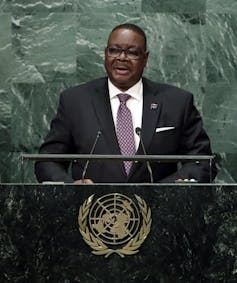
Malawian President Arthur Peter Mutharika (79) wants a second term. EPA/Jason Szenes

For his part Mutharika has been highlighting improvements in infrastructure and the lower inflation rates Malawi has seen during his first term. He also takes the credit for having stabilised the economy, which he found in shambles in 2014, and for improvements in the country’s agricultural output.

He has promised to continue improving Malawi’s infrastructure and to subsidise agriculture, if he retains power. He has gone as far as promising to develop Malawi to the levels of Europe.

Can the elections be free and fair?

Apart from the devastating effect Cyclone Idai has had – some people lost their voter registration certificates to flooding and some candidates could not reach people trapped in evacuation camps – not many complaints have been raised by contenders about the fairness of the playing field in this year’s election.

A worrying factor is the decline in the number of voters registered for the elections. But, such apathy is not unique to Malawi. Several factors are normally cited for this, including disappointment with politicians who fail to deliver on campaign promises.

Some people have raised concerns about the 79-year-old Mutharika’s health. They doubt his ability to effectively lead Malawi for another five years, given the country’s socio-economic challenges. The landlocked country is one of the poorest and least developed in the world.

These challenges actually apply to whoever emerges victorious after this poll.

Two cases in point are agriculture and employment. The Malawian economy is predominantly based on subsistence agriculture, which is crucial for food security. The majority of people who practice this type of agriculture also live in rural area.

And that’s where most of the vote comes from. Whoever wins the hearts of rural voters will most likely carry the day in Malawi. The same applies to the candidate who offers a better promise to the nation’s many jobless young people.

Will the elections help Malawi consolidate democracy?

It’s an achievement in itself that Malawi is holding its sixth multi-party national elections since its transition from its era of dictatorship under former President Kamuzu Banda. Banda ruled the country with an iron fist for the first three decades after independence.

But beyond free and fair elections, democratic consolidation entails fulfilling electoral promises, especially those that relate to citizens’ rights to basic services like water and education. The country also needs to provide decent work for its citizens.

The eight candidates contesting for the presidency and the 13 political parties that are vying for Parliament clearly show that Malawi’s election is open. But, more could be done to promote the participation of women.The Conversation

Chris Changwe Nshimbi, Director & Research Fellow, University of Pretoria

This article is republished from The Conversation under a Creative Commons license. Read the original article.

Lessons from Ghana on How using graphic pictures to cut tobacco use

Ghana recently joined only a handful of countries in Africa to introduce the use of pictures in health warnings on tobacco products. The other countries include Burkina Faso, Cameroon, Chad, Djibouti, Egypt, Kenya, Madagascar, Mauritius, Namibia, Senegal and Seychelles.

Research shows that large, picture-based or pictorial health warning labels on tobacco packages are an effective strategy to reduce tobacco use. Several studies have shown that labels are effective if they communicate the health risks of tobacco use and increase knowledge.

A combination of these factors can influence future decisions about smoking. Additionally, large and pictorial health warning labels can encourage smokers to quit, discourage non-smokers from starting and keep ex-smokers from starting again.

Estimates of tobacco use in Ghana are lower than in other countries in the west African region. Nevertheless, tobacco use is still considered to be a public health threat. It’s estimated that between 5% and 8% of the country’s population smokes.

In 2004, Ghana was among the first few countries to ratify the World Health Organisation (WHO) Framework Convention on Tobacco Control. The treaty was developed to spearhead the global response to the tobacco epidemic. But the country has been slow to implement many of the articles in the convention. These include recommendations on excise taxes as well as the introduction of pictorial warning labels on cigarette packs.

It’s a welcome move that Ghana – even belatedly – has moved on at least one of the interventions recommended by the WHO: the introduction of warning labels. The WHO recommends the use of full-colour images. These include pictures depicting various body parts affected by diseases related to tobacco use.

We conducted a qualitative study in 2014 – prior to the introduction of pictorial warnings. The research was done by the Kwame Nkrumah University of Science and Technology’s School of Public Health along with colleagues from the Food and Drugs Authority. Our findings showed that both smokers and non-smokers felt a combination of both pictures and words was more effective than just words on their own or just pictures on their own in conveying the health dangers of tobacco.

What’s been done

Ghana’s tobacco control measures are governed by the Public Health Act of 2012. The act legislates several aspects such as smoking in public places, tobacco advertising as well as packaging and labelling.

In 2016 the country’s Food and Drug Authority made use of the act to compile the Tobacco Control Regulations. Provisions introduced under the regulations mandated the tobacco industry – tobacco product manufacturers, wholesale distributors and importers – to ensure that all tobacco packaging had health warning labels in the form of a picture and text.

The stipulation was that warnings must cover 50% of the front and 60% of the back of all packaging. The industry was given 18 months from January 2017 to comply with the new rules.

These regulations supplemented rules introduced in 2010 that required text-only warnings on cigarettes packages. All tobacco products sold in Ghana are now required to have pictorial as well as text warnings.

Ghanaian authorities are also taking special measures to ensure that pictorial health warnings are implemented successfully. For example, the Food and Drugs Authority embarked on successive nationwide sensitisation and training for all law enforcement agencies such as the police, customs, judiciary, Ghana Health Service, opinion leaders and all stakeholders involved in tobacco control to raise awareness of the pictorial health warnings.

Impact

The introduction of the pictorial warnings forms part of a new education campaign in the country to increase people’s knowledge about tobacco use.

It’s too soon to tell what difference the warnings will make to tobacco consumption, if any. But we were able to establish initial reactions to the new packaging by conducting interviews with stakeholders in tobacco control on the introduction of the pictorial warnings.

It is suggested that the new packaging could help Ghana curb the health, social, environmental and economic consequences of tobacco use.

Olivia Agyekumwaa Boateng, Head of Tobacco & Substance Abuse at the Food and Drug authority in Ghana, contributed to this article.The Conversation

Ellis Owusu-Dabo, Associate Professor, Kwame Nkrumah University of Science and Technology (KNUST) and Arti Singh, Phd Candidate, Kwame Nkrumah University of Science and Technology (KNUST)

This article is republished from The Conversation under a Creative Commons license. Read the original article.

Create a free account, or log in.

Gain access to read this content, plus limited free content.

Yes! I would like to receive new content and updates.

Sponsored Ad

Ad 1
Ad 2
Ad 3
Ad 4
Ad 5
Ad 6