Home Blog Page 6283

Kenyans Angry at Ruto for Defending Waititu’s Corruption Allegations

Deputy President William Ruto yesterday chose to defend Kiambu Governor Ferdinang Waititu over his alleged 2.5 billion budget expense presented before the Senate last week.

Kenyans however are angry over the issue, claiming that Deputy President is dragging himself into the mud by defending the embattled governor.

Magoha to Suspend Setting up of New Public Universities

Dr. George Magoha has annoumced that there will not be any new public universities until further notice.

Speaking tough against those that have opposed his methods, Magoha has claimed that the existence of 6 universities offering duplicate courses is stretching the government resources that are meagre at the moment.

Speaking at a forum on University Education, Prof Magoha lamented that the existence of too many substandard universities is hurting the government budget allocations to Education facilities.
“I have received requests to increase the number of universities… You must apply the brakes,” said Magoha.

Barely two months since taking up the role as the Education Cabinet Secretary, Prof. George Magoha has started rubbing shoulders with the education department stake holders, with the recent war being the implementation of the new curriculum.

President Uhuru Kenyatta Wishes you a Blessed Holy Month of Ramadhan

MESSAGE OF GOODWILL FROM HIS EXCELLENCY PRESIDENT UHURU KENYATTA ON THE COMMENCEMENT OF THE HOLY MONTH OF RAMADHAN

On behalf of the people and the Government of Kenya, I extend warm greetings and best wishes to our Muslim brothers and sisters as they embark on the Holy Month of Ramadhan.

The Holy Month of Ramadhan as an important pillar in the Muslim faith, should be a period that inculcates in us the values of discipline, devotion and humility.

We particularly recognize the importance of this season to members of the Muslim community as it is a month during which they strengthen their journey of devotion and reflection

As a nation, the period of Ramadhan always gives us all an opportunity to reflect on the beauty of our cultural and religious diversity.

Faith continues to occupy a central place in the wellbeing of our nation and religious institutions play a key role in the promotion of essential values of unity, tolerance, compassion, charity and integrity. These are values that are critical for the wellbeing of the individual, family, and the entire nation.

As our Muslim brothers and sisters devote themselves to strengthen their faith during this period, we join them in solidarity and recognise the place of faith in consolidating our national unity.

As you embark on this solemn pillar of your faith, I urge all of you to remember our nation in your prayers and may your devotion be rewarded.

I also take this opportunity to encourage all Kenyans to cherish unity and tolerance; and to discard the minor challenges that seek to divide us while embracing the bonds that unite us.

On behalf of the entire nation, I wish you all a blessed Ramadhan.

Ramadhan Kareem and Saum Maqbul.

Uhuru Kenyatta, C.G.H.,
PRESIDENT OF THE REPUBLIC OF KENYA

Huduma Namba Servers were Not Hacked: Dr Fred Matiang’i

Cabinet Minister Dr. Fred Matiang’i has come out to crush speculations that Huduma Namba excercise was sabotaged by an alleged breach by a University of Nairobi student.

While speaking about the update of the ongoing mass registeration excercise, Dr. Matiang’i also confirmed that the kits and other materials used for the registeration excercise were safe and that the government is fully behind the excercise.

This is inlight of an article that claimed a university student had managed to infilterate the databaseand deleted files associated with several information of Kenyans.

Huduma Namba mass registeration excercise is expected to be complete by 18th May 2019

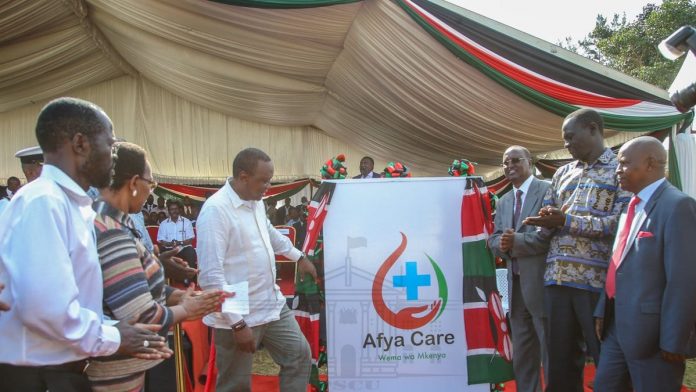
Kenya keen on working with The Global Fund in the implementation of Universal Health Coverage

uhuru kenyatta at a past event

President Uhuru Kenyatta has lauded the partnership between the Government of Kenya and The Global Fund to Fight AIDS, Tuberculosis and Malaria (The Global Fund) in the delivery of health services to Kenyans, especially in the war against malaria, TB and HIV/AIDS.

Speaking during a meeting with the Global Fund Executive Director Peter Sands who paid him a courtesy call at State House, Nairobi, President Kenyatta said his administration was keen on working with the Global Fund to ensure the successful implementation the Universal Health Coverage (UHC) programme. 

“We are putting a lot of money in UHC and we are determined to see it through,” President Kenyatta said.

The Head of State noted that Kenya’s success in the implementation of UHC, which is one of the key pillars of the Big 4 Agenda, will encourage its replication in other countries in Africa.

The Global Fund Executive Director commended President Kenyatta’s leadership and commitment in the implementation of the UHC, saying the piloting of the programme in four counties was a good approach.

Mr. Sands also praised Kenya’s contribution to the Global Fund and urged President Kenyatta to mobilise other leaders to support the Fund’s initiatives in curbing malaria, TB and HIV/AIDS. 

DAVOS/SWITZERLAND, 28JAN12 – Peter Sands, Group Chief Executive, Standard Chartered, United Kingdom; Foundation Board Member, is captured during the session ‘G20 Reality Check’ at the Annual Meeting 2012 of the World Economic Forum at the congress centre in Davos, Switzerland, January 28, 2012. Copyright by World Economic Forum swiss-image.ch/Photo by Michael Wuertenberg

“Your continued support to the Global Fund is highly appreciated,” Mr. Sands said.

The President assured that The Global Fund can count on Kenya’s support in its efforts to enhance the delivery of health services.

The Global Fund is a Geneva based international financing organization that aims to mobilize resources including finances to end the epidemics of HIV/AIDS, Malaria and TB. 
Present during the meeting were the Head of Public Service Joseph Kinyua, Health Cabinet Secretary Sicily Kariuki and State House Chief of Staff Nzioka Waita among other senior Government officials.

Reporting on China in Africa is too binary. What needs to be done to fix it

Yu-Shan Wu, University of the Witwatersrand

China’s involvement in many parts of Africa is expanding. Several milestones have been reached in recent years. These include China becoming the continent’s largest trading partner in 2009 and the opening of the country’s first overseas military base in Djibouti in 2017.

So it’s not surprising that this has become an ever-expanding topic for both the media and researchers. But the accuracy of work being done, particularly in terms of reportage, leaves a great deal to be desired.

Over the past ten years media scholars have increasingly begun to turn their attention to the issue. It’s one of the reasons for the 2009 launch of the Africa-China Reporting Project at the University of the Witwatersrand, where I’m associated. More recently scholarly work has been produced in a bid to identify what’s missing.

In analysis I did for a recently co-authored chapter in New Directions in Africa–China Studies we argue that a number of factors have contributed to coverage of the relationship between China and African countries, at times becoming a fertile area for propaganda, misinformation and disinformation. The main factors are the pressure on journalists for fast-paced information gathering. And the second is the impact that platforms such as Google, Facebook and Twitter are having on the dissemination of news, including the growing trend of the misuse of information.

Search a topic in the widely reported area of China in Africa, and it’s clear that many of the “facts” made available often appear contradictory. China is frequently framed and referred to in binary terms. It’s either portrayed as predator, or as a friend.

But the truth is far more nuanced. Individual relationships between China and particular countries differ. It’s also true that relationships between Beijing and certain regions have different hues. On top of this, these various relationships have been moulded over time.

There are ways to address the gaps in coverage and dearth of context. But it will require support as well as concerted effort on the part of journalists and media houses in African countries to report on behalf of Africans.

No nuance

The “predator” coverage portrays African countries as “set to burn as debt soars”. The “friend” image is portrayed through coverage of officials rejecting this view, as they did at last year’s Forum on China-Africa Cooperation.

Other examples include China being portrayed as “grabbing land” in Africa, and offering “rogue aid”. On the other hand reports tend to speak about “Chinese-funded” transport infrastructure projects without acknowledgement of the fact that a myriad international and local partners are also involved.

These over-simplified and overarching “China-Africa” narratives are deeply misleading. They make extracting facts about the China-Africa relationship extremely challenging: very often opinion trumps verification.

What affects reporting?

I have established three reasons why certain narratives take hold in the popular psyche and become representative of this complex relationship.

The first relates to the issue of perceptions towards China. Perceptions about China are coloured by social and historical contexts. For example, business or government officials who have engaged with China for a longer period of time are more likely to view it in a more nuanced and even positive way.

The second factor is linked to interest. For example, those who have something to lose from China’s role in Africa may harbour more negative views. And those who have something to gain are more likely to push a positive line.

The problem is that most of the time reporting doesn’t make clear why particular individuals, or groups, hold certain views. For example, those who have a stake in the direction of links between China and a particular country, would want to push their view. Not explaining their particular interest can leave an incomplete and misguided impression. So a single perspective can multiply to become the defining narrative of a story.

The third aspect is related to a lack of understanding. The focus on Asia studies in African higher education institutions remains limited. This includes deeper understanding of the rich history, culture and complexities of the East Asia region. In contrast the US, one of China’s main global competitors, has a long tradition of Asia studies and exchanges.

Where to from here?

Part of the reason stories may be misreported is that data and information about particular relationships, particularly related to high-level agreements and deals, are missing.

This was highlighted when the Democratic Alliance, South Africa’s main opposition party, threatened to take legal action against power utility Eskom, if it did not make its 2018 loan agreement with China public. Hence links with China is also at times, a backdrop to deeper domestic interactions.

The advent of technology and the information age has brought societies closer together. But they have also reinforced persistent differences based on perception, interests and limited understanding.

The divisive views and reporting such as the Africa-China example won’t dissipate unless journalists continually ask “why” when they are presented information about China and Africa’s relations.

They also have a duty to stand back and not perpetuate the preferred flavour of the news cycle.

For their part, media houses should make sure that their journalists are better equipped to cover these complex relationships. Given that one of the trends that stands out is that reporting on the relationship between China and African countries takes place from outside the continent, it’s imperative that more on-the-ground reporting, verification and support for local journalists is encouraged.The Conversation

Yu-Shan Wu, Research Associate, University of the Witwatersrand

This article is republished from The Conversation under a Creative Commons license. Read the original article.


Top 4 Wealthiest Women In Africa

BY FAITH MUTETE – Times have changed! African women are taking up different roles in the society. Each day is a new day where we get to experience great and big things done by women of different races all over the world.

Here is a list of the top 4 richest women in Africa

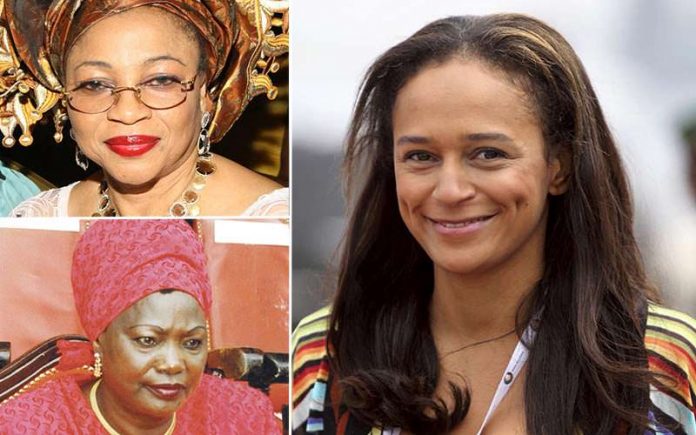
FOLORUNSHO ALAKIJA

Born in July 1951 she is a Nigerian billionaire businesswoman with an estimated net worth of $2.1 billion. She is involved in the fashion industry, oil and printing industries and is the managing director of the rose of Sharon Prints & Promotions Limited.

She is also listed as the second most influential women in Africa after Ngozi Okonjo and the eighty seventh most powerful women in the world by Forbes. As for her personal life, she is married to a lawyer and has been blessed with four sons and grandchildren. Folorunsho is also involved in philanthropic activities which involve a foundation called the Rose of Sharon that helps widows and orphans by offering them scholarships. She also sponsors medical and engineering scholarship schemes in Nigeria

ISABEL DOS SANTOS

The 46-year-old is the daughter of the former Angolan president Jose Eduardo Dos Santos is nicknamed the princess of Angola. She was the head of Sonangol Angola’s state oil firm and during that time she managed to end up with stakes in Angolan companies including banks and a telecom firm. She now owns shares of Portuguese companies including telecom and cable TV firm Nos SGPS.

Isabel has an estimated net worth of $2 billion and besides Unitel her business interest includes media, retail, finance and energy.

MAMA NGINA KENYATTA

She is the widow of the Kenya’s first president, Mzee Jomo Kenyatta and the first  lady Kenya has had and though now not in the lime light she has been able to attain undeniable wealth over the years. Her family has investments in hospitality, real estate banking, education, banking, and manufacturing.

Mama Ngina oversees several brands including the largest privately-owned bank the Commercial Bank of Africa’s, the upmarket hotel chain Heritage, not forgetting Brookside Diaries, Media Max and Timsales Timber.

As of 2013, Ngina Kenyatta’s Networth was $1 Billion

Despite her wealth and power Mama Ngina has also been able to be an effective mother and incredible wife to the former president who is a woman of few words and rare in the public eyes but when she shows up you cannot fail but notice her incredible sense of style.

WENDY ACKERMAN

She is a south African self-made wealthy power house who started out as a teacher in Soweto, where she taught night school but over the years Wendy and her husband own Ackerman family trust which owns 50%of pick n pay.

She has deeply been involved in driving change and promoting education in south Africa particularly in providing access to education to the needy and underprivileged in the society. She is a trustee of Ackerman Family Educational Trust which assists students in South Africa with bursaries and PICK N PAY bursary fund which provides education assistance to the employees in the company. Her great work in philanthropy is a great motivation to future female leaders that you can still be rich and bring positive change to the world.

Ministry of Devolution, Cabinet Slots Cut MPs to Size

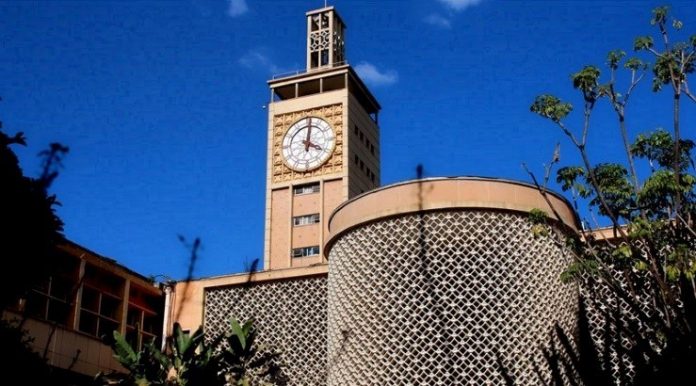
BY FAITH MUTETE – Ten years ago, members of parliament were household names in Kenya. Most Mps were known well beyond their constituencies, districts, regions and even provinces.
The likes of Paul Muite, James Orengo, Musikari Kombo, Dr.Eldon Wameyo were well known beyond their provinces. So were Boy Juma, Karisa Maitha, Matu Wamae and Jonesmas Mwanza Kikuyu.

But thanks to devolution that has changed the focus to Governors, MPs have since stopped becoming house hold names. Also, the fact that MPs are no longer appointed to the cabinet, has heavily reduced their countrywide recognition.

But their stature remains the same in Parliament and at home where they enjoy good public appeals courtesy of CDF. Today, few Kenyans outside Bungoma know the Mp for Webuye….or the Mp for Kwale East outside Kwale County..

Spain Funded Transmitters Boosts KBC Coverage in Western Kenya and Kitui

BY FAITH MUTETE – Kenya Broadcasting Corporation (KBC) Chairman David Were, Managing Director Naim Bilal were led by technical services Manager George Kanyi, inspecting the corporation’s Webuye station. The brand new TV transmitting station. The new site has been funded by the Government of Spain.

Other Stations funded by the Spanish Government are in Kitui, Kilifi, Kwale, Wajir, Maralal, Nyahururu, Bondo, Hola and Lamu. It consists of the first phase of the Government of Kenya and Spain support to upgrade KBC facilities to boost credible information dissemination by the National broadcaster.


The entire Western region to recieve excellent TV signals not only for KBC, but for other channels that procure content from KBC.

The Chairman said the Webuye station will ensure the entire Western region receives excellent TV signals not only for KBC, but for other channels that procure content from KBC.
Were said the board will ensure that Kenyans receive accurate, credible and balanced news from the national broadcaster.
The total Spanish grant under the phase 1 was Sh.1 Billion.

Five suspects of Barclays bank ATMs theft arraigned in court

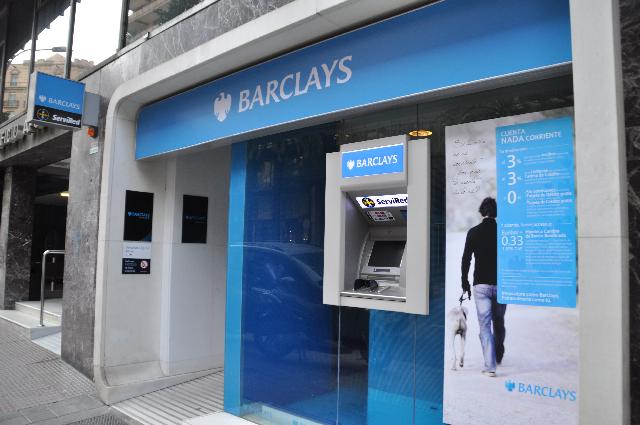
BY PRUDENCE WANZA – Five suspects of the Barclays banks ATMs theft have charged in court this morning. The five appeared before Senior Principal Magistrate at the Milimani Law Courts. 

They include, 1 taxi driver, 2 Police Officers and 2 drivers at G4S security Company. The taxi driver is suspected to have driven other suspects who were not before court at the Barclays ATM at the Mater hospital. He is charged of stealing and conspiring to commit felony of Sh. 1m from the Barclays bank ATM. He denied the charges in court. 

The taxi driver, Patrick Nyoike Karanja, is a widower, and on that particular day he was driving a motor vehicle registration no. KCE598L which is currently detained at the DCI headquarters. However his lawyer  applied for the vehicle to be released as it is his main source of income. 


The taxi driver, Patrick Nyoike Karanja, is a widower, and on that particular day he was driving a motor vehicle which is currently detained at the DCI headquarters. | PRUDENCE WANZA

The 2 Police officers and the drivers from G4S, also face a similar charge of stealing and conspiring to commit a felony of Sh.2.8m from Barclays bank ATM at Kenya Cinema along Moi Avenue. The four;Fredrick Herman Otiya, Daniel Orero Okindo, George Njoroge and John Otieno Makambongo denied the charges. 


The 2 Police officers and the drivers from G4S, also face a similar charge of stealing and conspiring to commit a felony | PRUDENCE WANZA

They will all be released on Ksh.2m bond or an alternative cash bail of Ksh. 500,000. 
The case will be mentioned on 16th May, 2019 for pretrial and the hearing will be on 5th June, 2019.