Sponsored Ad

Ad 1
Ad 2
Ad 3
Ad 4
Ad 5
Ad 6
24.1 C
Kenya
Sunday, April 26, 2026
Home Blog Page 6093

Uhuru: Sports, culture and arts to take center stage in Kenya

President Uhuru Kenyatta has said the Government will this year fully fund all national teams participating in international sports events.

He pointed out that sports, culture and arts are crucial to economic development of the country and therefore can no longer be left in the hands of well wishers to sponsor their activities.

“This year Harambee Stars will not beg or borrow but will be fully funded by the government, likewise our national rugby team, netball team and all other national teams will be fully sponsored by the government,” said President Kenyatta.

The President reiterated that all athletes will be sponsored and that they will no longer lack uniforms as they represent the nation in international sporting events.

“The new Sports, Arts and Social Development Fund will ensure no athlete is left behind,” said the President.

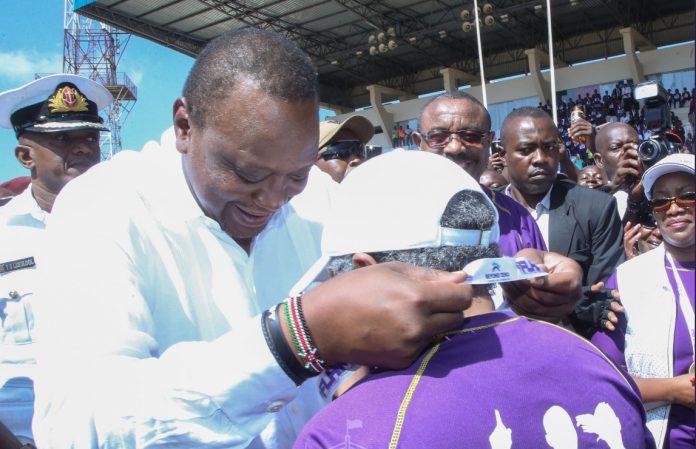
President Kenyatta was speaking this morning when he addressed over 25,000 participants of the 4th Edition of the Beyond Zero Half Marathon.

The President commended the First Lady for her efforts in helping mothers and children access quality healthcare services saying the initiative has highly contributed to the decrease of maternal and child mortality rates in the country.

“This is a noble initiative which goes a long way in assisting to achieve the national government agenda of zero maternal and child mortality,” said the President.

Former Ethiopian Prime Minister Hailemariam Desalegn and formerFirst Lady Roman Tesfaye participated in today’s race which attracted amateur and elite athletes as well as prominent Kenyans among them Deputy President William Ruto, Makueni Governor Kivutha Kibwana and his Nyandarua counterpart Francis Kimemia.

Josephat Bett and Brilliant Kipkoech won the 21km men and women’s races and were awarded cash prizes of Ksh 250,000 each.


In the 10km race where the First Lady competed, Vincent Ng’etich won the men’s event while Margaret Chelimo took the lead in the women category after beating Irene Kimais and Monica Ngige who came second and third respectively.

While thanking the participants for their commitment to the Beyond Zero initiative, the First Lady said proceeds from this year’s marathon will be invested in interventions aimed at advocating for policy formulation and protection so as to transform the lives of women and children.

“We dedicate it to babies – who are the future of this country. We dedicate it to our children, especially those living with physical and intellectual challenges – to advocate for inclusion and equal access to all services,” said the First Lady.

“We also dedicate this day to our elderly, our senior citizens, our grandparents – for their love and sacrifice to make what is Kenya today. We advocate for their recognition and social protection,” she added.

The First Lady said the pioneering concept of the marathon was inspired by the high rates of maternal and child mortality in the country.

She said through collective efforts, the initiative has been able  to contribute to the prevention of deaths for thousands of mothers and babies due to  lack of access to healthcare and medicines.


“Since we began running together six years ago, the concern has continued to capture the hearts of individuals, families, friends and communities across the country. Here today, we have teams from far and wide and I applaud you all for being part of this special day,” the First Lady said.


The First Lady pointed out that through the initiative, fully kitted mobile clinics have been purchased and delivered to all 47 counties in the country.

She said apart from contributing to the widespread awareness around health challenges facing women, children and vulnerable communities, the initiative started medical safaris to bring services closer to communities in hard to reach parts of the country.

Deputy President Ruto commended the First Lady for her relentless efforts in ensuring access to quality health services for women and children saying all Kenyans of goodwill should continue to support her noble efforts.

Former Ethiopian PM Desalegn lauded First Lady Margaret Kenyatta saying the entire region is inspired by her initiative which is worth emulating.

Others who spoke at the event included Heath CS Sicily Kariuki and her Sports counterpart Amb. Amina Mohamed.
Beyond Zero commemorates International Women’s Day by raising funds for marathon.  

Supporters of Beyond Zero today commemorated the International Women’s Day by raising funds in support of the marathon scheduled for Sunday.
First Lady Margaret Kenyatta, who is the patron of Beyond Zero, received the financial support at State House, Nairobi, where over 20 organizations affirmed their continued support of her initiatives to make healthcare accessible to mothers, children and vulnerable populations across the country.
Besides the cash donations, the First Lady received a Shs 50 million insurance cover for the over 25,000 participants expected to take part in the 4th edition of the First Lady’s Half Marathon and whose name has been changed to Beyond Zero Half Marathon (BZHM) 2019.
The insurance pledge was given by Jubilee Insurance who also donated over Shs 3 million through the firm’s Regional Chief Executive Officer Julius Kipngetich.
The insurance company will also mobilize doctors from 10 hospitals in Nairobi to be on standby for any emergencies during the Sunday event.
Safaricom, the official communications sponsor of the marathon, brought in an open cheque under which they will provide a State-of-the-art media centre and communication support.
Receiving the donations, the First Lady said the impact of Beyond Zero activities among them the recently initiated Medical Safaris has been transformational across the country.
“Thank you for your continued support. We must continue this journey together,” the First Lady told the partners and supporters including Women in Business who gave over Shs 1.2 million and
members of the National Assembly Lady Spouses Association (NALSA-K), who donated Shs 300,000.
All the Chief Executives and team leaders of the over 20 corporates affirmed their support for the First Lady’s initiatives and pledged to mobilize hundreds of their employees to take part in the Sunday event.
They said they had all been inspired by the First Lady’s desire for a better Kenya.
The corporate executives said the initiatives by the First Lady had touched homes and families all over the country.
The donors included Abbot, a healthcare technology provider, who gave over Sh 13 million. The Kenya Pipeline Company (KPC) and the Kenya Broadcasting Corporation (KBC) gave Shs 12 million each.
Other donations came from Diamond Trust Bank Shs 10 million and Kwese Free Sports Shs 6.3 million. Britam Insurance , Grain Bulk Handlers and Babs Security gave Shs 5 million each.
Kenya Power and Beta Healthcare International donated Shs 2 million each while the Ministry of Public Service gave Shs 1.6 million.
The rest of the donations were given by Sports Kenya Shs 1.75 million and the Emergency Medical Services Shs 1.3 million.
Kenya Revenue Authority, Vivo Energy, Murang’a County Government and Bidco Africa donated Shs 1 million each.
The Beyond Zero Marathon will start and end at the Nyayo National Stadium and is divided into several categories including the 21km half marathon, the 10 km road race, the 5km family race, wheelchair and tricycle races and a special 2km “pregna” walk for expectant mothers.
Earlier, First Lady Margaret Kenyatta held discussions with senior officials of the Dutch healthcare multinational Philips who visited her at State House, Nairobi.

The discussions centred on collaboration between the office of the First Lady and Philips in matters of health including a possible working arrangement towards the construction of the proposed Beyond Zero Referral Hospital for mothers and babies.
The team from Philips included the Executive Vice President Ronald de Jong, CEO for Africa Jasper Westerink and the General Manager for Business Development Roelof Assies

Why the ‘Miss Curvy Pageant’ is an assault on Ugandan women

Brenda Boonabaana, Makerere University and Amos Ochieng, Makerere University

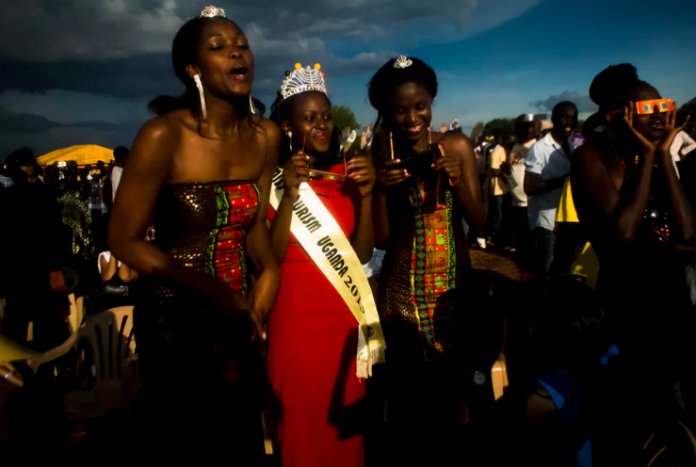
Uganda’s Junior Minister for Tourism, Wildlife and Antiquities, Godfrey Kiwanda Ssubi recently launched the “Miss Curvy Uganda” pageant at the Mistil Hotel in Kampala.

At the launch he claimed that the pageant was designed to boost Ugandan tourism by putting the bodies of curvy women on display. According to the minister, the pageant was expected to help Uganda increase the number of tourists to the targeted 4 million by 2020, from the 1.32 million received in 2017. The government is promoting tourism as a key sector to realise its ambitious economic plans set out in its national development plan.

But it’s questionable whether a pageant that’s clearly a ploy to maximise erotic capital, can help the country reach its development goals.

In our view it’s also a highly questionable strategy to use women’s bodies to attract tourists.

Uganda has used similar gimmicks before. In 2016 the same minister launched the Kampala Rolex Festival. A “rolex” is a Ugandan delicacy made of fried eggs wrapped in chapati (an unleavened flatbread). They are typically sold on the roadside.

The festival was intended to boost domestic tourism but the ministry has yet to measure its impact in terms of actual numbers.

The ministry is also running a parallel campaign dubbed Tulambule Uganda. Initially it targeted female celebrities with sizeable social media platforms in the hope that they would use their influence to promote domestic tourism. The campaign has only recently recruited male celebrities.

Our view is that the beauty pageant idea is denigrating to women. Uganda has great tourist attractions such as the iconic mountain gorillas, chimpanzees, lions, and giraffes; rich diversity of bird and insects species, and cultural and heritage tourism attractions. All are undervalued and undersold but should rightly form part of a comprehensive plan that attracts more tourists without exploiting women.

Misuse of female bodies

The Miss Curvy contest attracted a lot of local and international media attention. It also received a lot of resistance from human rights activists and civil society organisations nationally and internationally.

Uganda’s Parliament was divided about using a beauty pageant as a marketing tool for tourism. The men legislators were more supportive of the idea than the women.

Those against the idea criticised it for objectifying women and the fact that the pageant was designed to use their bodies as tourist attractions. One analogy was that the initiative was like a zoo in which women were being placed to satisfy the tourist gaze.

The minister was accused by different sections of the society including legislators, women activists, academia and local Ugandans of positioning Uganda as an exotic tourist destination based on the attractiveness of its curvy women.

The minister had been quoted as saying,

We have naturally endowed, nice-looking women who are amazing to look at. Why don’t we use these people as a strategy to promote our tourism industry?

In our view this is an appalling exploitation and degradation of the dignity of women and girls.

Even Uganda’s President Yoweri Museveni rejected the pageant idea, and denied that it had cabinet approval.

A number of civil society organisations described the pageant as sexist and a form of objectification, sexualisation, prejudice and exploitation of women for development purposes.

Some have argued that the pageant promotes the continued marginalisation of women in an already strongly patriarchal society. A press release by the Uganda Women’s Network, an umbrella organisation that brings together women focused organisations in the country, strongly condemned the pageant.

Women’s movement

Over the past three decades the women’s movement in Uganda has made tremendous strides in defending women’s rights. And there has been positive progress in various sectors. The biggest advances have been made in education, political engagements and representation, employment and legal rights. But a lot more still needs to be done, especially in health, resource access, and domestic violence arenas.

The biggest drivers of change have been a growing number of women-focused organisations as well as a national umbrella organisation, the Uganda Women’s Network that have been promoting gender equality and the empowerment of women.

A more enabling environment for women has also been facilitated by the pro-women legal and policy framework that guarantees the rights and dignity of women and girls. This is reflected in Uganda’s Constitution, the Uganda Gender Policy, and other affirmative action programmes.

But, there have been signs of a backlash that threatens to undo some of these positive outcomes. The proposed “Miss Curvy Uganda” is symptomatic of this push back, and it raises questions about the success of a decades long women’s empowerment movement.

Female dignity

Using women’s body’s to attract tourists is a direct assault on their personal dignity. It remains to be seen whether the overt objectification of women is an effective way to attract tourists.

We would suggest that Uganda’s marketing strategy would work better with a focus on the country’s natural and cultural diversity. Money would be better spent protecting our wildlife from poachers. The tourism ministry can also shift the tourist gaze to the richness of Uganda’s national heritage including traditional rituals, dances, ceremonies, and foods.The Conversation

Brenda Boonabaana, Tourism Lecturer and Gender and Development Specialist, Makerere University and Amos Ochieng, Assistant Lecturer, Tourism, Conservation and Development, Makerere University

This article is republished from The Conversation under a Creative Commons license. Read the original article.

The why, what and where of the world’s black leopards

Sam Williams, Durham University

A black leopard was recently spotted in Kenya’s Laikipia area by San Diego Zoo scientist, Nicholas Pilfold. Sam Williams, a conservation ecologist focused on African carnivores, asked Nicholas about the elusive cats.

Where are black leopards found in Africa?

There have been a number of reports of black leopard in Africa, but very few confirmed sightings.

A 2017 global review of black leopard observations found reports of the animal in Ethiopia, Kenya, and South Africa dating back to 1909. But the only confirmed report was from Ethiopia.

There isn’t very much data when it comes to leopards. Global leopard population numbers are unknown, as are the population numbers for many leopard subspecies.

Black leopards only differ from other leopards in the colour of their coat, a genetic variation that’s recessive and known as “melanism”.

Black leopards are found more often in densely forested habitats. Most confirmed sightings come from south-east Asia. The concentration of these are in the Malay Peninsula, where more than 90% of leopards are black. The frequency and distribution of black leopards in Africa is still part of ongoing research.

Based on what’s known about the type of terrain black leopards prefer it’s predicted that they would be present along the equator across western, central and eastern Africa.

We started our leopard conservation programme nearly two years ago in Laikipia County, central Kenya. The goals of our research are to determine population abundance and status of leopards in the area, and to mitigate human-leopard conflict.

As part of this research, we began recording black leopard observations last year. Since then we have confirmed three different melanistic individuals in our study area, suggesting that these leopards may be more common than first thought.

Why are they black, and does this offer any advantages over other leopards?

Melanism in leopards comes from a mutation that knocks out a gene that regulates the production of melanin. This causes an over production of pigment which turns the coat black.

The coat still has all the same features as a non-melanistic leopard, including the rosettes or spots which is one of the pieces of evidence we used in our study to scientifically confirm black leopard presence in Kenya.

Broadly, melanism has arisen independently in the cat family multiple times, and exists in 13 of the 37 cat species in the Felidae family. This suggests an adaptive significance to carrying this trait.

Black leopards are thought to persist in densely forested habitats, because it offers additional camouflage against shaded or dark backgrounds. For example, in tropical forests in the Malay Peninsula, melanism is displayed at such a high frequency that it’s likely that this is an advantageous trait in natural selection, rather than occurring by chance alone.

So, it’s interesting that our research has confirmed black leopards living in an open, arid environment in Kenya, where shade is limited.

This raises questions about whether being black in an arid environment influences hunting strategy, mating and reproduction. And whether there are natural selection mechanisms, other than camouflage, that allow melanism to persist in leopards.

Are there any specific threats faced by black leopards, and what needs to be done to protect them?

Leopards face a number of threats, including habitat loss, prey loss, conflict with humans and poaching and trafficking of their parts. These threats face all leopards, black included.

It’s unknown if black leopards face more persecution than non-melanistic leopards. If a leopard were to kill livestock, it would face persecution from locals regardless of its coat colour. However, through our conversations with communities we found stories that reveal a level of protection towards the big cats. When hunting in Kenya was legal, some guides refused to shoot black leopards. In Samburu culture in the Laikipia Plateau, owning a black cow is thought to be lucky to livestock herders, and the principle of rarity extends to black leopard. Sighting one is thought to be a symbol which requires interpretation and reflection.

Hopefully the global attention garnered recently by the black leopard images will move public consciousness to recognise leopards and their plight in conservation.The Conversation

Sam Williams, Postdoctoral Research Fellow in the Department of Zoology, University of Venda, Researcher at IGDORE, and Honorary Research Fellow in the Department of Anthropology, Durham University

This article is republished from The Conversation under a Creative Commons license. Read the original article.

Teen pregnancies in Kenya

Pasha 9: Teen pregnancies in Kenya

File 20190305 48447 wyzp1t.jpg?ixlib=rb 1.1
Mental health issues among teen girls in Kenya are often ignored.
Ozayr Patel, The Conversation

Kenyan teenagers who fall pregnant face social stigma and isolation. This, in turn, leads to a vicious cycle of mental stress, depression and suicidal thoughts.

In this week’s edition of Pasha, Estelle Monique Sidze, a research scientist, discusses the problem of teen pregnancies and how to deal with the challenges young women face, including the often ignored issue of mental health, particularly in urban slums where poverty is also a factor.


Read more: Fresh insights into the lives of Kenya’s urban teen mothers


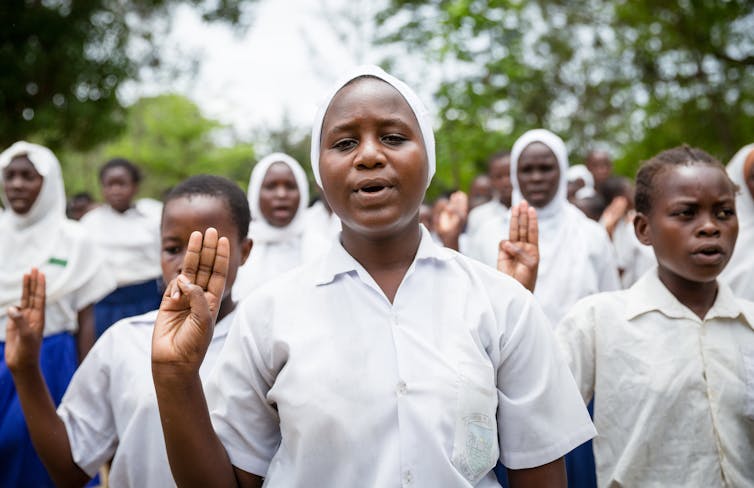
Photo: Students line up at school Miritini Primary School, Mombasa County, Kenya Credit: GPE/Kelley Lynch. Flickr

Music “Happy African Village” by John Bartmann found on FreeMusicArchive.org licensed under CC0 1.

Sounds Interviews conducted with girls by Carol Wangui and Estelle Monique Sidze not for reuse.


Listen on Apple PodcastsThe Conversation

Ozayr Patel, Digital Editor, The Conversation

This article is republished from The Conversation under a Creative Commons license. Read the original article.

UNFPA commends Uhuru for championing the youth agenda  

President Uhuru Kenyatta was yesterday commended for the role he has continued to play in championing the youth agenda.

United Nations Population Fund (UNFPA) Executive Director Natalia Kanem said Kenya has portrayed great leadership in supporting youth empowerment and development under President Kenyatta.

Dr. Kanem also praised First Lady Margaret Kenyatta for spearheading efforts to address health challenges facing mothers, neonates, children and adolescents in Kenya through the Beyond Zero campaign.

“The First Lady has been a beacon of hope for children and maternal health in Kenya,” Dr. Kanem said.

The UNFPA Executive Director, who assured Kenya of her organization’s increased support, was speaking today when she paid a courtesy call on President Kenyatta at State House, Nairobi.

President Kenyatta welcomed UNFPA’s support and partnership in accelerating Kenya’s development.

“We are truly grateful for the solid support that UNFPA extends to Kenya and we hope to continue working together to achieve even more in terms of our national development goals,” President Kenyatta said.

Plot thickens as CS treasury Henry Rotich, stays at DCI for 10 hours

Directorate of Criminal Investigations detectives grilled Treasury CS Henry Rotich for Sh20 billion payments made to firms linked to Kimwarer and Arror dams. He was released by 4:30 PM, 11 hours after he checked himself in at the DCI headquarters.

It is not clear whether his fingerprints have been taken by the DCI.

In the past, no Cabinet Secretary has ever spent more than 10 hours under interrogation and failed to take a plea for the offence for which he/she was summoned. At best, such top ranking officers are only left off the hook as state Witnesses.

Rotich has to answer 300 questions posed by hard nosed DCI officers.

Uhuru cautions leaders against attacking State agencies mandated to fight graft,

President Uhuru Kenyatta has today called on leaders to stop attacking  State agencies mandated to fight graft.
Affirming his resolve and commitment to the fight against corruption at all levels of Government, President Kenyatta said his administration has put in place a proactive programme of prevention as well as asset recovery that will serve to guard the public purse.

“I expect all of us to desist from creating barriers, hurdles and obstacles in the work of all state agencies involved [in the fight against corruption] and in turn cooperate with them as they discharge their respective mandates,” said the President.

The President who was accompanied by Deputy President William Ruto, spoke when he officially opened the 6th Annual Devolution Conference in Kirinyaga County.

President Kenyatta castigated leaders who have formed a habit of going to funerals and weddings where they spread falsehoods on others as concerns corruption.

He said any person with information as concerns graft is free to visit the Directorate of Criminal Investigations offices and record statements on any corruption allegations.


“I know many Kenyans believe that those mandated to do investigations have the capability to preform their duties,” said the President.

The President challenged anyone with information on his involvement in corrupt deals not to fear but go and submit the same to the DCI offices.

“I saw some saying I have stolen I don’t know what, please if any of you has any information go to DCI offices and report. You don’t have to fear anything. There is no need to move around funerals spreading falsehoods, how will the dead help you?” the President asked.

President Kenyatta assured state agencies involved in the fight against corruption of his full support and called on the judiciary to play its part to ensure that the wheels of justice in the corruption war moves with speed.

He pointed out that corruption is the single biggest obstacle to a better Kenya with shared prosperity for all as it has permeated both the national and county governments.

The President however said his government has taken bold steps to create a stable political environment against which the goodwill and support for good governance can flourish.

“Since the beginning of my Second Term, Kenyans have witnessed a more aggressive and vibrant investigative and prosecutorial approach to slaying the Dragons of Corruption and Impunity,” said the President.

The Head of State made it clear that the war on corruption is not against specific individuals or communities but rather it is a war against a crime that robs Kenyans the opportunity to build a nation with shared prosperity for all. 

The President at the same time called on all governors to join him in the war against graft terming it ‘generational struggle’ in which all Kenyans must emphatically say no to, and reign in on the corrupt within their respective governments.

“As we strive to build our nation and fill the national basket with the fruits of our labour, it is unfortunate that some have their hands in that basket taking away from the common good the necessary resources needed to build a better Kenya for all,” said the President.

He said with the renewed zeal against graft, Kenyans are assured of the brightest days ahead.

The President therefore called on all Kenyans to support the war on graft, saying winning the war would ensure better utilization of resources aimed at building a better country for all.

He challenged leaders to raise the bar in delivery of public services and accountability, noting that the foundation has already been set and now every Kenyan expects each county to prosper and improve the standard of living of its residents.

“For so long, Kenyans have been debating devolution, its merits and demerits. From what we have learnt, the time has now come to put this knowledge into acts and deeds that transform the lives of Kenyans,” the President said.

President Kenyatta urged county governments to turn their focus on delivering on the hopes and dreams of Kenyans, through tireless commitment to duty, integrity and servant-leadership.

The Head of State said he will soon convene a leaders forum discuss prudent utilization of public funds saying there is no need for county and national governments to continue spending more funds on recurrent budgets and personal emoluments at the expense of development.

“Yesterday we agreed [Governors] on the need to have a national conference on this issue so as to come up with policy and guidelines to correct these mistakes to ensure money goes to wananchi but not to a few individuals,” said the President.

President Kenyatta expressed satisfaction that devolution is working as demonstrated by various economic activities at the grassroots where value addition to agricultural products is getting entrenched.

Women in health, science and innovation are collaborating globally

Women leaders in science, health and innovation are collaborating on a global scale to address gender inequality. Shutterstock Judy Illes, University of British Columbia

Marie Curie, Rita Levi-Montalcini, Brenda Milner, Martha Salcudean, Julie Payette, Halle Tanner Dillon Johnson.

What do these names bring to mind?

They are women whose pioneering work led the fight against cancer, ground-breaking discoveries about how brain cells live and die and to the unveiling of the secrets of human memory. They are leaders in innovation in mechanical engineering and space exploration. They were among the first women in their classes in medicine, going on to provide health care for the poor, underserved and neglected.

Astrophysicist Dame Jocelyn Bell Burnell, who discovered pulsars, delivers a TED talk on women in science.

These courageous women broke down norms and survived wars, abuse and gender and racial discrimination. They worked independently from men, in partnership with men and sometimes in rivalry with them. They have left legacies of greatness and other women like them continue their work today.

In addition to my research in neuroethics, I have been actively engaged in promoting women in science throughout my career, including as an elected member of the International Women’s Forum, a global organization comprising more than 7,000 women leaders and heads of state.

Women become the majority

Women around the world have tried to follow their legacies. In some ways, they are succeeding. For example, women represent the majority of young university graduates. Yet they are still underrepresented in science, technology, engineering, mathematics (STEM) and computer science in many respects. Despite advances made in recent years, reports still suggest that women remain less likely to choose a career in science and technology than men.

Regional averages around the world show that women accounted for less than a third of those employed in scientific research and development across the world in 2014. Among Canadians ages 25 to 34 years holding bachelor’s degrees, men were almost twice as likely to work in science and technology jobs as women in 2016.

The share of science and engineering degrees is even smaller for women of colour: in 2014–2015, women of colour earned three to five per cent of related bachelor’s degrees. Globally, women made up about 12 per cent of board members in the information technology industry in 2015.

Leaky pipelines and other factors

Labour markets, family and work balance, interest, social class, cultural capital and social class are all factors reported to affect career choice and, by extension, career progress and satisfaction. Motivation is sometimes said to play a role when women decline to enter a field, but this is a highly contested assertion.

What’s more likely is that in 2015, for example, women who graduated with bachelor’s degrees in science and technology earned just 82 per cent of what their male counterparts earned.

Compounding these phenomena is the leaky pipeline: women disproportionately decide to leave a career trajectory due to isolation, ineffective feedback, insensitive interactions, and a lack of role models, mentors and sponsors. But let’s be clear: good mentors and role models for women need not be only women. In my own life, some of the very best were men.

Yet the news is not all bad. In 2016, women comprised about 40 per cent of scientists and engineers in the EU-28, an increase of more than 20 per cent since 2007. In Central Asia, Latin American and the Caribbean, Central and Eastern Europe and the Arab States, women represent over a third of the innovation workforce.

Equity, diversity and inclusivity of women have been topics of keen interest to the academic and corporate worlds that increasingly seek balance and justice among its educational systems and workforces, and to media that covers them. The Athena Program recognizes and rewards institutions for leadership in promoting women.

Canada has recently launched its own version of the Scientific Women’s Academic Network (SWAN) Athena program . The Canada Research Chairs Program has taken significant steps to recalibrate for gender balance, albeit imperfectly under certain circumstances for senior women whose appointments have already been renewed once in this prestigious system.

Future collaborations

A global collaboration between women leaders aims to address gender inequality. Author provided

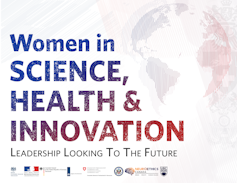
It takes a global effort. In a visionary and bold initiative, women leaders from different countries are coming together to identify priorities and opportunities for international collaboration. “Women in Science, Health and Innovation: Leadership Looking To The Future” will be held in Vancouver on March 7. In this event that ties to International Women’s Day — and foreshadows the 2019 Women Deliver conference in Vancouver on gender equality — researchers and speakers from Canada, France, the Netherlands, the United Kingdom, Switzerland, Germany and the United States will come together to address important questions:

  1. What have been the greatest changes in North America and Europe and over time for women in health, science and innovation?
  2. What have been some of the historical and incentives barriers to women entering engineering and physical sciences?
  3. What is on the agenda for coming years in gender, medical research and innovation?
  4. How have women in the past set the path for women in academic medicine and entrepreneurship of the future?

We will have to see what those collaborations will be and where the conversations will go, but there is much to look forward to when regional silos of strength and determination expand into full-blown global efforts.The Conversation

Judy Illes, Professor and Director, University of British Columbia

This article is republished from The Conversation under a Creative Commons license. Read the original article.

Stop the slaughter of African elephants by banning the ivory trade for good

The Convention on International Trade in Endangered Species of Wild Fauna and Flora (CITES) conference in South Africa provides a unique opportunity to make a ban on the ivory trade legally binding. The convention has already rejected a call to legalise the sale of ivory; the next step is a worldwide ban.

The International Union for the Conservation of Nature (IUCN) passed a motion on September 10 to ban all trade in ivory by halting the legal domestic trade that exists in some countries. But its ban is not legally enforceable.

Unlike the IUCN, CITES commands legal powers as most countries have signed and ratified its agreements, so they’re legally obliged to follow its policies. The success of a similar motion during its conference could mean the difference between the continuing existence of African elephants and their current slaughter.

A dwindling population

African elephants were first listed as a species of concern by CITES in 1977, with trade permitted only under the proviso of stringent regulation and monitoring. But by 1989, after a decade supposedly “well-regulated” international markets, the African elephant population had dropped by 60%.

Indeed, the population of African elephants has declined by up to 97% in the past century. Every year, around 30,000 elephants are slaughtered for their tusks, and this may drive African elephants to extinct within the next decade.

Even this trend masks a more serious decline. Despite strong scientific evidence that African elephants are two unique species that diverged from each other millions of years ago, vested interests aiming to maintain the ivory trade only acknowledge one species. This strengthens their argument that populations are high enough to withstand slaughter for ivory harvesting.

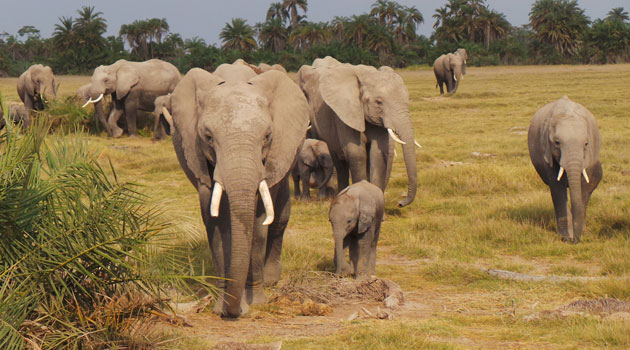
Forest elephants (Loxodonta cyclotis) are particularly vulnerable to extinction, having lost two-thirds of their population in just the past decade. Savannah elephants (Loxodonta africana) have declined by a third.

Illegal poaching is the main driver of population decline for both species.

Well-regulated markets?

Regulating the ivory trade is hard because of the difficulty in differentiating ivory obtained before the 1989 ban and illegal, post-1989 ivory. It’s currently impossible to assess the age of ivory, so many countries have created certification systems.

A lack of rigorous checking, along with the creation of false certification, allows dealers to sell new ivory using certificates created for ivory taken before the ban. And even the best technologies fail to provide a mechanism to trace or register individual tusks.

The picture is further complicated by the CITES-approved sale of stockpiles of 49 tonnes of seized ivory in 1997 to Japan. The sale was justified as providing funding for conservation but it legitimised trade and stoked demand to such a degree that it could not be met through legal sources. It’s thought to have driven further poaching, and increased smuggling by as much as 71%.

Another sale of stockpiled ivory to Japan and China in 2008 created a system where the mechanisms implemented to regulate released ivory allowed certificates to be falsely reused to launder illegal stock and create a limitless supply of ivory for sale.

With each sale, there have been guarantees of effective regulation, but each release has instead driven an increase in poaching and illegal trade. And despite repeated attempts to effectively regulate the ivory trade, each sale has stoked demand and driven laundering.

Getting around regulations

In the early 2000s, pressure from the governments of Zimbabwe, Namibia and South Africa – the same countries that sought the reintroduction of the ivory trade at the current conference – saw African elephants downlisted by CITES in these countries to allow limited trade, provided the ivory was registered and closely monitored, and that elephant populations within those countries remained stable.

But these countries provide a conduit for trade globally, and drive poaching across the native African elephant range states. Forensic testing proves that ivory sold in these countries frequently originates elsewhere, where it must have been poached illegally.

In China, the encouragement of the ivory trade as “cultural heritage” in 2002 and releases of “controlled volumes” of ivory led to a more than 170% increase in its value, and 59.6% of “legality-certificates” were used to launder illegal stock.

This boom in ivory prices lasted from 2009 until the ban announced by Chinese President Jinping Xi in September 2015. Since then, the value of ivory in China has halved.

Japan currently has the largest “legal” ivory market globally, including 7,570 registered dealers, 537 wholesalers, and 293 manufacturers. But irrefutable evidence shows increasing levels of laundering within the trade in Japan, thanks to an ineffective regulation system that allows anyone to decide on the legality of their ivory.

Sales in Japan are thought to have almost quadrupled from the equivalent of US$2 million in 2010, to US$7 million in 2014. It’s not feasible for this volume of ivory to have been legally registered.

Online markets for ivory have been targeted within China, and internationally by retailers including eBay, Taobao and Alibaba, but Japan has made no effort to do the same, despite repeated calls from non-governmental organisations, scientists and other governments.

Legalising any form of trade has been shown to drive illegal trade. It’s impossible to produce enough ivory legally to meet demand.

Stopping the slaughter

The United States, France, and China have all recognised the impossibility of regulating the trade, and banned sales of domestic ivory. There is support for a global ban across a range states. And by NGOs aiming to implement the “African Elephant Action Plan”, which provides a strategy to sustainably manage and conserve African elephant populations.

Support for a global ban has come from the public burning of ivory stockpiles in more than 21 countries to date. These burnings, such as the 105-ton ivory and rhino horn stockpile burning in Kenya in April, show that elephants are worth more than just their ivory, and that any ivory trade represents a threat to their survival.

The IUCN has set a precedent through its call to ban the domestic ivory trade, but the critical next step is the decision to be made at the CITES conference in Johannesburg. If the conference passes the motion to ban the sale of ivory for good, it might just manage to stop the massacre of African elephants that the trade inevitably allows.The Conversation

Alice Catherine Hughes, Associate Professor in Landscape Ecology & Conservation, Chinese Academy of Sciences

This article is republished from The Conversation under a Creative Commons license. Read the original article.

Create a free account, or log in.

Gain access to read this content, plus limited free content.

Yes! I would like to receive new content and updates.

Sponsored Ad

Ad 1
Ad 2
Ad 3
Ad 4
Ad 5
Ad 6