Home Blog Page 6286

Government: Register for Huduma Namba or be switched off

In a rather shocking move, the government has vowed to switch off mobile phone sim cards of users who will not have registered for Huduma Namba by the end of the 45 day deadline. Director  General  of the Communications Authority of Kenya, Francis  Wangusi, promised stern actions if Kenyans will not have registered.

Among other measures, non registered users will not be able to access crucial financial services such as M-Pesa and mobile linked bank accounts.

Francis Wangusi also added that data security is a priority in this operations and Kenyans should not fear, as the relevant authorities have put necessary measures to guard data.

Despite the court order making the application for Huduma Namba a voluntary excercise, it seems the government is darn serious about this project. The immigration Department also announced that as from May, no one will be able to apply for crucial services; passport and Visa applications, without being registered in the platform.

Afrograins East Africa MD charged of obtaining Sh. 15m falsely.

BY PRUDENCE WANZA – Afrograins East Africa Managing Director has been arraigned in court for obtaining Sh. 15m from James Waithaka Managing Director of Convex Commodity Merchants Limited.

The accused David Michael Okoth, allegedly obtained the money by pretending that he was in a position to supply the complainant 700 tones of white maize, a fact he knew to be false. 
Appearing before Senior Principal Magistrate Kennedy Cheruiyot at the Milimani Law courts, he denied the charge. 
He will be released on a bond of Sh. 2m and an alternative cash bail of Sh. 1m. 

The case has been set for hearing on 21st May, 2019 and the mention on 2nd May, 2019.

Woman charged of manslaughter released on Sh. 1m bond

BY PRUDENCE WANZA – A woman has been arraigned in court for killing one Peter Wasike at Kibera, Soweto area.
The two were married five years ago but separated and on the night of 31st March, 2019 they had a fight which resulted to the death of the deceased. 
The accused Rosemary Okwiri, pleaded not guilty to the charge before Senior Principal Magistrate, Kennedy Cheruiyot at the Milimani Law Courts. 
She has been released on a bond of Sh. 1million and an alternative cash bail of Sh. 1million
The case has been set for hearing on 21st May, 2019  and the mention on 2nd May, 2019.

Uhuru calls for more private sector participation in infrastructure development

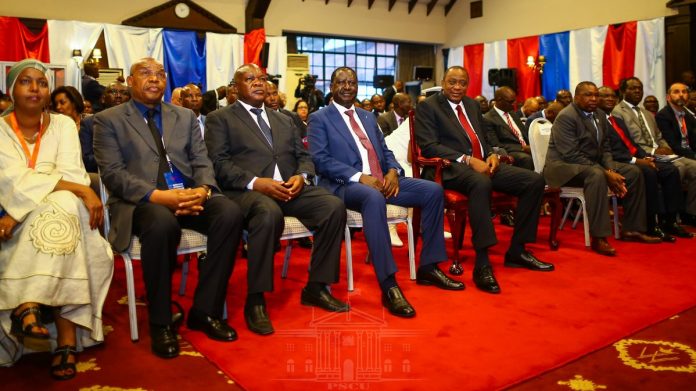
President Uhuru Kenyatta has urged African Governments to create an enabling environment to enable the private sector to participate more in the development of critical infrastructure in Africa. 

The President said he was convinced that public private partnerships supported by robust national institutions to ensure accountability and transparency holds the key to closing the prevailing infrastructure gap on the continent. 

The Head of State pointed out that Africa must work to address the insufficient stock of functional and quality infrastructure in energy, water and transport services to enable companies to produce competitively for both domestic and international markets. 

He said, good infrastructure is the backbone upon which African nations will achieve economic growth that will inturn create the much needed jobs for the youth as well as generate wealth to deal with the challenge of poverty. 

“High quality infrastructure reduces transactional and other costs; enabling efficient use of labour and capital, but more importantly, enhancing connectivity between production points and market points,” President Kenyatta said.

The President was speaking when he officially closed the inaugural AfroChampions Boma forum on African Infrastructure Financing and Delivery organized by the AfroChampions Initiative. 

The AfroChampions Initiative is a set of innovative public-private partnerships and flagship programs designed to galvanize African resources and institutions to support the emergence and success of African private sector in the regional and global spheres. 

The initiative is driven by prominent private and public sector players in Africa.

President Kenyatta said the dream of connecting the continent cannot be realized unless viable solutions to mobilise the required infrastructure financing are found.

“We need to connect Africa, but this cannot be possible without investing in critical infrastructure,” he said, adding that African economies must also be diversified by promoting value addition and manufacturing to create job opportunities for the more than ten million young people joining the labour market each year.

“Indeed, industrialization is the way to go if we are to achieve and sustain shared prosperity and job creation for our peoples,” he continued. 

President Kenyatta observed that the AfroChampions Initiative is important as it presents an exceptional opportunity for government agencies, private financiers and other stakeholders to come together and share their knowledge, expertise and experience leading to innovative solutions to the challenges in financing and implementing world class infrastructure systems in Africa. 

While noting that Nairobi is home to over 50 international development organizations as well as several global multinationals, the President reiterated Kenya’s commitment to continue assisting African companies to thrive. 

President Kenyatta also spoke on Pan-Africanism saying the African dream is that of a continent brimming with promise finding its feet in the modern world and striding confidently into a future of peace, prosperity and unity.

“It is the dream of our founding fathers; great men and women who saw in us the seeds of greatness and our vast potential to be a force for good; both at home and abroad,” President Kenyatta said.

He pointed out that Africa’s golden path to its deserved destiny lies not in nations engaging each other in fierce competition but rather in coming together to build a common better tomorrow for all those privileged to call Africa home. 

“The Pan-African dream of peace, prosperity and unity is set to be spurred by the imminent entry into force of the African Continental Free Trade Area Agreement.  This continental feat presents an extraordinary opportunity for Africa to become the single largest market in the world,” he said.

The President underscored the need for Africa’s companies to take cross-border leadership in key industries and for leading hubs – like Kenya – to play their proper role as accelerators for the expansion and triumph of African home-grown champions. 

The Head of State informed the meeting that Kenya has already taken giant steps in facilitating free movement of persons on the continent by offering visas on arrival to all African citizens.

Addressing the meeting that brought together key public and private sector players from across the continent, African Union’s High Representative for Infrastructure Development and former Prime Minister Raila Odinga expressed optimism that Africa is capable of addressing its infrastructure needs.

Mr Odinga called on African countries to remove barriers that hinder the free movement of people, goods and services by abolishing policies that curtail the involvement of the private sector in infrastructure development.

Maize flour consumers in dilemma as prices escalate

BY PETER WAFULA – You now have to dig deeper into your pockets in order to continue enjoying a bowl of ugali, a delicacy considered as staple food by majority of households in the country. This is the stark reality facing millions of maize flour consumers. A spot check in the market reveals an upward spiral of the commodity’s prices over the last two weeks with some brands having increased the price by Ksh.30 for a 2 kg packet of maize flour.

On retail stores shelves, leading maize flour brands Jogoo, Hodari and Dola 2kg packets are selling at ksh 109, ksh 107 and ksh 106 from ksh 79 and ksh 77 respectively. Two weeks ago, a price increase of between sh29 and sh30 with a likelihood of further increase of price unless drastic intervention to stabilize supply is urgently undertaken.
Maize millers have justified the upward prices review citing shortage of maize in the country. The move comes despite government’s assurance that the country has enough maize reserves to cushion Kenyans against hunger that has ravaged some parts of the country.

Maize sector has been riddled with controversies stemming from alleged corruption in the National Cereals and Produce Board, a body mandated to buy and stock maize from farmers over existence of a
cartel that is accused of importing maize leaving farmers at the mercy of middle men who offer low prices for farmer’s produce.

While the millers cite shortage of maize, some farmers in the maize growing regions have in their stores last year’s produce protesting what they term as low prices offered by the NCPB.

“We have maize rotting in our stores, we are surprised in other parts like Turkana people are dying of hunger not far from here. Let the government give us sh.3600 for a 90kg bag” said Nicodemus Kigen, a large scale maize farmer in Kwanza Sub County in Trans Nzoia County.

In a free economy market that currently exists, prices of commodities are left to be determined by market forces of demand and supply. Past attempts by the government to subsidize maize flour prices have proved short term with experts warning against attempts to impose price control on commodities.

Raila initially feared AU job was a “set up”

BY HENRY KIMOLI – Former Prime Minister Raila Odinga has sensationally claimed that he almost declined its role as Africa’s chief infrastructure diplomat for fear that he was being set up for failure.

Raila said it took President Uhuru Kenyatta pursuation to accept the job, which he has now taken with alot of enthusiasm.
According to his utterances, his idea is to open up all landlocked countries in Africa and hence foster African trade.

Raila also added that without good roads and railway connections ports themselves add for nothing.
He said air transport was a low hanging fruit that must be utilised. He said bureaucracy was to blame for the low traction of air transport. He also lamented that air transport is the cheapest and asked that this be explored in all african states.

He was speaking during the Afro Champions Infructure held at the Windor Resort, in Kenya.

Kenya’s universities need deep reform — not just a hike in fees

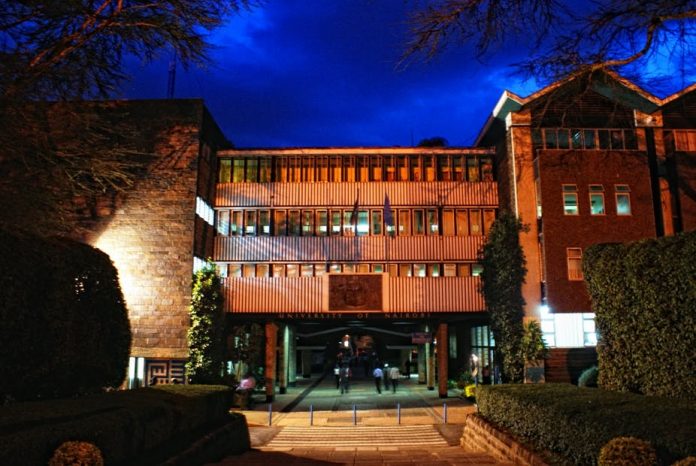
Th University of Nairobi. Universities in Kenya are struggling to keep afloat. Flickr/Nzomo Victor Ishmael Munene, Northern Arizona University

Vice-chancellors of Kenya’s 33 public universities are demanding a three-fold tuition fee increase. They point out that the proposed fee increase will merely meet the actual cost of providing university education.

Set 30 years ago, the current fee structure applies to all degree programmes irrespective of actual instructional cost. Over 49,000 students graduate from public universities annually.

The proposed increase is a reflection of the changing landscape in financing university education in Kenya. The once financially healthy universities are in financial straits, putting in doubt their long-term sustainability.

Most public universities are unable to meet basic operating expenses such as salaries, pensions, health care, and maintenance of plant and equipment. The flagship University of Nairobi, for instance, has a debt of 1.6 billion Kenya shillings (US$16 million) in unpaid pensions and other statutory contributions. The total debt of the 33 public institutions is around 110 billion Kenya shillings (US$1.10 billion). That’s equivalent to the state’s budgetary allocation over one year. The government spends around 27% of its budget on education. Universities get around 100.3 billion (US$1.03 billion) compared to 200 billion (US$ 2 billion) for basic education.

To manage the debt burden, universities have come under pressure to downsize their bloated non-essential staff. They have also introduced a range of austerity measures. The effect has been a decline in morale.

A tuition increase will provide much needed revenue to stabilise university finances. Universities are likely to use the extra funds in a number of ways. These could include improving the morale of both academic and administrative staff, improving the quality of instruction and better maintenance of plant and equipment.

But the proposed tuition increase comes with risks. A one-size-fits all raise fails to take into account the cost differential of various degree programmes. Medical, engineering and construction programmes, for instance, cost more than humanities and social sciences. Tuition fees should reflect these differences. If they don’t, under-investment in costly programmes will continue.

In addition, the tuition increase shouldn’t happen in isolation. It should be matched with a commitment by the government to restore university funding to previous levels. This will ensure that a bigger burden of financing universities doesn’t fall on students.

Diminishing revenue

The gloomy financial picture contrasts sharply with the healthy financial position that public universities enjoyed a decade ago. Then, universities had balanced budgets and even surpluses.

In 2011, for instance, total revenues earned by universities through tuition fees, programme fees and other income generating activities slightly exceeded government funding.

From 2010 to 2011 revenue growth in the five top public universities ranged from 2% – 21%.

There were a number of reasons for the financial crisis. These included diminishing revenue from privately-sponsored students who were a source much needed tuition revenues. Privately-sponsored students who did not attain the required high school graduation points to be awarded government scholarships. So they pay the full tuition in public universities.

The other reasons included declining government funding, closure of satellite campuses, and more stringent supervision of high school examinations that has reduced the number of university applicants and, therefore, fewer university enrolments.

In addition, poor financial management, and universities inability to develop robust income generating activities, and overall growth of the university institutions relative to demand have compromised university finances.

The fee increase proposal doesn’t come close to covering the actual cost of a basic non-science degree. And universities argue that the fees aren’t enough meet the increasing costs of providing quality education and running the institutions.

Opportunity for reform

I believe that by simply introducing a blanket tuition increase without addressing the problems ailing the public university sector, the government is missing a golden opportunity for much deeper reform.

Increasing tuition fees without consolidation of the public university sector is throwing good money after bad. The government should face the fact that a good number of public universities were established to give the government political legitimacy because they were established for political expediency in 2012-2013. Quite a few operate under capacity.

In addition, the proposed tuition rate increase was arrived at without broad consultations with key stakeholders. The whole process has been administrator-driven. As a result, students have threatened to go on strike while academics have called for a review.

Another problem is that the vice-chancellors’ fee increase proposal comes with no safeguards to mitigate its effects on poor students. Students from disadvantaged backgrounds experience difficulties even with the current fee structure. Without a clear specification of financial aid programmes for vulnerable students, the fee proposal will only make a bad situation worse.

Any tuition fee increase needs to be undertaken in the wider context of reforming the financing of university education in Kenya. A knee jerk policy like the one proposed by the vice-chancellors leaves too many policy challenges unresolved.The Conversation

Ishmael Munene, Professor of Research, Foundations & Higher Education, Northern Arizona University

This article is republished from The Conversation under a Creative Commons license. Read the original article.


Four charged of stealing 2.5m from Zeepo Company Limited.

BY PRUDENCE WANZA – Four people have been arraigned in court for stealing Sh. 2.5m from Zeepo Company Limited.

The four allegedly conspired to defraud the company Ksh. 2,585,000 that was a disbursement to Zeepo limited.
The accused, Bernard Wanyonyi Masafu, Simon Oparah Khisa, Charles Barake Masengo and James Ruty Odhiambo pleaded not guilty to the charges before Senior Principal Magistrate, Kennedy Cheruiyot at the Milimani Law Courts.
However, Simon Oparah, Charles Masengo and James Odhiambo face separate charges of stealing by servant as employees of Zeepo company Limited.
They will be released upon payment of a bond of Ksh. 500,000 and Ksh. 200,000 cash bail.
The case will be heard on 16th May, 2019 and the mention on 30th April, 2019.

Woman pleads guilty of selling Bhang

BY PRUDENCE WANZA – A woman who was arrested at Koja Bus Stage has been arraigned in court over charges of trafficking Bhang. The accused, Beatrice Achieng, however has pleaded guilty to the offence.
The accused, Beatrice was found with 10 rolls of bhang selling at a street price of Ksh. 200.

Beatrice Achieng charged of trafficking 10 rolls of bang | PRUDENCE WANZA

She appeared before Senior Principal Magistrate, Kennedy Cheruiyot, at the Milimani Law Courts. 
She will be remanded in custody until tomorrow for the facts of her case to be read to the court.